
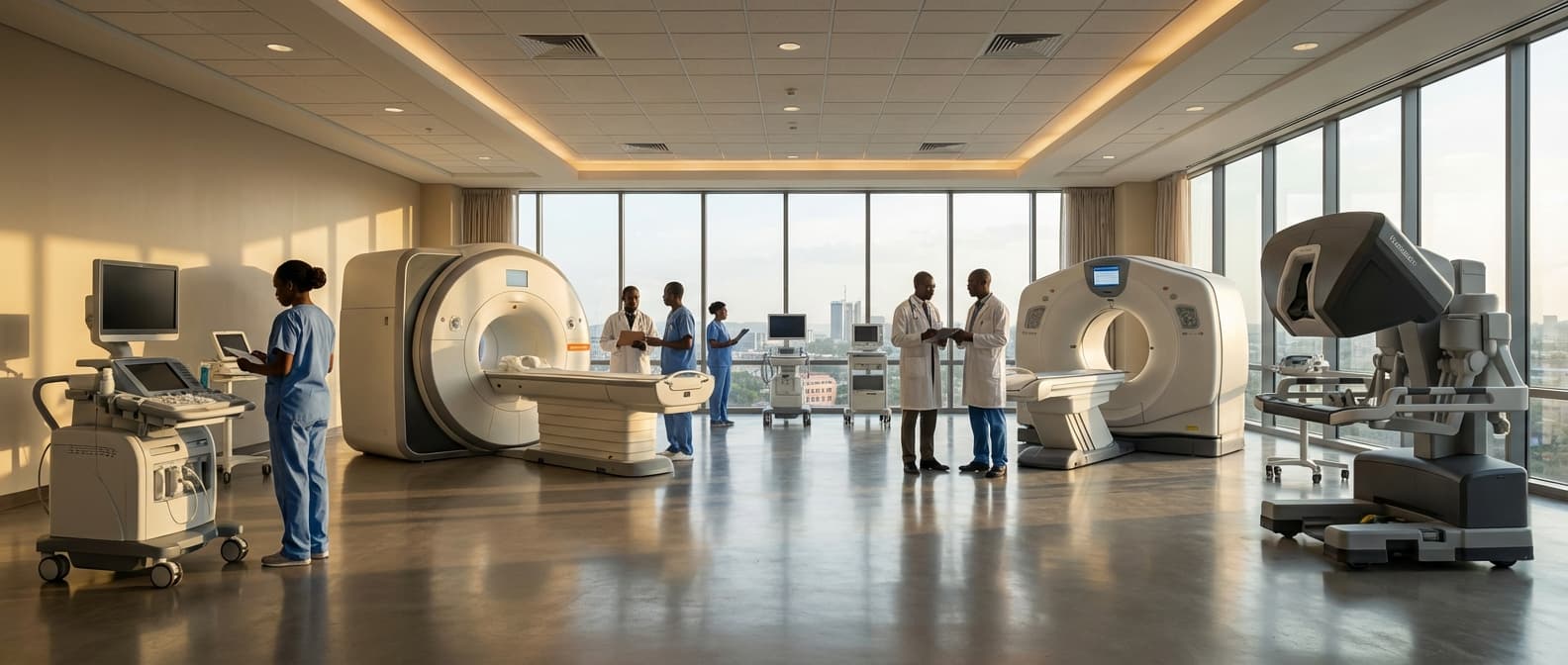
Renal Solutions in South Sudan
Engineering Excellence & Technical Support
Complete dialysis systems and renal care equipment designed to deliver safe, effective, and patient-centered kidney treatment. High-standard technical execution following OEM protocols and local regulatory frameworks.
Establishing South Sudan's First Dialysis Center
Renal Solutions spearheaded the development and operationalization of the inaugural dedicated hemodialysis center in South Sudan. This landmark achievement provides critical life-saving treatment for individuals suffering from end-stage renal disease, a condition previously lacking accessible care within the country.
Capacity Building for Nephrology Specialists
Through a comprehensive training program, Renal Solutions has significantly enhanced the local pool of nephrologists and dialysis technicians. This involves international standard curricula, hands-on mentorship, and the transfer of advanced medical knowledge to ensure sustainable, high-quality renal care delivery in South Sudan.
Securing Vital Medical Supplies and Equipment
Renal Solutions has established robust and reliable supply chains for essential dialysis consumables, medications, and specialized medical equipment. This ensures consistent availability of critical resources, overcoming logistical challenges and guaranteeing uninterrupted treatment for patients across South Sudan.
What Is Renal Solutions In South Sudan?
Renal Solutions in South Sudan refers to the provision of services and interventions aimed at the diagnosis, treatment, and management of kidney diseases within the South Sudanese healthcare system. This encompasses a range of activities, from basic screening and early detection to more advanced therapeutic modalities, where available. The objective is to address the growing burden of renal pathologies, which often stem from a confluence of factors including infectious diseases (e.g., malaria, HIV/AIDS), hypertension, diabetes, and lack of access to essential medications and specialized medical personnel.
| Need Category | Target Population | Typical Use Cases |
|---|---|---|
| Early Detection & Screening | Individuals with risk factors (e.g., known hypertension, diabetes, recurrent infections, family history of kidney disease). | Routine medical check-ups, screening programs in high-prevalence areas, assessment of individuals presenting with symptoms suggestive of kidney dysfunction (e.g., edema, fatigue, changes in urination). |
| Management of Co-morbidities | Patients with hypertension, diabetes mellitus, malaria, HIV/AIDS, or other systemic diseases that can impact renal function. | Regular monitoring of blood pressure and glycemic control, adjustment of antihypertensive and antidiabetic medications, management of anemia associated with CKD. |
| Acute Kidney Injury (AKI) | Individuals experiencing sudden onset of severe illness, trauma, dehydration, sepsis, or exposure to nephrotoxic agents. | Hospitalized patients in critical care settings, emergency room patients with signs of organ dysfunction, individuals requiring intensive medical intervention. |
| Chronic Kidney Disease (CKD) Progression | Patients diagnosed with stages of CKD who require ongoing medical management to slow disease progression. | Outpatient clinics for regular follow-up, prescription of medications to manage blood pressure, anemia, and mineral bone disease, dietary counseling. |
| End-Stage Renal Disease (ESRD) - Where Available | Patients with severely impaired kidney function requiring renal replacement therapy. | Dialysis centers for hemodialysis or peritoneal dialysis sessions, management of fluid overload, electrolyte imbalances, and uremic symptoms. |
| Health System Strengthening | Healthcare providers, policymakers, and public health organizations. | Training of medical personnel in nephrology, development of clinical guidelines, procurement of essential diagnostic and therapeutic supplies, advocacy for increased resource allocation to renal care. |
Key Components of Renal Solutions in South Sudan
- Diagnostic Services: Includes laboratory tests (serum creatinine, urea, urinalysis, estimated Glomerular Filtration Rate - eGFR) for assessing kidney function and identifying potential damage. Imaging studies, if accessible, may also be employed.
- Medical Management: Focuses on controlling underlying conditions that contribute to renal disease, such as hypertension and diabetes. This involves medication prescription, lifestyle modification advice, and management of complications.
- Acute Kidney Injury (AKI) Management: Provision of immediate care for sudden loss of kidney function, aiming to stabilize the patient and address the precipitating cause. This may include fluid management and electrolyte correction.
- Chronic Kidney Disease (CKD) Management: Long-term care for individuals with progressive loss of kidney function. This involves slowing disease progression, managing symptoms, and preparing for advanced therapies if indicated and available.
- Dialysis Services (Limited): Where infrastructure and resources permit, hemodialysis and/or peritoneal dialysis may be offered for end-stage renal disease (ESRD). However, access to these services is often severely restricted due to logistical and financial challenges.
- Kidney Transplantation (Extremely Limited/Non-existent): Currently, kidney transplantation is not a feasible or available option within South Sudan due to the lack of specialized surgical teams, post-operative care facilities, and organ procurement systems.
- Public Health and Awareness Programs: Efforts to educate the population about kidney health, risk factors for renal disease, and the importance of early detection and management.
Who Needs Renal Solutions In South Sudan?
South Sudan, a nation grappling with significant healthcare challenges, faces a growing burden of kidney-related diseases. Access to specialized renal care and essential solutions is a critical need across various sectors. This document outlines who requires these vital services and the specific departments within organizations that would benefit from them.
| Target Customer Group | Specific Departments/Units |
|---|---|
| Government Health Ministry & Public Hospitals | Nephrology Departments, Dialysis Centers, Intensive Care Units (ICUs), General Wards, Public Health Programs (disease prevention and screening) |
| International Aid Organizations & NGOs | Medical Missions, Mobile Clinics, Health & Nutrition Programs, Emergency Response Units, Maternal & Child Health Services |
| Medical Training Institutions & Universities | Medical Schools (nephrology training), Nursing Schools, Research Departments, Teaching Hospitals |
| Private Healthcare Providers & Clinics | Specialized Nephrology Clinics, Diagnostic Laboratories, Surgical Departments (for transplant-related care), General Practice |
| Military & Peacekeeping Forces | Military Hospitals, Field Medical Units, Occupational Health Services (for personnel exposed to specific risks) |
| Disaster Relief & Humanitarian Agencies | Emergency Medical Teams, Health Assessment Units, Water & Sanitation Programs (indirect impact on kidney health) |
Target Customers for Renal Solutions in South Sudan
- Individuals suffering from acute and chronic kidney diseases.
- Patients requiring dialysis (hemodialysis and peritoneal dialysis).
- Individuals with end-stage renal disease (ESRD) awaiting or undergoing kidney transplantation.
- Individuals with underlying conditions that increase the risk of kidney disease (e.g., diabetes, hypertension).
- Pregnant women with pre-existing kidney conditions or those developing gestational kidney issues.
- Children with congenital or acquired kidney disorders.
- Malnourished populations susceptible to kidney damage.
- Individuals in remote areas with limited access to healthcare facilities.
- Refugees and internally displaced persons (IDPs) with compromised health and potential exposure to kidney-harming factors.
Renal Solutions Process In South Sudan
The Renal Solutions Process in South Sudan outlines a structured approach to addressing kidney-related health issues, from initial patient contact to the delivery of necessary treatment and support. This process is crucial in a setting where healthcare infrastructure and specialized services might be limited. It aims to ensure that patients with renal conditions receive timely diagnosis, appropriate management, and follow-up care, ultimately improving their quality of life and health outcomes. The workflow is designed to be adaptable to local conditions while maintaining essential medical standards.
| Stage | Description | Key Activities | Responsible Parties | Potential Challenges |
|---|---|---|---|---|
| Inquiry and Initial Contact | The process begins when a potential patient or referring healthcare provider expresses a need for renal-related services. | Patient/family outreach, healthcare provider referrals, community health worker identification of potential cases. | Community Health Workers, Primary Healthcare Facilities, Patients/Families, Referring Physicians. | Lack of awareness about renal diseases, difficulty in reaching remote populations, communication barriers. |
| Screening and Preliminary Assessment | An initial evaluation to identify individuals who may have or be at risk for renal conditions. | Basic medical history, physical examination, urine dipstick tests, blood pressure measurement, identification of risk factors (e.g., diabetes, hypertension). | Nurses, Clinical Officers, Primary Healthcare Facility Staff. | Limited availability of diagnostic tools, inadequate training for primary care staff, overcrowding at facilities. |
| Referral and Consultation | Patients identified with potential renal issues are referred to specialized care for further evaluation. | Formal referral slips, transport arrangements to higher-level facilities or specialized clinics, initial consultation with a nephrologist or general physician with renal interest. | Primary Healthcare Facilities, Referring Physicians, Patients/Families, Transportation Providers, Specialized Healthcare Facilities. | Long distances to specialized centers, lack of specialized personnel, transportation costs, referral system breakdowns. |
| Diagnostic Workup | Comprehensive tests to confirm diagnosis, determine the cause, and assess the severity of the renal condition. | Blood tests (e.g., creatinine, urea, electrolytes, eGFR), urinalysis, kidney ultrasound, potentially kidney biopsy (if feasible). | Laboratory Technicians, Radiologists, Nephrologists, General Physicians. | Shortage of diagnostic equipment and reagents, unreliable power supply for equipment, lack of trained personnel for advanced diagnostics. |
| Treatment Planning and Decision Making | Based on the diagnosis, a personalized treatment plan is developed. | Discussion of treatment options (medical management, dialysis, transplantation referral), consideration of patient's overall health and resources, shared decision-making with the patient. | Nephrologists, General Physicians, Patients/Families, Social Workers (if available). | Limited access to medications, absence of dialysis facilities or insufficient capacity, ethical considerations, financial constraints. |
| Intervention and Execution | Implementation of the decided treatment plan. | Prescribing and administering medications, initiation and management of dialysis (hemodialysis or peritoneal dialysis), pre-transplant evaluations (if applicable). | Nephrologists, Dialysis Nurses, Physicians, Pharmacists. | Scarcity of dialysis machines and consumables, lack of trained dialysis staff, infection control challenges, intermittent supply of essential medicines. |
| Monitoring and Follow-up | Ongoing assessment of the patient's condition and response to treatment. | Regular clinical check-ups, monitoring of vital signs and lab parameters, adjustment of treatment as needed, management of complications. | Nephrologists, Nurses, General Physicians, Patients/Families. | Patient adherence to follow-up appointments, geographical barriers for regular visits, insufficient healthcare personnel for consistent monitoring. |
| Patient Education and Support | Empowering patients and their families with knowledge and resources to manage their condition. | Information on diet, fluid intake, medication adherence, lifestyle modifications, emotional and psychological support, connection with support groups. | Nurses, Dietitians (if available), Social Workers, Peer Support Groups. | Low literacy levels, cultural beliefs influencing health practices, lack of accessible educational materials, limited psychosocial support services. |
| Data Collection and Reporting | Systematic recording of patient data and treatment outcomes for program evaluation and improvement. | Maintaining patient records, collecting data on disease prevalence, treatment efficacy, and resource utilization, generating reports for stakeholders. | Healthcare Facility Administrators, Data Clerks, Program Managers. | Weak health information systems, inconsistent data entry, lack of capacity for data analysis and utilization, data privacy concerns. |
Renal Solutions Process Workflow in South Sudan
- Inquiry and Initial Contact
- Screening and Preliminary Assessment
- Referral and Consultation
- Diagnostic Workup
- Treatment Planning and Decision Making
- Intervention and Execution
- Monitoring and Follow-up
- Patient Education and Support
- Data Collection and Reporting
Renal Solutions Cost In South Sudan
South Sudan's healthcare system faces significant challenges, and access to essential medical supplies like renal solutions is often hindered by cost and availability. The pricing of renal solutions, crucial for dialysis treatments, is a complex issue influenced by a multitude of factors, leading to a wide range of prices in the local currency, the South Sudanese Pound (SSP). Understanding these determinants is vital for both healthcare providers and patients seeking to manage the financial burden of kidney disease management.
| Renal Solution Type | Estimated Price Range (SSP per unit) | Notes |
|---|---|---|
| Peritoneal Dialysis (PD) Solution (e.g., Dextrose-based, 1.5L/2L bag) | 15,000 - 45,000+ | Prices vary significantly based on dextrose concentration, specific electrolyte composition, and brand. Higher concentrations often cost more. |
| Hemodialysis (HD) Concentrate (e.g., Acid Concentrate, Bicarbonate Concentrate) | 5,000 - 20,000+ (per liter/gallon concentrate) | Sold as concentrates requiring dilution. Cost depends on the volume of concentrate needed to prepare a larger batch of dialysate. |
| Specialized/Electrolyte-Balanced PD Solutions | 25,000 - 60,000+ | Solutions with specific electrolyte profiles or for patients with unique needs tend to be more expensive. |
| Sterile Water for Injection (for HD dialysate preparation) | 2,000 - 8,000+ (per 1L/5L bag) | Essential for hemodialysis, cost depends on volume and sterility assurances. |
Key Pricing Factors for Renal Solutions in South Sudan:
- {"title":"Importation Costs and Tariffs","description":"As South Sudan has limited domestic manufacturing capabilities for specialized medical supplies, the majority of renal solutions are imported. This incurs significant costs related to international shipping, freight, insurance, and import duties. Fluctuations in global shipping rates and import tax policies directly impact the final price."}
- {"title":"Supplier Markups and Distribution Chains","description":"Multiple intermediaries in the supply chain, from international manufacturers and distributors to local importers and pharmacies/hospitals, each add their own markup. The longer and more complex the distribution chain, the higher the final cost for the end-user. Limited competition among suppliers can also lead to higher markups."}
- Exchange Rate Volatility
- Quality and Brand of Solution
- Volume and Packaging
- Availability and Scarcity
- Logistical Challenges and Storage
- Regulatory and Certification Costs
Affordable Renal Solutions Options
Navigating kidney health can present significant financial considerations. Fortunately, there are numerous affordable renal solutions and cost-saving strategies available to patients. These approaches aim to reduce the burden of treatment costs while maintaining high-quality care. Understanding these options can empower individuals to make informed decisions about their kidney health management.
| Strategy Type | Description | Potential Cost Savings |
|---|---|---|
Understanding Value Bundles and Cost-Saving Strategies
- {"title":"Value Bundles in Renal Care","description":"Value bundles are integrated payment models that group a set of services or treatments for a specific condition into a single, bundled payment. This encourages providers to coordinate care, improve efficiency, and focus on patient outcomes rather than the volume of services rendered. For renal care, this can include pre-dialysis education, dialysis treatments, medications, and post-transplant care."}
- {"title":"Cost-Saving Strategies for Renal Patients","description":"These strategies encompass a range of approaches, from negotiating costs to leveraging insurance benefits and exploring alternative treatment pathways. They are designed to make renal care more accessible and manageable financially."}
Verified Providers In South Sudan
In South Sudan's rapidly evolving healthcare landscape, identifying trustworthy and capable healthcare providers is paramount. Franance Health stands out as a beacon of reliability, offering a comprehensive suite of services underpinned by rigorous credentialing and an unwavering commitment to quality. This makes them the premier choice for individuals and organizations seeking dependable medical care.
| Provider Type | Credential Verification | Key Strengths | Areas of Specialization |
|---|---|---|---|
| Doctors (General & Specialists) | Verified medical degrees, board certifications, and active practicing licenses. | Extensive clinical experience, adherence to evidence-based medicine, patient advocacy. | Internal Medicine, Pediatrics, Obstetrics & Gynecology, Surgery, Public Health, Emergency Medicine. |
| Nurses | Registered Nurse (RN) licenses and relevant certifications. | Skilled in patient care, monitoring, administration of medications, health education. | General Nursing, Midwifery, Public Health Nursing, Critical Care Nursing. |
| Laboratory Technicians | Certified in medical laboratory science and equipped with knowledge of diagnostic procedures. | Accurate sample analysis, quality control, utilization of advanced diagnostic equipment. | Hematology, Biochemistry, Microbiology, Parasitology. |
| Pharmacists | Licensed pharmacists with expertise in medication management and dispensing. | Ensuring safe and effective use of pharmaceuticals, drug interaction monitoring, patient counseling. | Retail Pharmacy, Hospital Pharmacy, Compounding. |
Why Franance Health is the Best Choice in South Sudan:
- Rigorous Credentialing and Verification: Franance Health employs a stringent vetting process for all its healthcare professionals, ensuring they meet the highest international and local standards. This includes thorough background checks, verification of educational qualifications, and confirmation of active licenses.
- Experienced and Qualified Professionals: Their team comprises highly skilled doctors, nurses, specialists, and allied health professionals with extensive experience in various medical fields. Many have international training and a deep understanding of the unique health challenges in South Sudan.
- Comprehensive Service Offering: From primary care and diagnostics to specialized treatments and emergency services, Franance Health provides a holistic approach to healthcare. They are equipped to handle a wide range of medical needs.
- Commitment to Patient-Centered Care: Franance Health prioritizes the well-being and comfort of their patients. Their approach emphasizes clear communication, ethical practices, and personalized treatment plans.
- State-of-the-Art Facilities and Equipment: Investments in modern medical technology and well-maintained facilities ensure accurate diagnoses and effective treatments, adhering to international best practices.
- Accessibility and Reach: Franance Health is dedicated to increasing healthcare access across South Sudan, with a growing network of clinics and outreach programs designed to serve diverse communities.
Scope Of Work For Renal Solutions
This Scope of Work (SOW) outlines the technical deliverables and standard specifications for the development and implementation of a comprehensive Renal Solutions platform. This platform aims to streamline patient management, enhance clinical decision-making, and improve operational efficiency within renal care facilities. The project will focus on creating a robust, scalable, and secure system that adheres to industry best practices and regulatory requirements.
| Component/Module | Description | Key Features | Standard Specifications/Technologies |
|---|---|---|---|
| Patient Management Module | Centralized system for managing patient demographics, medical history, treatment plans, and contact information. | Patient profile creation, secure data storage, search and filtering capabilities, audit trails. | HIPAA compliant storage, FHIR R4 for data interoperability, PostgreSQL or similar RDBMS, OAuth 2.0 for authentication. |
| Treatment Planning Module | Facilitates the creation, modification, and tracking of individualized patient treatment plans. | Dialysis scheduling (hemodialysis, peritoneal dialysis), medication prescription, progress monitoring, outcome tracking. | Rule-based engines for treatment recommendations, integration with scheduling systems, DICOM for imaging if applicable. |
| Medication Management Module | Manages prescription, administration, and inventory of medications for renal patients. | Drug database integration, prescription verification, dosage calculation, administration logging, inventory tracking. | Integration with drug formularies, barcoding for administration, audit trails for medication dispensing. |
| Lab Results Integration | Automated ingestion and display of laboratory results from various LIS. | HL7 v2.x or FHIR for inbound data, result normalization and trending, flagging of abnormal values. | Secure SFTP/API integration with LIS, data validation and transformation. |
| Reporting and Analytics Module | Provides insights into patient outcomes, operational efficiency, and resource utilization. | Pre-defined reports (e.g., patient adherence, treatment effectiveness), customizable dashboards, data export capabilities. | Business Intelligence (BI) tools (e.g., Tableau, Power BI) or custom reporting engine, SQL for data querying. |
| Security and Access Control | Ensures data privacy, integrity, and compliance with healthcare regulations. | Role-based access control (RBAC), data encryption (at rest and in transit), audit logging, multi-factor authentication (MFA). | OWASP security standards, TLS 1.2+, AES-256 encryption, SAML 2.0 for SSO. |
| API Layer | Enables seamless integration with existing healthcare systems and third-party applications. | RESTful APIs, clear documentation, versioning, security protocols. | JSON/XML data formats, OpenAPI Specification (Swagger) for documentation, JWT for token-based authentication. |
Technical Deliverables
- Cloud-based Platform Architecture Design Document
- Database Schema and Design Specifications
- API Documentation (RESTful)
- User Interface (UI) and User Experience (UX) Design Mockups and Prototypes
- Core Application Modules (e.g., Patient Registration, Treatment Planning, Medication Management, Lab Results Integration, Appointment Scheduling)
- Reporting and Analytics Module with Customizable Dashboards
- Integration Layer for Electronic Health Records (EHR) and Laboratory Information Systems (LIS)
- Security and Access Control Implementation
- Data Migration Strategy and Scripts
- Comprehensive User Manuals and Training Materials
- Testing Strategy and Test Cases (Unit, Integration, System, User Acceptance)
- Deployment Plan and Infrastructure Configuration
- Post-Implementation Support and Maintenance Plan
- Source Code Repository and Version Control Setup
- Performance Monitoring and Optimization Tools
Service Level Agreement For Renal Solutions
This Service Level Agreement (SLA) outlines the agreed-upon response times and uptime guarantees for Renal Solutions' services. It is designed to ensure the reliable and timely delivery of our services to our valued clients, facilitating seamless patient care and operational efficiency.
| Service Component | Uptime Guarantee | Critical Issue Response Time | High Priority Issue Response Time | Normal Priority Issue Response Time |
|---|---|---|---|---|
| Core Platform Availability (EHR, Patient Management) | 99.9% (excluding scheduled maintenance) | 1 hour | 4 business hours | 8 business hours |
| Data Synchronization and Reporting Services | 99.5% (excluding scheduled maintenance) | 2 hours | 8 business hours | 2 business days |
| Client Support Portal and Communication Channels | 99.9% | 30 minutes | 2 business hours | 4 business hours |
| Remote Patient Monitoring (RPM) Data Ingestion | 99.8% (excluding scheduled maintenance) | 1 hour | 4 business hours | 1 business day |
Key Service Metrics
- Response Time: Refers to the maximum time allowed for Renal Solutions to acknowledge and begin addressing a reported issue.
- Uptime Guarantee: Represents the percentage of time the Renal Solutions services are expected to be operational and accessible.
- Critical Issues: Issues that severely impair or prevent the use of core Renal Solutions functionalities, directly impacting patient care or critical business operations.
- High Priority Issues: Issues that significantly impact Renal Solutions functionalities but do not completely prevent their use. This may include performance degradation or partial loss of functionality.
- Normal Priority Issues: Issues that have a minor impact on Renal Solutions functionalities, with workarounds available.
- Scheduled Maintenance: Planned downtime for system updates, upgrades, or hardware maintenance, communicated in advance to clients.
Frequently Asked Questions

Ready when you are
Let's scope your Renal Solutions in South Sudan project in South Sudan.

Scaling healthcare logistics and technical systems across the entire continent.