
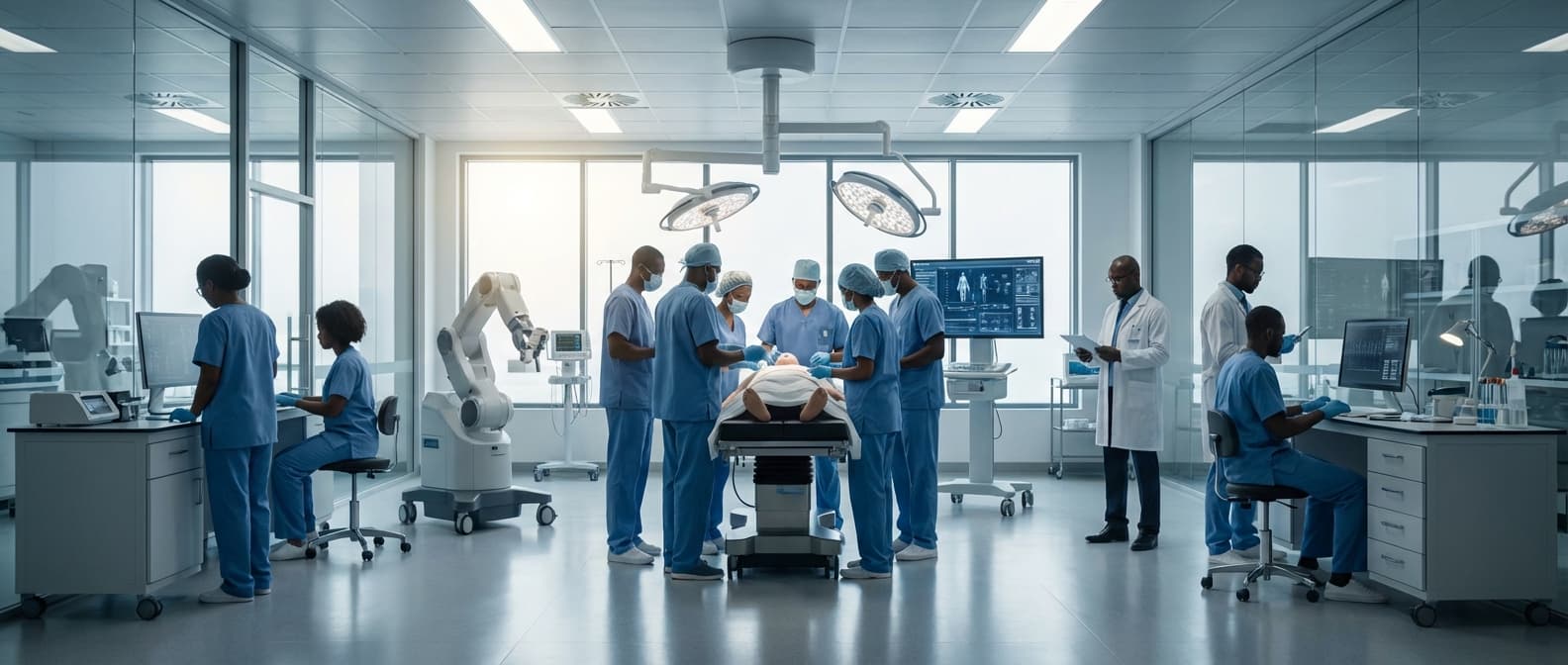
Managed Equipment Service (MES) in South Sudan
Engineering Excellence & Technical Support
Long‑term equipment provision with uptime SLAs and lifecycle management. High-standard technical execution following OEM protocols and local regulatory frameworks.
Reliable Power & Generator Uptime
Our expert technicians ensure 24/7 operational uptime for critical medical equipment by proactively maintaining and servicing generators and backup power systems. This guarantees consistent power supply, even in challenging environments, enabling uninterrupted patient care.
Medical Equipment Calibration & Preventative Maintenance
We provide expert calibration and scheduled preventative maintenance for a wide range of medical devices, from diagnostic imaging to laboratory equipment. This adherence to international standards ensures accurate readings, extends equipment lifespan, and minimizes costly emergency repairs.
On-Site Repair & Spare Parts Logistics
Our trained biomedical engineers are equipped to perform on-site repairs swiftly, minimizing downtime. We manage a robust spare parts inventory and a streamlined logistics network to ensure timely delivery of essential components across South Sudan, keeping your vital medical assets functional.
What Is Managed Equipment Service (Mes) In South Sudan?
Managed Equipment Service (MES) in South Sudan refers to a comprehensive outsourcing model for the procurement, installation, maintenance, repair, and lifecycle management of specialized equipment within healthcare facilities. This service aims to address critical infrastructure challenges, including limited technical expertise, scarcity of spare parts, and inadequate funding for capital expenditure and ongoing operational costs, which are prevalent in the South Sudanese context. MES contracts typically involve a service provider taking full responsibility for the operational readiness and performance of designated medical equipment, often on a fee-per-use or fixed-fee basis. This allows healthcare providers to focus on patient care while ensuring access to reliable, state-of-the-art medical technology.
| Who Needs MES in South Sudan? | Typical Use Cases for MES in South Sudan | |||
|---|---|---|---|---|
| Government Hospitals and Ministry of Health Facilities: Particularly those facing budgetary constraints and a lack of in-house technical capacity for complex medical equipment. | Non-Governmental Organizations (NGOs) and International Aid Agencies: Operating health facilities or providing healthcare services in remote or underserved areas, where infrastructure and technical support are limited. | Missions and Faith-Based Healthcare Providers: Often rely on external expertise to manage and maintain their medical equipment, ensuring sustainability of services. | New or Expanding Healthcare Facilities: Seeking to establish a robust medical technology infrastructure without significant upfront capital investment and the burden of immediate operational management. | Facilities with a High Reliance on Specialized Equipment: Such as diagnostic imaging, critical care units, or surgical theaters, where equipment downtime has a direct and significant impact on patient outcomes. |
| Diagnostic Imaging: Installation and maintenance of X-ray machines, ultrasound devices, CT scanners, and MRI machines to support accurate diagnosis. | Operating Theaters: Ensuring the reliability of surgical lights, anesthesia machines, electro-surgical units, and patient monitors for safe surgical procedures. | Intensive Care Units (ICUs) and Emergency Departments: Providing continuous operational readiness for ventilators, defibrillators, vital signs monitors, and infusion pumps. | Laboratory Equipment: Maintenance of analyzers, microscopes, and other diagnostic equipment crucial for laboratory testing. | Maternal and Child Health Equipment: Ensuring the functionality of incubators, phototherapy units, and fetal monitors to improve outcomes for mothers and newborns. |
Key Components of Managed Equipment Service (MES) in South Sudan:
- Equipment Procurement and Installation: Sourcing, purchasing, and setting up of new medical devices, often tailored to the specific needs and capacity of the facility.
- Preventive Maintenance: Scheduled servicing and calibration of equipment to minimize downtime and extend operational lifespan.
- Corrective Maintenance and Repair: Rapid response to equipment failures and malfunctions, including the provision of qualified technicians and necessary spare parts.
- Technical Training: Providing training to local healthcare staff on the proper operation and basic maintenance of the equipment.
- Consumables Management: In some MES models, the service provider may also manage the supply of essential consumables linked to equipment usage.
- Technology Upgrades and Replacement: Planning and executing the upgrade or replacement of equipment at the end of its lifecycle to ensure continued technological relevance.
- Performance Monitoring and Reporting: Continuous tracking of equipment uptime, usage, and maintenance activities, with regular reporting to the client facility.
- Asset Management: Comprehensive inventory management and tracking of all contracted equipment.
Who Needs Managed Equipment Service (Mes) In South Sudan?
Managed Equipment Service (MES) is a crucial solution for organizations in South Sudan that rely on essential equipment for their operations but lack the internal capacity for its maintenance, repair, and lifecycle management. MES providers take on the responsibility of ensuring equipment is operational, up-to-date, and cost-effectively managed, allowing clients to focus on their core mission.
| Customer Type | Key Departments/Functions | Types of Equipment Managed | Why MES is Needed |
|---|---|---|---|
| Healthcare Facilities | Radiology, Surgery, Laboratories, Critical Care Units, General Wards | MRI machines, X-ray equipment, CT scanners, ventilators, laboratory analyzers, diagnostic tools | Ensuring equipment uptime for patient diagnosis and treatment, reducing breakdown risks, access to specialized technicians, managing warranties and upgrades. |
| NGOs (Humanitarian & Development) | Logistics & Supply Chain, Field Operations, IT & Communications, Water & Sanitation, Health Programs | Vehicles, generators, communication devices (satellite phones, radios), water purification systems, IT hardware, office equipment | Maintaining operational readiness in remote and challenging environments, ensuring reliable service delivery, cost-effective management of a diverse equipment fleet. |
| Government Ministries | Health, Infrastructure, Energy, Water Resources, Defense, Communications | Medical equipment (in public hospitals), construction machinery, power generation equipment, water treatment plants, communication systems, IT infrastructure | Improving service delivery, ensuring national infrastructure functionality, long-term asset management, centralized control over equipment lifecycles. |
| Educational Institutions | Science & Technology Departments, IT Services, Research Centers, Administration | Laboratory equipment (microscopes, spectrometers), computers, projectors, servers, specialized machinery for vocational training | Facilitating research and learning, keeping technology current, reducing the burden of maintenance for academic staff. |
| Telecommunications Companies | Network Operations, Field Maintenance, Engineering | Base stations, transmission equipment, power systems for towers, network monitoring tools | Maximizing network availability, reducing downtime, proactive maintenance, efficient management of a geographically dispersed infrastructure. |
| Resource Extraction & Agriculture | Operations, Maintenance, Fleet Management | Heavy machinery (excavators, bulldozers), mining equipment, agricultural machinery, power generators | Ensuring continuous production, minimizing equipment failure in demanding conditions, specialized maintenance expertise, managing large capital investments. |
Target Customers and Departments for MES in South Sudan
- {"title":"Healthcare Sector","description":"Hospitals, clinics, and medical aid organizations are prime candidates for MES. The complexity and critical nature of medical equipment necessitate expert management to ensure patient care is not compromised."}
- {"title":"Non-Governmental Organizations (NGOs)","description":"NGOs operating in development, humanitarian aid, and disaster relief heavily depend on a wide range of equipment for their field operations, logistics, and communication."}
- {"title":"Government Ministries and Agencies","description":"Various government bodies responsible for public services, infrastructure, and national security require reliable equipment to function effectively."}
- {"title":"Educational Institutions","description":"Universities, vocational training centers, and research facilities may benefit from MES for specialized scientific equipment or IT infrastructure."}
- {"title":"Telecommunications Companies","description":"Companies managing vast network infrastructure, base stations, and other telecommunication hardware can leverage MES for efficient maintenance and upgrades."}
- {"title":"Resource Extraction and Agriculture","description":"Companies involved in mining, oil and gas exploration, or large-scale agricultural operations often utilize heavy machinery and specialized equipment that requires expert management."}
Managed Equipment Service (Mes) Process In South Sudan
The Managed Equipment Service (MES) process in South Sudan is a critical framework for ensuring the availability, functionality, and maintenance of essential medical equipment within healthcare facilities. This process is designed to address challenges such as limited technical expertise, scarce spare parts, and the high cost of equipment acquisition and upkeep. The workflow typically begins with an inquiry from a healthcare facility and culminates in the successful deployment, operation, and ongoing support of the required equipment.
| Stage | Description | Key Activities | Responsible Parties | Outcomes |
|---|---|---|---|---|
| The process is initiated when a healthcare facility identifies a need for new or improved medical equipment or requires support for existing equipment. | Facility submits an inquiry/request. MES provider conducts a site visit and needs assessment. Detailed inventory of existing equipment and infrastructure is compiled. Identification of specific equipment requirements and specifications. | Healthcare Facility (e.g., Ministry of Health, Hospital Management), MES Provider. | Clearly defined equipment needs, technical specifications, and a baseline understanding of the facility's capabilities. |
| Based on the needs assessment, the MES provider develops a comprehensive proposal outlining the scope of services, equipment options, costs, and implementation plan. | MES provider develops a technical and financial proposal. Proposal review and clarification with the healthcare facility. Negotiation of terms, conditions, service level agreements (SLAs), and pricing. Finalization of the scope of work. | MES Provider, Healthcare Facility (MoH, Finance Departments). | Agreed-upon proposal, including equipment list, service package, timelines, and financial terms. |
| Once the proposal is accepted, formal contracts are signed, and the procurement of the specified equipment and related services commences. | Formal contract signing. Procurement of equipment and spare parts according to specifications. Development of a detailed implementation and logistics plan. Securement of necessary import/customs clearances. | MES Provider, Equipment Suppliers, Ministry of Health (for approvals/facilitation). | Signed contract, ordered equipment, and a clear procurement and logistics roadmap. |
| The procured equipment is delivered to the healthcare facility, installed, and commissioned by qualified technicians. | Transportation of equipment to the facility. Unpacking, inspection, and testing of equipment. Professional installation and configuration. Initial calibration and quality assurance checks. Handover of operational equipment to the facility. | MES Provider (Logistics team, Biomedical Engineers). | Fully installed, tested, and operational medical equipment at the healthcare facility. |
| Healthcare staff are trained on the proper use, basic maintenance, and troubleshooting of the newly installed equipment to ensure effective and safe operation. | Development of training materials. Conduct of training sessions for clinicians and technicians. Practical demonstrations and hands-on exercises. Assessment of training effectiveness. Provision of user manuals and guides. | MES Provider (Trainers, Biomedical Engineers), Healthcare Facility Staff. | Competent healthcare staff capable of operating and performing basic maintenance of the equipment. |
| The MES provider is responsible for the ongoing operation, preventive maintenance, corrective maintenance, and repair of the equipment throughout the contract period. | Regular scheduled preventive maintenance. Prompt response to breakdown calls. Diagnosis and repair of faulty equipment. Supply of necessary spare parts. Biomedical engineering support. | MES Provider (Biomedical Engineers, Technicians), Healthcare Facility (for reporting issues). | High equipment uptime and reliability. Minimized downtime, ensuring continuous availability of medical services. |
| Regular monitoring of equipment performance, service delivery, and resource utilization is conducted, with reports provided to the healthcare facility and relevant stakeholders. | Collection of performance data (e.g., uptime, repair times). Regular service audits. Generation of periodic performance reports. Review meetings with the facility. Financial reporting and reconciliation. | MES Provider, Healthcare Facility (Management, MoH). | Transparent performance tracking, identification of areas for improvement, and informed decision-making. |
| Towards the end of the equipment's lifespan or contract period, a plan for decommissioning, replacement, or upgrade is executed. | Assessment of equipment condition and remaining lifespan. Planning for replacement or upgrade. Procurement and installation of new equipment. Safe disposal or decommissioning of old equipment. Knowledge transfer and handover for new services. | MES Provider, Healthcare Facility (MoH). | Seamless transition to new equipment, ensuring continued availability of essential medical services. Responsible disposal of obsolete equipment. |
Managed Equipment Service (MES) Workflow in South Sudan
- Inquiry and Needs Assessment
- Proposal Development and Negotiation
- Contracting and Procurement
- Equipment Delivery and Installation
- Training and Capacity Building
- Operation and Maintenance
- Monitoring and Reporting
- Equipment Decommissioning and Replacement
Managed Equipment Service (Mes) Cost In South Sudan
Managed Equipment Service (MES) in South Sudan, while still an emerging sector, presents a unique set of pricing dynamics. MES involves outsourcing the management, maintenance, and upgrade of critical medical equipment to specialized third-party providers. The cost of MES in South Sudan is influenced by a confluence of factors, ranging from the technical specifications of the equipment itself to the broader socio-economic and operational landscape of the country. Understanding these pricing factors is crucial for healthcare providers, NGOs, and government bodies seeking to implement or procure MES solutions.
Key Pricing Factors:
- Equipment Type and Complexity: The fundamental driver of MES cost is the type and complexity of the medical equipment. High-end diagnostic imaging machines (MRI, CT scanners), advanced surgical equipment, and sophisticated laboratory analyzers will naturally command higher service fees than simpler devices like basic patient monitors or autoclaves. This is due to the cost of specialized parts, the expertise required for maintenance and calibration, and the inherent value of the asset.
- Number and Volume of Equipment: The total number of equipment units under the MES contract significantly impacts the overall cost. Larger fleets often benefit from economies of scale, potentially leading to a lower per-unit cost. Conversely, a small number of highly specialized units might still incur substantial fees due to their complexity.
- Service Level Agreements (SLAs): The agreed-upon response times for maintenance, preventive maintenance schedules, uptime guarantees, and the scope of included services (e.g., parts replacement, labor, training, software updates) directly influence pricing. More stringent SLAs with guaranteed rapid response and comprehensive coverage will be more expensive.
- Geographic Location and Accessibility: South Sudan's challenging infrastructure and vast distances present significant logistical hurdles. The cost of transporting technicians, spare parts, and equipment for repairs is higher in remote or conflict-affected areas. MES providers often factor in increased travel time, potential security risks, and the need for robust supply chain management, leading to higher pricing for services in less accessible regions.
- Age and Condition of Equipment: Older equipment, or that which has been poorly maintained, may require more frequent and extensive servicing. MES providers may charge a premium to take on the responsibility of managing aging fleets, as the risk of breakdowns and the cost of replacement parts could be higher. In some cases, providers might insist on equipment upgrades as part of the MES contract, which would impact the overall financial commitment.
- Provider's Overhead and Expertise: The operational costs of MES providers, including their investment in skilled technicians (often requiring international recruitment and retention strategies), training programs, spare parts inventory, and administrative overhead, are factored into their pricing. The level of specialized expertise and the provider's reputation and track record also play a role.
- Warranty and Manufacturer Support: Whether existing manufacturer warranties are still valid or if the MES provider needs to assume full responsibility for all aspects of support, including procuring parts directly, influences the cost. Extended warranties or out-of-warranty support will have different pricing structures.
- Inflation and Currency Fluctuation: Given the economic volatility and potential for currency fluctuations in South Sudan, MES contracts often incorporate mechanisms to account for inflation. Pricing might be benchmarked against international standards with periodic adjustments or include clauses for currency hedging, impacting the final cost in local currency.
- Training and Capacity Building: Some MES agreements may include provisions for training local healthcare staff on the operation and basic maintenance of equipment. The extent and duration of such training programs will add to the overall MES cost.
Pricing Ranges in South Sudanese Pounds (SSP):
Providing precise pricing ranges for MES in South Sudan is challenging due to the nascent market and the significant variability in the factors mentioned above. However, based on general industry understanding and anticipated operational costs in the country, one can infer potential pricing structures. It's important to note that these are indicative ranges and actual quotes would depend on detailed contract negotiations.
MES contracts are typically structured on a per-equipment, per-year basis, or a comprehensive package for a fleet. The cost can be a fixed monthly or annual fee, or a tiered structure based on usage and service levels.
- Basic Equipment (e.g., patient monitors, basic lab equipment): These might range from SSP 1,500,000 to SSP 5,000,000 per unit per year. This would cover routine preventive maintenance, basic parts replacement, and on-site support with moderate response times.
- Intermediate Equipment (e.g., ultrasound machines, X-ray units, advanced centrifuges): For these, the cost could range from SSP 5,000,000 to SSP 20,000,000 per unit per year. This includes more comprehensive service plans, a wider range of spare parts, and potentially faster response times.
- High-End and Complex Equipment (e.g., MRI, CT scanners, sophisticated surgical suites): The annual cost for these could be substantial, ranging from SSP 20,000,000 to SSP 100,000,000 or even higher per unit per year. These contracts would involve highly specialized technicians, guaranteed uptime, rapid access to critical parts, and potentially global support networks.
- Fleet-wide MES Agreements: For a hospital or clinic with a diverse range of equipment, a comprehensive fleet-wide MES agreement might be negotiated. The pricing would be a total sum, often amortized over the contract period (typically 3-7 years). The total annual cost for such a package could range from SSP 50,000,000 to several hundred million South Sudanese Pounds, heavily dependent on the size, age, and complexity of the entire equipment inventory. This would represent a significant investment but could offer cost predictability and improved operational efficiency.
| Equipment Category | Indicative Annual Cost Range (SSP) | Typical Services Included |
|---|---|---|
| Basic Equipment (Patient Monitors, Basic Lab) | SSP 1,500,000 - 5,000,000 per unit | Routine preventive maintenance, basic parts, on-site support |
| Intermediate Equipment (Ultrasound, X-ray) | SSP 5,000,000 - 20,000,000 per unit | Comprehensive service, wider parts availability, faster response |
| High-End/Complex Equipment (MRI, CT Scanners) | SSP 20,000,000 - 100,000,000+ per unit | Specialized technicians, guaranteed uptime, rapid parts access |
| Fleet-wide MES Agreements | SSP 50,000,000 - Several Hundred Million (Total Annual) | Comprehensive management for entire equipment inventory |
Key Factors Influencing MES Cost in South Sudan
- Equipment Type and Complexity
- Number and Volume of Equipment
- Service Level Agreements (SLAs)
- Geographic Location and Accessibility
- Age and Condition of Equipment
- Provider's Overhead and Expertise
- Warranty and Manufacturer Support
- Inflation and Currency Fluctuation
- Training and Capacity Building
Affordable Managed Equipment Service (Mes) Options
Managed Equipment Service (MES) is a critical component for many businesses, ensuring their essential equipment operates efficiently and reliably. For organizations looking to optimize their budget without compromising on service quality, exploring affordable MES options is paramount. This involves understanding flexible service level agreements (SLAs), leveraging value bundles, and implementing proactive cost-saving strategies.
| MES Component | Description | Cost-Saving Mechanism | Example |
|---|---|---|---|
| Preventive Maintenance | Scheduled inspections and servicing to prevent breakdowns. | Reduces costly emergency repairs and extends equipment lifespan. | Annual tune-ups for HVAC systems. |
| Corrective Maintenance | On-demand repairs for equipment failures. | Bundled rates often offer better per-incident pricing than ad-hoc services. | On-site technician visit to fix a malfunctioning printer. |
| Spare Parts Management | Sourcing, stocking, and managing replacement parts. | Bulk purchasing discounts and reduced inventory holding costs. | MES provider manages inventory of common printer cartridges and laser units. |
| Remote Monitoring & Diagnostics | Using sensors and software to track equipment performance remotely. | Minimizes on-site visits for minor issues and enables faster troubleshooting. | Real-time alerts for low toner levels or overheating in servers. |
| Training & Knowledge Transfer | Providing staff with training on equipment operation and basic troubleshooting. | Empowers in-house staff to handle minor issues, reducing reliance on external technicians. | Workshops on operating specialized manufacturing machinery. |
Key Components of Affordable MES
- Understanding Service Level Agreements (SLAs): SLAs define the scope of services, response times, and uptime guarantees. Opting for tiered SLAs can offer cost savings by aligning service levels with the criticality of specific equipment.
- Value Bundles Explained: MES providers often offer bundled packages that combine preventive maintenance, corrective repairs, and spare parts management. These bundles can provide economies of scale and predictable costs.
- Cost-Saving Strategies in MES: Beyond basic service, proactive measures can significantly reduce overall MES expenditure.
- Negotiating Contract Terms: Don't hesitate to negotiate pricing, payment terms, and contract duration to secure the best possible deal.
- Leveraging Technology for Efficiency: Utilizing remote monitoring and diagnostics can reduce the need for on-site visits, leading to lower labor costs and faster issue resolution.
- Optimizing Spare Parts Inventory: Efficient management of spare parts, including predictive stocking and centralized warehousing, minimizes holding costs and emergency purchase expenses.
- Data Analytics for Predictive Maintenance: Analyzing equipment data allows for the prediction of potential failures, enabling scheduled maintenance and avoiding costly unplanned downtime and emergency repairs.
Verified Providers In South Sudan
In South Sudan, ensuring access to quality healthcare is paramount. When seeking medical services, it's crucial to rely on verified providers who adhere to the highest standards of care and professionalism. Franance Health stands out as a leading organization committed to delivering excellent healthcare solutions. This document outlines why Franance Health's credentials make them the best choice for your health needs in South Sudan.
| Credential Type | Description | Relevance to South Sudan |
|---|---|---|
| International Health Accreditation (e.g., JCI, ISO) | Demonstrates adherence to global best practices in patient safety, quality of care, and facility management. | Ensures that services provided meet international benchmarks, crucial for building trust and delivering reliable healthcare in a developing context. |
| National Medical Licensing & Registration | Confirms that all medical professionals are legally permitted to practice in South Sudan and meet national standards. | Guarantees that practitioners are recognized by the South Sudanese Ministry of Health, ensuring competence and adherence to local regulations. |
| Specialty Board Certifications | Indicates that physicians have undergone rigorous training and examinations in their specific medical fields. | Provides assurance of specialized expertise, enabling patients to receive advanced and accurate diagnoses and treatments for complex conditions. |
| Partnerships with Reputable Health Organizations | Collaboration with established NGOs, governmental health bodies, and international medical institutions. | Leverages expertise, resources, and best practices from established players in global health, enhancing the quality and reach of services in South Sudan. |
| Continuous Professional Development (CPD) Programs | Ongoing training and education for medical staff to maintain and enhance their skills and knowledge. | Ensures that healthcare providers are equipped with the latest medical knowledge and techniques, offering the most current and effective treatments available. |
Why Choose Franance Health in South Sudan?
- Rigorous Accreditation and Certification: Franance Health partners with and operates facilities that hold certifications from internationally recognized health accreditation bodies. This signifies adherence to strict quality, safety, and operational standards.
- Highly Qualified Medical Professionals: Our network comprises experienced doctors, nurses, and specialists who are not only credentialed but also continuously engaged in professional development to stay abreast of the latest medical advancements.
- Commitment to Patient-Centered Care: We prioritize a patient-first approach, ensuring compassionate care, clear communication, and respect for individual needs and preferences.
- Comprehensive Range of Services: From primary care to specialized treatments, Franance Health offers a broad spectrum of medical services designed to meet the diverse healthcare requirements of the South Sudanese population.
- Ethical Practices and Transparency: We are committed to upholding the highest ethical standards in all our operations, ensuring transparency in billing, treatment, and patient information.
- Community Engagement and Health Education: Franance Health actively participates in community outreach programs and health education initiatives, aiming to empower individuals with knowledge for better health outcomes.
Scope Of Work For Managed Equipment Service (Mes)
This Scope of Work (SOW) outlines the requirements for a Managed Equipment Service (MES) for a designated healthcare facility. The MES provider will be responsible for the comprehensive management, maintenance, and support of all specified medical equipment. This includes procurement, installation, calibration, preventative maintenance, corrective maintenance, decommissioning, and replacement planning. The objective is to ensure optimal equipment performance, patient safety, regulatory compliance, and cost-effectiveness throughout the lifecycle of the equipment.
| Equipment Category | Standard Specifications (Minimum) | Performance Metrics | Maintenance Frequency (PM) | Calibration Requirements |
|---|---|---|---|---|
| Diagnostic Imaging (e.g., MRI, CT Scanner) | FDA/CE certified, latest generation technology where feasible, energy-efficient, DICOM compliant | Uptime > 98%, Scan time within manufacturer specification, Image quality meeting clinical standards | Quarterly (preventative) + as per manufacturer recommendations | Annually and after major repairs |
| Critical Care Monitoring (e.g., ICU Ventilators, Defibrillators) | IEC 60601 compliant, patient safety features (e.g., alarms), user-friendly interface | Uptime > 99%, Alarm response time < 5 seconds, battery backup operational | Bi-annually (preventative) + monthly functional checks | Annually or as per manufacturer recommendations |
| Surgical Equipment (e.g., Electrosurgical Units, Surgical Lights) | Sterilization compatible, ergonomic design, safety interlocks | Functionality within 100% of manufacturer specs, reliable power output | Annually (preventative) | Annually |
| Laboratory Equipment (e.g., Analyzers, Centrifuges) | ISO 13485 certified components, high precision and accuracy, data integrity features | Accuracy within +/- 2% of expected values, run time within manufacturer specification | Quarterly (preventative) + as per manufacturer recommendations | Annually or as per manufacturer recommendations |
| Patient Monitoring (e.g., ECG, Pulse Oximetry) | CE marked, real-time data acquisition, clear display | Accuracy of vital signs within +/- 5% of gold standard, battery life > 4 hours | Annually (preventative) + monthly functional checks | Annually |
Key Technical Deliverables
- Equipment Inventory and Asset Management System
- Equipment Installation and Commissioning Reports
- Preventative Maintenance (PM) Schedules and Reports
- Corrective Maintenance (CM) Service Level Agreements (SLAs) and Reports
- Calibration Certificates and Records
- Equipment Performance and Utilization Reports
- Technology Assessment and Replacement Planning Reports
- Decommissioning and Disposal Plans and Certificates
- Training Materials and Records for Clinical Staff
- Regulatory Compliance Documentation (e.g., adherence to local and international standards)
- Safety and Risk Management Reports
- Biomedical Engineering Support and Consulting Services
Service Level Agreement For Managed Equipment Service (Mes)
This Service Level Agreement (SLA) outlines the guaranteed response times and uptime for the Managed Equipment Service (MES) provided by [Your Company Name] to [Client Company Name]. This SLA is an addendum to the Master Service Agreement (MSA) dated [MSA Date].
| Service Element | SLA Commitment | Measurement Method | Exclusions |
|---|---|---|---|
| Critical Equipment Uptime | 99.9% | Monthly Calculation of Unavailable Time (Total Minutes in Month - Available Minutes) / (Total Minutes in Month) * 100 | Scheduled maintenance, force majeure events, client-induced issues (e.g., misuse, unauthorized modifications), third-party network outages beyond our control. |
| Non-Critical Equipment Uptime | 99.5% | Monthly Calculation of Unavailable Time (Total Minutes in Month - Available Minutes) / (Total Minutes in Month) * 100 | Scheduled maintenance, force majeure events, client-induced issues (e.g., misuse, unauthorized modifications), third-party network outages beyond our control. |
| Critical Incident Response Time | 2 Business Hours | Time from notification to initial acknowledgment and assessment by [Your Company Name] support staff. | After business hours notifications will be addressed on the next business day. 'Critical Incident' is defined as a complete outage of a critical system impacting core business operations. |
| High Priority Incident Response Time | 4 Business Hours | Time from notification to initial acknowledgment and assessment by [Your Company Name] support staff. | After business hours notifications will be addressed on the next business day. 'High Priority Incident' is defined as a significant degradation of service impacting multiple users or a key function. |
| Medium Priority Incident Response Time | 8 Business Hours | Time from notification to initial acknowledgment and assessment by [Your Company Name] support staff. | After business hours notifications will be addressed on the next business day. 'Medium Priority Incident' is defined as a localized issue affecting a single user or a non-critical function. |
| Scheduled Maintenance Notification | 48 Hours Prior | Advance notice provided to the client for any planned maintenance activities that may impact service. | Emergency maintenance may be exempt from this notification period. |
Key Service Commitments
- This SLA applies to all equipment identified in the Service Order Form (SOF).
- Response times are measured from the time of notification to [Your Company Name] via the designated support channel.
- Uptime is calculated on a monthly basis, excluding scheduled maintenance windows.
- Penalties for failing to meet these commitments are detailed in the 'Service Credits' section.
Frequently Asked Questions

Ready when you are
Let's scope your Managed Equipment Service (MES) in South Sudan project in South Sudan.

Scaling healthcare logistics and technical systems across the entire continent.