
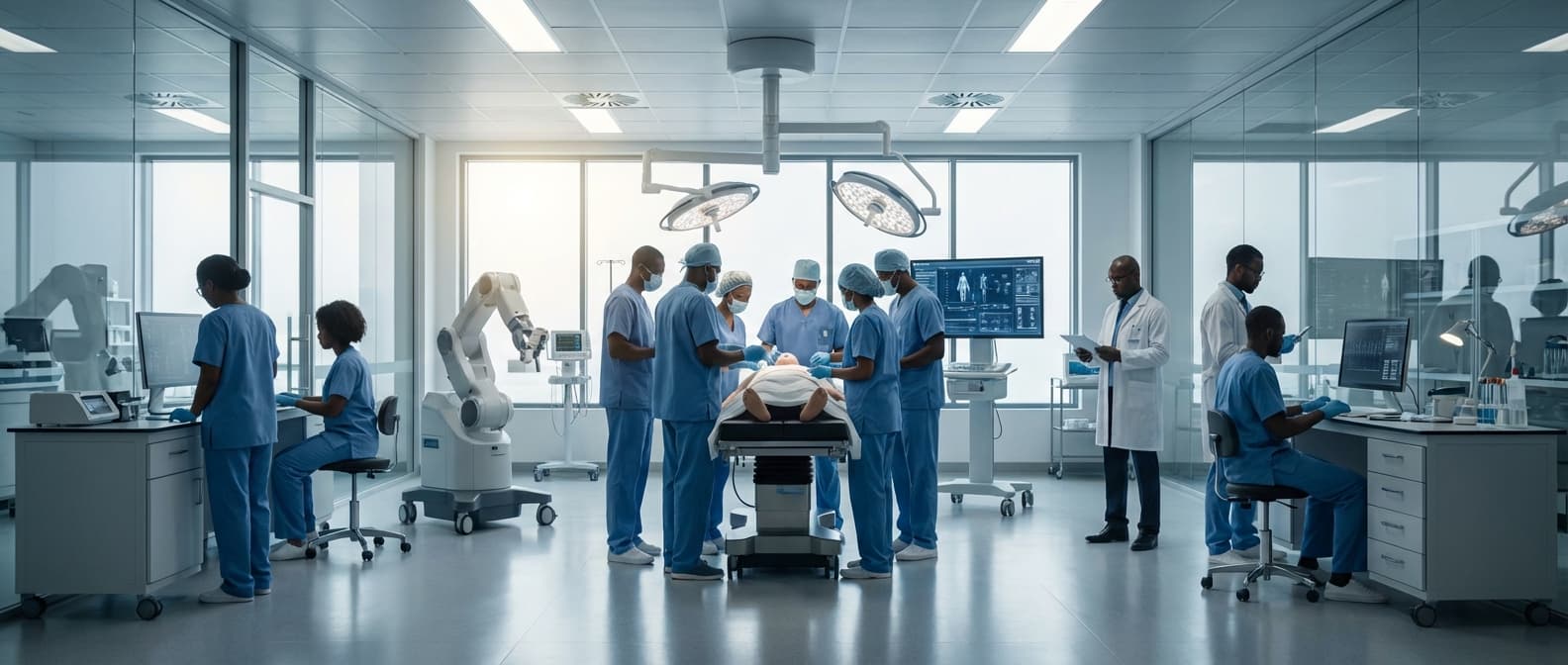
Calibration & Electrical Safety Testing in South Sudan
Engineering Excellence & Technical Support
Equipment calibration and IEC safety testing High-standard technical execution following OEM protocols and local regulatory frameworks.
Ensuring Medical Equipment Accuracy
We conduct rigorous calibration of vital medical devices, including vital signs monitors and ECG machines, to guarantee precise readings essential for patient diagnosis and treatment in South Sudan's healthcare facilities.
Electrical Safety Compliance
Our comprehensive electrical safety testing verifies that all medical equipment meets international standards, mitigating risks of electric shock and ensuring a safe environment for both patients and healthcare professionals.
On-Site Maintenance & Repair
Providing prompt and reliable on-site calibration and repair services for essential electrical medical equipment, we minimize downtime and maintain the operational readiness of critical healthcare infrastructure across South Sudan.
What Is Calibration & Electrical Safety Testing In South Sudan?
Calibration and Electrical Safety Testing are critical metrological and regulatory compliance services essential for ensuring the accuracy, reliability, and safety of electrical equipment and medical devices utilized within South Sudan. Calibration involves the systematic comparison of a measuring instrument or device against a known, traceable standard to determine and document any deviation (error) from the standard. This process quantifies the instrument's accuracy and establishes its suitability for its intended application. Electrical Safety Testing, conversely, focuses on verifying that electrical equipment, particularly medical devices, meets established safety standards designed to protect patients, operators, and the environment from electrical hazards such as electric shock, fire, and arcing. These services are paramount in a developing healthcare and industrial landscape like South Sudan, where maintaining the integrity of diagnostic and therapeutic equipment, as well as ensuring safe operational practices in various sectors, is of paramount importance.
| Service Type | Involves | Who Needs It | Typical Use Cases |
|---|---|---|---|
| Calibration | Comparison of measuring instruments (e.g., thermometers, pressure gauges, multimeters) against traceable standards to determine and correct inaccuracies. Includes adjustment, verification of performance, and documentation. | Hospitals and Clinics (for diagnostic and monitoring equipment), Laboratories (research, environmental, quality control), Manufacturing Facilities (for process control instruments), Water and Power Utilities, Research Institutions. | Ensuring accuracy of vital signs monitors, sterilizer temperature probes, laboratory analytical instruments, flow meters in utilities, and production line measurement tools. |
| Electrical Safety Testing | Testing for electrical hazards in equipment, including earth continuity, insulation resistance, leakage currents (earth, touch, patient), and dielectric strength. Performed on medical devices and general electrical equipment. | Hospitals and Healthcare Facilities (especially for medical devices connected to patients), Clinics, Dental Practices, Laboratories handling electrical equipment, Offices and Commercial Buildings (for general electrical equipment), Educational Institutions. | Verifying the safety of patient monitors, infusion pumps, ventilators, electro-surgical units, X-ray machines, and ensuring the safety of electrical installations and appliances in patient care areas. |
Key Aspects of Calibration & Electrical Safety Testing in South Sudan
- Calibration Process: Involves comparison against certified reference standards, adjustment to bring the device within specified tolerances, and issuance of a calibration certificate detailing the results and traceability.
- Electrical Safety Testing Standards: Adherence to relevant international standards (e.g., IEC 60601 series for medical electrical equipment) adapted or referenced for local applicability.
- Traceability: Ensuring that calibration results are traceable to national or international metrology institutes, providing confidence in measurement accuracy.
- Risk Mitigation: Identifying and rectifying potential electrical hazards that could lead to patient harm, equipment damage, or operational downtime.
- Regulatory Compliance: Meeting statutory requirements and industry best practices for equipment performance and safety.
- Preventive Maintenance: Integrating these tests as part of a broader maintenance program to extend equipment lifespan and ensure consistent performance.
Who Needs Calibration & Electrical Safety Testing In South Sudan?
Calibration and electrical safety testing are crucial for ensuring the accuracy, reliability, and safety of medical equipment and electrical systems across various sectors in South Sudan. This practice safeguards patients, healthcare professionals, and the general public from potential harm due to faulty equipment or unreliable readings. It also ensures that diagnostic and therapeutic procedures are performed with the highest degree of precision.
| Customer Type | Specific Departments/Areas | Purpose of Testing |
|---|---|---|
| Healthcare Facilities (Hospitals, Clinics, Diagnostic Centers) | Operating Rooms, Intensive Care Units (ICUs), Emergency Departments, Radiology (X-ray, CT, MRI), Laboratories (pathology, biochemistry), Anesthesia Departments, General Wards, Biomedical Engineering Departments | Ensure accurate diagnostic readings, prevent equipment malfunction during critical procedures, protect patients and staff from electrical hazards, comply with international healthcare standards. |
| Industrial and Manufacturing Sectors (e.g., Food Processing, Water Treatment, Energy) | Production Lines, Quality Control Laboratories, Electrical Substations, Control Rooms, Maintenance Workshops | Maintain product quality and consistency, ensure operational efficiency, prevent electrical accidents, comply with industrial safety regulations. |
| Government Agencies (e.g., Ministry of Health, Ministry of Environment, Ministry of Infrastructure) | Public Hospitals and Clinics (as overseers), Environmental Monitoring Stations, Public Works Departments, Disaster Management Agencies | Uphold public health and safety standards, ensure compliance in publicly funded facilities, monitor environmental safety parameters. |
| Educational Institutions (Universities, Technical Colleges) | Medical Schools, Science Laboratories, Engineering Departments, Workshops | Provide hands-on training with accurate equipment, ensure student and staff safety in laboratory settings, maintain research integrity. |
| Non-Governmental Organizations (NGOs) (especially those operating health facilities or providing essential services) | Mobile Clinics, Rural Health Centers, Water Supply Projects, Power Generation Units | Ensure the reliability and safety of equipment in resource-constrained settings, deliver essential services effectively, uphold donor and international organization standards. |
Target Customers and Departments for Calibration & Electrical Safety Testing in South Sudan:
- Healthcare Facilities
- Industrial and Manufacturing Sectors
- Government Agencies
- Educational Institutions
- Non-Governmental Organizations (NGOs)
Calibration & Electrical Safety Testing Process In South Sudan
This document outlines the comprehensive workflow for Calibration and Electrical Safety Testing services in South Sudan, from initial client inquiry to the successful execution and reporting of the tests. The process is designed to be transparent, efficient, and compliant with relevant safety standards, ensuring the reliability and safety of medical and laboratory equipment.
| Stage | Description | Key Activities | Responsible Party | Deliverables/Outcomes |
|---|---|---|---|---|
| Initial contact from a client requesting calibration and/or electrical safety testing services. | Client contacts service provider (phone, email, web form). Provider gathers preliminary information on equipment type, quantity, location, and specific needs. Provider offers initial consultation and guidance. | Client & Service Provider | Understanding of client requirements, initial assessment of scope. |
| Based on the inquiry, a detailed quotation is prepared and sent to the client. | Service provider assesses scope, identifies required test equipment, personnel, and estimated time. Provider generates a formal quotation detailing services, pricing, terms, and conditions. Client reviews quotation and provides feedback or acceptance. Upon acceptance, a formal agreement or purchase order is established. | Service Provider & Client | Agreed-upon scope of work, pricing, terms, and conditions. Signed agreement/PO. |
| Arrangement of the testing schedule and necessary logistical arrangements. | Service provider coordinates with the client to schedule the testing date(s) and time(s). This includes confirming site access, availability of equipment, and any necessary power or environmental conditions. Travel arrangements (if applicable) are made for the testing team. Local permits or site-specific access approvals are secured. | Service Provider & Client | Confirmed testing schedule. Logistics plan including travel, accommodation (if needed), and site access. |
| Ensuring all necessary resources and equipment are ready before on-site execution. | Service provider calibrates and verifies its own testing equipment. The testing team reviews equipment manuals and relevant standards. Necessary consumables and documentation (test forms, reference standards) are prepared. A pre-test checklist may be completed. | Service Provider | Calibrated and verified test equipment. Prepared documentation and consumables. Knowledge of test procedures. |
| The actual calibration and electrical safety testing performed at the client's facility. | Testing team arrives on-site. Equipment is identified and logged. Calibration procedures are followed using calibrated test equipment to verify accuracy against established standards. Electrical safety tests (e.g., earth resistance, insulation resistance, leakage current) are performed according to relevant standards (e.g., IEC 60601 series). Results are recorded meticulously on designated test forms. | Service Provider | Physical execution of calibration and electrical safety tests. Detailed recording of all test results. |
| Processing of collected data and generation of comprehensive test reports. | Collected data is reviewed and analyzed. Deviations from acceptable limits are identified. A formal test report is compiled, including equipment details, test procedures used, raw data, pass/fail status, and any recommendations. Calibration certificates are generated for equipment that meets specifications. | Service Provider | Analyzed test data. Comprehensive test reports and calibration certificates. |
| Issuance of certificates and post-testing engagement with the client. | Test reports and calibration certificates are submitted to the client. Any identified issues or recommendations are discussed. The client reviews the reports and provides feedback. Follow-up may involve re-testing, recommendations for repairs, or scheduling future services. Payment is processed according to the agreement. | Service Provider & Client | Client receives test documentation. Resolution of any outstanding queries. Completion of contractual obligations. Potential for future service engagements. |
Calibration & Electrical Safety Testing Workflow
- Inquiry & Consultation
- Quotation & Agreement
- Scheduling & Logistics
- Pre-Testing Preparations
- On-Site Testing Execution
- Data Analysis & Reporting
- Certification & Follow-up
Calibration & Electrical Safety Testing Cost In South Sudan
Calibration and electrical safety testing are crucial for ensuring the accuracy and safety of medical devices and equipment in South Sudan. However, obtaining these services can present challenges due to limited local infrastructure, the scarcity of certified technicians, and the reliance on imported parts and specialized equipment. The costs associated with these services are influenced by several factors, leading to a range of potential expenses.
Key Pricing Factors:
- Type and Complexity of Equipment: Simpler devices require less time and expertise for calibration and testing compared to complex medical machinery (e.g., MRI machines, ventilators). The number of parameters to be calibrated and the sophistication of the safety checks directly impact the cost.
- Service Provider: The cost can vary significantly between different service providers. Organizations with established international affiliations or specialized training may charge more but can offer higher quality and more comprehensive services. Local independent technicians or smaller workshops might offer lower rates but may have limitations in scope or certifications.
- Location and Accessibility: Performing these services in remote areas or conflict-affected zones can incur additional costs due to travel expenses, security considerations, and potential logistical challenges in transporting specialized equipment and personnel.
- Urgency of Service: Emergency or expedited testing and calibration services will typically command a premium over scheduled or routine maintenance.
- Parts and Consumables: If a device requires replacement parts or specific calibration consumables, these costs will be added to the service fee. The availability and import cost of these items in South Sudan can be a significant factor.
- Certification and Documentation: The level of certification required for the testing and calibration, and the formality of the documentation provided, can influence the price. Some clients may require rigorous, internationally recognized certification, which often comes at a higher cost.
- Warranty and Maintenance Agreements: For organizations with ongoing maintenance contracts, the cost of calibration and safety testing might be bundled into a larger agreement, potentially offering a lower per-service cost than standalone services.
Estimated Cost Ranges in South Sudanese Pound (SSP):
It's important to note that these are estimates and can fluctuate significantly based on the factors mentioned above. The volatile economic situation in South Sudan and the fluctuating exchange rates of the SSP also contribute to price variability. It is always recommended to obtain specific quotes from multiple service providers.
For the purpose of these estimates, we'll consider a standard set of common medical equipment like vital signs monitors, ECG machines, and basic diagnostic tools. For highly specialized or large medical imaging equipment, costs can be substantially higher, often requiring international specialists.
| Service Type | Estimated Cost Range (SSP) |
|---|---|
| Calibration & Electrical Safety Test (per basic device) | 50,000 - 150,000 |
| Calibration & Electrical Safety Test (per diagnostic device) | 80,000 - 200,000 |
| Calibration & Electrical Safety Test (per therapeutic device) | 100,000 - 250,000 |
| Calibration & Electrical Safety Test (per complex device, depending on parameters) | 150,000 - 500,000+ |
| On-site Service Call (within major towns, includes basic assessment) | 75,000 - 200,000 |
| Expedited Service Fee (additional percentage) | 25% - 50% |
| Replacement Parts (variable, depending on device) | Highly Variable (SSP 20,000 - 1,000,000+) |
| Travel & Logistics (for remote areas, per technician, per day) | 100,000 - 300,000+ |
Typical Calibration & Electrical Safety Testing Costs (Estimates)
- Basic Medical Devices (e.g., Vital Signs Monitors, Thermometers, BP Cuffs): SSP 50,000 - 150,000 per device
- Diagnostic Equipment (e.g., ECG Machines, Glucometers): SSP 80,000 - 200,000 per device
- Therapeutic Devices (e.g., Nebulizers, Infusion Pumps): SSP 100,000 - 250,000 per device
- Complex Medical Equipment (e.g., Ventilators, Defibrillators - per parameter calibration): SSP 150,000 - 500,000+
- On-site Service Call Fee (per visit, within major towns): SSP 75,000 - 200,000
- Travel/Logistics for Remote Locations (per day, per technician): SSP 100,000 - 300,000+
Affordable Calibration & Electrical Safety Testing Options
Ensuring your electrical equipment is accurately calibrated and meets safety standards is crucial for operational efficiency and worker protection. This guide explores affordable calibration and electrical safety testing options, highlighting the value of bundled services and effective cost-saving strategies. Investing in these services doesn't have to break the bank; with smart planning and informed choices, you can maintain compliance and reliability at a reduced cost.
| Cost-Saving Strategy | Description | Potential Savings Impact |
|---|---|---|
| Value Bundles | Combine calibration and electrical safety testing services into a single package. Often offered at a discounted rate compared to individual services. | Significant reduction on per-service costs, streamlined scheduling, and simplified billing. |
| Preventative Maintenance Programs | Regular, scheduled testing and calibration to catch issues early. Can be bundled with other maintenance tasks. | Avoids costly emergency repairs, reduces unexpected downtime, and extends equipment life. |
| Volume Discounts | Negotiate lower prices for testing a larger quantity of equipment within a specific timeframe. | Reduced per-unit cost for calibration and testing when more items are included. |
| Off-Peak Scheduling | Schedule services during non-peak operational hours or seasons to potentially secure lower rates. | May offer reduced hourly rates from service providers looking to fill their schedule. |
| On-Site vs. Lab Calibration | While lab calibration often offers higher precision, on-site services can save on shipping and downtime costs for larger equipment. | Eliminates transportation costs and reduces the time equipment is out of commission. |
| Long-Term Contracts | Commit to a service provider for an extended period (e.g., annual or multi-year) for potentially preferential pricing. | Guaranteed rates and often a dedicated account manager, leading to consistent cost management. |
| In-House Training (Limited Scope) | For basic electrical safety checks, training internal staff can reduce the need for external services for routine inspections. | Reduces the frequency of external safety testing for simpler assessments, freeing up budget for specialized calibration. |
Key Benefits of Regular Calibration & Safety Testing
- Enhanced Accuracy & Reliability: Ensures measurements are precise, leading to better process control and product quality.
- Compliance with Regulations: Meets industry standards and legal requirements, avoiding fines and downtime.
- Improved Safety: Identifies potential hazards in electrical equipment, preventing accidents and injuries.
- Reduced Downtime: Proactive testing identifies issues before they cause equipment failure.
- Extended Equipment Lifespan: Proper maintenance and calibration can prolong the operational life of your assets.
- Optimized Performance: Calibrated equipment functions at its peak efficiency, saving energy and resources.
Verified Providers In South Sudan
In South Sudan, accessing reliable and credentialed healthcare providers is paramount. Franance Health stands out as a leading organization committed to delivering high-quality medical services. Their dedication to rigorous credentialing ensures that all their healthcare professionals meet the highest standards of competence, ethics, and patient care. This meticulous vetting process not only builds trust but also guarantees that patients receive safe and effective treatment from qualified individuals. Franance Health's commitment to verification means patients can feel confident in the expertise and integrity of the medical professionals they encounter, making them the best choice for healthcare needs in South Sudan.
| Credential Type | Franance Health Verification Standard | Benefit to Patients |
|---|---|---|
| Medical Licenses | Verified current and valid licenses from recognized medical boards. | Ensures providers are legally authorized and qualified to practice. |
| Educational Qualifications | Confirmation of degrees and certifications from accredited institutions. | Guarantees a strong foundation of medical knowledge and training. |
| Professional Experience | Thorough background checks and reference verifications. | Confirms practical experience and competence in relevant specialties. |
| Continuing Professional Development (CPD) | Mandatory evidence of ongoing training and skill enhancement. | Ensures providers stay updated with the latest medical advancements and practices. |
| Ethical Conduct Reviews | Assessment of professional conduct and adherence to ethical codes. | Promotes patient trust and guarantees respectful and responsible care. |
Why Franance Health is the Best Choice for Verified Providers
- Rigorous Credentialing Process: Franance Health employs a comprehensive system to verify the qualifications, licenses, and experience of all their healthcare professionals.
- Commitment to Patient Safety: Their verification protocols are designed to ensure that all providers adhere to the highest standards of patient care and safety.
- Ethical Practice Standards: Franance Health upholds strict ethical guidelines, ensuring that all their providers practice with integrity and respect for patients.
- Access to Competent Professionals: By choosing Franance Health, patients gain access to a network of highly skilled and experienced medical practitioners.
- Building Trust and Confidence: The transparency and thoroughness of their credentialing process foster trust and confidence among patients seeking healthcare services.
Scope Of Work For Calibration & Electrical Safety Testing
This Scope of Work (SOW) outlines the requirements for the calibration and electrical safety testing of specified equipment. The objective is to ensure that all equipment meets its stated performance specifications and adheres to relevant electrical safety standards, guaranteeing safe operation and accurate measurements. This SOW details the technical deliverables expected from the service provider, along with the standard specifications that will be used as benchmarks for the testing and calibration processes.
| Standard/Specification | Description | Application/Purpose |
|---|---|---|
| ISO/IEC 17025 | General requirements for the competence of testing and calibration laboratories. | Ensures the technical competence of the laboratory performing calibration and testing services. |
| ANSI/IEC 60601 Series | Medical electrical equipment - Part 1: General requirements for basic safety and essential performance. | Establishes fundamental safety requirements for medical electrical equipment, including electrical insulation, protection against electric shock, and mechanical hazards. |
| NFPA 70E | Standard for Electrical Safety in the Workplace. | Addresses electrical safety requirements for industrial and workplace environments, including lockout/tagout, arc flash hazard analysis, and personal protective equipment. |
| Manufacturer's Specifications | Technical documentation provided by the original equipment manufacturer (OEM). | Defines the performance parameters, accuracy, and operating conditions for specific instruments. |
| Traceable Standards | Calibration standards that are directly or indirectly related to national or international standards (e.g., NIST, NPL). | Ensures the accuracy and reliability of measurement results by linking them to recognized metrological authorities. |
| ANSI/AAMI ES60601-1 | American National Standard, Medical electrical equipment - Part 1: General requirements for basic safety and essential performance. (A national adoption of IEC 60601-1) | Specific implementation of IEC 60601-1 for medical electrical equipment used in the United States. |
| IEC 61010 Series | Safety requirements for electrical equipment for measurement, control, and laboratory use. | Covers safety aspects of electrical equipment used in laboratories and for measurement and control purposes. |
Technical Deliverables
- Calibration Certificates: For each calibrated instrument, a traceable calibration certificate will be provided, detailing the "as found" and "as left" conditions, calibration dates, due dates, and the standards used. Each certificate will include a unique identification number.
- Calibration Stickers/Labels: Each calibrated instrument will be affixed with a clearly visible sticker or label indicating the calibration date, due date, and the calibrating entity.
- Electrical Safety Test Reports: For each tested piece of equipment, a comprehensive report will be issued, documenting the test performed, the pass/fail status, the readings obtained, and the applicable standard. Each report will include a unique identification number.
- Equipment Inventory: A detailed list of all equipment submitted for calibration and testing, including make, model, serial number, and the services performed.
- Summary Report: An overall summary of the calibration and testing activities, highlighting any significant findings, recommendations for maintenance, or equipment requiring replacement.
- Electronic Data (Optional): Digital copies of all certificates and reports, provided in a specified format (e.g., PDF) upon request.
- Certificate of Conformance: A declaration by the service provider confirming that the work performed meets the requirements of this SOW and the referenced standards.
Service Level Agreement For Calibration & Electrical Safety Testing
This Service Level Agreement (SLA) outlines the performance standards and commitments for Calibration and Electrical Safety Testing services. It defines response times for service requests and uptime guarantees for ongoing testing systems.
| Service Category | Response Time Target | Definition | Uptime Guarantee |
|---|---|---|---|
| Urgent Calibration & Electrical Safety Testing Request | 4 Business Hours | A request for immediate service due to critical equipment failure or regulatory non-compliance. Service initiation (acknowledgment and scheduling) must occur within this timeframe. | N/A |
| Routine Calibration & Electrical Safety Testing Request | 2 Business Days | A standard request for scheduled maintenance, calibration, or periodic electrical safety testing. Service initiation (acknowledgment and scheduling) must occur within this timeframe. | N/A |
| Scheduled Electrical Safety Testing System (if applicable) | N/A | Refers to automated or continuously monitored electrical safety testing systems. This SLA covers the reliability of the system itself, not the individual tests performed. | 99.5% Monthly Uptime |
Key Performance Indicators (KPIs)
- Response Time for Urgent Calibration & Testing Requests
- Response Time for Routine Calibration & Testing Requests
- Uptime Guarantee for Scheduled Electrical Safety Testing Systems
Frequently Asked Questions

Ready when you are
Let's scope your Calibration & Electrical Safety Testing in South Sudan project in South Sudan.

Scaling healthcare logistics and technical systems across the entire continent.