
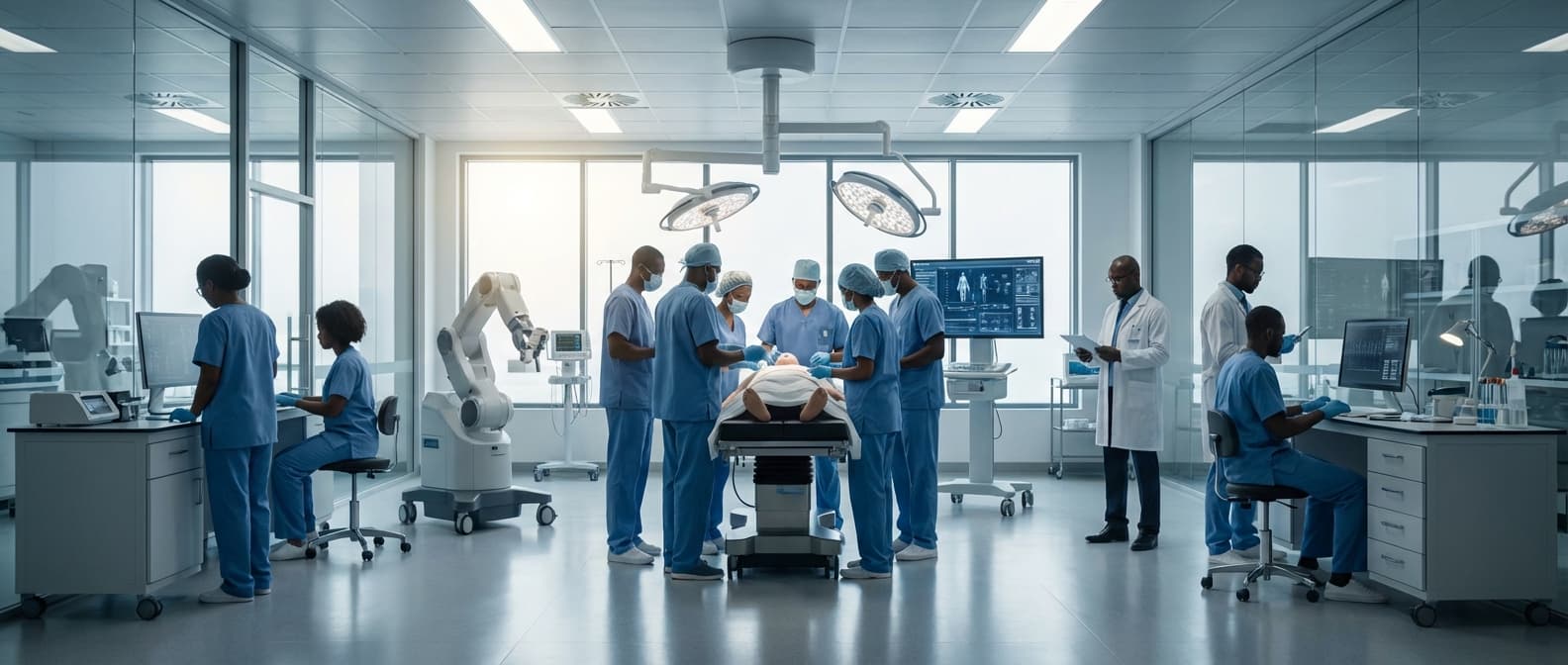
Biomedical Staffing Augmentation in South Sudan
Engineering Excellence & Technical Support
Onsite biomedical engineers and PACS administrators High-standard technical execution following OEM protocols and local regulatory frameworks.
Rapid Deployment of Specialized Lab Technicians
We provide immediate access to highly skilled laboratory technicians with expertise in areas like malaria diagnostics, blood banking, and molecular testing, crucial for bolstering South Sudan's healthcare infrastructure during critical periods and outbreaks.
Augmented Clinical Teams for Underserved Regions
Our network of vetted doctors, nurses, and community health workers can be rapidly deployed to remote and underserved areas, addressing critical staffing shortages and ensuring essential medical services reach vulnerable populations.
Enhanced Pharmaceutical Supply Chain Management Support
We offer experienced pharmaceutical technicians and supply chain specialists to optimize inventory management, distribution, and quality control of essential medicines, vital for the efficacy of health programs in challenging logistical environments.
What Is Biomedical Staffing Augmentation In South Sudan?
Biomedical Staffing Augmentation in South Sudan refers to the strategic provision of specialized, qualified biomedical personnel on a temporary or project-based basis to healthcare facilities and organizations within the nation. This service addresses critical gaps in the availability of trained professionals essential for the effective operation, maintenance, and calibration of medical equipment, as well as the delivery of comprehensive healthcare services. It involves the sourcing, vetting, deployment, and management of a pool of biomedical technicians, engineers, and related specialists who possess the requisite technical acumen and understanding of the South Sudanese healthcare landscape.
| Stakeholder/Entity | Need for Biomedical Staffing Augmentation | Typical Use Cases |
|---|---|---|
| Government Ministries of Health | Addressing widespread shortages of skilled biomedical personnel, especially in remote or underserved regions; improving national health infrastructure oversight; enhancing the reliability of essential medical equipment across public facilities. | National equipment audits and inventory management; establishing standardized maintenance protocols; supporting the rollout of new health initiatives; training national biomedical workforce. |
| Public and Private Hospitals | Covering for absent or departed biomedical staff; managing fluctuations in workload or specialized equipment requirements; ensuring continuous operation of critical medical devices; upgrading technical capabilities. | Emergency repair of high-priority medical equipment (e.g., ventilators, anesthesia machines); providing specialized expertise for new diagnostic imaging systems; implementing preventive maintenance programs; supporting surgical departments with specialized equipment. |
| Non-Governmental Organizations (NGOs) and International Aid Agencies | Facilitating the deployment and maintenance of medical equipment in emergency response settings, field hospitals, and clinics in challenging operational environments; ensuring effective utilization of donated medical technology. | Setting up and maintaining mobile clinics and surgical units; ensuring functionality of equipment in conflict zones or disaster-affected areas; providing technical support for humanitarian medical campaigns; rapid deployment for critical care needs. |
| Research Institutions and Academia | Supporting the operation and maintenance of specialized laboratory equipment for medical research; providing technical expertise for the development and implementation of new medical technologies. | Ensuring the operational readiness of advanced diagnostic and analytical equipment; assisting with the calibration and validation of research instruments; providing technical consultation for research projects involving medical devices. |
| Medical Device Manufacturers and Suppliers | Providing post-sales technical support, installation, commissioning, and training services in regions where they may lack a permanent local presence. | On-site installation and training for newly procured medical equipment; warranty and post-warranty service delivery; conducting user and maintenance training for facility staff. |
Key Aspects of Biomedical Staffing Augmentation:
- Talent Acquisition and Vetting: Rigorous screening processes to identify candidates with proven expertise in specific medical technologies (e.g., imaging, laboratory, life support), adherence to international safety standards, and cultural sensitivity.
- Deployment and On-site Support: Provision of personnel to designated healthcare facilities for defined periods, offering hands-on technical support, troubleshooting, and operational assistance.
- Training and Capacity Building: Opportunities for local staff to receive knowledge transfer and skill enhancement from augmented personnel, fostering long-term sustainability and reducing reliance on external support.
- Equipment Lifecycle Management: Support for installation, commissioning, preventive maintenance, corrective repairs, and decommissioning of biomedical devices.
- Regulatory Compliance and Quality Assurance: Ensuring that all technical operations align with national health regulations and international best practices for medical device management.
- Project-Specific Expertise: Mobilization of teams for specialized projects, such as equipping new health centers, conducting comprehensive equipment audits, or implementing new healthcare technologies.
Who Needs Biomedical Staffing Augmentation In South Sudan?
South Sudan, grappling with a fragile healthcare system and a critical shortage of skilled medical professionals, faces immense challenges in providing adequate healthcare services. Biomedical staffing augmentation is not a luxury but a necessity for a wide range of organizations and departments striving to deliver essential medical care. This augmentation fills critical gaps, enhances service delivery, and improves patient outcomes in a resource-constrained environment. The demand for specialized skills, from diagnostic imaging technicians to laboratory scientists and biomedical engineers, is particularly acute, hindering the effective operation and maintenance of vital medical equipment. Addressing this shortage through targeted staffing solutions is paramount for strengthening the healthcare infrastructure of South Sudan.
| Department/Unit | Specific Staffing Needs | Reason for Augmentation |
|---|---|---|
| Diagnostic Imaging (X-ray, Ultrasound, CT, MRI) | Radiology Technicians, Radiologists, MRI Technicians | Lack of skilled personnel to operate and interpret imaging equipment, leading to delayed diagnoses. |
| Laboratory Services (Hematology, Biochemistry, Microbiology, Blood Transfusion) | Medical Laboratory Technicians/Scientists, Phlebotomists, Blood Bank Technicians | Shortage of trained staff for essential diagnostic testing, impacting disease identification and treatment effectiveness. |
| Operating Theatres and Surgical Services | Anesthesiologists, Surgical Nurses, Scrub Nurses, Biomedical Technicians (for equipment maintenance) | Inadequate specialized surgical and anesthesia support, limiting the scope and availability of surgical procedures. |
| Intensive Care Units (ICUs) and Emergency Departments | Critical Care Nurses, Respiratory Therapists, Emergency Physicians, Biomedical Technicians | Need for highly specialized personnel to manage critically ill patients and operate life-support equipment. |
| Medical Equipment Maintenance and Repair | Biomedical Engineers, Biomedical Technicians | Critical shortage of skilled technicians to maintain, calibrate, and repair essential medical equipment, leading to downtime and reduced functionality. |
| Pharmacy and Drug Management | Pharmacists, Pharmacy Technicians | Ensuring proper dispensing, storage, and management of essential medicines. |
| Maternal and Child Health Services | Midwives, Pediatric Nurses, Obstetricians | Addressing high maternal and child mortality rates through specialized care. |
| Public Health and Disease Surveillance | Epidemiologists, Public Health Officers, Laboratory Technicians | Strengthening disease monitoring, outbreak investigation, and preventative health programs. |
| Rehabilitation Services (Physiotherapy, Occupational Therapy) | Physiotherapists, Occupational Therapists | Providing essential rehabilitation services for patients with injuries, disabilities, and chronic conditions. |
| Blood Banks and Transfusion Services | Blood Bank Technicians, Medical Officers | Ensuring a safe and sufficient blood supply for critical medical interventions. |
Target Customers and Departments for Biomedical Staffing Augmentation in South Sudan
- Ministry of Health (MoH)
- United Nations Agencies (e.g., WHO, UNICEF, UNFPA)
- Non-Governmental Organizations (NGOs) involved in healthcare delivery
- International Non-Governmental Organizations (INGOs)
- Hospitals and Clinics (Public and Private)
- Dispensaries and Health Posts
- Research Institutions and Universities (Medical Faculties)
- Medical Equipment Suppliers and Service Providers
- Humanitarian Aid Organizations
Biomedical Staffing Augmentation Process In South Sudan
The Biomedical Staffing Augmentation Process in South Sudan is a structured approach to identify, recruit, deploy, and manage qualified biomedical personnel to address critical healthcare needs. This process is vital for ensuring the operational continuity and effectiveness of healthcare facilities, especially in challenging environments. It involves several distinct stages, from the initial identification of a need to the successful integration and ongoing support of augmented staff.
| Stage | Description | Key Activities | Responsible Parties | Deliverables |
|---|---|---|---|---|
| The initial stage where a healthcare facility or organization identifies a deficit in biomedical staffing and formally requests augmentation. | Receiving and reviewing the request, conducting a detailed needs assessment (e.g., specific skill sets, number of staff required, duration, location), defining job descriptions and qualification requirements, securing budget approval. | Requesting Organization (Healthcare Facility/Ministry of Health), Implementing Partner/Recruitment Agency | Formal Request Document, Detailed Needs Assessment Report, Approved Budget, Draft Job Descriptions |
| Actively searching for and attracting qualified biomedical professionals to fill the identified positions. | Developing recruitment strategies, advertising vacancies through various channels (online job boards, professional networks, local outreach), building a candidate pipeline, initial candidate screening. | Implementing Partner/Recruitment Agency, HR Department of Requesting Organization | Candidate Longlist, Advertised Positions, Initial Screening Reports |
| Evaluating candidates to identify the most suitable individuals based on qualifications, experience, and suitability for the specific context. | Reviewing resumes and applications, conducting interviews (technical and behavioral), administering skills tests or practical assessments, background checks (professional, educational, criminal), reference checks, cultural fit assessment. | Implementing Partner/Recruitment Agency, Technical Experts from Requesting Organization | Shortlisted Candidates, Interview Notes, Assessment Results, Vetted Candidate List, Candidate Profiles |
| The process of preparing and sending the selected staff to their assigned locations and integrating them into the organization. | Extending job offers, facilitating visa and work permit processes (if applicable), arranging travel and accommodation, conducting pre-deployment briefings (including safety and security), providing induction and orientation at the facility, familiarization with local context and organizational procedures. | Implementing Partner/Recruitment Agency, Requesting Organization (HR & Operations), Local Authorities | Successful Candidates with Offers, Deployed Staff, Onboarding Documentation, Orientation Materials |
| Ensuring that augmented staff perform effectively and receive the necessary support throughout their deployment. | Setting performance objectives, regular performance reviews and feedback, providing ongoing technical and logistical support, addressing challenges and conflicts, facilitating professional development opportunities, ensuring timely remuneration and benefits. | Requesting Organization (Supervisors & HR), Implementing Partner/Recruitment Agency | Performance Review Reports, Support Logs, Resolved Issues, Staff Feedback, Training Records |
| The structured process of concluding the deployment of augmented staff and ensuring a smooth handover. | Conducting exit interviews, facilitating the return of staff, settling final payments and entitlements, knowledge transfer to permanent staff, evaluating the effectiveness of the augmentation process, archiving documentation. | Requesting Organization (HR & Operations), Implementing Partner/Recruitment Agency | Exit Interview Summaries, Final Payroll Records, Project Evaluation Report, Archived Documentation |
Workflow of Biomedical Staffing Augmentation Process
- Inquiry & Needs Assessment
- Sourcing & Recruitment
- Selection & Vetting
- Deployment & Onboarding
- Performance Management & Support
- Offboarding & Transition
Biomedical Staffing Augmentation Cost In South Sudan
The cost of biomedical staffing augmentation in South Sudan is influenced by a complex interplay of factors, often leading to a wide range of pricing in the local currency, the South Sudanese Pound (SSP). Demand for skilled biomedical professionals, particularly in remote or underserved areas, significantly drives up costs. The specialized nature of biomedical roles means that the availability of qualified personnel is often limited, creating a premium for their services. Furthermore, the inherent risks and logistical challenges associated with operating in South Sudan, including security concerns, infrastructure limitations, and the cost of expatriate support (if applicable), directly impact staffing augmentation expenses. The specific skill set and experience level required for a particular biomedical role also play a crucial part; highly specialized engineers, technicians with expertise in complex imaging equipment, or experienced laboratory scientists will command higher remuneration than general biomedical support staff. The duration of the staffing augmentation contract, whether short-term or long-term, also affects the overall cost, with longer commitments sometimes offering slight cost efficiencies per unit of time, but with increased total expenditure. Finally, the overhead costs associated with recruitment, vetting, travel, accommodation, and in-country support for augmented staff are factored into the final pricing.
| Biomedical Role Category | Estimated Monthly Range (SSP) | Notes |
|---|---|---|
| Biomedical Technician (General) | 500,000 - 900,000 | Includes routine maintenance, basic repairs, inventory management. Higher end for experienced individuals or those with broader equipment familiarity. |
| Biomedical Engineer (Specialized) | 900,000 - 1,800,000+ | For engineers with expertise in specific complex modalities (e.g., CT scanners, MRI, advanced laboratory equipment). Expatriate rates will be significantly higher. |
| Medical Equipment Specialist/Technologist | 700,000 - 1,300,000 | Focus on calibration, repair, and preventative maintenance of medical devices. Can overlap with technicians but with more in-depth technical knowledge. |
| Laboratory Technician (Specialized) | 600,000 - 1,100,000 | For roles requiring specific lab techniques or handling of advanced diagnostic equipment. Experience with specific testing platforms is a key driver. |
| Biomedical Support Manager/Coordinator | 800,000 - 1,500,000 | Overseeing biomedical operations, managing teams, developing maintenance schedules, and procurement. Requires strong leadership and technical understanding. |
| On-Demand/Emergency Repair Technician | Negotiable (often hourly/daily rate + travel) | For urgent repairs, pricing can be significantly higher due to immediate need and potential travel expenses. |
Key Pricing Factors for Biomedical Staffing Augmentation in South Sudan
- Demand and Scarcity of Skilled Professionals
- Specialization and Experience Level of the Role
- Security and Logistical Challenges
- Geographic Location (Urban vs. Remote)
- Duration of the Staffing Contract
- Expatriate vs. Local Hire Considerations
- Recruitment and Onboarding Costs
- Accommodation and Per Diem
- Travel and Transportation
- Training and Development Needs
Affordable Biomedical Staffing Augmentation Options
Biomedical departments often face the challenge of maintaining optimal staffing levels due to budget constraints, fluctuating workloads, or specialized skill shortages. Affordable biomedical staffing augmentation offers strategic solutions without compromising quality or operational efficiency. This involves leveraging flexible staffing models and cost-effective procurement strategies.
| Strategy | Description | Benefit |
|---|---|---|
| Flexible Staffing Models | Utilizing temporary, contract-to-hire, or part-time biomedical technicians and engineers instead of full-time employees. | Reduces fixed labor costs, benefits administration, and recruitment expenses. Allows scaling up or down based on immediate needs. |
| Outsourcing Non-Core Functions | Contracting out services like basic equipment maintenance, inventory management, or initial troubleshooting to specialized third-party providers. | Frees up internal staff for more complex tasks, leverages specialized expertise, and can offer economies of scale. |
| Shared Services or Consortium Models | Collaborating with other healthcare organizations to share specialized biomedical staff or resources, particularly for rare equipment or niche expertise. | Splits costs among multiple institutions, provides access to a broader pool of talent, and reduces individual organizational burden. |
| Vendor-Managed Services | Allowing original equipment manufacturers (OEMs) or third-party vendors to manage the maintenance and repair of their specific equipment. | Ensures specialized knowledge and access to genuine parts, often with performance guarantees, while reducing internal training needs. |
| Remote Support and Telemedicine Integration | Leveraging remote monitoring and diagnostic tools to assist with troubleshooting and minor repairs, reducing the need for on-site visits for every issue. | Faster response times, reduced travel costs for technicians, and efficient resolution of many common equipment problems. |
| Strategic Partnerships | Developing long-term relationships with staffing agencies or service providers that offer tiered pricing, volume discounts, or dedicated support. | Secures consistent access to qualified personnel at predictable costs and fosters a better understanding of organizational needs. |
Key Value Bundles in Biomedical Staffing Augmentation
- {"title":"On-Demand Technical Support","description":"Access to certified technicians for specific equipment repair, calibration, and maintenance on a per-incident or short-term basis. This avoids the overhead of full-time specialized staff."}
- {"title":"Project-Based Expertise","description":"Engagement of biomedical engineers for specific projects such as technology assessments, new equipment integration, or process improvement initiatives. This provides specialized knowledge for a defined period."}
- {"title":"Preventive Maintenance Packages","description":"Bundled services for scheduled preventive maintenance across a fleet of equipment, often at a discounted rate compared to individual service contracts."}
- {"title":"Training and Skill Development","description":"Augmentation includes opportunities for existing staff to be cross-trained or for temporary staff to bring in new skill sets, improving internal capabilities over time."}
- {"title":"Compliance and Safety Audits","description":"Specialized personnel to conduct regulatory compliance checks, safety assessments, and risk management evaluations, ensuring adherence to standards."}
Verified Providers In South Sudan
In South Sudan's rapidly developing healthcare landscape, identifying reliable and credentialed providers is paramount for individuals seeking quality medical services. Franance Health stands out as a leading organization committed to upholding the highest standards of healthcare delivery. Their rigorous credentialing process and dedication to patient well-being position them as a superior choice for healthcare in the region.
| Criterion | Franance Health Approach | Benefit to Patients |
|---|---|---|
| Provider Qualification | Mandatory verification of licenses, certifications, and educational backgrounds. | Ensures competence and expertise of healthcare professionals. |
| Professional Experience | Evaluation of practical experience and track record in relevant medical fields. | Access to practitioners with proven ability and successful patient outcomes. |
| Ethical Conduct | Adherence to a strict code of medical ethics and professional conduct. | Protection against malpractice and unethical practices, fostering trust. |
| Facility Standards | Assessment of healthcare facilities for safety, hygiene, and adequate equipment. | Access to well-equipped and safe environments for medical treatment. |
| Patient Feedback | Mechanisms for gathering and acting upon patient feedback. | Continuous improvement of services based on patient experiences. |
Why Franance Health is the Best Choice for Verified Providers in South Sudan:
- Rigorous Credentialing Process: Franance Health employs a stringent verification system for all healthcare professionals and facilities within their network. This ensures that only qualified and licensed practitioners, adhering to established medical protocols, are included.
- Commitment to Quality Care: Beyond basic credentials, Franance Health actively assesses providers based on their commitment to patient-centered care, ethical practices, and continuous professional development. This focus on quality guarantees a higher standard of medical attention.
- Comprehensive Network: Franance Health offers access to a diverse network of specialists and general practitioners, covering a wide range of medical needs. This accessibility simplifies the process of finding the right care when and where it's needed.
- Patient Safety and Trust: By prioritizing verified providers, Franance Health builds a foundation of trust and safety for patients. Knowing that your healthcare provider has undergone thorough vetting provides peace of mind.
- Advocacy for Healthcare Standards: Franance Health actively works to elevate healthcare standards across South Sudan. Their commitment to verification contributes to a more robust and reliable healthcare system for all.
Scope Of Work For Biomedical Staffing Augmentation
This Scope of Work (SOW) outlines the requirements for augmenting the existing biomedical staff with specialized expertise and increased capacity. The objective is to ensure the efficient and effective operation of the biomedical department, support ongoing projects, and maintain service level agreements (SLAs) for equipment maintenance and support. This SOW details the technical deliverables expected from the augmented staff and the standard specifications they must adhere to.
| Category | Technical Deliverables | Standard Specifications/Requirements |
|---|---|---|
| Equipment Installation & Commissioning | Successful installation, testing, and commissioning of new medical devices (specify types, e.g., MRI, CT scanners, ventilators). | Adherence to manufacturer's installation manuals, relevant safety standards (e.g., IEC 60601 series), and hospital protocols. Generation of detailed installation and commissioning reports. |
| Preventive Maintenance (PM) | Execution of scheduled preventive maintenance on assigned medical equipment. Identification and reporting of potential issues during PM. | Compliance with manufacturer's PM schedules and procedures. Documentation of all PM activities in the Computerized Maintenance Management System (CMMS). Adherence to established SLAs for PM completion rates. |
| Corrective Maintenance (CM) & Repair | Prompt and accurate diagnosis and repair of malfunctioning medical equipment. Minimization of equipment downtime. | Application of advanced troubleshooting techniques and diagnostic tools. Use of genuine or approved replacement parts. Adherence to defined response times for CM tickets (e.g., within 4 hours for critical equipment). Documentation of all CM activities, including root cause analysis where applicable. |
| Calibration & Performance Verification | Calibration of critical medical devices to ensure accuracy and safety. Performance verification testing. | Use of traceable and calibrated test equipment. Adherence to manufacturer specifications and relevant national/international standards (e.g., ISO 17025 for calibration labs, if applicable). Generation of calibration certificates. |
| Technical Support & Consultation | Provide expert technical advice and support to clinical staff regarding equipment operation and troubleshooting. Assist in evaluating new equipment technologies. | Clear and concise communication. Demonstrated understanding of clinical workflows and the impact of equipment performance on patient care. Participation in interdepartmental meetings as required. |
| Documentation & Reporting | Maintain accurate and up-to-date records of all maintenance, repair, installation, and calibration activities. Generate periodic reports on equipment status, maintenance trends, and resource utilization. | Utilize the hospital's designated CMMS (e.g., Fiix, Maximo) for all data entry. Reports should be clear, concise, and submitted in the agreed-upon format and frequency. Adherence to data privacy regulations (e.g., HIPAA). |
| Safety & Compliance | Ensure all medical equipment is maintained in safe operating condition. Comply with all regulatory requirements (e.g., Joint Commission, FDA) and hospital policies. | Regular review and understanding of relevant safety standards and regulations. Participation in internal and external audits. Prompt reporting of any safety hazards or non-compliance issues. |
| Inventory Management (As applicable) | Assist in managing spare parts inventory for assigned equipment categories. Recommend reorder points and minimum stock levels. | Accurate tracking of spare parts usage. Collaboration with procurement to ensure timely availability of critical components. Adherence to inventory control procedures. |
| Training & Knowledge Transfer | Provide on-the-job training to existing biomedical staff on new equipment or specialized techniques. | Development and delivery of clear training materials. Mentorship of junior staff members. Documented training sessions and attendance. |
Key Objectives of Biomedical Staffing Augmentation
- Enhance the department's capacity to manage a growing workload.
- Introduce specialized skills not currently available internally.
- Provide project-specific support for new equipment installations and integrations.
- Ensure continuous uptime and optimal performance of medical devices.
- Maintain compliance with regulatory standards and internal protocols.
- Facilitate knowledge transfer and training for existing staff.
Service Level Agreement For Biomedical Staffing Augmentation
This Service Level Agreement (SLA) outlines the agreed-upon response times and uptime guarantees for biomedical staffing augmentation services provided by [Your Company Name] to [Client Company Name]. This agreement is designed to ensure the consistent availability and rapid support for critical biomedical equipment maintenance and operational needs.
| Service Level | Description | Target (Hours) | Guarantee (%) |
|---|---|---|---|
| Emergency Support Response | Time to dispatch augmented biomedical staff to the client's site for critical equipment failures or immediate operational needs. | 2 | N/A |
| Urgent Support Response | Time to initiate remote troubleshooting or dispatch augmented staff for non-critical but time-sensitive equipment issues. | 4 | N/A |
| Routine Support Response | Time to schedule and commence planned maintenance or non-urgent repair work by augmented staff. | 24 | N/A |
| Critical Equipment Uptime | Guaranteed operational availability of critical biomedical equipment (as defined in Appendix A) supported by augmented staff. | N/A | 99.5% |
| Non-Critical Equipment Uptime | Guaranteed operational availability of non-critical biomedical equipment supported by augmented staff. | N/A | 98.0% |
Key Performance Indicators (KPIs) and Guarantees
- 1. Response Time: Defines the maximum allowed time from the initiation of a service request to the commencement of active service delivery by augmented biomedical staff.
- 2. Uptime Guarantee: Specifies the minimum percentage of time that critical biomedical equipment supported by augmented staff is expected to be operational and available for use.
- 3. Reporting: Details the frequency and format of reports provided to the client regarding performance against these KPIs.
- 4. Penalties and Remedies: Outlines the consequences for failing to meet the agreed-upon response times and uptime guarantees, and the remedies available to the client.
Frequently Asked Questions

Ready when you are
Let's scope your Biomedical Staffing Augmentation in South Sudan project in South Sudan.

Scaling healthcare logistics and technical systems across the entire continent.