
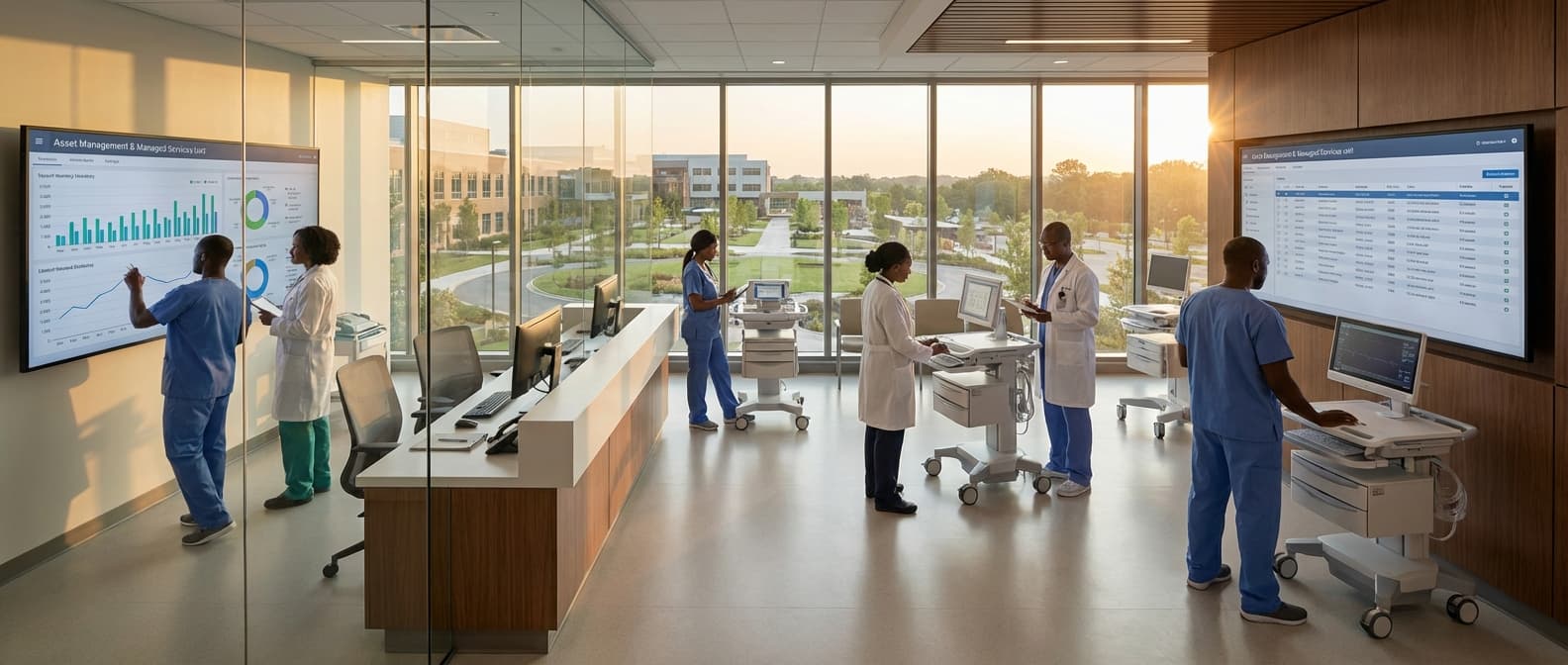
Maintenance KPI Reporting Service (Uptime/MTBF/MTTR) in South Sudan
Engineering Excellence & Technical Support
Maintenance KPI Reporting Service (Uptime/MTBF/MTTR) High-standard technical execution following OEM protocols and local regulatory frameworks.
Enhanced Operational Visibility for Critical Infrastructure
Empower South Sudan's vital sectors (energy, water, transportation) with real-time Uptime, Mean Time Between Failures (MTBF), and Mean Time To Repair (MTTR) reporting. Proactively identify and address potential downtime, ensuring consistent service delivery and supporting national development goals.
Optimized Maintenance Resource Allocation
Leverage data-driven insights from our KPI reporting to strategically allocate scarce maintenance resources. By understanding MTBF trends, we can predict component lifespan and schedule preventative maintenance, minimizing costly emergency repairs and maximizing the lifespan of essential equipment across South Sudan.
Accelerated Response & Reduced Outages
Significantly improve MTTR in South Sudan by providing maintenance teams with immediate access to performance data and issue history. This allows for faster diagnosis and resolution of equipment failures, leading to reduced service disruptions and improved reliability for citizens and businesses.
What Is Maintenance Kpi Reporting Service (Uptime/mtbf/mttr) In South Sudan?
Maintenance KPI Reporting Service (Uptime/MTBF/MTTR) in South Sudan refers to the systematic collection, analysis, and presentation of key performance indicators (KPIs) related to the reliability, availability, and maintainability of physical assets and operational systems within South Sudan. This service is crucial for organizations seeking to optimize their maintenance strategies, minimize operational disruptions, and ensure the continuous functioning of their critical infrastructure and equipment. The core KPIs typically reported include: Uptime, the percentage of time a system or asset is operational and available for use; Mean Time Between Failures (MTBF), the average time elapsed between one failure of a repairable system and the commencement of the next failure; and Mean Time To Repair (MTTR), the average time required to repair a failed system or asset back to its operational state. The service encompasses data acquisition from various sources (e.g., SCADA systems, CMMS databases, manual logs), data validation and cleansing, statistical analysis, and the generation of comprehensive reports and dashboards. These reports provide actionable insights into asset performance, identify recurring failure patterns, highlight areas for improvement in maintenance practices, and support informed decision-making regarding asset lifecycle management and resource allocation.
| Stakeholder/Industry | Needs Addressed | Typical Use Cases |
|---|---|---|
| Energy Sector (Oil & Gas, Power Generation) | Maximizing production uptime, minimizing unplanned outages, optimizing spare parts inventory, ensuring regulatory compliance. | Monitoring the reliability of drilling equipment, power turbines, transmission lines, and refinery operations. Predicting potential failures in critical infrastructure. |
| Telecommunications | Ensuring network availability, reducing service interruption time, improving customer satisfaction, optimizing network infrastructure maintenance. | Tracking the uptime of base stations, fiber optic networks, and data centers. Analyzing failure rates of network components to prioritize replacements or upgrades. |
| Infrastructure and Utilities (Water, Sanitation) | Maintaining continuous service delivery, managing aging assets, optimizing repair crew deployment, minimizing service disruptions to citizens. | Monitoring the performance of water pumps, treatment plants, distribution networks, and wastewater collection systems. Identifying bottlenecks in repair processes. |
| Manufacturing and Industrial Facilities | Maximizing production output, minimizing downtime due to equipment failure, controlling maintenance costs, improving equipment lifespan. | Tracking the availability of production lines, critical machinery, and automated systems. Analyzing MTBF of specific machine parts to schedule preventative maintenance. |
| Transportation and Logistics | Ensuring fleet availability, optimizing vehicle maintenance schedules, minimizing delays, improving operational efficiency. | Monitoring the uptime of trucks, buses, trains, and cargo handling equipment. Analyzing repair times for common vehicle issues to improve workshop efficiency. |
| Government and Public Sector Agencies | Ensuring the reliability of essential public services, optimizing resource allocation for maintenance, managing large asset portfolios. | Monitoring the operational status of public buildings, vehicles, and critical IT systems. Planning maintenance budgets based on asset performance data. |
Key Components of Maintenance KPI Reporting Service:
- Data Acquisition: Establishing mechanisms to collect raw performance and maintenance data from assets and systems.
- Data Validation and Cleansing: Ensuring the accuracy, completeness, and consistency of collected data.
- KPI Calculation: Applying standard methodologies to compute Uptime, MTBF, MTTR, and other relevant maintenance metrics.
- Trend Analysis: Identifying patterns and deviations in KPI performance over time.
- Root Cause Analysis (RCA) Support: Facilitating investigations into the underlying causes of failures.
- Reporting and Visualization: Presenting analyzed data through reports, dashboards, and executive summaries.
- Benchmarking: Comparing performance against industry standards or historical data.
- Actionable Recommendation Generation: Providing insights and suggestions for maintenance strategy optimization and asset lifecycle management.
Who Needs Maintenance Kpi Reporting Service (Uptime/mtbf/mttr) In South Sudan?
A Maintenance KPI Reporting Service, focusing on Uptime, Mean Time Between Failures (MTBF), and Mean Time To Repair (MTTR), is crucial for organizations in South Sudan that rely on critical infrastructure and machinery to maintain operations, ensure safety, and maximize efficiency. These metrics provide essential insights into the reliability and performance of assets, enabling proactive maintenance strategies, informed decision-making, and ultimately, reduced operational costs and downtime.
| Target Customer Segment | Key Departments/Areas of Focus | Specific Needs/Challenges Addressed | Examples of Assets/Infrastructure |
|---|---|---|---|
| Public Sector Organizations (Government Agencies) | Water & Sanitation Utilities, Power Generation & Distribution, Transportation Infrastructure (Roads, Airports), Healthcare Facilities, Telecommunications | Ensuring consistent service delivery, minimizing public disruption, optimizing public spending on infrastructure maintenance, maintaining safety standards. | Water pumps, power generators, transmission lines, vehicles, medical equipment, communication towers. |
| Private Sector Enterprises | Oil & Gas Exploration & Production, Mining Operations, Agriculture (Large-scale farming), Construction, Manufacturing, Logistics & Transportation, Hospitality (Hotels) | Maximizing production output, reducing operational costs, ensuring employee safety, maintaining competitive advantage, meeting contractual obligations. | Drilling rigs, processing plants, heavy machinery, agricultural equipment, construction vehicles, factory machinery, fleet vehicles, hotel generators, HVAC systems. |
| Non-Governmental Organizations (NGOs) and Humanitarian Agencies | Logistics & Fleet Management, Healthcare Programs, Water & Sanitation Projects, Shelter & Infrastructure Development, Energy Projects (Solar, Generators) | Reliable delivery of aid and services, ensuring operational continuity in challenging environments, efficient resource allocation for maintenance, maintaining the integrity of essential programs. | Aid delivery vehicles, medical equipment, water purification systems, field generators, communication equipment, basic infrastructure for field operations. |
| International Organizations | United Nations Agencies, Development Banks, International Aid Programs | Ensuring the success of development projects, accountable use of funds for infrastructure and operational support, maintaining robust and reliable operations for program delivery. | Any infrastructure or equipment critical to their programmatic goals in South Sudan, similar to public sector and NGO examples. |
Target Customers and Departments in South Sudan Requiring Maintenance KPI Reporting Service
- Public Sector Organizations (Government Agencies)
- Private Sector Enterprises
- Non-Governmental Organizations (NGOs) and Humanitarian Agencies
- International Organizations
Maintenance Kpi Reporting Service (Uptime/mtbf/mttr) Process In South Sudan
This document outlines the workflow for the Maintenance KPI Reporting Service (Uptime/MTBF/MTTR) in South Sudan. This service aims to provide clients with accurate and timely reporting on key maintenance performance indicators, enabling them to optimize their operational efficiency and resource allocation. The process is designed to be transparent and efficient, from the initial client inquiry through to the final delivery of the KPI report.
| Stage | Description | Key Activities | Deliverables | Responsible Party |
|---|---|---|---|---|
| The client expresses interest in the Maintenance KPI Reporting Service. | Initial consultation, understanding client's assets, reporting needs, desired KPIs (Uptime, MTBF, MTTR), data availability, and reporting frequency. | Defined scope of work, agreement on KPIs, data sources, and reporting format. | Client & Service Provider |
| Gathering relevant maintenance and operational data from the client. | Accessing client's existing systems (e.g., CMMS, SCADA, ERP), manual logs, or deploying data collection tools. Validating data accuracy, completeness, and consistency. | Cleaned and validated dataset for KPI calculation. | Service Provider (with client support) |
| Applying predefined formulas to the validated data to compute the requested KPIs. | Calculating Uptime (e.g., percentage of time assets were operational), Mean Time Between Failures (MTBF), and Mean Time To Repair (MTTR) based on industry standards and client-specific definitions. | Raw KPI values. | Service Provider |
| Compiling the calculated KPIs into a comprehensive and easily understandable report. | Designing the report structure (charts, graphs, tables). Including historical data trends, comparisons, and any identified anomalies or insights. | Draft Maintenance KPI Report. | Service Provider |
| Presenting the generated report to the client for review and discussion. | Electronically delivering the draft report. Scheduling a meeting for a detailed review, answering client questions, and clarifying any aspects of the report. | Finalized Maintenance KPI Report, addressed client queries. | Service Provider & Client |
| Gathering client feedback to refine the service and reporting process. | Collecting client feedback on the report's clarity, accuracy, and usefulness. Identifying areas for improvement in data collection, calculation methodologies, or reporting presentation for future cycles. | Actionable insights for service enhancement. | Service Provider (with client input) |
Workflow Stages
- Inquiry & Scope Definition
- Data Collection & Validation
- KPI Calculation
- Report Generation
- Report Delivery & Review
- Feedback & Improvement
Maintenance Kpi Reporting Service (Uptime/mtbf/mttr) Cost In South Sudan
Providing Maintenance KPI Reporting Services (Uptime, MTBF, MTTR) in South Sudan involves several cost considerations. The pricing is influenced by factors such as the complexity of the assets being monitored, the volume of data, the required reporting frequency and detail, the technology infrastructure needed (e.g., sensors, software, cloud hosting), and the expertise of the reporting personnel. Given the current economic landscape in South Sudan, including currency fluctuations and import costs for technology, the price ranges can be volatile. Services typically involve data collection, analysis, visualization, and actionable insights delivery. The specific industry (e.g., oil & gas, infrastructure, manufacturing, telecommunications) will also heavily dictate the type and criticality of assets, thus impacting the reporting scope and cost.
| Service Level/Scope | Estimated Range (South Sudanese Pound - SSP) |
|---|---|
| Basic Reporting (Monthly, Standard KPIs, Limited Assets) | 150,000 - 400,000 SSP |
| Intermediate Reporting (Weekly/Bi-weekly, Detailed KPIs, Moderate Asset Volume) | 400,000 - 900,000 SSP |
| Advanced Reporting (Daily/Real-time, Comprehensive KPIs, High Asset Volume, Custom Analytics) | 900,000 - 2,500,000+ SSP |
| Project Setup & Initial Implementation (Includes sensor deployment, system integration, training - one-time) | 500,000 - 3,000,000+ SSP (highly variable) |
| Consultancy & Optimization Services (Per day/project) | 100,000 - 300,000+ SSP |
Key Factors Influencing Maintenance KPI Reporting Costs in South Sudan
- Asset Complexity and Criticality: The more complex or critical the machinery and systems, the more intricate the data collection and analysis required, leading to higher costs.
- Data Volume and Source: The sheer amount of data generated by assets and the number of data sources (e.g., SCADA systems, manual logs, IoT sensors) directly impact processing and storage costs.
- Reporting Frequency and Detail: Daily, weekly, or monthly reports with varying levels of detail (e.g., high-level summaries vs. in-depth root cause analysis) will affect the service provider's effort and cost.
- Technology Infrastructure: The need for specialized software, hardware (sensors, gateways), data storage solutions, and potentially cloud hosting services will add to the overall expense. Import duties and logistical challenges for technology in South Sudan can be significant.
- On-site vs. Remote Services: While remote reporting is more common, any requirement for on-site data validation, sensor installation, or technician presence will increase costs due to travel and accommodation expenses.
- Service Provider Expertise and Experience: Highly skilled analysts and experienced maintenance professionals will command higher rates.
- Customization and Integration: Bespoke reporting dashboards, integration with existing enterprise systems (e.g., ERP, CMMS), and custom KPI development will add to the project cost.
- Security and Compliance: Depending on the industry, stringent data security and compliance requirements might necessitate additional investment in secure platforms and processes.
- Economic and Currency Fluctuations: The unstable economic environment and currency volatility in South Sudan can significantly impact pricing, often leading to quotes being adjusted frequently.
- Geographic Location within South Sudan: Accessibility and logistical challenges to specific project sites can influence costs.
Affordable Maintenance Kpi Reporting Service (Uptime/mtbf/mttr) Options
Our Affordable Maintenance KPI Reporting Service provides crucial insights into your operational efficiency by tracking Uptime, Mean Time Between Failures (MTBF), and Mean Time To Repair (MTTR). Understanding these metrics is vital for minimizing downtime, optimizing maintenance schedules, and ultimately reducing operational costs. We offer flexible value bundles designed to cater to businesses of all sizes, along with cost-saving strategies to maximize your return on investment.
| Bundle Name | Target Audience | Key Features | Starting Price |
|---|---|---|---|
| Essential Insights | Small Businesses, New to KPIs | Weekly Reports, Basic Trends, Standard Dashboard | $X/month |
| Pro Performance | Growing Businesses | Weekly/Monthly Reports, Advanced Trends, Interactive Dashboard, Limited RCA | $Y/month |
| Enterprise Excellence | Large Organizations | Daily/Weekly/Monthly Reports, Predictive Analytics, Custom Dashboards, Dedicated Support | $Z/month |
Key Maintenance KPIs and Their Value
- {"title":"Uptime","description":"Measures the percentage of time your assets are operational and available for use. High uptime directly translates to increased productivity and revenue."}
- {"title":"Mean Time Between Failures (MTBF)","description":"Indicates the average time your equipment operates before experiencing a failure. A higher MTBF signifies greater reliability and less unplanned downtime."}
- {"title":"Mean Time To Repair (MTTR)","description":"Represents the average time it takes to repair a failed asset. Lower MTTR means faster recovery from downtime, minimizing impact on operations."}
Verified Providers In South Sudan
In South Sudan, where access to reliable healthcare is paramount, identifying verified healthcare providers is crucial for ensuring quality and trustworthy medical services. Franance Health stands out as a leading organization, distinguished by its rigorous credentialing process and unwavering commitment to patient well-being. This document outlines why Franance Health represents the best choice for individuals and organizations seeking healthcare solutions in South Sudan.
| Credential Type | Verification Standard | Implication for Patients |
|---|---|---|
| Medical Licenses & Certifications | Official government-issued licenses, recognized professional board certifications | Ensures providers are legally authorized and have met baseline professional requirements. |
| Educational Background & Training | Verification of degrees from accredited institutions, specialized training records | Confirms theoretical knowledge and practical skills acquired through formal education. |
| Work Experience & References | Thorough background checks, employer references, peer reviews | Validates practical application of skills and professional reputation. |
| Ethical Conduct & Disciplinary History | Checks against professional disciplinary boards, review of past malpractice claims | Guarantees providers adhere to ethical principles and have a clean professional record. |
| Continuing Medical Education (CME) | Proof of ongoing participation in relevant professional development programs | Ensures providers are current with medical advancements and best practices. |
Why Franance Health Credentials Matter
- Rigorous Vetting Process: Franance Health implements a comprehensive vetting process for all its healthcare professionals, ensuring they meet the highest standards of medical expertise, ethical practice, and professional conduct.
- Qualified and Experienced Professionals: Only certified and experienced medical practitioners, nurses, technicians, and support staff are onboarded, guaranteeing that patients receive care from individuals with proven competence.
- Adherence to International Standards: Franance Health aligns its credentialing and operational procedures with recognized international healthcare standards, ensuring a high level of service delivery.
- Focus on Patient Safety and Quality Care: The verification process is designed to prioritize patient safety, employing checks that confirm a provider's commitment to best practices and quality outcomes.
- Transparency and Trust: By clearly communicating their credentialing standards, Franance Health builds trust and offers transparency to the public, making it easier to select dependable healthcare options.
- Continuous Professional Development: Franance Health often mandates or encourages ongoing training and development for its affiliated providers, ensuring they remain up-to-date with the latest medical advancements and techniques.
Scope Of Work For Maintenance Kpi Reporting Service (Uptime/mtbf/mttr)
This Scope of Work (SOW) defines the services to be provided for the Maintenance KPI Reporting Service, focusing on Uptime, Mean Time Between Failures (MTBF), and Mean Time To Repair (MTTR). The service aims to establish a robust and consistent reporting framework for key maintenance performance indicators, enabling data-driven decision-making and continuous improvement of asset reliability and operational efficiency.
| Deliverable Title | Description | Technical Specifications/Standards | Frequency | Format |
|---|---|---|---|---|
| Data Ingestion and Validation Report | A report detailing the successful ingestion and validation of raw maintenance data from specified sources. This includes checks for data completeness, accuracy, and adherence to predefined formats. | Data sources to be clearly defined. Validation rules (e.g., range checks, data type conformity, null value handling) to be documented. Error logging and reporting mechanisms. | Daily/Weekly (as agreed) | CSV, Excel, or direct database access |
| Uptime Calculation and Reporting | Calculation and presentation of Uptime percentage for specified critical assets or systems, with clear definitions of 'operational' and 'downtime' periods. | Calculation formula: (Total Available Time - Downtime) / Total Available Time * 100%. Definition of 'available time' and 'downtime' to be mutually agreed upon. Time zone consistency. | Monthly | PDF Report, Excel Dashboard |
| MTBF Calculation and Reporting | Calculation and presentation of MTBF for specified asset classes or individual critical assets, based on logged failure and repair events. | Calculation formula: Total Uptime / Number of Failures. Requires accurate logging of failure start and end times, and successful repair completion. Clearly define 'failure' event. | Monthly/Quarterly (as agreed) | PDF Report, Excel Dashboard |
| MTTR Calculation and Reporting | Calculation and presentation of MTTR for specified asset classes or individual critical assets, based on logged repair durations. | Calculation formula: Total Repair Time / Number of Repairs. Requires accurate logging of repair start and completion times. Clearly define 'repair start' and 'repair completion' events. | Monthly/Quarterly (as agreed) | PDF Report, Excel Dashboard |
| Performance Trend Analysis Report | Analysis of historical KPI data to identify trends, patterns, and potential areas for improvement in maintenance strategies and asset performance. | Visualizations of trends over time (e.g., line charts, bar charts). Identification of significant deviations and their potential causes. Benchmarking against industry standards (if applicable). | Quarterly | PDF Report with dashboards |
| Root Cause Analysis (RCA) Support Data | Provision of summarized data and event logs to support root cause analysis investigations for significant failures or performance degradation. | Detailed event logs, failure timelines, and relevant operational data associated with specific incidents. Data export in a structured format for analysis tools. | As needed (triggered by performance thresholds or specific incidents) | CSV, JSON, or direct database access |
| Reporting Dashboard (Interactive) | An interactive dashboard providing real-time or near real-time visualization of key maintenance KPIs, allowing for drill-down analysis. | Technologies: Power BI, Tableau, Grafana, or similar. Customizable views. Secure access controls. Data refresh frequency to be specified. | Ongoing access (with scheduled refresh) | Web-based interactive dashboard |
| Methodology and Definitions Document | A comprehensive document outlining the methodologies, formulas, and definitions used for calculating each KPI, ensuring consistency and clarity. | Precise definitions of all terms (e.g., asset, failure, repair, downtime, operational). Step-by-step calculation guides for each KPI. Data governance policies. | Upon commencement of service and updated as needed | PDF Document |
Key Performance Indicators (KPIs) to be Reported:
- Uptime: Percentage of time a critical asset or system is operational and available for use.
- Mean Time Between Failures (MTBF): Average time between system failures, calculated from the time of repair to the next failure.
- Mean Time To Repair (MTTR): Average time required to repair a failed component or system, from the commencement of repair activities to its return to operational status.
Service Level Agreement For Maintenance Kpi Reporting Service (Uptime/mtbf/mttr)
This Service Level Agreement (SLA) outlines the terms and conditions for the Maintenance KPI Reporting Service, specifically focusing on Uptime, Mean Time Between Failures (MTBF), and Mean Time To Repair (MTTR) reporting. It defines the expected response times for critical incidents and guarantees a minimum service uptime.
| Incident Severity | Response Time Target | Uptime Guarantee (Monthly) | Reporting Frequency (MTBF/MTTR) |
|---|---|---|---|
| Critical (Service Unavailability) | 15 Minutes | 99.9% | Daily (during ongoing incident) |
| High (Significant Performance Degradation) | 1 Hour | 99.9% | Weekly |
| Medium (Minor Functionality Impairment) | 4 Business Hours | 99.9% | Monthly |
| Low (Information Request/Non-Critical Issue) | 8 Business Hours | 99.9% | Monthly |
Key Service Metrics & Guarantees
- Uptime Guarantee: The Maintenance KPI Reporting Service will achieve a minimum uptime of 99.9% per calendar month.
- Response Time: The service commits to acknowledge and begin investigation of reported incidents within the defined timeframes based on severity.
- MTBF & MTTR Reporting: Accurate and timely reporting of Mean Time Between Failures (MTBF) and Mean Time To Repair (MTTR) will be provided as per agreed-upon schedules.
- Exclusions: This SLA does not cover downtime or performance degradation caused by factors outside of the service provider's reasonable control, including but not limited to customer-induced issues, third-party network failures, or force majeure events.
Frequently Asked Questions

Ready when you are
Let's scope your Maintenance KPI Reporting Service (Uptime/MTBF/MTTR) in South Sudan project in South Sudan.

Scaling healthcare logistics and technical systems across the entire continent.