
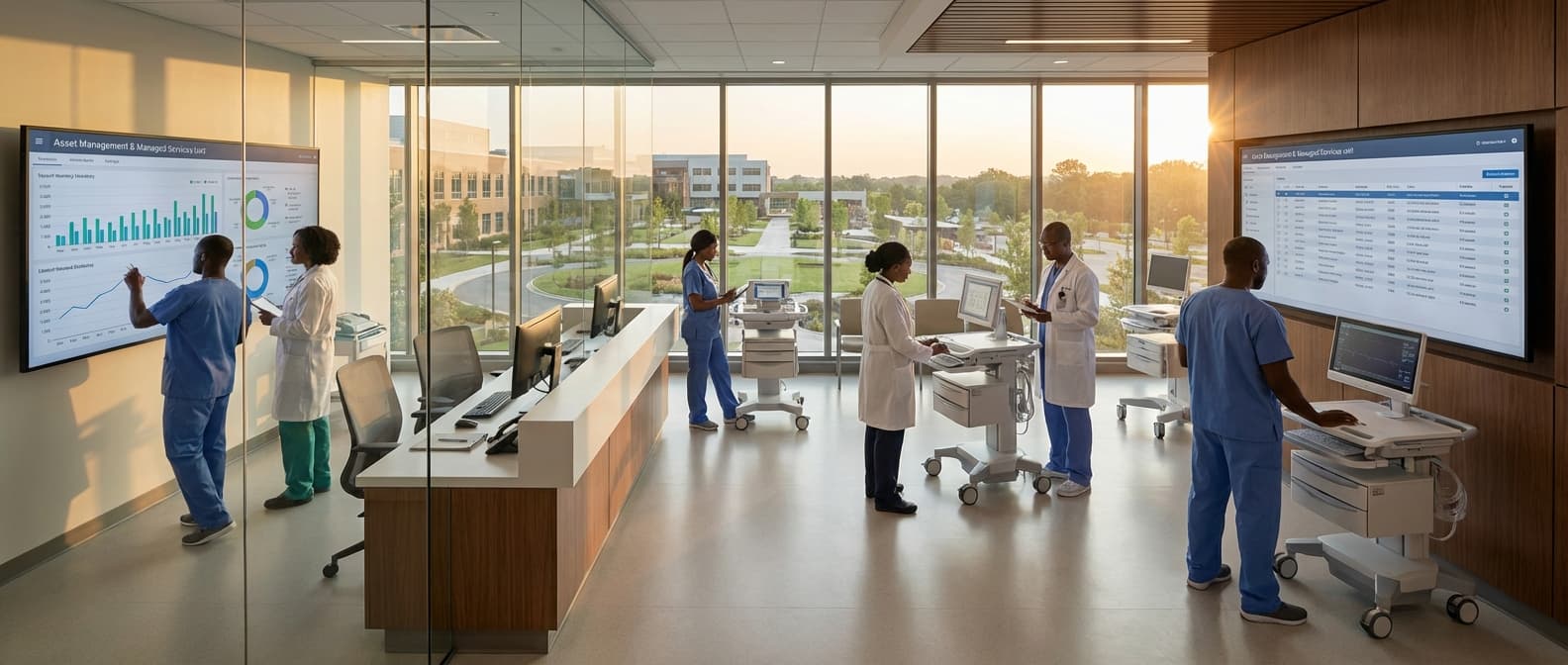
CMMS Setup & Configuration Service in South Sudan
Engineering Excellence & Technical Support
CMMS Setup & Configuration Service High-standard technical execution following OEM protocols and local regulatory frameworks.
Customized CMMS Blueprint for South Sudan's Infrastructure
We develop bespoke CMMS configurations tailored to the unique operational environments and asset types prevalent in South Sudan, from critical energy infrastructure to agricultural machinery. Our deep understanding of local conditions ensures your CMMS is optimized for maximum efficiency and longevity.
Seamless Integration with Existing South Sudanese Systems
Our service ensures your new CMMS integrates smoothly with your current digital ecosystem, including ERP systems, SCADA, or any bespoke software used within South Sudan. We prioritize data integrity and workflow continuity for uninterrupted operations.
Localized Training & Support for South Sudanese Workforce
We provide hands-on, culturally relevant training for your South Sudanese team, empowering them to fully leverage the CMMS. Our ongoing support is delivered with local context in mind, ensuring accessibility and rapid resolution of any operational challenges.
What Is Cmms Setup & Configuration Service In South Sudan?
A Computerized Maintenance Management System (CMMS) Setup & Configuration Service in South Sudan is a specialized professional service focused on the deployment, customization, and optimization of CMMS software within organizations operating in South Sudan. This service ensures that the chosen CMMS solution is accurately installed, tailored to the unique operational needs of the client, and configured to facilitate efficient and effective asset maintenance, work order management, inventory control, and reporting. It encompasses the entire lifecycle of CMMS implementation, from initial system setup and data migration to user training and ongoing system refinement.
| Who Needs CMMS Setup & Configuration Service? | Typical Use Cases in South Sudan | |||||||||||
|---|---|---|---|---|---|---|---|---|---|---|---|---|
| Organizations with significant physical assets: This includes industries like oil and gas, mining, agriculture, utilities (power, water), manufacturing, transportation, and large-scale infrastructure projects. | Oil and Gas Exploration & Production: Managing the maintenance of drilling rigs, pipelines, processing facilities, and associated equipment to ensure operational continuity and safety. | Mining Operations: Scheduling and tracking maintenance for heavy machinery, processing plants, and extraction equipment to minimize downtime and maximize productivity. | Agricultural Enterprises: Maintaining tractors, harvesters, irrigation systems, and other farm machinery for efficient crop production. | Public Utilities (Water and Power): Optimizing the maintenance of power generation units, distribution networks, water treatment plants, and pumping stations to ensure reliable service delivery. | Manufacturing Facilities: Managing the upkeep of production lines, machinery, and automation equipment to maintain product quality and output. | Transportation and Logistics Companies: Scheduling and tracking the maintenance of vehicle fleets (trucks, buses, etc.) and related infrastructure. | Large Commercial Buildings and Facilities Management: Implementing preventive maintenance for HVAC systems, elevators, generators, and other building infrastructure in hotels, office complexes, and hospitals. | Government Agencies and Infrastructure Projects: Managing the maintenance of public assets such as roads, bridges, government buildings, and public transportation infrastructure. | Non-Governmental Organizations (NGOs) and Humanitarian Aid Organizations: Maintaining critical operational assets like vehicles, generators, communication equipment, and facilities in remote or challenging environments. | New or Expanding Businesses: Establishing robust maintenance practices from the outset to prevent future operational challenges and ensure scalability. | Organizations experiencing high maintenance costs or frequent asset failures: To gain better control over maintenance expenses and improve asset reliability. | Companies seeking to improve compliance and safety standards: By ensuring proactive maintenance and accurate record-keeping. |
Key Components of CMMS Setup & Configuration Service:
- Needs Assessment and System Selection: Analyzing the organization's current maintenance practices, identifying pain points, and recommending the most suitable CMMS software based on functional requirements, budget, and scalability needs relevant to the South Sudanese context.
- Installation and Deployment: Installing the CMMS software on-premises or configuring it for cloud-based access, ensuring compatibility with existing IT infrastructure.
- System Customization and Configuration: Tailoring the CMMS to match the organization's specific asset hierarchy, maintenance workflows, preventive maintenance schedules, user roles and permissions, and reporting requirements.
- Data Migration: Transferring existing asset data, maintenance history, spare parts inventory, and vendor information into the new CMMS, ensuring data integrity and accuracy.
- Integration with Existing Systems: Where feasible, integrating the CMMS with other enterprise systems such as Enterprise Resource Planning (ERP) or Building Information Modeling (BIM) software.
- User Training and Support: Providing comprehensive training to maintenance staff, technicians, supervisors, and administrators on how to effectively utilize the CMMS for daily operations and decision-making.
- Reporting and Analytics Configuration: Setting up custom reports and dashboards to provide actionable insights into maintenance costs, asset performance, work order completion rates, and key performance indicators (KPIs).
- Testing and Quality Assurance: Rigorous testing of all configured modules and functionalities to ensure they operate as intended and meet the defined requirements.
- Post-Implementation Review and Optimization: Conducting periodic reviews to identify areas for further improvement, system optimization, and alignment with evolving business objectives.
Who Needs Cmms Setup & Configuration Service In South Sudan?
Setting up and configuring a Computerized Maintenance Management System (CMMS) is a crucial step for any organization aiming to optimize its maintenance operations, reduce downtime, and improve asset longevity in South Sudan. This service is particularly vital for entities grappling with aging infrastructure, limited technical expertise, and the need for efficient resource allocation in a challenging operational environment.
| Customer Type | Key Departments Benefiting from CMMS | Typical Assets Managed | Why CMMS Setup is Crucial |
|---|---|---|---|
| Government Ministries & Agencies | Public Works, Infrastructure, Water & Sanitation, Health, Energy | Roads, bridges, public buildings, water treatment plants, power grids, official vehicles | Ensuring public service continuity, efficient allocation of limited budgets, transparency in maintenance spending, extending asset lifespan. |
| Oil & Gas Companies | Production, Operations, Maintenance, Safety, Logistics | Drilling rigs, pipelines, refineries, pumps, generators, exploration equipment | Minimizing costly downtime, preventing accidents, ensuring regulatory compliance, optimizing spare parts inventory, predictive maintenance. |
| Mining Operations | Operations, Maintenance, Engineering, Health & Safety | Heavy machinery (excavators, haul trucks), crushing plants, processing equipment, conveyor systems | Maximizing operational uptime, reducing equipment failure, enhancing safety protocols, managing large spare parts inventories. |
| Power Generation & Utilities | Operations, Maintenance, Engineering, Distribution | Turbines, generators, transformers, transmission lines, water pumps, distribution networks | Ensuring reliable power/water supply, proactive fault detection, efficient workforce scheduling, managing critical spares. |
| Telecommunications Companies | Network Operations, Field Services, Engineering, Infrastructure | Cell towers, base stations, fiber optic cables, generators, data centers, network equipment | Maximizing network uptime, reducing call-out times for technicians, optimizing site maintenance, managing backup power systems. |
| Large-Scale Agriculture & Food Processing | Farm Operations, Processing Plant Management, Maintenance, Logistics | Tractors, harvesters, irrigation systems, processing machinery, storage facilities, cold chain equipment | Preventing crop loss due to equipment failure, ensuring product quality, optimizing harvesting schedules, efficient machinery upkeep. |
| Construction & Infrastructure Development Companies | Fleet Management, Site Operations, Maintenance, Project Management | Cranes, excavators, bulldozers, concrete mixers, generators, scaffolding | Maximizing equipment availability on project sites, reducing rental costs due to downtime, efficient scheduling of maintenance and repairs. |
| Healthcare Facilities | Facilities Management, Biomedical Engineering, Operations | MRI machines, X-ray machines, ventilators, HVAC systems, backup generators, surgical equipment | Ensuring uninterrupted critical equipment operation, patient safety, compliance with healthcare regulations, efficient management of maintenance schedules. |
| NGOs & Humanitarian Aid Organizations | Logistics, Operations, Fleet Management, Program Management | Vehicles (trucks, 4x4s), generators, water purification systems, communication equipment, office buildings | Ensuring operational readiness in remote areas, reliable support for humanitarian missions, maximizing the lifespan of donated or purchased assets. |
| Logistics & Transportation Companies | Fleet Maintenance, Operations, Dispatch | Trucks, buses, vans, forklifts, warehouse equipment | Minimizing vehicle downtime, reducing maintenance costs, improving delivery schedules, ensuring safety and compliance. |
Target Customers and Departments in South Sudan for CMMS Setup & Configuration Service
- {"title":"Government Ministries & Agencies","description":"Responsible for public infrastructure and essential services. They often manage a vast array of assets that require regular maintenance and have a mandate for efficient public spending."}
- {"title":"Oil & Gas Companies","description":"The dominant industry in South Sudan, with extensive and complex equipment requiring stringent maintenance schedules to ensure operational continuity and safety. Downtime in this sector is extremely costly."}
- {"title":"Mining Operations","description":"Similar to oil and gas, mining involves heavy machinery and critical infrastructure that needs reliable maintenance to prevent disruptions and ensure worker safety."}
- {"title":"Power Generation & Utilities","description":"Managing power plants, distribution networks, and water treatment facilities demands proactive maintenance to ensure uninterrupted supply of essential services to the population."}
- {"title":"Telecommunications Companies","description":"Maintaining cell towers, network infrastructure, and data centers is critical for providing communication services. CMMS helps ensure network uptime and efficient technician deployment."}
- {"title":"Large-Scale Agriculture & Food Processing","description":"Managing fleets of agricultural machinery, processing plants, and storage facilities requires systematic maintenance to maximize yield and minimize spoilage."}
- {"title":"Construction & Infrastructure Development Companies","description":"These companies operate and maintain large fleets of construction equipment and manage the upkeep of newly built or existing infrastructure projects."}
- {"title":"Healthcare Facilities (Hospitals & Clinics)","description":"Ensuring the reliable operation of critical medical equipment, building systems (HVAC, generators), and overall facility maintenance is paramount for patient care."}
- {"title":"Non-Governmental Organizations (NGOs) & Humanitarian Aid Organizations","description":"Managing operational assets like vehicles, generators, and facilities in remote or challenging locations requires efficient maintenance to support their critical work."}
- {"title":"Logistics & Transportation Companies","description":"Maintaining fleets of trucks, buses, and other vehicles is essential for the smooth functioning of supply chains and transportation services."}
Cmms Setup & Configuration Service Process In South Sudan
This document outlines the workflow for CMMS (Computerized Maintenance Management System) setup and configuration services provided in South Sudan, from initial inquiry to final execution and handover. The process is designed to be comprehensive, ensuring client needs are met effectively within the local context.
| Stage | Description | Key Activities | Deliverables/Outcomes |
|---|---|---|---|
| Inquiry & Initial Consultation | The client expresses interest in CMMS services. This stage involves understanding their basic requirements and introducing the service offering. | Receive inquiry (phone, email, website), Initial discussion on CMMS needs, Preliminary assessment of client's industry and scale, Schedule follow-up meeting. | Client awareness of service offering, Identified potential for CMMS implementation. |
| Needs Assessment & Scope Definition | A detailed understanding of the client's current maintenance practices, challenges, and desired outcomes is established. This forms the basis for the CMMS configuration. | On-site or remote workshops, Interviews with key stakeholders (maintenance managers, technicians, IT), Review of existing documentation (manuals, asset lists), Identification of specific modules required (asset management, work orders, inventory, reporting), Definition of key performance indicators (KPIs). | Detailed Needs Assessment Report, Defined System Scope Document, Agreed-upon CMMS features and functionalities. |
| Proposal & Contract Negotiation | A formal proposal outlining the scope, timeline, pricing, and terms of service is presented. Upon agreement, a contract is signed. | Develop detailed service proposal, Cost estimation and quotation, Presentation of proposal to client, Negotiation of terms and conditions, Contract finalization and signing. | Formal Service Proposal, Signed Contract Agreement, Agreed Payment Schedule. |
| Data Collection & Preparation | Gathering all necessary data from the client for system input, including asset details, maintenance history, spare parts inventory, and user information. | Client provides asset registers, maintenance logs, spare parts lists, vendor information, user details. Data cleansing and standardization (handling variations in naming conventions, units of measure), Data formatting for import. | Cleaned and standardized asset data, Prepared spare parts inventory data, User list for system access. |
| System Installation & Configuration | Installing the chosen CMMS software (cloud-based or on-premise) and configuring it according to the defined scope and client data. | Software installation (if on-premise), Cloud environment setup, Configuration of asset hierarchy, Work order types and workflows, User roles and permissions, Inventory management settings, Customization of reporting templates. | Installed and accessible CMMS software, Configured system tailored to client's operational needs. |
| User Training & System Rollout | Training key personnel on how to effectively use the CMMS. This ensures smooth adoption and utilization. | Development of training materials (manuals, presentations), Delivery of training sessions (on-site or remote), hands-on exercises, Q&A sessions, Train-the-trainer approach (if applicable). | Trained users proficient in CMMS operation, User training manuals and guides. |
| Testing, Validation & Go-Live | Thorough testing of all configured modules and workflows to ensure functionality and data accuracy. The system is then officially launched for operational use. | User Acceptance Testing (UAT), Data validation (checking imported data accuracy), Testing of key workflows (work order creation, completion, reporting), Bug fixing and adjustments, Formal Go-Live decision. | Tested and validated CMMS system, Successful system Go-Live, Initial user feedback collected. |
| Post-Implementation Support & Handover | Providing ongoing support to address any initial issues, optimize system usage, and formally hand over the operational CMMS. | Post-launch troubleshooting and support, Performance monitoring, System optimization recommendations, Knowledge transfer to client's internal support team, Final project documentation and handover. | Resolved post-implementation issues, Optimized CMMS performance, Finalized project documentation, Fully operational and supported CMMS system. |
Key Stages of CMMS Setup & Configuration Service
- Inquiry & Initial Consultation
- Needs Assessment & Scope Definition
- Proposal & Contract Negotiation
- Data Collection & Preparation
- System Installation & Configuration
- User Training & System Rollout
- Testing, Validation & Go-Live
- Post-Implementation Support & Handover
Cmms Setup & Configuration Service Cost In South Sudan
Setting up and configuring a Computerized Maintenance Management System (CMMS) in South Sudan involves various factors that influence the overall cost. These costs can fluctuate significantly based on the complexity of the chosen CMMS, the extent of customization required, the vendor's experience, and the specific needs of the organization. South Sudan's economic landscape, including currency fluctuations and availability of skilled IT professionals, also plays a role. The local currency, the South Sudanese Pound (SSP), is subject to volatility, which can impact the final price quoted by vendors, especially if their costs are benchmarked against foreign currencies.
| Service Component | Estimated Range (SSP) | Notes |
|---|---|---|
| Basic CMMS Setup (Cloud-based, <10 users) | 5,000,000 - 15,000,000 | Includes initial configuration, data import for a few assets, and basic user training. |
| Standard CMMS Setup & Configuration (Cloud-based, 10-50 users) | 15,000,000 - 50,000,000 | Covers more extensive configuration, asset hierarchy setup, work order workflows, preventive maintenance schedules, and comprehensive training. |
| Complex CMMS Implementation (Cloud/On-premise, >50 users) | 50,000,000 - 200,000,000+ | Involves significant customization, integration with other systems, advanced reporting, extensive data migration, and potentially on-site support for an extended period. |
| Customization & Integration (Per module/feature) | 2,000,000 - 20,000,000+ | Highly variable based on the complexity of the requirement. This is often quoted separately by vendors. |
| Data Migration (Per 1,000 records) | 500,000 - 2,000,000 | Depends on data quality, format, and the level of manual intervention required. |
| User Training (Per day, per trainer) | 700,000 - 2,500,000 | Can be bundled with the overall implementation cost or charged separately. |
Key Pricing Factors for CMMS Setup & Configuration in South Sudan:
- CMMS Software Licensing/Subscription: This is often the largest component. Costs vary based on the type of CMMS (cloud-based vs. on-premise), the number of users, modules included (e.g., asset management, work order management, inventory, preventive maintenance), and any advanced features.
- Implementation and Configuration Services: This covers the vendor's expertise in tailoring the CMMS to the organization's specific workflows, asset hierarchy, user roles, and reporting needs. It includes initial setup, data migration, system integration, and user training.
- Customization and Development: If the standard CMMS functionalities are insufficient, custom development or significant configuration will incur additional costs. This could involve creating custom fields, reports, or integrations with other existing systems.
- Data Migration: The complexity and volume of existing maintenance data to be transferred into the new CMMS will impact the cost. This can range from manual data entry to automated scripts for larger datasets.
- User Training: Comprehensive training for all relevant personnel (maintenance staff, managers, administrators) is crucial for successful adoption. The duration and depth of training influence this cost.
- Vendor Experience and Reputation: More established and reputable CMMS providers, especially those with experience in challenging markets like South Sudan, may command higher prices due to their proven track record and support capabilities.
- Ongoing Support and Maintenance: While not strictly setup cost, it's important to consider the recurring costs for technical support, software updates, and system maintenance, which are often bundled with licensing.
- Infrastructure Requirements: For on-premise solutions, the cost of necessary hardware (servers, networking) and IT infrastructure needs to be factored in. Cloud-based solutions generally reduce this burden.
- Project Management: Effective project management ensures the CMMS implementation stays on track and within budget. The level of project management provided by the vendor will affect pricing.
- Currency Exchange Rates and Inflation: As mentioned, the volatility of the SSP can lead to price adjustments by vendors. High inflation rates can also drive up the cost of local services and resources.
Affordable Cmms Setup & Configuration Service Options
Implementing a Computerized Maintenance Management System (CMMS) can significantly boost operational efficiency, reduce downtime, and extend asset lifespan. However, the initial setup and configuration can be a daunting and costly undertaking. Our Affordable CMMS Setup & Configuration Service Options are designed to provide expert assistance without breaking the bank, offering flexible solutions tailored to your specific needs and budget. We understand that every organization is unique, and we offer value bundles and implement cost-saving strategies to ensure you get the most out of your CMMS investment.
| Service Level | Description | Key Features | Estimated Time Investment (Hours) | Typical Cost Range (USD) |
|---|---|---|---|---|
| Basic Setup & Configuration | Ideal for smaller organizations or those with simpler maintenance needs. Focuses on core CMMS functionalities. | User account creation, basic asset entry, work order management setup, preventative maintenance scheduling (initial setup), core reporting setup. | 10-20 | $800 - $2,000 |
| Standard Value Bundle | A comprehensive package for most growing businesses. Includes advanced configuration for common workflows. | All Basic features + Advanced asset hierarchy, customizable work order forms, inventory management integration (basic), KPI/dashboard setup, basic user training materials. | 25-40 | $2,500 - $5,000 |
| Premium Integration Bundle | Designed for organizations with complex operations, multiple locations, or integration requirements. | All Standard features + Integration with existing ERP/SCADA systems (e.g., API setup), custom report generation, advanced preventative maintenance strategies (e.g., condition-based), mobile CMMS optimization, comprehensive user training sessions (on-site/remote). | 45-70+ | $5,500 - $10,000+ |
| A La Carte Services | Add specific modules or customization as needed. Perfect for targeted enhancements. | Individual module setup (e.g., advanced reporting, mobile deployment, specific integrations), data migration assistance, custom workflow development, ongoing support retainer. | Variable | Priced per service (e.g., $100 - $500 per hour for expert consultation) |
Key Benefits of Our CMMS Setup & Configuration Services
- Expert Guidance: Leverage our extensive experience to ensure your CMMS is configured optimally for your workflows.
- Reduced Implementation Time: Accelerate your path to a fully functional CMMS and realize benefits sooner.
- Cost Control: Transparent pricing and value bundles ensure predictable expenses and prevent budget overruns.
- Minimized Disruption: Our streamlined process minimizes impact on your daily operations.
- Scalability: Solutions that grow with your organization, adapting to evolving needs.
- Enhanced Data Accuracy: Proper setup ensures reliable data for informed decision-making.
- Improved User Adoption: Intuitive configuration leads to better user engagement and system utilization.
Verified Providers In South Sudan
Navigating the healthcare landscape in South Sudan can be challenging, with the paramount importance of ensuring you are receiving care from verified and trustworthy providers. Franance Health stands out as a premier choice, not only due to its comprehensive services but also its unwavering commitment to quality, transparency, and patient well-being. Their credentials are a testament to their dedication to upholding the highest standards in healthcare delivery.
| Area of Expertise | Franance Health's Commitment | Why it Matters for Patients |
|---|---|---|
| Medical Diagnostics | State-of-the-art laboratory and imaging facilities. | Accurate and timely identification of health conditions leads to more effective treatment. |
| Specialized Care | Access to a diverse range of medical specialists. | Patients receive expert advice and treatment for complex or specific health concerns. |
| Preventive Health | Emphasis on health education and screening programs. | Empowers individuals to maintain well-being and prevent diseases. |
| Emergency Services | Preparedness for medical emergencies with trained personnel and resources. | Ensures prompt and life-saving interventions when critical care is needed. |
| Pharmacy Services | Reliable access to quality and authentic medications. | Guarantees patients receive safe and effective pharmaceutical treatments. |
Key Credentials and Strengths of Franance Health:
- Accreditation and Affiliation: Franance Health maintains rigorous adherence to national healthcare regulations and often holds accreditations from relevant South Sudanese health authorities. This ensures their practices meet established quality benchmarks and safety protocols.
- Qualified Medical Professionals: The organization prioritizes employing highly skilled and experienced doctors, nurses, and allied health professionals. Many of their staff possess international training and certifications, bringing global best practices to local care.
- Patient-Centered Approach: Franance Health is distinguished by its focus on individual patient needs. This includes comprehensive diagnostic services, personalized treatment plans, and continuous follow-up care, fostering trust and positive health outcomes.
- Technological Integration: Investing in modern medical equipment and diagnostic tools is a hallmark of Franance Health. This allows for accurate diagnoses and effective treatment, even in challenging circumstances.
- Ethical Practices and Transparency: A core tenet of Franance Health is operating with utmost integrity. This translates to clear communication regarding treatment options, costs, and patient rights, building a foundation of trust.
- Community Engagement and Outreach: Beyond direct patient care, Franance Health actively participates in public health initiatives and community outreach programs, demonstrating a commitment to the broader health of South Sudan.
Scope Of Work For Cmms Setup & Configuration Service
This Scope of Work (SOW) outlines the services to be provided for the setup and configuration of a Computerized Maintenance Management System (CMMS). The objective is to implement a robust CMMS solution that will streamline maintenance operations, improve asset management, and enhance overall facility performance. This document details the technical deliverables and standard specifications that will guide the project.
| Deliverable Category | Technical Deliverable | Standard Specifications | Description |
|---|---|---|---|
| System Setup | CMMS Software Installation | Cloud-based or On-Premise (as agreed) | Installation and initial setup of the chosen CMMS software on designated servers or cloud environment. |
| System Setup | Database Setup and Configuration | Relational Database (e.g., SQL Server, PostgreSQL) | Configuration of the database to support CMMS functionalities, including schema design and indexing. |
| Data Migration | Asset Registry Data Import | CSV, Excel, or API integration | Importation of existing asset inventory data, including asset details, location, manufacturer, model, and serial numbers. |
| Data Migration | Preventive Maintenance (PM) Schedule Import | CSV, Excel, or direct entry | Importation of existing PM schedules, task lists, and associated frequencies. |
| Data Migration | Work Order History Import | Limited scope, prioritized based on criticality | Migration of critical past work order data for historical analysis (if feasible and agreed upon). |
| System Configuration | User Role and Permission Setup | Role-based access control | Definition and assignment of user roles and associated permissions based on organizational structure and responsibilities. |
| System Configuration | Organizational Hierarchy Setup | Configurable hierarchical structure | Configuration of the organizational structure within the CMMS, including departments, locations, and reporting lines. |
| System Configuration | Asset Categorization and Tagging | Hierarchical categorization and custom tags | Establishment of a standardized system for categorizing and tagging assets for improved searchability and reporting. |
| System Configuration | Labor and Skill Matrix Configuration | Configurable skill sets and labor rates | Setup of labor resources, skills required for tasks, and associated costs. |
| System Configuration | Parts and Inventory Management Setup | Stockroom and inventory item configuration | Configuration of parts catalogs, stockrooms, reorder points, and inventory tracking. |
| System Configuration | Workflow and Business Process Configuration | Configurable approval workflows, task assignments | Customization of maintenance workflows, including work order creation, approval processes, and completion procedures. |
| System Configuration | Custom Field Creation | User-defined fields | Creation of custom fields to capture specific organizational data not covered by standard CMMS fields. |
| System Configuration | Reporting and Dashboard Configuration | Pre-defined and custom report templates | Configuration of standard reports and creation of custom reports/dashboards for key performance indicators (KPIs). |
| System Integration | Integration with Existing Systems (if applicable) | API-based or file-based integration | Integration with other relevant systems such as ERP, SCADA, or Building Management Systems (BMS) as per agreed scope. |
| Training | Administrator Training | Hands-on, role-specific training | Training for system administrators on system management, configuration, and troubleshooting. |
| Training | End-User Training | Role-based training modules | Training for end-users (technicians, supervisors, managers) on their specific functionalities and workflows. |
| Documentation | System Configuration Document | Comprehensive document detailing all configurations | A comprehensive document outlining all system configurations, custom settings, and business rules. |
| Documentation | User Manuals | Role-specific user guides | User manuals tailored to different user roles, providing step-by-step instructions. |
| Documentation | Data Migration Report | Summary of migrated data and any discrepancies | A report summarizing the data migration process, including the number of records migrated and any identified issues. |
| Testing | User Acceptance Testing (UAT) Plan | Documented test cases and scenarios | A plan outlining the UAT process, including test scripts, scenarios, and success criteria. |
| Testing | UAT Execution and Sign-off | Formal UAT session and sign-off by client stakeholders | Facilitation of UAT sessions and formal sign-off by the client upon successful completion. |
| Go-Live Support | Post-Go-Live Support Plan | Defined support period and escalation procedures | A plan for providing support during the initial period after system go-live. |
Project Phases and Key Activities
- Phase 1: Project Initiation and Planning
- Phase 2: Data Collection and Migration
- Phase 3: System Configuration and Customization
- Phase 4: User Training and Acceptance
- Phase 5: Go-Live and Post-Implementation Support
Service Level Agreement For Cmms Setup & Configuration Service
This Service Level Agreement (SLA) outlines the terms and conditions governing the setup and configuration of the Computerized Maintenance Management System (CMMS) provided by [Your Company Name] (hereinafter referred to as "Provider") to [Client Company Name] (hereinafter referred to as "Client"). This SLA also details the response times and uptime guarantees associated with this service.
| Service Component | Response Time Target (Business Hours) | Resolution Time Target (Business Hours) | Uptime Guarantee |
|---|---|---|---|
| Initial CMMS Software Installation & Basic Configuration | 4 Business Hours | 2 Business Days | N/A (Part of Setup) |
| Custom Module Configuration & Workflow Setup | 8 Business Hours | 3-5 Business Days (depending on complexity) | N/A (Part of Setup) |
| Data Migration & Import Assistance | 8 Business Hours | 2-4 Business Days (depending on data volume) | N/A (Part of Setup) |
| User Training & Handover | 24 Business Hours | 1 Business Day (for scheduling) | N/A (Part of Setup) |
| Post-Setup Technical Support (during initial warranty period, e.g., 30 days) | 4 Business Hours (for critical issues) | 8 Business Hours (for critical issues) | 99.5% (for hosted CMMS instances) |
| Post-Setup Technical Support (after initial warranty, if applicable/purchased) | 8 Business Hours (for standard issues) | 2 Business Days (for standard issues) | 99.5% (for hosted CMMS instances) |
Key Service Definitions
- CMMS Setup & Configuration Service: This refers to the professional services provided by the Provider to install, configure, and customize the CMMS software according to the Client's specific operational requirements and agreed-upon scope.
- Service Hours: Defined as Monday through Friday, 9:00 AM to 5:00 PM [Client's Time Zone], excluding public holidays observed by the Provider.
- Downtime: Any period during which the CMMS is unavailable to the Client due to issues with the Provider's hosting infrastructure, configuration errors introduced by the Provider, or scheduled maintenance.
- Scheduled Maintenance: Pre-announced periods of downtime required for system updates, upgrades, or essential maintenance. Client will be notified at least [Number] business days in advance.
- Unscheduled Downtime: Any downtime not classified as Scheduled Maintenance.
Frequently Asked Questions

Ready when you are
Let's scope your CMMS Setup & Configuration Service in South Sudan project in South Sudan.

Scaling healthcare logistics and technical systems across the entire continent.