
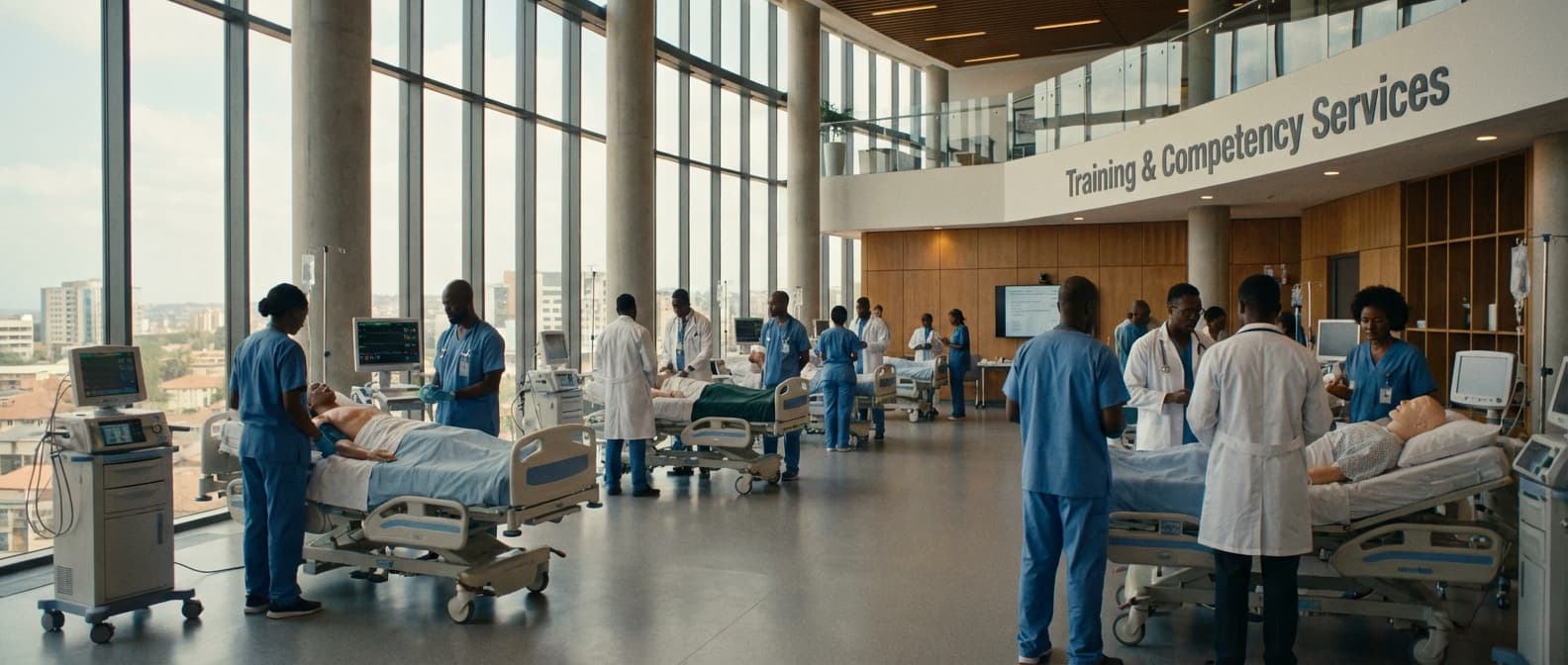
Ventilator User Training Service (Nurses) in South Africa
Engineering Excellence & Technical Support
Ventilator User Training Service (Nurses) High-standard technical execution following OEM protocols and local regulatory frameworks.
Mastering Ventilation Modes for Optimal Patient Outcomes
Gain hands-on experience with common South African ventilator modes (e.g., SIMV, Pressure Support, CPAP). Learn to select the most appropriate mode based on patient condition, interpret key ventilator settings, and proactively identify potential issues, ensuring effective respiratory support and improved patient recovery.
Proactive Alarm Management & Troubleshooting
Develop critical skills in identifying, interpreting, and responding to ventilator alarms. Our training focuses on understanding the root causes of common alarms and implementing effective troubleshooting strategies to ensure patient safety and continuity of care in diverse South African healthcare settings.
Bridging Respiratory Support & Patient Monitoring Integration
Understand how ventilator settings directly impact haemodynamics and oxygenation. Learn to seamlessly integrate ventilator management with vital sign monitoring, including SpO2, EtCO2, and ABGs, to provide comprehensive and responsive patient care within the South African context.
What Is Ventilator User Training Service (Nurses) In South Africa?
Ventilator User Training Service (Nurses) in South Africa refers to structured educational programs designed to equip registered nurses with the necessary knowledge and practical skills to safely and effectively operate, monitor, and manage mechanical ventilators in a clinical setting. This service ensures competency in ventilator initiation, titration, weaning protocols, troubleshooting, and patient care specific to mechanical ventilation. The training adheres to South African healthcare standards and best practices, aiming to enhance patient outcomes and reduce the incidence of ventilator-associated complications.
| Who Needs Ventilator User Training? | Typical Use Cases | ||||||||||||
|---|---|---|---|---|---|---|---|---|---|---|---|---|---|
| Registered Nurses (RNs) working in critical care units (ICUs, High Dependency Units) | Management of patients with acute respiratory failure (e.g., ARDS, pneumonia, COPD exacerbations, sepsis) | Registered Nurses (RNs) in emergency departments | Initial stabilization and management of patients requiring immediate mechanical ventilation | Registered Nurses (RNs) in operating theaters | Intraoperative management of anesthesia and ventilation | Registered Nurses (RNs) involved in patient transport (e.g., inter-hospital transfers) | Ensuring safe and continuous mechanical ventilation during transit | Registered Nurses (RNs) in specialized units (e.g., neurology, cardiology) where patients may require temporary mechanical ventilation | Management of respiratory compromise in specific patient populations | Newly qualified Registered Nurses (RNs) entering critical care | Foundation skills development for advanced practice | Experienced Registered Nurses (RNs) transitioning to critical care roles | Cross-skilling and competency validation |
Key Components of Ventilator User Training Service (Nurses):
- Principles of mechanical ventilation: Understanding gas exchange, lung mechanics, ventilatory modes (e.g., volume-controlled, pressure-controlled, assist-control, synchronized intermittent mandatory ventilation), and physiological effects of positive pressure ventilation.
- Ventilator settings and parameters: Proficiency in setting initial and ongoing ventilator parameters (tidal volume, respiratory rate, PEEP, FiO2, flow triggering, sensitivity) based on patient assessment and clinical objectives.
- Patient monitoring and assessment: Continuous evaluation of patient's respiratory status, hemodynamic stability, neurological status, and response to ventilation. Interpretation of ventilator waveforms, alarms, and physiological data.
- Ventilator-associated pneumonia (VAP) prevention: Implementation of evidence-based protocols for VAP prevention, including oral care, head-of-bed elevation, and aseptic techniques.
- Airway management: Competency in endotracheal tube management, suctioning techniques, and understanding indications for tracheostomy.
- Troubleshooting and alarm management: Identification and resolution of common ventilator alarms and malfunctions, as well as management of potential complications (e.g., barotrauma, volutrauma, bronchospasm, hemodynamic instability).
- Weaning protocols: Understanding and application of established weaning protocols and patient assessment for readiness to wean from mechanical ventilation.
- Documentation and communication: Accurate and timely documentation of ventilator settings, patient responses, interventions, and communication with the multidisciplinary team.
- Ethical and legal considerations: Awareness of ethical principles and legal responsibilities related to mechanical ventilation and patient care.
- Hands-on simulation and practical application: Opportunities for nurses to practice ventilator management in simulated environments using mannequins and actual ventilator equipment.
Who Needs Ventilator User Training Service (Nurses) In South Africa?
The Ventilator User Training Service in South Africa is crucial for ensuring competent and safe operation of ventilators by healthcare professionals, particularly nurses. This training is essential for a wide range of facilities and departments where mechanical ventilation is a critical component of patient care. The primary target customers are nurses, but the service also indirectly benefits healthcare facilities, patients, and the broader healthcare system.
| Customer Type | Department/Facility | Rationale for Training Need |
|---|---|---|
| Registered Nurses | ICU/HCU, ED, Operating Theatres | Direct management of critically ill patients requiring mechanical ventilation, advanced troubleshooting, and parameter adjustments. |
| Enrolled Nurses | ICU/HCU, General Wards | Assisting with patient care, monitoring vital signs, and basic ventilator setup under supervision. |
| Specialty Nurses (Critical Care, ER) | ICU/HCU, ED | Possess specialized knowledge in managing complex ventilation scenarios, weaning protocols, and advanced ventilator modes. |
| Paediatric/Neonatal Nurses | PICU, NICU | Managing ventilation in vulnerable patient populations with specific physiological differences and equipment requirements. |
| Emergency Medical Services (EMS) | Ambulance Services | Initiating ventilation in pre-hospital settings to stabilize patients en route to the hospital. |
| All Nursing Staff | Across all departments with ventilator access | Ensuring a baseline understanding of ventilator operation, safety protocols, and recognition of alarm conditions. |
Target Customers and Departments
- {"items":["Registered Nurses (RNs)","Enrolled Nurses (ENs)","Auxiliary Nurses","Specialty Nurses (e.g., Critical Care Nurses, ICU Nurses, ER Nurses)","Student Nurses (during their clinical rotations)"],"title":"Target Customers (Primary)"}
- {"items":["Intensive Care Units (ICUs) / High Care Units (HCUs)","Emergency Departments (EDs) / Accident & Emergency (A&E)","Operating Theatres / Surgical Wards","Respiratory Therapy Departments","Paediatric Intensive Care Units (PICUs)","Neonatal Intensive Care Units (NICUs)","Pulmonary/Cardiopulmonary Wards","Emergency Medical Services (EMS) / Ambulance Services (for pre-hospital ventilation)","General Wards (where temporary or short-term ventilation may be required)","Private Hospitals","Public Hospitals (Provincial and Tertiary Hospitals)","Community Health Centers (with advanced critical care capabilities)","Rehabilitation Centers (managing patients on long-term ventilation)"],"title":"Target Departments and Healthcare Facilities"}
Ventilator User Training Service (Nurses) Process In South Africa
This document outlines the typical workflow for a Ventilator User Training Service specifically for Nurses in South Africa, from the initial inquiry to the successful execution of the training. The process emphasizes clarity, efficiency, and ensuring that nursing staff receive comprehensive and effective training on ventilator operation and patient management.
| Stage | Key Activities | Responsible Parties | Deliverables/Outcomes |
|---|---|---|---|
| Inquiry & Needs Assessment | Initial contact, information gathering, customization discussion, quotation & proposal generation. | Healthcare Facility/Nurse, Training Provider. | Understanding of training needs, customized proposal, cost estimate. |
| Agreement & Scheduling | Contract finalization, logistics confirmation, participant registration. | Training Provider, Healthcare Facility. | Signed agreement, confirmed training schedule, registered participants. |
| Pre-Training Preparation | Curriculum finalization, resource allocation, material distribution, confirmations. | Training Provider, Healthcare Facility. | Prepared training materials, booked resources, informed participants. |
| Training Execution | Theoretical sessions, practical demonstrations, hands-on practice, case studies, Q&A, assessment. | Training Provider (Instructors), Nurses (Participants). | Enhanced knowledge and skills in ventilator use, successful assessment outcomes. |
| Post-Training & Follow-up | Feedback collection, certification, reporting, ongoing support, follow-up evaluation. | Training Provider, Healthcare Facility, Nurses. | Feedback reports, training certificates, performance evaluation, improved clinical practice. |
Ventilator User Training Service (Nurses) Workflow in South Africa
- 1. Inquiry & Needs Assessment:
- Initial Contact: A healthcare facility (hospital, clinic, etc.) or individual nurse makes an inquiry regarding ventilator user training.
- Information Gathering: The training provider collects essential information such as the number of nurses requiring training, their current skill level, the specific types of ventilators in use, preferred training dates, and the facility's location.
- Customization Discussion: Based on the needs assessment, the training provider discusses the possibility of customizing the curriculum to address specific ventilator models, patient populations, or any unique institutional protocols.
- Quotation & Proposal: A detailed quotation and training proposal are provided, outlining the scope of training, duration, cost, learning objectives, and expected outcomes.
- 2. Agreement & Scheduling:
- Contract/Agreement: Upon acceptance of the proposal, a formal agreement or contract is established, outlining terms, conditions, payment schedules, and cancellation policies.
- Logistics Confirmation: Dates, times, and the venue (on-site at the facility or at the training provider's facility) are confirmed.
- Participant Registration: The healthcare facility registers the nurses who will attend the training. Necessary participant details (name, contact information, registration number if applicable) are collected.
- 3. Pre-Training Preparation:
- Curriculum Development/Refinement: The training materials are finalized, ensuring they align with current South African nursing council guidelines and best practices for ventilator management.
- Resource Allocation: Instructors, training equipment (demonstration ventilators, simulation manikins if applicable), and training rooms are booked and prepared.
- Material Distribution (Optional): Pre-reading materials or introductory modules might be sent to participants in advance.
- Confirmation & Reminders: The facility and participants receive final confirmation of the training schedule and any pre-training instructions.
- 4. Training Execution:
- Welcome & Introduction: The training commences with a welcome, introduction of instructors, and an overview of the day's agenda and learning objectives.
- Theoretical Component: In-depth lectures and discussions covering ventilator principles, modes of ventilation, indications for use, patient assessment, troubleshooting common issues, and safety protocols.
- Practical/Hands-on Component:
- **Demonstration:** Instructors demonstrate the operation of specific ventilator models, including setup, parameter adjustments, and alarm management.- **Simulation/Practice:** Nurses engage in hands-on practice using demonstration ventilators or simulation equipment, applying learned skills in a controlled environment.- **Case Studies:** Realistic patient scenarios are presented for discussion and problem-solving, integrating theoretical knowledge with practical application.- Q&A and Discussion: Ample time is allocated for nurses to ask questions, clarify doubts, and engage in interactive discussions.
- Assessment (Formative/Summative):
- **Formative:** Ongoing assessment through observation during practical sessions and participation in discussions to gauge understanding.- **Summative:** A formal assessment, which may include a written test, practical skills evaluation, or scenario-based assessment, to verify competency.- 5. Post-Training & Follow-up:
- Feedback Collection: Participants and the healthcare facility are invited to provide feedback on the training program through evaluation forms.
- Certification: Upon successful completion of the training and assessment, certificates of attendance or competency are issued to the nurses.
- Reporting: A post-training report is provided to the healthcare facility, summarizing attendance, assessment results, and any recommendations.
- Ongoing Support (Optional): Some training providers offer post-training support, such as access to online resources, refresher courses, or dedicated helplines for clinical queries.
- Follow-up Evaluation (Optional): A follow-up evaluation may be conducted after a period to assess the impact of the training on clinical practice and patient outcomes.
Ventilator User Training Service (Nurses) Cost In South Africa
The cost of ventilator user training services for nurses in South Africa can vary significantly depending on several factors. These include the type and complexity of the ventilators being trained on, the duration of the training program, the qualifications and experience of the trainers, the location of the training (on-site at a hospital or at a dedicated training facility), and the number of nurses being trained. Government hospitals might have different budgetary constraints and training providers compared to private healthcare institutions. The training often involves a combination of theoretical knowledge and practical, hands-on experience with the equipment, which can influence the overall cost. Additionally, some training providers may offer bundled packages that include ongoing support or refresher courses, impacting the final price.
| Training Type/Duration | Estimated Cost Range (ZAR) | Typical Inclusions |
|---|---|---|
| Basic Ventilator Operation & Principles (1-2 days) | R 2,500 - R 5,000 per nurse | Introduction to ventilation, basic settings, alarms, patient monitoring, emergency procedures. |
| Intermediate Ventilator Management (2-3 days) | R 4,000 - R 7,500 per nurse | Advanced modes, weaning strategies, troubleshooting, specific ventilator platforms, case studies. |
| Advanced & Specialized Ventilator Training (3-5 days) | R 6,000 - R 12,000+ per nurse | Non-invasive ventilation, high-frequency ventilation, pediatric/neonatal ventilation, critical care scenarios, hands-on simulations. |
| On-site Hospital Training (Group Rate) | Varies greatly (negotiable based on group size and days) | Tailored to hospital's specific equipment, can be more cost-effective for larger groups. |
| Manufacturer-Specific Training | Often included with equipment purchase or can be a separate fee (e.g., R 3,000 - R 10,000+ per course) | Focuses on a particular brand and model, often highly specialized. |
Key Factors Influencing Ventilator User Training Costs for Nurses in South Africa:
- Type and complexity of ventilator models (e.g., basic vs. advanced modes, specific manufacturer features).
- Duration and depth of the training program (e.g., introductory, advanced, specialized modules).
- Trainer qualifications and experience (e.g., certified respiratory therapists, experienced clinical educators).
- Location of training (on-site at healthcare facility vs. off-site training center).
- Number of nurses participating in the training.
- Inclusion of practical, hands-on sessions and simulation.
- Provision of training materials (manuals, digital resources).
- Accreditation and certification offered by the training provider.
- Travel and accommodation costs for trainers (if applicable).
- Post-training support and refresher courses.
Affordable Ventilator User Training Service (Nurses) Options
This document outlines affordable ventilator user training service options specifically for nurses. We understand the critical need for well-trained nursing staff to manage patients requiring mechanical ventilation, while also acknowledging budget constraints. Our goal is to provide comprehensive, high-quality training that is both accessible and cost-effective.
| Cost-Saving Strategy | Description | Benefit |
|---|---|---|
| Group Discounts | Reduced per-nurse cost when training multiple staff members from the same facility. | Significant savings for larger nursing teams. |
| Blended Learning Approach | Combining cost-effective online modules with targeted in-person simulation or on-site training. | Optimizes learning while minimizing travel and instructor fees. |
| Flexible Scheduling | Offering training during off-peak hours or in modular formats to minimize disruption to patient care schedules. | Reduces the need for expensive overtime or temporary staffing. |
| Train-the-Trainer Program | Investing in internal expertise to deliver ongoing training, reducing long-term external training costs. | Sustainable knowledge transfer and reduced per-trainee cost over time. |
| Subscription-Based Access | Annual or multi-year subscriptions to online learning platforms and resource libraries. | Predictable costs and continuous access to updated content. |
| Customizable Packages | Tailoring training content and delivery methods to meet specific organizational needs. | Avoids paying for unnecessary modules and focuses resources effectively. |
Key Training Modalities & Value Bundles
- {"title":"Core Curriculum Modules","description":"Fundamental knowledge covering ventilator basics, modes of ventilation, patient assessment, troubleshooting common alarms, and weaning protocols."}
- {"title":"Advanced Ventilation Concepts","description":"Deeper dives into specific ventilation strategies (e.g., ARDS, NIV), advanced monitoring techniques, and integration with other critical care technologies."}
- {"title":"Hands-on Simulation Training","description":"Practical application of learned concepts using high-fidelity simulators and manikins, allowing nurses to practice critical scenarios in a safe environment."}
- {"title":"Online Self-Paced Learning","description":"Flexible, accessible modules that nurses can complete at their own pace, ideal for knowledge reinforcement and foundational learning."}
- {"title":"On-Site Group Training","description":"Tailored training sessions delivered at your facility, allowing for direct team interaction and case-specific discussions."}
- {"title":"Train-the-Trainer Programs","description":"Empower experienced nurses within your organization to become internal trainers, fostering sustainable knowledge transfer and reducing reliance on external resources."}
- {"title":"Value Bundle 1: Foundational Nurse Package","description":"Includes Core Curriculum Modules (online), 2 hours of Live Online Q&A with an expert, and access to a digital resource library. Ideal for new hires and refresher training."}
- {"title":"Value Bundle 2: Advanced Practice Package","description":"Includes Core Curriculum Modules (online), Advanced Ventilation Concepts (online), 4 hours of On-Site Simulation Training (group), and access to a digital resource library. Designed for nurses seeking to enhance their critical care skills."}
- {"title":"Value Bundle 3: Comprehensive Facility Package","description":"Includes all modules (online and on-site options), unlimited access to simulation labs (if available at our facility), Train-the-Trainer program for 5 key staff, and ongoing online support for 1 year. The most cost-effective for larger institutions."}
Verified Providers In South Africa
In South Africa, discerning which healthcare providers are truly legitimate and offer high-quality care is crucial for individual well-being. 'Verified Providers' signifies a commitment to established standards, rigorous vetting processes, and ongoing quality assurance. Franance Health stands out in this landscape due to its unwavering dedication to these principles, ensuring that patients receive the best possible care. Their credentialing process is not merely a bureaucratic hurdle; it's a fundamental aspect of their operational ethos, designed to build trust and guarantee excellence.
| Credentialing Aspect | Franance Health's Approach | Benefit to Patients |
|---|---|---|
| License Verification | Thorough cross-referencing with official regulatory bodies. | Ensures providers are legally permitted to practice and meet minimum competency standards. |
| Education and Training | Verification of academic qualifications and specialized training from accredited institutions. | Confirms that healthcare professionals possess the necessary foundational knowledge and expertise. |
| Professional Experience | Assessment of work history, including any disciplinary actions or malpractice claims. | Provides insight into a provider's practical experience and professional conduct. |
| Peer Review | Inclusion of peer assessments and recommendations. | Offers an additional layer of quality assurance by those who understand the complexities of medical practice. |
| Continuing Professional Development (CPD) | Mandatory adherence to ongoing CPD requirements. | Guarantees that providers stay updated with the latest medical advancements and practices. |
Why Franance Health is the Best Choice for Verified Providers:
- Rigorous Vetting and Credentialing: Franance Health employs a multi-stage credentialing process for all affiliated healthcare professionals and facilities. This includes verification of qualifications, licenses, professional history, and peer reviews.
- Commitment to Quality Assurance: Beyond initial verification, Franance Health maintains continuous quality monitoring. This involves patient feedback mechanisms, regular audits, and adherence to best practice guidelines.
- Focus on Patient Safety and Outcomes: The credentialing process is fundamentally driven by patient safety and the pursuit of optimal health outcomes. Providers are selected based on their demonstrated ability to deliver safe, effective, and patient-centered care.
- Transparency and Accountability: Franance Health champions transparency in its provider network. Patients can access information about the credentials and specializations of their chosen healthcare professionals, fostering informed decision-making.
- Adherence to South African Healthcare Standards: All verified providers associated with Franance Health meet and often exceed the regulatory requirements and standards set by South African healthcare governing bodies.
Scope Of Work For Ventilator User Training Service (Nurses)
This Scope of Work outlines the requirements for providing comprehensive ventilator user training services specifically tailored for registered nurses. The training will ensure proficient and safe operation of various ventilator models, encompassing theoretical knowledge, practical skills, and emergency management. The objective is to enhance clinical competency and patient outcomes by equipping nurses with the necessary expertise to manage patients requiring mechanical ventilation.
| Deliverable | Description | Standard Specification | Format/Method | Acceptance Criteria |
|---|---|---|---|---|
| Training Curriculum | Detailed outline of all training modules, learning objectives, and content for each session. | Must align with current best practices in respiratory care and ventilator management. Shall include theoretical and practical components. Curriculum to be submitted for review and approval prior to training. | Digital document (PDF) | Curriculum approved by the client's clinical education department. |
| Training Materials | All handouts, presentations, case studies, and reference guides provided to trainees. | Materials must be clear, concise, accurate, and relevant to the specified ventilator models. Visual aids and diagrams are encouraged. Content to be reviewed and approved by the client. | Digital document (PDF, PowerPoint) and/or printed copies as specified. | Materials reviewed and approved by the client's clinical education department. Trainees confirm receipt and understanding. |
| Hands-on Training Sessions | Practical demonstration and supervised practice on actual or simulated ventilator units. | Each trainee must have dedicated time for hands-on practice with the specified ventilator models. Training to be conducted by certified/experienced respiratory therapists or qualified clinical educators. Ratio of instructors to trainees to be maintained (e.g., 1:5). | In-person practical sessions | Trainees demonstrate proficiency in ventilator set-up, mode selection, alarm management, and basic troubleshooting under supervision. Instructor observation and skill checklist completion. |
| Competency Assessment Tools | Methods used to evaluate trainee understanding and skill acquisition. | Includes written examinations, practical skill assessments, and case study analysis. Assessments must be validated and designed to measure attainment of learning objectives. Passing score to be defined (e.g., 80%). | Written exams (online or paper), practical skills checklists, case study evaluations | Trainees achieve the defined passing score on all assessment components. |
| Post-Training Evaluation Reports | Summary reports detailing trainee performance, attendance, and overall training effectiveness. | Reports to include individual trainee scores, areas of strength and weakness, and recommendations for further development. Aggregated data on training program success. Reports to be confidential and submitted to the client. | Digital document (PDF) | Reports submitted within [e.g., 5] business days of training completion. Client confirms receipt and review. |
| Certificate of Completion | Official documentation awarded to trainees who successfully complete the training program. | Certificates to include trainee name, training dates, training content covered, and issuing organization. Shall be verifiable. | Printed or digital certificate | Issuance of certificates to all qualifying trainees within [e.g., 7] business days of successful completion of all assessments. |
| Ventilator Model Specific Training | Detailed training on the operation, features, and maintenance of identified ventilator models. | Training must cover all critical functions, safety features, and common troubleshooting procedures for each specified model (e.g., [Vendor A Model X], [Vendor B Model Y]). Vendor-specific manuals and resources should be utilized and referenced. | Presentation, demonstration, hands-on practice, Q&A | Trainees can independently and safely operate the specified ventilator models and respond to common alarms and alerts. |
Key Training Modules
- Introduction to Mechanical Ventilation
- Ventilator Principles and Modes
- Ventilator Set-up and Patient Connection
- Monitoring and Alarms
- Ventilator Graphics and Interpretation
- Weaning from Mechanical Ventilation
- Troubleshooting and Emergency Management
- Specific Ventilator Model Operation (e.g., [Vendor A Model X], [Vendor B Model Y])
- Infection Control and Hygiene Practices
- Documentation and Communication
Service Level Agreement For Ventilator User Training Service (Nurses)
This Service Level Agreement (SLA) outlines the response times and uptime guarantees for the Ventilator User Training Service specifically tailored for nurses. This agreement aims to ensure timely support and consistent availability of the training resources to facilitate effective and safe ventilator operation by nursing staff.
| Service Component | Uptime Guarantee | Response Time (Severity 1 - Critical Issue) | Response Time (Severity 2 - Major Issue) | Response Time (Severity 3 - Minor Issue) |
|---|---|---|---|---|
| Training Delivery Platform Availability | 99.5% (excluding scheduled maintenance) | 1 hour | 4 business hours | 8 business hours |
| Technical Support for Training Platform | N/A (Support is provided during business hours) | 30 minutes (acknowledgment) | 2 business hours (resolution attempt) | 4 business hours (resolution attempt) |
| Training Material Accessibility | 99.5% (excluding scheduled maintenance) | 1 hour | 4 business hours | 8 business hours |
Key Service Components
- Training Delivery Platform Availability
- Technical Support for Training Platform
- Training Material Accessibility
Frequently Asked Questions

Ready when you are
Let's scope your Ventilator User Training Service (Nurses) in South Africa project in South Africa.

Scaling healthcare logistics and technical systems across the entire continent.