
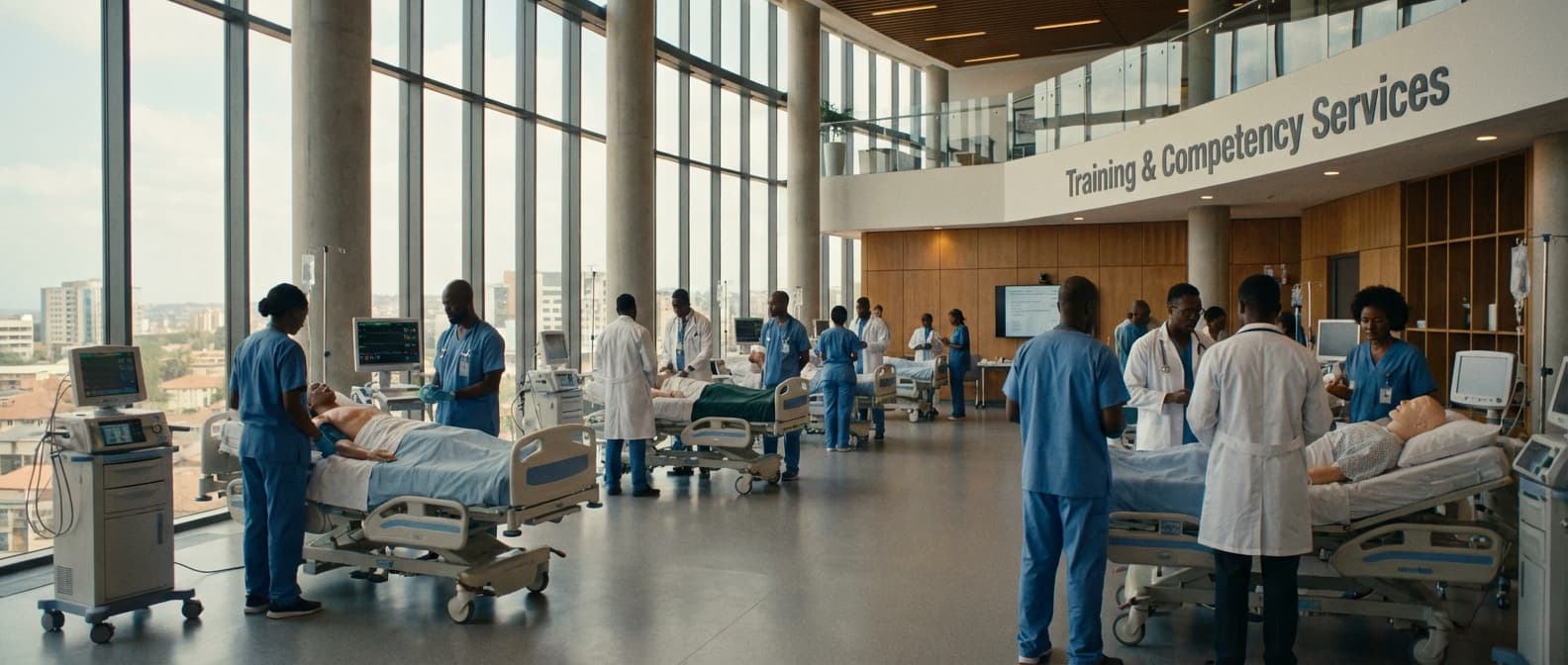
Ultrasound Application Training Service (Protocol-Based) in South Africa
Engineering Excellence & Technical Support
Ultrasound Application Training Service (Protocol-Based) High-standard technical execution following OEM protocols and local regulatory frameworks.
Protocol-Driven Learning
Master essential ultrasound protocols for South Africa's diverse clinical needs. Our training focuses on standardized, evidence-based workflows ensuring consistent and accurate diagnostic skills.
Real-World Case Studies
Gain hands-on experience with realistic patient scenarios relevant to South African healthcare settings. Our modules incorporate common pathologies and anatomical variations encountered locally.
Certified Competency
Achieve recognized proficiency in ultrasound applications. Upon successful completion of our training, receive a certificate validating your adherence to established diagnostic protocols.
What Is Ultrasound Application Training Service (Protocol-based) In South Africa?
Ultrasound Application Training Service (Protocol-Based) in South Africa refers to a specialized educational offering designed to equip healthcare professionals with the theoretical knowledge and practical skills necessary to perform and interpret diagnostic ultrasound examinations according to established, evidence-based protocols. This service emphasizes standardized imaging techniques, anatomical correlation, and sonographic interpretation guidelines to ensure consistency, accuracy, and diagnostic yield across various clinical scenarios. The training is typically delivered by experienced sonographers, radiologists, or ultrasonographers with expertise in specific ultrasound modalities and anatomical regions. It aims to move beyond basic operational proficiency to a deep understanding of the application's scientific principles, potential pitfalls, and advanced diagnostic capabilities.
| Who Needs Ultrasound Application Training Service (Protocol-Based)? | Typical Use Cases | ||||||||
|---|---|---|---|---|---|---|---|---|---|
| Radiologists: To enhance their diagnostic capabilities in ultrasound, standardize their practice, and stay abreast of evolving protocols and technologies. | Radiology Registrars/Trainees: Foundational training to develop core competencies in ultrasound interpretation and performance. | Sonographers (Diagnostic Medical Sonographers): To improve their scanning proficiency, expand their skillset to new applications, and ensure adherence to best practices and institutional protocols. | Medical Officers and General Practitioners (especially those in rural or underserved areas): For Point-of-Care Ultrasound (POCUS) applications, enabling initial diagnostic assessments and guiding further management. | Specialist Physicians (e.g., Cardiologists, Gastroenterologists, Urologists): To perform specialized ultrasound examinations within their respective fields (e.g., echocardiography, transvaginal ultrasound). | Physiotherapists and Sports Medicine Professionals: For musculoskeletal ultrasound applications to diagnose and manage injuries. | Emergency Medicine Physicians: For rapid bedside ultrasound assessments to guide immediate management decisions. | Healthcare Institutions: To standardize ultrasound services across departments, ensure quality control, and enhance patient safety and diagnostic accuracy. | ||
| Abdominal Imaging: Assessment of solid organs (liver, spleen, kidneys, pancreas), gallbladder, biliary tree, and urinary tract. | Obstetric Ultrasound: Antenatal screening, fetal biometry, anomaly scans, and monitoring of pregnancy progression. | Gynecological Ultrasound: Evaluation of the uterus, ovaries, fallopian tubes, and pelvic masses. | Vascular Ultrasound: Assessment of arterial and venous circulation, including carotid Doppler, peripheral vascular studies, and DVT diagnosis. | Echocardiography: Assessment of cardiac structure, function, and valvular integrity. | Musculoskeletal Ultrasound: Evaluation of tendons, ligaments, muscles, joints, and soft tissue masses. | Thyroid and Breast Ultrasound: Detection and characterization of nodules and lesions. | Superficial Structures Imaging: Assessment of lymph nodes, testes, and other superficial tissues. | Point-of-Care Ultrasound (POCUS): Rapid diagnostic assessments in emergency departments, intensive care units, primary care settings, and pre-hospital environments (e.g., FAST scan, cardiac arrest assessment, lung ultrasound). | Interventional Ultrasound Guidance: Assisting in procedures such as biopsies, aspirations, and drain placements. |
Key Components of Ultrasound Application Training Service (Protocol-Based):
- Protocol Development and Adherence: Training focuses on understanding and implementing pre-defined imaging protocols for specific examinations (e.g., abdominal, obstetric, vascular, musculoskeletal). This includes standardization of transducer selection, probe positioning, image acquisition parameters, and documentation.
- Anatomical and Pathophysiological Correlation: Emphasis on linking ultrasound findings to underlying anatomy and the pathophysiology of disease. This involves detailed study of sonographic anatomy and recognition of characteristic appearances of various pathologies.
- Image Optimization and Quality Assurance: Instruction on optimizing image quality through technical adjustments (gain, depth, focus, time-gain compensation) and understanding quality assurance metrics to ensure diagnostic competence.
- Pathology Recognition and Interpretation: Training in identifying normal and abnormal sonographic findings, differentiating between benign and malignant lesions, and understanding the differential diagnoses for observed abnormalities.
- Reporting and Documentation: Guidance on generating comprehensive and accurate ultrasound reports that clearly describe findings, measurements, and conclusions in a standardized format.
- Hands-on Practical Sessions: Extensive supervised practical scanning sessions utilizing phantoms, simulators, and/or consenting patients to develop psychomotor skills and refine technique under expert guidance.
- Case Review and Feedback: Structured sessions for reviewing acquired images and patient cases, providing constructive feedback on technique, interpretation, and protocol adherence.
- Continuing Professional Development (CPD) Integration: Often structured to meet CPD requirements for medical professionals.
- Focus on Specific Applications: Training can be tailored to specific ultrasound applications such as general radiology, obstetrics and gynecology, cardiology, emergency medicine, point-of-care ultrasound (POCUS), or interventional procedures.
Who Needs Ultrasound Application Training Service (Protocol-based) In South Africa?
This document outlines the essential need for Ultrasound Application Training Services, specifically protocol-based, within South Africa. Such training is crucial for enhancing diagnostic accuracy, improving patient outcomes, and ensuring the safe and effective use of ultrasound technology across various healthcare settings. The target customers and departments are diverse, reflecting the widespread application of ultrasound in modern medicine. From primary healthcare facilities to specialized tertiary hospitals, professionals require up-to-date, standardized training to maintain high standards of care and keep pace with evolving technologies and protocols.
| Department/Setting | Key Training Needs | Example Applications |
|---|---|---|
| Radiology Departments (Public & Private Hospitals) | Advanced protocol adherence, specific modality training (e.g., Doppler, contrast-enhanced ultrasound), interpretation skills, new application integration. | General abdominal, pelvic, musculoskeletal, breast, thyroid, vascular, interventional procedures, pediatric imaging. |
| Emergency Departments | Point-of-care ultrasound (POCUS) protocols (e.g., FAST, RUSH, eFAST), rapid assessment, trauma imaging, procedural guidance. | Trauma assessment, cardiac function assessment, fluid status, lung assessment, identification of pneumothorax/hemothorax, guiding central line insertion. |
| Obstetrics & Gynecology Departments | Fetal anomaly screening protocols, maternal-fetal medicine specific scans, gynecological imaging protocols, 3D/4D ultrasound applications. | Dating scans, anomaly scans, growth scans, cervical length assessment, pelvic pathology assessment, fertility assessments. |
| Cardiology Departments | Echocardiography protocols (transthoracic and transesophageal), valvular heart disease assessment, congenital heart disease imaging, stress echocardiography. | Left ventricular function assessment, valve stenosis/regurgitation quantification, pericardial effusion detection, cardiac mass identification. |
| Intensive Care Units (ICUs) | Critical care POCUS protocols, monitoring of organ function, fluid management, guidance for invasive procedures. | Diaphragmatic excursion, lung B-lines, IVC assessment, cardiac function, guided line placement, pleural effusion detection. |
| Primary Healthcare Clinics & Rural Facilities | Basic diagnostic ultrasound protocols, screening applications, remote ultrasound support training, simplified interpretation. | Basic abdominal scans, obstetric dating, simple musculoskeletal assessments, identifying common pathologies for referral. |
| Surgical Departments (e.g., Vascular, General) | Pre-operative and intra-operative ultrasound guidance, post-operative monitoring, vascular access. | Pre-operative planning for vascular surgery, intra-operative guidance for biopsies or drainage, post-operative assessment of fluid collections. |
| Physiotherapy & Rehabilitation Centers | Musculoskeletal ultrasound protocols, guided injections and aspirations, functional assessment. | Tendon and ligament assessment, joint effusion evaluation, guided injections for pain management, muscle activation assessment. |
Target Customers for Ultrasound Application Training Service (Protocol-Based) in South Africa
- Radiologists and Radiology Registrars
- Sonographers (Diagnostic Medical Sonographers)
- General Practitioners and Family Physicians (especially in rural or resource-limited settings)
- Emergency Medicine Physicians
- Intensivists and Critical Care Physicians
- Obstetricians and Gynecologists
- Cardiologists and Cardiac Sonographers
- Vascular Surgeons and Vascular Sonographers
- Pediatricians and Pediatric Sonographers
- Physiotherapists and Rehabilitation Specialists (for musculoskeletal and interventional ultrasound)
- Nurses (particularly in critical care, emergency, and specialized units)
- Medical Technologists
Ultrasound Application Training Service (Protocol-based) Process In South Africa
This document outlines the workflow for Ultrasound Application Training Services (Protocol-Based) offered in South Africa, detailing the process from initial inquiry to the successful execution of the training program. This service is designed to equip healthcare professionals with the practical skills and theoretical knowledge required to perform specific ultrasound examinations according to established protocols.
| Stage | Key Activities | Responsible Parties | Deliverables/Outcomes |
|---|---|---|---|
| Inquiry & Needs Assessment | Initial contact, discussion of training needs, target audience identification, specific protocol requirements. | Client (Healthcare Institution/Professional), Training Provider | Understanding of training scope, identified training requirements, confirmation of protocol focus. |
| Proposal & Quotation | Development of training curriculum, duration, venue, equipment, materials, and cost breakdown. | Training Provider | Formal training proposal, detailed quotation. |
| Agreement & Scheduling | Contract finalization, confirmation of dates, times, venue, and agreed-upon protocols. | Client, Training Provider | Signed training agreement, confirmed training schedule, finalized protocol list. |
| Pre-Training Preparation | Creation of learning materials, setup of training environment, pre-reading distribution. | Training Provider, Client (for venue access) | Prepared training materials, ready training venue, informed trainees. |
| Training Delivery (Execution) | Lectures, demonstrations, hands-on scanning, case studies, protocol adherence practice. | Training Provider (Trainer), Trainees | Acquired theoretical knowledge, developed practical scanning skills, understanding of specific protocols. |
| Competency Assessment | Written tests, practical scanning evaluations, case study analysis. | Training Provider | Assessment results, identification of competency levels. |
| Feedback & Evaluation | Collection of feedback from trainees and trainers. | Client, Training Provider, Trainees | Training evaluation report, insights for improvement. |
| Certification & Post-Training Support | Issuance of certificates, provision of ongoing support. | Training Provider | Certificate of completion, access to post-training resources. |
| Invoicing & Payment | Finalization of billing and collection of outstanding payments. | Training Provider, Client | Paid invoice, financial closure. |
Ultrasound Application Training Service (Protocol-Based) Workflow in South Africa
- Inquiry & Needs Assessment: The process begins with a healthcare institution or individual professional expressing interest in specific ultrasound application training (e.g., Abdominal, OB/GYN, Vascular, Point-of-Care Ultrasound). This involves understanding the target audience, their current skill level, the specific protocols to be covered, and the desired learning outcomes.
- Proposal & Quotation: Based on the needs assessment, a detailed proposal is generated. This includes the training curriculum, duration, venue requirements, trainer qualifications, recommended equipment, learning materials, and a comprehensive quotation. This stage often involves back-and-forth discussions to refine the proposal.
- Agreement & Scheduling: Upon acceptance of the proposal and quotation, a formal training agreement is established. This outlines the terms and conditions, payment schedule, cancellation policy, and confirms the agreed-upon training dates, times, and location. For protocol-based training, specific protocols to be used (e.g., local hospital guidelines, international standards) are confirmed at this stage.
- Pre-Training Preparation: The training provider prepares all necessary learning materials, including presentations, handouts, case studies, and access to simulated or real ultrasound equipment (if applicable). The trainees may be provided with pre-reading materials or online modules to review before the formal training begins. The training venue is confirmed and equipped.
- Training Delivery (Execution): This is the core phase where the training is delivered. It typically involves a blend of theoretical lectures, practical demonstrations, hands-on scanning sessions using ultrasound phantoms or supervised patient scans, and case-based discussions. Emphasis is placed on adhering to the agreed-upon protocols, image optimization, interpretation, and documentation.
- Competency Assessment: Throughout and at the end of the training, trainees are assessed on their understanding and practical application of the protocols. Assessments may include written tests, practical scanning evaluations, and case study analyses. The goal is to ensure proficiency in performing the specified ultrasound examinations according to the established protocols.
- Feedback & Evaluation: Both trainees and the training provider engage in a feedback process. Trainees provide feedback on the training content, delivery, and trainer effectiveness. The provider evaluates the trainees' performance and identifies areas for further development.
- Certification & Post-Training Support: Upon successful completion of the training and assessment, trainees receive a certificate of completion. Post-training support may include access to online resources, follow-up consultations, or opportunities for continuing professional development. For protocol-based training, confirmation of adherence to the specific protocols learned is often implicit in the successful completion.
- Invoicing & Payment: Final invoicing is processed according to the terms of the agreement, and payment is collected.
Ultrasound Application Training Service (Protocol-based) Cost In South Africa
The cost of Ultrasound Application Training Services (Protocol-Based) in South Africa is influenced by a variety of factors, making it challenging to provide a single definitive price. These services are crucial for healthcare professionals to gain proficiency in using ultrasound equipment for specific diagnostic or therapeutic applications, adhering to established protocols. Pricing typically varies based on the complexity of the application, the duration and intensity of the training, the expertise of the trainers, the location of the training, and the provider's reputation and resources. Often, training is tailored to specific medical specialties or equipment manufacturers. The South African market generally sees costs ranging from a few thousand Rand for introductory or single-application workshops to tens of thousands of Rand for comprehensive, multi-day courses with advanced skill development and hands-on practice. Accreditation and certification also play a role in determining the final cost.
| Training Type/Scope | Estimated Cost Range (ZAR) | Typical Duration | Key Characteristics |
|---|---|---|---|
| Introductory/Basic Application Workshop (e.g., basic abdominal, obstetric) | R3,000 - R8,000 | 1-2 days | Focus on fundamental principles, basic image acquisition, and common protocols. Often for junior sonographers or medical students. |
| Intermediate Application Training (e.g., specific organ systems, vascular) | R7,000 - R15,000 | 2-3 days | Deeper dive into specific anatomical regions, more advanced protocols, and interpretation basics. Hands-on scanning on phantoms or simulated patients. |
| Advanced Application Training (e.g., echocardiography, interventional ultrasound, specialized obstetrics) | R12,000 - R25,000+ | 3-5 days or modular | In-depth theoretical knowledge, complex case studies, advanced manipulation techniques, and interpretation of challenging scenarios. Often includes simulation or supervised clinical practice. |
| Manufacturer-Specific Application Training | R5,000 - R20,000+ | Variable (1-5 days) | Tailored to a specific brand and model of ultrasound equipment, covering its unique features and optimized protocols. May be offered by the manufacturer or authorized distributors. |
| On-site Facility Training (Bulk/Departmental) | Custom Quote (per participant cost often lower) | Variable | Training delivered at the healthcare facility, customized to their specific needs and equipment. Pricing often negotiated based on the number of participants and training duration. |
Key Factors Influencing Ultrasound Application Training Costs in South Africa:
- Application Complexity: Training for basic obstetric scans will generally be less expensive than advanced cardiac or interventional ultrasound procedures.
- Training Duration and Intensity: Shorter workshops or single-day sessions will be more cost-effective than multi-day courses requiring extensive hands-on practice.
- Trainer Expertise and Reputation: Highly experienced sonographers, radiologists, or specialists with a strong track record will command higher fees.
- Location of Training: Training conducted at a major urban centre or at a specialized facility might incur higher overheads and thus higher costs compared to on-site training at a hospital or clinic.
- Provider's Reputation and Resources: Established training institutions or manufacturers with state-of-the-art simulation equipment and comprehensive learning materials often charge a premium.
- Group Size and Format: Individualized training will be more expensive per person than group sessions. On-site training for a facility's entire department can offer economies of scale.
- Accreditation and Certification: Training that leads to recognized professional accreditation or certification will typically be priced higher due to the added value and rigor.
- Equipment Access: The availability and quality of ultrasound machines for hands-on practice during the training directly impact the cost.
- Curriculum Customization: Tailoring the training protocol to a specific hospital's needs or a particular equipment model can influence the price.
- Inclusion of Materials: Whether the cost includes comprehensive training manuals, online resources, or assessment tools.
Affordable Ultrasound Application Training Service (Protocol-based) Options
Our affordable ultrasound application training service offers protocol-based instruction designed to equip sonographers with essential skills quickly and efficiently. We understand that comprehensive training can be a significant investment, so we've developed flexible value bundles and cost-saving strategies to make high-quality education accessible. Our protocol-driven approach ensures standardized, reproducible scanning techniques, crucial for accurate diagnostics and efficient workflow. This focused training minimizes time spent on less critical aspects, maximizing learning for immediate application in your clinical setting.
| Cost-Saving Strategy | Description | Benefit |
|---|---|---|
| Group Discounts | Reduced per-participant cost for teams of 3 or more registering for the same bundle. | Significant savings for training multiple staff members. |
| Early Bird Registration | Discounted pricing for registrations completed well in advance of the training start date. | Incentivizes planning and commitment, leading to lower overall cost. |
| Online Module Integration | Leverage our online learning modules for foundational theory and protocol overviews, complementing in-person practical sessions. | Reduces in-person contact time, lowering associated costs and increasing flexibility. |
| Refresher & Advanced Modules | Discounted rates for returning participants or for adding specialized advanced modules to existing bundles. | Cost-effective continuous professional development. |
| On-Site Training Options | For larger groups, we offer on-site training at your facility, eliminating travel and accommodation expenses for your staff. | Eliminates significant travel and lodging costs for participants. |
| Protocol Standardization Focus | Our protocol-based training inherently reduces scanning time and improves efficiency, leading to faster patient throughput and reduced resource utilization. | Long-term operational cost savings through improved workflow and diagnostic accuracy. |
Value Bundles for Comprehensive Training
- {"title":"Core Application Bundle","description":"Includes foundational training in 2-3 essential ultrasound applications (e.g., Abdominal, OB/GYN, Vascular). Focuses on core protocols, image optimization, and basic interpretation. Ideal for new sonographers or those expanding into general scanning.","cost_saving_benefit":"Cost-effective entry point for broad skill acquisition."}
- {"title":"Specialty Focus Bundle","description":"Deeper dive into 1-2 specific advanced applications (e.g., Echocardiography, Small Parts, MSK). Emphasizes advanced protocols, specific pathology identification, and hands-on practice with challenging cases.","cost_saving_benefit":"Targeted expertise development, reducing the need for multiple individual courses."}
- {"title":"Comprehensive Program Bundle","description":"Combines core and selected specialty applications for a holistic training experience. Offers the most extensive skill development and is ideal for facilities needing multi-talented sonographers.","cost_saving_benefit":"Highest value proposition for equipping a well-rounded sonography team."}
- {"title":"Customizable Bundle","description":"Tailor a training package to your specific needs, selecting from our full range of applications. Work with our experts to design the perfect curriculum for your team.","cost_saving_benefit":"Ensures you only pay for the training you need, maximizing ROI."}
Verified Providers In South Africa
In South Africa's evolving healthcare landscape, ensuring access to verified and high-quality healthcare providers is paramount. Franance Health stands out as a leader in this regard, committed to connecting patients with accredited professionals and facilities. Their rigorous credentialing process is a cornerstone of their service, offering peace of mind and a guarantee of competence. This dedication to verification sets Franance Health apart, making them a trusted partner for individuals seeking reliable healthcare solutions.
| Credentialing Aspect | Franance Health's Approach | Benefit to Patients |
|---|---|---|
| Professional Licenses & Certifications | Verified against official issuing bodies and professional councils. | Confirms adherence to regulatory requirements and specialized training. |
| Educational Qualifications | Thoroughly checked against accredited institutions. | Ensures foundational medical knowledge and academic rigor. |
| Work Experience & References | Verified through previous employers and professional references. | Provides insight into practical application of skills and professional conduct. |
| Criminal & Disciplinary Background Checks | Conducted through relevant South African authorities. | Prioritizes patient safety and ethical practice. |
| Specialty Accreditation | Confirmed for specialists through relevant colleges and boards. | Guarantees advanced expertise in specific medical fields. |
Why Franance Health's Verified Providers Are the Best Choice:
- Uncompromising Credentialing Process: Franance Health employs a multi-faceted verification system that goes beyond basic registration. This includes thorough checks of professional qualifications, licenses, disciplinary records, and practice history. This meticulous approach ensures that only the most competent and ethical professionals are included in their network.
- Enhanced Patient Safety and Trust: By partnering with Franance Health, patients are assured that they are engaging with providers who meet the highest standards of care. This significantly reduces the risk of encountering unqualified practitioners and fosters a greater sense of trust and security in the healthcare journey.
- Access to Specialized Expertise: Franance Health's network encompasses a wide array of medical specialists and healthcare professionals across various disciplines. Their verification process ensures that these specialists possess the required advanced training, experience, and certifications, providing access to top-tier expertise for complex medical needs.
- Streamlined Healthcare Navigation: Navigating the healthcare system can be daunting. Franance Health simplifies this process by offering a curated list of verified providers, saving patients time and effort in their search for quality care. Their platform provides detailed information about each provider, enabling informed decision-making.
- Commitment to Continuous Quality Improvement: Franance Health doesn't stop at initial verification. They engage in ongoing monitoring and feedback mechanisms to ensure that their network providers maintain their high standards. This commitment to continuous improvement guarantees that patients consistently receive excellent care.
Scope Of Work For Ultrasound Application Training Service (Protocol-based)
This Scope of Work (SOW) outlines the services to be provided for a comprehensive, protocol-based ultrasound application training program. The training will equip participants with the necessary theoretical knowledge and practical skills to effectively utilize ultrasound technology in accordance with established protocols. This document details the technical deliverables and standard specifications required for the successful execution of this training service.
| Category | Description | Technical Deliverables | Standard Specifications | |||||
|---|---|---|---|---|---|---|---|---|
| Training Curriculum Development | Creation of a structured and modular training curriculum tailored to specific ultrasound applications (e.g., Abdominal, OB/GYN, Vascular, Echocardiography). Includes theoretical modules, practical scanning sessions, and assessment strategies. | Detailed Training Manual (Digital & Print) | Curriculum aligned with recognized professional standards (e.g., AIUM, ASE, SRU guidelines). | Modular structure with learning objectives for each module. | Comprehensive coverage of relevant anatomy, physiology, pathology, and ultrasound physics. | Integration of case studies and simulation exercises. | ||
| Instructor-Led Training Sessions | Delivery of theoretical and practical training sessions by qualified and experienced ultrasound instructors. | Classroom Lectures & Presentations | Certified ultrasound professionals with demonstrated teaching experience. | Appropriate audiovisual equipment (projector, screen, speakers). | Interactive learning environment encouraging participant engagement. | |||
| Hands-on Practical Scanning Sessions | Supervised practical training sessions utilizing ultrasound simulators and/or live patient models (as ethically and logistically feasible). | Access to Ultrasound Simulators (if applicable) | High-fidelity simulators capable of realistic organ models and diverse pathologies. | Availability of adequately stocked ultrasound machines for practical scanning. | Low participant-to-instructor ratio for personalized feedback (e.g., 4:1 or better). | Structured scanning exercises for various protocols. | ||
| Protocol Standardization | Establishment and dissemination of standardized ultrasound examination protocols for each application. | Protocol Manuals (Digital & Print) | Protocols based on current evidence-based guidelines and best practices. | Clear step-by-step instructions for image acquisition. | Standardized terminology for reporting. | |||
| Assessment and Evaluation | Methods for assessing participant comprehension and skill proficiency. | Written Examinations (Quizzes, Mid-term, Final) | Practical Scanning Assessments (Objective Structured Clinical Examinations - OSCEs) | Participant Feedback Surveys | Passing scores clearly defined for each assessment component. | Competency-based evaluation for practical skills. | Anonymous feedback mechanisms to ensure honest participant input. | |
| Technical Equipment & Software | Provision and maintenance of all necessary ultrasound equipment and associated software for the training. | High-quality Ultrasound Machines | Loaner Ultrasound Scanners (if provided) | Essential Transducers (e.g., Convex, Linear, Phased Array, Volumetric) | Ultrasound Phantoms for quality assurance. | Software for image acquisition, review, and reporting. | Equipment meeting industry standards for image quality and functionality. | Regular maintenance and calibration of all equipment. |
| Post-Training Support | Limited post-training support to address participant queries and reinforce learning. | Online Resource Portal (e.g., forum, FAQs) | Email support for a defined period (e.g., 30 days post-training). | Access to recorded lectures or supplementary materials (optional). |
Key Objectives
- To provide participants with a thorough understanding of ultrasound principles and physics.
- To train participants on specific ultrasound imaging protocols for various clinical applications.
- To develop participants' hands-on scanning skills, ensuring accuracy and efficiency.
- To enable participants to interpret ultrasound images in the context of their respective clinical disciplines.
- To ensure participants can operate ultrasound equipment safely and effectively, adhering to manufacturer guidelines and institutional policies.
- To foster critical thinking and problem-solving abilities related to ultrasound examinations.
Service Level Agreement For Ultrasound Application Training Service (Protocol-based)
This Service Level Agreement (SLA) outlines the performance standards for the Ultrasound Application Training Service (Protocol-Based). It defines the agreed-upon response times for support requests and the guaranteed uptime for the training platform.
| Service Level | Description | Target Response Time | Guaranteed Uptime |
|---|---|---|---|
| Standard Support | General inquiries, non-critical technical issues, or questions regarding training material. | Within 4 business hours during operational hours (9 AM - 5 PM, Monday-Friday, excluding public holidays). | 99.5% |
| Critical Support | Issues preventing access to the training platform or significantly impacting the ability to complete training modules. | Within 1 business hour during operational hours. | 99.9% |
Key Performance Indicators
- Response Times for Support Requests
- Platform Uptime Guarantees
Frequently Asked Questions

Ready when you are
Let's scope your Ultrasound Application Training Service (Protocol-Based) in South Africa project in South Africa.

Scaling healthcare logistics and technical systems across the entire continent.