
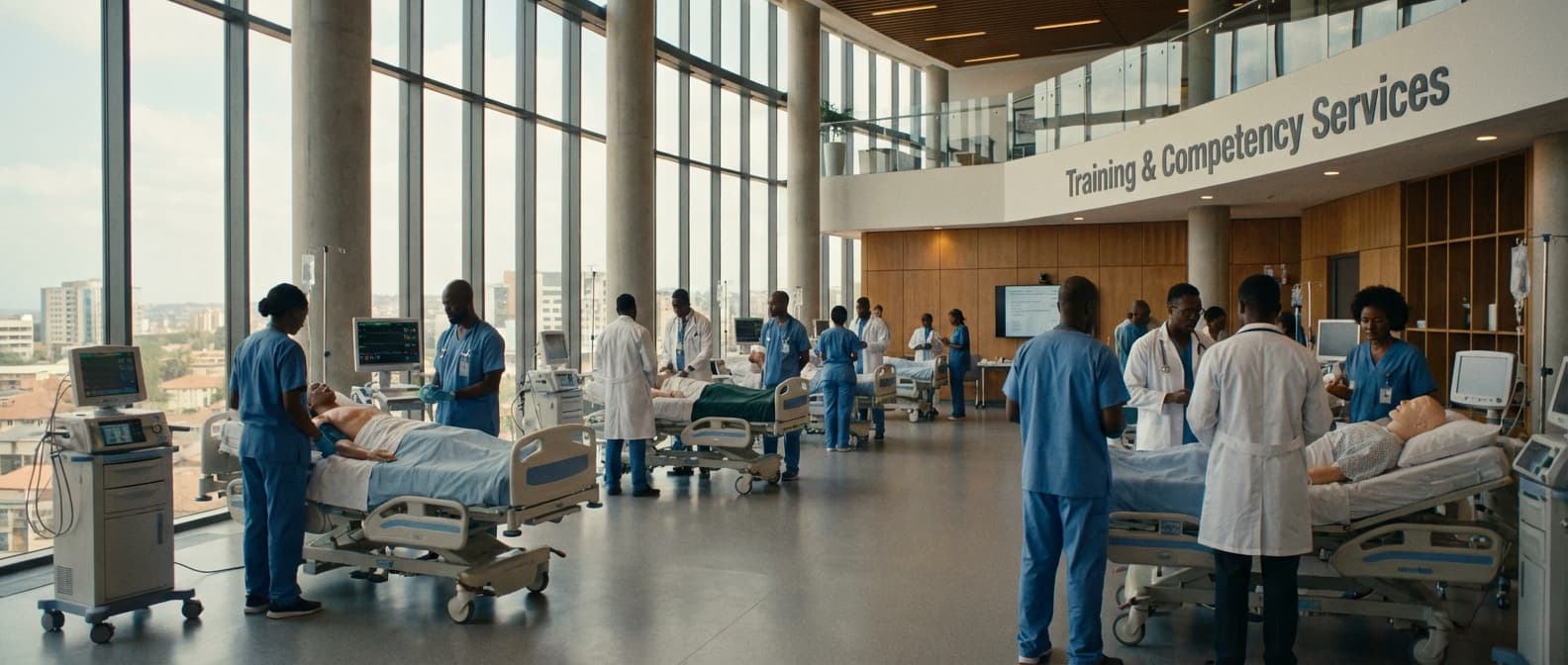
MRI Operator Training Service (Radiographers) in South Africa
Engineering Excellence & Technical Support
MRI Operator Training Service (Radiographers) High-standard technical execution following OEM protocols and local regulatory frameworks.
Advanced Pulse Sequence Mastery
Gain in-depth knowledge and practical application of a comprehensive suite of MRI pulse sequences, including advanced techniques like FLAIR, DWI, and gradient echo imaging. Learn optimal parameter selection for specific pathologies and anatomical regions, ensuring superior image quality and diagnostic accuracy for radiographers across South Africa.
Patient Safety & Protocol Optimization
Master the latest patient safety protocols, including MRI safety screening, contrast agent administration guidelines, and emergency management procedures. Our training focuses on developing robust departmental protocols to minimize risks and enhance the patient experience, crucial for radiographers operating in diverse South African healthcare settings.
Image Interpretation & Artifact Reduction
Develop advanced image interpretation skills for common and complex MRI findings relevant to the South African patient population. Learn systematic approaches to identifying and mitigating common MRI artifacts, empowering radiographers to produce diagnostic-quality images consistently and confidently.
What Is Mri Operator Training Service (Radiographers) In South Africa?
MRI Operator Training Service (Radiographers) in South Africa refers to specialized educational programs designed to equip radiographers with the necessary knowledge and practical skills to safely and effectively operate Magnetic Resonance Imaging (MRI) scanners. This training is crucial for ensuring high-quality diagnostic imaging, patient safety, and adherence to regulatory standards within the South African healthcare landscape. The service encompasses theoretical instruction on MRI physics, safety protocols, image acquisition techniques, and artifact recognition, coupled with hands-on experience utilizing MRI equipment under the supervision of experienced MRI technologists and radiologists. It addresses the unique challenges and requirements of the South African healthcare system, including varying resource availability and diverse patient populations. The training aims to foster competency in patient preparation, positioning, protocol selection, image post-processing, and basic troubleshooting.
| Who Needs It? | Typical Use Cases | |||||
|---|---|---|---|---|---|---|
| Newly qualified radiographers entering MRI practice. | Acquisition of new MRI scanners requiring trained personnel. | Radiographers transitioning from other modalities (e.g., CT, X-ray) to MRI. | Healthcare institutions seeking to upgrade the skills of their existing radiography staff. | Radiographers employed in public and private hospitals, diagnostic imaging centers, and specialized clinics. | Medical imaging departments requiring specialized training for specific MRI applications (e.g., neuroimaging, musculoskeletal MRI). | |
| Routine diagnostic imaging for neurological conditions (e.g., stroke, tumors, multiple sclerosis). | Assessment of musculoskeletal injuries and degenerative conditions (e.g., joint pathologies, ligament tears). | Staging and monitoring of oncological diseases. | Evaluation of cardiovascular and gastrointestinal systems. | Advanced neuroimaging for research and clinical applications. | Pediatric imaging requiring specific protocols and patient handling techniques. | Interventional MRI procedures. |
Key Components of MRI Operator Training Service (Radiographers):
- MRI Physics and Principles: Understanding signal generation, image contrast mechanisms, pulse sequences, and spatial encoding.
- Safety Protocols: Comprehensive training on MR safety zones, screening procedures, contraindications, ferromagnetic detection, and emergency management of MR-related incidents.
- Patient Care and Management: Techniques for patient preparation, communication, anxiety management, and immobilization for optimal image quality and patient comfort.
- Image Acquisition Techniques: Proficiency in selecting and optimizing pulse sequences, field of view, slice thickness, and other imaging parameters for various anatomical regions and pathologies.
- Protocol Development and Optimization: Understanding how to adapt or develop MRI protocols based on clinical indications and available hardware.
- Artifact Recognition and Mitigation: Identifying common artifacts (e.g., motion, susceptibility, aliasing) and implementing strategies to minimize their impact.
- Quality Assurance (QA) and Quality Control (QC): Understanding and performing routine checks to ensure optimal scanner performance and image quality.
- Advanced Imaging Techniques (Optional): Introduction to specialized MRI techniques such as fMRI, diffusion-weighted imaging (DWI), perfusion imaging, and MR spectroscopy.
- Legal and Ethical Considerations: Adherence to South African healthcare regulations, patient confidentiality, and professional conduct.
Who Needs Mri Operator Training Service (Radiographers) In South Africa?
MRI Operator Training Service (Radiographers) in South Africa is crucial for ensuring the highest standards of diagnostic imaging. This specialized training is designed to equip radiographers with the advanced knowledge and practical skills necessary to operate MRI scanners effectively, safely, and efficiently. The service addresses the growing demand for skilled MRI professionals, the continuous evolution of MRI technology, and the need for accurate and high-quality patient care across various healthcare settings.
| Department | Role of MRI Operator Training | Specific Needs | |
|---|---|---|---|
| Radiology Department | Core function of MRI operations and image acquisition. Training ensures competency in scan protocols, patient positioning, and image quality optimization. | Advanced techniques, troubleshooting, protocol optimization, contrast agent administration, safety protocols. | |
| Neurology Department | MRI is essential for diagnosing and monitoring brain and spinal cord conditions. Radiographers need specific training for neurological protocols. | Neuroimaging protocols (e.g., fMRI, diffusion tensor imaging), understanding neurological pathologies. | Orthopedics Department |
| Orthopedics Department | Crucial for assessing musculoskeletal injuries, degenerative conditions, and post-operative evaluations. Specialized training for orthopedic imaging. | Musculoskeletal imaging protocols (e.g., joint imaging, spinal imaging), artifact reduction. | Oncology Department |
| Oncology Department | MRI is used for staging, treatment planning, and monitoring response to therapy in various cancers. Training in oncological imaging protocols. | Oncological imaging protocols (e.g., MR spectroscopy, tumor characterization), multi-parametric MRI. | Cardiology Department |
| Cardiology Department | Increasingly used for assessing cardiac structure and function. Requires specialized training in cardiac MRI techniques. | Cardiac MRI protocols (e.g., cine imaging, stress perfusion), understanding cardiovascular anatomy and physiology. | |
| Emergency Department | Rapid MRI scans can be critical in trauma and acute neurological events. Training for efficient and safe emergency MRI. | Emergency protocols, rapid scan techniques, patient management in acute settings. | |
| Research and Development (R&D) Departments | In academic settings, radiographers may assist in research requiring novel MRI techniques or data acquisition. | Advanced MRI sequences, experimental protocol development, data acquisition for research. |
Target Customers and Departments for MRI Operator Training Service (Radiographers) in South Africa:
- Hospitals (Public and Private): These are the primary institutions where MRI services are most prevalent. Training is vital for their existing radiography teams and for new hires.
- Radiology Clinics and Imaging Centers: Standalone imaging facilities that offer MRI as a key diagnostic service.
- Academic and Teaching Hospitals: Institutions involved in training future radiographers and conducting medical research, requiring advanced MRI expertise.
- Specialized Medical Centers: Facilities focusing on specific areas like neurology, orthopedics, oncology, or cardiology, where MRI plays a significant role in diagnosis and treatment planning.
- Government Health Departments: Particularly those responsible for overseeing public healthcare infrastructure and ensuring adequate staffing and training for public hospitals.
- Private Healthcare Groups: Large organizations managing multiple hospitals and clinics, looking for standardized and high-quality training solutions.
- Medical Device Manufacturers and Distributors: Companies that sell MRI equipment may require training services for their clients' staff or for their own application specialists.
- Individual Radiographers: Professionals seeking to upskill, specialize, or enhance their career prospects by acquiring advanced MRI operating skills.
Mri Operator Training Service (Radiographers) Process In South Africa
This document outlines the typical workflow for an MRI Operator Training Service catering to Radiographers in South Africa. The process begins with an initial inquiry and culminates in the successful execution and completion of the training program. The service aims to equip radiographers with the necessary knowledge and practical skills to operate MRI scanners safely and effectively.
| Stage | Key Activities | Responsible Party | Deliverables/Outcomes |
|---|---|---|---|
| Receive inquiry via email, phone, or website. Discuss training needs, objectives, and potential solutions. | Service Provider (Sales/Training Coordinator), Prospective Client (Radiographer/Institution) | Initial understanding of client needs, potential training scope identified. |
| Detailed discussion of existing skills, specific MRI modalities to be covered, desired learning outcomes, and available resources. Tailoring the curriculum. | Service Provider (Training Specialist), Prospective Client | Customized training plan, defined learning objectives, identified specific skill gaps. |
| Develop a comprehensive proposal including training modules, duration, delivery methods (on-site, remote, hybrid), trainer qualifications, and pricing. Present and discuss the proposal. | Service Provider (Sales/Training Coordinator) | Formal training proposal, detailed quotation, clear understanding of scope and cost. |
| Finalize terms and conditions. Sign training agreement. Confirm training dates and logistics (venue, equipment access, participant numbers). | Service Provider, Client | Signed training contract, confirmed booking, scheduled training dates. |
| Disseminate pre-reading materials, online learning platform access, onboarding instructions, and any pre-assessment questionnaires. Coordinate participant registration. | Service Provider, Client (for participant coordination) | Trainees have access to preparatory materials, logistical arrangements are in place. |
| Conduct theoretical lectures, interactive discussions, practical demonstrations, and hands-on sessions on MRI scanners. Utilize simulators where applicable. Address participant questions and concerns. | Service Provider (Certified MRI Trainer) | Knowledge transfer, practical skill development, increased confidence in MRI operation. |
| Administer written examinations, practical skill assessments, scenario-based evaluations, and observe trainees' performance during hands-on sessions. | Service Provider (Certified MRI Trainer) | Objective evaluation of trainee proficiency, identification of areas requiring further development. |
| Collect feedback from trainees through questionnaires and informal discussions. Gather feedback from the institution regarding training effectiveness and impact on workflow. | Service Provider, Client | Insights into training quality, areas for improvement, and overall satisfaction. |
| Issue certificates of completion to trainees who meet the competency standards. Provide summary reports on training outcomes and participant progress to the institution. | Service Provider | Formal recognition of achieved skills, documented training record. |
| Offer a period of post-training support, answering follow-up questions, providing access to a knowledge base or online resources. Discuss opportunities for advanced training or continuous professional development. | Service Provider | Continued learning and support, enhanced long-term skill retention, potential for future business. |
MRI Operator Training Service (Radiographers) Workflow in South Africa
- Inquiry & Initial Consultation: The process starts when a radiographer or their institution expresses interest in the MRI operator training service.
- Needs Assessment & Customization: Understanding the specific requirements, prior experience, and desired outcomes of the trainees.
- Proposal & Quotation: A detailed proposal outlining the training curriculum, duration, methodology, and associated costs is provided.
- Agreement & Booking: Upon acceptance of the proposal, a formal training agreement is signed, and specific training dates are confirmed.
- Pre-Training Preparation: This includes providing trainees with pre-reading materials, access to online resources, and any necessary software or platform setup.
- Training Delivery (Theory & Practical): The core of the service, involving lectures, demonstrations, hands-on practice, and simulation on actual MRI equipment.
- Competency Assessment: Evaluating the trainees' understanding and practical skills through written exams, practical assessments, and case studies.
- Feedback & Evaluation: Gathering feedback from trainees and the institution to assess the effectiveness of the training and identify areas for improvement.
- Certification & Documentation: Issuing certificates of completion to successful trainees, along with any relevant training records or documentation.
- Post-Training Support: Offering ongoing support, answering queries, and potentially providing refresher courses or advanced training modules.
Mri Operator Training Service (Radiographers) Cost In South Africa
The cost of MRI operator training services for radiographers in South Africa can vary significantly based on several factors. These include the reputation and accreditation of the training provider, the duration and depth of the course, the level of practical experience offered (e.g., hands-on time with MRI equipment), and the specific modules covered. Furthermore, whether the training is conducted on-site at a healthcare facility or at a dedicated training centre, and if it includes certification or assessment fees, will influence the overall price. Geographical location within South Africa may also play a minor role, with major metropolitan areas potentially offering a wider range of options but also potentially higher overheads for training providers.
| Training Type | Estimated Price Range (ZAR) | Notes |
|---|---|---|
| Basic Introduction to MRI for Radiographers (e.g., 1-2 days) | R 5,000 - R 12,000 | Covers fundamental principles, safety, and basic image acquisition. May be theoretical with limited practical exposure. |
| Comprehensive MRI Operator Training (e.g., 5-10 days) | R 15,000 - R 45,000 | Includes in-depth theoretical knowledge, extensive hands-on scanning experience, protocol optimization, and troubleshooting. Often includes certification. |
| Specialized MRI Training (e.g., Neuro, MSK, Cardiac - 2-3 days per module) | R 8,000 - R 25,000 per module | Focuses on specific anatomical areas or advanced techniques. Can be added to comprehensive training or taken as standalone advanced courses. |
| On-site Training (per group) | Variable (often a flat fee plus per-participant cost) | Costs can range widely depending on the number of participants and the duration. Providers will quote based on specific needs and travel expenses. |
| Online/Virtual MRI Training | R 3,000 - R 10,000 | More theoretical and less hands-on, but offers flexibility. May be supplemented with simulation software. |
Key Pricing Factors for MRI Operator Training in South Africa
- Training Provider Reputation and Accreditation
- Course Duration and Intensity
- Level of Practical/Hands-on Experience
- Specific MRI Modalities and Techniques Covered
- On-site vs. Off-site Training Location
- Inclusion of Certification and Assessment Fees
- Group Size for Training
Affordable Mri Operator Training Service (Radiographers) Options
This document outlines affordable MRI operator training service options specifically tailored for radiographers. We understand the importance of specialized MRI training for career advancement and operational efficiency, and aim to provide cost-effective solutions. This includes exploring various training formats, value bundles, and strategic cost-saving measures to make high-quality MRI education accessible.
| Value Bundle Option | Inclusions | Target Audience | Estimated Cost Range (USD) | Cost-Saving Strategies |
|---|---|---|---|---|
| Foundational MRI Essentials Bundle | Online modules covering MRI physics, safety protocols, image acquisition principles, and basic pulse sequences. Access to online quizzes and knowledge checks. | Radiographers new to MRI, or those needing a refresher on core principles. | $500 - $1,500 per user | Utilizing early bird discounts, group registration for multiple staff members, and selecting a longer-term access period for online modules. |
| Comprehensive MRI Operator Bundle | Includes all Foundational Essentials modules, plus: Advanced pulse sequence optimization, specific anatomical region scanning protocols (e.g., neuro, MSK), introduction to contrast agents, and basic artifact management. May include limited simulation or virtual lab access. | Radiographers transitioning into dedicated MRI roles or seeking to expand their scanning capabilities. | $1,500 - $3,000 per user | Bundling with other staff members, negotiating volume discounts with the training provider, and leveraging employer-sponsored training budgets. |
| Advanced MRI Specialization Bundle | Focuses on specific advanced applications such as fMRI, diffusion tensor imaging (DTI), cardiac MRI, or specific contrast protocols. Often includes expert-led webinars or case study reviews. May include a mentorship component. | Experienced MRI radiographers looking to specialize or enhance expertise in niche areas. | $2,500 - $5,000+ per user | Opting for self-study resources for less critical advanced topics, focusing training on the most impactful specializations for the facility, and exploring partnerships with academic institutions for specialized training. |
| Facility-Wide MRI Training Solution | Customized blended or on-site training program tailored to the facility's specific MRI scanners, protocols, and staff needs. Includes initial training, ongoing support, and potentially certification preparation. | Healthcare facilities seeking to upskill their entire MRI team or onboard new staff efficiently. | Custom Quote (based on scope, duration, and number of participants) | Negotiating long-term service agreements, leveraging internal trainers for basic onboarding, and exploring government grants or subsidies for workforce development in medical imaging. |
Key Training Delivery Formats for Radiographers:
- Online/E-Learning Modules: Flexible, self-paced learning accessible from anywhere, ideal for foundational knowledge and theoretical concepts.
- Blended Learning Programs: Combines online modules with in-person practical sessions, offering a balanced approach to theory and hands-on experience.
- In-Person Workshops/Seminars: Intensive, instructor-led training focused on practical skills, troubleshooting, and advanced techniques.
- On-Site Training: Customized training delivered at the healthcare facility, minimizing travel costs and maximizing relevance to specific equipment and workflows.
Verified Providers In South Africa
In the competitive landscape of South African healthcare, identifying truly 'Verified Providers' is paramount for ensuring quality, safety, and ethical medical services. This is where Franance Health distinguishes itself. Their rigorous credentialing process and unwavering commitment to excellence make them the premier choice for patients seeking reliable and high-caliber healthcare professionals. Franance Health doesn't just list providers; they actively vet and verify each one, ensuring they meet stringent standards for qualifications, experience, and patient care.
| Franance Health Verification Component | What it Entails | Benefit to Patients |
|---|---|---|
| Medical License Verification | Confirmation of current, valid registration with the relevant South African medical council (e.g., HPCSA). | Ensures providers are legally authorized to practice and adhere to professional regulations. |
| Educational and Professional Qualifications | Scrutiny of degrees, diplomas, certifications, and specialist training. | Guarantees that providers possess the necessary academic and practical expertise. |
| Work Experience and References | Validation of employment history and, where applicable, professional references. | Confirms practical application of skills and positive professional conduct. |
| Criminal Background Checks (where applicable) | Ensures providers have a clean record, prioritizing patient safety. | Provides an added layer of security and peace of mind. |
| Ethical Practice and Patient Feedback Mechanisms | Assessment of adherence to medical ethics and incorporation of feedback systems. | Promotes a patient-centered approach and accountability for care quality. |
Why Franance Health Represents the Best Choice for Verified Providers:
- Rigorous Vetting Process: Franance Health employs a multi-faceted verification system that goes beyond basic registration. This includes thorough checks of medical licenses, professional qualifications, and continuous professional development records.
- Emphasis on Experience and Specialization: They prioritize providers with proven track records and relevant experience in their chosen fields. This ensures patients are connected with specialists who can address their specific needs effectively.
- Patient-Centric Approach: Franance Health's verification criteria include an evaluation of a provider's commitment to patient well-being, ethical practices, and communication standards.
- Transparency and Trust: By offering a clearly defined and accessible verification process, Franance Health builds trust and empowers patients to make informed decisions about their healthcare.
- Continuous Monitoring: The verification is not a one-time event. Franance Health maintains a system for ongoing monitoring to ensure providers continue to meet their high standards.
- Access to Top Talent: Their platform serves as a curated gateway to South Africa's most competent and trustworthy healthcare professionals, saving patients time and reducing the risk of encountering substandard services.
Scope Of Work For Mri Operator Training Service (Radiographers)
This Scope of Work (SOW) outlines the requirements for providing comprehensive MRI Operator Training Services specifically tailored for radiographers. The objective is to equip radiographers with the necessary theoretical knowledge and practical skills to safely and effectively operate MRI scanners, ensuring high-quality diagnostic imaging and patient care. The training will cover fundamental principles of MRI, advanced imaging techniques, safety protocols, quality assurance, and troubleshooting. The training program will include technical deliverables and adhere to standard specifications as detailed below.
| Module Title | Key Learning Objectives | Standard Specification/Content | Delivery Method | Assessment Method |
|---|---|---|---|---|
| Introduction to MRI Physics | Understand fundamental principles of MRI (magnetism, RF pulses, signal generation). | Basic physics concepts, T1/T2 relaxation, spin echo, gradient echo sequences. | Lecture, presentation, interactive simulations. | Quizzes, practical application scenarios. |
| MRI Safety Protocols | Identify and mitigate all potential MRI safety hazards. | Magnetic field safety, SAR, acoustic noise, cryogens, screening procedures, contrast agents. | Lecture, video demonstrations, safety drills. | Scenario-based questions, practical safety checks. |
| MRI Scanner Operation | Operate the MRI scanner effectively and efficiently. | Console operation, patient positioning, coil selection, sequence parameters, image acquisition. | Demonstration, hands-on practice on a live scanner. | Practical task completion, competency checklist. |
| Image Acquisition Techniques | Perform standard and advanced MRI sequences. | T1W, T2W, FLAIR, DWI, GRE, MRA, Cardiac MRI (basic), Spectroscopy (basic). | Lecture, demonstration, hands-on practice. | Image quality assessment, sequence parameter selection exercises. |
| Image Processing and Post-Processing | Understand image reconstruction and basic post-processing. | Windowing, leveling, MPR, 3D reconstruction. | Demonstration, hands-on practice with PACS/viewing software. | Image manipulation tasks. |
| Quality Assurance and Control (QA/QC) | Implement QA/QC procedures for MRI. | Phantom imaging, system checks, artifact identification and correction. | Lecture, practical QA/QC implementation. | QA/QC report generation, artifact identification quiz. |
| Common Artifacts and Troubleshooting | Identify, analyze, and troubleshoot common MRI artifacts. | Motion, susceptibility, aliasing, chemical shift artifacts; basic system error codes. | Case studies, practical troubleshooting exercises. | Problem-solving scenarios, diagnostic interpretation of artifact images. |
| Patient Care and Communication | Provide optimal patient care during MRI procedures. | Patient screening, comfort measures, communication techniques, management of claustrophobia. | Role-playing, discussion. | Scenario-based assessment on patient interaction. |
Technical Deliverables
- Comprehensive training manual (digital and/or hard copy) covering all aspects of MRI operation.
- Interactive e-learning modules or presentation slides for theoretical sessions.
- Practical training checklist and competency assessment forms for hands-on sessions.
- Case study materials for diagnostic interpretation and problem-solving exercises.
- Post-training evaluation forms for participant feedback.
- Certification of completion for successful participants.
- Daily/weekly progress reports submitted to the client.
- Final training summary report including attendee performance metrics and recommendations.
Service Level Agreement For Mri Operator Training Service (Radiographers)
This Service Level Agreement (SLA) outlines the commitment of [Service Provider Name] to provide high-quality MRI Operator Training Services specifically for Radiographers, covering response times for support requests and uptime guarantees for the training platform. This SLA is an integral part of the Master Service Agreement between [Service Provider Name] and [Client Name].
| Service Component | Service Level Objective (SLO) | Measurement Metric | Reporting Frequency |
|---|---|---|---|
| Training Platform Uptime | 99.5% Uptime (excluding scheduled maintenance) | Percentage of time the platform is accessible and functional | Monthly |
| Technical Support: Critical Issues (e.g., platform inaccessible, unable to start module) | Acknowledge: within 1 hour; Resolution target: within 4 business hours | Time to first response and time to resolution (estimated) | As reported and tracked in support tickets |
| Technical Support: Non-Critical Issues (e.g., minor display errors, login problems) | Acknowledge: within 4 business hours; Resolution target: within 1 business day | Time to first response and time to resolution (estimated) | As reported and tracked in support tickets |
| Training Content Updates | Annual review and update cycle for core modules; Ad-hoc updates for significant technological advancements | Number of content updates per year | Annual report and notification of ad-hoc updates |
| Instructor Availability (if applicable) | Scheduled Q&A sessions: [Specify days/times/frequency]; On-demand support: within [X] business hours of request | Attendance at scheduled sessions and response time for on-demand requests | Monthly summary of sessions and response times |
Key Service Components
- Training Platform Uptime: Guarantees the availability of the online MRI Operator Training platform.
- Technical Support Response Times: Defines the maximum time to acknowledge and begin addressing technical issues reported by users.
- Training Content Updates: Outlines the frequency and process for updating training materials to reflect the latest MRI technology and practices.
- Instructor Availability: Specifies the availability of qualified instructors for Q&A sessions or practical guidance (if applicable).
Frequently Asked Questions

Ready when you are
Let's scope your MRI Operator Training Service (Radiographers) in South Africa project in South Africa.

Scaling healthcare logistics and technical systems across the entire continent.