
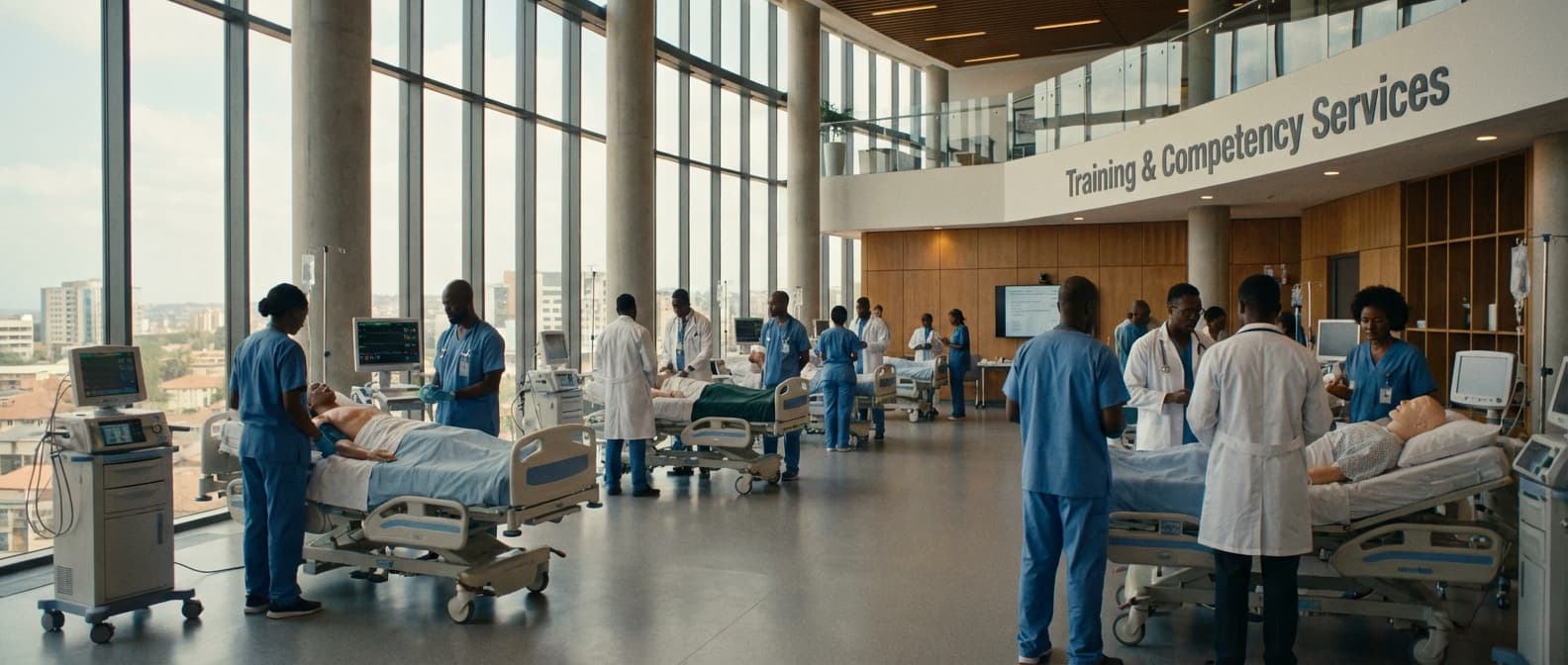
CT Operator Training Service (Radiographers) in South Africa
Engineering Excellence & Technical Support
CT Operator Training Service (Radiographers) High-standard technical execution following OEM protocols and local regulatory frameworks.
Advanced Imaging Techniques Mastery
Develop proficiency in cutting-edge CT imaging modalities and protocols, including dual-energy CT, spectral imaging, and advanced reconstruction algorithms. Master techniques for optimized image quality, reduced radiation dose, and enhanced diagnostic accuracy, crucial for complex diagnostic challenges in South Africa's diverse healthcare landscape.
Radiation Safety & Optimization Compliance
Gain comprehensive understanding and practical application of South African radiation protection regulations (e.g., NNR guidelines). Implement ALARA principles through precise patient positioning, optimized scan parameters, and effective shielding techniques, ensuring patient and staff safety in line with national standards.
Pathology Recognition & Protocol Selection
Enhance your ability to identify a wide spectrum of pathologies across various anatomical regions from CT images. Learn to select and tailor optimal imaging protocols based on clinical indications and suspected pathologies, contributing to faster and more accurate diagnoses within the South African healthcare context.
What Is Ct Operator Training Service (Radiographers) In South Africa?
CT Operator Training Service (Radiographers) in South Africa refers to specialized educational programs designed to equip qualified radiographers with the theoretical knowledge and practical skills necessary to safely and effectively operate Computed Tomography (CT) scanners. This service is crucial for ensuring diagnostic image quality, patient safety, and adherence to radiation protection principles within a medical imaging department. It involves comprehensive instruction on CT principles, hardware operation, image acquisition protocols, image processing and manipulation, artifact recognition and reduction, quality control procedures, and relevant legal and ethical considerations. The training is typically delivered by experienced CT technologists, medical physicists, or specialized training institutions. The objective is to enable radiographers to perform CT examinations independently, producing high-quality diagnostic images while minimizing radiation dose to the patient and optimizing workflow efficiency.
| Who Needs CT Operator Training (Radiographers)? | Typical Use Cases |
|---|---|
| Newly qualified radiographers entering a CT imaging environment. | Routine screening and diagnostic examinations for conditions such as:
|
| Existing radiographers transitioning to a new CT scanner model or technology. | Specialized CT applications including:
|
| Radiographers seeking to enhance their skills in advanced CT techniques and protocols. | Post-operative assessment and monitoring.
|
| Radiographers working in departments with evolving imaging demands or requiring specific certifications. | Research imaging protocols and data acquisition for clinical studies. |
Key Components of CT Operator Training Service:
- Theoretical foundation in CT physics (X-ray beam generation, detector technology, data acquisition geometry).
- Understanding of CT scanner hardware (gantry, couch, console, software interfaces).
- Development of proficiency in patient positioning and preparation for CT examinations.
- Mastery of various CT acquisition protocols for different anatomical regions and clinical indications.
- Image reconstruction techniques and parameters optimization.
- Image manipulation and post-processing (windowing, leveling, MPR, 3D rendering).
- Identification and mitigation strategies for common CT artifacts.
- Principles of radiation safety and dose optimization techniques (e.g., ALARA principle, dose modulation).
- Quality assurance and quality control (QA/QC) procedures for CT equipment.
- Understanding of contrast media administration protocols and related safety measures.
- Legal and ethical considerations in medical imaging and CT.
- Emergency preparedness and patient management during CT examinations.
Who Needs Ct Operator Training Service (Radiographers) In South Africa?
In South Africa, comprehensive CT Operator Training services are crucial for a variety of healthcare professionals and institutions to ensure safe, efficient, and high-quality CT imaging. This training is particularly vital for radiographers who are at the forefront of patient care in this specialized field. The demand for such services stems from the need for up-to-date knowledge, adherence to evolving protocols, and the effective utilization of advanced CT technology.
| Target Customer Group | Relevant Departments/Contexts | Key Training Needs |
|---|---|---|
| Radiographers | Radiology Departments (Public & Private Hospitals, Diagnostic Centres) | Advanced CT physics, protocol optimization, contrast media administration, radiation dose reduction techniques, image post-processing, patient safety and management in CT, legal and ethical aspects. |
| CT Technologists | Specialized CT Units, Advanced Imaging Centres | Specific CT applications (e.g., Cardiac CT, Interventional CT, Dual-Energy CT), advanced troubleshooting, workflow efficiency, quality control and assurance specific to CT. |
| Hospitals (Management & Training Coordinators) | Human Resources, Radiology Department Management, Continuing Professional Development (CPD) Offices | Compliance with regulatory standards, staff competency assessment, efficient departmental operations, cost-effective imaging, staff retention through skill development. |
| Academic/Teaching Institutions | Radiography Training Programs, University Medical Schools | Curriculum development, trainer training, provision of cutting-edge CT knowledge for future professionals, research support. |
| Government & Public Health Agencies | Department of Health, Provincial Health Authorities | Ensuring standardized quality of care, training for public sector radiographers, addressing workforce shortages in specific areas, implementing national imaging guidelines. |
| Private Healthcare Corporates | Centralized Training Departments, Hospital Group Radiology Leads | Uniform training standards across multiple sites, maximizing ROI on CT equipment, ensuring consistent patient experience, leadership development for radiology managers. |
Target Customers and Departments Requiring CT Operator Training Service (Radiographers) in South Africa
- Radiographers (Diagnostic Radiographers): The primary target audience, requiring ongoing professional development and specialized training in CT operation, image acquisition, patient positioning, radiation safety, and quality assurance.
- CT Technologists: Professionals solely focused on CT scanning, benefiting from advanced training in specific CT applications, protocols, and troubleshooting.
- Radiology Departments within Hospitals: Covering both public and private sector hospitals, these departments are the largest consumers of CT services and thus require a skilled workforce.
- Diagnostic Imaging Centres/Clinics: Standalone facilities offering specialized imaging services, including CT scans.
- Academic and Teaching Hospitals: Institutions involved in training future radiographers and healthcare professionals, requiring instructors and advanced training programs.
- Rural and Underserved Areas: Where access to specialized training may be limited, mobile or online training solutions are essential for bringing skills development to these regions.
- Government Health Departments: Responsible for setting standards and ensuring the competency of healthcare professionals within the public health sector.
- Private Healthcare Groups: Large corporate entities that own and manage multiple hospitals and imaging facilities, seeking standardized and efficient training across their networks.
- Medical Device Companies (CT Manufacturers/Suppliers): Often provide initial training for new equipment, but ongoing training by independent services ensures a deeper understanding and optimized use.
Ct Operator Training Service (Radiographers) Process In South Africa
The CT Operator Training Service for Radiographers in South Africa is a comprehensive process designed to equip qualified radiographers with the specialized skills and knowledge required to operate Computed Tomography (CT) scanners. This workflow outlines the journey from initial inquiry to successful completion of the training program, ensuring adherence to South African healthcare standards and best practices.
| Stage | Description | Key Activities | Responsible Parties | Deliverables/Outcomes |
|---|---|---|---|---|
| The process begins when a radiographer, or their institution, expresses interest in CT operator training. | Contacting the training provider, expressing interest, discussing specific training needs (e.g., type of scanner, experience level). | Prospective Trainee, Employer (optional), Training Provider | Understanding of training program offerings, initial assessment of training requirements. |
| The training provider provides detailed information about the CT operator training program. | Providing course brochures, syllabi, fee structures, scheduling information. Offering personalized consultations to address specific questions and clarify expectations. | Training Provider, Prospective Trainee | Informed decision-making by the trainee, clarity on program content and logistics. |
| The prospective trainee formally applies for the training program and their eligibility is confirmed. | Submitting the application form, providing proof of qualification (e.g., degree in radiography, HPCSA registration), undergoing any pre-screening assessments (if applicable). | Prospective Trainee, Training Provider (for verification) | Confirmation of eligibility to enroll in the program. |
| Upon successful verification, the trainee enrolls and prepares for the course. | Completing enrollment paperwork, making fee payments, receiving pre-course materials (e.g., recommended reading, access to online portals). | Prospective Trainee, Training Provider | Official enrollment, access to learning resources, readiness for the commencement of training. |
| The trainee engages in comprehensive theoretical instruction covering CT principles and protocols. | Attending lectures (online or in-person), studying course materials, participating in discussions, covering topics like CT physics, cross-sectional anatomy, imaging protocols, radiation safety, contrast media, and quality assurance. | Trainee, Training Provider (Lecturers/Instructors) | Solid understanding of CT principles, safe operating procedures, and diagnostic imaging techniques. |
| This crucial stage involves hands-on experience with actual CT scanners under expert supervision. | Operating various CT scanner models, performing different scan types (e.g., head, chest, abdomen), practicing patient positioning, image acquisition techniques, and protocol optimization. This often takes place in a simulated or actual clinical environment. | Trainee, Clinical Instructors/Supervisors | Proficiency in operating CT scanners, executing standard and specialized scans, troubleshooting common issues. |
| The trainee's understanding and practical skills are rigorously assessed to ensure competency. | Undergoing written examinations, practical skills assessments, case study analysis, and oral examinations. Evaluation of adherence to safety protocols and diagnostic image quality. | Training Provider (Assessors/Examiners) | Demonstration of acquired knowledge and practical skills, identification of areas for further development. |
| Upon successful completion of all assessments, the trainee receives certification and ongoing support. | Issuance of a certificate of competence, providing feedback on performance, offering guidance on continuing professional development (CPD), and potentially facilitating further specialization or employment opportunities. | Training Provider, Trainee | Recognized qualification as a CT Operator, enhanced career prospects, and a foundation for lifelong learning in CT imaging. |
CT Operator Training Service Workflow (South Africa)
- Initial Inquiry & Needs Assessment
- Program Information & Consultation
- Application & Eligibility Verification
- Enrollment & Pre-Course Preparation
- Theoretical Training Modules
- Practical/Hands-on CT Scanner Training
- Competency Assessment & Evaluation
- Certification & Post-Training Support
Ct Operator Training Service (Radiographers) Cost In South Africa
The cost of CT Operator Training (Radiographers) in South Africa can vary significantly based on several factors. These include the duration and intensity of the course, the reputation and accreditation of the training provider, the location of the training (in-person vs. online, urban vs. rural), and whether the training is part of a larger qualification or a standalone certification. Prices are typically quoted in South African Rand (ZAR).
| Training Type | Estimated Cost Range (ZAR) | Notes |
|---|---|---|
| Basic CT Awareness/Introduction | R 3,000 - R 7,000 | Typically 1-3 days, theoretical focus. |
| Intermediate CT Operator Course | R 8,000 - R 15,000 | Covers fundamental protocols, image acquisition. May include some practical elements. |
| Advanced CT Training/Specialization | R 16,000 - R 30,000+ | In-depth protocols, advanced applications, potentially longer duration and more hands-on experience. |
| Full Qualification/Diploma (including CT) | Varies significantly (often part of a larger BSc or National Diploma) | This is a broader educational program where CT training is a module. Costs will be significantly higher and spread over years. |
Key Pricing Factors for CT Operator Training (Radiographers) in South Africa:
- Course Duration and Depth: Shorter, introductory courses will be less expensive than comprehensive programs covering advanced CT techniques, protocols, and interpretation.
- Provider Accreditation and Reputation: Training from internationally recognized or well-established local institutions with strong industry ties will generally command higher fees.
- Training Format: In-person, hands-on training with access to actual CT equipment is usually more costly than online or theoretical-based courses.
- Location: Training in major urban centers like Johannesburg, Cape Town, or Durban may have higher overheads reflected in pricing compared to smaller towns.
- Inclusion of Practical Components: Courses that include supervised clinical placements or extensive simulator time will be priced higher.
- Certification and Examination Fees: The cost of official certification exams, if not bundled, will be an additional factor.
- Group vs. Individual Training: Bulk bookings for multiple radiographers from a single institution might offer discounted rates.
- Level of Specialization: Training focused on specific CT applications (e.g., cardiac CT, neuro CT) might be more specialized and therefore priced differently than general CT training.
Affordable Ct Operator Training Service (Radiographers) Options
Seeking affordable CT operator training for radiographers is a critical investment in advancing your team's skills and ensuring high-quality patient care. This service offers specialized education for radiographers to become proficient in operating Computed Tomography (CT) scanners. The goal is to provide comprehensive knowledge and practical skills necessary for safe and effective CT imaging, covering anatomy, pathology, scanner operation, image acquisition protocols, radiation safety, and quality control. We understand that budget constraints are a significant factor for many healthcare facilities, and thus we focus on delivering value through flexible training options and strategic cost-saving measures.
| Value Bundle Tier | Description | Key Inclusions | Ideal For | Estimated Cost Range (Per Trainee) |
|---|---|---|---|---|
| Essential CT Fundamentals | A foundational package designed for radiographers new to CT or requiring a refresher on core principles. | Basic CT Physics & Anatomy, Scanner Operation Essentials, Standard Protocols, Radiation Safety Basics. | Entry-level CT techs, staff transitioning to CT. | $750 - $1,500 |
| Advanced CT Proficiency | Expands upon fundamental knowledge with in-depth coverage of advanced techniques and specific applications. | All 'Essential' inclusions PLUS: Advanced Protocols (e.g., Cardiac, Angiography), Contrast Management, Artifact Analysis & Troubleshooting, Quality Control Procedures. | Radiographers with some CT experience seeking to expand their skill set. | $1,200 - $2,500 |
| Comprehensive CT Specialist | A complete training solution for aspiring CT specialists, including preparation for certification. | All 'Advanced' inclusions PLUS: Specialized Modality Training (optional add-on), Mock Certification Exams, Dedicated Mentorship, Extended Clinical Simulation Hours. | Radiographers aiming for CT certification and specialization. | $2,000 - $4,000+ |
| On-Site Facility Training | Customizable training delivered at your facility, tailored to your specific equipment and protocols. | Fully customized curriculum based on your needs, on-site instruction, equipment-specific training, facility protocol integration. | Facilities with multiple staff members to train or unique equipment. | Priced per training day/group size, starting from $3,000 per day. |
Key Training Components & Value Proposition
- Comprehensive Curriculum: Covers essential CT principles, advanced protocols, patient positioning, contrast media administration, and artifact reduction.
- Hands-on Experience: Simulated or supervised clinical practice to build confidence and proficiency.
- Radiation Safety Emphasis: Thorough training on ALARA principles and dose reduction techniques.
- Credentialing Support: Preparation for CT certification exams.
- Experienced Instructors: Led by certified CT technologists and radiologic technologists with extensive clinical and teaching experience.
- Flexible Learning Modalities: Offering a blend of online, in-person, and hybrid options to suit your facility's needs and schedule.
- Cost-Effectiveness: Designed to deliver high-quality training at competitive price points.
Verified Providers In South Africa
In South Africa's evolving healthcare landscape, discerning patients seek not only quality medical services but also the assurance of provider legitimacy and ethical practice. Franance Health has emerged as a leading entity, meticulously vetting and verifying healthcare providers across the nation. This commitment to credentialing ensures that patients receive care from qualified, registered, and ethical professionals. Franance Health's rigorous verification process is a cornerstone of their service, building trust and transparency within the healthcare ecosystem.
| Verification Aspect | Franance Health's Standard | Patient Benefit |
|---|---|---|
| Medical Licensing | Confirmation of valid, current medical license from relevant South African councils. | Ensures providers are legally permitted to practice and meet basic competency requirements. |
| Professional Qualifications | Verification of degrees, diplomas, and specialized certifications from accredited institutions. | Confirms providers have the necessary education and specialized training for their field. |
| Experience & Practice History | Review of years in practice and confirmation of no significant malpractice claims or disciplinary actions. | Indicates practical experience and a history of responsible medical practice. |
| Ethical Conduct | Assessment of adherence to professional codes of conduct and ethical standards. | Promotes a patient-centered approach and builds trust in the provider-patient relationship. |
| Continuing Professional Development (CPD) | Confirmation that providers are actively engaged in ongoing learning and skill enhancement. | Ensures providers are up-to-date with the latest medical advancements and best practices. |
Why Franance Health's Verified Providers are the Best Choice:
- Uncompromised Patient Safety: Franance Health's verification process prioritizes patient well-being by confirming that providers hold valid medical licenses, relevant certifications, and have no disciplinary actions against them. This significantly reduces the risk of encountering unqualified or unethical practitioners.
- Access to Qualified Professionals: Their network comprises a diverse range of specialists and general practitioners who have met stringent academic, training, and experience benchmarks. This means patients can confidently access the best medical expertise for their needs.
- Ethical Practice Assurance: Beyond qualifications, Franance Health assesses providers for their adherence to ethical guidelines and professional conduct. This fosters a patient-provider relationship built on trust and respect.
- Streamlined Healthcare Navigation: By pre-vetting providers, Franance Health simplifies the often-complex process of finding a trustworthy healthcare professional, saving patients time and reducing stress.
- Enhanced Transparency and Accountability: The verification process provides a clear audit trail, promoting accountability within the healthcare system and offering patients peace of mind.
Scope Of Work For Ct Operator Training Service (Radiographers)
This Scope of Work (SOW) outlines the requirements for a comprehensive CT Operator Training Service specifically designed for Radiographers. The service aims to enhance the theoretical knowledge and practical skills of radiographers in the safe, efficient, and high-quality operation of Computed Tomography (CT) systems. This SOW details the technical deliverables and standard specifications that the training provider must adhere to.
| Category | Item | Description | Standard Specifications/Requirements |
|---|---|---|---|
| Curriculum & Materials | Training Manuals | Comprehensive guide covering CT physics, principles, protocols, patient safety, image acquisition, reconstruction, and quality control. | Must be up-to-date with current CT technology and regulatory standards. Available in digital and/or print format. Language: English. Minimum 100 pages. |
| Curriculum & Materials | Presentation Slides | Visually engaging slides for theoretical sessions, reinforcing key concepts. | High-resolution graphics, clear text, and appropriate for instructor-led delivery. Must align with training manuals. |
| Curriculum & Materials | Case Studies | Real-world examples of CT imaging scenarios, including protocol selection, artifact identification, and diagnostic challenges. | A minimum of 15 diverse case studies covering various anatomical regions and pathologies. Includes reviewer questions and answers. |
| Instructors | Qualifications | Demonstrated expertise in CT imaging, radiologic technology, and adult education. | Minimum 5 years of active experience as a CT Radiographer. Holding relevant professional certifications (e.g., ARRT, equivalent). Experience in delivering technical training. |
| Instructors | Instructor-to-Trainee Ratio | Ensuring adequate individual attention and support during practical sessions. | Maximum ratio of 1:6 for hands-on practical sessions. |
| Hands-on Training | CT Scanner Access | Availability of a functional CT scanner for practical training. | Modern multi-slice CT scanner. Access for a minimum of 4 hours per trainee group. Scanner must be in good working order and calibrated. |
| Hands-on Training | Phantom Usage | Phantoms for simulating patient anatomy and assessing image quality. | Standard CT accreditation phantoms (e.g., ACR phantom, contrast resolution phantom) and anatomical phantoms. |
| Hands-on Training | Protocol Development Practice | Opportunity for trainees to practice selecting and modifying existing CT protocols. | Trainees will be guided through selecting appropriate protocols for common examinations and understand the rationale behind parameter choices. |
| Assessment & Evaluation | Pre-Training Assessment | To gauge existing knowledge and tailor training delivery. | Multiple-choice questionnaire covering fundamental CT concepts. To be completed prior to the commencement of training. |
| Assessment & Evaluation | Post-Training Examination | To measure the effectiveness of the training and trainee comprehension. | Comprehensive exam including theoretical questions (multiple choice, short answer) and practical scenario-based questions. Pass mark: 75%. |
| Assessment & Evaluation | Practical Skills Assessment | Evaluation of trainee performance during hands-on sessions. | Instructor observation and checklist-based assessment of trainee's ability to operate the CT scanner, select protocols, and position patients (simulated). |
| Certification | Training Certificate | Formal document acknowledging successful completion of the training program. | Issued to trainees who achieve a passing score (>= 75%) in the post-training examination and demonstrate satisfactory practical skills. Must include trainee name, course title, dates of training, instructor signature, and organization logo. |
| Post-Training Support | Q&A Forum/Email Support | Opportunity for trainees to seek clarification on concepts or issues post-training. | Access to a dedicated email address or online forum for a period of 30 days post-training for technical queries. |
| Post-Training Support | Resource Library Access | Access to supplementary learning materials. | Digital access to updated versions of training manuals and relevant articles for a period of 6 months. |
Technical Deliverables
- Detailed Training Curriculum and Materials
- Certified and Experienced CT Instructors
- Hands-on CT Scanner Training Sessions
- Comprehensive Assessment and Evaluation Tools
- Training Completion Certificates
- Post-Training Support and Resources
Service Level Agreement For Ct Operator Training Service (Radiographers)
This Service Level Agreement (SLA) outlines the guaranteed response times and uptime for the CT Operator Training Service provided to radiographers. This SLA is a part of the overall Service Agreement between [Your Company Name] and [Client Company Name].
| Service Category | Response Time Guarantee | Scope |
|---|---|---|
| Critical Technical Issues (e.g., platform inaccessible, inability to start training) | Within 2 business hours | Affecting multiple users or preventing access to core training functionality. |
| Urgent Technical Issues (e.g., specific module not loading, content errors) | Within 4 business hours | Affecting individual users or specific training content that hinders progress. |
| General Inquiries (e.g., content clarification, usage questions) | Within 1 business day | Non-critical questions related to the training material or platform usage. |
| Scheduled Maintenance Notification | Minimum 48 hours advance notice | Planned downtime for system updates or improvements. |
Key Service Metrics
- Uptime Guarantee: The CT Operator Training Service will be available and operational for a minimum of 99.5% of the scheduled training hours.
- Response Times: Guaranteed response times for technical support and training-related queries are defined below.
- Definitions: Uptime refers to the percentage of time the training platform and its associated resources are accessible and functional. Scheduled training hours are those agreed upon and communicated to the client.
- Exclusions: This SLA does not cover downtime or performance issues caused by factors outside of [Your Company Name]'s reasonable control, including but not limited to internet outages on the client's side, third-party software failures not directly managed by [Your Company Name], or scheduled maintenance communicated in advance.
Frequently Asked Questions

Ready when you are
Let's scope your CT Operator Training Service (Radiographers) in South Africa project in South Africa.

Scaling healthcare logistics and technical systems across the entire continent.