
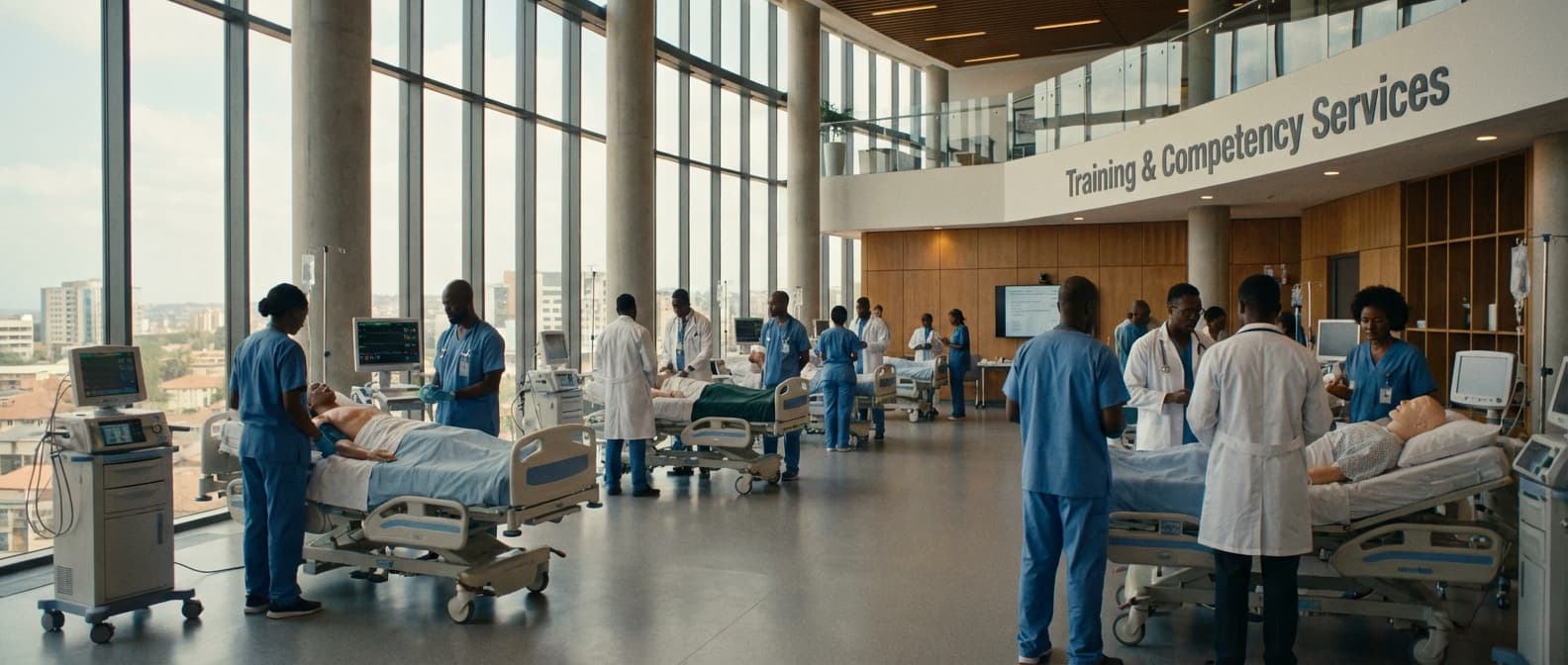
Biomedical Engineering First-Line Support Training Service in South Africa
Engineering Excellence & Technical Support
Biomedical Engineering First-Line Support Training Service High-standard technical execution following OEM protocols and local regulatory frameworks.
Advanced Biomedical Device Troubleshooting
Master the diagnosis and resolution of complex issues across a wide range of critical medical equipment, including imaging systems, patient monitors, and surgical robots, ensuring minimal downtime and optimal patient care delivery in South African healthcare facilities.
Regulatory Compliance & Safety Protocols
Gain expertise in adhering to South African medical device regulations and international safety standards. Our training equips you with the knowledge to implement and document essential safety procedures, minimizing risks and ensuring compliance for all biomedical equipment.
Remote Diagnostics & Networked Medical Systems
Develop proficiency in utilizing remote diagnostic tools and understanding the intricacies of networked medical systems. Learn to effectively support interconnected medical devices, troubleshoot network-related failures, and integrate new technologies within diverse South African hospital IT infrastructures.
What Is Biomedical Engineering First-line Support Training Service In South Africa?
Biomedical Engineering First-Line Support Training Service in South Africa refers to a structured program designed to equip individuals with the foundational knowledge and practical skills necessary to perform initial troubleshooting, maintenance, and basic repair of biomedical equipment. This service plays a critical role in ensuring the operational readiness of medical devices within healthcare facilities, minimizing downtime, and supporting the work of more specialized biomedical engineers. The training focuses on common issues, safety protocols, and the identification of problems that can be resolved without the immediate intervention of advanced technicians. It empowers frontline healthcare personnel, such as nurses, laboratory technologists, and administrative staff with basic technical competencies, thereby improving efficiency and patient care.
| Who Needs This Service | Typical Use Cases | |||||
|---|---|---|---|---|---|---|
| Healthcare professionals (nurses, allied health professionals) who regularly use biomedical equipment and can benefit from basic troubleshooting to maintain workflow. | A nurse on a ward identifying that a patient monitor is not displaying vital signs correctly and performing a simple restart or checking cable connections before calling a biomedical technician. | Laboratory technologists who need to ensure the immediate functionality of diagnostic equipment before running critical tests. | A ward manager or administrative staff responsible for the initial reporting and basic checks of non-functional equipment. | A small clinic or rural healthcare facility with limited access to on-site biomedical engineering support, where local staff need to manage minor equipment issues. | A hospital department seeking to reduce response times for minor equipment faults and free up specialized biomedical engineers for more complex tasks. | New entrants to the biomedical field or existing support staff requiring foundational training before specializing. |
Key Components of Biomedical Engineering First-Line Support Training
- Equipment identification and basic operational principles.
- Routine preventive maintenance procedures (cleaning, calibration checks).
- Troubleshooting common malfunctions (e.g., power issues, basic connectivity problems).
- Safe handling and disconnection/reconnection of equipment.
- Understanding user manuals and technical documentation.
- Reporting procedures for complex faults to higher-level support.
- Basic understanding of electrical and mechanical safety standards relevant to medical devices.
Who Needs Biomedical Engineering First-line Support Training Service In South Africa?
In South Africa, the demand for first-line biomedical engineering support training services is driven by the need to ensure the optimal functionality, safety, and longevity of medical equipment across various healthcare settings. This specialized training is crucial for a wide range of individuals and institutions involved in the healthcare ecosystem. The primary beneficiaries are those directly responsible for the day-to-day operation and basic troubleshooting of medical devices, enabling them to address minor issues promptly, thereby minimizing downtime and improving patient care.
| Customer Type | Key Needs Addressed by Training | Relevant Departments |
|---|---|---|
| New Biomedical Technicians/Technologists | Foundation in basic electrical safety, equipment identification, routine maintenance, minor troubleshooting, and documentation. | Biomedical Engineering Department |
| Existing Biomedical Staff | Upskilling on new technologies, specialized equipment, advanced troubleshooting techniques, preventive maintenance strategies, and regulatory compliance updates. | Biomedical Engineering Department; all clinical departments |
| Clinical Engineers/Department Managers | Understanding of team training needs, performance monitoring, risk management, service level agreements, and efficient resource allocation for first-line support. | Biomedical Engineering Department; all clinical departments |
| Healthcare Administrators | Cost-benefit analysis of in-house training, impact of skilled first-line support on operational efficiency, patient safety, and equipment lifespan. | Hospital Management; Finance Department; Procurement Department |
| Medical Device Manufacturers' Representatives | Training on basic user-level maintenance and troubleshooting for their specific product lines to provide immediate support to clients. | Sales and Service Departments (manufacturer's side); Biomedical Engineering Departments (client's side) |
| Community Health Workers/Nurses (Remote Areas) | Basic operation, cleaning, disinfection, and identification of common faults for essential equipment like blood pressure monitors, thermometers, and basic diagnostic tools. | Primary Healthcare Clinics; Community Health Centers |
Target Customers and Departments for Biomedical Engineering First-Line Support Training Service in South Africa
- {"items":["Newly recruited biomedical engineering technicians and technologists.","Existing biomedical engineering staff requiring refresher courses or training on new equipment.","Clinical engineers and department managers overseeing biomedical equipment.","Healthcare facility administrators seeking to improve in-house maintenance capabilities.","Medical device manufacturers' local representatives for their product support.","Independent medical equipment service providers.","Community health workers and nurses in remote or resource-limited areas who manage basic medical equipment."],"title":"Target Customers"}
- {"items":["Biomedical Engineering Departments (primary focus).","Operating Theatres (for anesthesia machines, surgical lights, electrosurgical units).","Intensive Care Units (ICUs) and High Care Units (HCUs) (for ventilators, patient monitors, infusion pumps).","Emergency Departments (for defibrillators, ECG machines, vital signs monitors).","Radiology and Imaging Departments (for basic operation and safety checks of diagnostic equipment).","Laboratories (for basic maintenance of diagnostic and analytical equipment).","Wards and General Patient Care Areas (for beds, vital signs monitors, nebulizers).","Rehabilitation and Physiotherapy Departments (for specialized therapy equipment).","Procurement and Asset Management Departments (to understand equipment maintenance requirements)."],"title":"Target Departments within Healthcare Facilities"}
Biomedical Engineering First-line Support Training Service Process In South Africa
This document outlines the typical workflow for a Biomedical Engineering First-Line Support Training Service in South Africa, guiding a client from their initial inquiry to the successful execution and completion of the training. The process is designed to ensure clear communication, tailored solutions, and effective knowledge transfer for biomedical equipment maintenance and troubleshooting.
| Stage | Description | Key Activities | Responsible Party |
|---|---|---|---|
| Initial contact from a client seeking first-line support training for their biomedical equipment. | Client contacts service provider. Discussion of training needs, specific equipment, skill levels, desired outcomes, number of trainees, and preferred training dates. Site visit or remote consultation may occur. | Client, Service Provider (Sales/Technical Representative) |
| Formalizing the training offering based on the assessed needs. | Service provider creates a detailed proposal outlining training objectives, curriculum, duration, methodology, trainer qualifications, required resources, and a comprehensive quotation. | Service Provider (Sales/Technical Department) |
| Formalizing the commitment and setting the training timeline. | Client reviews and accepts the proposal/quotation. A formal service agreement or contract is signed. Specific training dates, times, and locations (if on-site) are confirmed and scheduled. | Client, Service Provider (Sales/Legal Department) |
| Developing or customizing the learning resources. | Service provider prepares or customizes training manuals, presentations, practical exercises, and any necessary simulation equipment or software. This may involve tailoring content to specific equipment models and client environments. | Service Provider (Training Department/Instructors) |
| The core training phase where knowledge and skills are imparted. | Training is conducted either at the client's premises or remotely via online platforms. This includes theoretical instruction, practical demonstrations, hands-on exercises, troubleshooting scenarios, and Q&A sessions. | Service Provider (Certified Trainers/Instructors) |
| Evaluating the trainees' understanding and competence. | Post-training assessments (written tests, practical evaluations, scenario-based problem-solving) are administered. Successful trainees receive a certificate of completion, often detailing the equipment or skills covered. | Service Provider (Certified Trainers/Assessors) |
| Ensuring continued learning and service improvement. | Provision of limited post-training support (e.g., Q&A via email, access to online resources). Collection of feedback from the client and trainees to evaluate the effectiveness of the training and identify areas for improvement. | Service Provider (Training Department/Customer Support) |
| Concluding the financial aspects of the service. | Service provider issues an invoice for the training services rendered. Client processes payment according to the agreed-upon terms. | Service Provider (Finance Department), Client (Finance Department) |
Biomedical Engineering First-Line Support Training Service Process Workflow
- Inquiry & Needs Assessment
- Proposal Development & Quotation
- Agreement & Scheduling
- Training Material Preparation
- On-site/Remote Training Delivery
- Assessment & Certification
- Post-Training Support & Feedback
- Invoicing & Payment
Biomedical Engineering First-line Support Training Service Cost In South Africa
The cost of first-line support training for Biomedical Engineers in South Africa can vary significantly based on several factors. This training is crucial for ensuring that biomedical engineering personnel are equipped to handle initial troubleshooting, maintenance, and user support for medical devices, thereby minimizing downtime and ensuring patient safety. The pricing is influenced by the provider's reputation and expertise, the scope and duration of the training, the specialization of the devices covered, and the delivery method (in-person vs. online). Demand for these specialized skills also plays a role, especially in areas with a higher concentration of healthcare facilities.
Pricing Factors:
- Provider Reputation and Accreditation: Established training institutions or specialized biomedical support companies often command higher fees due to their proven track record, experienced instructors, and accredited programs.
- Training Duration and Intensity: Longer and more intensive courses, often including hands-on practical sessions and simulations, will naturally be more expensive than shorter, theoretical-based programs.
- Device Specialization: Training focused on highly complex or specialized medical equipment (e.g., advanced imaging systems, critical care ventilators) will typically incur higher costs than general biomedical equipment maintenance training.
- Delivery Method: In-person training, especially if it involves travel and accommodation for instructors or participants, is generally more expensive than online or blended learning approaches. However, the hands-on experience in in-person settings can be invaluable.
- Customization and On-site Training: Tailoring training modules to a specific hospital's equipment inventory or conducting it on-site at the client's facility often adds to the cost due to bespoke development and logistical considerations.
- Certification and Assessment: Programs that include formal certification exams and rigorous assessments may have higher fees to cover the costs associated with these processes.
- Inclusion of Training Materials and Equipment: The provision of comprehensive manuals, software licenses, or access to specialized training equipment can influence the overall price.
Pricing Ranges (in South African Rand - ZAR):
Based on these factors, the cost for first-line support training services for Biomedical Engineers in South Africa can range from approximately ZAR 3,000 to ZAR 15,000 per participant for shorter, more general courses, and potentially up to ZAR 30,000 or more for highly specialized, multi-day, or bespoke training programs. Group rates and institutional discounts are often available.
| Training Type/Scope | Estimated Cost Range (ZAR) | Notes |
|---|---|---|
| Basic/General First-Line Support (e.g., 1-2 days, common equipment) | 3,000 - 7,000 | Typically covers foundational troubleshooting and maintenance for a range of common devices. |
| Intermediate/Specialized First-Line Support (e.g., 3-5 days, specific device categories) | 7,000 - 15,000 | Focuses on specific classes of medical equipment, requiring more in-depth knowledge. |
| Advanced/Highly Specialized First-Line Support (e.g., 5+ days, complex systems) | 15,000 - 30,000+ | Covers intricate devices like imaging machines, critical care monitors, or surgical robots, often including hands-on labs. |
| Bespoke/On-site Training (Customized for specific hospital/equipment) | Varies significantly based on scope and duration | Pricing is project-based, taking into account customization, travel, and instructor time. |
Key Factors Influencing Biomedical Engineering First-Line Support Training Costs in South Africa
- Provider Reputation and Accreditation
- Training Duration and Intensity
- Device Specialization
- Delivery Method (In-person vs. Online)
- Customization and On-site Training
- Certification and Assessment
- Inclusion of Training Materials and Equipment
Affordable Biomedical Engineering First-line Support Training Service Options
Securing effective and affordable first-line biomedical engineering support training is crucial for healthcare facilities to ensure the proper functioning and safety of medical equipment. This service aims to equip frontline technicians with the essential knowledge and skills to perform initial troubleshooting, basic maintenance, and proper equipment handling, thereby reducing downtime and the need for immediate, often costly, senior engineer intervention. The focus is on empowering existing staff to address common issues, thereby optimizing resource allocation and improving overall equipment lifecycle management. This section explores value bundles and cost-saving strategies for such training.
| Value Bundle Type | Description | Included Services/Features | Target Audience | Potential Cost Savings |
|---|---|---|---|---|
| Core Skills Foundation Bundle | Provides essential theoretical knowledge and practical skills for basic support. | Online modules, virtual instructor-led sessions, basic troubleshooting guides, common device manuals, foundational safety principles. | New biomedical technicians, clinical staff with equipment oversight responsibilities. | Reduced reliance on senior engineers for basic issues, faster initial response times, improved staff competency, lower training material development costs through pre-packaged content. |
| Hands-on Essentials Bundle | Combines foundational knowledge with practical, supervised training on common equipment. | Includes 'Core Skills' plus on-site or virtual lab sessions, guided practice on specific device types, simulated troubleshooting scenarios, basic tool utilization. | Entry-level biomedical technicians, staff requiring more practical application. | Decreased equipment downtime, reduced number of service calls to manufacturers, extended equipment lifespan through proactive basic maintenance, improved staff confidence and problem-solving ability. |
| Specialized Device Focus Bundle | Tailored training on a specific category of frequently used or problematic equipment. | In-depth modules for imaging devices, patient monitoring systems, or infusion pumps; advanced troubleshooting for that category; specific parts identification; vendor-specific insights (where applicable). | Technicians frequently servicing a particular equipment class, teams with high usage of specialized devices. | Faster resolution of issues for specialized equipment, reduced need for external specialized technicians, improved efficiency in specific departments. |
| Train-the-Trainer Program | Empowers experienced internal staff to deliver first-line support training to new hires. | Curriculum development support, facilitation skills training, access to training materials, ongoing mentorship, assessment strategies for trainees. | Senior biomedical engineers or lead technicians. | Significant long-term cost savings by internalizing training, consistent training delivery aligned with organizational needs, knowledge retention within the organization. |
Key Components of First-Line Biomedical Engineering Support Training:
- Basic equipment identification and classification
- Introduction to common medical device technologies
- Fundamental troubleshooting methodologies (e.g., root cause analysis)
- Preventive maintenance procedures for frequently used devices
- Safe equipment handling, storage, and transportation protocols
- Understanding of essential biomedical safety standards and regulations
- Introduction to documentation and record-keeping for maintenance activities
- Effective communication with clinical staff regarding equipment status
Verified Providers In South Africa
In the dynamic and increasingly digital landscape of healthcare in South Africa, discerning trustworthy and accredited healthcare providers is paramount. Franance Health stands out as a beacon of reliability, offering a network of verified healthcare professionals and facilities that adhere to the highest standards of quality, ethics, and patient care. This commitment to excellence makes them the premier choice for individuals seeking dependable healthcare services.
| Credential/Aspect | Franance Health Verification | Benefit to Patient |
|---|---|---|
| Professional Registration | Mandatory verification of valid registration with relevant South African professional councils (e.g., HPCSA, SANC). | Ensures providers are legally qualified and licensed to practice. |
| Academic and Professional Qualifications | Verification of degrees, diplomas, and specialized certifications from accredited institutions. | Confirms expertise and competence in their respective fields. |
| Practice History and Reputation | Review of practice history, disciplinary records, and patient feedback where available. | Minimizes the risk of encountering providers with a history of malpractice or poor patient care. |
| Compliance with South African Healthcare Laws | Ensures adherence to all national healthcare regulations and privacy laws (e.g., POPIA). | Protects patient rights and ensures a secure healthcare experience. |
| Commitment to Continuing Professional Development (CPD) | Encouragement and verification of ongoing training and skill enhancement. | Guarantees that providers are up-to-date with the latest medical advancements and best practices. |
| Insurance and Liability Coverage | Confirmation of adequate professional indemnity insurance. | Provides financial protection for patients in the unlikely event of professional negligence. |
Franance Health Credentials and Why They Represent the Best Choice
- Rigorous Vetting Process: Franance Health employs a multi-stage vetting process for all its affiliated providers. This includes thorough background checks, verification of professional qualifications and registrations with relevant South African medical councils (e.g., HPCSA, SANC), and assessment of their practice history.
- Adherence to National Standards: All Franance Health-verified providers comply with South African healthcare regulations and national quality assurance frameworks. This ensures that patients receive care that meets established benchmarks.
- Commitment to Ethical Practice: Providers on the Franance Health network are expected to uphold the highest ethical standards, prioritizing patient well-being, confidentiality, and informed consent. This commitment is a cornerstone of their verification.
- Patient-Centric Approach: Franance Health focuses on partnering with providers who demonstrate a strong patient-centric approach, emphasizing communication, empathy, and personalized care plans.
- Technology Integration: Many Franance Health providers leverage modern technology, including secure patient portals and telehealth options, to enhance accessibility and efficiency in healthcare delivery.
- Continuous Quality Monitoring: Franance Health doesn't just verify; they engage in ongoing monitoring of their network to ensure sustained high performance and patient satisfaction.
- Specialized Care Access: Whether seeking general practitioners, specialists, or allied health professionals, Franance Health's verified network offers a comprehensive range of services, ensuring patients can find the specific care they need.
Scope Of Work For Biomedical Engineering First-line Support Training Service
This Scope of Work (SOW) outlines the requirements for a Biomedical Engineering First-Line Support Training Service. The objective is to equip individuals with the fundamental knowledge and skills necessary to provide effective initial support for biomedical equipment, ensuring patient safety and operational efficiency. This training will cover essential troubleshooting, basic maintenance, incident reporting, and escalation procedures. The technical deliverables will include training materials, practical exercises, and competency assessments. Standard specifications for the training program and its delivery are detailed below.
| Section | Standard Specification | Description | Key Performance Indicator (KPI) |
|---|---|---|---|
| Training Content | Curriculum Alignment | Training modules shall cover fundamental principles of biomedical equipment operation, common failure modes, basic diagnostic procedures, safety protocols, and effective communication techniques for first-line support. | 95% of trainees demonstrate understanding of core curriculum concepts through post-training assessments. |
| Training Content | Equipment Scope | Training shall address a defined list of commonly encountered biomedical equipment (e.g., vital signs monitors, infusion pumps, ECG machines, basic diagnostic imaging peripherals). Specific equipment list to be provided by the client. | Training covers at least 80% of the client-provided critical equipment list. |
| Training Delivery | Methodology | Training will be delivered through a blended approach combining instructor-led sessions, hands-on practical exercises, case studies, and simulated troubleshooting scenarios. | Average trainee engagement score of 4.0/5.0 or higher based on feedback forms. |
| Training Delivery | Instructor Qualifications | Trainers must possess a minimum of 5 years of experience in biomedical engineering, with proven experience in training and direct first-line support. | All instructors meet the specified experience and qualification criteria. |
| Training Delivery | Practical Sessions | Hands-on sessions will utilize actual or simulated biomedical equipment, allowing trainees to practice diagnostic and basic maintenance tasks in a controlled environment. | 100% of trainees participate actively in all scheduled practical exercises. |
| Training Materials | Clarity and Accessibility | All training materials will be clear, concise, visually appealing, and easily accessible in the agreed-upon format (digital/print). | Material review feedback indicates a comprehension rate of 90% for the provided documentation. |
| Assessment | Validation | Competency assessments will objectively measure the trainee's ability to apply learned skills to real-world first-line support scenarios. | Minimum passing score of 75% on all competency assessments. |
| Assessment | Feedback Mechanism | A structured feedback mechanism will be in place to collect trainee input on the training program, allowing for continuous improvement. | Training feedback reports are generated and reviewed quarterly. |
| Post-Training | Support Period | A defined period of post-training support (e.g., 30 days) will be offered to address follow-up questions and reinforce learning. | Resolution rate of 90% for post-training queries within 2 business days. |
Technical Deliverables
- Comprehensive Training Manual (Digital and/or Print)
- Practical Demonstration Scenarios and Equipment Lists
- Troubleshooting Flowcharts and Decision Trees (per equipment type)
- Incident Reporting Forms and Templates
- Competency Assessment Tools (Quizzes, Practical Exams)
- Training Completion Certificates
- Post-Training Support Documentation (FAQ, Resource Links)
Service Level Agreement For Biomedical Engineering First-line Support Training Service
This Service Level Agreement (SLA) outlines the guaranteed response times and uptime for the Biomedical Engineering First-Line Support Training Service. This SLA is designed to ensure timely and effective support for all users of the training platform and associated resources.
| Service Component | Response Time Guarantee | Uptime Guarantee |
|---|---|---|
| Access to Online Training Platform | 95% availability during support hours | 99.5% |
| Knowledge Base Availability | 98% availability during support hours | 99.9% |
| First-Line Support Ticket Response (Standard) | Within 4 business hours | N/A (Focus is on response, not continuous uptime) |
| First-Line Support Ticket Response (Urgent - Impacting Training Completion) | Within 1 business hour | N/A (Focus is on response, not continuous uptime) |
| Scheduled Maintenance | Advance notification of at least 48 hours | During off-peak hours, typically weekends |
Key Service Components
- Scope of Service: This SLA covers the Biomedical Engineering First-Line Support Training Service, including access to the online training modules, simulation environments, knowledge base, and the technical support desk for training-related issues.
- Support Hours: Standard support is available Monday through Friday, 9:00 AM to 5:00 PM (local time), excluding public holidays.
- Escalation Procedures: Detailed escalation paths are defined for critical issues, ensuring prompt attention from higher tiers of support.
- Definitions: Specific definitions for terms like 'Incident', 'Request', 'Downtime', and 'Response Time' are provided for clarity.
Frequently Asked Questions

Ready when you are
Let's scope your Biomedical Engineering First-Line Support Training Service in South Africa project in South Africa.

Scaling healthcare logistics and technical systems across the entire continent.