
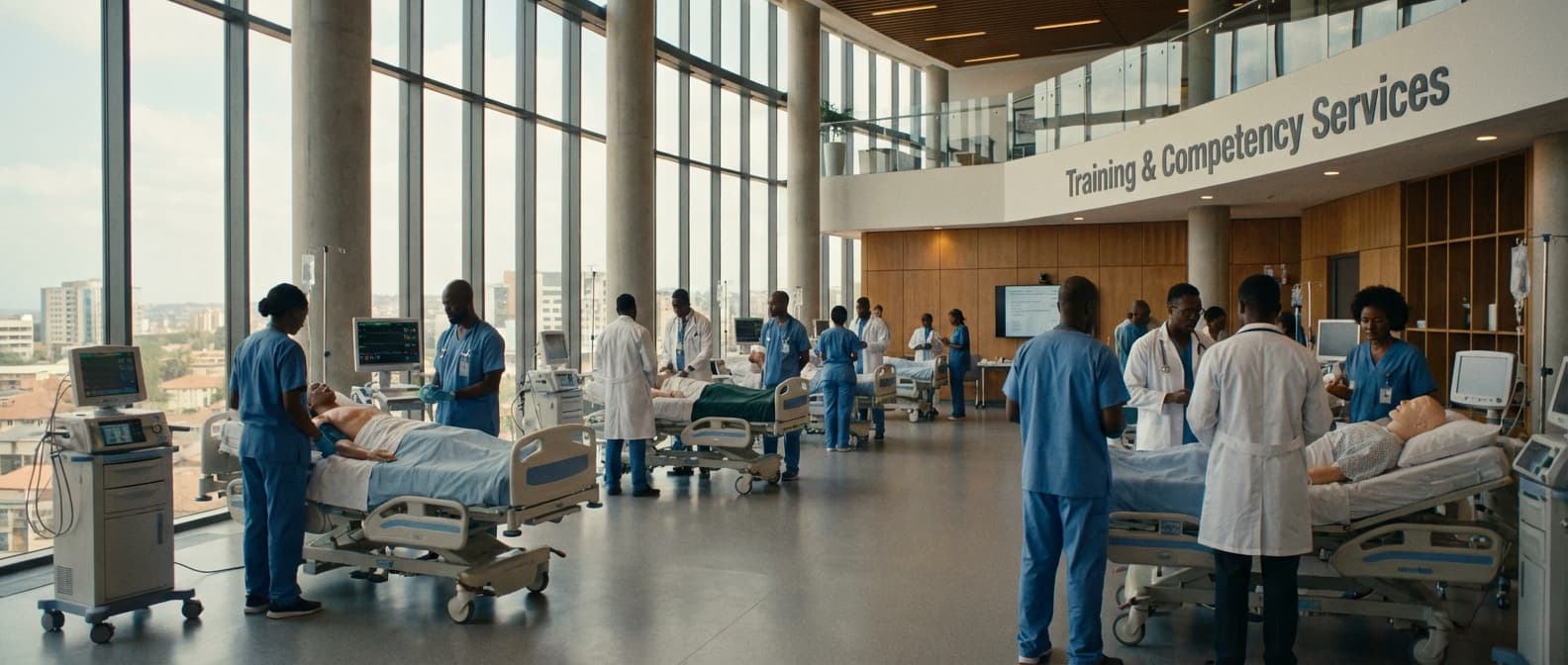
Anesthesia Workstation User Training Service in South Africa
Engineering Excellence & Technical Support
Anesthesia Workstation User Training Service High-standard technical execution following OEM protocols and local regulatory frameworks.
Master Your Anesthesia Workstation: Expert-Led South African Training
Gain hands-on proficiency with our specialized training sessions, tailored for the South African healthcare landscape. Our certified instructors provide in-depth guidance on workstation setup, parameter optimization, and advanced feature utilization, ensuring you can confidently operate critical equipment and enhance patient safety.
Protocol Adherence & Workflow Optimization
Our training emphasizes adherence to the latest South African clinical guidelines and best practices. Learn to streamline your workflow, minimize errors, and maximize the efficiency of your anesthesia workstation through practical demonstrations and interactive case studies, directly applicable to your daily practice.
Advanced Monitoring & Troubleshooting
Elevate your patient monitoring capabilities. This module covers advanced waveform analysis, alarm management strategies, and effective troubleshooting techniques for common workstation issues. Empower your team with the knowledge to quickly identify and resolve problems, ensuring uninterrupted patient care.
What Is Anesthesia Workstation User Training Service In South Africa?
Anesthesia Workstation User Training Service in South Africa refers to specialized educational programs designed to equip healthcare professionals with the knowledge and practical skills necessary for the safe and effective operation of modern anesthesia workstations. These comprehensive training modules are crucial for ensuring optimal patient safety during surgical and procedural interventions that require anesthesia. The service encompasses theoretical instruction on the workstation's architecture, functionalities, and alarm management, alongside hands-on practical sessions focusing on setup, calibration, patient connection, ventilation modes, agent delivery, monitoring integration, and emergency troubleshooting. Emphasis is placed on understanding the physiological principles underlying anesthetic delivery and ventilation, as well as adhering to established clinical protocols and best practices specific to the South African healthcare context.
| Target Audience | Rationale for Training | Typical Use Cases |
|---|---|---|
| Anesthesiologists (Specialists and Registrars) | Ensuring competency in advanced ventilation strategies, agent management, and complex monitoring integration for diverse patient populations and surgical complexities. Maintaining up-to-date knowledge of new technologies and algorithms. Compliance with professional development requirements. | Complex cardiac surgery, neurosurgery, pediatric anesthesia, obstetric anesthesia, trauma surgery, long and intricate procedures, utilization of advanced monitoring (e.g., neuromuscular monitoring, advanced respiratory monitoring). |
| Anesthetic Nurses / Clinical Technologists | Proficiency in workstation setup, routine monitoring, basic troubleshooting, and assisting the anesthesiologist. Understanding alarm parameters and responding appropriately. Ensuring patient safety during induction, maintenance, and emergence from anesthesia. | Routine general anesthesia, regional anesthesia assistance, intra-operative monitoring, patient transport with anesthesia support, assisting in emergency situations. |
| Biomedical Engineers / Technicians | Understanding the technical specifications, maintenance requirements, calibration procedures, and common fault diagnostics of anesthesia workstations. Ensuring the equipment is functional, safe, and compliant with medical device regulations. | Installation of new workstations, routine preventive maintenance, corrective maintenance, equipment validation and verification, troubleshooting equipment malfunctions, advising on procurement of new equipment. |
| Healthcare Facility Management / Procurement Departments | Informed decision-making regarding workstation selection, budgeting for training and maintenance, and ensuring compliance with national healthcare standards and safety regulations. | Evaluating and procuring new anesthesia workstations, developing maintenance contracts, implementing infection control policies related to anesthetic equipment, ensuring a safe and functional operating theatre environment. |
Key Components of Anesthesia Workstation User Training:
- Workstation Components and Architecture
- Pre-use Checks and Setup Procedures
- Ventilator Modes and Parameters
- Anesthetic Agent Delivery Systems (Vaporizers)
- Gas Flow Control and Mixing
- Integrated Monitoring Capabilities (Physiological Parameters)
- Alarm System Management and Response
- Low and Minimal Flow Anesthesia Techniques
- Emergency Procedures and Troubleshooting
- Cleaning, Disinfection, and Maintenance Protocols
- Regulatory Compliance and Documentation (South African context)
- Ergonomics and Workflow Optimization
Who Needs Anesthesia Workstation User Training Service In South Africa?
Anesthesia workstation user training services are crucial for ensuring the safe, effective, and efficient use of sophisticated anesthesia delivery systems in healthcare facilities across South Africa. These services cater to a range of professionals who directly interact with or oversee the operation of these vital machines, ultimately impacting patient outcomes and operational efficiency. The training is not a one-size-fits-all solution; it's tailored to the specific needs and skill levels of different user groups within various hospital departments.
| Target Customer Group | Specific Departments | Key Training Needs/Benefits |
|---|---|---|
| Anesthesiologists | Operating Theatres (OT)/Surgical Departments, Intensive Care Units (ICU), Emergency Departments (ED), Pain Clinics | Advanced functionality, ventilation modes, drug delivery integration, troubleshooting, emergency protocols, interpretation of complex data, maximizing efficiency during procedures. |
| Anesthesia Nurses/Practitioner Nurses | Operating Theatres (OT)/Surgical Departments, Intensive Care Units (ICU), Post-Anesthesia Care Units (PACU), Delivery Rooms | Setup and shutdown procedures, routine maintenance, basic troubleshooting, monitoring patient vitals, understanding alarm systems, safe drug administration, patient transport with workstation. |
| Medical Equipment Technicians/Biomedical Engineers | Biomedical Engineering Departments, Maintenance Teams | Preventative maintenance schedules, in-depth troubleshooting and repair, calibration, software updates, understanding system architecture, safety checks, accessory management. |
| Respiratory Therapists | Intensive Care Units (ICU), High Care Units, General Wards (for ventilator support) | Understanding ventilator settings and modes, patient monitoring, management of respiratory failure, weaning protocols, integration with other respiratory devices. |
| Training Institutions/Universities | Medical Schools, Nursing Schools, Allied Health Programs | Providing fundamental and advanced knowledge on anesthesia workstation operation to future healthcare professionals, curriculum development, simulator-based training. |
| Hospital Management/Procurement Teams | Procurement Departments, Clinical Engineering Management, Department Heads | Understanding the capabilities and limitations of different workstations, return on investment (ROI) considerations, ensuring compliance with regulatory standards, planning for ongoing training needs and budgets. |
Target Customers & Departments for Anesthesia Workstation User Training in South Africa:
- Healthcare facilities of all sizes, from large tertiary hospitals to smaller private clinics.
- Public and private healthcare sectors.
- Teaching hospitals and academic medical centers.
Anesthesia Workstation User Training Service Process In South Africa
This document outlines the standard workflow for an Anesthesia Workstation User Training Service offered in South Africa. The process is designed to be efficient, comprehensive, and tailored to the needs of healthcare professionals requiring proficiency in operating anesthesia workstations. The workflow begins with an initial inquiry and concludes with successful training execution and post-training support.
| Stage | Description | Key Activities | Responsible Party | Output/Deliverable |
|---|---|---|---|---|
| Initial contact from a client requesting anesthesia workstation training. | Receive inquiry, gather information on workstation model, number of trainees, desired training dates, and specific learning objectives. Discuss existing knowledge base and any unique requirements. | Client, Training Provider | Understanding of client's training needs and expectations. |
| Based on the needs assessment, a formal proposal and cost estimate are provided. | Develop a detailed training proposal outlining curriculum, duration, trainers, location, and included materials. Generate a comprehensive quotation. | Training Provider | Formal Training Proposal and Quotation. |
| Formalization of the training contract and confirmation of the training schedule. | Client reviews and approves proposal/quotation. Sign a formal training agreement. Mutually agree on training dates, times, and venue (on-site or off-site). | Client, Training Provider | Signed Training Agreement, Confirmed Training Schedule. |
| Logistical and material preparations for the training session. | Confirm venue suitability, ensure availability of anesthesia workstations, necessary consumables, and simulation equipment. Distribute pre-reading materials or online modules to trainees. Confirm trainer availability and travel arrangements. | Training Provider, Client (for venue access) | Prepared Training Environment, Trainee Readiness. |
| Delivery of the anesthesia workstation user training. | Conduct theoretical sessions on workstation principles, features, and safety. Perform practical hands-on training using simulation or actual equipment. Include troubleshooting and maintenance overview. Incorporate case studies and interactive discussions. | Training Provider (Trainer) | Completed Training Sessions, Hands-on Skill Development. |
| Assessment of trainee competency and issuance of certification. | Administer knowledge-based assessments (e.g., written tests, quizzes) and practical skill evaluations. Provide constructive feedback. Issue certificates of completion to successful trainees. | Training Provider | Trainee Competency Assessment Results, Certificates of Completion. |
| Post-training assistance and performance monitoring. | Provide access to training materials and resources. Offer follow-up technical support for a defined period. Gather feedback on the training effectiveness for continuous improvement. Schedule refresher courses or advanced training if required. | Training Provider, Client | Sustained Competency, Training Program Improvement. |
Anesthesia Workstation User Training Service Process
- Inquiry and Needs Assessment
- Proposal and Quotation
- Training Agreement and Scheduling
- Pre-Training Preparations
- Training Execution
- Post-Training Evaluation and Certification
- Ongoing Support and Follow-up
Anesthesia Workstation User Training Service Cost In South Africa
The cost of anesthesia workstation user training services in South Africa can vary significantly due to several factors. These include the provider's reputation and experience, the complexity and duration of the training program, the number of participants, the location of the training (on-site at a hospital versus off-site at a training center), and any specific customization required for the training. Manufacturers of anesthesia workstations often offer their own certified training programs, which may differ in cost from independent training providers or consultants. The type of anesthesia workstation being trained on (e.g., basic vs. advanced features, specific brand models) also plays a role. Furthermore, the level of certification or accreditation offered as part of the training can influence the overall price. The South African Rand (ZAR) is the local currency, and pricing will be quoted accordingly.
| Training Type/Scope | Estimated Cost Range (ZAR) | Typical Duration |
|---|---|---|
| Basic User Training (e.g., initial setup, routine operations for a single model) | R 3,000 - R 8,000 per participant | 1-2 days |
| Advanced User Training (e.g., in-depth features, troubleshooting, specific clinical applications) | R 7,000 - R 15,000 per participant | 2-3 days |
| Comprehensive Manufacturer-Led Training (often includes certification) | R 10,000 - R 25,000+ per participant (can vary significantly by manufacturer) | 3-5 days |
| On-site Group Training (for a team of 5-10 participants, covering basic/advanced) | R 20,000 - R 50,000 per session (negotiable based on scope) | 2-3 days |
| Customized Training Programs (tailored to specific hospital protocols or rare scenarios) | Priced on a project basis, often starting from R 30,000 upwards | Variable |
Key Pricing Factors for Anesthesia Workstation User Training in South Africa
- Provider's Reputation and Experience
- Training Program Complexity and Duration
- Number of Participants
- Training Location (On-site vs. Off-site)
- Customization of Training Content
- Anesthesia Workstation Model and Features
- Certification or Accreditation Offered
- Travel and Accommodation Costs (if applicable)
Affordable Anesthesia Workstation User Training Service Options
Providing comprehensive and accessible user training for affordable anesthesia workstations is crucial for ensuring safe and effective patient care. This service focuses on empowering healthcare professionals with the knowledge and skills to operate these cost-effective solutions confidently. We offer flexible training options designed to meet diverse needs and budgets, emphasizing value through tailored bundles and strategic cost-saving measures.
| Service Option | Description | Potential Cost Savings |
|---|---|---|
| On-Site Training | In-person, hands-on at your facility. | Higher direct cost but may reduce overall implementation time. |
| Remote Virtual Training | Live, interactive via video conference. | Eliminates travel costs, ideal for geographically dispersed teams. |
| E-Learning Modules | Self-paced online courses. | Lowest per-user cost, excellent for large user bases and refreshers. |
| Train-the-Trainer | Empower internal staff to train. | Significantly reduces long-term training expenditure per user. |
| Customized Training | Tailored to specific needs. | Ensures efficiency, potentially reducing time spent on irrelevant topics. |
Value Bundles & Cost-Saving Strategies:
- {"title":"Foundation Bundle","description":"Includes a comprehensive e-learning module for all staff and one remote virtual training session for key personnel. Offers foundational knowledge at a competitive price."}
- {"title":"Comprehensive Bundle","description":"Combines on-site or remote virtual training for a designated group with access to e-learning modules for all users. Ideal for initial implementation or significant staff onboarding."}
- {"title":"Sustained Competency Bundle","description":"Features annual refresher e-learning modules, access to a library of advanced topic webinars, and discounted rates for subsequent on-site or virtual training sessions. Promotes ongoing skill development and compliance."}
- {"title":"Early Bird Discounts","description":"Incentivize early booking of training sessions to secure preferred dates and benefit from reduced pricing."}
- {"title":"Group Discounts","description":"Offer tiered discounts based on the number of participants or workstation units trained simultaneously."}
- {"title":"Multi-Year Training Contracts","description":"Commitment to multiple years of training services provides significant cost savings through bulk purchasing power and locked-in rates."}
- {"title":"Train-the-Trainer Integration","description":"Investing in a Train-the-Trainer program can dramatically reduce long-term training costs by empowering internal resources to deliver ongoing education."}
- {"title":"Bundled with Workstation Purchase","description":"Inquire about special training packages when purchasing your affordable anesthesia workstation, often providing a bundled discount."}
Verified Providers In South Africa
In South Africa, ensuring you're receiving care from a verified provider is paramount for your health and well-being. Franance Health stands out as a leader in this regard, meticulously credentialing its network of healthcare professionals. This rigorous process ensures that all practitioners on the Franance Health platform have met stringent standards of education, licensure, experience, and ethical conduct. Choosing Franance Health means opting for a healthcare experience characterized by trust, competence, and patient-centered care, setting a benchmark for quality in the South African healthcare landscape.
| Franance Health Credentialing Component | Description of Verification | Benefit to Patients |
|---|---|---|
| Medical Licensure Verification | Thorough checks with relevant South African medical councils and regulatory bodies to confirm active and unblemished licenses. | Ensures providers are legally qualified and permitted to practice medicine. |
| Educational Background Validation | Verification of medical degrees and postgraduate qualifications from accredited institutions. | Confirms foundational medical knowledge and specialized training. |
| Professional Experience Assessment | Review of past work history, including practice type, duration, and areas of expertise. | Helps identify providers with relevant experience for your specific needs. |
| Ethical Conduct and Disciplinary Record Check | Screening for any past disciplinary actions or ethical breaches reported to professional bodies. | Safeguards patients from providers with a history of misconduct. |
| Continuing Professional Development (CPD) Compliance | Confirmation that providers are meeting ongoing educational requirements set by their respective professional bodies. | Ensures providers remain up-to-date with the latest medical advancements and practices. |
Why Franance Health is the Best Choice for Verified Providers in South Africa:
- Uncompromising Credentialing Process: Franance Health goes above and beyond to verify every provider's qualifications, including checking medical licenses, educational degrees, specialized training, and professional affiliations.
- Focus on Patient Safety and Quality: Our rigorous vetting ensures that you are connected with healthcare professionals who adhere to the highest standards of patient safety, medical ethics, and clinical excellence.
- Access to Reputable Professionals: By choosing Franance Health, you gain access to a curated network of trusted and experienced doctors, specialists, therapists, and other healthcare practitioners.
- Peace of Mind: Knowing that your healthcare provider has been thoroughly vetted by Franance Health provides invaluable peace of mind, allowing you to focus on your recovery and well-being.
- Streamlined Healthcare Experience: Our platform simplifies the process of finding and connecting with verified healthcare providers, making your healthcare journey smoother and more efficient.
Scope Of Work For Anesthesia Workstation User Training Service
This Scope of Work (SOW) outlines the requirements for providing comprehensive user training services for Anesthesia Workstations. The training aims to equip healthcare professionals with the necessary knowledge and skills to safely and effectively operate the anesthesia workstation, ensuring optimal patient care and operational efficiency. This document details the technical deliverables and standard specifications expected from the training provider.
| Category | Deliverable | Standard Specification / Requirement |
|---|---|---|
| Training Program Design | Curriculum Development | Must be tailored to the specific Anesthesia Workstation model. Should cover foundational principles, system components, operational procedures, safety features, ventilation modes, drug delivery systems, monitoring capabilities, and emergency scenarios. Includes theoretical and practical components. Must be modular and adaptable to different user skill levels (e.g., novice, experienced). |
| Training Program Design | Training Materials | High-quality, up-to-date, and easily understandable materials. Includes participant manuals, instructor guides, presentations (e.g., PowerPoint), user guides, quick reference cards, and visual aids (e.g., diagrams, videos). Materials must be provided in digital and/or print format as specified. Language: English (or as specified). |
| Training Delivery | Instructor Qualifications | Instructors must possess recognized expertise in anesthesia, be certified or experienced users of the specific Anesthesia Workstation model, and have proven training delivery skills. Evidence of qualifications and experience will be required. |
| Training Delivery | Training Methodology | A blended learning approach is preferred, incorporating lectures, demonstrations, hands-on practical sessions using actual or simulated equipment, case studies, and interactive Q&A sessions. Emphasis on practical application and skill reinforcement. |
| Training Delivery | Training Schedule & Location | Flexible scheduling to accommodate institutional needs. Training to be conducted at the client's facility or a designated training center. Logistics including classroom setup, AV equipment, and workstation availability must be coordinated. |
| Training Delivery | Participant Group Size | Optimal group size to facilitate effective interaction and hands-on practice (e.g., typically 6-10 participants per instructor). Specific limits to be agreed upon. |
| Technical Deliverables | Training Workstations | Access to functional and representative Anesthesia Workstations for hands-on training. If simulations are used, they must accurately replicate the functionality and user interface of the target workstation. |
| Technical Deliverables | Simulation Software (if applicable) | High-fidelity simulation software that mirrors the Anesthesia Workstation's operation, including physiological responses and alarm scenarios. Must be robust and stable. |
| Technical Deliverables | Post-Training Support | Access to a technical support helpline or online portal for a specified period post-training for user queries and basic troubleshooting guidance. |
| Assessment & Evaluation | Participant Assessment | Methods to assess learning and skill acquisition. This may include pre- and post-training quizzes, practical skill demonstrations, and competency-based evaluations. Results to be documented. |
| Assessment & Evaluation | Training Feedback | Mechanism for participants to provide feedback on the training program, instructors, and materials. Feedback forms (digital or paper) to be distributed and collected. |
| Assessment & Evaluation | Training Completion Certificate | Issuance of a certificate of completion to participants who successfully meet the training objectives and pass assessments. Certificates must be personalized and include workstation model and training dates. |
| Documentation | Training Report | A comprehensive report detailing the training conducted, including dates, locations, participant lists, assessment results, feedback summary, and any identified areas for improvement. Submitted within a specified timeframe post-training. |
Key Objectives
- To ensure all trained personnel can confidently and competently operate the anesthesia workstation.
- To promote safe and efficient anesthetic delivery practices.
- To minimize user errors and potential equipment-related complications.
- To familiarize users with advanced features and functionalities of the workstation.
- To provide clear guidelines on routine maintenance and basic troubleshooting.
- To facilitate compliance with relevant healthcare regulations and standards.
Service Level Agreement For Anesthesia Workstation User Training Service
This Service Level Agreement (SLA) outlines the performance standards and guarantees for the Anesthesia Workstation User Training Service provided by [Your Company Name] to [Client Company Name]. This SLA defines the response times for support requests and the uptime guarantees for the training platform, ensuring reliable and effective training delivery.
| Service Component | Metric | Target | Measurement Method | Remedy/Penalty |
|---|---|---|---|---|
| Training Platform Availability | Uptime Percentage | 99.5% per calendar month | Monitored by [Monitoring Tool Name] from the client's perspective. | For every 1% decrease below the target, a credit of [X]% of the monthly training service fee will be issued. |
| Technical Support Response Time | Initial Response to Critical Issues (e.g., platform inaccessible, core functionality broken) | Within 1 hour during business hours ([Business Hours]) | Timestamp of ticket creation and first acknowledgment by support staff. | If response time is exceeded, a credit of [Y]% of the daily training service fee for the affected service will be issued. |
| Technical Support Response Time | Initial Response to High Priority Issues (e.g., training content loading slowly, minor feature malfunction) | Within 4 business hours during business hours | Timestamp of ticket creation and first acknowledgment by support staff. | If response time is exceeded, a credit of [Z]% of the daily training service fee for the affected service will be issued. |
| Training Session Uptime | Availability of scheduled training sessions | 99.0% during scheduled training session times | Recorded by [Monitoring Tool Name] and confirmed by client confirmation. | For each missed scheduled training session due to platform issues, a make-up session will be provided free of charge, or a credit of [A]% of the session fee will be issued. |
Key Service Components
- Training Platform Availability
- Technical Support Response Times
- Training Session Uptime
Frequently Asked Questions

Ready when you are
Let's scope your Anesthesia Workstation User Training Service in South Africa project in South Africa.

Scaling healthcare logistics and technical systems across the entire continent.