
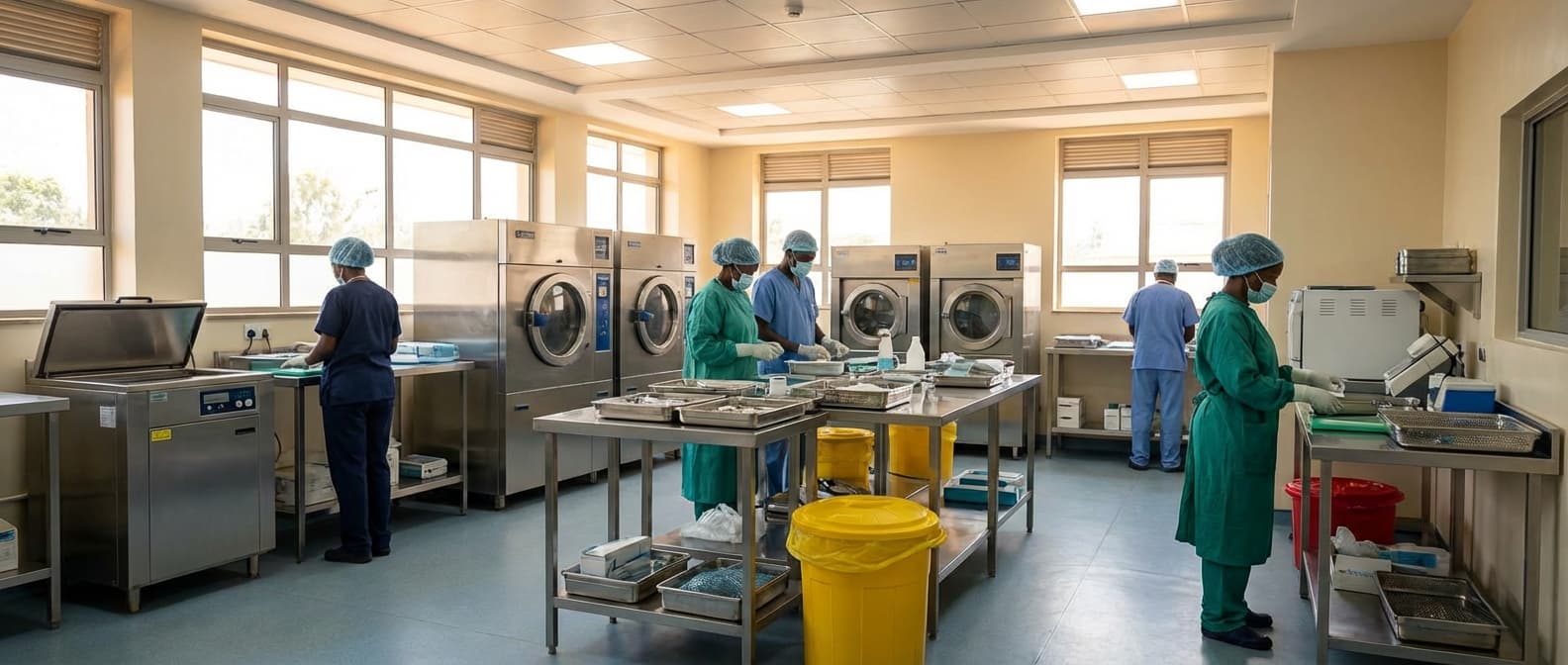
Infection-Control Readiness Support Service for Reusable Equipment in South Africa
Engineering Excellence & Technical Support
Infection-Control Readiness Support Service for Reusable Equipment High-standard technical execution following OEM protocols and local regulatory frameworks.
Validated Sterilization Processes
Leveraging globally recognized validation protocols and advanced instrumentation to ensure reusable medical equipment meets South African regulatory standards for terminal sterilization and disinfection, minimizing the risk of healthcare-associated infections.
Real-time Equipment Traceability
Implementing robust digital tracking systems that provide end-to-end traceability for all reusable equipment, from point of use to reprocessing and back, guaranteeing accountability and facilitating rapid recall management if necessary.
On-site Technical Training & Auditing
Delivering comprehensive, hands-on training programs for healthcare staff on proper decontamination, cleaning, and sterilization techniques, coupled with regular on-site audits to reinforce best practices and ensure consistent compliance with infection control guidelines.
What Is Infection-control Readiness Support Service For Reusable Equipment In South Africa?
Infection-Control Readiness Support Service for Reusable Equipment in South Africa is a specialized consultancy and technical assistance program designed to ensure healthcare facilities, laboratories, and other entities handling reusable medical devices, instruments, and equipment maintain optimal infection prevention and control (IPC) standards. It focuses on the entire lifecycle of reusable items, from initial procurement and validation to cleaning, disinfection, sterilization, storage, and monitoring. The service aims to mitigate the risk of healthcare-associated infections (HAIs) transmitted via inadequately processed reusable items, thereby safeguarding patient and healthcare worker safety. This is particularly critical in the South African context, where resource limitations, diverse healthcare settings, and the ongoing burden of infectious diseases necessitate robust and evidence-based IPC practices.
| Who Needs the Service | Typical Use Cases | ||
|---|---|---|---|
| Public and Private Hospitals: All departments utilizing reusable surgical instruments, endoscopes, anaesthesia equipment, and other medical devices. | Ensuring surgical instrument sets are properly decontaminated and sterilized for subsequent procedures to prevent surgical site infections (SSIs). | Validating the efficacy of autoclaves and washer-disinfectors in central sterile supply departments (CSSDs). | Training new staff on the correct handling and reprocessing of flexible endoscopes. |
| Specialized Clinics (e.g., Dental, Ophthalmology, Dermatology): Facilities performing procedures requiring sterile or disinfected instruments. | Establishing protocols for the safe reprocessing of dental instruments and handpieces. | Validating disinfection cycles for ophthalmic surgical tools. | Developing SOPs for the sterilization of dermatological instruments. |
| Diagnostic Laboratories: Facilities using reusable glassware, sampling equipment, and diagnostic tools. | Ensuring autoclaves used for media sterilization are functioning correctly. | Developing protocols for the decontamination of specimen collection devices. | |
| Tertiary and Academic Medical Centers: Institutions with complex reprocessing needs and extensive research activities. | Implementing advanced sterilization techniques for novel or complex instrumentation. | Conducting research on the efficacy of new decontamination agents or processes. | |
| Rural and Underserved Healthcare Facilities: Facilities with limited access to advanced technology and specialized training. | Providing foundational training and simplified protocols for effective reprocessing with available resources. | Assessing and upgrading existing reprocessing infrastructure where feasible. | |
| Medical Device Manufacturers and Suppliers: Companies seeking to ensure their products are adequately supported in the local market regarding reprocessing. | Providing training to end-users on the correct reprocessing of their specific devices. | Assisting in the validation of reprocessing procedures for new product launches. |
Key Components of the Service
- Policy and Procedure Development/Review: Assisting in the creation or updating of comprehensive Standard Operating Procedures (SOPs) for the decontamination and sterilization of various reusable items, aligned with national and international guidelines (e.g., SANS, WHO, CDC).
- Staff Training and Competency Assessment: Providing targeted training modules for sterile processing technicians, nurses, doctors, and laboratory personnel on best practices in cleaning, disinfection, sterilization, packaging, and handling of reusable equipment. This includes competency validation to ensure practical application of knowledge.
- Equipment Validation and Maintenance: Supporting the selection, installation, validation (IQ, OQ, PQ), and routine performance monitoring of cleaning, disinfection, and sterilization equipment (e.g., washer-disinfectors, autoclaves, low-temperature sterilizers).
- Process Auditing and Risk Assessment: Conducting thorough audits of current reprocessing workflows to identify potential breaches in IPC, assess risks, and recommend corrective actions. This includes evaluating adherence to manufacturer's instructions for use (IFUs).
- Microbiological Monitoring and Quality Assurance: Establishing and overseeing programs for environmental monitoring, biological and chemical indicator testing, and process challenge devices (PCDs) to verify the efficacy of sterilization cycles.
- Inventory Management and Traceability Systems: Advising on or implementing systems for tracking reusable items through their reprocessing cycles, ensuring accountability and facilitating recall procedures if necessary.
- Compliance and Regulatory Advisory: Providing guidance on relevant South African regulations, standards, and accreditation requirements pertaining to the reprocessing of reusable medical devices.
- Problem Solving and Root Cause Analysis: Assisting facilities in investigating and resolving issues related to sterilization failures, equipment malfunctions, or recurrent HAIs linked to reusable items.
Who Needs Infection-control Readiness Support Service For Reusable Equipment In South Africa?
In South Africa, robust infection control for reusable medical equipment is paramount to patient safety and preventing healthcare-associated infections (HAIs). Organizations facing challenges in maintaining stringent hygiene standards, ensuring compliance with national regulations, and optimizing their sterilization and disinfection processes are prime candidates for Infection-Control Readiness Support Services. These services are crucial for healthcare facilities that handle a high volume of reusable instruments, devices, and equipment, where lapses in sterilization or disinfection can have severe consequences.
| Customer Type/Department | Specific Needs/Challenges | Benefits of Support Service |
|---|---|---|
| Public Hospitals | Limited budgets for advanced equipment, inconsistent training, high patient turnover, resource constraints impacting reprocessing capacity. | Improved compliance with national guidelines, cost-effective solutions for process optimization, enhanced patient safety, reduced risk of HAIs. |
| Private Hospitals | Maintaining high standards to meet patient expectations and accreditation requirements, managing complex and varied instrumentation, potential for rapid adoption of new technologies. | Ensuring accreditation readiness, optimizing workflow efficiency, expert guidance on new sterilization technologies, consistent quality assurance. |
| Clinics and Day Surgery Centres | Often have smaller reprocessing teams, need for efficient and rapid turnaround of instruments, potential lack of dedicated infection control specialists. | Streamlined reprocessing protocols, reduced risk of cross-contamination, improved staff competency, compliance support for smaller facilities. |
| Dental Practices | High volume of small, intricate instruments, stringent requirements for dental instrument sterilization, need for efficient workflows. | Ensuring full compliance with dental infection control standards, optimizing sterilization cycles for dental tools, training on safe handling of sharps. |
| Endoscopy Units | Specialized and complex reusable endoscopes, meticulous cleaning and high-level disinfection requirements, risk of transmission of pathogens. | Expertise in endoscope reprocessing validation, customized disinfection protocols, training on best practices for delicate equipment, risk mitigation for complex procedures. |
| Central Sterile Supply Departments (CSSDs) | Core function is reprocessing, need for continuous improvement, managing large volumes and diverse equipment, staff training and competency assessment. | Process optimization and validation, staff competency development programs, expert advice on equipment maintenance and upgrades, audit support. |
| Procurement and Biomedical Engineering Departments | Selecting and maintaining sterilization and disinfection equipment, ensuring equipment meets infection control standards, budget allocation for infection control infrastructure. | Guidance on equipment selection based on infection control needs, support in developing maintenance schedules, ensuring equipment is fit for purpose. |
| Infection Prevention and Control (IPC) Committees/Teams | Oversight and policy development, risk assessment, monitoring compliance, need for up-to-date knowledge and best practices. | Providing evidence-based recommendations, assisting with policy development and implementation, supporting audits and risk assessments, facilitating knowledge exchange. |
Target Customers and Departments in South Africa Needing Infection-Control Readiness Support for Reusable Equipment:
- Hospitals (Public and Private)
- Clinics and Day Surgery Centres
- Specialty Clinics (e.g., Dental, Ophthalmology, Endoscopy)
- Rehabilitation Centres
- Maternity Wards and Neonatal Units
- Outpatient Departments with Procedure Rooms
- Medical Device Reprocessing Units/Central Sterile Supply Departments (CSSDs)
Infection-control Readiness Support Service For Reusable Equipment Process In South Africa
This document outlines the workflow for the Infection-Control Readiness Support Service for Reusable Equipment Process in South Africa. This service aims to ensure that healthcare facilities in South Africa are adequately prepared and compliant with infection control standards when handling reusable medical equipment. The workflow encompasses the entire lifecycle of a service request, from initial inquiry to the final execution and reporting.
| Stage | Description | Key Activities | Responsible Party | Deliverables |
|---|---|---|---|---|
| Inquiry & Initial Contact | The process begins when a healthcare facility expresses interest in the Infection-Control Readiness Support Service. | Facility contacts the service provider (e.g., via phone, email, website). Initial discussion about service offerings and potential needs. | Healthcare Facility (Inquirer), Service Provider (Inquiry Point) | Acknowledgement of inquiry, preliminary service information |
| Needs Assessment & Scoping | A detailed understanding of the facility's current reusable equipment processes and infection control gaps is established. | On-site visit or remote consultation. Review of existing protocols, equipment inventory, infrastructure, staff training records, and current challenges. Identification of specific areas for support. | Service Provider (Assessment Team), Healthcare Facility (Key Personnel - e.g., Infection Control Practitioner, Biomedical Engineer, Nurse Manager) | Needs assessment report, scope of work document, preliminary identification of required interventions |
| Proposal & Agreement | A formal proposal outlining the scope of work, methodology, timeline, and costs is presented and agreed upon. | Development of a detailed service proposal based on the needs assessment. Negotiation of terms, fees, and schedule. Signing of a service agreement/contract. | Service Provider (Business Development/Management), Healthcare Facility (Management/Procurement) | Formal service proposal, signed service agreement |
| Planning & Preparation | The service provider meticulously plans and prepares for the execution phase. | Detailed work plan development. Resource allocation (personnel, equipment, materials). Scheduling of on-site activities. Communication with the facility regarding logistics. | Service Provider (Project Manager, Technical Team) | Detailed project plan, resource schedule, communication plan |
| On-site Execution | The core support services are delivered at the healthcare facility. | On-site training sessions. Process audits and evaluations. Equipment assessment and recommendations. Development/refinement of Standard Operating Procedures (SOPs). Implementation of corrective actions (if applicable and within scope). | Service Provider (Consultants, Trainers, Technical Staff), Healthcare Facility (Staff Participation) | Completed training sessions, audit findings, updated SOPs (draft or final), implemented improvements |
| Reporting & Recommendations | A comprehensive report detailing findings, interventions, and actionable recommendations is provided. | Compilation of all collected data and assessment outcomes. Formulation of clear and practical recommendations for enhancing infection control readiness. Presentation of the final report to facility management. | Service Provider (Reporting Team/Consultants) | Comprehensive service report, prioritized recommendations, action plan template |
| Follow-up & Verification | The service provider ensures the sustainability of improvements and verifies compliance over time. | Scheduled follow-up visits or remote check-ins. Monitoring of implemented recommendations. Verification of ongoing compliance with infection control standards. Optional provision of advanced training or ongoing support. | Service Provider (Account Manager, Consultants), Healthcare Facility (Infection Control Team) | Follow-up reports, verification of compliance, sustained improvement in infection control practices |
Workflow Stages for Infection-Control Readiness Support Service
- Inquiry & Initial Contact
- Needs Assessment & Scoping
- Proposal & Agreement
- Planning & Preparation
- On-site Execution
- Reporting & Recommendations
- Follow-up & Verification
Infection-control Readiness Support Service For Reusable Equipment Cost In South Africa
The provision of Infection-Control Readiness Support Services for Reusable Equipment in South Africa is a critical component of ensuring patient safety and preventing healthcare-associated infections (HAIs). This service encompasses a range of activities designed to ensure that reusable medical devices are effectively cleaned, disinfected, and sterilized according to stringent guidelines and regulatory requirements. The cost of such services is influenced by several factors, leading to a variable pricing structure within the South African market.
| Service Component/Scope | Estimated Price Range (ZAR) | Notes |
|---|---|---|
| Basic Training & Protocol Development (Per Session/Facility) | R5,000 - R15,000 | Focuses on foundational knowledge and establishing standard operating procedures. |
| On-site Sterilization Department Assessment & Gap Analysis | R7,500 - R25,000 | Evaluates current practices against best standards and identifies areas for improvement. |
| Routine Equipment Cleaning & Disinfection Oversight (e.g., Daily/Weekly) | R10,000 - R30,000 per month | For facilities requiring regular supervision of cleaning protocols for general reusable items. |
| Full Sterilization Department Management (Per Facility) | R50,000 - R200,000+ per month | Comprehensive service including staffing, consumables, maintenance, and quality control for a dedicated sterile processing department. |
| Specialized Equipment Reprocessing Support (e.g., Endoscopes) | Priced per instrument/procedure or as a service contract | Requires highly specialized training and equipment; often charged per unit or with a dedicated support contract. |
| Consumables Supply & Management (Bundled Service) | Variable, often a percentage of overall service or per unit cost | Includes detergents, disinfectants, sterile packaging, indicators, etc. |
| Preventive Maintenance & Calibration of Sterilization Equipment | R3,000 - R15,000 per service/machine | Essential for equipment reliability and effectiveness. |
| Infection Control Auditing & Compliance Support | R10,000 - R40,000 per audit/project | Assists facilities in preparing for and passing regulatory inspections. |
| Emergency/Ad-hoc Consultation | R1,500 - R5,000 per hour | For urgent infection control issues or advice. |
Key Pricing Factors for Infection-Control Readiness Support Services in South Africa:
- Scope of Services: This is the primary driver of cost. Services can range from basic training and protocol development to comprehensive end-to-end management of sterilization departments, including equipment maintenance, consumables supply, and quality assurance.
- Type and Volume of Reusable Equipment: The complexity and quantity of reusable medical devices to be managed directly impact the resources and expertise required. Specialized equipment (e.g., endoscopes, surgical instruments) demands more advanced cleaning and sterilization processes, thus increasing costs.
- Frequency of Service: Whether the support is required on a daily, weekly, monthly, or project-specific basis will affect the overall pricing. Continuous monitoring and support will naturally incur higher costs than ad-hoc interventions.
- Level of Expertise and Qualifications: The experience, certifications, and specializations of the infection control professionals and technicians providing the service are crucial. Highly qualified personnel command higher rates.
- Geographic Location within South Africa: Costs can vary between major metropolitan areas (e.g., Johannesburg, Cape Town, Durban) and more rural or remote regions due to differences in operational costs, logistics, and availability of specialized personnel.
- Technology and Equipment Used: If the service provider utilizes advanced automated cleaning and sterilization systems, or sophisticated tracking and monitoring software, this can influence the pricing. This often reflects a higher initial investment and ongoing maintenance costs for the provider.
- Consumables and Supplies: The cost of specialized detergents, disinfectants, sterilization wraps, indicators, and other consumables is a direct component of the service fee, especially if bundled.
- Regulatory Compliance and Auditing Support: Services that include assistance with regulatory compliance audits (e.g., South African National Department of Health regulations) and internal quality assurance programs will add to the cost.
- Contract Duration and Volume Commitments: Longer-term contracts or larger volume commitments can sometimes lead to discounted pricing for the healthcare facility.
- Customization and Bespoke Solutions: Tailored infection control programs designed to meet the unique needs of a specific healthcare facility will be priced differently than standardized service packages.
Affordable Infection-control Readiness Support Service For Reusable Equipment Options
Our Affordable Infection-Control Readiness Support Service for Reusable Equipment Options is designed to empower healthcare facilities with robust infection prevention strategies without breaking the budget. We understand the critical need for effective sterilization and reprocessing of reusable medical devices to ensure patient safety and operational efficiency. This service focuses on providing accessible, high-quality support that integrates seamlessly into your existing workflows.
| Value Bundle | Description | Cost-Saving Strategies | Target Audience |
|---|---|---|---|
| Basic Readiness Package | Includes initial protocol assessment, SOP template development, and staff training modules for fundamental reprocessing procedures. | Reduces risk of reprocessing errors leading to patient harm and costly recalls. Optimizes staff time by providing standardized procedures. Lower initial investment for facilities with basic needs. | Small clinics, dental practices, outpatient surgical centers with limited reusable equipment volume. |
| Enhanced Compliance Bundle | Builds on the Basic Package with detailed regulatory gap analysis, on-site training with competency verification, and initial equipment selection guidance. | Minimizes fines and penalties from non-compliance. Prevents unnecessary equipment purchases by guiding towards cost-effective, suitable solutions. Improved staff confidence and reduced retraining needs. | Mid-sized hospitals, specialized clinics, facilities with moderate reusable equipment inventory and higher regulatory scrutiny. |
| Comprehensive Operational Excellence Bundle | Encompasses all features of the Enhanced Compliance Bundle, plus ongoing performance monitoring, advanced troubleshooting support, and strategic planning for future technology adoption. | Maximizes equipment lifespan through proper maintenance and care. Identifies opportunities for process optimization and automation to reduce labor costs. Proactive risk management to avoid costly outbreaks or infections. | Large hospitals, multi-site healthcare systems, facilities with high volumes of complex reusable instrumentation. |
| Modular Support Add-ons | Individual modules for specific needs such as advanced sterilization validation, sterile processing department workflow optimization, or a deep dive into a particular equipment category. | Allows facilities to "pick and choose" specific support, avoiding unnecessary costs for services not required. Targeted solutions address specific pain points efficiently. | All facility types requiring specialized expertise for particular challenges. |
Key Features of Our Service
- Comprehensive assessment of current reusable equipment reprocessing protocols.
- Development of tailored infection control plans and Standard Operating Procedures (SOPs).
- Training and competency assessment for reprocessing staff.
- Guidance on selecting appropriate cleaning, disinfection, and sterilization equipment.
- Support in navigating regulatory compliance (e.g., FDA, CDC, AAMI).
- Regular audits and performance monitoring to ensure ongoing effectiveness.
- Access to expert consultation for troubleshooting and emerging infection control challenges.
Verified Providers In South Africa
In South Africa's dynamic healthcare landscape, discerning patients seek reliable and accredited medical services. Franance Health stands out as a beacon of trust, meticulously vetting its network of providers. This commitment to verification ensures that every practitioner associated with Franance Health adheres to the highest professional standards, offering a secure and effective healthcare journey for all.
Why Franance Health Credentials Matter:
Franance Health's credentialing process is rigorous and comprehensive, encompassing multiple crucial aspects. This multi-layered approach guarantees that their providers are not only qualified but also committed to ethical practice and patient well-being. By choosing a Franance Health-verified provider, you are opting for a healthcare experience built on a foundation of expertise, integrity, and proven competence.
| Benefit for Patients | Franance Health's Assurance | Why it's the Best Choice |
|---|---|---|
| Trust and Safety | Providers undergo rigorous verification. | Reduces the risk of encountering unqualified or unethical practitioners. |
| Quality of Care | Focus on verified qualifications and experience. | Ensures access to competent and skilled medical professionals. |
| Peace of Mind | Comprehensive background checks and compliance verification. | Allows patients to focus on their health with confidence in their provider's legitimacy. |
| Accountability | Adherence to professional standards and regulatory requirements. | Provides a recourse and ensures providers are accountable for their actions. |
| Enhanced Patient Experience | Network of vetted professionals committed to patient well-being. | Contributes to a more positive and effective healthcare journey. |
Key Franance Health Credentialing Criteria:
- Professional Registration and Licensure: Ensuring all practitioners are registered with the relevant South African professional councils (e.g., Health Professions Council of South Africa - HPCSA, South African Nursing Council - SANC) and hold valid practicing licenses.
- Academic and Clinical Qualifications: Verifying the authenticity and completeness of medical degrees, diplomas, and specialized training from recognized institutions.
- Professional Indemnity Insurance: Confirming that all providers possess adequate and up-to-date professional indemnity insurance, offering an essential layer of protection for patients.
- Good Standing and Disciplinary Records: Thorough background checks to ascertain that providers have no adverse disciplinary findings or ongoing investigations with regulatory bodies.
- Continuing Professional Development (CPD): Encouraging and monitoring providers' commitment to ongoing learning and skill enhancement to stay abreast of medical advancements.
- Ethical Conduct and Practice Standards: Assessing adherence to established ethical codes of conduct and best practice guidelines within their respective fields.
Scope Of Work For Infection-control Readiness Support Service For Reusable Equipment
This Scope of Work (SOW) outlines the requirements for Infection-Control Readiness Support Services for Reusable Medical Equipment. The objective is to ensure that healthcare facilities have robust processes and documentation in place to minimize the risk of healthcare-associated infections (HAIs) transmitted through improperly cleaned, disinfected, or sterilized reusable medical equipment. The services will encompass a review of existing protocols, development of standardized documentation, and provision of training materials, culminating in a comprehensive readiness assessment.
| Deliverable | Description | Standard Specifications / Requirements | Format | Timeline (Weeks from SOW Execution) |
|---|---|---|---|---|
| Standard Operating Procedures (SOPs) | Detailed, step-by-step procedures for each stage of reusable equipment reprocessing (cleaning, disinfection, sterilization, storage, handling). | Must align with current CDC, FDA, AAMI, and relevant local/national regulatory guidelines. Include specific instructions for different equipment types. Clear language and visual aids encouraged. | Digital (PDF) and printable versions. | 1-4 |
| Equipment Reprocessing Logs | Templates for recording critical information during the reprocessing cycle for each piece of equipment. | Must capture date/time, operator, equipment identifier, cleaning agent/method used, disinfection/sterilization parameters (e.g., temperature, pressure, cycle time), indicator results, and any deviations. Audit trail capabilities are desirable. | Digital (e.g., Excel, Word) and printable versions. | 1-4 |
| Competency Assessment Tools | Methods to evaluate the knowledge and practical skills of staff involved in reusable equipment reprocessing. | Include written tests, practical demonstrations, and observation checklists. Should cover all aspects of SOPs and relevant infection prevention principles. | Digital (e.g., fillable PDF, online quiz platform) and printable versions. | 3-6 |
| Training Materials | Comprehensive modules designed to educate reprocessing staff on infection control principles and proper reprocessing techniques. | Content to cover HAI transmission routes, aseptic technique, use of PPE, chemical safety, sterilization monitoring, and documentation requirements. Can include presentations, handouts, and case studies. | Digital (e.g., PowerPoint, PDF handouts) and potentially video format. | 3-6 |
| Readiness Assessment Report | A formal report summarizing the findings of the support services, identifying gaps, and providing recommendations. | Includes review of existing documentation, observation of practices (if applicable), and assessment of staff competency. Recommendations should be prioritized and actionable. | Digital (PDF) and executive summary (PDF). | 6-8 |
Technical Deliverables and Standard Specifications
- Development of Standard Operating Procedures (SOPs) for cleaning, disinfection, and sterilization processes.
- Creation of standardized equipment reprocessing logs and documentation templates.
- Design of competency assessment tools for reprocessing staff.
- Provision of evidence-based training materials on infection prevention principles for reusable equipment.
- Compilation of a readiness assessment report with actionable recommendations.
Service Level Agreement For Infection-control Readiness Support Service For Reusable Equipment
This Service Level Agreement (SLA) outlines the response times and uptime guarantees for the Infection-Control Readiness Support Service for Reusable Equipment. This service ensures that essential reusable medical equipment is maintained at optimal infection control standards, minimizing the risk of healthcare-associated infections (HAIs).
| Service Component | Response Time Guarantee | Uptime Guarantee | Notes |
|---|---|---|---|
| Critical Infection Control Incident Response (e.g., immediate risk of HAIs due to equipment malfunction) | Within 15 minutes of confirmed notification | N/A (Focus on immediate resolution) | Requires direct, real-time communication (phone/dedicated alert system). |
| Urgent Infection Control Issue Support (e.g., equipment requiring immediate decontamination outside of scheduled cycles) | Within 1 hour of confirmed notification | N/A (Focus on rapid resolution) | Support provided via remote access, phone, or on-site technician dispatch if necessary. |
| Routine Infection Control Consultation/Troubleshooting (e.g., non-critical equipment concerns, process clarification) | Within 4 business hours of confirmed notification | N/A (Focus on timely assistance) | Support provided via email, phone, or scheduled remote session. |
| Proactive Monitoring System Availability | N/A | 99.9% uptime during operational hours (defined as 24/7/365) | Excludes scheduled maintenance, which will be communicated with 48 hours advance notice. |
Scope of Service
- Proactive monitoring of infection control status for designated reusable equipment.
- On-demand support for critical infection control issues impacting reusable equipment.
- Assistance with decontamination and sterilization processes.
- Guidance on best practices for handling and storage of reusable equipment.
- Troubleshooting of equipment-related infection control challenges.
Frequently Asked Questions

Ready when you are
Let's scope your Infection-Control Readiness Support Service for Reusable Equipment in South Africa project in South Africa.

Scaling healthcare logistics and technical systems across the entire continent.