
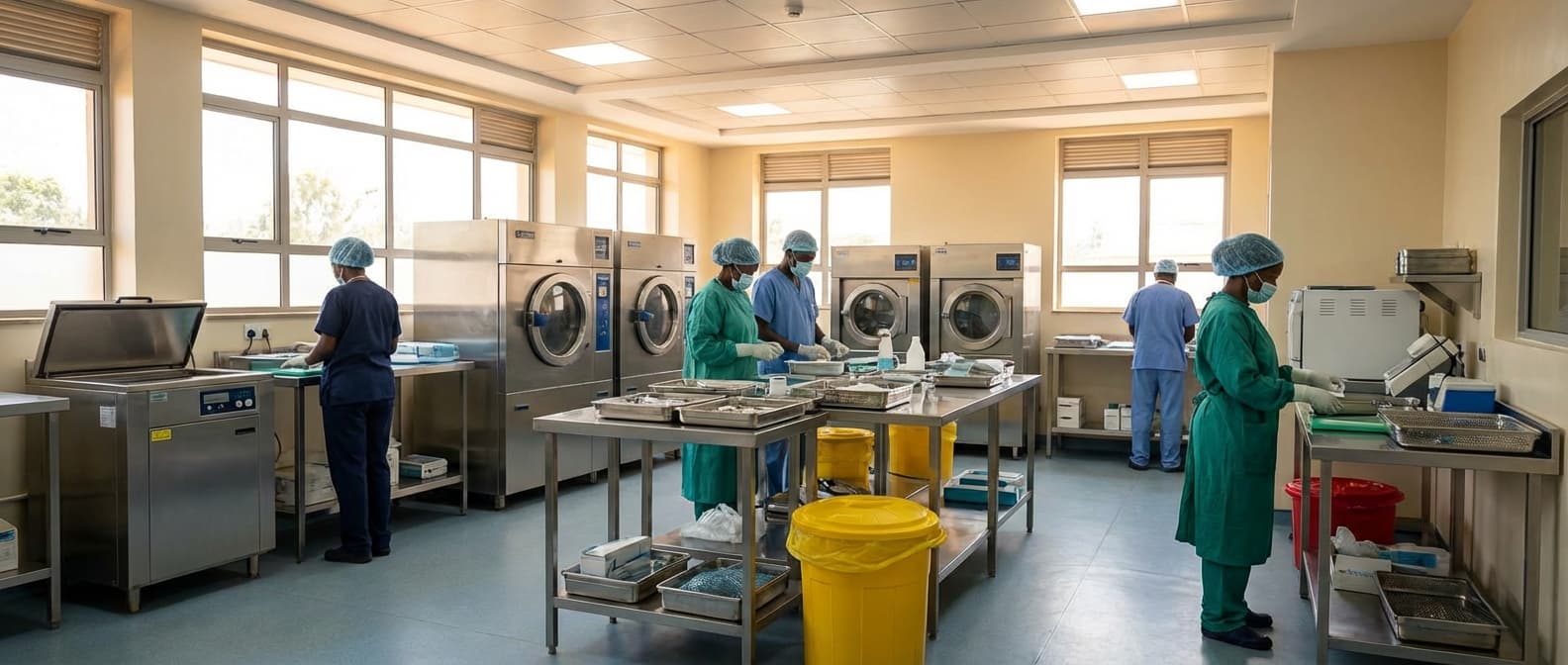
Endoscope Reprocessing Equipment Support Service in South Africa
Engineering Excellence & Technical Support
Endoscope Reprocessing Equipment Support Service High-standard technical execution following OEM protocols and local regulatory frameworks.
Guaranteed Uptime for Critical Endoscope Reprocessing
Our proactive maintenance and rapid-response repair services ensure your endoscope reprocessing equipment operates at peak efficiency, minimizing downtime and safeguarding patient safety. We understand the critical nature of your workflow in South African healthcare facilities and are dedicated to maximizing your operational uptime.
End-to-End Regulatory Compliance Support
Navigate South Africa's stringent healthcare regulations with confidence. Our expert technicians are well-versed in local compliance standards and provide comprehensive support for equipment validation, calibration, and documentation, ensuring your reprocessing practices meet all necessary requirements.
Optimized Equipment Performance & Longevity
Leverage our specialized knowledge to extend the lifespan and enhance the performance of your endoscope reprocessing equipment. We offer tailored service plans, including preventative maintenance, software updates, and component upgrades, designed to reduce operational costs and ensure your investment continues to deliver exceptional results.
What Is Endoscope Reprocessing Equipment Support Service In South Africa?
Endoscope reprocessing equipment support services in South Africa refer to the comprehensive maintenance, repair, calibration, validation, and operational assistance provided for the specialized machinery utilized in the disinfection and sterilization of flexible and rigid endoscopes. This service is critical for ensuring that medical facilities maintain the highest standards of patient safety and infection control by guaranteeing the functionality, accuracy, and compliance of endoscope reprocessing equipment.
| Who Needs Endoscope Reprocessing Equipment Support Service | Typical Use Cases |
|---|---|
| Hospitals (Public and Private): Departments such as Gastroenterology, Pulmonology, Urology, Gynecology, and Operating Theatres where flexible and rigid endoscopes are extensively used. | Ensuring the full operational capacity of automated endoscope reprocessors (AERs) and washer-disinfectors for gastrointestinal endoscopes, bronchoscopes, cystoscopes, hysteroscopes, and surgical scopes. |
| Day Clinics and Specialized Surgical Centres: Facilities performing endoscopic procedures on an outpatient basis. | Maintaining the throughput and efficacy of reprocessing equipment to meet the demands of high patient volumes and rapid turnaround times for reusable instruments. |
| Sterile Processing Departments (SPDs) / Central Sterile Supply Departments (CSSDs): Centralized units responsible for the decontamination, cleaning, disinfection, and sterilization of reusable medical devices, including endoscopes. | Guaranteed uptime and performance of specialized cleaning and disinfection machines to prevent the transmission of healthcare-associated infections (HAIs) and ensure patient safety. |
| Biomedical Engineering Departments: Internal technical teams responsible for the maintenance and repair of all medical equipment within a healthcare facility. | Supplementing internal expertise, providing access to specialized knowledge, and managing complex repairs for endoscope reprocessing equipment, often under service agreements. |
| Distributors and Manufacturers of Endoscope Reprocessing Equipment: Companies that sell and service this specialized equipment. | Providing after-sales support, installation, validation, and ongoing maintenance to their clientele to uphold product reputation and customer satisfaction. |
Key Components of Endoscope Reprocessing Equipment Support Services:
- Preventive Maintenance (PM): Scheduled inspections, cleaning, lubrication, and component replacement to minimize the risk of equipment failure and prolong its operational lifespan.
- Corrective Maintenance & Repair: Diagnosis and rectification of malfunctions, component failures, or performance degradation identified during operation or through user reporting.
- Calibration & Performance Verification: Adjustment and testing of critical parameters (e.g., temperature, pressure, flow rates, cycle times) to ensure the equipment meets manufacturer specifications and regulatory requirements for effective disinfection/sterilization.
- Validation & Qualification (IQ/OQ/PQ): Installation Qualification (IQ), Operational Qualification (OQ), and Performance Qualification (PQ) to formally document that the equipment is installed correctly, operates according to its specifications, and consistently achieves the desired reprocessing outcomes.
- Service Contracts & Extended Warranties: Proactive agreements that cover scheduled maintenance, priority response times, and potentially spare parts, offering cost predictability and assured support.
- Technical Training & Consultation: Providing training to in-house biomedical engineering or sterile processing staff on the proper operation, basic troubleshooting, and maintenance of the equipment. Offering consultative advice on workflow optimization and best practices.
- Spare Parts Management: Ensuring the availability and timely delivery of genuine or equivalent spare parts for repairs and maintenance, minimizing downtime.
- Compliance & Regulatory Support: Assistance in meeting national and international standards and guidelines for endoscope reprocessing (e.g., SANS standards, departmental health guidelines) through proper equipment maintenance and documentation.
- Remote Diagnostics & Monitoring: In some cases, advanced support may include remote access for troubleshooting and performance monitoring.
Who Needs Endoscope Reprocessing Equipment Support Service In South Africa?
Endoscope reprocessing equipment support services are crucial for ensuring the safe and effective decontamination of reusable medical devices. In South Africa, several key stakeholders rely heavily on these services to maintain high standards of patient safety and operational efficiency. This includes not only ensuring regulatory compliance but also minimizing the risk of healthcare-associated infections.
| Customer Segment | Key Needs & Requirements | Departments/Units Involved |
|---|---|---|
| Public Hospitals | Cost-effective solutions, reliable and rapid repair, preventative maintenance to avoid downtime, training for existing staff, adherence to national guidelines, supply chain management for spare parts. | CSSD, Gastroenterology, Pulmonology, Urology, ENT, Operating Theatres |
| Private Hospitals | High uptime, advanced diagnostic capabilities, rapid response times, performance optimization of equipment, integrated service contracts, training on new technologies, compliance with international best practices. | CSSD, Gastroenterology, Pulmonology, Urology, ENT, Operating Theatres, Day Surgery Units |
| Day Clinics & Surgical Centers | Efficient workflow optimization, minimal turnaround time for reprocessing, preventative maintenance to ensure patient throughput, reliable service to avoid appointment cancellations. | Endoscopy Units, CSSD, Relevant Surgical Departments |
| Specialist Endoscopy Units | Expertise in specific endoscope types and reprocessing methods, calibration and validation of equipment, service for advanced imaging and therapeutic equipment, software updates and integration. | Gastroenterology, Pulmonology, Urology, ENT |
| Central Sterile Supply Departments (CSSD) | Comprehensive maintenance programs, validation and verification services, efficient troubleshooting, staff training on equipment operation and maintenance, inventory management for consumables. | Entire CSSD Operations |
Target Customers and Departments in South Africa Requiring Endoscope Reprocessing Equipment Support Service
- Hospitals (Public and Private)
- Day Clinics and Surgical Centers
- Specialist Endoscopy Units
- Gastroenterology Departments
- Pulmonology Departments
- Urology Departments
- Ear, Nose, and Throat (ENT) Departments
- Operating Theatres (for flexible endoscopy procedures)
- Central Sterile Supply Departments (CSSD)
Endoscope Reprocessing Equipment Support Service Process In South Africa
This document outlines the Endoscope Reprocessing Equipment Support Service Process in South Africa, detailing the workflow from initial inquiry to successful execution of service. This process ensures efficient and effective maintenance and repair of vital medical equipment, minimizing downtime and upholding patient safety standards.
| Stage | Description | Key Activities | Responsible Party | Outcome |
|---|---|---|---|---|
| The client identifies a need for support and initiates contact. | Client contacts the service provider (phone, email, web portal). Service provider acknowledges inquiry. Initial problem description gathered. Preliminary eligibility and service scope assessment. | Client, Service Provider Sales/Support Team | Service request logged. Understanding of client's need and basic issue. |
| Formalizing the service request and prioritizing the issue. | Service request details are entered into the support system. Severity and urgency of the issue are assessed. Appropriate service level agreement (SLA) and response times are confirmed. Client is informed of next steps and estimated timelines. | Service Provider Support Desk/Dispatcher | Service request formally documented. Prioritization assigned. Client expectations managed. |
| Gathering detailed technical information and diagnosing the root cause. | If remote diagnosis is possible: troubleshooting via phone/video call with client's technical staff. If on-site required: scheduling a site visit. Detailed symptom reporting and diagnostic questions. Initial diagnosis based on information provided. | Service Provider Technical Support/Field Engineer | Preliminary diagnosis of the equipment issue. Identification of potential solutions. |
| Providing a detailed proposal for the service and obtaining client authorization. | Based on the diagnosis, a detailed quotation is generated (parts, labor, travel). Quotation sent to client for review and approval. Client provides purchase order (PO) or written authorization. | Service Provider Sales/Service Management, Client | Approved quotation and work order generated. Commencement of service authorized. |
| Planning and coordinating the service execution. | Scheduling the Field Engineer's visit. Arranging necessary parts and specialized tools. Coordinating access and any site-specific requirements with the client. Confirming appointment with the client. | Service Provider Service Coordinator/Field Engineer | Service visit scheduled and prepared for. All logistical requirements confirmed. |
| Performing the repair or maintenance on the client's premises. | Field Engineer arrives at the client's site. Conducts a thorough inspection and diagnosis. Performs the necessary repairs or preventative maintenance. Tests the equipment thoroughly to ensure functionality. Provides a brief overview of the work performed to the client. | Service Provider Field Engineer | Equipment repaired or maintained. Functionality confirmed. Client informed of service completion. |
| Completing all necessary paperwork and formally closing the service request. | Field Engineer completes a detailed service report (including parts used, labor hours, work performed). Service report submitted for review. Invoice generated based on the approved quotation. Service request formally closed in the system. Follow-up communication with client to ensure satisfaction. | Service Provider Field Engineer, Service Management, Accounts Department | Service request documented and closed. Invoice issued. Client satisfaction confirmed. |
| Ensuring long-term client satisfaction and identifying areas for improvement. | Post-service follow-up call or email. Gathering client feedback on the service provided. Analyzing feedback for service quality improvement. Proactive identification of potential future issues. | Service Provider Account Manager/Customer Service | Client satisfaction secured. Insights for continuous service improvement gained. |
Endoscope Reprocessing Equipment Support Service Process - South Africa
- This process is designed to be comprehensive, ensuring all aspects of equipment support are addressed.
- Clear communication and timely execution are paramount throughout each stage.
- Adherence to manufacturer guidelines and local regulations is critical for service quality and compliance.
Endoscope Reprocessing Equipment Support Service Cost In South Africa
Providing effective and reliable support services for endoscope reprocessing equipment is crucial for infection control and operational efficiency in South African healthcare facilities. The cost of these services is influenced by a variety of factors, leading to a broad pricing range. Understanding these elements is essential for budgeting and procurement. The primary services typically include scheduled preventative maintenance, emergency repairs, validation and testing, and the supply of spare parts and consumables. These services are offered by Original Equipment Manufacturers (OEMs), independent third-party service providers, and sometimes in-house biomedical engineering departments. The sophistication and brand of the endoscope reprocessing equipment itself also play a significant role in determining support costs, with more complex or specialized systems generally incurring higher service fees. The geographical location within South Africa can also impact travel costs for technicians. Service contracts offer a way to manage these costs predictably, with varying levels of coverage and response times available.
Key Pricing Factors:
- Type of Service: Preventative maintenance is generally less expensive than emergency repairs. Validation and certification services also carry their own pricing structures.
- Service Level Agreements (SLAs): Contracts with guaranteed response times, uptime, and proactive maintenance will be priced higher than ad-hoc or reactive services.
- Equipment Manufacturer & Model: OEMs often charge a premium for their specialized knowledge and genuine parts. Different models of reprocessing equipment (e.g., automated endoscope reprocessors, ultrasonic cleaners, drying and storage cabinets) will have varying support costs.
- Age and Condition of Equipment: Older or poorly maintained equipment may require more frequent or extensive servicing, leading to higher costs. Extended warranties or service plans for older equipment can also be more expensive.
- Geographic Location: Travel and accommodation costs for technicians will vary depending on the location of the healthcare facility within South Africa.
- Frequency of Service: Annual service contracts or multi-year agreements might offer slight discounts compared to single-service engagements.
- Scope of Coverage: Whether the service includes parts, labor, consumables, or just labor will significantly affect the price.
- Third-Party vs. OEM: Independent service providers may offer competitive pricing compared to OEMs, but it's important to verify their expertise and parts authenticity.
- Training and Certification: The level of training and certification of the service technicians will influence their rates.
Pricing Ranges in South African Rand (ZAR):
It is important to note that these are indicative ranges and can vary significantly based on the factors mentioned above. Specific quotes should always be obtained for accurate budgeting.
| Service Type | Estimated Annual Cost Range (ZAR) | Notes |
|---|---|---|
| Annual Preventative Maintenance Contract (Basic) | R 8,000 - R 25,000 | Covers scheduled inspections, cleaning, minor adjustments. May exclude parts. |
| Annual Preventative Maintenance Contract (Comprehensive) | R 20,000 - R 50,000+ | Includes more thorough checks, some parts replacement, and potentially extended coverage. |
| Emergency/Ad-hoc Repair Call-Out (Labor Only) | R 2,500 - R 7,500 per incident | Excludes parts and travel; can vary significantly based on urgency and distance. |
| Emergency/Ad-hoc Repair (Parts & Labor) | R 5,000 - R 20,000+ per incident | Depends heavily on the complexity of the repair and the cost of the spare part. |
| Validation and Certification (per unit) | R 3,000 - R 10,000 | Essential for compliance; cost can increase with multiple units or complex systems. |
| Spare Parts (per item) | R 500 - R 15,000+ | Varies from small filters to major components like pumps or control boards. |
| Consumables (e.g., detergents, disinfectants - per year) | R 1,500 - R 5,000+ | Depends on the volume of reprocessing and the specific chemicals used. |
| Full Service Contract (covering PM, some repairs, potentially parts) | R 40,000 - R 100,000+ per year | Premium coverage for high-value equipment or critical operations. Often tailored. |
Factors Influencing Endoscope Reprocessing Equipment Support Service Costs in South Africa
- Scheduled Preventative Maintenance
- Emergency Repair Services
- Validation and Certification (e.g., IEC 62353, local regulatory compliance)
- Supply of Genuine Spare Parts
- Supply of Consumables (e.g., cleaning solutions, filters)
- Remote Diagnostics and Support
- Software Updates and Upgrades
- Technician Training and Certification
- Travel and Accommodation Expenses for Technicians
- Service Level Agreement (SLA) Guarantees (e.g., response time, uptime)
- Extended Warranty and Service Plans
Affordable Endoscope Reprocessing Equipment Support Service Options
Maintaining sterile and functional endoscopes is crucial for patient safety and effective medical procedures. Reprocessing these delicate instruments requires specialized equipment and a robust support service. This document outlines affordable endoscope reprocessing equipment support service options, focusing on value bundles and cost-saving strategies to help healthcare facilities manage their budget without compromising quality or compliance.
| Value Bundle Component | Description | Cost-Saving Benefit |
|---|---|---|
| Comprehensive Support Package | Includes scheduled preventive maintenance, a set number of on-site or remote corrective maintenance visits per year, priority response times, and basic staff training. | Reduces unexpected repair costs, minimizes downtime with proactive maintenance, and optimizes staff efficiency. |
| Parts & Labor Agreement | Covers all necessary parts and labor for scheduled and unscheduled repairs within a defined period. | Predictable budgeting for repair expenses, avoiding fluctuating costs of individual repairs. Potential for discounted parts pricing. |
| Bundled Training & Validation | Combines initial equipment training for new staff, annual refresher courses, and periodic validation services. | Ensures staff proficiency, reduces operator error-related issues, and maintains regulatory compliance efficiently, potentially avoiding fines. |
| Remote Monitoring & Diagnostics Add-on | Allows service technicians to remotely access equipment data to diagnose issues and perform minor troubleshooting. | Faster issue resolution, often preventing the need for on-site visits, thereby reducing travel costs and downtime. |
| Equipment Upgrade/Trade-in Program | Offers discounted pricing on new equipment when trading in older, functional units. | Lowers the capital expenditure for upgrading to newer, more efficient, and potentially less maintenance-intensive equipment. |
Understanding Endoscope Reprocessing Equipment Support Services
- Preventive Maintenance: Regular servicing to identify and address potential issues before they lead to equipment failure or downtime. This includes cleaning, lubrication, calibration, and component checks.
- Corrective Maintenance/Repair: On-demand service to diagnose and fix equipment malfunctions. This can include parts replacement, software troubleshooting, and on-site or depot repair.
- Validation and Performance Testing: Ensuring that reprocessing equipment consistently meets regulatory standards and effectively reprocesses endoscopes to the required cleanliness and disinfection levels. This is critical for infection control.
- Training and Education: Providing staff with comprehensive training on the proper operation, maintenance, and troubleshooting of reprocessing equipment to enhance efficiency and reduce errors.
- Parts and Consumables Management: Sourcing and managing the supply of necessary parts and consumables for equipment maintenance and operation. This can include filters, disinfectants, and other specialized items.
- Equipment Calibration: Ensuring that all measurement and functional aspects of the reprocessing equipment are accurate and within specified tolerances.
Verified Providers In South Africa
In South Africa, navigating the healthcare landscape can be challenging. Choosing the right healthcare provider is paramount for your well-being. Franance Health stands out as a beacon of trust and quality, offering a network of verified providers committed to exceptional patient care. Their rigorous credentialing process ensures that every healthcare professional within their network meets the highest standards of expertise, experience, and ethical practice. This commitment to verification translates into peace of mind for patients, knowing they are receiving care from qualified and trustworthy individuals.
| Credentialing Aspect | Franance Health's Approach | Patient Benefit |
|---|---|---|
| Professional Qualifications | Verification of degrees, certifications, and licenses from recognized institutions. | Ensures providers possess the foundational knowledge and legal authorization to practice. |
| Experience and Competence | Thorough review of past practice history, case reviews, and peer references. | Guarantees providers have practical experience and a proven track record of successful patient outcomes. |
| Ethical Standards | Adherence to strict ethical codes of conduct and a robust complaint resolution process. | Protects patients from malpractice and ensures a respectful and professional healthcare experience. |
| Specialty Expertise | Verification of specific training and certifications for specialized medical fields. | Allows patients to easily identify and access the most qualified experts for their specific health concerns. |
| Continuous Professional Development (CPD) | Mandatory participation in ongoing education and training programs. | Ensures providers stay updated with the latest medical advancements, technologies, and treatment protocols. |
Why Franance Health Represents the Best Choice:
- Unwavering commitment to patient safety and quality care.
- Access to a meticulously vetted network of healthcare professionals.
- Emphasis on continuous professional development and adherence to ethical guidelines.
- Streamlined access to a diverse range of medical specialities.
- Enhanced patient trust through transparent and rigorous credentialing.
- Focus on personalized care plans tailored to individual needs.
Scope Of Work For Endoscope Reprocessing Equipment Support Service
This Scope of Work (SOW) outlines the requirements for Endoscope Reprocessing Equipment Support Services. The objective is to ensure the optimal performance, reliability, and compliance of all endoscope reprocessing equipment within the designated facilities. This includes preventive maintenance, corrective maintenance, calibration, validation, and training services for a comprehensive range of endoscope reprocessing equipment.
| Technical Deliverable | Description | Standard Specification/Reference | Frequency/Trigger | Documentation Required |
|---|---|---|---|---|
| Preventive Maintenance (PM) Plan Execution | Scheduled inspection, cleaning, lubrication, functional testing, and replacement of wear-and-tear parts for all endoscope reprocessing equipment (e.g., AERs, drying cabinets, leak testers). | Manufacturer's recommended PM schedule and procedures, relevant industry standards (e.g., AAMI ST98, ISO 15883). | As per manufacturer's recommendations (e.g., quarterly, semi-annually, annually). | PM Report, Service Logbook Entry, Recommended Parts List. |
| Corrective Maintenance (CM) Response and Repair | On-site diagnosis, troubleshooting, and repair of equipment malfunctions and breakdowns to restore full functionality. | Manufacturer's diagnostic tools and procedures, acceptable downtime targets (e.g., < 24 hours for critical equipment). | Upon equipment failure/report of malfunction. | CM Report, Service Logbook Entry, Parts Used, Root Cause Analysis (if applicable). |
| Equipment Calibration | Calibration of critical parameters (e.g., temperature, pressure, flow rates, conductivity) to ensure accurate and reliable operation. | Manufacturer's calibration procedures, traceable calibration standards (e.g., NIST traceable), acceptable calibration tolerance limits. | As per manufacturer's recommendations or regulatory requirements (e.g., annually, semi-annually). | Calibration Certificate, Service Logbook Entry. |
| Installation Qualification (IQ) | Verification that the endoscope reprocessing equipment is installed correctly according to manufacturer's specifications and all utilities are properly connected and functioning. | Manufacturer's IQ protocol, relevant facility infrastructure specifications. | Upon initial installation or significant relocation of equipment. | IQ Report, Installation Checklist. |
| Operational Qualification (OQ) | Verification that the endoscope reprocessing equipment operates within its specified limits and performs all functions as intended. | Manufacturer's OQ protocol, pre-defined test parameters and acceptance criteria. | Following IQ, or after major repairs/modifications. | OQ Report, OQ Test Results. |
| Performance Qualification (PQ) | Verification that the endoscope reprocessing equipment consistently performs its intended function under normal operating conditions, often using simulated or actual patient loads. | Manufacturer's PQ protocol, relevant cleaning efficacy standards (e.g., AAMI ST98), clinical workflow simulations. | Following OQ, or at regular intervals as per risk assessment and regulatory guidance. | PQ Report, PQ Test Results. |
| On-Site Technical Support | Provision of expert technical advice, troubleshooting assistance, and problem resolution via phone, email, or on-site visits. | Defined response times (e.g., within 4 business hours for phone/email, next business day for on-site). | As needed by facility staff. | Support Ticket/Record, Summary of Consultation. |
| Staff Training | Training for facility personnel on the proper operation, basic maintenance, and troubleshooting of endoscope reprocessing equipment. | Manufacturer's training materials, facility-specific operating procedures. | For new staff, new equipment, or as required by regulatory updates. | Training Attendance Records, Training Assessment (optional). |
| Spare Parts and Consumables | Procurement, stocking, and management of genuine manufacturer spare parts and recommended consumables for repairs and maintenance. | Manufacturer's approved parts list, defined inventory levels, lead time targets for critical parts. | As needed for PM and CM, or proactively managed. | Parts Inventory Report, Usage Logs. |
Key Service Categories
- Preventive Maintenance (PM)
- Corrective Maintenance (CM)
- Calibration Services
- Validation Services (IQ, OQ, PQ)
- Technical Support and Consultation
- Training Services
- Parts and Consumables Management
Service Level Agreement For Endoscope Reprocessing Equipment Support Service
This Service Level Agreement (SLA) outlines the support services provided for Endoscope Reprocessing Equipment, focusing on response times for reported issues and uptime guarantees for critical equipment. The objective is to ensure the continuous availability and optimal performance of endoscope reprocessing equipment, thereby supporting patient safety and operational efficiency.
| Equipment Type | Severity Level | Response Time Target (Business Hours) | Uptime Guarantee (%) |
|---|---|---|---|
| Automated Endoscope Reprocessors (AERs) | Critical (System Failure, Contamination Risk) | 1 hour | 98% |
| Automated Endoscope Reprocessors (AERs) | High (Partial Malfunction, Reduced Capacity) | 2 business hours | 98% |
| Ultrasonic Cleaners | Critical (System Failure, Inability to Clean) | 1 hour | 97% |
| Ultrasonic Cleaners | High (Reduced Cleaning Efficacy, Minor Malfunction) | 3 business hours | 97% |
| Drying and Storage Cabinets | Critical (Failure to Maintain Sterility/Cleanliness) | 2 hours | 95% |
| Drying and Storage Cabinets | High (Minor Functionality Issues) | 4 business hours | 95% |
Key Performance Indicators (KPIs)
- Response Time: The maximum allowable time from when a critical issue is reported to when the support team acknowledges and begins actively working on the issue.
- Resolution Time: The maximum allowable time from when a critical issue is reported to when it is fully resolved and the equipment is returned to operational status.
- Uptime Guarantee: The minimum percentage of time the critical endoscope reprocessing equipment is expected to be available and functional.
Frequently Asked Questions

Ready when you are
Let's scope your Endoscope Reprocessing Equipment Support Service in South Africa project in South Africa.

Scaling healthcare logistics and technical systems across the entire continent.