
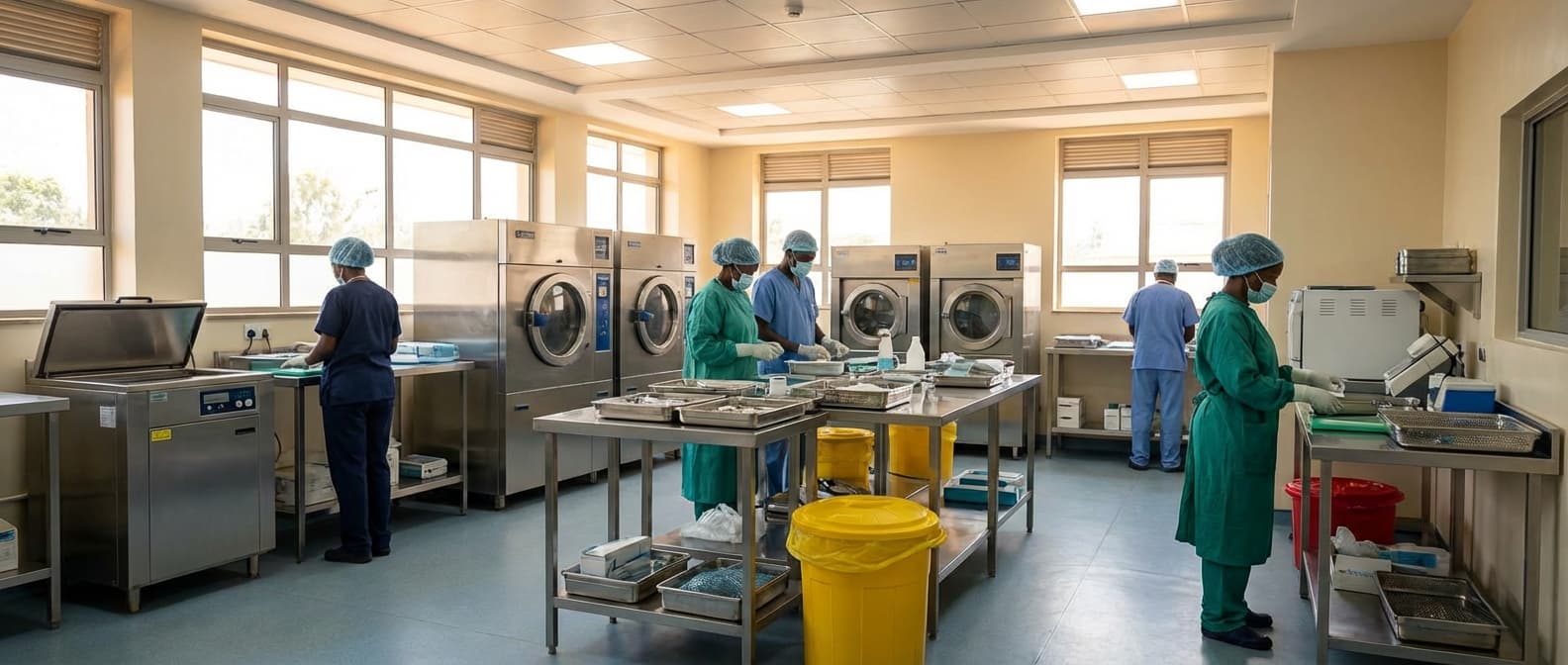
Autoclave Validation Support Service in South Africa
Engineering Excellence & Technical Support
Autoclave Validation Support Service High-standard technical execution following OEM protocols and local regulatory frameworks.
IQ/OQ/PQ Expertise
Our certified validation engineers in South Africa provide comprehensive Installation Qualification (IQ), Operational Qualification (OQ), and Performance Qualification (PQ) services, ensuring your autoclaves meet stringent regulatory standards and operate with utmost reliability.
Regulatory Compliance Assurance
Navigate South African and international regulatory landscapes with confidence. We specialize in aligning your autoclave validation with Good Manufacturing Practices (GMP), ISO 13485, and other relevant guidelines, minimizing audit risks.
Advanced Calibration & Testing
Leveraging state-of-the-art calibrated equipment and validated methodologies, we perform precise temperature, pressure, and cycle time verifications, delivering accurate and defensible validation reports tailored for the South African market.
What Is Autoclave Validation Support Service In South Africa?
Autoclave Validation Support Service in South Africa refers to the provision of specialized technical expertise and documented evidence to ensure that steam sterilization processes, carried out by autoclaves, consistently achieve the required microbiological kill parameters. This service is crucial for maintaining product safety, regulatory compliance, and operational efficiency within industries that rely on effective sterilization. The core objective is to demonstrate that the autoclave is capable of rendering microorganisms non-viable under defined conditions, thereby preventing contamination and ensuring sterility.
| Who Needs Autoclave Validation Support Service | Typical Use Cases |
|---|---|
| Healthcare Sector: Hospitals, clinics, dental practices, veterinary facilities (for sterilization of surgical instruments, medical devices, and laboratory equipment). | Sterilization of reusable surgical instruments, dental handpieces, endoscopes, and laboratory glassware. |
| Pharmaceutical and Biotechnology Industries: Manufacturers of sterile drug products, vaccines, and biological materials. | Sterilization of parenteral drugs, medical implants, laboratory equipment used in sterile manufacturing, and media preparation. |
| Food and Beverage Industry: Producers of certain processed foods requiring terminal sterilization. | Sterilization of canned goods and retort pouch products to ensure shelf-stability and eliminate spoilage microorganisms. |
| Research and Development Laboratories: Academic, industrial, and government research institutions utilizing autoclaves for sterilization of labware and materials. | Sterilization of growth media, consumables, and equipment to maintain aseptic conditions for experiments. |
| Manufacturing of Medical Devices: Companies producing sterile medical devices. | Sterilization of single-use and reusable medical devices prior to packaging and distribution. |
| Waste Management: Facilities handling infectious medical waste. | Decontamination and sterilization of hazardous bio-waste to prevent the spread of pathogens. |
What the Service Involves:
- Installation Qualification (IQ): Verifying that the autoclave is installed correctly according to manufacturer specifications and relevant standards. This includes checks on utilities, environmental conditions, and equipment documentation.
- Operational Qualification (OQ): Testing the autoclave's operational capabilities within its defined limits. This involves performing trials with biological and physical indicators to confirm consistent achievement of critical process parameters (temperature, pressure, time, and steam quality) across the entire chamber.
- Performance Qualification (PQ): Challenging the autoclave with representative loads under normal operating conditions to demonstrate its ability to consistently deliver sterile products over a defined period. This typically involves multiple cycles with varying load configurations.
- Validation Protocol Development: Creating comprehensive, documented plans outlining the procedures, acceptance criteria, and testing methodologies for IQ, OQ, and PQ.
- Execution of Validation Studies: Performing the required tests, including the placement and retrieval of biological indicators (e.g., Geobacillus stearothermophilus) and chemical indicators, as well as monitoring and recording process data.
- Data Analysis and Reporting: Compiling and analyzing all collected data, generating detailed validation reports that include evidence of compliance, deviations, and recommendations.
- Revalidation Services: Conducting validation studies after significant maintenance, modifications, or at predetermined intervals to ensure ongoing efficacy.
- Consultancy and Training: Providing expert advice on sterilization best practices, regulatory requirements, and operator training on autoclave operation and validation principles.
- Calibration Services: Ensuring that critical measuring instruments (temperature probes, pressure gauges) are accurately calibrated, which is a prerequisite for valid sterilization.
Who Needs Autoclave Validation Support Service In South Africa?
In South Africa, a robust Autoclave Validation Support Service is crucial for a wide range of organizations that rely on steam sterilization to ensure the safety and efficacy of their processes and products. Failure to properly validate and maintain autoclaves can lead to compromised sterility, regulatory non-compliance, and significant operational disruptions. This service is essential for businesses and institutions where hygiene, sterility, and process control are paramount.
| Customer Type | Primary Departments Requiring Support | Key Sterilization Needs |
|---|---|---|
| Hospitals & Clinics | Sterilization & Central Supply Department (CSSD), Operating Theatre, Dental Department, Infection Control | Surgical instruments, medical devices, patient care equipment, linens |
| Pharmaceutical Companies | Quality Assurance (QA), Quality Control (QC), Manufacturing, Research & Development (R&D), Validation Department | Media, glassware, equipment, manufacturing environments, stoppers, filters |
| Biotechnology Companies | R&D, Manufacturing, Process Development, QA/QC | Cell culture media, laboratory consumables, bioreactor components, upstream and downstream processing equipment |
| Research Laboratories | Lab Management, Research Scientists, Technical Staff | Glassware, media, culture plates, instruments, waste disposal |
| Veterinary Facilities | Veterinary Surgeons, Clinic Management, Animal Husbandry | Surgical instruments, kennels, laboratory equipment |
| Food & Beverage Industry | Quality Assurance, R&D, Packaging Development | Laboratory equipment, packaging materials (specific applications), pilot plant equipment |
| Cosmetic Manufacturers | QA/QC, Production, R&D | Production equipment, packaging components, laboratory instruments |
Target Customers and Departments for Autoclave Validation Support in South Africa
- {"title":"Healthcare Sector","description":"Hospitals, clinics, dental practices, and private medical facilities are primary users of autoclaves for sterilizing surgical instruments, medical devices, and other reusable materials. Maintaining the highest standards of sterility is non-negotiable to prevent healthcare-associated infections (HAIs)."}
- {"title":"Pharmaceutical and Biotechnology Companies","description":"Manufacturers of pharmaceuticals, vaccines, and biotechnological products utilize autoclaves for sterilizing media, equipment, glassware, and manufacturing environments to ensure product purity and prevent contamination."}
- {"title":"Research and Development Laboratories","description":"Universities, private research institutions, and contract research organizations (CROs) that conduct experiments and analyses requiring sterile conditions for biological samples, media preparation, and equipment sterilization."}
- {"title":"Food and Beverage Industry","description":"While not always steam sterilization in the same sense as medical, some food processing facilities may use autoclaves for specific sterilization needs of packaging materials, laboratory equipment used in quality control, or for research into shelf-life extension and sterilization processes."}
- {"title":"Veterinary Clinics and Animal Research Facilities","description":"Similar to human healthcare, veterinary practices and facilities involved in animal research need to sterilize instruments and equipment to ensure animal welfare and prevent disease transmission."}
- {"title":"Cosmetic and Personal Care Manufacturing","description":"Companies producing cosmetics and personal care products may use autoclaves for sterilizing manufacturing equipment and packaging materials to ensure product safety and prevent microbial contamination."}
- {"title":"Industrial Manufacturing (Specific Applications)","description":"Certain niche industrial applications that require sterilization of components or materials might also benefit from these services, though this is less common than in the life sciences."}
Autoclave Validation Support Service Process In South Africa
This document outlines the typical workflow for an Autoclave Validation Support Service process in South Africa, from the initial client inquiry to the successful execution and closure of the validation project. This structured approach ensures compliance with relevant regulatory standards and client-specific requirements.
| Stage | Description | Key Activities | Deliverables | Responsible Parties |
|---|---|---|---|---|
| Inquiry and Initial Consultation | The client expresses interest in autoclave validation services and seeks information. This stage involves understanding the client's needs, the type of autoclaves, and their intended use. | Initial contact via phone, email, or website form. Discussion of client requirements, scope of work, and regulatory context (e.g., SANS, HPCSA, CFR). | Preliminary understanding of client needs, basic scope definition. | Client, Service Provider Sales/Technical Team |
| Proposal and Quotation | Based on the initial consultation, the service provider develops a detailed proposal outlining the scope of services, methodology, timeline, and associated costs. | Site visit (optional), detailed risk assessment (preliminary), protocol development outline, cost estimation, and timeline projection. | Formal Proposal Document, Detailed Quotation. | Service Provider Technical Team, Sales Team |
| Contracting and Planning | Upon acceptance of the proposal, a formal contract is established. This stage involves detailed planning and resource allocation for the validation project. | Contract negotiation and signing. Development of a detailed project plan, including scheduling, resource allocation, equipment calibration schedule, and communication protocols. | Signed Contract, Detailed Project Plan, Validation Master Plan (VMP) amendment (if applicable). | Client Management, Service Provider Project Manager |
| Pre-Validation Activities | Activities undertaken before commencing on-site validation execution to ensure readiness and compliance. | Review and approval of validation protocols (IQ, OQ, PQ). Calibration of all validation equipment. Review of autoclave operational manuals and maintenance records. Qualification of personnel involved. | Approved Validation Protocols, Calibrated Equipment Certificates, Personnel Competency Records. | Service Provider Validation Team, Client Quality Assurance |
| Execution of Validation Protocols (IQ, OQ, PQ) | The core of the validation process, involving the systematic execution of Installation Qualification (IQ), Operational Qualification (OQ), and Performance Qualification (PQ) protocols. | IQ: Verification of correct installation and component identification. OQ: Testing of equipment functionality within its operational limits. PQ: Demonstrating that the autoclave consistently performs as intended under normal operating conditions with representative products/loads. | Completed Protocol Execution Records, Raw Data Logs, Calibration Records for the period. | Service Provider Validation Team |
| Data Analysis and Report Generation | All collected data is analyzed, and a comprehensive validation report is compiled. | Data compilation and analysis. Identification of any deviations. Writing of the validation report, including conclusions and recommendations. | Draft Validation Report, Final Validation Report with Executive Summary, Certificates of Validation (IQ, OQ, PQ). | Service Provider Validation Team, Report Reviewer |
| Corrective Actions and Re-validation (if necessary) | If deviations are identified during execution, corrective actions are implemented, and re-validation may be required. | Investigation of deviations, implementation of corrective and preventative actions (CAPAs), performance of re-validation tests as per approved protocols. | Deviation Reports, CAPA Records, Re-validation Protocol Execution Records, Revised Validation Report. | Service Provider Validation Team, Client Quality Assurance |
| Closure and Handover | Formal closure of the validation project and handover of all documentation to the client. | Final review and approval of the validation report by the client. Archiving of validation documentation. Post-validation support discussion (if applicable). | Signed Final Validation Report, Completed Validation Package, Project Closure Letter. | Service Provider Project Manager, Client Management |
Key Stages of Autoclave Validation Support Service Process
- Inquiry and Initial Consultation
- Proposal and Quotation
- Contracting and Planning
- Pre-Validation Activities
- Execution of Validation Protocols (IQ, OQ, PQ)
- Data Analysis and Report Generation
- Corrective Actions and Re-validation (if necessary)
- Closure and Handover
Autoclave Validation Support Service Cost In South Africa
Autoclave validation in South Africa is a critical process for ensuring the effectiveness of sterilization equipment, particularly in healthcare, research, and food processing industries. The cost of this service is influenced by several factors, leading to a range of pricing. Understanding these factors helps in budgeting and selecting the right service provider.
| Validation Type | Typical Range (ZAR per Autoclave) | Notes |
|---|---|---|
| Installation Qualification (IQ) | R 4,000 - R 7,000 | Verifies correct installation and documentation. |
| Operational Qualification (OQ) | R 5,000 - R 9,000 | Tests the autoclave's functionality across its operating parameters. |
| Performance Qualification (PQ) | R 7,000 - R 15,000+ | Confirms the autoclave consistently sterilizes loads effectively, often involving multiple runs with biological indicators. |
| Full IQ/OQ/PQ Package | R 15,000 - R 35,000+ | Comprehensive validation for a new installation or major overhaul. Pricing can vary significantly based on autoclave size and complexity. |
| Routine Revalidation (OQ/PQ) | R 8,000 - R 20,000+ | Annual or bi-annual revalidation to ensure continued performance. Often focuses on OQ and PQ, with IQ being less frequent. |
| Consultation and Protocol Development | R 2,000 - R 5,000+ | May be an additional cost for developing or reviewing validation protocols, especially for complex or specialized applications. |
Key Factors Influencing Autoclave Validation Costs in South Africa
- {"title":"Type of Validation","description":"The scope of the validation significantly impacts cost. This can include Installation Qualification (IQ), Operational Qualification (OQ), and Performance Qualification (PQ). A full IQ/OQ/PQ is more comprehensive and therefore more expensive than a single qualification or routine revalidation."}
- {"title":"Number and Size of Autoclaves","description":"Each autoclave to be validated will incur costs. Larger autoclaves may also require more complex validation procedures and a greater number of validation runs, increasing the overall price."}
- {"title":"Complexity of Autoclave","description":"More advanced autoclaves with complex control systems, multiple cycles, or specialized features might require more specialized expertise and time from the validation technician, thus increasing costs."}
- {"title":"Geographic Location","description":"Travel and accommodation expenses for the validation team can influence the final price, especially if the facility is located in remote areas of South Africa. Providers in major metropolitan areas might have slightly different pricing structures than those serving a wider national footprint."}
- {"title":"Validation Protocol and Reporting","description":"The level of detail and customization required in the validation protocol and the subsequent report can affect the cost. Standardized protocols are generally less expensive than bespoke ones."}
- {"title":"Validation Company Reputation and Experience","description":"Reputable and highly experienced validation companies may charge a premium for their expertise, established track record, and adherence to international standards (e.g., SANS, ISO, AAMI). Smaller or newer companies might offer more competitive pricing."}
- {"title":"Frequency of Validation","description":"While not directly a cost per instance, the required frequency of validation (e.g., annual, bi-annual) impacts the total annual expenditure. Some service providers may offer discounts for multi-year contracts or frequent clients."}
- {"title":"On-site vs. Off-site Support","description":"The majority of autoclave validation occurs on-site. However, if any part of the process or analysis can be done off-site, it might influence cost. Typically, the entire process is conducted at the client's facility."}
Affordable Autoclave Validation Support Service Options
Ensuring your autoclave operates correctly is crucial for sterility and compliance. Autoclave validation, often a regulatory requirement, can be a significant expense. This guide outlines affordable autoclave validation support service options, focusing on value bundles and cost-saving strategies to make this essential process more budget-friendly.
| Service Component | Standard Cost (Typical Range) | Cost-Saving Strategies / Value Bundles |
|---|---|---|
| Installation Qualification (IQ) | $500 - $1,500+ | Bundle with OQ/PQ for a discounted rate. Leverage OEM installation if available and cost-effective. Ensure all documentation is prepared beforehand to minimize technician time. |
| Operational Qualification (OQ) | $700 - $2,000+ | Often bundled with IQ and PQ. Look for providers offering tiered OQ based on complexity. Some services might offer remote OQ assistance for basic checks. |
| Performance Qualification (PQ) | $800 - $2,500+ per cycle | Bundle PQ for multiple cycles or a full validation cycle. Negotiate based on the number of cycles required. Consider sharing PQ resources with nearby facilities if feasible. |
| Calibration Services | $150 - $400+ | Annual calibration contracts with discounts. Combine calibration with validation services from the same provider. Ensure calibration is performed by accredited labs. |
| Revalidation Services | Similar to initial validation costs | Schedule revalidation in advance to secure better rates. Utilize cost-effective service providers for routine revalidation. |
| Documentation & Reporting | Often included, but can be a separate charge | Opt for providers with streamlined digital reporting. Ensure clear understanding of report requirements to avoid revision costs. |
| Training for In-House Staff | $500 - $2,000+ per session | Invest in comprehensive training to reduce reliance on external services for minor checks or initial troubleshooting. Consider group training sessions. |
Understanding Autoclave Validation Support Services
- What is Autoclave Validation? It's a documented process that provides a high degree of assurance that an autoclave consistently performs according to pre-determined specifications and quality attributes. This typically involves Installation Qualification (IQ), Operational Qualification (OQ), and Performance Qualification (PQ).
- Why is it Important? Ensures effective sterilization, prevents product contamination, meets regulatory requirements (e.g., FDA, ISO, health authorities), and safeguards patient or client safety.
- Common Costs Associated with Validation: Service technician fees, equipment calibration, testing consumables, documentation and reporting, and potential downtime.
- Key Service Providers: Specialized validation companies, original equipment manufacturers (OEMs), and in-house trained personnel (though this often requires significant upfront investment and ongoing training).
Verified Providers In South Africa
In South Africa's evolving healthcare landscape, identifying 'verified providers' is paramount for patients seeking quality and trustworthy medical services. While the term 'verified' can have multiple interpretations, it generally refers to healthcare professionals and institutions that have undergone a rigorous assessment of their qualifications, licensing, accreditations, and adherence to ethical standards. Franance Health stands out as a prime example of an entity that champions and facilitates access to such verified providers, representing a superior choice for healthcare consumers.
| Feature | Franance Health's Approach | Benefit to Patients |
|---|---|---|
| Credential Verification | Thorough checks of licenses, registrations, and specialist qualifications. | Ensures providers are legally qualified and possess the necessary expertise. |
| Quality Assurance | Prioritizes accredited institutions and practitioners adhering to high standards. | Increases confidence in the quality and safety of the medical care received. |
| Transparency | Detailed provider profiles with experience, specializations, and affiliations. | Empowers patients to make informed choices based on comprehensive information. |
| Ethical Standards | Mandates adherence to a strict code of medical ethics. | Guarantees professional and trustworthy healthcare interactions. |
| Accessibility | Centralized platform for discovering and connecting with verified providers. | Saves time and reduces the burden of searching for reliable healthcare. |
Why Franance Health Represents the Best Choice for Verified Providers:
- Rigorous Vetting Process: Franance Health employs a meticulous screening process that goes beyond basic credential checks. They delve into the qualifications, specialist training, and professional experience of each provider. This ensures that only highly competent and experienced individuals are listed.
- Mandatory Licensing and Registration Verification: A cornerstone of Franance Health's verification is the confirmation of all necessary medical licenses and registrations with relevant South African regulatory bodies (e.g., Health Professions Council of South Africa - HPCSA). This guarantees that providers are legally permitted to practice and meet national standards.
- Accreditation and Quality Assurance: Franance Health prioritizes providers who hold accreditations from recognized healthcare quality assurance organizations. This indicates a commitment to maintaining high standards of care, patient safety, and operational efficiency.
- Patient-Centric Approach: The platform focuses on connecting patients with providers who demonstrate a strong commitment to patient well-being and satisfaction. This often includes factors like patient feedback, communication skills, and ethical patient care practices.
- Comprehensive Provider Profiles: Franance Health offers detailed profiles that go beyond contact information. These profiles include educational background, specializations, areas of expertise, hospital affiliations, and even patient testimonials (where applicable), empowering patients to make informed decisions.
- Commitment to Ethical Practice: Providers on the Franance Health network are expected to adhere to a strict code of ethics. This commitment ensures that patients receive transparent, honest, and professional medical care without undue influence or conflict of interest.
- Accessibility and Convenience: By consolidating verified providers on a single, user-friendly platform, Franance Health simplifies the often-complex process of finding suitable healthcare. This saves patients valuable time and reduces the stress associated with searching for reliable medical assistance.
Scope Of Work For Autoclave Validation Support Service
This Scope of Work (SOW) outlines the services to be provided by the Service Provider for Autoclave Validation Support. The objective is to ensure that the specified autoclave(s) consistently operate within predefined parameters, delivering effective sterilization and meeting regulatory and quality standards. The Service Provider will perform a comprehensive validation process, including Installation Qualification (IQ), Operational Qualification (OQ), and Performance Qualification (PQ).
| Deliverable | Description | Standard Specification / Reference |
|---|---|---|
| IQ Protocol | Document outlining the procedures and acceptance criteria for verifying the correct installation of the autoclave. | Manufacturer's Installation Manual, Site Engineering Drawings, Relevant industry standards (e.g., ISO 17665). |
| IQ Execution Records | Completed documentation of all IQ tests performed, including observations, measurements, and deviations. | Signed and dated by the Service Provider and Client representative. |
| IQ Summary Report | Comprehensive report detailing the results of the IQ, including a summary of findings and a statement of qualification. | Formal document reviewed and approved by the Client. |
| OQ Protocol | Document outlining the procedures and acceptance criteria for verifying the autoclave's operational capabilities within its designed limits. | Manufacturer's Operating Manual, Process Flow Diagrams, Relevant industry standards (e.g., ISO 17665). |
| OQ Execution Records | Completed documentation of all OQ tests performed, including temperature, pressure, time, and vacuum profile verifications. | Signed and dated by the Service Provider and Client representative. |
| OQ Summary Report | Comprehensive report detailing the results of the OQ, including a summary of findings and a statement of qualification. | Formal document reviewed and approved by the Client. |
| PQ Protocol | Document outlining the procedures and acceptance criteria for demonstrating consistent and effective sterilization performance under normal operating conditions for specified loads. | Manufacturer's Load Configurations, Client's Sterilization Load Matrix, Relevant industry standards (e.g., ISO 17665), Biological Indicator Manufacturers' instructions, Chemical Indicator Manufacturers' instructions. |
| PQ Execution Records | Completed documentation of all PQ cycles, including load configuration, cycle parameters, and results from biological and chemical indicators. | Signed and dated by the Service Provider and Client representative. Raw data from indicators included. |
| PQ Summary Report | Comprehensive report detailing the results of the PQ, including a summary of findings, confirmation of efficacy for specified loads, and a statement of qualification. | Formal document reviewed and approved by the Client. May include recommendations for operational parameters. |
| Calibration Certificates | Certificates for all calibrated instruments, demonstrating traceability to national/international standards. | ISO 17025 accredited calibration laboratories, NIST traceability. |
| Training Materials | User-friendly documentation and presentation materials for autoclave operation, maintenance, and troubleshooting. | Tailored to the specific autoclave model and client's operational environment. |
| Risk Assessment Report | Document identifying potential failure modes, their effects, and mitigation strategies related to autoclave operation and sterilization efficacy. | Based on FMEA (Failure Mode and Effects Analysis) principles, ICH Q9 guidelines where applicable. |
| Final Validation Report | Consolidated report summarizing all IQ, OQ, and PQ findings, including a final conclusion on the validated status of the autoclave. | Formal document reviewed and approved by the Client. Includes reference to all sub-reports and protocols. |
Key Services and Deliverables
- Installation Qualification (IQ): Verification of correct installation of the autoclave, including all components, utilities, and safety features, according to manufacturer's specifications and site requirements.
- Operational Qualification (OQ): Testing of the autoclave's operational capabilities to ensure it performs as intended within its operational range. This includes verifying control parameters such as temperature, pressure, time, and vacuum.
- Performance Qualification (PQ): Demonstrating that the autoclave consistently performs its intended sterilization cycles under normal operating conditions, using validated biological and chemical indicators. This phase will confirm efficacy for the specified load types.
- Documentation Generation: Creation of all necessary validation protocols, execution records, summary reports, and certificates of validation.
- Calibration Services: Calibration of critical instruments and sensors associated with the autoclave, traceable to national or international standards.
- Training: Providing training to the client's personnel on the operation, routine maintenance, and troubleshooting of the validated autoclave.
- Risk Assessment: Conducting a risk assessment to identify potential failure modes and their impact on the sterilization process.
- Revalidation Support: Providing support for revalidation activities as required due to maintenance, modifications, or scheduled revalidation intervals.
Service Level Agreement For Autoclave Validation Support Service
This Service Level Agreement (SLA) outlines the response times and uptime guarantees for the Autoclave Validation Support Service provided by [Your Company Name] to [Client Company Name].
| Service Component | Response Time Target | Uptime Guarantee | Notes |
|---|---|---|---|
| Initial Response to Critical Support Request | Within 1 Business Hour | N/A (Focus on response) | Critical issues are defined as those preventing autoclave operation or posing an immediate safety risk. |
| Initial Response to High Priority Support Request | Within 2 Business Hours | N/A (Focus on response) | High priority issues are defined as those significantly impacting validation efficiency or causing minor operational disruptions. |
| Initial Response to Standard Support Request | Within 4 Business Hours | N/A (Focus on response) | Standard issues include general inquiries, non-critical troubleshooting, or requests for procedural clarification. |
| Resolution Target (Critical Issues) | Within 4 Business Hours (target for initial diagnosis and workaround) | N/A (Focus on resolution progress) | Actual resolution time may vary depending on complexity and availability of spare parts/personnel. |
| Resolution Target (High Priority Issues) | Within 8 Business Hours (target for diagnosis and resolution) | N/A (Focus on resolution progress) | Efforts will be made to resolve within this timeframe. |
| Knowledge Base & Documentation Availability | N/A | 99.5% Uptime | Ensures access to the online support portal, FAQs, and documentation during the service period. |
| Remote Diagnostic Tool Availability (if applicable) | N/A | 99.0% Uptime | Applies to any remote access tools provided for diagnostics. |
Service Overview
- The Autoclave Validation Support Service encompasses remote technical assistance, troubleshooting, and guidance related to the operation, maintenance, and validation of client-owned autoclaves.
- This SLA applies to support requests submitted through [Designated Support Channel, e.g., dedicated support portal, email address, phone number].
- The service operates during [Days of Week, e.g., Monday to Friday] from [Start Time] to [End Time] [Time Zone].
Frequently Asked Questions

Ready when you are
Let's scope your Autoclave Validation Support Service in South Africa project in South Africa.

Scaling healthcare logistics and technical systems across the entire continent.