
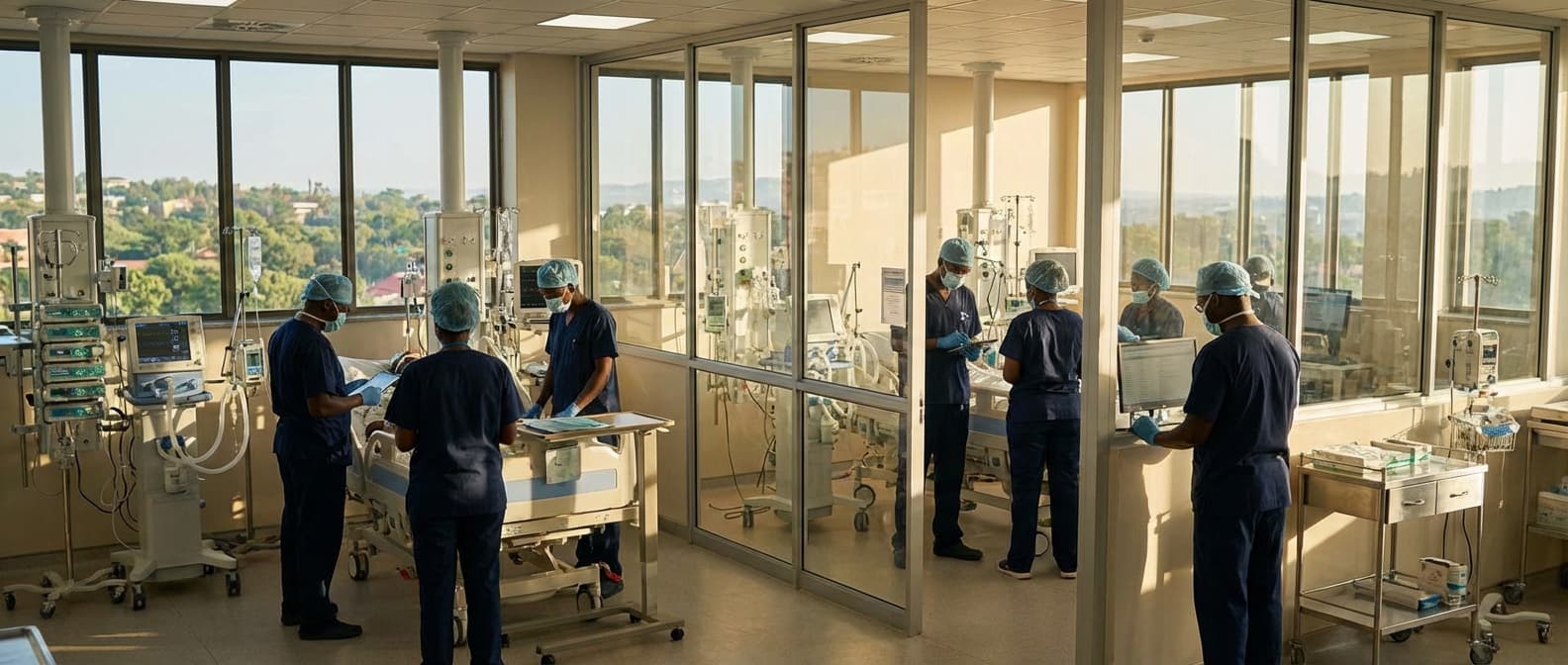
Ventilator Fleet Management & PM in South Africa
Engineering Excellence & Technical Support
Preventive maintenance and fleet management for ICU ventilators High-standard technical execution following OEM protocols and local regulatory frameworks.
Centralized Ventilator Fleet Visibility
Gain real-time oversight of your entire ventilator fleet across all South African healthcare facilities. Our platform provides detailed asset tracking, location services, and operational status, enabling proactive resource allocation and immediate response to critical needs. Reduce downtime and optimize deployment.
Proactive Predictive Maintenance Scheduling
Leverage AI-driven insights to predict potential equipment failures before they occur. Our system analyzes historical usage data and performance metrics to schedule optimal preventive maintenance, minimizing unexpected breakdowns and ensuring critical ventilators are always functional and compliant with South African healthcare standards.
Streamlined Compliance & Auditing
Effortlessly manage and document all maintenance activities, calibration records, and regulatory compliance for your South African ventilator fleet. Our platform simplifies audit preparation with automated report generation, ensuring adherence to national healthcare regulations and quality standards.
What Is Ventilator Fleet Management & Pm In South Africa?
Ventilator Fleet Management & Preventive Maintenance (PM) in South Africa refers to the comprehensive operational oversight and proactive upkeep of a pool of mechanical ventilators. This service ensures that these critical life-support devices are consistently available, functional, and compliant with regulatory standards. It encompasses a spectrum of activities designed to maximize device uptime, minimize unexpected failures, and optimize resource allocation within healthcare facilities and emergency response organizations.
| Who Needs Ventilator Fleet Management & PM? | Typical Use Cases | |||||
|---|---|---|---|---|---|---|
| Tertiary and Secondary Hospitals: Facilities with intensive care units (ICUs), high dependency units (HDUs), and emergency departments requiring a substantial and reliable ventilator pool for critically ill patients. | Emergency Medical Services (EMS) & Ambulance Services: Maintaining readiness of mobile ventilators for critical care transport and pre-hospital interventions. | Specialized Clinics & Surgical Centers: Facilities performing complex procedures that may necessitate mechanical ventilation. | Disaster Management & Public Health Agencies: Organizations responsible for stockpiling and deploying ventilators during public health emergencies or mass casualty events. | Medical Equipment Rental Companies: Businesses providing ventilators to healthcare facilities, requiring robust management to ensure device availability and serviceability for their clients. | Government & Military Healthcare Facilities: Ensuring operational readiness of deployed medical assets in diverse environments. | |
| Routine Patient Care: Ensuring ventilators are available and calibrated for patients requiring mechanical ventilation in ICUs and HDUs for conditions like ARDS, sepsis, and respiratory failure. | Emergency Department Triage & Stabilization: Providing immediate access to functional ventilators for patients presenting with acute respiratory distress. | Intra-facility & Inter-facility Patient Transfers: Ensuring the reliable transport of ventilated patients between departments or to other healthcare institutions. | Surgical Procedures: Supplying ventilators for anesthesia support during surgical interventions. | Pandemic Preparedness & Response: Managing and deploying surge capacity ventilators during outbreaks of respiratory illnesses (e.g., COVID-19). | Remote & Rural Healthcare: Ensuring functional ventilators are maintained in areas with limited access to specialized biomedical engineering support. | Training & Simulation Exercises: Providing and maintaining ventilators for clinical simulation and staff training purposes. |
Key Components of Ventilator Fleet Management & PM
- Inventory Management: Maintaining an accurate, real-time database of all ventilator units, including make, model, serial number, location, acquisition date, and service history.
- Deployment & Allocation: Strategizing and executing the deployment of ventilators based on patient acuity, geographical distribution of demand, and facility capacity. This includes establishing protocols for emergency allocation.
- Preventive Maintenance Scheduling & Execution: Developing and adhering to manufacturer-recommended and internally defined PM schedules. This involves routine inspections, calibration, cleaning, functional testing, and replacement of wear-and-tear components.
- Corrective Maintenance & Repair: Responding to emergent equipment failures, diagnosing faults, performing repairs, and documenting all repair activities and parts used.
- Performance Monitoring & Diagnostics: Utilizing diagnostic tools and software to monitor ventilator performance parameters, identify potential issues before they manifest as failures, and track operational efficiency.
- Compliance & Regulatory Adherence: Ensuring all ventilators meet national and international safety standards and regulatory requirements (e.g., South African Health Professions Council, medical device regulations). This includes maintaining comprehensive service records for audit purposes.
- Training & Competency Assurance: Providing training for biomedical engineers, technicians, and clinical staff on the proper operation, basic troubleshooting, and maintenance of specific ventilator models.
- Asset Lifecycle Management: Planning for the eventual decommissioning, disposal, or replacement of ventilators based on age, obsolescence, and total cost of ownership.
- Supply Chain Management: Managing the procurement and stocking of critical spare parts, consumables, and accessories necessary for both PM and corrective maintenance.
- Data Analytics & Reporting: Collecting and analyzing data related to device utilization, failure rates, maintenance costs, and PM effectiveness to inform strategic decision-making and continuous improvement.
Who Needs Ventilator Fleet Management & Pm In South Africa?
Ventilator fleet management and preventive maintenance (PM) are critical services for ensuring the reliable operation and optimal utilization of life-support equipment in healthcare settings. In South Africa, where resource constraints can be a significant challenge, robust fleet management and PM programs are not just beneficial but essential. They reduce unexpected downtime, extend equipment lifespan, ensure patient safety by minimizing malfunctions, and contribute to cost-efficiency by avoiding costly emergency repairs and premature replacements. Proactive management also ensures compliance with regulatory standards and facilitates better budgeting and resource allocation for medical equipment.
| Target Customer/Department | Specific Needs Addressed by Fleet Management & PM | Key Benefits |
|---|---|---|
| Intensive Care Units (ICUs) | High-volume, critical use of ventilators; need for immediate availability and reliability. | Reduced patient risk, minimized downtime, improved patient outcomes. |
| High Dependency Units (HDUs) | Consistent need for ventilation support; proactive maintenance prevents exacerbation of patient conditions. | Enhanced patient stability, efficient use of nursing resources. |
| Operating Theatres (OTs) | Ventilators used during surgical procedures; require impeccable functionality. | Safe surgical environment, reduced procedural delays, patient safety. |
| Emergency Departments (EDs) | Sudden, critical patient influx requiring immediate ventilation; need for readily available and functional equipment. | Rapid response to emergencies, improved patient triage and stabilization. |
| Respiratory Therapy Departments | Primary users and often responsible for equipment maintenance; benefit from streamlined workflows and reliable inventory. | Optimized workflow, extended equipment lifespan, cost savings. |
| Biomedical Engineering Departments | Responsible for the upkeep and repair of medical equipment; PM programs reduce workload and improve efficiency. | Proactive problem identification, reduced reactive maintenance burden, better resource planning. |
| Procurement & Finance Departments | Need for predictable maintenance costs, optimized asset lifecycle, and informed purchasing decisions. | Improved budgeting, extended asset life, reduced capital expenditure through better maintenance. |
| Quality Assurance & Patient Safety Departments | Ensuring equipment meets safety standards and contributes to positive patient outcomes. | Compliance with regulations, enhanced patient safety, reduced risk of adverse events. |
Who Needs Ventilator Fleet Management & PM in South Africa? Target Customers & Departments
- {"title":"Public Hospitals","description":"These are the cornerstone of healthcare in South Africa, serving the vast majority of the population. They often face the greatest resource limitations, making efficient equipment management paramount."}
- {"title":"Private Hospitals & Specialist Clinics","description":"While often better resourced, private facilities also benefit from streamlined operations, enhanced patient care quality, and maximizing the return on their significant investment in advanced medical equipment."}
- {"title":"Tertiary and Academic Hospitals","description":"These institutions are involved in complex patient care and often house specialized equipment, requiring meticulous maintenance to support advanced procedures and medical training."}
- {"title":"District & Regional Hospitals","description":"Serving broader populations, these hospitals rely heavily on functional and well-maintained equipment to provide essential services, making fleet management crucial for consistent patient care."}
- {"title":"Emergency Medical Services (EMS) & Ambulance Services","description":"Mobile units require robust and reliable ventilators that are meticulously maintained to function under demanding conditions during patient transport."}
- {"title":"Non-Governmental Organizations (NGOs) & Charitable Healthcare Providers","description":"Organizations working to improve healthcare access in underserved areas can maximize the impact of donated or limited equipment through effective management and maintenance."}
- {"title":"Government Health Departments (National & Provincial)","description":"Responsible for the overall healthcare infrastructure, these departments can benefit from centralized fleet management data to inform policy, procurement, and resource allocation across the public sector."}
Ventilator Fleet Management & Pm Process In South Africa
This document outlines the workflow for Ventilator Fleet Management and Preventative Maintenance (PM) processes in South Africa, from initial inquiry to the final execution and reporting. The objective is to ensure the optimal functioning, availability, and longevity of the national ventilator fleet, critical for public health response.
| Stage | Description | Key Activities | Responsible Parties | Output/Deliverables | Timeline (Typical) |
|---|---|---|---|---|---|
| Inquiry & Initial Assessment | Receiving a request for service or identifying a need for PM or repair. | Receiving service request (phone, email, portal). Verifying equipment details (serial number, model, location). Initial diagnosis (if applicable). Assessing urgency and scope of work. | Healthcare Facility Staff, Biomedical Engineering Department, Central Command/Logistics Unit, Service Provider Helpdesk | Service Request Logged, Initial Assessment Report, Prioritization Level | Immediate to 24 hours |
| Planning & Scheduling | Organizing and scheduling the PM or repair work based on urgency, resource availability, and operational needs. | Creating a maintenance schedule. Assigning technicians. Coordinating access to facilities. Verifying parts availability. Risk assessment for scheduled maintenance. | Biomedical Engineering Department, Central Command/Logistics Unit, Service Provider Scheduling Team | Maintenance Schedule, Technician Assignment, Resource Allocation Plan | 1-5 business days |
| Procurement & Logistics | Acquiring necessary parts, consumables, and arranging for the transport of technicians and equipment if needed. | Raising purchase orders for parts. Verifying inventory. Coordinating transportation for technicians and/or ventilators. Ensuring adherence to import/export regulations (if applicable). | Procurement Department, Logistics Unit, Service Provider Warehouse/Logistics | Procured Parts & Consumables, Transportation Arrangements, Delivery Schedules | 2-15 business days (depending on part availability) |
| Execution of PM Services | Performing the scheduled preventative maintenance or repairs on the ventilators. | Performing visual inspection. Calibrating equipment. Replacing worn parts. Cleaning and disinfecting. Troubleshooting and repairing faults. Software updates. | Qualified Biomedical Technicians (in-house or outsourced) | Completed PM Checklist, Repair Log, Replaced Parts | 0.5-4 hours per ventilator (depending on service) |
| Testing & Validation | Ensuring the ventilator is functioning correctly and meets all performance specifications after service. | Conducting functional tests. Running performance verification tests. Ensuring all alarms are operational. Documenting test results. | Qualified Biomedical Technicians | Test Reports, Performance Validation Certificates | 0.5-2 hours per ventilator |
| Documentation & Reporting | Recording all activities, findings, and outcomes of the PM or repair. | Updating the asset management system. Completing service reports. Submitting invoices. Recording downtime. Generating fleet status reports. | Biomedical Engineering Department, Service Provider Admin, Central Command/Logistics Unit | Updated Asset Register, Completed Service Reports, Financial Reconciliation Documents, Fleet Performance Reports | 1-3 business days post-execution |
| Follow-up & Continuous Improvement | Reviewing performance data, addressing any recurring issues, and optimizing the PM process. | Analyzing maintenance data for trends. Identifying root causes of failures. Reviewing technician performance. Updating PM procedures. Feedback collection from facilities. | Biomedical Engineering Department Management, Central Command/Logistics Unit, Quality Assurance Team | Action Plans for Improvement, Updated SOPs, Training Needs Analysis, Performance Improvement Reports | Ongoing |
Key Stages in Ventilator Fleet Management & PM Process:
- Inquiry & Initial Assessment
- Planning & Scheduling
- Procurement & Logistics
- Execution of PM Services
- Testing & Validation
- Documentation & Reporting
- Follow-up & Continuous Improvement
Ventilator Fleet Management & Pm Cost In South Africa
Managing a ventilator fleet in South Africa involves significant operational costs, particularly for preventative maintenance (PM). These costs are influenced by a range of factors, including the type and age of the ventilators, the complexity of their technology, the availability of spare parts, service provider expertise, and contractual agreements. The South African healthcare landscape, with its mix of public and private facilities, also presents varied pricing structures. Public hospitals often operate under different procurement and maintenance frameworks compared to private institutions, potentially leading to different cost dynamics. The rand (ZAR) exchange rate also plays a crucial role, especially for imported ventilators and spare parts, introducing an element of volatility to pricing.
| Service Category | Estimated Price Range (ZAR per annum) | Notes |
|---|---|---|
| Basic Preventative Maintenance (per ventilator) | R 8,000 - R 25,000 | Covers routine checks, calibration, filter replacement. Varies by model complexity and provider. |
| Comprehensive Preventative Maintenance (per ventilator) | R 20,000 - R 60,000+ | Includes PM, minor repairs, and sometimes parts. Higher end for advanced ventilators and extensive SLAs. |
| On-Demand Repair Service (per incident) | R 3,000 - R 15,000+ | Cost per call-out, excluding major parts. Can escalate significantly with complex issues. |
| Service Level Agreement (SLA) - Fleet-wide | Customized (potentially R 100,000 - R 1,000,000+ annually) | Highly dependent on fleet size, ventilator types, and coverage scope. Often negotiated per institution. |
| Parts Replacement (variable) | R 1,000 - R 50,000+ | Cost of specific components like sensors, boards, or screens. Can be a significant factor in total cost of ownership. |
Key Pricing Factors for Ventilator Fleet Management & PM in South Africa:
- Ventilator Type & Model: Advanced, high-acuity ventilators with more complex features and sensors typically incur higher PM costs due to specialized servicing requirements and more expensive components.
- Ventilator Age & Usage: Older ventilators may require more frequent maintenance and replacement parts, leading to increased costs. High usage also accelerates wear and tear.
- Complexity of Technology: Ventilators with integrated monitoring, advanced ventilation modes, and digital connectivity often have higher PM costs due to specialized diagnostics and calibration.
- Availability and Cost of Spare Parts: The accessibility and price of original manufacturer parts versus third-party alternatives significantly impact PM expenses. Import duties and logistics also add to the cost.
- Service Provider Expertise & Certification: Accredited and experienced biomedical engineering teams with specific manufacturer training command higher service fees.
- Service Level Agreements (SLAs): The scope of the SLA (e.g., response time, parts inclusion, software updates) directly influences the overall cost. Comprehensive SLAs are generally more expensive.
- Geographic Location: Travel and logistical costs for technicians to reach remote facilities can add to the PM expenses.
- Volume of Fleet: Larger fleets might benefit from volume-based discounts on service contracts.
- Regulatory Compliance: Ensuring ventilators meet South African health regulations and undergo mandatory testing adds to the maintenance overhead.
- Contractual Terms: The duration of the contract, payment terms, and any included training or support services affect the overall pricing.
Affordable Ventilator Fleet Management & Pm Options
Managing a ventilator fleet effectively and ensuring optimal performance through preventative maintenance (PM) is crucial for healthcare facilities. This often involves significant capital investment and ongoing operational costs. This document outlines affordable fleet management and PM options, focusing on value bundles and cost-saving strategies to maximize the lifespan and utility of your ventilator equipment while minimizing expenditure.
| Value Bundle Option | Description | Cost-Saving Strategies | Potential Benefits |
|---|---|---|---|
| OEM All-Inclusive Service Package | Comprehensive PM, all parts (including wear-and-tear), labor, and priority response, typically for a fixed annual fee. | Negotiate multi-year contracts for volume discounts. Bundle multiple equipment types into one agreement. Leverage included training for in-house staff. | Predictable budgeting, guaranteed OEM parts and expertise, minimized downtime, simplified asset management. |
| Third-Party Managed Service & PM | Contracting with a specialized third-party provider for PM, repairs, and potentially parts management across the fleet. | Compare pricing against OEM offerings. Negotiate service level agreements (SLAs) for response times. Consider bundling with other medical equipment services. | Potentially lower overall costs, flexibility in service scope, access to specialized technicians, competitive pricing. |
| Hybrid In-House & Outsourced Model | Performing routine PM and basic troubleshooting internally, with an external contract for complex repairs, specialized diagnostics, or extended warranty coverage. | Invest in in-house training for common PM tasks. Utilize external services only for critical or specialized needs. Leverage OEM or third-party programs for parts and extended support. | Reduced labor costs for routine maintenance, access to expert support for complex issues, better control over PM scheduling, cost containment for specialized services. |
| Equipment Leasing with Integrated PM | Leasing ventilators where the lease agreement includes routine PM and maintenance as part of the monthly payment. | Analyze total cost of ownership compared to outright purchase. Ensure lease terms include comprehensive PM and responsive service. | Lower upfront capital expenditure, predictable monthly costs, access to newer technology, includes maintenance without separate budgeting. |
Key Components of Affordable Ventilator Fleet Management & PM
- Comprehensive Service Contracts: Bundling PM, repairs, and parts under a single contract can offer predictable budgeting and often discounted rates.
- Extended Warranty Programs: Proactively extending warranties beyond the initial manufacturer period can safeguard against unexpected repair costs, especially for older equipment.
- Performance Monitoring & Data Analytics: Leveraging data to track ventilator usage, identify trends, and predict potential failures allows for proactive intervention, preventing costly breakdowns.
- Tiered PM Schedules: Tailoring PM frequencies based on actual ventilator usage and performance data, rather than a rigid manufacturer schedule, can optimize resource allocation.
- Third-Party Service Providers: Exploring reputable third-party biomedical service companies can provide competitive pricing for PM and repair services compared to OEM contracts.
- In-House Training & Capabilities: Investing in training internal biomedical staff to perform routine PM and minor repairs can significantly reduce external service costs.
- Refurbished Equipment Programs: For non-critical or backup needs, considering certified refurbished ventilators can offer substantial cost savings over new purchases.
- Strategic Equipment Lifecycle Management: Developing a clear plan for equipment acquisition, maintenance, and eventual replacement based on total cost of ownership.
Verified Providers In South Africa
In South Africa's dynamic healthcare landscape, identifying trustworthy and skilled healthcare providers is paramount. Franance Health stands out as a beacon of reliability, offering a curated network of verified professionals dedicated to delivering exceptional patient care. Their rigorous credentialing process ensures that every provider on their platform meets the highest standards of expertise, ethical practice, and patient safety. This commitment to verification provides patients with the confidence and peace of mind they deserve when seeking medical assistance. Choosing Franance Health means opting for a system that prioritizes your well-being through its meticulous selection and ongoing assessment of healthcare practitioners.
| Provider Type | Key Credentials Verified | Benefits of Choosing Verified Franance Health Providers |
|---|---|---|
| General Practitioners | MBChB/MBBS degrees, HPCSA registration, good standing with medical councils, evidence of continuing professional development (CPD). | Access to qualified and up-to-date medical knowledge for primary care needs, reliable diagnoses, and referrals. |
| Specialist Doctors (e.g., Cardiologists, Dermatologists, Oncologists) | Postgraduate qualifications (FC(SA) or equivalent), specialist board certification, HPCSA specialist registration, established practice history. | Expert care for complex medical conditions, access to advanced treatment options, and specialized diagnostic capabilities. |
| Dentists | BDS degrees, HPCSA registration as a dental practitioner, specialization certifications (if applicable), and adherence to dental board standards. | Trustworthy dental care, from routine check-ups to complex restorative procedures, ensuring oral health and well-being. |
| Therapists (e.g., Physiotherapists, Occupational Therapists) | Relevant degree qualifications (e.g., B.Physio, B.OT), HPCSA registration, specialization endorsements, and evidence of practical experience. | Skilled rehabilitation and therapeutic interventions to improve mobility, function, and quality of life. |
| Mental Health Professionals (e.g., Psychologists, Psychiatrists) | Master's degrees or doctorates in psychology, MBChB with psychiatry specialization, HPCSA registration, and specific therapeutic modality certifications. | Confidential and effective mental health support, evidence-based treatments, and expert guidance for psychological well-being. |
Why Franance Health Credentials Matter:
- Rigorous Verification Process: Franance Health employs a comprehensive vetting system that goes beyond basic qualifications.
- Expertise and Specialization: Each provider's credentials are thoroughly reviewed to confirm their specific expertise and areas of specialization.
- Ethical Practice Standards: A strong emphasis is placed on a provider's commitment to ethical conduct and patient-centered care.
- Regulatory Compliance: Franance Health ensures all providers adhere to South African medical regulations and licensing requirements.
- Continuous Quality Monitoring: Providers are subject to ongoing performance evaluation to maintain their verified status.
- Patient Safety First: The core of their credentialing is to ensure the highest level of safety for all patients.
Scope Of Work For Ventilator Fleet Management & Pm
This Scope of Work (SOW) outlines the requirements for comprehensive ventilator fleet management and preventive maintenance (PM) services. The objective is to ensure the optimal performance, reliability, and safety of the entire hospital ventilator fleet through proactive maintenance, effective asset tracking, and adherence to stringent technical standards.
| Section | Description | Technical Deliverables | Standard Specifications |
|---|---|---|---|
| Ventilator Fleet Inventory Management | Establish and maintain a comprehensive, real-time inventory of all ventilators. This includes tracking model numbers, serial numbers, purchase dates, warranty status, location, and maintenance history. | Centralized digital fleet database; Asset tagging (barcodes/RFID); Regular inventory audits. | ISO 13485 (Quality Management Systems for Medical Devices); Manufacturer's equipment specifications; Hospital's asset management policy. |
| Preventive Maintenance (PM) Program | Develop and execute a robust PM program based on manufacturer recommendations and industry best practices to ensure all ventilators are serviced at scheduled intervals. | Detailed PM checklists per ventilator model; Scheduled PM execution logs; PM compliance reports; Calibration certificates. | Manufacturer's recommended PM schedules and procedures; AAMI (Association for the Advancement of Medical Instrumentation) standards; FDA (Food and Drug Administration) regulations regarding medical device maintenance. |
| Corrective Maintenance & Repair Services | Provide timely and effective repair services for all malfunctioning ventilators. This includes troubleshooting, diagnosis, part replacement, and testing. | Service request logging system; Repair logs detailing issue, resolution, parts used, and technician; Repair turnaround time reports; Root cause analysis for recurring issues. | Manufacturer's service manuals and diagnostic tools; Certified technician training; Use of genuine or equivalent replacement parts. |
| Calibration and Performance Verification | Perform regular calibration and performance verification of ventilators to ensure accuracy and reliability in delivering therapeutic support. | Calibration records with traceable standards; Performance verification reports against manufacturer specifications; Out-of-tolerance alerts and corrective actions. | Manufacturer's calibration procedures; Standards traceable to national metrology institutes (e.g., NIST); CSA (Canadian Standards Association) standards. |
| Safety Testing and Electrical Inspection | Conduct routine safety testing and electrical inspections to ensure compliance with electrical safety standards. | Safety test reports; Electrical safety compliance certificates; Records of any identified safety hazards and corrective actions. | IEC 60601 (Medical electrical equipment - Part 1: General requirements for basic safety and essential performance); NFPA 99 (Health Care Facilities Code). |
| Software Updates and Firmware Management | Manage and implement all necessary software updates and firmware upgrades for ventilators. | Software/firmware version control log; Records of implemented updates and dates; User training on new features (if applicable). | Manufacturer's release notes and installation procedures; Hospital's IT security and change management policies. |
| Documentation and Reporting | Maintain comprehensive and accurate records of all maintenance activities, inventory, and compliance. Provide regular reports to hospital management. | Monthly/Quarterly PM compliance reports; Fleet availability and downtime reports; Cost analysis of maintenance and repairs; Recall and hazard alert management logs. | HIPAA (Health Insurance Portability and Accountability Act) for patient data privacy (if applicable to maintenance records); Hospital's record retention policies. |
| Training and Competency Assessment | Ensure all technicians performing maintenance are adequately trained and competent on specific ventilator models. | Training records for technicians; Competency assessment results; Certification of training completion. | Manufacturer's training programs; Relevant professional certifications; Hospital's HR and training policies. |
| Emergency Response & Support | Provide on-call support for urgent repair needs and critical equipment failures. | 24/7 on-call availability; Defined response times for critical equipment failures; Emergency repair procedures. | Hospital's emergency preparedness plan; Defined service level agreements (SLAs) for response and resolution. |
| Parts and Consumables Management | Maintain an adequate stock of critical spare parts and consumables to minimize repair delays. | Inventory of critical spare parts; Reorder point notifications; Preferred vendor list for parts. | Manufacturer's recommended spare parts list; Hospital's procurement and inventory management policies. |
Key Objectives
- Maintain the hospital's ventilator fleet in optimal operational condition.
- Minimize equipment downtime and unscheduled repairs.
- Ensure patient safety by adhering to manufacturer specifications and regulatory standards.
- Provide accurate and up-to-date inventory and maintenance records.
- Optimize resource allocation for maintenance activities.
- Facilitate efficient recall management and software updates.
- Support clinical staff with reliable equipment for patient care.
Service Level Agreement For Ventilator Fleet Management & Pm
This Service Level Agreement (SLA) outlines the performance standards and guarantees for Ventilator Fleet Management and Preventive Maintenance (PM) services. It defines response times for critical events and establishes uptime guarantees for the managed ventilator fleet.
| Service Category | Response Time Target | Uptime Guarantee | Notes |
|---|---|---|---|
| Critical Alarms (e.g., Ventilator Failure, Immediate Patient Risk) | Within 30 minutes | N/A (Focus on rapid response) | On-site technician dispatched or remote intervention initiated. |
| Non-Critical Issues (e.g., Scheduled PM, Routine Checks, Minor Malfunctions) | Within 4 business hours | N/A (Managed through scheduled service) | Remote troubleshooting or scheduled on-site visit. |
| Overall Ventilator Fleet Uptime | N/A | 98% (excluding planned maintenance) | Ensures availability of functional ventilators for patient care. |
| Preventive Maintenance (PM) Schedule Adherence | N/A | 95% adherence to scheduled PM dates | Minimizes unexpected failures and extends equipment lifespan. |
Key Metrics and Guarantees
- Response Time for Critical Alarms
- Response Time for Non-Critical Issues
- Uptime Guarantee
- Preventive Maintenance Schedule Adherence
Frequently Asked Questions

Ready when you are
Let's scope your Ventilator Fleet Management & PM in South Africa project in South Africa.

Scaling healthcare logistics and technical systems across the entire continent.