
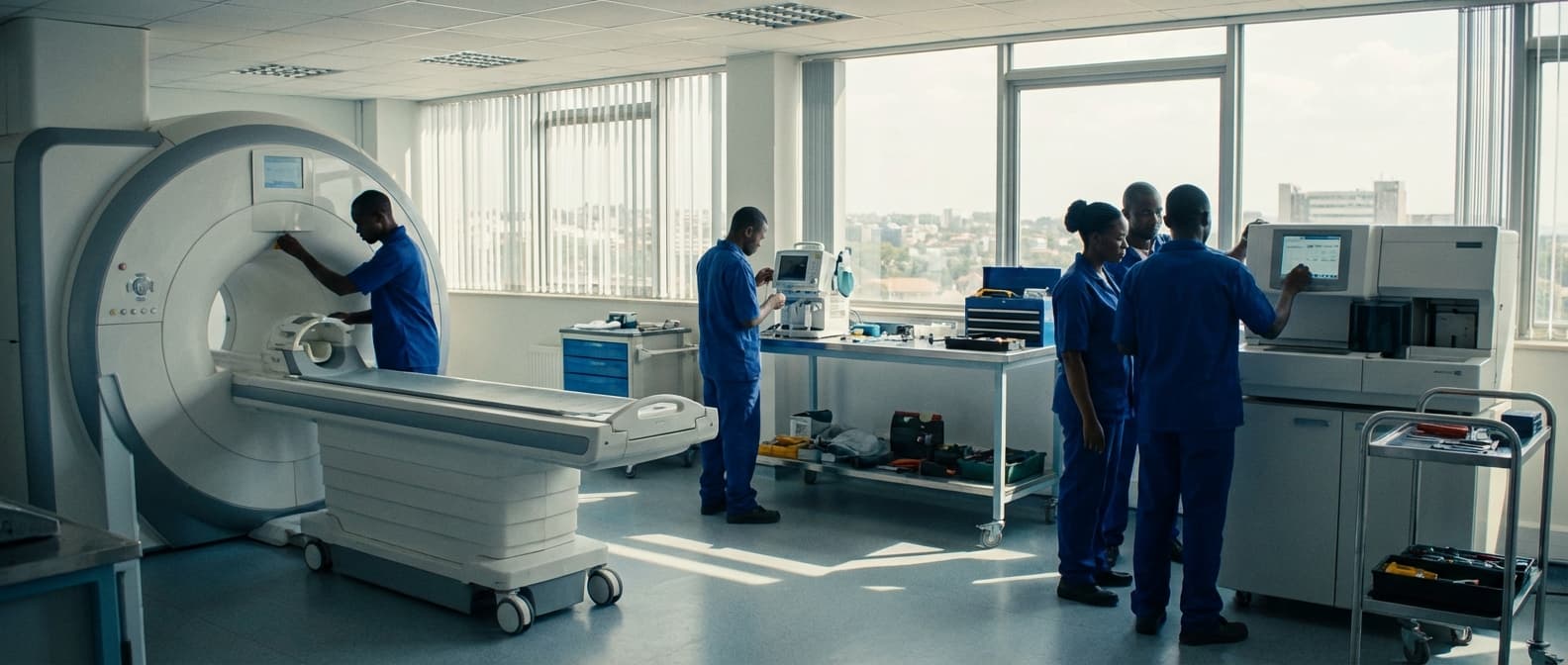
Uptime, Downtime & Root-Cause Analysis Reporting Service in South Africa
Engineering Excellence & Technical Support
Uptime, Downtime & Root-Cause Analysis Reporting Service High-standard technical execution following OEM protocols and local regulatory frameworks.
Proactive Uptime Monitoring & Alerting
Leveraging advanced South African-specific infrastructure monitoring tools, we provide real-time uptime dashboards and immediate alerts for critical service disruptions across your entire South African network. Stay ahead of potential issues before they impact your business.
Automated Downtime Detection & Classification
Our service automatically detects and classifies downtime events with precision, correlating across South African data centers and cloud environments. Gain instant visibility into service availability and the scope of impact, minimizing manual investigation time.
AI-Powered Root Cause Analysis (RCA) for South Africa
Utilize our intelligent RCA engine to pinpoint the exact root cause of South African service degradations and outages. We analyze logs, metrics, and network telemetry to deliver actionable insights and prevent recurrence, backed by local context.
What Is Uptime, Downtime & Root-cause Analysis Reporting Service In South Africa?
Uptime, Downtime, and Root-Cause Analysis (RCA) Reporting Services in South Africa are specialized offerings designed to monitor, document, and meticulously investigate the availability and operational status of IT infrastructure and critical business systems. This service is crucial for organizations aiming to maximize system availability, minimize disruptive outages, and implement proactive measures to prevent recurrence of technical issues. The core of this service involves continuous performance monitoring of servers, networks, applications, and cloud resources. When an anomaly or failure occurs, leading to downtime, the service not only logs the event but also triggers an in-depth investigation to identify the originating cause. The RCA process systematically analyzes logs, configurations, environmental factors, and event sequences to pinpoint the precise reason for the downtime, moving beyond superficial symptoms to uncover underlying vulnerabilities or defects. The output is a comprehensive report detailing the incident, its impact, the RCA findings, and actionable recommendations for remediation and future prevention. This service is indispensable for any South African entity that relies on the continuous operation of its digital assets for revenue generation, service delivery, or operational efficiency.
| Who Needs This Service? | Typical Use Cases | ||||||||||
|---|---|---|---|---|---|---|---|---|---|---|---|
| Enterprise Businesses (Finance, Retail, Manufacturing): Organizations with mission-critical applications where even brief downtime translates to significant financial loss and reputational damage. | E-commerce Platforms: Maintaining constant availability for online transactions, customer access, and inventory management. | Telecommunication Providers: Ensuring uninterrupted voice and data services for a wide customer base. | Healthcare Institutions: Guaranteeing access to patient records, diagnostic systems, and critical medical infrastructure. | Government Agencies and Public Services: Maintaining operational continuity for essential services and citizen-facing platforms. | Managed Service Providers (MSPs) and IT Consultancies: Offering proactive monitoring and incident management as a service to their clients. | Cloud-Native Organizations: Managing the complexity of distributed systems and ensuring service availability in dynamic cloud environments. | Organizations with Regulatory Compliance Requirements: Demonstrating due diligence in maintaining system stability and documenting incident management processes. | Software-as-a-Service (SaaS) Providers: Guaranteeing the reliability and availability of their applications to end-users. | Data Centers and Hosting Providers: Ensuring high uptime for hosted infrastructure and services. | Companies undergoing Digital Transformation: Monitoring the performance and availability of new digital services and applications. | Businesses experiencing frequent or recurring IT issues: Identifying the root causes of persistent problems to implement effective long-term solutions. |
| Financial Services: Monitoring trading platforms, payment gateways, and core banking systems to prevent transaction failures and data integrity issues. | Retail and E-commerce: Ensuring websites, inventory management systems, and point-of-sale (POS) operations are consistently available, especially during peak sales periods. | Healthcare IT: Tracking the uptime of Electronic Health Records (EHR) systems, medical imaging equipment, and patient monitoring devices. | Telecommunications Network Operations: Analyzing network device failures, connectivity interruptions, and service outages to optimize network performance and customer experience. | Cloud Infrastructure Management: Monitoring virtual machines, containers, databases, and network components within cloud environments to ensure application availability. | Application Performance Monitoring (APM): Identifying bottlenecks and errors within application code that lead to slow performance or crashes. | Disaster Recovery (DR) and Business Continuity (BC) Planning: Validating the effectiveness of DR/BC plans through simulated outages and post-incident analysis. | Security Incident Post-Mortems: Analyzing system behavior during and after security breaches to understand the attack vector and impact on availability. | Performance Optimization Projects: Using downtime and RCA data to identify areas for infrastructure upgrades, code refactoring, or configuration adjustments. | Vendor Performance Evaluation: Assessing the uptime and reliability of third-party services and hosted solutions. |
Key Components of Uptime, Downtime & RCA Reporting Services
- Continuous Monitoring: Proactive, real-time tracking of system health, performance metrics, and availability status across diverse IT components.
- Automated Alerting: Immediate notification mechanisms for predefined thresholds, performance degradations, and critical failures, enabling rapid response.
- Incident Logging and Documentation: Comprehensive recording of all system events, including start/end times of outages, affected services, and initial impact assessments.
- Root-Cause Analysis (RCA): Structured investigation methodologies to identify the fundamental reasons behind system failures, utilizing data correlation and diagnostic tools.
- Reporting and Analytics: Generation of detailed reports on uptime percentages, downtime durations, incident frequency, RCA findings, and recommended corrective actions.
- Trend Analysis and Predictive Insights: Utilizing historical data to identify recurring patterns, predict potential future issues, and inform capacity planning and maintenance strategies.
- Service Level Agreement (SLA) Compliance Monitoring: Verification and reporting against agreed-upon uptime guarantees and performance benchmarks.
Who Needs Uptime, Downtime & Root-cause Analysis Reporting Service In South Africa?
In South Africa's dynamic business landscape, the need for robust Uptime, Downtime, and Root-Cause Analysis (RCA) Reporting Services is critical for organizations aiming for operational excellence, cost efficiency, and competitive advantage. These services are not a luxury but a necessity for businesses that rely on the continuous availability of their IT systems, networks, and critical infrastructure. Without understanding why systems fail and how to prevent future occurrences, companies risk significant financial losses, reputational damage, and customer dissatisfaction.
| Target Customer Segment | Key Departments/Roles Benefiting | Specific Needs/Pain Points |
|---|---|---|
| Large Enterprises | IT Operations, Infrastructure Management, Service Desk, CIO/CTO Office, Business Continuity Planning, Risk Management | Ensuring high availability for mission-critical applications, meeting complex SLAs, identifying systemic issues across vast IT estates, optimizing large IT budgets, compliance with industry regulations (e.g., POPIA, FICA). |
| Small to Medium-sized Businesses (SMBs) | IT Management (often outsourced), Operations Managers, Business Owners | Minimizing the impact of unexpected downtime on limited resources, achieving cost-effective IT support, understanding the ROI of IT investments, preventing data loss and operational paralysis, improving employee productivity. |
| Managed Service Providers (MSPs) | Service Delivery Managers, Technical Support Teams, Account Managers | Proving value to clients through proactive monitoring and reporting, optimizing resource allocation for client support, identifying recurring issues for client-specific solutions, differentiating services from competitors, meeting client SLA commitments effectively. |
| Financial Services (Banking, Insurance, Investment) | IT Infrastructure & Operations, Compliance & Risk, Security Operations Center (SOC), Business Operations | Strict regulatory adherence (e.g., SARB directives, FICA, FAIS), preventing financial losses due to transaction failures or system unavailability, maintaining customer trust and confidence, high-security requirement incident analysis. |
| Telecommunications | Network Operations Center (NOC), Service Assurance, Engineering, Customer Support | Ensuring continuous connectivity for millions of users, rapid identification and resolution of network faults, minimizing churn due to service disruptions, managing complex network infrastructure, meeting stringent quality of service (QoS) metrics. |
| E-commerce & Retail | E-commerce Platform Management, IT Operations, Marketing, Supply Chain Logistics | Maximizing online sales by ensuring website and payment gateway uptime, preventing lost revenue during peak periods, quickly resolving issues affecting customer transactions, maintaining customer loyalty through seamless online experiences. |
| Healthcare | IT Operations, Clinical Informatics, Hospital Administration, Compliance Officers | Ensuring availability of Electronic Health Records (EHRs) and critical medical systems, patient safety, compliance with healthcare regulations (e.g., POPIA for patient data), preventing disruptions to patient care and treatment. |
| Manufacturing & Industrial | Plant Operations, Industrial Control Systems (ICS) IT, Maintenance Departments, Production Management | Minimizing production downtime and associated costs, ensuring the reliability of automated systems and SCADA, preventing safety incidents related to system failures, optimizing operational efficiency. |
Who Needs Uptime, Downtime & Root-Cause Analysis Reporting Service in South Africa?
- Organizations of all sizes that depend on IT infrastructure for their core operations.
- Businesses facing increasing pressure to maintain service level agreements (SLAs).
- Companies seeking to optimize IT spending and resource allocation.
- Sectors with stringent regulatory compliance requirements.
- Organizations experiencing frequent or prolonged system outages.
- Businesses looking to improve customer satisfaction and loyalty.
- IT departments struggling with reactive problem-solving rather than proactive prevention.
- Managed Service Providers (MSPs) offering IT support to their clients.
- Cloud service providers and hosting companies.
- Telecommunications companies.
- Financial institutions (banks, investment firms, insurance companies).
- E-commerce and retail businesses.
- Manufacturing and industrial companies.
- Healthcare providers.
- Government agencies and parastatals.
Uptime, Downtime & Root-cause Analysis Reporting Service Process In South Africa
This document outlines the standard workflow for an Uptime, Downtime & Root-Cause Analysis (RCA) Reporting Service offered in South Africa. The process is designed to be comprehensive, efficient, and to provide clear, actionable insights for clients experiencing service disruptions. It covers the journey from an initial inquiry to the final delivery and analysis of the RCA report.
| Stage | Description | Key Activities | Inputs | Outputs | Responsible Parties |
|---|---|---|---|---|---|
| The client expresses interest in the RCA reporting service. | Discuss service needs, understand the client's environment (IT infrastructure, applications, business impact), define reporting frequency and scope. Understand past incident management processes. | Client inquiry (email, phone call, website form) | Initial understanding of client needs, basic service requirements. | Client, Service Provider Sales/Account Manager |
| Based on gathered requirements, a detailed service offering is developed. | Define specific service levels, scope of analysis (e.g., network, application, server), data sources to be monitored, reporting templates, communication protocols. Prepare a formal proposal with pricing and terms. | Client requirements, Service Provider expertise and service catalog. | Detailed Service Proposal, Pricing structure, Statement of Work (SOW) draft. | Service Provider Technical Team, Sales/Account Manager |
| Formalizing the service agreement and preparing for service commencement. | Client reviews and accepts the proposal. Contract negotiation and signing. Secure necessary access credentials and permissions. Conduct onboarding meetings to confirm operational details, contact persons, and escalation paths. Set up monitoring tools and data feeds. | Accepted Proposal, Signed Contract, Client access credentials. | Signed Service Agreement, Onboarding documentation, Initial access and configuration of tools. | Client, Service Provider Operations/Onboarding Team, Legal Team |
| Proactive or reactive identification of service disruptions and gathering of relevant information. | Continuous monitoring of client systems for anomalies, performance degradation, or outright failures. Automated alerts trigger data collection. Manual reporting of incidents by the client. Collection of logs, metrics, event data, network traces, and configuration changes from relevant systems. | Monitoring system alerts, Client incident reports, System logs, performance metrics, network data. | Raw incident data, system logs, performance metrics, event timelines. | Service Provider Monitoring Tools, Service Provider Operations Team, Client IT Support |
| Systematic investigation to identify the fundamental reason for the downtime or performance issue. | Analyze collected data to identify patterns, correlating events. Isolate the contributing factors. Conduct hypothesis testing. Engage with client subject matter experts (SMEs) for clarification. Determine the most probable root cause(s). Document findings with evidence. | Raw incident data, historical data, client system architecture knowledge, SME input. | Identified root cause(s), supporting evidence, preliminary findings. | Service Provider RCA Analysts, Client SMEs |
| Compiling the findings into a structured and understandable report. | Create a comprehensive RCA report including incident summary, timeline, impact assessment, identified root cause(s), contributing factors, evidence, and recommended corrective/preventative actions. Internal review by senior analysts and technical leads. | Identified root cause(s), supporting evidence, collected data, RCA template. | Draft RCA Report, Internal review feedback. | Service Provider RCA Analysts, Service Provider Management |
| Communicating the findings and recommendations to the client. | Deliver the final RCA report to the designated client contact. Schedule and conduct a presentation meeting to walk through the report, explain findings, and discuss recommendations. Answer client questions and clarify any uncertainties. | Final RCA Report, Presentation slides (optional). | Final RCA Report delivered, Client understanding of findings and recommendations. | Service Provider RCA Lead/Manager, Client Stakeholders |
| Ensuring the recommendations are acted upon and providing ongoing support. | Track the implementation of recommended corrective and preventative actions. Offer support for remediation efforts. Conduct post-remediation reviews to validate effectiveness. Gather client feedback on the service. | Client commitment to remediation, Service Provider recommendations. | Remediation status updates, Post-remediation reports, Client satisfaction feedback. | Service Provider Account Manager, Service Provider Operations Team, Client Remediation Team |
Key Stages of the Uptime, Downtime & Root-Cause Analysis Reporting Service Process
- Initial Inquiry & Requirements Gathering
- Service Scoping & Proposal
- Agreement & Onboarding
- Incident Detection & Data Collection
- Root-Cause Analysis Execution
- Report Generation & Review
- Report Delivery & Presentation
- Follow-up & Remediation Support
Uptime, Downtime & Root-cause Analysis Reporting Service Cost In South Africa
The cost of uptime, downtime, and root-cause analysis (RCA) reporting services in South Africa can vary significantly based on several factors. These services are crucial for businesses to maintain operational continuity, understand service disruptions, and implement preventative measures. Pricing is typically influenced by the complexity of the infrastructure, the scope of services required, the frequency of reporting, and the vendor's expertise and reputation. As a general guideline, businesses in South Africa can expect to invest in these services, with costs ranging from a few thousand Rand for basic, automated reporting to tens of thousands of Rand or more for comprehensive, in-depth analysis and consultancy with a dedicated team.
Key pricing factors include:
- Infrastructure Size and Complexity: Larger and more complex IT environments (e.g., multiple data centers, cloud deployments, diverse application stacks) will naturally incur higher monitoring and analysis costs due to the increased number of points to track and potential failure modes.
- Scope of Services: This can range from simple automated uptime monitoring and basic alert notifications to sophisticated downtime incident management, detailed root-cause analysis, performance benchmarking, and proactive capacity planning. The more comprehensive the service, the higher the cost.
- Frequency and Depth of Reporting: The number of reports generated, their detail level (e.g., executive summaries vs. granular technical logs), and the frequency (daily, weekly, monthly, on-demand) all impact pricing.
- Service Level Agreements (SLAs): Vendors often base pricing on guaranteed uptime percentages and response times for critical incidents. Higher SLA commitments usually command higher fees.
- Vendor Expertise and Reputation: Established vendors with proven track records, specialized tools, and certified analysts will generally charge more than newer or smaller providers.
- Automation vs. Human Intervention: Services relying heavily on automated tools for monitoring and initial reporting will be more cost-effective than those involving significant human effort for investigation and analysis.
- Customization and Integration: The need for custom dashboards, integrations with existing IT Service Management (ITSM) tools, or bespoke reporting formats can add to the overall cost.
- Support Level: The availability of 24/7 support, dedicated account managers, or expert consultants for incident response and RCA will influence the price.
- Contract Duration: Longer-term contracts often come with discounted rates compared to month-to-month agreements.
In the South African market, pricing is typically quoted in South African Rand (ZAR). It's essential for businesses to clearly define their requirements and solicit multiple quotes to find a service that balances cost with the necessary level of insight and support.
| Service Tier / Scope | Estimated Monthly Cost (ZAR) | Typical Features Included |
|---|---|---|
| Basic Uptime Monitoring & Alerting | R 2,000 - R 7,000 | Automated uptime checks (website, server), basic email/SMS alerts, simple dashboard. |
| Standard Uptime/Downtime Reporting & Basic RCA | R 6,000 - R 15,000 | More frequent checks, custom alerting thresholds, automated incident logging, basic root-cause identification through log analysis, monthly summary reports. |
| Comprehensive Monitoring, Downtime Analysis & In-depth RCA | R 12,000 - R 30,000+ | Advanced performance monitoring, application-aware checks, proactive anomaly detection, detailed incident management workflow, expert-led root-cause analysis, detailed post-incident reports, trend analysis, SLA management, dedicated support. |
| Enterprise/Managed RCA Services (24/7 Support) | R 25,000 - R 70,000+ | Full-spectrum IT infrastructure monitoring, real-time incident response, collaborative RCA with client teams, historical data analysis for predictive insights, ongoing performance optimization recommendations, dedicated account management. |
Key Pricing Factors for Uptime, Downtime & RCA Reporting Services
- Infrastructure Size and Complexity
- Scope of Services Required (Monitoring, Alerting, Incident Management, RCA)
- Frequency and Depth of Reporting
- Service Level Agreement (SLA) Guarantees
- Vendor Expertise and Reputation
- Level of Automation vs. Human Analysis
- Customization and Integration Needs
- Support Level and Availability (e.g., 24/7)
- Contract Duration
Affordable Uptime, Downtime & Root-cause Analysis Reporting Service Options
This service provides essential Uptime, Downtime, and Root-Cause Analysis (RCA) reporting to ensure your systems are reliable and resilient. We offer flexible value bundles and cost-saving strategies to fit diverse budgets and needs. Understanding your system's performance is crucial for proactive maintenance, identifying bottlenecks, and preventing future outages. Our reporting empowers you with actionable insights, minimizing costly downtime and improving overall operational efficiency.
| Value Bundle | Description | Key Reporting Metrics | Target Audience | Estimated Monthly Cost (USD) | Cost-Saving Strategy |
|---|---|---|---|---|---|
| Essential Uptime | Core monitoring and basic downtime reporting for critical services. | Overall Uptime Percentage, Downtime Incidents (count), Average Downtime Duration. | Small Businesses, Startups, teams with limited IT budgets. | $50 - $150 | Focus on essential services; self-service portal for basic data access. |
| Proactive Insights | Includes Essential Uptime features plus basic RCA for recurring issues and performance trends. | Uptime/Downtime by Service, Top Downtime Causes (recurring), Performance Degradation Alerts. | Growing Businesses, IT departments seeking to prevent common issues. | $150 - $400 | Bundled pricing; reduced cost for longer commitment terms. |
| Advanced Resilience | Comprehensive monitoring, detailed RCA for all incidents, and predictive analytics for potential failures. | Per-Incident RCA Reports, Mean Time Between Failures (MTBF), Mean Time To Recovery (MTTR), Anomaly Detection Alerts, Trend Analysis. | Medium to Large Enterprises, Mission-critical operations, Compliance-driven organizations. | $400 - $1000+ | Customizable reporting frequency; dedicated account manager for optimization; automation of data collection. |
Key Features & Benefits
- Comprehensive Uptime Tracking: Monitor the availability of your critical systems and applications.
- Detailed Downtime Analysis: Pinpoint the duration, frequency, and impact of any outages.
- In-depth Root-Cause Analysis (RCA): Investigate the underlying reasons for incidents to prevent recurrence.
- Actionable Reporting: Receive clear, concise reports with recommendations for improvement.
- Proactive Issue Identification: Detect potential problems before they lead to downtime.
- Improved System Reliability: Enhance the stability and performance of your infrastructure.
- Cost Reduction: Minimize revenue loss and operational expenses associated with downtime.
- Enhanced Decision-Making: Gain data-driven insights to inform IT strategy and investments.
Verified Providers In South Africa
In South Africa, navigating the healthcare landscape and finding reliable, verified providers is paramount for ensuring quality care. Franance Health has emerged as a leading platform, distinguishing itself through its rigorous credentialing process and commitment to patient well-being. This dedication to verification sets them apart, making them a trusted resource for individuals seeking medical assistance.
| Aspect | Franance Health's Approach | Benefits for Patients |
|---|---|---|
| Credentialing Process | Rigorous checks including medical license validation, specialty certifications, and background screenings. | Ensures access to competent and trustworthy healthcare providers, mitigating risks associated with unqualified practitioners. |
| Provider Network | Curated selection of doctors, specialists, therapists, and other healthcare professionals across South Africa. | Offers a wide range of medical expertise, allowing patients to find the right care for their specific needs. |
| Transparency and Information | Detailed provider profiles including qualifications, experience, and patient reviews. | Empowers patients with the information needed to make informed decisions about their healthcare choices. |
| Quality Assurance | Ongoing monitoring of provider performance and patient feedback mechanisms. | Maintains high standards of care and addresses any potential concerns promptly. |
| Accessibility and Convenience | Digital platform for easy search, booking, and communication with providers. | Streamlines the process of accessing healthcare, saving patients time and effort. |
Why Franance Health is the Top Choice for Verified Providers in South Africa:
- Unwavering commitment to credential verification.
- Extensive network of highly qualified medical professionals.
- User-friendly platform for seamless appointment booking and communication.
- Emphasis on patient-centric care and satisfaction.
- Proactive approach to staying abreast of healthcare regulations and best practices.
Scope Of Work For Uptime, Downtime & Root-cause Analysis Reporting Service
This Scope of Work (SOW) outlines the requirements for a comprehensive Uptime, Downtime, and Root-Cause Analysis (RCA) Reporting Service. The service aims to provide clients with detailed, actionable insights into their system's performance, identifying periods of unavailability, their duration, and the underlying causes to facilitate continuous improvement and minimize future disruptions. This document details the technical deliverables and standard specifications expected from the service provider.
| Deliverable | Description | Standard Specifications / Format | Frequency |
|---|---|---|---|
| Uptime/Downtime Report | Comprehensive report detailing system availability, including total uptime percentage, total downtime duration, and individual downtime event summaries. | JSON, CSV, or PDF. Should include timestamps of start and end of downtime, duration, impacted services/systems, and severity level. | Daily, Weekly, Monthly, Quarterly (Client configurable) |
| Root-Cause Analysis (RCA) Report | Detailed analysis of each significant downtime event, identifying the primary and contributing factors that led to the incident. Includes a timeline of events, impact assessment, and recommended corrective actions. | JSON or PDF. Must follow a structured RCA methodology (e.g., 5 Whys, Fishbone Diagram). Include problem statement, evidence, root cause(s), impact, timeline, corrective actions, and preventative measures. | Per incident (for critical/major incidents) or aggregated in monthly/quarterly reports. |
| Trend Analysis Report | Analysis of historical uptime/downtime data and RCA findings to identify recurring issues, common failure patterns, and areas for proactive improvement. | JSON or PDF. Should include charts and graphs visualizing trends, identification of critical failure points, and recommendations for systemic improvements. | Monthly, Quarterly, Annually |
| Alerting & Notification Mechanism | Real-time alerts for critical downtime events to designated personnel. | Email, SMS, or integration with existing incident management tools (e.g., Slack, Microsoft Teams). Alerts should include essential incident details (time, system, brief description). | Real-time |
| Data Repository Access | Access to the raw and processed uptime/downtime and RCA data for client-side analysis and historical reference. | Secure API access (e.g., RESTful) or direct database access (read-only) with appropriate credentials. Data format: JSON or CSV. | On-demand and continuous |
Key Objectives of the Service
- Accurately track and report system uptime and downtime.
- Conduct thorough root-cause analysis for all identified downtime events.
- Provide clear, concise, and actionable reports to stakeholders.
- Identify trends and patterns in system performance to prevent future issues.
- Support continuous improvement initiatives by highlighting areas needing attention.
Service Level Agreement For Uptime, Downtime & Root-cause Analysis Reporting Service
This Service Level Agreement (SLA) outlines the commitments regarding uptime, downtime, and root-cause analysis reporting for the [Service Name] service provided by [Your Company Name]. It defines the expected response times for incidents and the guaranteed uptime percentages.
| Incident Severity Level | Definition | Target Response Time | Target Resolution Time | RCA Report Delivery |
|---|---|---|---|---|
| Severity 1 (Critical) | Service is completely unavailable or a critical feature is non-functional for all users. | Within 15 minutes | Within 4 hours | Within 24 business hours of resolution |
| Severity 2 (High) | A significant feature is degraded or unavailable for a substantial portion of users. | Within 1 hour | Within 8 business hours | Within 48 business hours of resolution |
| Severity 3 (Medium) | A minor feature is degraded or a workaround exists, impacting a limited number of users. | Within 4 business hours | Within 24 business hours | Upon request or for recurring issues |
| Severity 4 (Low) | Cosmetic issues, minor bugs, or feature requests with no significant impact on service availability. | Within 1 business day | Best effort or scheduled in future releases | Not typically provided unless part of a larger trend |
Key Service Components
- Uptime Guarantee: The service will be available for [e.g., 99.9%] of the time over a calendar month.
- Downtime Definition: Downtime is defined as a period during which the service is unavailable to users, excluding scheduled maintenance.
- Scheduled Maintenance: Pre-announced periods of planned downtime for updates and improvements, communicated with at least [e.g., 48 hours] notice.
- Incident Response Time: The time taken to acknowledge and begin investigation of a reported incident.
- Root-Cause Analysis (RCA) Reporting: A detailed report provided after significant incidents, explaining the cause, impact, and preventative measures.
- Service Credits: Compensation provided to customers in the event of failure to meet agreed-upon uptime guarantees.
Frequently Asked Questions

Ready when you are
Let's scope your Uptime, Downtime & Root-Cause Analysis Reporting Service in South Africa project in South Africa.

Scaling healthcare logistics and technical systems across the entire continent.