
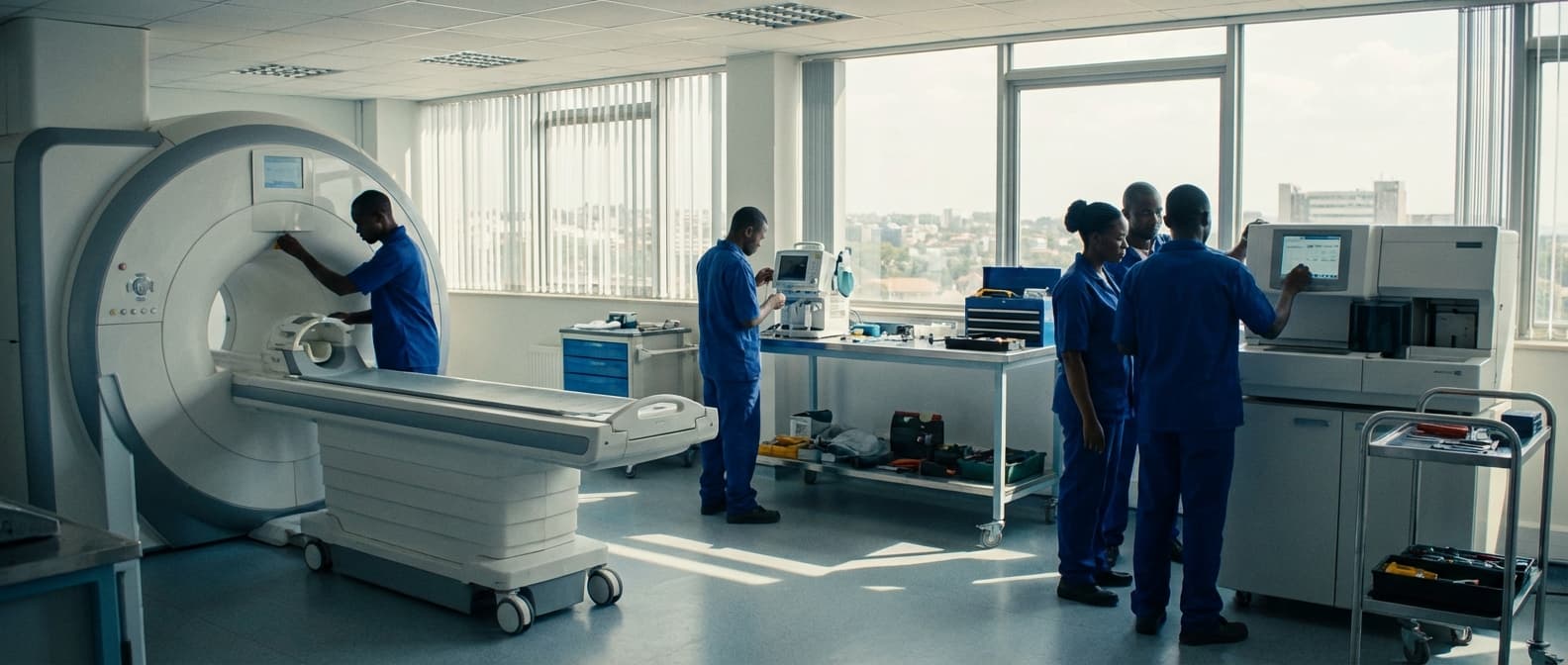
Planned Shutdown Coordination Service for Critical Equipment in South Africa
Engineering Excellence & Technical Support
Planned Shutdown Coordination Service for Critical Equipment High-standard technical execution following OEM protocols and local regulatory frameworks.
Proactive Maintenance Scheduling & Risk Mitigation
Our service leverages advanced predictive analytics and historical data to meticulously plan and schedule critical equipment shutdowns. This proactive approach minimizes unplanned downtime, reduces operational risks, and ensures optimal equipment health, directly impacting productivity and safety for South African industries.
Optimized Resource & Logistics Management
We provide end-to-end coordination, encompassing efficient allocation of skilled technicians, specialized tools, and necessary spare parts across diverse South African locations. This ensures minimal disruption and rapid execution of shutdown activities, maximizing asset availability and reducing project timelines.
Enhanced Safety Compliance & Operational Continuity
Our rigorous adherence to South African safety regulations and best practices during planned shutdowns safeguards personnel and assets. By meticulously managing every phase, we ensure uninterrupted operational continuity post-maintenance, bolstering trust and reliability for your critical equipment.
What Is Planned Shutdown Coordination Service For Critical Equipment In South Africa?
Planned Shutdown Coordination Service for Critical Equipment in South Africa refers to a specialized offering designed to manage and optimize the downtime of essential machinery and infrastructure. This service is crucial for industries reliant on continuous operation and where unscheduled outages carry significant financial, safety, and operational risks. It encompasses a comprehensive suite of activities aimed at minimizing disruption, maximizing efficiency, and ensuring the safe and effective execution of planned maintenance, upgrades, or replacements of critical assets. The core objective is to transition from reactive or poorly managed shutdowns to a proactive, controlled, and strategic approach.
| Who Needs It? | Typical Use Cases | |||||||
|---|---|---|---|---|---|---|---|---|
| Industries with high capital investment in critical infrastructure: | Power Generation (Thermal, Hydro, Renewable): Scheduled maintenance of turbines, generators, boilers, transformers, and grid infrastructure. | Mining & Minerals Processing: Planned downtime for crushing, grinding, conveying, smelting, and refining equipment, including haul trucks and excavators. | Oil & Gas (Upstream, Midstream, Downstream): Maintenance of offshore platforms, refineries, pipelines, and processing plants. "Turnarounds" are a prime example. | Manufacturing (Heavy Industry): Planned servicing of large-scale production lines, furnaces, presses, and automated machinery. | Water & Wastewater Treatment: Scheduled maintenance of pumps, filtration systems, aeration equipment, and distribution networks. | Transport Infrastructure: Planned maintenance of railway lines, bridges, tunnels, and airport control systems. | Telecommunications: Scheduled upgrades and maintenance of core network infrastructure, data centers, and satellite ground stations. | Public Utilities: Planned maintenance of critical grid components, distribution networks, and essential service delivery systems. |
| Organizations facing significant financial losses due to unscheduled downtime: | Companies operating 24/7: Any interruption can result in substantial revenue loss and impact supply chain commitments. | Businesses with complex, interconnected systems: A failure in one critical piece of equipment can cascade and affect multiple processes. | Organizations with strict contractual obligations for uptime: Penalties for not meeting service level agreements (SLAs) can be severe. | Sectors with high safety and environmental risk profiles: Uncontrolled failures can lead to catastrophic accidents or environmental damage. | Companies undergoing major capital upgrades or technology insertions: Integrating new systems requires meticulous planning and coordinated shutdowns. |
Key Components of the Service
- Detailed Planning & Scheduling: Development of a granular, multi-stage plan covering all aspects of the shutdown, from initial scope definition to final recommissioning. This includes detailed task sequencing, resource allocation, and identification of critical path activities.
- Scope Definition & Management: Precisely defining the work to be performed during the shutdown, including maintenance, inspections, repairs, modifications, and replacements. This involves a rigorous change management process to control scope creep.
- Resource Optimization: Ensuring the availability and allocation of all necessary resources, including skilled personnel (internal and external contractors), specialized tools, equipment, and materials, at the correct time and location.
- Risk Assessment & Mitigation: Comprehensive identification and analysis of potential risks associated with the shutdown, such as safety hazards, environmental impacts, and logistical challenges. Development and implementation of robust mitigation strategies.
- Stakeholder Communication & Coordination: Establishing and maintaining clear communication channels with all relevant stakeholders, including operational teams, maintenance departments, contractors, suppliers, regulatory bodies, and management. Facilitating seamless coordination between these entities.
- Permit & Regulatory Compliance: Ensuring all required permits, licenses, and regulatory approvals are obtained and adhered to throughout the shutdown process. This includes safety, environmental, and operational compliance.
- Execution Monitoring & Control: Real-time oversight of shutdown activities to track progress, identify deviations from the plan, and implement corrective actions promptly. This often involves the use of project management software and regular progress meetings.
- Quality Assurance & Control: Implementing strict quality control measures to verify that all work performed meets specified standards and is executed correctly.
- Recommissioning & Handover: Planning and executing the safe and efficient recommissioning of equipment and systems post-shutdown. This includes rigorous testing, performance verification, and formal handover back to operations.
- Post-Shutdown Review & Lessons Learned: Conducting a thorough review of the shutdown process to identify successes, challenges, and areas for improvement. Documenting lessons learned to enhance future shutdown planning and execution.
Who Needs Planned Shutdown Coordination Service For Critical Equipment In South Africa?
Planned shutdown coordination services for critical equipment are essential for organizations in South Africa that rely heavily on uninterrupted operation of their machinery and infrastructure. These services are designed to minimize downtime, optimize maintenance schedules, and ensure the safety and efficiency of complex maintenance operations. Without proper coordination, planned shutdowns can lead to extended outages, increased costs, and potential safety hazards.
| Target Customer Segment | Typical Departments Involved |
|---|---|
| Mining and Minerals Processing | Operations Management, Maintenance Engineering, Safety Officers, Production Planning, Supply Chain |
| Manufacturing and Heavy Industry (e.g., Automotive, Steel, Chemicals) | Plant Management, Engineering & Maintenance, Production Supervisors, Quality Control, Health & Safety |
| Energy and Utilities (e.g., Power Generation, Water Treatment) | Asset Management, Operations Control, Electrical & Mechanical Engineering, Environmental Health & Safety (EHS), Grid Operations |
| Oil and Gas (Upstream, Midstream, Downstream) | Plant Operations, Asset Integrity, Maintenance & Reliability, HSE, Project Management |
| Food and Beverage Processing | Plant Operations, Engineering & Maintenance, Quality Assurance, Production Management, EHS |
| Telecommunications Infrastructure | Network Operations, Field Maintenance, Engineering, Safety & Compliance |
| Healthcare Facilities (e.g., Hospitals with critical medical equipment) | Facility Management, Biomedical Engineering, Operations Management, Risk Management |
| Large-Scale Logistics and Warehousing | Operations Management, Facilities Maintenance, Health & Safety, IT Infrastructure |
| Public Infrastructure (e.g., Transportation Hubs, Water Systems) | Asset Management, Operations & Maintenance, Safety Departments, Engineering Teams |
Target Customers & Departments for Planned Shutdown Coordination Services in South Africa
- Industries with High Capital Investment in Critical Equipment: Businesses where machinery represents a significant portion of their operational assets and where downtime directly translates to substantial financial losses.
- Organizations with Complex Interdependencies: Companies where the shutdown of one piece of equipment can cascade and affect multiple other systems or production lines.
- Facilities with Stringent Safety and Regulatory Requirements: Sectors where adherence to strict safety protocols and compliance with national and international regulations is paramount during maintenance activities.
Planned Shutdown Coordination Service For Critical Equipment Process In South Africa
This document outlines the workflow for the Planned Shutdown Coordination Service for Critical Equipment Process in South Africa. This service ensures that planned maintenance and repair activities for critical equipment are executed efficiently, safely, and with minimal disruption to operations. The process begins with an inquiry from a client and culminates in the successful completion and documentation of the shutdown.
| Stage | Description | Key Activities | Responsible Party | Deliverables | Timeline (Indicative) |
|---|---|---|---|---|---|
| Inquiry & Initial Assessment | The client expresses interest in planning a shutdown for critical equipment, providing initial details about the need and desired timeframe. | Receive client inquiry, understand the broad scope and urgency, conduct preliminary risk assessment, provide initial proposal/quote. | Client, Service Provider Sales/Business Development | Initial Proposal, Budgetary Estimate, Confirmation of Interest | 1-3 Days |
| Scope Definition & Planning | Detailed discussion and agreement on the specific equipment, tasks, duration, safety requirements, and objectives of the shutdown. | Conduct site visits, detailed technical discussions, define scope of work, identify critical path activities, develop risk assessment and mitigation plan, define communication protocols, establish Key Performance Indicators (KPIs). | Client (Operations, Maintenance, Safety), Service Provider (Project Manager, Engineers, Safety Officers) | Detailed Scope of Work Document, Project Plan, Risk Assessment Report, Communication Plan, Safety Plan | 5-15 Days |
| Resource Mobilization & Scheduling | Securing and allocating all necessary personnel, equipment, materials, and permits for the shutdown. | Identify and procure specialized tools and equipment, recruit and train shutdown personnel, order spare parts and consumables, obtain necessary permits and authorizations, develop detailed work schedules and sequencing. | Service Provider (Project Manager, Procurement, HR, Logistics), Client (Procurement, Safety) | Resource Allocation Plan, Procurement Orders, Permit Applications, Detailed Shutdown Schedule | 10-30 Days (depending on complexity) |
| Pre-Shutdown Preparations | Final checks and preparations at the site to ensure everything is ready for the shutdown to commence. | Conduct pre-shutdown safety inductions, site walk-throughs, verify availability of all resources, pre-position equipment and materials, confirm isolations and lockout/tagout procedures, conduct pre-shutdown team briefings. | Service Provider (Project Manager, Supervisors, Safety Officers), Client (Operations, Maintenance) | Pre-Shutdown Readiness Report, Confirmed Isolate and Lockout Procedures | 2-5 Days |
| Shutdown Execution | The actual performance of the planned maintenance and repair activities on the critical equipment. | Execute planned tasks according to schedule, manage on-site resources, implement safety procedures rigorously, conduct continuous progress monitoring, manage deviations and unforeseen issues, maintain clear communication channels. | Service Provider (On-site Team, Supervisors, Technicians), Client (Operations, Maintenance Supervisors) | Daily Progress Reports, Incident Reports (if any), Updated Schedules | Duration of Shutdown (days/weeks) |
| Post-Shutdown Activities & Reporting | Restoring equipment to operational status, conducting final checks, and documenting the shutdown process. | Perform functional testing and commissioning, conduct final inspections, demobilize resources, complete all necessary documentation, prepare draft shutdown report. | Service Provider (Project Manager, Engineers), Client (Operations, Maintenance, Quality Assurance) | Commissioning Reports, Final Inspection Sign-offs, Draft Shutdown Report | 2-7 Days |
| Close-out & Review | Finalizing all documentation, financial reconciliation, and conducting a lessons learned session. | Submit final shutdown report, reconcile invoices and payments, conduct post-shutdown review meeting with client to discuss performance, identify areas for improvement, and formalize project closure. | Service Provider (Project Manager, Finance), Client (Project Sponsor, Procurement, Operations) | Final Shutdown Report, Lessons Learned Document, Final Invoice, Project Closure Confirmation | 5-10 Days |
Workflow Stages for Planned Shutdown Coordination Service
- Inquiry & Initial Assessment
- Scope Definition & Planning
- Resource Mobilization & Scheduling
- Pre-Shutdown Preparations
- Shutdown Execution
- Post-Shutdown Activities & Reporting
- Close-out & Review
Planned Shutdown Coordination Service For Critical Equipment Cost In South Africa
The cost of a Planned Shutdown Coordination Service for Critical Equipment in South Africa is a multifaceted consideration, influenced by several key factors. These services are crucial for minimizing downtime, ensuring safety, and optimizing the efficiency of maintenance operations for essential industrial and commercial machinery. The pricing is typically quoted in South African Rand (ZAR) and can vary significantly based on the scope, duration, and complexity of the shutdown. Below is a discussion of the primary pricing factors and estimated ranges.
| Service Tier/Complexity | Estimated Price Range (ZAR) | Typical Scope of Services |
|---|---|---|
| Basic Coordination (Scheduling & Communication) | R 30,000 - R 75,000 | Developing shutdown schedules, facilitating communication between teams, basic progress tracking. |
| Standard Coordination (Project Management Lite) | R 75,000 - R 200,000 | Includes basic coordination plus risk identification, permit tracking, contractor onboarding assistance, and basic safety oversight. |
| Comprehensive Coordination (Full Project Management) | R 200,000 - R 750,000+ | Full project management, including detailed risk assessments, safety management plans, contractor selection and management, quality control, detailed reporting, and post-shutdown analysis. This can increase substantially for very large or complex shutdowns. |
| Specialized/Industry-Specific Coordination (e.g., Mining, Nuclear) | R 500,000 - R 2,000,000+ | Highly specialized services for extremely critical or hazardous environments, involving extensive regulatory compliance, highly skilled personnel, and advanced safety protocols. Costs are highly variable based on the specific industry and project size. |
Key Pricing Factors for Planned Shutdown Coordination Services in South Africa:
- Scope of Work and Services Included: This is the most significant driver of cost. Services can range from basic scheduling and communication to comprehensive project management, including risk assessments, permit acquisition, contractor management, safety supervision, and post-shutdown reporting. A wider scope naturally increases the price.
- Duration of the Shutdown: The length of the planned shutdown directly impacts the labor and resource costs associated with coordination. Longer shutdowns require more sustained effort from the coordination team.
- Number and Complexity of Critical Equipment: Coordinating the maintenance of a single, complex piece of machinery will differ in cost from coordinating multiple, interdependent systems. The more equipment involved, and the more intricate their interdependencies, the higher the coordination effort and cost.
- Geographic Location within South Africa: While most services operate nationally, travel and accommodation expenses for the coordination team might be factored in if the shutdown location is remote or difficult to access. Costs can also be influenced by regional labor rates for any on-site personnel provided by the service.
- Level of Expertise and Experience of the Coordination Team: Highly experienced and specialized shutdown coordinators, particularly those with a proven track record in specific industries (e.g., mining, manufacturing, energy), command higher fees due to their valuable knowledge and ability to prevent costly mistakes.
- Safety and Compliance Requirements: Stricter safety regulations and compliance standards, especially in industries like mining or heavy manufacturing, necessitate more rigorous planning and supervision, adding to the coordination cost. This can include specialized safety personnel and detailed risk management protocols.
- Technology and Software Utilization: The use of advanced project management software, digital twins, or specialized communication platforms for real-time monitoring and reporting can influence pricing, either as a direct cost or embedded in the service fee.
- Client-Specific Requirements and Customization: Bespoke service packages tailored to a client's unique operational needs, reporting formats, or integration with existing systems will impact the overall cost.
- Risk Level Associated with the Equipment/Process: Highly critical equipment or processes with a high potential for catastrophic failure or significant environmental impact will require a more robust and therefore more expensive coordination effort. This often translates to more senior and specialized personnel.
Affordable Planned Shutdown Coordination Service For Critical Equipment Options
Our Affordable Planned Shutdown Coordination Service is designed to minimize downtime and maximize efficiency for your critical equipment maintenance. We understand that planned shutdowns are essential for the longevity and optimal performance of your assets, but can also represent significant costs. Our service focuses on providing comprehensive, cost-effective solutions through carefully crafted value bundles and strategic cost-saving approaches.
| Service Component | Bronze Bundle | Silver Bundle | Gold Bundle | Cost-Saving Impact |
|---|---|---|---|---|
| Basic Scheduling & Timeline | ✓ | ✓ | ✓ | Reduced downtime, fewer missed deadlines |
| Stakeholder Communication | ✓ | ✓ | ✓ | Improved collaboration, faster decision-making |
| On-site Coordination | ✓ | ✓ | Swift issue resolution, minimized delays | |
| Vendor Management | ✓ | ✓ | Negotiated rates, streamlined procurement | |
| Predictive Maintenance Integration | ✓ | Proactive problem solving, reduced emergency repairs | ||
| Advanced Reporting & Analytics | ✓ | Data-driven optimization, continuous improvement | ||
| Risk Assessment & Mitigation | ✓ | ✓ | ✓ | Prevention of costly errors and delays |
| Resource Optimization Planning | ✓ | ✓ | ✓ | Efficient labor and equipment utilization |
Value Bundles & Cost-Saving Strategies
- {"title":"Value Bundles: Tailored Service Packages","sublists":[{"items":["Basic shutdown scheduling and timeline development.","Communication channel establishment with key stakeholders.","Pre-shutdown risk assessment and identification of potential bottlenecks.","Post-shutdown review meeting."],"title":"Bronze Bundle: Essential Coordination"},{"items":["All Bronze Bundle features.","Detailed work package breakdown and resource allocation.","On-site presence during critical shutdown phases for immediate issue resolution.","Development of preventative maintenance recommendations based on shutdown findings.","Vendor coordination and management."],"title":"Silver Bundle: Enhanced Planning & Oversight"},{"items":["All Silver Bundle features.","Advanced predictive maintenance integration into shutdown planning.","Real-time performance monitoring and reporting during the shutdown.","Post-shutdown analysis for continuous improvement and lifecycle cost reduction.","Emergency response planning and escalation procedures.","Spare parts inventory optimization consultation."],"title":"Gold Bundle: Comprehensive Optimization"}],"description":"We offer tiered value bundles to suit varying needs and budgets, ensuring you receive the most impactful services for your investment. These bundles are designed to integrate seamlessly with your existing operations."}
- {"title":"Cost-Saving Strategies: Maximizing Your ROI","sublists":[{"items":["Minimizing overtime and rush charges through meticulous scheduling.","Optimizing the sequence of tasks to reduce overall downtime.","Identifying opportunities for parallel work streams.","Leveraging off-peak hours for less critical activities."],"title":"Proactive Planning & Scheduling"},{"items":["Efficient allocation of internal and external labor to avoid overstaffing.","Negotiating favorable rates with pre-qualified third-party vendors.","Ensuring the right tools and equipment are available at the right time, reducing rental costs.","Minimizing travel and accommodation expenses through smart logistics."],"title":"Resource Optimization"},{"items":["Preventing costly unexpected delays and repairs through thorough pre-shutdown inspections and assessments.","Ensuring compliance with safety regulations, avoiding fines and potential shutdown extensions.","Developing contingency plans to address unforeseen issues efficiently."],"title":"Risk Mitigation"},{"items":["Utilizing digital tools for communication, documentation, and progress tracking, reducing administrative overhead.","Leveraging data analytics to identify areas for future cost savings.","Exploring remote monitoring and diagnostic capabilities where applicable."],"title":"Technology Integration"}],"description":"Our approach prioritizes cost-effectiveness at every stage of the coordination process. We employ proven strategies to reduce expenses without compromising on safety or quality."}
Verified Providers In South Africa
In South Africa, ensuring access to reliable and skilled healthcare providers is paramount. 'Verified Providers' signifies a crucial standard, indicating that healthcare professionals and facilities have undergone rigorous checks and meet specific quality benchmarks. Franance Health stands out as a leading platform dedicated to connecting individuals with these verified professionals. Their commitment to stringent credentialing and a transparent vetting process makes them a trusted source for finding the best healthcare solutions across the nation.
| Verification Aspect | Franance Health's Approach | Patient Benefit |
|---|---|---|
| Professional Qualifications | Thoroughly checks degrees, diplomas, and relevant academic achievements from accredited institutions. | Ensures providers possess the foundational knowledge and expertise for their practice. |
| Licensing and Registration | Verifies current registration and good standing with relevant South African professional councils (e.g., HPCSA, SAPC). | Guarantees providers are legally permitted and ethically compliant to practice. |
| Experience and Specialization | Reviews previous work history, areas of expertise, and any specialized training or fellowships. | Helps patients find providers with the specific experience relevant to their condition. |
| Professional References/Background Checks | May include checks on professional conduct and, where appropriate, a review of any disciplinary records. | Provides an extra layer of assurance regarding the provider's ethical standards and reliability. |
| Continuing Professional Development (CPD) | Encourages and may verify participation in ongoing training and education. | Indicates providers are committed to staying up-to-date with the latest medical advancements and practices. |
Why Franance Health's Verified Providers are the Best Choice in South Africa:
- Rigorous Credentialing: Franance Health employs a multi-faceted verification process that goes beyond basic licensing. This includes checking qualifications, experience, professional affiliations, and, where applicable, specialized certifications.
- Commitment to Quality: By partnering exclusively with verified providers, Franance Health ensures a high standard of care, promoting patient safety and optimal health outcomes.
- Trust and Transparency: The verification process provides patients with confidence and peace of mind, knowing they are engaging with legitimate and competent healthcare professionals.
- Comprehensive Network: Franance Health offers access to a diverse range of specialists and services, catering to a wide spectrum of healthcare needs throughout South Africa.
- Efficiency in Access: The platform streamlines the process of finding and booking appointments with verified providers, saving patients valuable time and effort.
Scope Of Work For Planned Shutdown Coordination Service For Critical Equipment
This Scope of Work (SOW) outlines the services required for the coordination of planned shutdowns for critical equipment. The objective is to ensure minimal disruption to operations, maximize safety, and optimize resource utilization during scheduled maintenance and repair activities.
| Technical Deliverable | Description | Standard Specification/Format |
|---|---|---|
| Shutdown Schedule | Master plan detailing all planned shutdowns, including dates, durations, affected equipment, and key milestones. | Gantt chart or equivalent visual representation in MS Project, Primavera P6, or similar project management software. Also a detailed tabular list in Excel/CSV format. |
| Pre-Shutdown Meeting Minutes | Records of discussions, decisions, action items, and assigned responsibilities from pre-shutdown planning meetings. | Formal document, typically in PDF format, distributed via email to all stakeholders. |
| Detailed Work Plans | Step-by-step breakdown of tasks for each shutdown, including resource allocation, estimated time, and safety precautions. | MS Word or PDF documents, referencing specific task numbers from CMMS (Computerized Maintenance Management System) if applicable. May include flowcharts or process diagrams. |
| Procurement Requisitions and Orders | Documentation for all parts, materials, and services required for the shutdown. | Formal requisitions in the company's designated procurement system. Purchase orders in PDF format. |
| Safety Permits and Documentation | All necessary permits (e.g., hot work, confined space entry) and safety checklists. | Completed and signed hard copies or digital records within the company's safety management system. Typically PDF or image files. |
| Daily/Weekly Progress Reports | Regular updates on shutdown progress, including achievements, challenges, and upcoming activities. | Standardized report template in MS Word or PDF format, often accompanied by a brief presentation during status meetings. |
| Post-Shutdown Review Report | Analysis of shutdown performance against objectives, identification of deviations, lessons learned, and recommendations for future shutdowns. | Formal report in MS Word or PDF format, including root cause analysis for any significant issues encountered. |
| Shutdown Completion Certificate/Sign-off | Formal document confirming the successful completion of the shutdown and return of equipment to service. | Signed document (hard copy or electronic signature) by authorized personnel from Operations and Maintenance. |
| As-Built Documentation (if applicable) | Records of any modifications or changes made to equipment or systems during the shutdown. | Updated engineering drawings (CAD format), P&IDs, and equipment manuals, clearly indicating changes. |
Key Responsibilities of the Planned Shutdown Coordination Service
- Develop and maintain a comprehensive shutdown schedule for all critical equipment.
- Coordinate with relevant departments (Operations, Maintenance, Engineering, Safety, Procurement) to ensure alignment and resource availability.
- Facilitate pre-shutdown planning meetings to define scope, objectives, and success criteria for each shutdown.
- Oversee the development of detailed work plans, including task sequencing, dependencies, and estimated durations.
- Manage the procurement of necessary parts, materials, and external services required for the shutdown.
- Ensure adherence to all safety regulations, permits, and lockout/tagout procedures.
- Monitor progress during the shutdown, identify and resolve any deviations from the plan, and communicate status updates regularly.
- Coordinate the execution of pre-commissioning and commissioning activities post-maintenance.
- Conduct post-shutdown reviews to identify lessons learned and areas for improvement.
- Maintain accurate records of all shutdown activities, including work orders, material usage, and time spent.
- Facilitate the implementation of minor modifications or upgrades during scheduled shutdowns, if approved.
Service Level Agreement For Planned Shutdown Coordination Service For Critical Equipment
This Service Level Agreement (SLA) outlines the terms and conditions for the Planned Shutdown Coordination Service for Critical Equipment. It defines response times for critical event notifications and uptime guarantees for the coordination platform and associated services. This SLA aims to ensure minimal disruption and swift resolution during planned maintenance or shutdown events of critical infrastructure.
| Service Component | Availability Guarantee (Uptime) | Response Time Target | Resolution Time Target | Scope / Conditions |
|---|---|---|---|---|
| Coordination Platform Access | 99.9% | N/A (Continuous Availability) | N/A (Continuous Availability) | Applicable during scheduled maintenance windows for the platform itself. Scheduled maintenance will be communicated at least 7 days in advance. |
| Critical Event Notification Acknowledgment | N/A (Focus on Response) | 15 minutes | N/A (Focus on initial response) | Applies to urgent notifications regarding issues impacting planned shutdown execution or immediate post-shutdown restoration efforts. |
| Emergency Support for Coordination Platform Issues | N/A (Focus on Response) | 30 minutes | 4 hours | Applies to critical failures of the Coordination Platform that prevent essential communication or scheduling for ongoing planned shutdowns. Resolution target is for restoring core functionality. |
| Assistance with Schedule Changes (Non-Emergency) | N/A (Focus on Response) | 4 business hours | 8 business hours | Applies to requests for modifying planned shutdown schedules that do not pose an immediate risk to critical operations. Business hours are defined as Monday-Friday, 9 AM - 5 PM Client's Local Time. |
| Post-Shutdown Review Support | N/A (Focus on Response) | 1 business day | 2 business days | Applies to requests for data retrieval or assistance with post-shutdown analysis reports. Business hours as defined above. |
Key Definitions
- Critical Equipment: Any machinery, system, or infrastructure deemed essential for the uninterrupted operation of the client's business. Failure or shutdown of Critical Equipment will result in significant financial or operational impact.
- Planned Shutdown: A scheduled and pre-approved cessation of operations for Critical Equipment, typically for maintenance, upgrades, or essential servicing.
- Coordination Platform: The software and infrastructure provided by the service provider to facilitate communication, scheduling, and resource allocation for Planned Shutdowns.
- Critical Event Notification: An alert or notification triggered by the detection of an issue or event requiring immediate attention related to a Planned Shutdown.
- Uptime: The percentage of time the Coordination Platform and its core functionalities are operational and accessible to the client.
- Response Time: The maximum time allowed for the service provider to acknowledge and begin working on a Critical Event Notification.
- Resolution Time: The maximum time allowed to fully resolve a Critical Event Notification, bringing the situation back to a satisfactory state.
- Service Provider: The entity providing the Planned Shutdown Coordination Service.
- Client: The entity utilizing the Planned Shutdown Coordination Service.
Frequently Asked Questions

Ready when you are
Let's scope your Planned Shutdown Coordination Service for Critical Equipment in South Africa project in South Africa.

Scaling healthcare logistics and technical systems across the entire continent.