
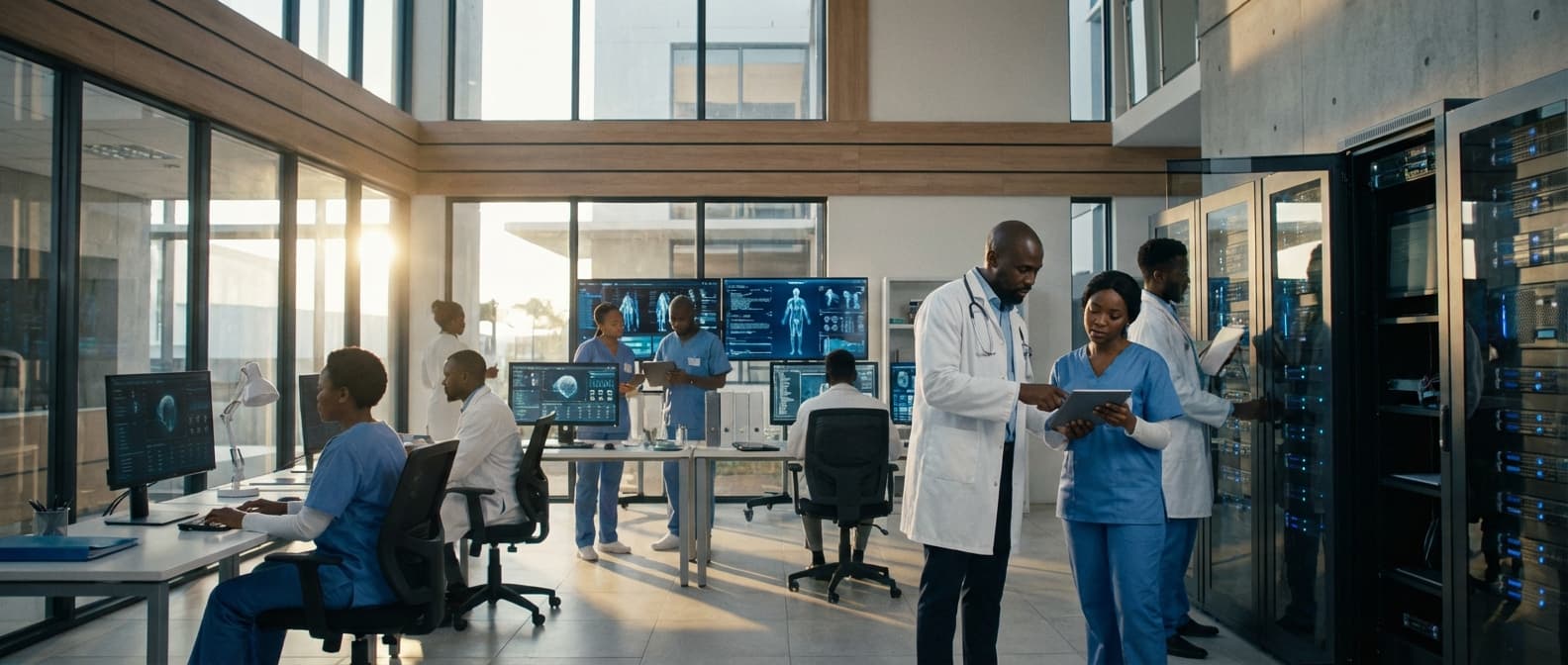
Tele-Radiology in South Africa
Engineering Excellence & Technical Support
24/7 access to certified radiologists providing rapid, accurate remote interpretation of diagnostic imaging studies. High-standard technical execution following OEM protocols and local regulatory frameworks.
Bridging Geographical Gaps with Remote Expertise
Tele-radiology in South Africa leverages advanced digital imaging and secure cloud platforms to connect remote clinics and hospitals with a network of specialized radiologists. This ensures timely access to expert diagnoses, regardless of location, improving patient care in underserved rural and peri-urban areas.
Enhancing Diagnostic Throughput and Accuracy
Our tele-radiology solutions utilize AI-powered tools for initial image analysis and workflow optimization, reducing turnaround times for critical reports. This allows for quicker treatment decisions and improves the overall diagnostic accuracy, ultimately leading to better patient outcomes and more efficient healthcare delivery.
Ensuring Data Security and Regulatory Compliance
We adhere to the strictest data privacy regulations in South Africa, employing robust encryption protocols and secure data transfer mechanisms. Our tele-radiology platform guarantees the confidentiality and integrity of patient information, fostering trust and enabling seamless collaboration between healthcare providers.
What Is Tele-radiology In South Africa?
Tele-radiology, also known as teleradiology, in South Africa refers to the practice of interpreting medical images (such as X-rays, CT scans, MRIs, and ultrasounds) remotely. This involves transmitting radiological images and associated patient data from one location to another for interpretation by a radiologist. The service facilitates access to specialist radiological expertise, particularly in regions with a scarcity of qualified radiologists. This is achieved through secure, high-speed digital networks and specialized Picture Archiving and Communication Systems (PACS) and Vendor Neutral Archives (VNAs).
| Who Needs Tele-Radiology? | Typical Use Cases in South Africa | ||||||||
|---|---|---|---|---|---|---|---|---|---|
| Hospitals and Clinics in Underserved Areas: Facilities located in rural or remote regions with limited or no on-site radiologist presence. | Emergency Department (ED) Consultations: Rapid interpretation of critical imaging studies (e.g., suspected stroke, trauma, acute abdomen) for time-sensitive diagnoses, especially during off-hours. | Small and Medium-Sized Private Practices: Radiology groups that can augment their existing capacity or offer 24/7 coverage. | Public Healthcare Sector: Provincial hospitals and clinics struggling with radiologist shortages, enabling better patient care distribution. | Specialty Practices (e.g., Cardiology, Neurology): Requiring specialized interpretations of imaging modalities for complex conditions. | Mobile Clinics and Field Hospitals: Providing diagnostic capabilities in temporary or mobile healthcare settings. | Sub-specialty Interpretations: Accessing expertise in areas like neuroradiology, musculoskeletal radiology, or interventional radiology without the need for the patient to travel long distances. | Second Opinions: Obtaining an independent radiological assessment to confirm or refute a diagnosis. | Load Shedding Mitigation: Providing continuous service during power outages by leveraging backup power at remote reading centers. | Cost-Effectiveness: Reducing the need for full-time on-site radiologists in facilities with lower imaging volumes. |
Key Aspects of Tele-Radiology in South Africa
- Service Definition: Remote acquisition, transmission, and interpretation of medical imaging studies.
- Technological Infrastructure: Relies on secure PACS/VNAs, high-bandwidth networks (internet or dedicated lines), and robust IT security protocols.
- Operational Model: Often involves a central reading hub or network of radiologists who receive and interpret studies from satellite or originating sites.
- Regulatory Compliance: Adheres to South African healthcare regulations and data privacy laws (e.g., POPIA).
Who Needs Tele-radiology In South Africa?
Tele-radiology, the practice of interpreting medical images remotely, presents a compelling solution to address various challenges within South Africa's healthcare landscape. While advanced imaging technology is increasingly available, access to skilled radiologists, particularly in underserved rural areas, remains a significant bottleneck. Tele-radiology bridges this gap by connecting remote healthcare facilities with specialist radiologists, ensuring timely and accurate diagnoses, improving patient outcomes, and optimizing resource allocation. This technology is not a luxury but a necessity for enhancing the reach and quality of diagnostic imaging services across the nation.
| Department/Sector | Specific Needs Addressed by Tele-Radiology | Key Benefits |
|---|---|---|
| Rural Clinics/Hospitals | Lack of on-site radiologists, limited access to specialist interpretation, delayed diagnosis | Improved diagnostic accuracy, faster treatment initiation, reduced patient travel, equitable access to care |
| District Hospitals | Radiologist shortages, high patient volume, need for expert opinion on complex cases | Increased reporting capacity, enhanced diagnostic expertise, reduced burden on existing staff, improved efficiency |
| Provincial/Tertiary Hospitals | Managing overflow, sub-specialty coverage gaps, staff shortages, after-hours support | Extended service availability, access to niche expertise, improved operational flexibility, maintained service quality |
| Private Radiology Practices | Expanding service area, offering 24/7 coverage, outsourcing interpretations, optimizing workflow | Increased market share, competitive advantage, improved profitability, streamlined operations |
| Emergency Medicine | Urgent need for rapid scan interpretation, potential for misdiagnosis due to delays | Faster critical decision-making, improved patient outcomes, reduced mortality/morbidity, enhanced trauma care |
| Oncology | Monitoring treatment response, staging of disease, need for precise imaging analysis | Accurate assessment of therapeutic effectiveness, improved treatment planning, better patient management |
| Neurology | Diagnosis of stroke, head injuries, and neurological disorders requiring immediate interpretation | Timely intervention for conditions like stroke, improved neurological assessment and management |
| Orthopedics | Interpretation of fractures, dislocations, and sports injuries, especially in remote areas | Faster diagnosis of injuries, enabling prompt treatment and rehabilitation |
Who Needs Tele-Radiology in South Africa? Target Customers & Departments
- Primary Healthcare Clinics & Hospitals: Facilities in rural and peri-urban areas often lack on-site radiologists and may have limited access to advanced imaging equipment. Tele-radiology provides them with immediate access to expert interpretation.
- District Hospitals: These facilities often handle a higher patient load and may experience specialist shortages. Tele-radiology can alleviate pressure on existing radiologists and ensure faster turnaround times for critical cases.
- Provincial & Tertiary Hospitals: Even well-resourced hospitals can benefit from tele-radiology to manage overflow, provide sub-specialty expertise not available on-site, or during staff shortages and leave periods.
- Private Radiology Practices: Independent practices can leverage tele-radiology to extend their reach, offer 24/7 services, and improve efficiency by outsourcing or co-sourcing interpretations.
- Academic & Teaching Hospitals: Tele-radiology can be used for remote learning opportunities for radiology residents and for collaborative research projects.
- Emergency Departments: Rapid interpretation of scans is crucial in emergency settings. Tele-radiology ensures that even in remote locations, critically ill patients receive timely diagnoses.
- Outpatient Departments: Timely diagnostic reports are vital for efficient patient management and treatment planning in outpatient settings.
Tele-radiology Process In South Africa
Tele-radiology in South Africa involves the remote transmission of radiological images from a healthcare facility to a radiologist for interpretation and reporting. This process is crucial for improving access to specialist diagnostic services, especially in underserved rural areas and busy urban centers. The workflow typically begins with a referral from a referring physician, followed by image acquisition, secure transmission, radiologist interpretation, report generation, and finally, the delivery of the report back to the referring physician.
| Step | Description | Key Stakeholders | Technology/Tools Involved | Challenges/Considerations |
|---|---|---|---|---|
| A patient requires a radiological examination. The referring physician, often at a primary healthcare facility or a hospital lacking a radiologist, initiates a request for a radiological service, potentially specifying the need for a tele-radiology consultation. | Referring Physician, Patient, Healthcare Facility Administrator | Electronic Health Record (EHR) systems (if integrated), Referral forms (paper or electronic), Communication channels (phone, email) | Ensuring accurate patient information, appropriate referral justification, clear communication of urgency. |
| The patient undergoes the radiological examination (X-ray, CT, MRI, Ultrasound) at the referring facility. The acquired images are then prepared for transmission. | Radiographer/Technologist, Patient | Radiology equipment (X-ray machines, CT scanners, MRI scanners, Ultrasound machines), Picture Archiving and Communication System (PACS) or equivalent image management system | Image quality control, standardized imaging protocols, ensuring all relevant images are captured. |
| Radiological images and associated patient data are securely transmitted from the originating facility to the tele-radiology service provider or a central PACS. Security and patient privacy are paramount. | Radiographer/Technologist, IT Department, Tele-radiology Provider | Secure VPN, encrypted data transfer protocols (e.g., HL7, DICOM over secure channels), PACS, Cloud-based storage, dedicated network infrastructure | Bandwidth limitations, data security and privacy compliance (e.g., POPIA in South Africa), reliable internet connectivity, interoperability between systems. |
| A qualified radiologist, located remotely, accesses the transmitted images and patient information. They analyze the images, identify any abnormalities, and formulate a diagnosis. | Radiologist, Tele-radiology Provider | Radiology workstations with high-resolution monitors, specialized viewing software (DICOM viewers), PACS, communication tools for consultation | Radiologist workload, ensuring adequate sub-specialty coverage, managing time zone differences, maintaining diagnostic accuracy. |
| The radiologist dictates or writes a comprehensive report of their findings and diagnosis. This report is often reviewed by another radiologist (for quality assurance) before being finalized. | Radiologist, Reporting Radiologist (if applicable), Quality Assurance Radiologist | Speech recognition software, reporting templates, PACS reporting module, electronic signature capabilities | Ensuring clarity and conciseness of reports, adherence to reporting standards, efficient turnaround times. |
| The finalized report is securely transmitted back to the referring physician's facility. The referring physician reviews the report and uses it for patient management. Mechanisms for follow-up or clarification may be in place. | Referring Physician, Tele-radiology Provider, Patient (indirectly) | EHR integration, secure email, secure portal, fax (less common but still used), direct communication channels | Ensuring timely delivery, clear communication of findings to the referring physician, patient follow-up coordination, feedback mechanisms. |
Tele-Radiology Workflow in South Africa
- Initial Inquiry and Referral
- Image Acquisition
- Secure Data Transmission
- Radiologist Interpretation
- Report Generation and Review
- Report Delivery and Follow-up
Tele-radiology Cost In South Africa
Tele-radiology, the practice of interpreting medical images remotely, is gaining traction in South Africa as a solution to address shortages of radiologists, particularly in rural and underserved areas. The cost of tele-radiology services in South Africa is influenced by a multitude of factors, leading to a range of pricing structures. These factors include the complexity of the imaging modality, the urgency of the report, the experience level of the radiologist, the volume of studies, and the contractual agreements between healthcare providers and tele-radiology service providers. The pricing is typically quoted in South African Rand (ZAR).
| Service Type (Example) | Estimated Cost Range (ZAR) | Notes |
|---|---|---|
| Standard X-ray Interpretation | R200 - R500 | Basic interpretation, standard turnaround time. |
| Urgent X-ray Interpretation | R400 - R800 | Priority report, often within 1-2 hours. |
| Standard CT Scan Interpretation | R600 - R1,500 | Interpretation of axial and coronal/sagittal reconstructions, standard turnaround. |
| Urgent CT Scan Interpretation | R1,000 - R2,500 | Immediate reporting, crucial for emergency cases. |
| Standard MRI Scan Interpretation | R800 - R2,000 | Complex sequences and multi-planar reconstructions, standard turnaround. |
| Urgent MRI Scan Interpretation | R1,500 - R3,000+ | High priority, often for neurological or orthopedic emergencies. |
| Standard Ultrasound Interpretation | R400 - R1,000 | Includes Doppler where applicable, standard turnaround. |
| Per Study Fee (Volume Dependent) | Variable | Often negotiated based on monthly/annual volume, can be lower per study for high volumes. |
| Monthly Subscription/Platform Fee | Variable | May include access to a reading platform, PACS integration, and support. Can be a fixed cost or per-user. |
Key Pricing Factors for Tele-Radiology in South Africa
- Imaging Modality: Different imaging techniques (e.g., X-ray, CT scan, MRI, Ultrasound) have varying costs associated with their interpretation. More complex modalities like MRI and CT scans generally incur higher professional fees.
- Report Urgency (Turnaround Time): Standard reporting times are usually cheaper than 'stat' or urgent reads, which require immediate attention from the radiologist and often come with a premium.
- Radiologist Experience and Specialization: Highly specialized radiologists or those with extensive experience may command higher fees. Sub-specialists in areas like neuroradiology or musculoskeletal imaging may also have different pricing.
- Volume of Studies: Healthcare facilities with a high volume of imaging studies may be able to negotiate bulk discounts with tele-radiology providers.
- Type of Service: Basic interpretation versus comprehensive reporting that includes differential diagnoses, recommendations, and follow-up plans can affect pricing.
- Technology and Infrastructure: The cost of the tele-radiology platform, including PACS (Picture Archiving and Communication System) integration and secure data transmission, can be factored into service fees, sometimes as a separate infrastructure cost.
- Contractual Agreements: Pricing can vary significantly based on whether it's a pay-per-study model, a fixed monthly fee, or a capitation model (per patient).
- Geographic Location: While tele-radiology aims to bridge geographical gaps, the operating costs for the service provider within South Africa might indirectly influence pricing.
Affordable Tele-radiology Options
Tele-radiology has become an increasingly vital component of modern healthcare, offering remote diagnostic imaging interpretation. Choosing affordable options requires understanding how value is delivered and exploring cost-saving strategies. Value bundles in tele-radiology often consolidate services to provide comprehensive solutions at a predictable price point, while other strategies focus on optimizing utilization, negotiating terms, and leveraging technology to reduce overall expenditure.
| Value Bundle Component | Description | Cost-Saving Benefit |
|---|---|---|
| Comprehensive Reading Services | Includes interpretation of all imaging modalities (X-ray, CT, MRI, Ultrasound, etc.) with subspecialty coverage. | Eliminates the need for multiple vendor contracts and consolidates expertise, leading to administrative efficiency and potentially better pricing through volume. |
| 24/7/365 Coverage | Ensures constant availability of radiologists for emergency studies and routine reads, regardless of time or day. | Reduces reliance on expensive in-house overnight or on-call staff, and potentially leverages more affordable global talent pools. |
| Integrated Workflow Solutions | Bundles often include PACS integration, reporting software, and communication tools. | Streamlines operations, reduces manual effort, and improves efficiency, leading to higher radiologist throughput and lower per-study costs. |
| Quality Assurance and Reporting | Includes peer review, outcome tracking, and regular performance reports. | Ensures high-quality diagnostics, minimizing the risk of costly misdiagnoses or follow-up errors, and provides data for negotiation and improvement. |
| Dedicated Account Management | A single point of contact for service, billing, and operational issues. | Simplifies communication and issue resolution, saving administrative time and effort. |
Key Affordable Tele-Radiology Options & Strategies
- Subspecialty Teleradiology: Accessing subspecialists (e.g., neuroradiology, pediatric radiology) remotely can be more cost-effective than employing them full-time, especially for lower-volume needs.
- Emerging Market Providers: Newer tele-radiology companies, particularly those based in regions with lower overhead costs, may offer more competitive pricing.
- Per-Study vs. Full-Time Equivalent (FTE) Models: Understanding the pricing structure is crucial. Per-study models are good for fluctuating workloads, while FTE models might be better for consistent high volumes, though negotiation is key.
- "Follow-the-Sun" Models: This model utilizes radiologists across different time zones to provide 24/7 coverage, potentially reducing overtime costs compared to a single location.
- AI-Assisted Teleradiology: Integrating Artificial Intelligence (AI) tools can improve radiologist efficiency, potentially leading to higher throughput and lower per-study costs.
- Quality Reporting and Metrics: Negotiating pricing based on demonstrated quality metrics (e.g., turnaround time, accuracy) can ensure value for money.
- Volume-Based Discounts: Larger healthcare systems or groups can often negotiate better rates by committing to higher study volumes.
- Customized Service Agreements: Tailoring contracts to specific needs, such as desired turnaround times for different study types, can prevent paying for unnecessary premium services.
- Data Security and Compliance: While not directly a cost-saving strategy, ensuring robust data security and HIPAA compliance from the outset avoids potentially enormous costs associated with breaches and penalties.
Verified Providers In South Africa
In South Africa's dynamic healthcare landscape, ensuring access to verified and high-quality healthcare providers is paramount. Franance Health stands out as a trusted entity committed to connecting individuals with accredited medical professionals and facilities. Their rigorous credentialing process and dedication to patient well-being make them a leading choice for those seeking reliable healthcare services. This document outlines the key aspects of Franance Health's verification process and highlights why they represent the best choice for accessing verified providers in South Africa.
| Franance Health Verification Step | Description | Importance for Patients |
|---|---|---|
| Academic and Professional Qualification Verification | Confirmation of degrees, diplomas, and specialized training from recognized institutions. | Ensures providers possess the foundational knowledge and expertise required for their practice. |
| Professional Licensure and Registration Check | Verification of active and valid licenses with relevant South African medical councils (e.g., HPCSA, SAQA). | Guarantees providers are legally authorized to practice and adhere to professional regulations. |
| Disciplinary Record and Sanction Search | Scrutiny of past or present disciplinary actions, investigations, or sanctions from professional bodies. | Protects patients from practitioners with a history of misconduct or negligence. |
| Background Checks and Criminal Record Verification | Where applicable and legally permissible, checks for relevant criminal history. | Adds an extra layer of safety and ensures a secure healthcare environment. |
| Peer Review and Reference Checks | Gathering feedback from colleagues and references regarding a provider's clinical skills and ethics. | Provides insights into a provider's practical competence and professional reputation. |
Why Franance Health is Your Best Choice for Verified Providers:
- Unwavering Commitment to Verification: Franance Health employs a stringent multi-stage credentialing process for all listed providers. This goes beyond basic registration to include verification of qualifications, professional licenses, disciplinary records, and adherence to ethical standards. This ensures that only legitimate and competent healthcare professionals are included in their network.
- Comprehensive Provider Network: Their network encompasses a wide array of medical disciplines, from general practitioners and specialists to allied health professionals and hospitals. This breadth of coverage means that most healthcare needs can be met through Franance Health's verified directory.
- Enhanced Patient Safety and Trust: By meticulously vetting each provider, Franance Health significantly reduces the risk of patients encountering unqualified or unethical practitioners. This fosters a higher level of trust and confidence in the healthcare services accessed through their platform.
- Streamlined Access to Quality Care: Franance Health simplifies the process of finding and engaging with verified healthcare professionals. Their user-friendly platform and dedicated support ensure that individuals can easily locate and book appointments with the right medical experts when they need them most.
- Focus on Continuous Quality Improvement: Franance Health actively monitors provider performance and patient feedback. This commitment to ongoing quality assurance ensures that their network remains at the forefront of delivering excellent healthcare in South Africa.
Scope Of Work For Tele-radiology
This document outlines the Scope of Work (SOW) for Tele-Radiology services, detailing the technical deliverables and standard specifications required for successful implementation and operation. The objective is to establish a robust and efficient tele-radiology service that provides timely and accurate diagnostic interpretations of medical images to remote healthcare facilities.
The tele-radiology service will encompass the acquisition, transmission, storage, interpretation, and reporting of medical imaging studies (e.g., X-ray, CT, MRI, Ultrasound). This SOW defines the expected technical capabilities, performance metrics, and security requirements for all participating entities and systems.
| Specification Area | Standard/Requirement | Details |
|---|---|---|
| Image Transmission Protocol | DICOM (Digital Imaging and Communications in Medicine) | Must support DICOM Send and Receive, ensuring interoperability with existing imaging modalities and PACS. |
| Network Security | HIPAA Compliant / GDPR Compliant (as applicable) | End-to-end encryption (TLS/SSL) for data in transit, secure authentication protocols, VPN tunnels for dedicated connections. |
| Image Quality | Diagnostic Accuracy Standards | Resolution, contrast, and luminance levels meeting established diagnostic standards for each imaging modality. Regular calibration of display devices. |
| System Uptime | 99.9% Availability | High availability architecture with redundancy for critical components to minimize downtime. |
| Turnaround Time (TAT) | Defined by Service Level Agreement (SLA) | Specific TATs for different modalities and urgency levels (e.g., STAT reads within 30 minutes, routine reads within 24 hours). |
| Data Storage | Secure and Compliant Storage | Long-term archiving of images and reports according to regulatory requirements and institutional policies. Data redundancy and disaster recovery plans. |
| Reporting System | Structured Reporting | Support for structured reporting templates, integration with voice recognition software, and secure report distribution. |
| Workstation Requirements | High-Performance Diagnostic Workstations | Multi-monitor setups (minimum 2MP or higher), dedicated GPU for image rendering, adequate processing power and RAM. |
| Interoperability | HL7 / FHIR Integration (where applicable) | Capability to exchange patient demographics, study orders, and results with RIS/HIS/EHR systems. |
| Audit Trails | Comprehensive Logging | Detailed logs of all system activities, including image access, viewing, reporting, and administrative changes for compliance and quality control. |
Key Technical Deliverables
- Secure and reliable image transmission system (DICOM compliant).
- PACS (Picture Archiving and Communication System) and RIS (Radiology Information System) integration capabilities.
- High-resolution diagnostic workstations with calibrated monitors for radiologists.
- Redundant and secure data storage solutions.
- Robust communication infrastructure (VPN, secure internet access).
- Real-time or near real-time reporting system.
- Quality assurance and audit trail mechanisms.
- Integration with Electronic Health Records (EHR) systems (where applicable).
- Training and support for local site staff.
- Service Level Agreements (SLAs) for turnaround times and system uptime.
Service Level Agreement For Tele-radiology
This Service Level Agreement (SLA) outlines the guaranteed response times and uptime for the Tele-Radiology services provided by [Your Company Name] (hereinafter referred to as 'Provider') to [Client Company Name] (hereinafter referred to as 'Client'). This SLA is an integral part of the Master Service Agreement between the Provider and the Client.
| Service Component | Service Level Objective (SLO) | Measurement Metric | Reporting Frequency | Service Credit |
|---|---|---|---|---|
| Report Turnaround Time (Standard Cases) | 95% of reports delivered within 24 hours of study receipt. | Percentage of reports delivered within the defined timeframe. | Monthly | 2% of monthly service fee for each 5% decrement below 95% |
| Report Turnaround Time (STAT Cases) | 90% of STAT reports delivered within 2 hours of study receipt. | Percentage of STAT reports delivered within the defined timeframe. | Monthly | 3% of monthly service fee for each 5% decrement below 90% |
| System Uptime Guarantee | 99.9% uptime for the tele-radiology platform (excluding scheduled maintenance). | Percentage of time the platform is operational and accessible. | Monthly | 5% of monthly service fee for every hour of unscheduled downtime exceeding 0.1% of monthly operational hours |
| Image and Report Accessibility | All transmitted images and reports available to the Client for at least 7 years. | Archival data availability. | Annually | N/A (Data retention is a mandatory requirement) |
| Urgent Case Notification | Acknowledgement of STAT case request within 30 minutes. | Time taken for acknowledgement. | Monthly | 1% of monthly service fee for each 15-minute delay beyond the 30-minute window |
Scope of Services
- Interpretation of diagnostic imaging studies (e.g., X-ray, CT, MRI, Ultrasound) received electronically from the Client's facilities.
- Generation and delivery of radiology reports in a secure, digital format.
- Secure transmission of images and reports via encrypted network channels.
- Availability of on-call radiologists for urgent case consultations.
Frequently Asked Questions

Ready when you are
Let's scope your Tele-Radiology in South Africa project in South Africa.

Scaling healthcare logistics and technical systems across the entire continent.