
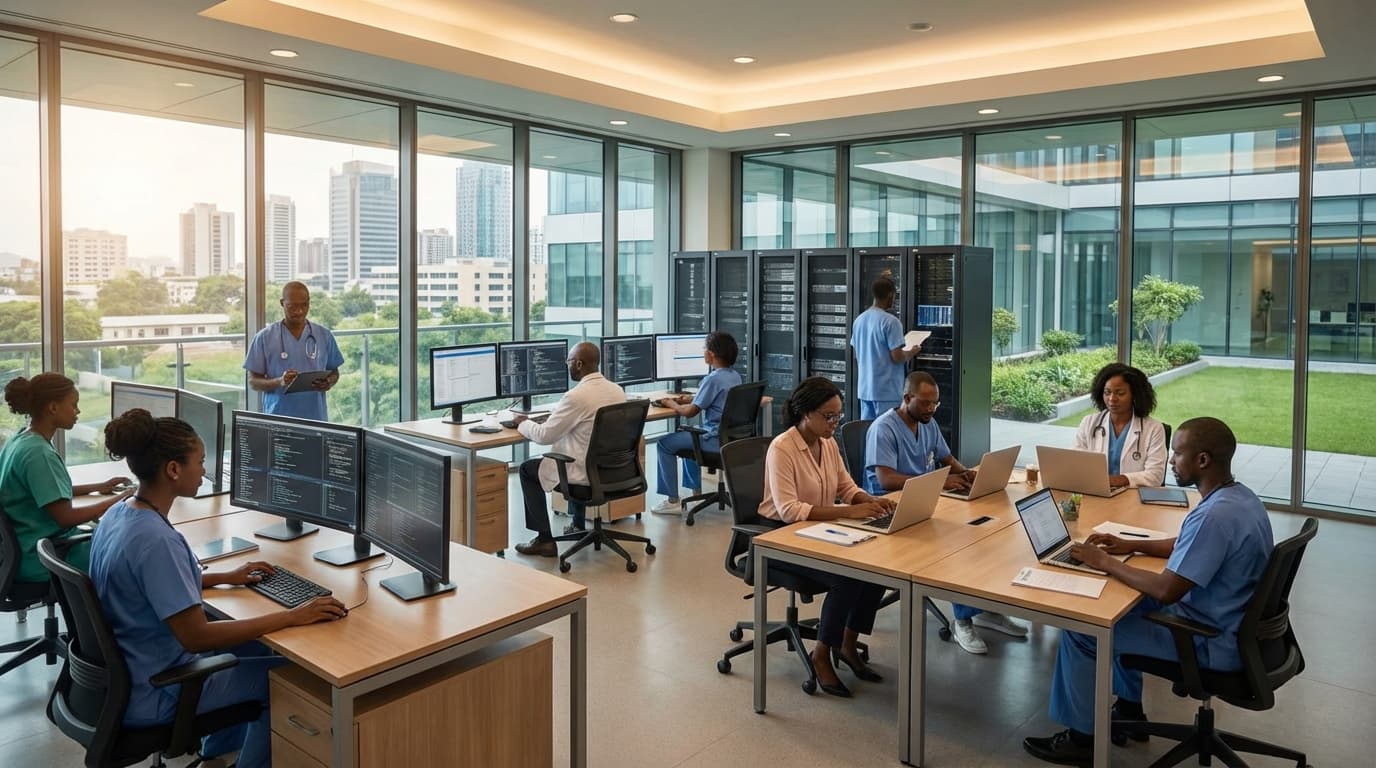
Radiology Reader & Reporting Support in South Africa
Engineering Excellence & Technical Support
Remote radiology reading and reporting services High-standard technical execution following OEM protocols and local regulatory frameworks.
AI-Powered Image Analysis & Triage
Leveraging advanced AI algorithms for rapid, high-accuracy analysis of medical images (X-ray, CT, MRI). This enables automated detection of critical findings, prioritisation of urgent cases for radiologists, and reduction in report turnaround times, ultimately enhancing patient care pathways across South African healthcare facilities.
Scalable Cloud-Based Reporting Platform
Providing a secure, scalable, and HIPAA-compliant cloud platform for radiology reporting. Our solution facilitates seamless integration with existing PACS/RIS systems, enabling remote access for radiologists, standardized report generation with structured templates, and robust audit trails, thereby boosting efficiency and accessibility in underserved regions of South Africa.
Interoperable Data Exchange & Collaboration
Ensuring seamless interoperability with diverse healthcare IT ecosystems through adherence to HL7, DICOM, and FHIR standards. This fosters secure, real-time data exchange for collaborative diagnosis and consultation between referring clinicians and radiologists across the South African network, improving diagnostic accuracy and patient management.
What Is Radiology Reader & Reporting Support In South Africa?
Radiology Reader & Reporting Support in South Africa refers to a specialized service that augments the capabilities of medical imaging departments and radiologists. This service typically involves leveraging advanced AI algorithms and, in some cases, human expert oversight to assist in the interpretation of medical images and the generation of diagnostic reports. It is designed to enhance efficiency, accuracy, and turnaround times within the radiology workflow.
| Who Needs It? | Typical Use Cases | ||||||||
|---|---|---|---|---|---|---|---|---|---|
| Public Hospitals & Clinics: Particularly those facing radiologist shortages or high patient volumes, to improve access to timely diagnostics and reduce workload. | Private Radiology Practices: To enhance efficiency, reduce reporting turnaround times, and maintain a competitive edge. AI can assist with routine screenings and identify complex cases requiring senior specialist attention. | Tertiary & Academic Medical Centers: For research purposes, training, and to support complex case reviews. AI can help in identifying subtle findings or quantifying changes in challenging imaging studies. | Emergency Departments: For rapid triage and identification of life-threatening conditions (e.g., intracranial hemorrhage, pneumothorax) to expedite treatment. | Rural & Remote Healthcare Facilities: To provide access to advanced diagnostic interpretation capabilities where specialist radiologists may be unavailable. | Tele-radiology Providers: To scale operations and ensure consistent quality and efficiency in remote image interpretation. | Oncological Imaging: Automated segmentation and measurement of tumors, monitoring response to chemotherapy or radiation therapy. | Cardiovascular Imaging: Detection and quantification of calcifications, assessment of cardiac function, and identification of potential stenoses. | Neurological Imaging: Automated detection of stroke, tumors, and neurodegenerative changes, as well as quantitative analysis of brain atrophy. | Musculoskeletal Imaging: Identification of fractures, dislocations, and degenerative joint diseases, with automated measurements for severity assessment. |
Key Components and Functionalities
- Image Analysis & Triage: Automated identification of critical findings and prioritization of urgent cases for immediate radiologist review. This often involves using deep learning models trained on vast datasets to detect abnormalities such as pulmonary nodules, fractures, or signs of stroke.
- Quantitative Analysis: Automated measurement of lesions, volumes, and other relevant parameters to support objective assessment and longitudinal tracking of disease progression or treatment response.
- Report Generation Assistance: Structured templating and auto-population of report sections based on identified findings, reducing manual data entry and standardizing report content.
- Second Reader/AI Validation: An AI-driven second pass on images to flag potential missed findings or discrepancies, acting as a safety net for radiologists.
- Workflow Optimization: Integration with existing Picture Archiving and Communication Systems (PACS) and Electronic Health Records (EHR) to streamline image access and reporting.
- Quality Assurance & Audit: Tools for reviewing report quality, tracking radiologist performance metrics, and facilitating peer review processes.
- Remote Support & Collaboration: Facilitating remote access to interpreted images and reports for consultation and second opinions, particularly relevant in underserved areas.
Who Needs Radiology Reader & Reporting Support In South Africa?
Radiology reader and reporting support services are crucial for enhancing diagnostic accuracy, improving efficiency, and addressing the radiologist shortage in South Africa. These services can benefit a wide range of healthcare providers, from large public hospitals to smaller private practices and specialized imaging centers. By augmenting existing radiology departments and offering expert second opinions, these support systems play a vital role in delivering timely and reliable patient care across the nation.
| Customer Segment | Primary Departments Benefiting | Key Needs Addressed |
|---|---|---|
| Public Hospitals (Provincial & Tertiary) | Radiology Department, Emergency Department, Oncology, Cardiology, Neurology, Orthopedics | Overcoming radiologist shortages, improving turnaround times for critical cases, ensuring consistent reporting quality, supporting complex case reviews, reducing workload on existing staff. |
| Private Hospital Groups | Radiology Departments across multiple facilities, Specialist Clinics (e.g., Cardiac, Orthopedic, Neurological) | Standardizing reporting across sites, increasing capacity during peak times, offering subspecialty expertise, improving efficiency and throughput, competitive advantage through faster reporting. |
| Specialized Imaging Centers | General Radiology, MRI, CT, Ultrasound, Mammography, Interventional Radiology | Providing subspecialty reading for specific modalities, second opinion services, managing high volumes of specific exam types, ensuring consistent quality for niche services. |
| Rural and Underserved Clinics | Radiology Department (if applicable), General Practitioners, Specialist Consultants | Providing access to expert interpretation where local radiologists are unavailable, improving diagnostic capabilities in remote areas, enabling remote reporting for existing imaging equipment. |
| Tertiary Referral Centers | Radiology Department, Departments requiring complex diagnostic interpretation (e.g., Neurosurgery, Advanced Oncology) | Supporting the interpretation of highly specialized and rare conditions, providing peer review and quality assurance for complex cases, augmenting subspecialty radiology expertise. |
| Academic and Teaching Hospitals | Radiology Department, Educational Programs for Radiologists and Technologists | Providing a diverse range of cases for training, offering expert interpretation to support research, ensuring high-quality reporting for teaching purposes, demonstrating best practices in reporting. |
Target Customers and Departments for Radiology Reader & Reporting Support in South Africa
- Public Hospitals (Provincial & Tertiary)
- Private Hospital Groups
- Specialized Imaging Centers
- Rural and Underserved Clinics
- Tertiary Referral Centers
- Academic and Teaching Hospitals
Radiology Reader & Reporting Support Process In South Africa
The Radiology Reader & Reporting Support Process in South Africa outlines the essential steps involved in facilitating the reading of radiological images and the subsequent generation of reports, particularly when specialized expertise or additional workload support is required. This process is crucial for ensuring timely and accurate diagnoses, especially in a country with varying levels of access to radiology services. The workflow begins with an inquiry, which can originate from a referring clinician, a hospital department, or even an administrative request for services. This inquiry triggers a series of actions involving image acquisition, transmission, reading, reporting, and final delivery. The emphasis is on a streamlined and efficient process that leverages technology and human expertise to meet the diagnostic needs of patients and healthcare providers across South Africa.
| Stage | Description | Key Participants/Systems | Critical Considerations |
|---|---|---|---|
| Inquiry & Request Initiation | A clinical need for radiological imaging or interpretation is identified. A formal request is submitted, specifying the patient, clinical history, and imaging modality required. | Referring Clinician, Hospital Department, PACS Administrator, Reporting System | Clarity of clinical information, urgency of the request, patient demographics. |
| Image Acquisition & Preparation | Radiological images are acquired using the appropriate equipment. Images are then processed and formatted for digital transmission and archiving. | Radiology Technologist, Radiology Department, PACS (Picture Archiving and Communication System) | Image quality, adherence to protocols, proper labeling and metadata. |
| Image Transmission & Archiving | Acquired images are securely transmitted to a PACS or a specialized teleradiology platform for storage and access. Data security and compliance are paramount. | PACS, RIS (Radiology Information System), Teleradiology Platform, IT Department | Data integrity, security protocols (e.g., encryption), bandwidth, uptime of systems. |
| Radiologist Assignment & Reading | Based on availability, subspecialty, and workload, a qualified radiologist is assigned to interpret the images. The radiologist reviews the images and clinical history. | Radiologist (in-house or teleradiologist), RIS, PACS, Reporting Software | Radiologist availability, subspecialty matching, workload balancing, turnaround time (TAT) targets. |
| Report Generation & Review | The assigned radiologist dictates or types the findings and conclusion into a reporting system. A draft report is generated and may undergo peer review or quality assurance. | Radiologist, Reporting Software, PACS, RIS, Quality Assurance Personnel | Accuracy and completeness of findings, clarity of language, adherence to standardized reporting templates, turnaround time for reporting. |
| Report Distribution & Communication | The final, signed report is distributed to the referring clinician. This can be via electronic means (RIS/PACS integration, secure email) or fax. Urgent findings require immediate communication. | Referring Clinician, RIS, PACS, Electronic Health Record (EHR) System, Communication Systems | Timeliness of delivery, secure communication channels, confirmation of receipt, process for urgent result notification. |
| Billing & Administration | After reporting, the service is billed to the patient or healthcare provider according to established tariffs and agreements. Administrative records are updated. | Hospital Administration, Medical Aid/Insurance, Billing Department, RIS | Accurate coding, claim submission, reconciliation, adherence to contractual obligations. |
Radiology Reader & Reporting Support Process: Key Stages
- Inquiry & Request Initiation
- Image Acquisition & Preparation
- Image Transmission & Archiving
- Radiologist Assignment & Reading
- Report Generation & Review
- Report Distribution & Communication
- Billing & Administration
Radiology Reader & Reporting Support Cost In South Africa
The cost of radiology reader and reporting support in South Africa is a dynamic field influenced by several key factors. These services are crucial for ensuring accurate diagnoses and efficient workflow in healthcare facilities. Pricing is generally determined by the complexity of the cases, the volume of reports required, the qualifications and experience of the radiologists involved, and the technology and platform used for delivery. Service providers often offer tiered pricing models, with higher costs associated with specialized interpretations (e.g., advanced neuroimaging, complex orthopedic cases) and urgent reporting needs. The geographical location within South Africa can also play a role, with urban centers potentially having higher operational costs reflected in service fees. Furthermore, the level of integration with existing hospital information systems (HIS) and Picture Archiving and Communication Systems (PACS) can impact setup and ongoing costs.
| Service Component | Typical Pricing Range (ZAR per report/hour) | Notes |
|---|---|---|
| Standard Radiology Report Interpretation | R300 - R800 | Varies based on modality (X-ray, CT, MRI) and complexity. Lower end for basic X-rays, higher for CT/MRI. |
| Specialized/Complex Case Interpretation (e.g., Neuro, MSK, Oncology) | R600 - R1,500+ | Requires highly specialized radiologists, leading to higher fees. |
| STAT/Urgent Report Interpretation | R500 - R1,200+ | Premium charged for expedited turnaround times (often within 1-2 hours). |
| Teleradiology Platform Fee (per study/month) | R100 - R500 per study (if per-study) or R5,000 - R20,000+ per month (if subscription-based) | Covers access to the platform, secure data transmission, and often basic support. Varies significantly by provider and features. |
| Radiologist Reading Fee (per hour - for outsourced/freelance) | R700 - R1,500+ | Less common for full reporting support, but applicable for ad-hoc consultations or overflow. |
| AI-Assisted Reporting Augmentation (addon) | Variable (often integrated into per-report fees or a percentage increase) | The cost of AI tools is increasingly being incorporated into reporting services. |
| Onboarding & Integration Fee | R5,000 - R50,000+ | One-time fee for setting up and integrating with existing hospital IT infrastructure. |
Key Pricing Factors for Radiology Reader & Reporting Support in South Africa
- Complexity of Radiological Cases
- Volume of Reports Required
- Radiologist Qualifications and Experience
- Technology and Platform Used (e.g., AI integration, secure portals)
- Urgency of Reporting (Standard vs. STAT reports)
- Level of Specialization (e.g., neuroradiology, interventional radiology)
- Integration with Hospital Information Systems (HIS) and PACS
- Geographical Location (urban vs. rural)
- Contractual Agreements (long-term vs. ad-hoc)
- Ancillary Services (e.g., peer review, quality assurance)
Affordable Radiology Reader & Reporting Support Options
Accessing high-quality radiology reading and reporting support can significantly enhance diagnostic accuracy, reduce turnaround times, and alleviate workload pressures on existing radiology departments. This document outlines affordable options, focusing on value bundles and cost-saving strategies.
| Strategy | Description | Cost-Saving Mechanism | Considerations |
|---|---|---|---|
| Teleradiology Subspecialty Outsourcing | Engage external teleradiology services for niche subspecialty reads. | Avoids high recruitment and retention costs for specialized in-house radiologists; pay-per-study model. | Ensure licensing, credentialing, and communication protocols are robust. Quality control is paramount. |
| After-Hours & Overflow Teleradiology | Utilize remote radiologists for non-core hours and peak demand. | Reduces overtime for internal staff; avoids permanent hiring for intermittent needs. | Clearly define emergency protocols and escalation procedures. Monitor turnaround times closely. |
| AI-Assisted Reading | Implement AI tools for preliminary reads and critical finding flagging. | Increases radiologist efficiency, potentially reducing the need for additional readers. AI can pre-process studies. | Requires integration with PACS/RIS. Needs validation and human oversight. Understand AI vendor's data security and privacy policies. |
| Per-Study or Block Pricing Contracts | Negotiate fees based on volume of studies or contracted time blocks. | Provides cost predictability and scalability; aligns costs with actual utilization. | Requires accurate volume forecasting. Beware of hidden fees or minimum commitments. |
| Bundled Service Packages | Purchase a comprehensive package of reading, reporting, and QA services. | Streamlines vendor management; potential for volume discounts and integrated workflows. | Compare offerings from multiple vendors. Ensure all necessary services are included. |
Key Value Bundles and Cost-Saving Strategies
- {"title":"Teleradiology Subspecialty Reads","description":"Leverage external teleradiology groups for specific subspecialties (e.g., neuroradiology, musculoskeletal, breast imaging) that may be cost-prohibitive to employ full-time. This provides expert interpretation on-demand."}
- {"title":"Workload Balancing & Overflow Support","description":"Utilize teleradiology for after-hours, weekend coverage, or to manage temporary spikes in imaging volume. This prevents burnout of internal staff and ensures timely reports."}
- {"title":"AI-Powered Preliminary Read & Prioritization","description":"Integrate AI tools that provide initial preliminary reads or flag critical findings. This allows human radiologists to focus on complex cases and critical alerts, improving efficiency and potentially reducing the need for additional full-time readers."}
- {"title":"Dedicated Remote Reading Teams","description":"Contract with teleradiology providers for dedicated remote radiologists or teams who integrate seamlessly with your PACS and RIS. This can be more cost-effective than hiring additional in-house staff, especially for specific shifts or volumes."}
- {"title":"Flexible Per-Study or Block Contracts","description":"Negotiate contracts based on the number of studies read or in blocks of time, rather than fixed salaries. This offers greater cost control and scalability."}
- {"title":"Bundled Reporting Services","description":"Seek providers who offer bundled services including reading, preliminary reporting, final report generation, and quality assurance. This streamlines the process and often comes with volume discounts."}
- {"title":"Technology Integration & Workflow Optimization","description":"Invest in or partner with providers who offer integrated IT solutions (PACS, RIS, dictation software) to minimize IT overhead and improve operational efficiency. Streamlined workflows reduce wasted time and resources."}
- {"title":"Geographic Arbitrage","description":"Partner with teleradiology providers located in regions with lower operational costs, passing on those savings to your organization. Ensure adherence to all regulatory and licensing requirements."}
- {"title":"Service Level Agreements (SLAs) & Performance Metrics","description":"Establish clear SLAs for turnaround times, report accuracy, and availability. Holding providers accountable to these metrics ensures value for money and quality service."}
- {"title":"Hybrid Models","description":"Combine in-house staffing with remote support for optimal coverage and cost-effectiveness. This allows for flexibility in managing resources based on demand."}
Verified Providers In South Africa
In the South African healthcare landscape, identifying 'verified providers' is crucial for ensuring quality, safety, and ethical practice. This verification process instills confidence in patients and stakeholders alike. Franance Health distinguishes itself by adhering to stringent credentialing standards, making them a leading choice for healthcare services in South Africa. Their commitment to meticulous vetting and ongoing evaluation of their healthcare professionals and facilities sets a benchmark for excellence.
| Credentialing Aspect | Franance Health's Approach | Benefit to Patients |
|---|---|---|
| License and Registration Verification | Confirmed with relevant South African regulatory bodies (e.g., HPCSA) | Ensures providers are legally qualified and authorized to practice. |
| Educational and Training Validation | Cross-referenced with accredited institutions and examination boards | Confirms expertise and specialized knowledge in their field. |
| Criminal Record and Sanction Checks | Thorough background investigations and database screenings | Protects patients from potentially unsafe or unethical practitioners. |
| Clinical Competency Assessment | May involve peer reviews, case study analysis, or simulated scenarios | Guarantees a high standard of medical care and treatment efficacy. |
| Professional Indemnity Insurance Confirmation | Verified current and adequate insurance coverage | Provides financial recourse in the unlikely event of medical malpractice. |
Why Franance Health Represents the Best Choice for Verified Providers in South Africa:
- Rigorous Credentialing Process: Franance Health employs a multi-faceted verification system that goes beyond basic qualifications.
- Comprehensive Background Checks: This includes thorough verification of medical licenses, specialist registrations, and educational credentials.
- Sanction and Disciplinary Record Review: Franance Health actively checks for any history of professional misconduct or disciplinary actions.
- Peer Review and Performance Monitoring: Ongoing evaluation of clinical outcomes and patient feedback ensures continuous quality improvement.
- Adherence to Ethical Standards: All providers are bound by a strict code of ethics and professional conduct.
- Patient-Centric Approach: Verification processes are designed to prioritize patient safety and well-being.
- Transparency and Accountability: Franance Health maintains a transparent system for its verification procedures.
- Commitment to Continuing Professional Development (CPD): Providers are encouraged and often required to engage in ongoing learning.
Scope Of Work For Radiology Reader & Reporting Support
This Scope of Work (SOW) outlines the requirements for Radiology Reader & Reporting Support services. The objective is to provide qualified and experienced radiologists to review medical imaging studies and generate accurate, timely, and comprehensive diagnostic reports. These services are crucial for patient care, clinical decision-making, and research. The SOW details the technical deliverables, standard specifications, and operational expectations for the radiology reading and reporting process.
| Deliverable | Description | Standard Specifications | Acceptance Criteria |
|---|---|---|---|
| Diagnostic Radiology Reports | Comprehensive, detailed reports of imaging findings and diagnostic conclusions. | Standardized report format (e.g., ACR BI-RADS, LI-RADS where applicable). Inclusion of clinical history, technique, comparison to prior studies, findings, impression/conclusion, and recommendations. Reports must be in English and adhere to established medical terminology. | Reports are legible, accurate, complete, and submitted within the agreed-upon turnaround time (TAT). Reports undergo peer review and meet quality benchmarks. |
| Image Interpretation Services | Review of various imaging modalities including X-ray, CT, MRI, Ultrasound, Nuclear Medicine, and Mammography. | Interpretation performed by board-certified or board-eligible radiologists with relevant subspecialty expertise. Utilization of PACS viewer with advanced visualization tools. Adherence to modality-specific protocols. | All requested studies are interpreted. Interpretations are clinically relevant and supported by imaging findings. |
| Subspecialty Consultations | Provision of expert opinions for complex or challenging cases requiring specialized knowledge. | Access to radiologists with subspecialty training (e.g., neuroradiology, musculoskeletal radiology, interventional radiology, pediatric radiology, breast imaging, etc.). | Timely availability for consultations. High-quality, evidence-based consultative advice provided. |
| Quality Assurance Reports | Regular reports detailing key quality metrics and performance indicators. | Metrics include: TAT adherence, report accuracy rates, inter-reader variability, incident reports, and continuous improvement initiatives. Reports provided monthly or quarterly. | Reports are accurate, comprehensive, and presented in a clear, actionable format. Demonstrable efforts towards quality improvement. |
| Data Export and Integration | Ability to export anonymized or de-identified radiology data for research or audit purposes. | Data export formats to be agreed upon (e.g., DICOM, CSV). Secure and compliant data transfer protocols (e.g., HIPAA, GDPR). | Data is exported accurately and completely as per agreed specifications and in compliance with privacy regulations. |
Technical Deliverables
- Diagnostic Radiology Reports
- Image Interpretation Services
- Subspecialty Consultations
- Quality Assurance Reports
- Data Export and Integration
Service Level Agreement For Radiology Reader & Reporting Support
This Service Level Agreement (SLA) outlines the guaranteed response times and uptime for the Radiology Reader & Reporting Support service. This SLA applies to all contracted services and aims to ensure efficient and reliable support for radiology reading and reporting workflows.
| Service Component | Response Time Guarantee (Business Hours) | Uptime Guarantee |
|---|---|---|
| Initial Triage of New Cases | Within 15 minutes of assignment | 99.9% (excluding scheduled maintenance) |
| Report Generation (Routine Cases) | Within 4 business hours of case completion by radiologist | 99.9% (excluding scheduled maintenance) |
| Report Generation (STAT/Critical Cases) | Within 30 minutes of radiologist dictation completion | 99.9% (excluding scheduled maintenance) |
| Technical Support (Platform/PACS Issues) | Within 30 minutes for critical issues, within 2 business hours for non-critical issues | 99.5% (excluding scheduled maintenance) |
| Emergency Support (Urgent Downtime) | Immediate acknowledgement, resolution within 2 hours | N/A (focus on rapid restoration) |
Scope of Services
- On-demand radiologist reading services for diagnostic imaging studies.
- Generation of comprehensive and accurate radiology reports.
- Timely turnaround of reports based on established service levels.
- Technical support for the radiology reading platform and PACS integration.
- Quality assurance checks and peer review processes.
Frequently Asked Questions

Ready when you are
Let's scope your Radiology Reader & Reporting Support in South Africa project in South Africa.

Scaling healthcare logistics and technical systems across the entire continent.