
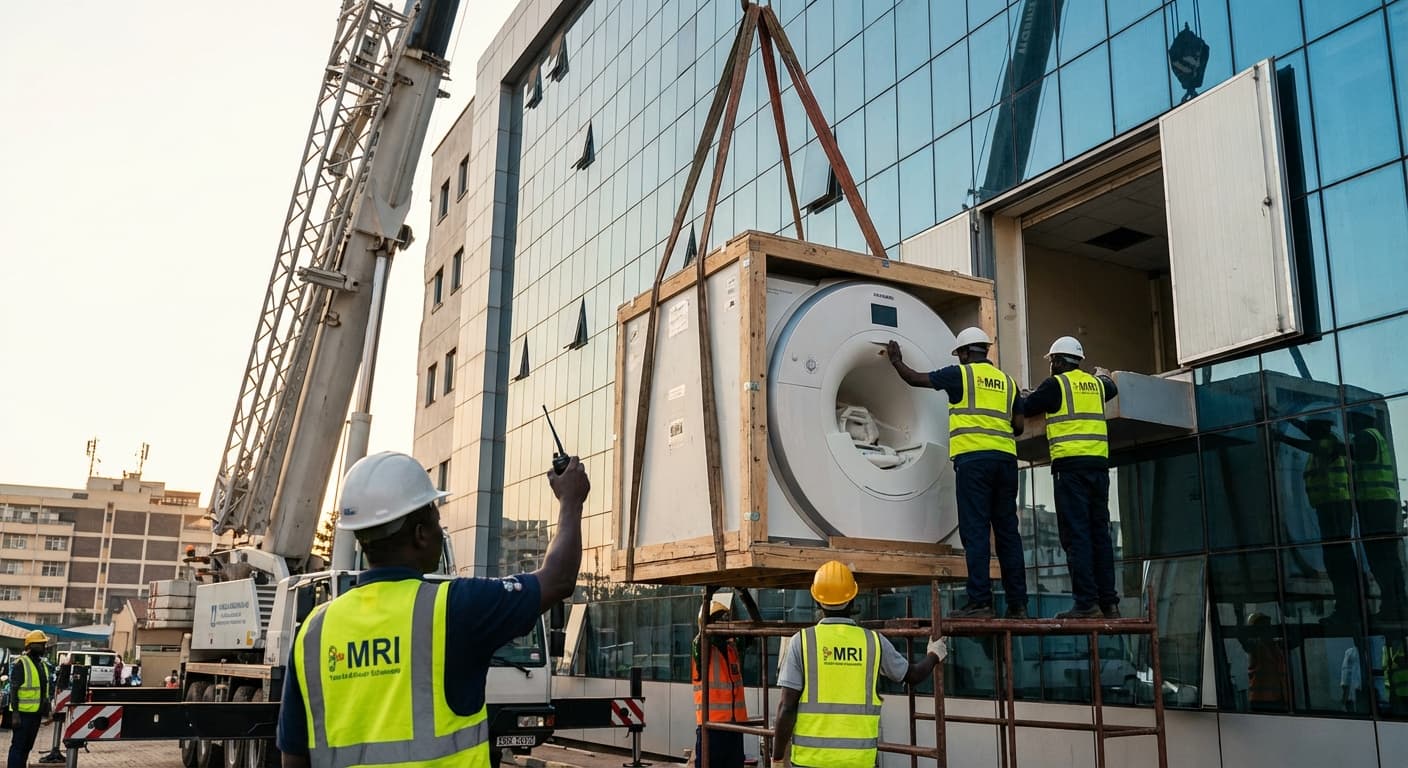
Cranage & Rigging Supervision Service in South Africa
Engineering Excellence & Technical Support
Cranage & Rigging Supervision Service High-standard technical execution following OEM protocols and local regulatory frameworks.
Advanced Load Dynamics & Stability Analysis
Leveraging cutting-edge software and experienced personnel, we conduct comprehensive load dynamics and stability analyses for complex lifts. Our meticulous approach ensures precise center-of-gravity calculations, wind load considerations, and sway mitigation strategies, guaranteeing safe and controlled operations even in challenging environmental conditions across South Africa's diverse terrains.
Optimized Rigging Path & Component Optimization
Our expertise extends to the meticulous planning and optimization of rigging paths, considering site constraints, overhead clearances, and ground bearing pressures. We utilize advanced modeling to select the most efficient and load-rated rigging components, minimizing stress and wear, thereby enhancing safety margins and reducing project timelines for critical infrastructure and industrial projects nationwide.
Real-time Risk Mitigation & Emergency Response Planning
We implement proactive real-time risk assessment protocols throughout every lift. Our supervisors are trained in immediate hazard identification and possess robust emergency response plans tailored to South African regulatory requirements and common site scenarios. This ensures swift and effective intervention to mitigate potential incidents, safeguarding personnel, assets, and the environment.
What Is Cranage & Rigging Supervision Service In South Africa?
Cranage & Rigging Supervision Service in South Africa refers to the provision of expert oversight and management for lifting operations involving cranes and rigging equipment. This service ensures that all lifting activities are conducted safely, efficiently, and in compliance with relevant South African regulations and international best practices. It involves a qualified and experienced supervisor who directs and monitors the entire lifting process, from planning and preparation to execution and post-lift assessment. The primary objective is to mitigate risks associated with heavy lifting, prevent accidents, and ensure the integrity of both personnel and equipment.
| Who Needs Cranage & Rigging Supervision? | Typical Use Cases | ||
|---|---|---|---|
| Construction Companies (Infrastructure, Commercial, Residential) | Erection of structural steel and precast concrete elements. | Placement of large machinery and equipment. | Installation of heavy modules and prefabricated sections. |
| Industrial Facilities (Manufacturing, Mining, Petrochemical) | Maintenance and repair of plant equipment. | Installation of new production lines or machinery. | Decommissioning and removal of heavy assets. |
| Ports and Terminals | Loading and unloading of heavy cargo (e.g., containers, project cargo). | Movement of port equipment and infrastructure. | |
| Energy Sector (Power Generation, Oil & Gas) | Installation of turbines, generators, and other large power plant components. | Offshore platform construction and maintenance. | Onshore facility construction and decommissioning. |
| Specialized Lifting Projects | Civil engineering projects (e.g., bridge construction, dam building). | Heavy haulage and transportation of oversized loads. | Event rigging and stage setup for large-scale productions. |
| Warehousing and Logistics | Installation and movement of heavy racking systems. | Placement of substantial inventory or automated warehousing systems. |
Key Components of Cranage & Rigging Supervision
- Pre-lift planning and hazard identification.
- Development and review of lift plans and method statements.
- Verification of equipment suitability, certification, and condition.
- Supervision of crane operators, riggers, and other personnel.
- Ensuring adherence to communication protocols and signaling.
- Monitoring of load stability, swing, and clearances.
- Emergency response planning and coordination.
- Post-lift inspection and documentation.
- Compliance with relevant South African legislation (e.g., Occupational Health and Safety Act, Driven Machinery Regulations).
Who Needs Cranage & Rigging Supervision Service In South Africa?
Cranage & Rigging Supervision Service in South Africa is a critical requirement for a wide range of industries that involve the lifting, moving, and placement of heavy, oversized, or delicate loads. This specialized service ensures that operations are conducted safely, efficiently, and in compliance with all relevant regulations. It is essential for mitigating risks, preventing accidents, and optimizing project timelines and budgets.
| Target Customer | Key Departments Involved | Specific Needs/Applications |
|---|---|---|
| Construction Companies (Residential, Commercial, Industrial) | Project Management, Site Operations, Health & Safety, Engineering | Lifting and positioning of building materials, pre-fabricated modules, structural steel, heavy machinery, and formwork. |
| Mining Operations (Surface and Underground) | Operations Management, Maintenance, Engineering, Safety & Health | Installation and removal of heavy mining equipment (crushers, conveyors, haul trucks), shaft sinking operations, and equipment relocation. |
| Manufacturing Plants & Heavy Industry | Production Management, Maintenance & Reliability, Engineering, Logistics | Installation of new machinery, relocation of production lines, handling of large components, and maintenance requiring heavy lifting. |
| Energy Producers (Eskom, Independent Power Producers, Petrochemical) | Engineering, Operations, Maintenance, Project Execution, Safety & Environment | Installation of turbines, transformers, boilers, wind turbine components, and handling of large piping and structural elements during plant construction and maintenance. |
| Port Authorities & Logistics Companies | Operations, Terminal Management, Cargo Handling, Fleet Management | Loading and unloading of heavy cargo from vessels, container stacking, and movement of oversized equipment within port facilities. |
| Government Agencies & Municipalities (Roads, Water, Rail) | Infrastructure Development, Project Management, Engineering, Public Works | Installation of bridges, large water pipes, railway components, and other heavy infrastructure elements. |
| Event Organizers & Exhibition Companies | Production Management, Logistics, Technical Crew | Installation and dismantling of large stages, sound and lighting equipment, and exhibition structures. |
| Specialized Engineering & Fabrication Companies | Project Management, Fabrication, Site Installation | Handling of custom-built structures, large vessels, and complex fabricated components for various industries. |
Target Customers and Departments in South Africa
- Construction Industry:
- Mining Sector:
- Manufacturing & Industrial Plants:
- Energy Sector (Power Generation, Oil & Gas):
- Port and Logistics Operations:
- Infrastructure Development:
- Special Projects & Events:
Cranage & Rigging Supervision Service Process In South Africa
This document outlines the typical workflow for Cranage & Rigging Supervision services in South Africa, from the initial client inquiry to the successful execution of the project. The process emphasizes safety, compliance, and efficient operations, ensuring that all lifting operations are conducted according to industry best practices and South African regulations.
| Stage | Key Activities | Deliverables/Outcomes | Responsible Parties |
|---|---|---|---|
| 1. Inquiry & Initial Consultation | Client contacts the service provider with a lifting requirement. Discussion of project scope, nature of the lift, client expectations, and preliminary safety concerns. | Understanding of client needs. Preliminary project feasibility assessment. | Client, Service Provider (Business Development/Sales) |
| 2. Site Assessment & Planning | On-site visit by qualified personnel to assess the lifting environment, identify potential hazards, evaluate ground conditions, access routes, surrounding infrastructure, and available space. Detailed lift plan development, including crane selection, rigging equipment, load calculations, exclusion zones, and contingency plans. Risk assessment and method statement (RAMS) creation. | Comprehensive site survey report. Detailed lift plan. Approved RAMS. Identification of necessary permits and licenses. | Service Provider (Rigging Supervisor, Lifting Engineer, Safety Officer), Client (Site Manager, Project Manager) |
| 3. Quotation & Proposal | Based on the site assessment and lift plan, a detailed quotation is prepared, outlining services, personnel, equipment, duration, costs, and payment terms. A formal proposal is submitted to the client. | Detailed quotation. Formal project proposal. | Service Provider (Sales, Operations Manager) |
| 4. Contract & Agreement | Upon acceptance of the quotation, a formal contract or service agreement is drafted and signed by both parties, outlining scope of work, responsibilities, liabilities, insurance, and payment schedule. | Signed contract/service agreement. | Client, Service Provider |
| 5. Pre-Operation Mobilization & Preparation | Mobilization of qualified and certified rigging supervisors, riggers, and crane operators to site. Inspection and certification of all lifting equipment (cranes, slings, shackles, etc.) as per South African regulations (e.g., LOLER). Final review of lift plan and RAMS with the on-site team. Pre-lift safety briefings and toolbox talks. Establishment of exclusion zones and safety barriers. | Certified personnel on-site. Verified and certified lifting equipment. Approved lift plan and RAMS. Established safety protocols. | Service Provider (Operations Manager, Supervisor), Client (Site Manager) |
| 6. On-Site Supervision & Execution | The appointed rigging supervisor oversees all aspects of the lifting operation. This includes guiding the crane operator, directing riggers, ensuring correct rigging techniques, monitoring load stability, adherence to the lift plan, communication protocols, and maintaining exclusion zones. Continuous risk monitoring and immediate intervention for any deviations or safety concerns. | Safe and efficient execution of lifting operations. Real-time monitoring and control. | Service Provider (Rigging Supervisor, Riggers), Crane Operator, Client (Site Representatives) |
| 7. Post-Operation & Demobilization | Once the lifting operation is complete, the supervisor oversees the safe demobilization of equipment and personnel. Post-lift inspection of the load and surrounding area for any damage. Securing of the lifted asset. | Equipment and personnel safely demobilized. Site returned to its pre-lift state (as applicable). | Service Provider (Supervisor), Client (Site Manager) |
| 8. Project Completion & Reporting | Finalization of all documentation, including daily logs, incident reports (if any), and a comprehensive post-job report. This report details the execution of the lift, any challenges encountered, lessons learned, and confirmation of project completion. Invoicing and final payment reconciliation. | Comprehensive project report. Final invoicing. Project closure. | Service Provider (Project Manager, Administration), Client (Finance Department) |
Cranage & Rigging Supervision Service Process Workflow
- 1. Inquiry & Initial Consultation:
- 2. Site Assessment & Planning:
- 3. Quotation & Proposal:
- 4. Contract & Agreement:
- 5. Pre-Operation Mobilization & Preparation:
- 6. On-Site Supervision & Execution:
- 7. Post-Operation & Demobilization:
- 8. Project Completion & Reporting:
Cranage & Rigging Supervision Service Cost In South Africa
Cranage and rigging supervision services in South Africa are crucial for ensuring the safe and efficient movement of heavy loads on construction sites, industrial facilities, and during specialized projects. The cost of these services is influenced by a variety of factors, making it essential for clients to understand these elements when budgeting. Pricing typically falls within a broad range, but can be broken down by hourly rates, project-based fees, and the complexity of the operation.
| Service Type / Duration | Estimated Price Range (ZAR) | Notes |
|---|---|---|
| Junior Rigging Supervisor (Hourly) | ZAR 350 - 600 | For less complex lifts or as an assistant supervisor. |
| Experienced Crane & Rigging Supervisor (Hourly) | ZAR 600 - 1,200 | Standard rate for qualified and experienced supervisors. |
| Lead/Senior Supervisor (Hourly) | ZAR 1,000 - 1,800+ | For highly complex, high-risk, or large-scale projects. |
| Daily Rate (8-10 hour day) | ZAR 4,000 - 10,000+ | Often offered for extended projects. Varies significantly by experience and project. |
| Project-Based Fee | Varies widely (e.g., 5-15% of total project lift cost) | Custom quoted based on scope, duration, complexity, and risk. Can be a more cost-effective option for large, defined projects. |
| Specialized Equipment Supervision (e.g., heavy lift cranes) | Often a premium hourly or daily rate | Requires highly specialized knowledge and experience. |
Key Pricing Factors for Cranage & Rigging Supervision in South Africa:
- Complexity of the Lift: Simple, straightforward lifts with standard equipment will be less expensive than complex, multi-crane lifts or those involving delicate or unusually shaped loads.
- Duration of the Project: Longer projects naturally incur higher costs due to the extended time the supervision team is on-site. This can be billed hourly or as a daily rate.
- Type and Size of Cranes Involved: The supervision requirements and expertise needed will vary significantly depending on the type and lifting capacity of the cranes being used (e.g., mobile cranes, tower cranes, crawler cranes).
- Rigging Requirements: The intricacy and type of rigging gear (slings, shackles, spreader bars, etc.) required to secure the load will impact the supervision needed and potentially specialized rigging supervisor costs.
- Site Conditions and Accessibility: Difficult terrain, confined spaces, or remote locations can increase the time and effort required from the supervision team, thus affecting costs.
- Experience and Qualifications of Supervisors: Highly experienced and certified crane and rigging supervisors, particularly those with specialized certifications or extensive project portfolios, will command higher rates.
- Number of Supervisors Required: The size and complexity of the operation will dictate the number of supervisors needed to ensure adequate coverage and safety oversight.
- Risk Assessment and Method Statement Development: The development of detailed risk assessments and method statements is a critical part of the service and is often included in the overall cost.
- Travel and Accommodation: If the project is located far from the service provider's base, travel and accommodation expenses for the supervision team will be added to the cost.
- Insurance and Liability: Reputable service providers will have comprehensive insurance, which is factored into their pricing to cover potential liabilities.
- Emergency Call-Outs: Fees for unscheduled or emergency supervision services will generally be higher than for pre-booked engagements.
Affordable Cranage & Rigging Supervision Service Options
Securing reliable and cost-effective cranage and rigging supervision is crucial for projects of any scale. This service ensures the safe and efficient movement of heavy loads, minimizing risks and project delays. We offer flexible options designed to meet your budgetary needs without compromising on safety or expertise. Understanding value bundles and implementing smart cost-saving strategies are key to maximizing your investment.
| Value Bundle Option | Description | Key Benefits | Ideal For |
|---|---|---|---|
| 'Essentials' Package | Includes core rigging supervision for standard lifts, basic equipment coordination, and pre-lift safety checks. | Cost-effective for routine tasks, reliable oversight. | Smaller projects, repetitive lifts, minimal complexity. |
| 'Standard' Package | Combines skilled rigging supervision with basic crane selection advice and on-site coordination for moderate lifts. Includes detailed lift plan review. | Balanced cost and comprehensive support for common projects. | Medium-sized projects, diverse lifting needs, moderate complexity. |
| 'Premium' Package | Full-service offering: expert rigging supervision, detailed lift planning, equipment sourcing consultation, and ongoing site coordination. Includes post-lift analysis. | Maximum safety, efficiency, and risk mitigation for complex operations. | Large-scale projects, critical lifts, high-risk environments, specialized equipment requirements. |
| 'On-Demand' Supervision | Flexible booking of certified rigging supervisors for specific lift windows or as needed. | Cost-effective for projects with unpredictable lifting schedules or short-term needs. | Projects with variable timelines, last-minute lifting requirements, supplemental supervision. |
Key Considerations for Affordable Cranage & Rigging Supervision
- Clear Project Scope: Precisely defining the scope of work (lift type, weight, duration, location, required equipment) allows for accurate quoting and avoids unnecessary charges.
- Advance Planning: Early engagement enables better scheduling, potential for off-peak rates, and access to preferred personnel and equipment.
- Equipment Optimization: Selecting the right-sized crane and rigging gear for the job prevents overspending on underutilized capacity.
- Experienced Personnel: Qualified and experienced supervisors not only enhance safety but also contribute to faster, more efficient operations, reducing overall project time.
- Communication & Coordination: Seamless communication between site management, rigging teams, and crane operators is vital to prevent errors and rework.
- Package Deals: Exploring bundled services can often lead to discounts compared to individual service bookings.
Verified Providers In South Africa
In South Africa's dynamic healthcare landscape, identifying truly verified and competent healthcare providers is paramount. When it comes to accessible and quality medical services, Franance Health stands out. Their rigorous credentialing process ensures that all affiliated healthcare professionals meet the highest standards of education, licensing, and ethical practice. This commitment to verification not only builds trust but also guarantees patients receive care from individuals who are demonstrably skilled and qualified. Choosing Franance Health means opting for a system that prioritizes patient safety and well-being through meticulous vetting.
| Credentialing Aspect | Franance Health Verification Standard | Benefit to Patients |
|---|---|---|
| Educational Background | Verification of degrees, diplomas, and specialized training from accredited institutions. | Ensures providers possess the foundational knowledge and advanced skills required for their practice. |
| Licensing and Registration | Confirmation of current and valid registration with relevant South African medical councils and regulatory bodies. | Guarantees that providers are legally authorized to practice and adhere to professional standards. |
| Professional Experience | Scrutiny of past professional history, including clinical experience and any disciplinary actions. | Provides assurance of practical expertise and a history of responsible patient care. |
| Continuing Professional Development (CPD) | Confirmation of ongoing engagement in CPD activities to stay abreast of medical advancements. | Indicates a commitment to lifelong learning and the application of the latest medical knowledge. |
| Insurance and Malpractice Cover | Verification of appropriate professional indemnity insurance. | Offers an additional layer of financial protection and accountability for both the provider and the patient. |
Why Franance Health Credentials Matter:
- Uncompromising Quality Assurance: Franance Health subjects all providers to a multi-layered credentialing process.
- Licensed and Certified Professionals: Every practitioner is verified to hold valid and current medical licenses and certifications.
- Commitment to Ethical Practice: Background checks and adherence to a strict code of conduct are integral to their vetting.
- Ensured Patient Safety: Rigorous credentialing minimizes risks and ensures you are in capable hands.
- Access to Trusted Expertise: Franance Health connects you with a network of proven and reliable healthcare professionals.
Scope Of Work For Cranage & Rigging Supervision Service
This Scope of Work (SOW) outlines the requirements for Cranage & Rigging Supervision Services. The service provider shall ensure safe and efficient execution of all lifting and rigging operations, adhering to industry best practices, project-specific procedures, and relevant regulations. The scope includes pre-lift planning, on-site supervision, personnel competency verification, equipment inspection, and incident reporting.
| Category | Specific Deliverable | Standard Specification/Requirement |
|---|---|---|
| Pre-Lift Planning | Lift Plans Review and Approval | Adherence to project-specific lift plan templates and procedures. Verification of load weight, center of gravity, rigging selection, crane capacity, exclusion zones, and environmental considerations. |
| Pre-Lift Planning | Job Safety Analysis (JSA) / Risk Assessment | Development and review of JSAs for all lifting operations, identifying potential hazards and implementing control measures. Ensuring all personnel understand and acknowledge the JSA. |
| On-site Supervision | Direct Supervision of Lifting Operations | Continuous presence and oversight during all critical lifting phases. Ensuring adherence to approved lift plans, communication protocols, and safe operating procedures. |
| On-site Supervision | Signal Person and Rigger Oversight | Verification of competency and direct supervision of signal persons and riggers. Ensuring correct hand signals, communication, and rigging techniques are employed. |
| On-site Supervision | Crane Operator Monitoring | Observing crane operator's performance for safe practices, adherence to load limits, and correct operation of crane functions. |
| Personnel Competency | Verification of Crane Operator Certification | Review of valid certifications and licenses for all crane operators as per local regulations and industry standards (e.g., NCCCO, ALE). |
| Personnel Competency | Verification of Rigger and Signal Person Certification | Review of valid certifications and qualifications for all riggers and signal persons. |
| Equipment Inspection | Verification of Crane Inspection Records | Review of current third-party inspection certificates and daily operator inspection logs for all cranes involved. |
| Equipment Inspection | Verification of Rigging Gear Certification | Ensuring all rigging equipment (slings, shackles, spreader bars, etc.) is properly certified, marked, and free from defects. |
| Load Calculation | Weight Verification | Confirming accuracy of load weights through documentation (e.g., shipping manifests, engineering calculations) or by consulting with relevant parties. |
| Communication | Pre-Lift Briefings | Conducting pre-lift meetings with all involved personnel to discuss lift plan, hazards, roles, and responsibilities. |
| Communication | Radio Communication Protocol | Ensuring effective and clear radio communication between the signal person, crane operator, and supervisor. |
| Incident Reporting | Near Miss and Incident Reporting | Documenting and reporting all incidents, accidents, and near misses immediately. Participating in incident investigations. |
| Documentation | Daily Reports | Submitting daily reports detailing activities performed, personnel involved, equipment used, any observed issues, and lift status. |
| Documentation | Lift Completion Records | Maintaining records of completed lifts, including confirmation of successful execution and adherence to the lift plan. |
Key Responsibilities and Deliverables
- Pre-Lift Planning and Risk Assessment
- On-site Supervision and Execution Monitoring
- Personnel Competency Verification
- Equipment Inspection and Certification Verification
- Load Calculation and Configuration Review
- Communication and Coordination
- Incident Reporting and Investigation Support
- Close-out and Documentation
Service Level Agreement For Cranage & Rigging Supervision Service
This Service Level Agreement (SLA) outlines the performance standards, response times, and uptime guarantees for the Cranage & Rigging Supervision Service provided by [Your Company Name] to [Client Company Name]. This SLA is an addendum to the Master Service Agreement (MSA) executed on [Date of MSA].
| Service Component | Target Response Time (Non-Emergency) | Target Response Time (Emergency) | Uptime Guarantee |
|---|---|---|---|
| Initial Site Assessment/Pre-Lift Meeting Confirmation | Within 2 Business Hours of Request | Within 1 Business Hour of Request | N/A (Scheduled) |
| Supervision Presence During Scheduled Lifts | N/A (Scheduled) | On-site within 30 minutes of scheduled start time (unless otherwise agreed) | 99.5% during scheduled operational hours |
| Availability of Supervisor for Queries/Consultations | Within 1 Business Hour | Within 30 Minutes | N/A (On-demand during operational hours) |
| Issuance of Daily Reports | Within 4 Business Hours of End of Shift | N/A | N/A |
| Emergency Incident Response (Supervision) | N/A | On-site within 30 minutes of notification (location permitting) | N/A |
Scope of Service
- On-site supervision of all cranage operations, including pre-lift planning, rigging checks, lift execution, and post-lift inspections.
- Provision of qualified and certified rigging supervisors.
- Ensuring compliance with all relevant safety regulations and industry best practices.
- Communication and coordination with site personnel, crane operators, and rigging crews.
- Daily reporting on cranage and rigging activities, including any incidents or deviations.
Frequently Asked Questions

Ready when you are
Let's scope your Cranage & Rigging Supervision Service in South Africa project in South Africa.

Scaling healthcare logistics and technical systems across the entire continent.