
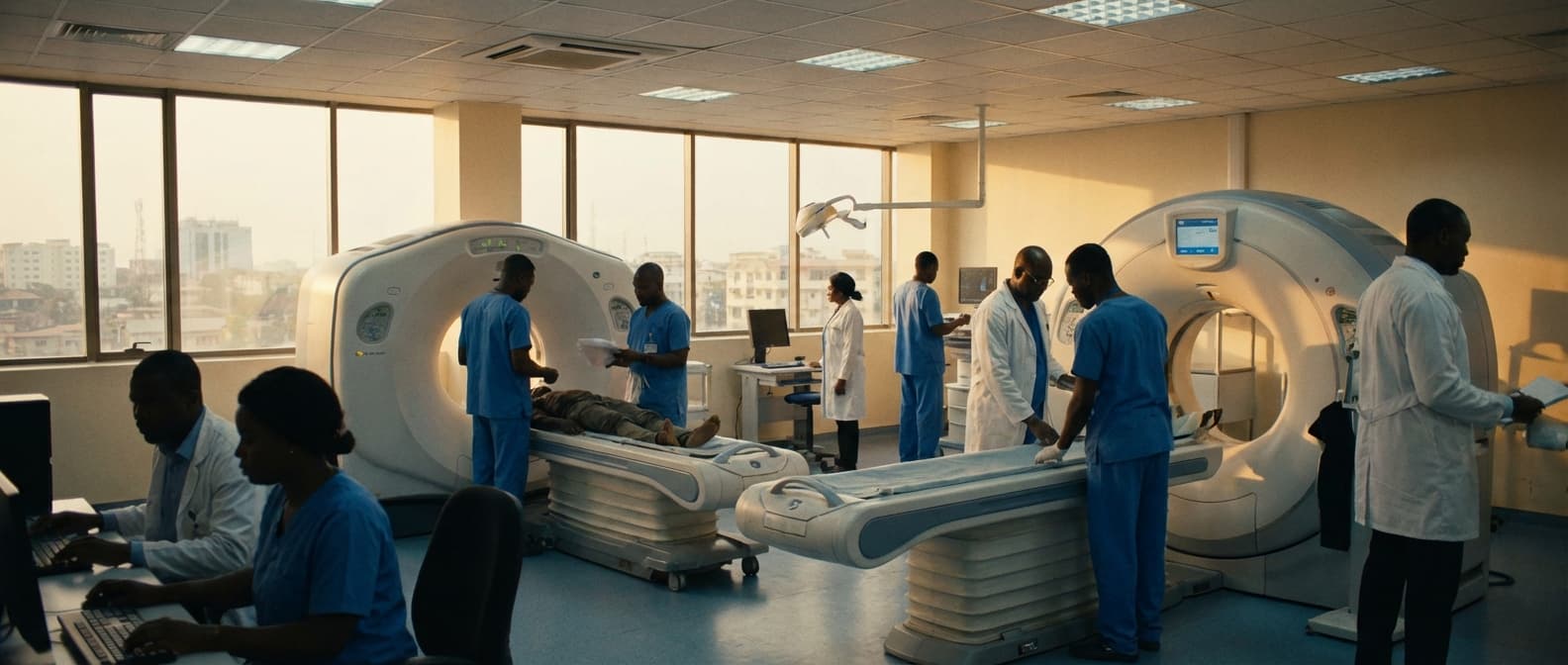
Radiology Room Design & Shielding Calculation in South Africa
Engineering Excellence & Technical Support
Turnkey room planning, shielding drawings and approvals for imaging suites. High-standard technical execution following OEM protocols and local regulatory frameworks.
Optimized Radiation Shielding for Diagnostic Efficacy and Safety
Leveraging advanced simulation software and South African building codes, we design radiation shielding solutions for radiology rooms that minimize dose to staff and patients while ensuring optimal image quality for diagnostic accuracy. Our calculations account for varying X-ray energies, workload, and room occupancy, adhering to national safety standards (e.g., ARPANSA regulations).
Strategic Layout & Workflow for Enhanced Throughput and Comfort
We meticulously plan radiology room layouts to maximize operational efficiency and patient comfort. This includes strategic placement of imaging equipment, control rooms, changing areas, and waiting zones, considering workflow patterns specific to South African healthcare settings and local accessibility requirements, thereby improving patient flow and staff productivity.
Customized Room Geometry and Material Selection for Diverse Modalities
Our expertise extends to designing room geometries and selecting appropriate shielding materials (lead, concrete, etc.) tailored for a wide range of imaging modalities commonly found in South Africa, including X-ray, CT, MRI, and mammography. We ensure compliance with international best practices and local regulatory frameworks for each specific imaging technology.
What Is Radiology Room Design & Shielding Calculation In South Africa?
Radiology room design and shielding calculations in South Africa constitute a specialized engineering and architectural service focused on ensuring the safe and effective operation of medical imaging facilities. This discipline integrates architectural layout, radiation physics, and regulatory compliance to create environments that minimize radiation exposure to patients, staff, and the general public, while optimizing workflow and diagnostic image quality. The service encompasses a comprehensive approach, from initial site assessment and room configuration to detailed radiation attenuation calculations, material selection, and construction oversight. Key considerations include the type and energy of radiation emitted by diagnostic equipment (e.g., X-ray, CT, MRI, PET/CT), patient occupancy, staff workload, and proximity to occupied areas. Adherence to South African legislative frameworks, particularly those governed by the National Nuclear Regulator (NNR) and relevant building codes, is paramount. This involves the application of scientifically validated shielding methodologies to determine the required thickness and type of attenuating materials (lead, concrete, drywall) for walls, doors, windows, and floors to maintain dose rates within permissible limits.
| Need For Service | Who Requires This Service | Typical Use Cases | ||
|---|---|---|---|---|
| Regulatory Compliance: Ensuring adherence to NNR licensing requirements and radiation safety standards. | Medical Facilities: Hospitals, clinics, diagnostic imaging centers, private practices. | Installation of new X-ray machines, CT scanners, MRI units, PET/CT scanners. | Renovation or relocation of existing radiology suites. | Upgrade of imaging equipment with higher radiation output or different energy spectra. |
| Radiation Protection: Minimizing radiation exposure to patients, staff, and the public. | Radiology Departments | Veterinary clinics with diagnostic imaging capabilities. | Research institutions utilizing radiation-emitting equipment. | Industrial radiography facilities (though typically under different regulatory frameworks). |
| Operational Efficiency: Designing for optimal workflow, patient throughput, and staff ergonomics. | Architects and Engineers | Design of new healthcare facilities or expansion of existing ones. | Retrofitting older facilities to accommodate modern imaging technologies. | Ensuring efficient patient movement and equipment accessibility. |
| Investment Protection: Ensuring the facility is designed to accommodate future technological advancements and regulatory changes. | Equipment Manufacturers and Vendors | Facilitating the installation and commissioning of new imaging equipment. | Providing technical specifications for building integration. |
Key Components of Radiology Room Design & Shielding Calculation Service
- Site Assessment and Requirements Analysis: Evaluation of existing infrastructure, workflow needs, and regulatory compliance for the proposed imaging modality.
- Architectural Design and Layout: Optimizing room dimensions, door placement, control booth design, and patient/staff access to enhance safety and efficiency.
- Radiation Source Characterization: Detailed understanding of the emission spectrum, beam divergence, and workload of the installed or proposed diagnostic imaging equipment.
- Shielding Calculation Methodology: Application of established physics principles and software tools (e.g., Monte Carlo simulations, NIST attenuation data) to quantify radiation transmission.
- Material Selection and Specification: Identification and quantification of appropriate shielding materials (lead sheeting, high-density concrete, specialized drywall) based on attenuation requirements.
- Door and Window Design: Specification of shielded doors and leaded glass windows to maintain containment while allowing visual access.
- Ventilation and HVAC Integration: Design of air handling systems to manage heat loads and maintain air quality, considering potential radiation penetration points.
- Electrical and Data Cabling Integration: Planning for the safe and shielded routing of power and data conduits.
- Quality Assurance and Verification: Post-construction radiation surveys and dose rate measurements to confirm shielding efficacy and compliance.
- Documentation and Reporting: Preparation of comprehensive reports detailing design parameters, calculations, material specifications, and compliance statements for regulatory submission.
Who Needs Radiology Room Design & Shielding Calculation In South Africa?
Radiology room design and shielding calculations are crucial for ensuring the safety of both patients and medical staff, as well as the integrity of diagnostic imaging equipment, in South Africa. These specialized services are essential for any facility that utilizes or plans to install X-ray, CT, MRI, or other radiation-producing equipment. The primary goal is to comply with national and international radiation safety regulations, minimize radiation exposure, and create an optimal imaging environment. This involves detailed architectural planning for room layout, equipment placement, and the precise calculation and specification of shielding materials (like lead, concrete, or specialized glass) required to attenuate radiation to safe levels, preventing it from escaping the room and exposing individuals outside the controlled area.
| Department/Facility Type | Specific Services/Equipment Requiring Design & Shielding | Key Considerations for Design & Shielding |
|---|---|---|
| Radiology Department (Hospitals & Clinics) | X-ray rooms (general radiography, fluoroscopy, mammography), CT scan rooms, MRI suites, PET/CT suites, Interventional Radiology suites, Ultrasound rooms (though radiation shielding is typically not required for ultrasound, room layout and acoustics are important). | Lead shielding for X-ray/CT, RF shielding for MRI, structural integrity for heavy equipment, patient flow and comfort, staff workflow, ventilation, radiation safety signage, emergency exits. |
| Orthopaedic Departments | X-ray rooms for limb imaging, Fluoroscopy for intraoperative guidance. | Adequate space for patient positioning and larger equipment, shielding for fluoroscopy, ease of access for patients with mobility issues. |
| Cardiology Departments | Angiography suites, Cardiac catheterization labs, CT Angiography rooms. | Extensive lead shielding for fluoroscopy and CT, high-resolution imaging capabilities, sterile environment considerations, patient monitoring stations. |
| Oncology Departments | Linear accelerator (LINAC) bunkers, CT simulators, PET/CT scanners. | Extremely robust shielding for high-energy radiation from LINACs, precise room dimensions for treatment planning, radiation safety interlocks, patient accessibility. |
| Dental Practices (Specialized) | Digital X-ray rooms (intraoral and panoramic), Cone Beam CT (CBCT) rooms. | Smaller scale lead shielding, efficient patient positioning, workflow for dental procedures, compliance with dental radiography regulations. |
| Veterinary Hospitals/Clinics | X-ray rooms for animal imaging, CT scan rooms for advanced diagnostics. | Adaptations for animal handling and positioning, durable and cleanable surfaces, appropriate shielding for the specific equipment and animal sizes. |
| Research Institutions | Dedicated imaging research labs with various radiation-generating equipment, animal imaging facilities. | Flexibility in room design for evolving research needs, specialized shielding for experimental setups, safety protocols for novel equipment. |
Target Customers and Departments in South Africa Requiring Radiology Room Design & Shielding Calculation
- Hospitals (Public and Private)
- Radiology Clinics and Imaging Centers
- Specialized Medical Practices (e.g., Orthopaedics, Cardiology, Oncology, Dentistry)
- Veterinary Clinics and Hospitals
- Research Institutions and Universities with medical imaging facilities
- Industrial facilities utilizing X-ray for non-destructive testing (though the focus here is medical)
- Government health departments and regulatory bodies overseeing radiation safety
Radiology Room Design & Shielding Calculation Process In South Africa
Designing and executing radiology room shielding in South Africa involves a structured workflow from initial client inquiry to final project completion. This process is governed by stringent national regulations, primarily dictated by the National Nuclear Regulator (NNR) and the Department of Health, to ensure radiation safety for patients, staff, and the public. The workflow typically begins with an inquiry, followed by detailed site assessment, design and calculation, regulatory approval, procurement and installation, and finally, commissioning and handover.
| Phase | Description | Key Activities | Responsible Parties | South African Regulations/Standards |
|---|---|---|---|---|
| The process begins with a potential client (hospital, clinic, or imaging center) contacting a specialist shielding design and installation company. | Understand client's needs (type of equipment, room layout), discuss preliminary budget, and provide an overview of the process. | Client (Radiology Department/Facility Management), Shielding Consultant/Designer | General understanding of NNR and DoH radiation safety principles. |
| A thorough evaluation of the proposed room location and surrounding areas. | Measure room dimensions, assess existing structures, identify adjacent occupied areas (offices, waiting rooms, patient rooms), determine equipment specifications (kVp, mA, workload, beam orientation). | Shielding Consultant/Designer, Client's Representative | Adherence to NNR's 'Safety Standard: General Requirements for the Safety of Radiation Workers and the Public' (GN R240). |
| Developing the precise shielding specifications for the room. | Utilize specialized software and industry-standard formulas (e.g., NCRP Report 147, ICRP Publication 102) to calculate required shielding thickness for walls, floors, ceilings, doors, and windows based on workload, occupancy, and distance. | Shielding Consultant/Designer (Radiation Physicist often involved) | NNR 'Safety Standard: Requirements for Radiation Protection in Diagnostic Radiology Facilities' (GN R1372), ICRP Recommendations, NCRP Reports. |
| Submitting the design to the relevant authorities for approval. | Prepare detailed design reports, shielding calculations, floor plans, and equipment specifications for submission to the NNR and/or Department of Health provincial branches. | Shielding Consultant/Designer, Client (for submission) | NNR Licensing and Approval process, specific provincial requirements from Departments of Health. |
| Acquiring the necessary shielding materials. | Order lead, concrete, special shielding glass, and other materials according to the approved design specifications. Quality control of materials is crucial. | Shielding Contractor/Installer, Material Suppliers | Compliance with material quality standards. |
| The physical construction and installation of the shielding. | Install lead sheeting, pour concrete, fit shielding windows and doors, ensuring meticulous attention to detail to avoid gaps or weaknesses. | Shielding Contractor/Installer, Construction Crew | Adherence to approved design and NNR safety guidelines during construction. |
| Ensuring the installed shielding meets the design specifications. | Visual inspection of all joints, seams, and penetrations. Non-destructive testing may be employed for critical areas. | Shielding Contractor/Installer, Independent QA Inspector (if required) | Best practices in radiation shielding installation. |
| Verifying the effectiveness of the shielding post-installation. | Conduct radiation surveys using calibrated survey meters to measure radiation levels at various points inside and outside the room, comparing them against regulatory limits. This is often performed by a qualified Radiation Physicist. | Radiation Physicist, Shielding Consultant/Designer, Client | NNR 'Safety Standard: Requirements for Radiation Protection in Diagnostic Radiology Facilities' (GN R1372), NNR 'Safety Standard: General Requirements for the Safety of Radiation Workers and the Public' (GN R240). |
| Providing the client with all necessary documentation and formally handing over the room. | Deliver final reports, 'as-built' drawings, commissioning results, operation and maintenance manuals, and any NNR compliance certificates. Training for facility staff on radiation safety protocols. | Shielding Consultant/Designer, Shielding Contractor/Installer, Client | Requirement for comprehensive documentation by NNR. |
| Maintaining compliance with regulations and ensuring continued safety. | Periodic radiation surveys, equipment quality control checks, and NNR inspections to ensure ongoing adherence to safety standards. | Client, NNR, Department of Health | NNR license renewal requirements, periodic NNR inspections. |
Radiology Room Design & Shielding Calculation Process in South Africa Workflow
- Inquiry & Initial Consultation
- Site Assessment & Requirement Gathering
- Shielding Design & Calculation
- Regulatory Submission & Approval
- Procurement & Material Sourcing
- Construction & Shielding Installation
- Quality Assurance & Verification
- Commissioning & Testing
- Final Handover & Documentation
- Ongoing Compliance & Audits
Radiology Room Design & Shielding Calculation Cost In South Africa
Designing and implementing a radiology room, especially concerning radiation shielding, is a specialized field with varying costs. In South Africa, the pricing for radiology room design and shielding calculations is influenced by several key factors. These include the complexity of the room layout, the type of imaging equipment to be installed (e.g., X-ray, CT scanner, MRI, PET/CT), the required shielding materials (lead, concrete, baryte plaster), the extent of regulatory compliance needed, and the specific expertise of the architects, radiation physicists, and construction contractors involved. The size of the facility and the urgency of the project can also play a role in the final quotation. It's crucial to engage qualified professionals to ensure both patient and staff safety, as well as adherence to national and international radiation protection standards.
| Service Component | Estimated Price Range (ZAR) | Notes |
|---|---|---|
| Radiological Shielding Calculation (per room) | R 5,000 - R 25,000+ | Price varies significantly with modality and complexity. May be included in broader design packages. |
| Architectural Design & Planning (Radiology Suite) | R 30,000 - R 150,000+ | Depends on the size of the suite, number of rooms, and level of detail required. |
| Structural Engineering Consultation (for shielding integration) | R 10,000 - R 50,000+ | Essential for ensuring structural integrity with added shielding materials. |
| Lead Shielding Materials (per kg/m²) | R 500 - R 1,500+ | Highly dependent on lead thickness and market prices. |
| Concrete/Baryte Plaster (per m³) | R 2,000 - R 7,000+ | Includes material and installation, density is a key factor. |
| Radiation Protection Officer (RPO) / Physicist Consultation (ongoing) | R 3,000 - R 10,000+ per site visit/report | For initial setup, compliance checks, and periodic reviews. |
| Full Radiology Room Design & Shielding Project Management | R 50,000 - R 300,000+ | This is a comprehensive package, often a percentage of the total construction cost. |
Key Pricing Factors for Radiology Room Design & Shielding Calculations in South Africa
- Scope of Work: Full design services including architectural drawings, structural engineering, and detailed shielding plans versus basic consultation and calculation.
- Imaging Modality: Different modalities (X-ray, CT, MRI, etc.) have varying radiation output and shielding requirements, impacting design complexity and material costs.
- Room Size & Layout: Larger or more complex room configurations will naturally incur higher design and material costs.
- Shielding Materials: The choice of shielding materials (lead thickness, concrete density, baryte plaster) significantly affects cost. Lead is typically more expensive but can be more space-efficient.
- Regulatory Compliance: Ensuring adherence to South African National Nuclear Regulator (NNR) guidelines and other relevant health and safety standards can involve extensive documentation and specialized expertise.
- Professional Fees: Costs associated with radiation physicists, architectural designers, structural engineers, and experienced construction contractors.
- Site Conditions: Existing building structures, accessibility for material delivery, and any necessary demolition or retrofitting can add to the overall project expense.
- Project Timeline: Expedited projects may incur higher fees due to the need for faster turnaround on design and construction.
- Consultation & Verification: Additional costs for site visits, progress meetings, and final radiation surveys/verification.
Affordable Radiology Room Design & Shielding Calculation Options
Designing an affordable radiology room while ensuring adequate radiation shielding is a critical undertaking. This involves balancing functionality, patient safety, and budget. Cost-effective design strategies often focus on optimizing space, material selection, and modularity. Shielding calculations are paramount to prevent radiation exposure to staff and the public, and can be approached in several ways to manage costs. Value bundles and specific cost-saving strategies can significantly impact the overall project expense without compromising safety or operational efficiency.
| Value Bundle / Strategy | Description | Cost-Saving Aspect | Potential Benefits |
|---|---|---|---|
| Basic Shielding Package | Includes essential shielding calculations based on standard imaging modalities and equipment specifications. Focuses on meeting minimum regulatory requirements. | Lower upfront consultation fees, streamlined material ordering. | Meets compliance, provides foundational safety. |
| Optimized Shielding Design | Involves detailed modeling and simulation to precisely determine shielding thickness and material needs for specific room layouts and projected workload. May include optimization for scatter radiation. | Reduces over-shielding (excessive lead), minimizing material costs and structural load. | Cost efficiency, enhanced safety, optimized space utilization. |
| Turnkey Room Solution | A bundled service encompassing design, material procurement, installation of shielding, and basic room fit-out. Often offered by specialized vendors. | Streamlined project management, potential discounts through bulk purchasing, reduced coordination efforts. | Faster project completion, predictable costs, single point of accountability. |
| Material Mix & Match Strategy | Utilizing a combination of different shielding materials strategically based on their cost-effectiveness for specific areas (e.g., lead-lined drywall for general walls, leaded glass for viewing windows). | Leverages lower-cost materials where appropriate, reducing overall material expenditure. | Balanced cost and shielding efficacy. |
| Self-Shielded Equipment Integration | Selecting imaging equipment with integrated shielding, thereby reducing the need for extensive room-based shielding. | Decreases the scope and cost of room construction and shielding. | Simplifies design, potentially faster installation. |
| Advanced Simulation & Modeling | Employing sophisticated software for 3D radiation modeling and Monte Carlo simulations to precisely predict dose distributions and optimize shielding with high accuracy. | Eliminates guesswork, prevents costly over-shielding, ensures precise compliance. | Maximum cost-effectiveness in shielding design, robust safety assurance. |
Key Considerations for Affordable Radiology Room Design & Shielding
- Space Optimization: Efficient layout minimizes wasted space, reducing construction and material costs. Consider multi-purpose areas where feasible.
- Material Selection: Explore cost-effective yet durable and compliant shielding materials like lead-lined drywall, leaded glass, and concrete alternatives.
- Modular Construction: Prefabricated shielding panels and room components can expedite installation and potentially lower labor costs.
- Shielding Calculation Expertise: Engaging with experienced radiation physicists or consultants is crucial for accurate and efficient shielding design.
- Phased Implementation: If budget is a constraint, consider phased upgrades or the installation of less critical shielding initially, with a plan for future enhancements.
- Standardization: Utilizing standardized room sizes and equipment layouts can simplify design and procurement, leading to economies of scale.
Verified Providers In South Africa
Navigating the healthcare landscape in South Africa can be challenging, and ensuring you're accessing services from verified and reputable providers is paramount. Franance Health stands out as a leader in this regard, offering a network of healthcare professionals and facilities that have undergone rigorous credentialing processes. This commitment to verification means patients can trust the quality, safety, and expertise of the care they receive. Choosing Franance Health translates to peace of mind, knowing you're in the hands of qualified professionals dedicated to your well-being. Their comprehensive vetting ensures adherence to industry standards and ethical practices, making them a beacon of reliability in the South African healthcare sector.
| Credentialing Aspect | Franance Health's Commitment | Benefit to Patients |
|---|---|---|
| Professional Licenses & Qualifications | Thorough verification of all medical licenses, certifications, and academic qualifications. | Ensures providers meet all legal and professional requirements for practice. |
| Experience & Specialization | Assessment of relevant work experience and specialized training in their respective fields. | Guarantees access to experienced specialists for specific health needs. |
| Reputation & Performance | Checks on professional references and patient feedback where applicable. | Provides assurance of a provider's track record and patient satisfaction. |
| Adherence to Ethical Standards | Confirmation of compliance with medical ethics and professional conduct codes. | Upholds the highest standards of patient care and trust. |
| Facility Accreditation (where applicable) | Verification of accreditation for hospitals, clinics, and diagnostic centers within their network. | Ensures facilities meet stringent safety, quality, and operational standards. |
Why Franance Health is the Best Choice:
- Rigorous Credentialing and Vetting Process
- Commitment to Patient Safety and Quality Care
- Access to a Wide Network of Trusted Healthcare Professionals
- Ensured Adherence to Industry Standards and Ethics
- Peace of Mind and Reliable Healthcare Solutions
Scope Of Work For Radiology Room Design & Shielding Calculation
This Scope of Work (SOW) outlines the requirements for the design and radiation shielding calculations for a new radiology room. The objective is to ensure the room is designed according to applicable safety standards, regulatory requirements, and optimal operational efficiency for diagnostic imaging procedures. The scope includes architectural and structural design considerations, detailed radiation shielding calculations, and the generation of all necessary technical deliverables.
| Phase/Activity | Description | Key Deliverables | Applicable Standards/Specifications |
|---|---|---|---|
| Define room layout, imaging modalities, patient throughput, and specific operational needs. | Project Brief, Functional Requirements Document | Facility guidelines, user feedback |
| Develop detailed room layout, including patient entry/exit, control room, equipment space, and associated areas. | Architectural Floor Plans, Elevations, Sections, Room Data Sheets | Building codes, accessibility standards (e.g., ADA), infection control guidelines |
| Assess structural loads for imaging equipment, and integrate shielding requirements into structural elements. | Structural Integration Notes, Coordination Drawings | Local building codes, structural engineering best practices |
| Perform detailed calculations to determine the required shielding thickness for walls, doors, windows, and floors based on equipment specifications and occupancy factors. | Shielding Calculation Report (including dose rate predictions at different locations) | NCRP Report No. 147, IEC 60601-2-33, 21 CFR Part 1020.33 (FDA), local regulatory requirements |
| Specify the type and thickness of shielding materials (e.g., lead, concrete) for all applicable surfaces. | Shielding Material Specifications, Bill of Materials for Shielding | Manufacturer data, material properties |
| Specify lead-lined doors and x-ray protective windows, including integration details. | Door and Window Specifications, Installation Details | Radiation protection standards, door/window manufacturer specifications |
| Integrate power, ventilation, and HVAC requirements for imaging equipment and patient comfort. | Coordination with MEP drawings | Equipment manufacturer specifications, HVAC design standards |
| Assemble all design documents, calculation reports, and specifications into a comprehensive package. | Final Design Package (including all drawings, reports, and specifications) | Project requirements, industry best practices |
| Submit all deliverables for client review and incorporate feedback. | Approved Design Package | Client approval process |
Key Activities
- Architectural and Interior Design for Radiology Room
- Radiation Shielding Calculations
- Technical Deliverable Generation
- Compliance with Standards and Regulations
- Coordination with Equipment Vendors
- Quality Assurance and Review
Service Level Agreement For Radiology Room Design & Shielding Calculation
This Service Level Agreement (SLA) outlines the performance standards and commitments for the design and calculation of radiology room shielding. It defines response times for inquiries and critical issues, as well as uptime guarantees for any associated calculation or design platforms/software provided by the service provider. This agreement ensures timely and reliable service delivery to support the operational needs of healthcare facilities.
| Service Metric | Target | Definition | Measurement |
|---|---|---|---|
| Initial Response Time (Non-Urgent Inquiry) | 4 Business Hours | Time from initial contact (email/phone) to acknowledgment and initiation of action for standard inquiries regarding design or calculation. | Timestamp of acknowledgment vs. timestamp of inquiry. |
| Initial Response Time (Urgent Inquiry) | 1 Business Hour | Time from initial contact (designated urgent channel) to acknowledgment and initiation of action for critical issues affecting immediate project timelines or safety concerns. | Timestamp of acknowledgment vs. timestamp of urgent inquiry. |
| Design/Calculation Delivery (Standard Project) | 10 Business Days | Time from receipt of all necessary project information (site survey, equipment specs, room dimensions) to delivery of preliminary design and calculation report. | Date of project information receipt vs. date of preliminary report delivery. |
| Design/Calculation Delivery (Expedited Project) | 5 Business Days | Time from receipt of all necessary project information to delivery of preliminary design and calculation report for projects designated as expedited. | Date of project information receipt vs. date of preliminary report delivery. |
| Review/Revision Turnaround | 2 Business Days | Time to review and provide feedback or incorporate minor revisions to submitted designs or calculations. | Timestamp of feedback request vs. timestamp of feedback/revision delivery. |
| Platform/Software Uptime Guarantee | 99.5% | Guaranteed availability of the online platform or software used for design and calculation, excluding scheduled maintenance. | Percentage of operational time over a monthly period, measured by platform monitoring tools. |
| Scheduled Maintenance Notification | 48 Hours Advance Notice | Notification provided to the client prior to any planned downtime for maintenance of platforms or software. | Timestamp of notification vs. start time of scheduled maintenance. |
Scope of Services
- Radiology Room Shielding Design: Development of comprehensive shielding plans based on room layout, equipment specifications, and regulatory requirements.
- Shielding Calculation: Performing accurate calculations for radiation attenuation materials (e.g., lead, concrete) to meet radiation safety standards.
- Consultation and Review: Providing expert advice and reviewing existing designs or calculations for compliance and optimization.
- Documentation: Generating detailed reports, schematics, and specifications for the designed shielding.
- Platform/Software Access (if applicable): Ensuring availability of any dedicated platforms or software used for design and calculation.
Frequently Asked Questions

Ready when you are
Let's scope your Radiology Room Design & Shielding Calculation in South Africa project in South Africa.

Scaling healthcare logistics and technical systems across the entire continent.