
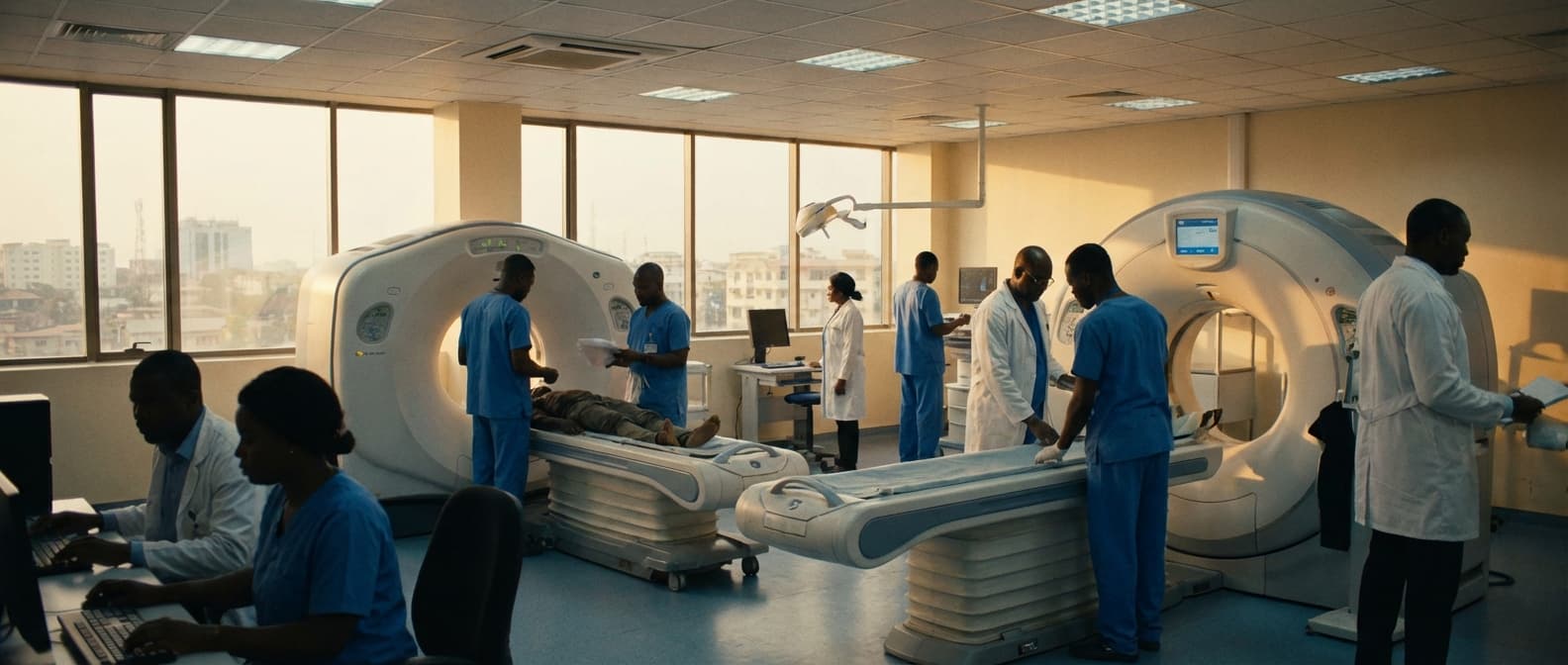
Imaging Acceptance Testing & QA in South Africa
Engineering Excellence & Technical Support
Commissioning and periodic QA for CT/MRI/X‑ray/US/Mammo. High-standard technical execution following OEM protocols and local regulatory frameworks.
Advanced Imaging Protocols for Remote Diagnostics
Pioneering the adoption and validation of advanced imaging protocols (e.g., DICOM standards, AI-driven image enhancement) to enable robust remote diagnostics across South Africa's diverse healthcare landscape, ensuring high-quality image interpretation regardless of geographical location.
Rigorous QA for Medical Imaging Devices
Implementing comprehensive Quality Assurance frameworks for medical imaging equipment (MRI, CT, X-ray, Ultrasound) including performance testing, calibration verification, and radiation safety compliance, meeting international standards and ensuring patient safety within the South African context.
Data-Driven Image Quality Metrics & Reporting
Developing and deploying data-driven metrics for image quality assessment, including signal-to-noise ratio (SNR), contrast-to-noise ratio (CNR), and resolution analysis. Providing detailed, actionable reports to healthcare providers and manufacturers to drive continuous improvement in imaging outcomes.
What Is Imaging Acceptance Testing & Qa In South Africa?
Imaging Acceptance Testing & Quality Assurance (QA) in South Africa refers to a rigorous process of verifying that medical imaging systems, including hardware (e.g., X-ray machines, CT scanners, MRI units, ultrasound devices) and associated software (e.g., Picture Archiving and Communication Systems - PACS, Radiology Information Systems - RIS, image viewers), meet predefined performance, functional, and regulatory requirements prior to full clinical deployment or after significant upgrades. This service ensures that imaging data is acquired, processed, displayed, stored, and retrieved accurately, reliably, and in compliance with South African healthcare legislation and international standards such as those set by the Health Professions Council of South Africa (HPCSA), Medical Device Regulations, and potentially relevant IEC/ISO standards.
| Who Needs Imaging Acceptance Testing & QA? | Typical Use Cases | |||||
|---|---|---|---|---|---|---|
| Hospitals and Clinics: Both public and private healthcare facilities acquiring new imaging equipment or upgrading existing systems. | Radiology Departments: Ensuring the consistent and reliable performance of diagnostic imaging workflows. | Medical Imaging Vendors/Manufacturers: As part of their product release cycles and for compliance with local market entry requirements. | IT Departments in Healthcare: Managing the integration and performance of imaging systems within the broader hospital IT infrastructure. | Regulatory Bodies and Accrediting Agencies: As a prerequisite for licensing, accreditation, and quality standards adherence. | Third-Party Service Providers: Offering independent verification and validation services to healthcare institutions. | |
| Procurement of New Imaging Modalities: Before clinical use of new CT scanners, MRI machines, X-ray units, mammography systems, ultrasound devices, etc. | PACS/RIS Implementation or Upgrade: Ensuring seamless integration, data management, and retrieval functionalities. | Software Updates or Patches: Verifying that new software releases do not negatively impact imaging performance or data integrity. | Relocation or Reconfiguration of Imaging Suites: Ensuring systems function correctly in their new environment. | Post-Maintenance Verification: Confirming that repairs or routine maintenance have not introduced new issues. | Regular Quality Control (QC) Programs: Establishing baseline performance and monitoring drift over time. | Preparation for Clinical Audits or Accreditation: Demonstrating adherence to quality and safety standards. |
Key Components of Imaging Acceptance Testing & QA:
- System Functionality Verification: Ensuring all hardware and software components operate as intended according to manufacturer specifications and clinical workflow requirements.
- Image Quality Assessment: Evaluating image resolution, contrast, signal-to-noise ratio (SNR), artifacts, and geometric accuracy to ensure diagnostic interpretability.
- Performance Metrics Evaluation: Measuring acquisition times, processing speeds, data transfer rates, and system uptime against established benchmarks.
- Interoperability Testing: Verifying seamless data exchange between different imaging modalities, PACS, RIS, and other hospital information systems (HIS) using protocols like DICOM (Digital Imaging and Communications in Medicine) and HL7 (Health Level Seven).
- Data Integrity and Security: Confirming that image data is stored securely, remains uncorrupted during transmission and storage, and complies with patient privacy regulations (e.g., POPIA - Protection of Personal Information Act).
- User Interface (UI) and User Experience (UX) Validation: Assessing the ease of use, intuitiveness, and efficiency of system interfaces for radiologists, technologists, and other clinical staff.
- Regulatory Compliance Audits: Confirming adherence to South African medical device regulations, radiation safety standards, and any applicable clinical guidelines.
- Documentation Review: Validating user manuals, technical specifications, training materials, and maintenance logs.
Who Needs Imaging Acceptance Testing & Qa In South Africa?
Imaging Acceptance Testing (IAT) and Quality Assurance (QA) are critical for any organization in South Africa that deals with medical imaging, whether it's for diagnostic, therapeutic, or research purposes. These processes ensure that imaging equipment functions correctly, produces accurate and reliable images, and meets established standards and regulatory requirements. This is paramount for patient safety, effective diagnosis and treatment, and efficient workflow.
| Target Customer/Department | Specific Needs for Imaging IAT & QA | Key Benefits |
|---|---|---|
| Hospitals (Public & Private) | Ensuring CT scanners, MRI machines, X-ray units, ultrasound, mammography, and PACS systems meet performance specifications for accurate diagnosis. Verification of image quality, dose levels, and system integration. Departments: Radiology, Nuclear Medicine, Cardiology, Oncology, Emergency Departments, Surgical Departments. | Improved diagnostic accuracy, reduced misdiagnosis, enhanced patient safety, optimized workflow, compliance with regulatory standards, extended equipment lifespan. |
| Radiology Clinics / Imaging Centers | Verification of all imaging modalities and associated software for consistent image quality and reliable reporting. Essential for maintaining patient trust and referrals. | Enhanced reputation, increased patient throughput, cost-effectiveness through early issue detection, regulatory compliance. |
| Medical Research Institutions / Universities | Validation of imaging equipment for research protocols, ensuring data integrity, reproducibility, and accuracy for scientific publications and breakthroughs. | Reliable research data, successful grant applications, publication of high-quality findings, advancement of medical knowledge. |
| Medical Device Manufacturers & Distributors | Pre-installation testing, commissioning, and ongoing performance verification of imaging devices sold or maintained in South Africa. Ensuring compliance with local regulations (e.g., SAHPRA). | Product reliability, reduced service calls, customer satisfaction, compliance with import/export and operational regulations, market confidence. |
| Government Health Departments / Regulatory Bodies | Setting and enforcing standards for medical imaging equipment. Ensuring that deployed equipment in public health facilities meets minimum quality and safety requirements. | Standardization of care, public health protection, equitable access to quality imaging services, oversight of the healthcare sector. |
| Veterinary Clinics / Animal Hospitals | Ensuring diagnostic accuracy for animal health. Verification of imaging equipment used for diagnosing diseases, injuries, and for pre-surgical assessments. | Accurate animal diagnosis, effective treatment planning, improved patient outcomes, building trust with pet owners. |
Who Needs Imaging Acceptance Testing & QA in South Africa? Target Customers and Departments
- {"title":"Hospitals and Healthcare Facilities","description":"The largest and most critical consumers of imaging IAT and QA. This includes both public and private sector hospitals."}
- {"title":"Radiology Clinics and Imaging Centers","description":"Specialized facilities focused on providing diagnostic imaging services, often operating independently or as part of larger hospital groups."}
- {"title":"Medical Research Institutions and Universities","description":"Organizations conducting research that relies on high-quality imaging data, requiring rigorous validation of their imaging systems."}
- {"title":"Medical Device Manufacturers and Distributors","description":"Companies that manufacture, import, or distribute medical imaging equipment in South Africa. They need to ensure their products meet local standards before deployment and for ongoing support."}
- {"title":"Government Health Departments and Regulatory Bodies","description":"Entities responsible for setting and enforcing standards for medical equipment and healthcare services, including imaging."}
- {"title":"Veterinary Clinics and Animal Hospitals","description":"Increasingly utilizing advanced imaging technologies, requiring similar QA processes as human healthcare to ensure accurate diagnosis for animal patients."}
Imaging Acceptance Testing & Qa Process In South Africa
Imaging Acceptance Testing & QA (Quality Assurance) processes in South Africa are crucial for ensuring that medical imaging equipment meets stringent performance, safety, and regulatory standards before being deployed for patient care. This workflow, from initial inquiry to final execution and sign-off, involves a series of defined steps to guarantee reliability and accuracy.
| Stage | Description | Key Activities | Responsible Parties | Deliverables/Outcomes |
|---|---|---|---|---|
| Inquiry & Needs Assessment | Initial contact from a healthcare facility or client to procure new imaging equipment. | Understanding clinical requirements, budget, space constraints, and existing infrastructure. Site visits may occur. | Client/Facility Management, Clinical Department Heads, Procurement Team, Imaging Equipment Vendors. | Defined equipment specifications, preliminary budget, initial project scope. |
| Procurement & Installation Planning | Formalizing the purchase of the imaging equipment and planning the logistics of its installation. | Issuing purchase orders, negotiating contracts, scheduling installation dates, coordinating with IT and facilities management. | Procurement Department, Legal Department, Vendor Sales & Project Management, Facility Management. | Signed contract, confirmed delivery and installation schedule, approved site layout. |
| Pre-Installation Site Survey & Preparation | Ensuring the installation site is ready and meets all technical and safety requirements for the specific imaging modality. | Assessing power requirements, ventilation, radiation shielding (if applicable), space, network connectivity, and environmental controls. Performing necessary modifications. | Vendor Technical Team, Facility Management, Biomedical Engineering Department, Radiation Physicist (if applicable). | Completed site preparation checklist, confirmed compliance with vendor specifications. |
| Equipment Delivery & Unpacking | The physical arrival and unpacking of the imaging equipment. | Careful transportation, inspection for shipping damage, unpacking in the designated installation area. | Vendor Logistics Team, Installation Engineers, Site Personnel. | Undamaged equipment delivered to site. |
| Initial Power-Up & Basic Functionality Checks | Turning on the equipment for the first time and verifying fundamental operations. | Powering on, checking error messages, verifying essential system components are recognized, basic user interface navigation. | Vendor Installation Engineers, Biomedical Engineering Department. | System powers on, no critical error messages, basic system components detected. |
| Comprehensive Acceptance Testing (IQ, OQ, PQ) | A structured testing process to verify the equipment's performance against predefined standards. | IQ (Installation Qualification): Verifying installation against specifications. OQ (Operational Qualification): Testing system functions and parameters. PQ (Performance Qualification): Evaluating performance in a clinical workflow context. | Vendor Technical Team, Biomedical Engineering Department, Clinical Users, QA Specialist. | Verified installation, operational functionality, and performance in simulated or actual clinical scenarios. Test reports generated. |
| Quality Assurance (QA) Protocol Implementation | Executing predefined QA protocols to ensure consistent image quality, safety, and operational reliability. | Running phantom scans, checking dose levels, performing contrast and resolution tests, verifying calibration accuracy. | Biomedical Engineering Department, Radiographers/Technologists, QA Specialist. | Completed QA test results, adherence to regulatory and institutional QA standards. |
| Data Verification & Image Quality Assessment | Evaluating the quality of acquired images and ensuring data integrity. | Reviewing diagnostic images for artifacts, resolution, contrast, and anatomical accuracy. Verifying DICOM compliance and network connectivity for image transfer. | Radiologists, Senior Radiographers, PACS Administrator, QA Specialist. | Acceptable image quality, accurate data archiving and retrieval. |
| Safety & Radiation Protection Checks | Confirming the equipment adheres to all safety regulations, especially for ionizing radiation. | Verifying radiation output, beam collimation, interlocks, and emergency stop functions. Ensuring compliance with national radiation safety standards (e.g., NRB, MSA). | Radiation Physicist, Radiation Safety Officer, Biomedical Engineering Department, Vendor Technical Team. | Radiation safety compliance certificate, documented safety checks. |
| User Training & Competency Assessment | Ensuring clinical staff are adequately trained to operate the equipment safely and effectively. | Conducting theoretical and practical training sessions. Assessing user competency through practical evaluations and knowledge checks. | Vendor Application Specialists, Senior Clinical Users, Training Department. | Trained and competent clinical staff, training records. |
| Documentation & Reporting | Creating and consolidating all relevant documentation throughout the process. | Compiling installation reports, test results, QA reports, safety certificates, training records, and user manuals. | Vendor Project Manager, Biomedical Engineering Department, QA Specialist. | Comprehensive documentation package for handover. |
| Final Sign-off & Handover | Formal acceptance of the installed and tested equipment by the client. | Review of all documentation, satisfactory completion of all tests, and formal sign-off by authorized personnel. | Client Representative (e.g., Department Head, Biomedical Engineering Manager), Vendor Project Manager. | Equipment officially handed over to the client, ready for clinical use. |
| Ongoing QA & Maintenance | Establishing a schedule for routine quality assurance and preventative maintenance. | Implementing regular QA checks, performing scheduled maintenance as per vendor recommendations, troubleshooting issues. | Biomedical Engineering Department, Service Engineers, Clinical Users. | Continued optimal performance, prolonged equipment lifespan, prompt issue resolution. |
Imaging Acceptance Testing & QA Workflow in South Africa
- Inquiry & Needs Assessment
- Procurement & Installation Planning
- Pre-Installation Site Survey & Preparation
- Equipment Delivery & Unpacking
- Initial Power-Up & Basic Functionality Checks
- Comprehensive Acceptance Testing (IQ, OQ, PQ)
- Quality Assurance (QA) Protocol Implementation
- Data Verification & Image Quality Assessment
- Safety & Radiation Protection Checks
- User Training & Competency Assessment
- Documentation & Reporting
- Final Sign-off & Handover
- Ongoing QA & Maintenance
Imaging Acceptance Testing & Qa Cost In South Africa
Imaging Acceptance Testing and Quality Assurance (QA) are critical phases in the development and deployment of medical imaging systems. In South Africa, the cost of these services can vary significantly based on several factors. Understanding these influences is crucial for accurate budgeting and vendor selection. The primary drivers for cost include the complexity of the imaging modality, the software and hardware involved, the scope of testing required (e.g., functional, performance, security, regulatory compliance), the level of expertise and experience of the QA team, and the project timeline. Furthermore, the location within South Africa and the specific vendor's pricing structure will also play a role. It's important to note that these are estimates, and a detailed proposal from a vendor is always recommended for precise figures.
| Service Component | Estimated Cost Range (ZAR) | Notes |
|---|---|---|
| Initial Consultation & Planning | R5,000 - R15,000 | Covers understanding requirements, defining scope, and initial test strategy. |
| Functional Testing (per modality/feature) | R15,000 - R75,000+ | Includes testing image acquisition, processing, display, and data management. Higher for complex modalities or extensive feature sets. |
| Performance Testing (e.g., image loading times, system responsiveness) | R10,000 - R50,000+ | Crucial for high-volume environments. Varies with the number of concurrent users and data throughput. |
| Integration Testing (e.g., with PACS, RIS, EMR) | R20,000 - R100,000+ | Highly dependent on the number and complexity of integrations. Critical for workflow efficiency. |
| Usability & User Acceptance Testing (UAT) | R15,000 - R60,000 | Involves end-users to validate if the system meets their operational needs. Can be project-based or hourly. |
| Security Testing | R20,000 - R80,000+ | Essential for protecting patient data. Varies with the sensitivity of the data and regulatory requirements. |
| Regulatory Compliance Testing (e.g., SABS, IEC standards) | R30,000 - R150,000+ | Specific to South African or international standards. May involve specialized equipment or procedures. |
| Test Automation Development (initial setup) | R50,000 - R200,000+ | Significant upfront investment but can lead to long-term cost savings for repetitive tests. |
| Daily QA Team Rate (Senior Tester/Analyst) | R3,000 - R7,000 per day | Rate for skilled personnel. Can be billed hourly or as part of a project package. |
| Project Management & Reporting | R10,000 - R50,000 | Covers planning, coordination, risk management, and comprehensive test reports. |
| Total Project Estimate (Small to Medium Complexity) | R75,000 - R300,000 | For a moderately complex imaging system with standard integrations and testing scope. |
| Total Project Estimate (High Complexity/Large Scale) | R300,000 - R1,000,000+ | For highly complex modalities, extensive integrations, advanced automation, and rigorous compliance. |
Key Pricing Factors for Imaging Acceptance Testing & QA in South Africa
- Complexity of Imaging Modality (e.g., MRI, CT, Ultrasound, X-ray, PET-CT)
- Software and Hardware Integration (e.g., PACS, RIS, EMR integration)
- Scope of Testing (Functional, Performance, Usability, Security, Regulatory - e.g., SABS, IEC standards)
- Testing Environment Setup and Management
- Test Automation Implementation
- Team Size and Expertise (Seniority, Specialization)
- Duration and Intensity of Testing
- Reporting and Documentation Requirements
- Travel and Accommodation Costs (if applicable)
- Vendor's Overhead and Profit Margins
- Urgency and Project Timeline
Affordable Imaging Acceptance Testing & Qa Options
Ensuring the accuracy and reliability of medical imaging equipment is paramount for patient safety and effective diagnosis. Acceptance Testing (AT) and Quality Assurance (QA) are critical processes, but their cost can be a significant concern for many healthcare facilities. Fortunately, there are numerous affordable options and cost-saving strategies available. This document explores value bundles and practical methods to reduce expenses without compromising on quality.
Value Bundles: These are pre-packaged service offerings designed to provide comprehensive AT/QA solutions at a more predictable and often lower cost than individual, à la carte services. They typically combine multiple testing phases, routine QA checks, and sometimes even preventive maintenance into a single contract. Bundling can simplify budgeting, streamline vendor management, and offer economies of scale.
| Cost-Saving Strategy | Description | Potential Benefit |
|---|---|---|
| Negotiate Service Contracts: | Actively negotiate pricing, terms, and service level agreements (SLAs) with AT/QA providers. Don't accept the initial quote without discussion. Leverage competing bids. | Significant reduction in per-test or per-service costs. Better defined service expectations. |
| Long-Term Contracts/Multi-Year Agreements: | Committing to a longer contract term (2-5 years) with a provider often results in lower annual rates due to the provider's ability to forecast and allocate resources. | Lower annual operational costs. Predictable budgeting. |
| Bundle Services: | Combine AT/QA for multiple modalities or sites with a single vendor. This can lead to volume discounts and reduced administrative overhead. | Discounted rates, simplified vendor management, reduced travel costs for technicians. |
| In-House QA Capabilities: | For routine QA (not initial AT), consider training internal staff on specific testing procedures and using in-house personnel for certain tasks, provided they have the necessary expertise and oversight. | Reduced reliance on external vendors for routine checks. Increased internal control. |
| Leverage Vendor-Provided Tools/Software: | Some equipment manufacturers offer basic QA tools or software that can be integrated into your QA program, potentially reducing the need for specialized third-party equipment for certain tests. | Reduced capital expenditure on testing equipment. Streamlined workflow if integrated well. |
| Phased Acceptance Testing: | For large capital acquisitions, consider phasing the acceptance testing. Initial critical tests can be performed immediately, with less critical or validation tests scheduled after initial operational use. | Faster deployment of new equipment, spreading out AT costs. |
| Prioritize Critical Equipment: | Focus comprehensive AT/QA on the most critical imaging modalities and those with the highest patient throughput or diagnostic impact. Less critical equipment might have a slightly modified or less frequent QA schedule (within regulatory guidelines). | Optimized resource allocation. Focus on highest-impact areas. |
| Shared Services/Consortiums: | For smaller facilities or those with limited resources, explore forming or joining a regional consortium to share AT/QA services and costs among multiple institutions. | Access to expert services at a fraction of individual cost. Shared expertise. |
| Performance Contracts: | Negotiate contracts where vendor compensation is tied to specific performance metrics or uptime, incentivizing efficient and effective AT/QA. | Guaranteed performance levels. Potential for shared savings if targets are exceeded. |
| Remote Monitoring Integration: | While not always a direct cost-saver for testing itself, integrating remote monitoring can proactively identify issues before they require extensive on-site testing or repairs, leading to fewer emergency calls and less downtime. | Reduced downtime, proactive issue resolution, potentially fewer routine tests needed. |
Types of Value Bundles for Imaging AT/QA
- Comprehensive AT/QA Packages: Include initial acceptance testing, baseline QA, and ongoing quarterly or annual QA checks for a specified period (e.g., 1-3 years).
- Technology-Specific Bundles: Focus on a particular imaging modality (e.g., a mammography QA bundle, an MRI safety and performance bundle).
- Fleet Management Bundles: Cover AT/QA for an entire fleet of imaging equipment across multiple sites, often with tiered pricing based on volume.
- Bundles with Remote Monitoring: Combine on-site testing with remote performance monitoring tools for continuous oversight and proactive issue detection.
- Bundles with Training & Support: Include initial equipment training and ongoing technical support for the imaging staff.
- Bundles with Software Updates & Calibration: Integrate software updates and essential calibration services into the regular QA schedule.
Verified Providers In South Africa
Finding verified healthcare providers in South Africa is crucial for ensuring quality care and peace of mind. This process can be complex, but understanding the credentials and assurances offered by reputable organizations simplifies your search. Franance Health stands out as a premier choice due to its rigorous vetting process and commitment to excellence. This document outlines what makes a provider 'verified' in South Africa and why Franance Health's credentials represent the best choice for your healthcare needs.
| Verification Aspect | Standard Practice in SA | Franance Health's Enhanced Approach |
|---|---|---|
| Professional Registration | Mandatory for all licensed practitioners (e.g., HPCSA, SANC) | Confirms current and valid registration with relevant South African regulatory bodies. |
| Specialization & Qualifications | Often verified through degrees and diplomas | Verifies postgraduate qualifications, specialized training, and ongoing professional development beyond basic degrees. |
| Clinical Experience & Track Record | Based on self-reporting and references | Involves a review of practice history, areas of expertise, and potentially peer endorsements. |
| Patient Feedback & Outcomes | Limited formal aggregation | Actively collects and analyzes anonymized patient feedback and reported treatment outcomes to ensure consistent patient satisfaction and quality of care. |
| Ethical Conduct & Compliance | Governed by regulatory bodies | Includes checks for adherence to ethical guidelines and data privacy regulations (e.g., POPIA). |
| Facility Standards (for clinics/hospitals) | May rely on existing accreditations | If applicable, verifies facility accreditations and operational quality beyond basic compliance. |
Understanding Verified Providers in South Africa
- Regulatory Bodies: Healthcare professionals in South Africa are regulated by specific councils that set standards, register practitioners, and handle disciplinary matters. Examples include the Health Professions Council of South Africa (HPCSA) and the South African Nursing Council (SANC).
- Professional Associations: Many specialties have professional associations that often have their own accreditation or membership requirements, signifying a commitment to ongoing professional development and ethical practice.
- Accreditation of Facilities: Hospitals and clinics undergo accreditation processes by bodies like the Accreditation Association of South Africa (HASA) to ensure they meet stringent quality and safety standards for patient care.
- Insurance Provider Networks: Medical aid schemes often maintain lists of 'network providers' who have met their criteria for cost-effectiveness and quality of service. However, this is primarily for financial benefit and doesn't always equate to the highest level of clinical excellence.
- Independent Verification Platforms: Emerging platforms are dedicated to verifying provider credentials, patient reviews, and service quality, offering a more holistic verification for consumers.
- Franance Health's Verification Process: Franance Health goes beyond basic registration. They implement a multi-faceted verification that includes checking professional body registrations, relevant certifications, specializations, and a thorough review of their operational standards and patient feedback mechanisms.
Scope Of Work For Imaging Acceptance Testing & Qa
This Scope of Work (SOW) outlines the activities, technical deliverables, and standard specifications for Imaging Acceptance Testing and Quality Assurance (QA). The purpose of this testing is to ensure that the implemented imaging system meets all functional, performance, and usability requirements as defined by the project and industry best practices. This SOW covers the entire lifecycle of testing, from test plan development to final report generation.
| Deliverable Name | Description | Format | Associated Standard/Specification |
|---|---|---|---|
| Imaging System Test Plan | A document outlining the strategy, scope, objectives, resources, schedule, and deliverables for the imaging system testing effort. | Microsoft Word / PDF | ISO 29119 - Part 3: Test techniques / IEEE 829 - Standard for Software Test Documentation |
| Imaging System Test Cases | Detailed step-by-step instructions for executing tests, including preconditions, input data, expected results, and pass/fail criteria. | Microsoft Excel / Test Management Tool | ISO 29119 - Part 3: Test techniques / IEEE 829 - Standard for Software Test Documentation |
| Test Execution Logs | Records of each test case execution, including actual results, deviations from expected results, and timestamps. | Test Management Tool / CSV | Internal Project Standards / IEEE 829 - Standard for Software Test Documentation |
| Defect/Bug Reports | Detailed documentation of identified issues, including description, severity, priority, steps to reproduce, and status. | Defect Tracking System (e.g., Jira, Bugzilla) / CSV | Internal Project Standards / Common Vulnerabilities and Exposures (CVE) classification for security defects |
| Performance Test Results Report | Analysis of system performance metrics, including response times, throughput, resource utilization, and capacity. | Microsoft Word / PDF | ISO 25010 - System and software quality models / LoadRunner / JMeter best practices |
| Security Test Report | Summary of security vulnerabilities identified, their impact, and recommended remediation actions. | Microsoft Word / PDF | OWASP Top 10 / NIST Cybersecurity Framework |
| Usability Test Findings Report | Evaluation of user interface design, navigation, and overall user experience. | Microsoft Word / PDF | ISO 9241 - Ergonomics of human-system interaction / Nielsen Norman Group heuristics |
| Imaging System Acceptance Test Report | A comprehensive report summarizing all testing activities, defect status, outstanding issues, and a recommendation for system acceptance. | Microsoft Word / PDF | Internal Project Standards / IEEE 829 - Standard for Software Test Documentation |
| System Configuration Documentation | Details of the configuration of the imaging system and testing environment for reproducibility. | Text Files / Configuration Management Tools | Industry best practices for system configuration management |
Key Activities in Imaging Acceptance Testing & QA
- Test Plan Development: Creating comprehensive test plans based on project requirements and use cases.
- Test Case Design: Developing detailed test cases covering functional, integration, performance, security, and usability aspects.
- Test Environment Setup: Configuring and validating the testing environment to mimic production conditions.
- Test Execution: Performing planned test cases, documenting results, and identifying defects.
- Defect Management: Tracking, prioritizing, and retesting resolved defects.
- Performance Testing: Assessing system responsiveness, throughput, and stability under various load conditions.
- Security Testing: Verifying system security measures against potential vulnerabilities.
- Usability Testing: Evaluating the ease of use and user experience of the imaging system.
- Regression Testing: Ensuring that new changes or bug fixes have not negatively impacted existing functionality.
- User Acceptance Testing (UAT) Support: Assisting end-users in their validation of the system.
- Test Reporting: Generating detailed reports on test progress, findings, and overall system quality.
Service Level Agreement For Imaging Acceptance Testing & Qa
This Service Level Agreement (SLA) outlines the commitments for Imaging Acceptance Testing and Quality Assurance (QA) services, focusing on response times for critical issues and guaranteed uptime for the testing environment.
| Service Metric | Target | Definition | Measurement Period |
|---|---|---|---|
| Critical Issue Response Time | 2 Business Hours | Time from initial report of a critical defect (e.g., system failure, inability to perform core imaging functions) to the start of investigation by the QA team. | 24x7x365 |
| High Priority Issue Response Time | 4 Business Hours | Time from initial report of a high-priority defect (e.g., significant functional impairment, data corruption risk) to the start of investigation. | Business Hours (Mon-Fri, 9 AM - 5 PM Local Time) |
| Medium Priority Issue Response Time | 8 Business Hours | Time from initial report of a medium-priority defect (e.g., minor functional issue, cosmetic defect impacting usability) to the start of investigation. | Business Hours (Mon-Fri, 9 AM - 5 PM Local Time) |
| Testing Environment Uptime | 99.5% | Percentage of time the designated imaging acceptance testing and QA environment is accessible and operational for scheduled testing activities. | Monthly |
| Scheduled Maintenance Window | Maximum 4 hours per month | Pre-announced periods for system upgrades, patches, or routine maintenance. Testing will be unavailable during these windows. | Monthly |
Scope of Services
- Imaging Acceptance Testing: Ensuring new imaging systems and software meet predefined functional and performance requirements.
- Quality Assurance (QA): Ongoing validation and verification of imaging system performance, image quality, and data integrity.
- Defect Tracking and Resolution: Formal process for reporting, prioritizing, and resolving identified issues.
Frequently Asked Questions

Ready when you are
Let's scope your Imaging Acceptance Testing & QA in South Africa project in South Africa.

Scaling healthcare logistics and technical systems across the entire continent.