
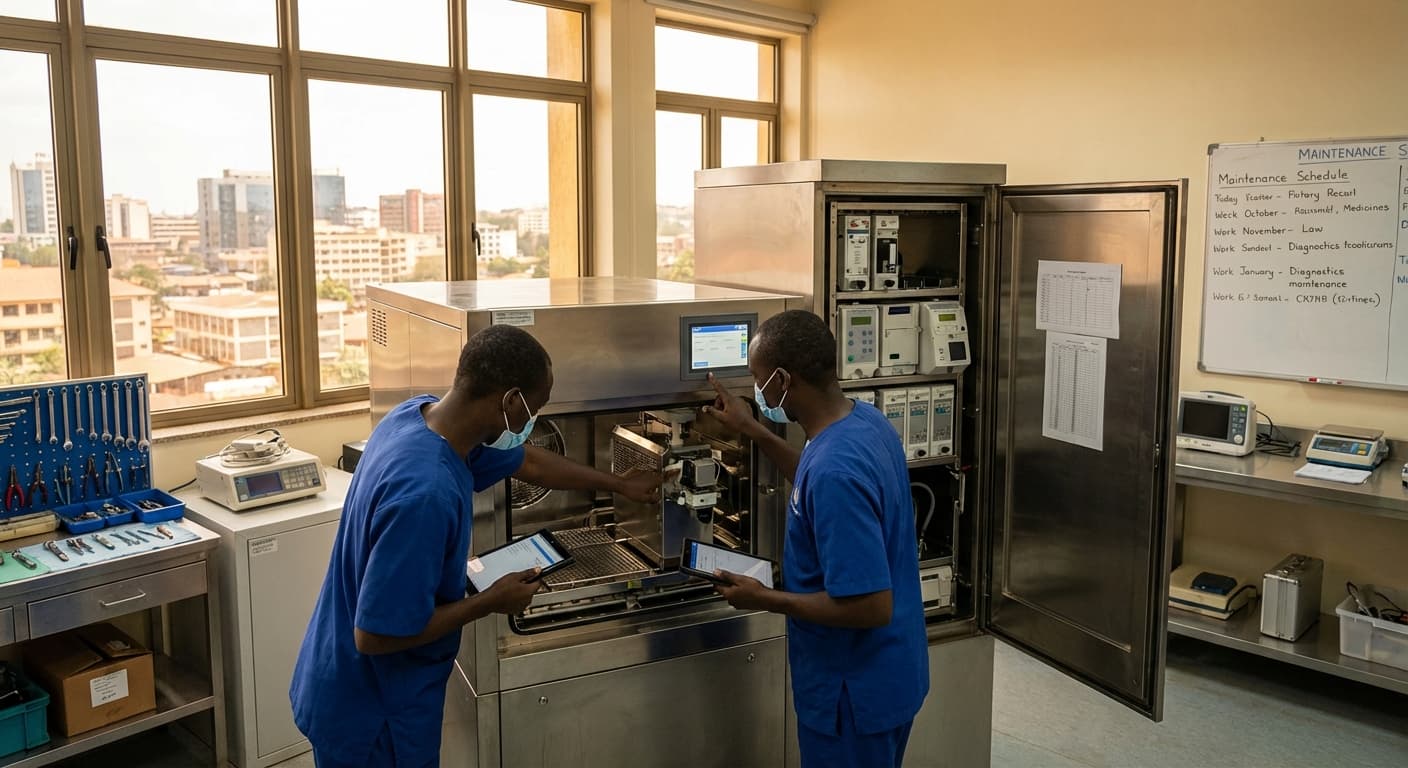
Total Cost of Ownership (TCO) & Lifecycle Budgeting Service in South Africa
Engineering Excellence & Technical Support
Total Cost of Ownership (TCO) & Lifecycle Budgeting Service High-standard technical execution following OEM protocols and local regulatory frameworks.
Optimised Asset Utilisation & Performance
Leverage advanced analytics to identify underperforming assets, streamline maintenance schedules, and maximise operational uptime. Our TCO analysis predicts optimal replacement cycles, ensuring your fleet and infrastructure deliver peak performance throughout their lifespan, reducing waste and increasing ROI.
Proactive Risk Mitigation & Financial Forecasting
Quantify and predict potential cost overruns due to market volatility, regulatory changes, and technological obsolescence. Our lifecycle budgeting services provide robust financial forecasting and contingency planning, safeguarding your business from unexpected expenses and ensuring predictable capital allocation.
Data-Driven Strategic Procurement & Vendor Management
Empower your procurement decisions with comprehensive TCO insights, moving beyond upfront costs to consider operational expenses, maintenance, disposal, and potential resale value. We facilitate strategic vendor selection and performance tracking, driving down long-term costs and fostering sustainable supply chain partnerships within the South African context.
What Is Total Cost Of Ownership (Tco) & Lifecycle Budgeting Service In South Africa?
Total Cost of Ownership (TCO) and Lifecycle Budgeting (LCB) services in South Africa refer to a comprehensive financial and asset management methodology. TCO quantifies all direct and indirect costs associated with acquiring, operating, maintaining, and disposing of an asset or system over its entire useful life. LCB extends this by integrating TCO principles into a strategic budgeting framework, ensuring that future capital and operational expenditures related to an asset are anticipated, planned, and funded throughout its lifecycle. This service is crucial for organizations seeking to optimize financial resources, improve asset performance, and mitigate long-term financial risks associated with capital investments and operational expenditures.
| Who Needs TCO & LCB Services? | Typical Use Cases | |||||||
|---|---|---|---|---|---|---|---|---|
| Public Sector Entities: Municipalities, provincial and national government departments, state-owned enterprises (SOEs) requiring long-term financial planning for infrastructure, fleet management, and IT systems. | Infrastructure Projects: Evaluating the long-term cost of roads, bridges, water treatment plants, and energy generation facilities. | Large Corporations: Particularly in capital-intensive industries like manufacturing, mining, energy, and telecommunications, to manage significant asset portfolios. | IT Departments: For hardware (servers, networks, end-user devices), software (licenses, maintenance, upgrades), and cloud services. | Fleet Management: Assessing the total cost of vehicles, including purchase, fuel, maintenance, insurance, and eventual resale/disposal. | Real Estate & Facilities Management: Evaluating the TCO of buildings, including construction, utilities, maintenance, repairs, and eventual renovation or demolition. | Manufacturing & Industrial Companies: For plant and machinery, assessing acquisition, operation, maintenance, and replacement costs. | Procurement Departments: To inform sourcing decisions by comparing the TCO of different supplier offerings, not just initial purchase prices. | Strategic Planning & Finance Departments: To inform long-term investment decisions, capital allocation, and financial risk management. |
Key Components of TCO & LCB Services
- Cost Identification & Categorization: Delineating all expenditures across acquisition (purchase price, installation, initial configuration), operation (energy, consumables, personnel, software licensing), maintenance (preventive, corrective, upgrades), and disposal (decommissioning, recycling, environmental remediation).
- Lifecycle Stage Analysis: Mapping costs to distinct phases of the asset's existence: conceptualization, acquisition, deployment, operation, maintenance, and end-of-life.
- Financial Modeling & Forecasting: Developing predictive models to estimate future costs, incorporating inflation, technological obsolescence, and service level agreements (SLAs).
- Risk Assessment & Mitigation: Identifying potential cost overruns, performance degradation, and operational disruptions and developing strategies to mitigate these risks.
- Scenario Planning & Optimization: Analyzing the financial impact of various operational strategies, upgrade paths, and replacement cycles to identify the most cost-effective approach.
- Budgetary Integration: Aligning TCO projections with organizational budgeting cycles, ensuring adequate funding is allocated for each lifecycle stage.
- Performance Measurement & Reporting: Establishing Key Performance Indicators (KPIs) to track actual costs against projected TCO and providing regular reports to stakeholders.
Who Needs Total Cost Of Ownership (Tco) & Lifecycle Budgeting Service In South Africa?
Total Cost of Ownership (TCO) and Lifecycle Budgeting are critical financial management tools that provide a comprehensive view of all costs associated with an asset or project over its entire lifespan. In South Africa, various organizations and departments can significantly benefit from these services, enabling better financial planning, risk mitigation, and strategic decision-making.
| Target Customer/Department | Key Needs & Benefits of TCO/Lifecycle Budgeting |
|---|---|
| Manufacturing & Industrial Sectors (e.g., Automotive, Mining, FMCG) | Needs: Accurate forecasting of machinery, equipment, and plant maintenance costs; optimization of operational efficiency; understanding of end-of-life disposal costs. Benefits: Reduced downtime, improved asset utilization, optimized capital expenditure, better risk management for aging assets. |
| Information Technology (IT) Departments (Across all sectors) | Needs: Holistic budgeting for hardware (servers, networks, end-user devices), software licensing, implementation, maintenance, support, and eventual decommissioning. Benefits: Informed decisions on technology refresh cycles, predictable IT spending, avoidance of hidden costs, improved return on investment (ROI) for IT investments. |
| Infrastructure & Utilities Companies (e.g., Eskom, Water Boards, Telkom) | Needs: Long-term financial planning for large-scale infrastructure projects (power plants, water treatment facilities, pipelines, communication networks), maintenance, upgrades, and decommissioning. Benefits: Sustainable service delivery, transparent budgeting for public funds, robust risk assessment for long-term assets, compliance with regulatory frameworks. |
| Construction & Property Development Companies | Needs: Comprehensive cost analysis of buildings and infrastructure projects from design and construction through to operation, maintenance, and eventual sale or demolition. Benefits: More accurate project costing, improved profitability, better understanding of operational expenses for clients, informed investment decisions. |
| Transportation & Logistics Companies (e.g., Airlines, Shipping, Fleet Management) | Needs: Detailed budgeting for vehicles, aircraft, vessels, maintenance, fuel, insurance, and eventual fleet replacement. Benefits: Optimized fleet utilization, reduced operational costs, improved fuel efficiency, strategic fleet modernization plans. |
| Government & Public Sector Departments (e.g., National Treasury, Municipalities, State-Owned Enterprises) | Needs: Transparent and accountable budgeting for public assets, infrastructure, and services; justification of taxpayer expenditure; long-term financial sustainability of public programs. Benefits: Efficient allocation of public funds, improved service delivery, reduced financial risk, enhanced public trust and accountability. |
| Finance & Procurement Departments (Across all sectors) | Needs: A reliable framework for evaluating and comparing procurement options, understanding the true cost of ownership for capital assets, and managing budgets effectively over the asset lifecycle. Benefits: Data-driven procurement decisions, identification of cost-saving opportunities, improved budget control, stronger negotiation power. |
| Facilities Management Departments | Needs: Comprehensive budgeting for building maintenance, energy consumption, repairs, upgrades, and end-of-life asset replacement for commercial and industrial properties. Benefits: Optimized facility operating costs, improved asset lifespan, enhanced building performance, strategic capital planning for facility upgrades. |
Who Needs TCO & Lifecycle Budgeting Services in South Africa?
- Organizations aiming for long-term financial sustainability and predictability.
- Companies seeking to optimize asset acquisition and management strategies.
- Government entities responsible for public infrastructure and services.
- Businesses operating in capital-intensive industries.
- Organizations facing increasing regulatory compliance and reporting requirements.
- Companies looking to make informed investment decisions and justify capital expenditure.
- SMEs and large corporations alike, depending on their asset complexity and scale of operations.
Total Cost Of Ownership (Tco) & Lifecycle Budgeting Service Process In South Africa
The Total Cost of Ownership (TCO) & Lifecycle Budgeting Service Process in South Africa is a structured approach designed to help businesses understand and manage the full financial implications of an asset or project over its entire lifespan. This service aims to provide a comprehensive financial roadmap, enabling informed decision-making, optimal resource allocation, and long-term financial stability. The workflow typically begins with an initial inquiry and culminates in the delivery of a detailed TCO and lifecycle budget report, along with ongoing support and review.
| Stage | Description | Key Activities | Deliverables | South African Context Considerations |
|---|---|---|---|---|
| Inquiry & Initial Consultation | The client expresses interest in TCO & Lifecycle Budgeting services. This stage involves understanding their needs and objectives. | Initial contact (phone, email, website). Understanding client's business, industry, and specific assets/projects of interest. Discussing preliminary goals and expected outcomes. | Initial understanding of client needs. Proposal outlining scope, methodology, and fees. | Awareness of South African economic factors (inflation rates, currency fluctuations, local tax regulations like VAT and income tax), and industry-specific incentives or compliance requirements relevant to the client's sector. |
| Scope Definition & Data Gathering | Clearly defining the boundaries of the analysis and collecting all necessary financial and operational data. | Defining the asset/project lifecycle phases (acquisition, operation, maintenance, disposal). Identifying all cost drivers (capital expenditure, operational expenditure, maintenance, energy, labor, decommissioning). Gathering historical data, vendor quotes, operational metrics, and regulatory information. | Detailed scope document. Comprehensive data repository for analysis. | Accessing data from South African suppliers and service providers. Understanding local labor costs and employment legislation impacting operational budgets. Accounting for South African environmental regulations and potential disposal costs. |
| Analysis & Modeling | Applying established TCO and lifecycle budgeting methodologies to the gathered data. | Categorizing and quantifying costs across lifecycle phases. Discounting future costs to present value (Net Present Value - NPV). Performing sensitivity analysis and scenario planning. Incorporating inflation, depreciation, and residual value estimations. | Validated cost models. Preliminary TCO estimates. Risk assessments. | Utilizing South African discount rates and inflation projections. Applying South African accounting standards (e.g., IFRS) for depreciation and asset valuation. Considering specific South African tax implications on capital allowances and operational costs. |
| Report Generation & Presentation | Communicating the findings of the analysis in a clear, actionable report. | Compiling a comprehensive TCO report detailing all cost elements, assumptions, and methodologies. Presenting findings to key stakeholders. Explaining the implications of the TCO for budgeting and strategic planning. | Final TCO and lifecycle budget report. Presentation slides. Executive summary. | Ensuring the report is culturally relevant and easy to understand for South African business leaders. Highlighting how TCO can inform strategic procurement and investment decisions within the South African market. |
| Implementation Support & Monitoring | Assisting the client in integrating the TCO findings into their operational and financial strategies. | Developing action plans based on TCO insights. Assisting in vendor negotiations. Setting up monitoring mechanisms to track actual costs against the lifecycle budget. Providing training to relevant staff. | Actionable implementation plans. Budget tracking frameworks. Training materials. | Collaborating with South African finance and procurement teams. Ensuring alignment with local budgeting cycles and reporting requirements. Monitoring compliance with South African procurement policies if applicable. |
| Review & Optimization | Periodically reviewing the TCO model and actual performance to identify areas for improvement. | Conducting periodic reviews of TCO calculations. Comparing actual costs to budgeted lifecycle costs. Recommending adjustments to operational strategies or asset management plans. Updating models based on new data or changing market conditions. | Performance review reports. Optimization recommendations. Updated TCO models. | Adapting to changes in the South African economic landscape, regulatory environment, and technological advancements that may impact asset costs. Proactively addressing potential cost escalations or new opportunities within the South African market. |
Workflow Stages
- Inquiry & Initial Consultation
- Scope Definition & Data Gathering
- Analysis & Modeling
- Report Generation & Presentation
- Implementation Support & Monitoring
- Review & Optimization
Total Cost Of Ownership (Tco) & Lifecycle Budgeting Service Cost In South Africa
The Total Cost of Ownership (TCO) and Lifecycle Budgeting service is crucial for South African businesses to understand the true financial implications of an asset or investment over its entire lifespan. This goes beyond the initial purchase price and includes all associated costs from acquisition to disposal. In South Africa, the pricing for these services is influenced by several factors, leading to a range of costs in ZAR (South African Rand).
Key Pricing Factors:
- Scope and Complexity of Assets: The number, type, and complexity of assets being analyzed significantly impact the service cost. A single IT asset will be less expensive to assess than a fleet of heavy machinery or an entire building infrastructure.
- Data Availability and Quality: The ease with which relevant cost data can be accessed and its reliability directly affect the time and effort required from the service provider. Poorly organized or missing data will increase costs.
- Depth of Analysis: The level of detail and sophistication required for the TCO analysis. This can range from basic capital expenditure and operational cost breakdowns to advanced modelling incorporating depreciation, maintenance schedules, energy consumption, and end-of-life disposal costs.
- Service Provider Expertise and Reputation: Established firms with a proven track record and highly specialized consultants will generally command higher fees than smaller or newer players.
- Duration of the Lifecycle: Longer lifecycles require more detailed projections and ongoing monitoring, potentially increasing the overall cost.
- Customization vs. Standardisation: Bespoke TCO models tailored to a specific client's unique operations will be more expensive than using standardized methodologies and templates.
- Reporting and Deliverables: The format, detail, and frequency of reports and presentations can influence pricing. Interactive dashboards or in-depth strategic recommendations will cost more than a basic report.
- Geographical Reach (within SA): While less of a factor for remote services, on-site assessments or consultations in remote areas might incur additional travel and accommodation costs.
- Technology Utilised: The use of specialized TCO software or advanced analytical tools can influence pricing, either by increasing the provider's investment or being passed on to the client.
| Service Component | Typical Pricing Factor | Estimated Price Range (ZAR) | Notes |
|---|---|---|---|
| Initial TCO Assessment (Simple Asset) | Number of assets, basic data | R 5,000 - R 15,000 | For a single IT device, office equipment, or similar. |
| Comprehensive TCO Analysis (Complex Asset/Small Project) | Complexity, data depth, customisation | R 15,000 - R 50,000 | e.g., a fleet of vehicles, a significant piece of machinery, or a small software implementation. |
| Full Lifecycle Budgeting & TCO for Major Investments/Infrastructure | Extensive data gathering, advanced modelling, long lifecycles | R 50,000 - R 250,000+ | For large-scale projects, building infrastructure, or strategic asset planning. |
| Consulting Hours (Ad-hoc support/review) | Expertise of consultant, duration | R 1,000 - R 3,500 per hour | Often applicable for specific questions, data validation, or review of existing models. |
| Software Licensing/Subscription (if provided) | Features, user count, support level | Varies significantly (e.g., R 5,000 - R 50,000+ annually) | Some providers offer proprietary TCO software as part of their service. |
| Ongoing Monitoring & Re-evaluation | Frequency, scope, reporting needs | Retainer-based or project-specific | For dynamic assets or projects requiring continuous lifecycle management. |
Typical Cost Components Included in TCO & Lifecycle Budgeting Services:
- Initial Purchase/Acquisition Costs (CAPEX)
- Installation and Implementation Costs
- Operational Costs (OPEX) - e.g., energy, consumables
- Maintenance and Repair Costs
- Downtime and Productivity Loss (where quantifiable)
- Training and Personnel Costs
- Insurance and Taxes
- Finance Costs (interest on loans, depreciation)
- Disposal and Decommissioning Costs
- Potential Residual Value/Resale Value
Affordable Total Cost Of Ownership (Tco) & Lifecycle Budgeting Service Options
Our Affordable Total Cost of Ownership (TCO) & Lifecycle Budgeting Service Options provide a comprehensive approach to understanding and minimizing the true cost of your assets over their entire lifespan. We go beyond initial purchase prices to incorporate all direct and indirect expenses, from acquisition and installation to operation, maintenance, repair, upgrades, and eventual disposal or decommissioning. Our service empowers you to make informed financial decisions, optimize resource allocation, and achieve significant cost savings through strategic value bundles and proven cost-saving strategies.
| Value Bundle Name | Description | Key Benefits | Target Audience | Indicative Price Range (Illustrative) |
|---|---|---|---|---|
| Foundation TCO Assessment | Basic analysis of direct acquisition and operational costs for a defined period. | Initial cost visibility, basic budgeting, identification of major cost drivers. | Small to medium-sized businesses, new asset acquisitions. | $1,000 - $3,000 |
| Comprehensive Lifecycle Planner | In-depth TCO analysis including maintenance, repair, upgrades, and disposal. Develops multi-year budget forecasts. | Detailed financial planning, proactive cost management, optimized asset utilization, reduced unexpected expenses. | Growing businesses, organizations with significant asset portfolios, capital-intensive industries. | $3,000 - $7,500 |
| Strategic TCO Optimization Package | Includes Comprehensive Lifecycle Planner with added recommendations for cost-saving strategies, risk mitigation, and performance benchmarking. | Maximized ROI, significant long-term cost reductions, enhanced operational efficiency, improved asset longevity, minimized risk. | Large enterprises, organizations seeking competitive advantage through cost leadership, asset-heavy industries. | $7,500 - $15,000+ |
| Customized TCO Solutions | Tailored analysis and budgeting services designed to meet specific organizational needs and asset types. | Precise cost control for unique situations, maximum flexibility, targeted cost-saving initiatives. | Organizations with highly specialized assets or complex operational environments. | Customized Pricing based on scope |
Key Components of Our TCO & Lifecycle Budgeting Services
- Comprehensive TCO Analysis: Identifying all relevant costs throughout an asset's lifecycle.
- Lifecycle Budgeting: Developing accurate financial forecasts for long-term asset management.
- Risk Assessment & Mitigation: Quantifying potential cost overruns and implementing preventative measures.
- Optimization Recommendations: Identifying opportunities for efficiency improvements and cost reduction.
- Performance Monitoring & Reporting: Tracking actual costs against budgets and providing actionable insights.
- Strategic Procurement Guidance: Advising on best practices for acquiring assets with lower TCO.
- Maintenance & Repair Planning: Developing proactive strategies to minimize downtime and costly repairs.
- Upgrade & Obsolescence Management: Planning for necessary upgrades and managing the end-of-life cycle.
Verified Providers In South Africa
In South Africa's burgeoning healthcare landscape, identifying reliable and credentialed healthcare providers is paramount for ensuring quality care and peace of mind. Franance Health has emerged as a leading platform dedicated to connecting individuals with verified healthcare professionals. This commitment to verification not only safeguards patients but also elevates the standards of healthcare delivery across the nation. Franance Health's rigorous credentialing process ensures that all listed providers meet stringent criteria, encompassing qualifications, experience, ethical conduct, and regulatory compliance. This meticulous approach provides a crucial layer of trust for users seeking medical assistance, making them the best choice for navigating the South African healthcare system.
| Franance Health Credentialing Criteria | What It Means for Patients |
|---|---|
| Academic and Professional Qualifications | Ensures providers possess the foundational knowledge and expertise required for their medical practice. |
| Valid Medical Licenses and Registrations | Confirms providers are legally authorized to practice medicine in South Africa, adhering to national standards. |
| Proof of Experience and Specialization | Verifies a provider's practical experience and their specific areas of expertise, allowing for informed choices. |
| Background Checks and Ethical Conduct Review | Screens for any disciplinary actions or ethical concerns, safeguarding against unprofessional behavior. |
| Continuing Professional Development (CPD) Compliance | Confirms providers are committed to staying updated with the latest medical advancements and practices. |
Why Franance Health is the Best Choice for Verified Providers in South Africa:
- Rigorous Verification Process: Franance Health employs a multi-faceted verification system that scrutinizes the qualifications, licenses, and professional history of every healthcare provider on its platform.
- Commitment to Quality Care: By partnering only with credentialed professionals, Franance Health guarantees that users have access to high-quality medical expertise and ethical treatment.
- Enhanced Patient Safety: The verification process acts as a crucial safeguard, minimizing the risk of encountering unqualified or unethical practitioners.
- Streamlined Access to Trusted Professionals: Franance Health simplifies the search for reliable healthcare providers, saving users valuable time and reducing stress.
- Promoting Transparency and Trust: The platform fosters transparency within the healthcare sector, building trust between patients and practitioners.
- Wide Range of Specialties: Franance Health offers a comprehensive directory of verified providers across various medical specialties, catering to diverse healthcare needs.
- Adherence to South African Healthcare Regulations: All listed providers are confirmed to comply with the relevant regulatory bodies and standards within South Africa.
Scope Of Work For Total Cost Of Ownership (Tco) & Lifecycle Budgeting Service
This document outlines the Scope of Work (SOW) for the Total Cost of Ownership (TCO) and Lifecycle Budgeting service. This service aims to provide a comprehensive understanding of all costs associated with an asset, system, or project throughout its entire lifespan, from initial acquisition to disposal. The objective is to enable informed decision-making by providing accurate financial projections, identifying cost drivers, and supporting strategic resource allocation.
| Phase | Key Activities | Deliverables | Standard Specifications/Considerations |
|---|---|---|---|
| Define scope, identify asset/system/project, collect historical cost data, identify cost categories (CAPEX, OPEX, etc.), understand existing financial models and reporting mechanisms. | Scope Definition Document, Asset/System Inventory, Initial Data Repository, Stakeholder List. | Clear definition of boundaries (e.g., what is included/excluded). Data accuracy and completeness are paramount. Use of standardized data collection templates. Privacy and confidentiality of sensitive financial data. |
| Identify all relevant cost elements for each lifecycle phase (e.g., purchase price, installation, training, energy, maintenance, spares, licenses, decommissioning). Categorize costs according to a predefined framework (e.g., direct/indirect, fixed/variable). | Detailed Cost Breakdown Structure (CBS) per lifecycle phase, Cost Category Definitions. | Alignment with industry best practices (e.g., ISO 55000 for asset management). Consistency in cost definitions across all analyses. Consideration of hidden costs and intangible expenses. |
| Develop models to forecast future costs based on historical data, inflation rates, anticipated usage, maintenance schedules, technological advancements, and risk factors. Apply appropriate discounting methods for Net Present Value (NPV) calculations. | TCO Model(s) with projected costs per lifecycle phase, NPV Analysis, Sensitivity Analysis Reports. | Use of robust financial modeling software. Clearly stated assumptions and their justifications. Probabilistic forecasting where appropriate. Discount rate justification and consistency. |
| Translate TCO projections into comprehensive lifecycle budgets, outlining expected expenditures for each year/period. Integrate with existing organizational budgeting processes. | Lifecycle Budget Plan (e.g., annual, multi-year), Budget Variance Tracking Mechanism. | Alignment with organizational financial calendar and reporting cycles. Clear distinction between capital and operational budgets. Flexibility for adjustments based on evolving needs. |
| Analyze the TCO results to identify key cost drivers, benchmark against industry standards, and highlight areas for potential optimization. Prepare detailed reports summarizing findings and recommendations. | TCO Analysis Report, Cost Driver Identification Summary, Benchmarking Report (if applicable), Recommendations for Cost Optimization. | Clear and concise presentation of findings. Actionable recommendations. Visualizations (charts, graphs) to illustrate cost trends. Peer review of analysis and reports. |
| Provide guidance on implementing the TCO model and lifecycle budgeting processes. Train relevant personnel on using the developed models and understanding the reporting outputs. | Training Materials, User Manuals for TCO Models, Post-implementation Support Plan. | Tailored training programs for different user groups. Ongoing support to address queries and issues. Documentation of best practices for continued application. |
| Periodically review the TCO model and lifecycle budgets to ensure accuracy and relevance. Incorporate feedback and update projections as necessary. | Periodic Review Reports, Updated TCO Models and Budgets. | Establish a cadence for review (e.g., quarterly, annually). Formal process for incorporating changes and documenting updates. Continuous improvement of the TCO methodology. |
Key Objectives of TCO & Lifecycle Budgeting Service
- Quantify all direct and indirect costs associated with an asset/system/project over its lifecycle.
- Identify and analyze cost drivers and their impact on overall expenditure.
- Develop realistic budget forecasts for each lifecycle phase (acquisition, operation, maintenance, upgrade, disposal).
- Support investment decisions by comparing the long-term financial implications of different options.
- Enhance financial planning and control by providing a structured approach to budgeting.
- Identify opportunities for cost optimization and efficiency improvements.
- Provide a framework for performance measurement and accountability related to costs.
Service Level Agreement For Total Cost Of Ownership (Tco) & Lifecycle Budgeting Service
This Service Level Agreement (SLA) outlines the commitment for the Total Cost of Ownership (TCO) and Lifecycle Budgeting Service. It defines the expected response times for support requests and the guaranteed uptime for the service platform. Adherence to these metrics ensures efficient and reliable delivery of TCO analysis and budgeting services.
| Service Component | Uptime Guarantee | Response Time (Critical) | Response Time (High) | Response Time (Medium) |
|---|---|---|---|---|
| TCO & Lifecycle Budgeting Platform Availability | 99.9% | N/A (Continuous) | N/A (Continuous) | N/A (Continuous) |
| Technical Support - Platform Issues | N/A | 2 Business Hours | 4 Business Hours | 8 Business Hours |
| Technical Support - Query/Advisory | N/A | 4 Business Hours | 8 Business Hours | 24 Business Hours |
| Report Generation Request (Standard) | N/A | N/A | 1 Business Day | 3 Business Days |
Scope of Service
- Provision of TCO analysis tools and methodologies.
- Assistance with lifecycle cost modeling and forecasting.
- Generation of TCO reports and lifecycle budget projections.
- Technical support for the TCO and Lifecycle Budgeting platform.
- Regular updates and maintenance of the TCO and Lifecycle Budgeting software/platform.
Frequently Asked Questions

Ready when you are
Let's scope your Total Cost of Ownership (TCO) & Lifecycle Budgeting Service in South Africa project in South Africa.

Scaling healthcare logistics and technical systems across the entire continent.