
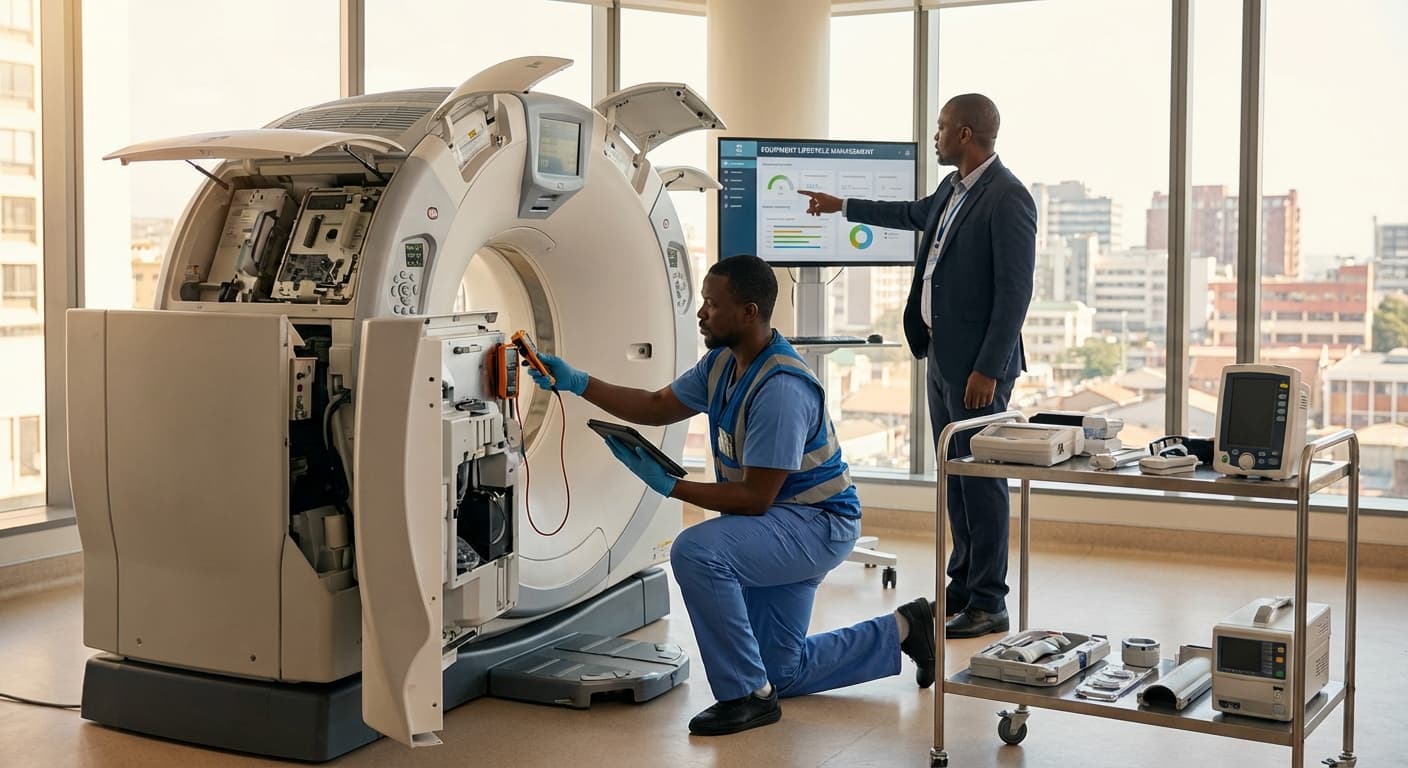
Equipment Replacement Planning & Obsolescence Strategy Service in South Africa
Engineering Excellence & Technical Support
Equipment Replacement Planning & Obsolescence Strategy Service High-standard technical execution following OEM protocols and local regulatory frameworks.
Predictive Replacement Forecasting
Leverage advanced analytics and IoT data integration to forecast equipment lifespan with high accuracy. Our service proactively identifies optimal replacement windows, minimizing downtime and maximizing ROI, crucial for South Africa's diverse industrial landscape.
Proactive Obsolescence Mitigation
Our strategy employs rigorous component lifecycle tracking and multi-vendor sourcing to preemptively address obsolescence risks. We ensure critical South African infrastructure remains operational by identifying and securing alternatives before parts become unavailable.
Integrated Lifecycle Management
We offer a holistic approach to equipment lifecycle management, integrating procurement, maintenance, and disposal phases. This ensures seamless transitions for South African businesses, reducing hidden costs and enhancing operational continuity from acquisition to end-of-life.
What Is Equipment Replacement Planning & Obsolescence Strategy Service In South Africa?
Equipment Replacement Planning & Obsolescence Strategy Service in South Africa is a specialized offering designed to assist organizations in proactively managing the lifecycle of their critical assets. This service encompasses a systematic approach to forecasting the optimal time for asset replacement, mitigating the risks associated with technological obsolescence, and ensuring operational continuity. It leverages data-driven methodologies, including total cost of ownership (TCO) analysis, reliability-centered maintenance (RCM) principles, and risk assessment frameworks, to inform strategic decision-making regarding capital expenditure and asset disposition. The service aims to move organizations from reactive, failure-driven replacement cycles to a predictive, optimized model that enhances efficiency, reduces downtime, and improves overall return on investment (ROI) for their equipment portfolio. Key activities include detailed asset inventory, performance data analysis, TCO modeling, obsolescence risk profiling, and the development of tailored replacement roadmaps.
| Beneficiary Profile | Typical Needs | Illustrative Use Cases |
|---|---|---|
| Manufacturing Firms (e.g., Automotive, Food & Beverage, FMCG) | Minimizing production downtime, optimizing energy efficiency, ensuring compliance with evolving industry standards, managing spare parts inventory for legacy equipment. | Replacing aging CNC machinery with newer, automated systems to increase throughput and reduce manual labor dependency. Developing a strategy for phasing out older packaging lines due to increasing maintenance costs and lack of spare parts. Planning for the upgrade of critical control systems that are nearing end-of-support from the vendor. |
| Mining and Heavy Industry | Maximizing operational uptime in harsh environments, reducing unplanned maintenance expenditures, extending the service life of high-value capital equipment, ensuring safety of operations. | Developing a replacement plan for a fleet of haul trucks based on accumulated operating hours and projected maintenance costs. Strategizing the upgrade of critical crushing and screening equipment to improve ore recovery rates. Planning for the obsolescence of specialized drilling rigs with no available OEM support. |
| Utilities (e.g., Power Generation, Water Treatment) | Ensuring grid stability and service reliability, managing long-term asset depreciation, complying with stringent regulatory requirements, optimizing operational expenditure. | Planning the phased replacement of aging turbines in a power generation plant to maintain output and efficiency. Developing a long-term asset management plan for water treatment pumps considering their operational lifespan and environmental regulations. Strategizing the upgrade of SCADA systems to address cybersecurity vulnerabilities and support future network integration. |
| Logistics and Transportation Companies | Optimizing fleet utilization, minimizing fuel consumption, ensuring regulatory compliance (e.g., emissions standards), managing maintenance costs for diverse vehicle types. | Developing a replacement cycle for delivery vehicles based on mileage, maintenance history, and fuel efficiency. Planning the transition from older diesel fleets to newer, potentially electric or hybrid, vehicles. Strategizing the upgrade of fleet management software that is no longer supported by the vendor. |
| Commercial Real Estate and Facility Management | Reducing operational costs (HVAC, lighting, etc.), extending the lifespan of building systems, ensuring tenant satisfaction, maintaining asset value. | Planning the replacement of aging HVAC systems in commercial buildings to improve energy efficiency and reduce service calls. Developing a strategy for upgrading building automation systems (BAS) to enable smart building functionalities. Strategizing the replacement of elevators nearing their end-of-life to ensure safety and accessibility. |
Key Components of the Service
- Asset Inventory and Valuation: Comprehensive cataloging of existing equipment, including specifications, age, condition, and current market value.
- Performance Data Analysis: Collection and analysis of operational data (e.g., uptime, failure rates, maintenance costs, energy consumption) to establish baseline performance metrics.
- Total Cost of Ownership (TCO) Modeling: Calculation of all direct and indirect costs associated with owning and operating an asset over its lifecycle, including acquisition, operation, maintenance, and disposal costs.
- Reliability-Centered Maintenance (RCM) Integration: Application of RCM principles to identify critical assets and determine optimal maintenance strategies to maximize lifespan and minimize failure risks.
- Obsolescence Risk Assessment: Evaluation of technological advancements, vendor support lifecycle, spare parts availability, and regulatory compliance to quantify obsolescence risks.
- Strategic Replacement Forecasting: Development of data-driven models to predict the optimal replacement timeframe for assets based on economic viability, operational requirements, and risk tolerance.
- Capital Expenditure (CAPEX) Planning: Formulation of phased CAPEX plans aligned with the replacement strategy, ensuring budget allocation and procurement optimization.
- Disposal and Decommissioning Strategy: Planning for the environmentally sound and cost-effective disposal or resale of retired assets.
- Risk Mitigation Strategies: Development of contingency plans for potential supply chain disruptions, extended lead times, or unexpected asset failures.
Who Needs Equipment Replacement Planning & Obsolescence Strategy Service In South Africa?
In South Africa's dynamic and evolving industrial landscape, robust Equipment Replacement Planning & Obsolescence Strategy services are not just beneficial, they are essential for organizations aiming for sustained competitiveness, operational efficiency, and risk mitigation. These services provide a structured approach to managing the lifecycle of critical assets, ensuring that replacements are planned proactively, and the risks associated with obsolete equipment are effectively addressed. This prevents costly downtime, identifies opportunities for technological upgrades, and maintains compliance with evolving industry standards and regulations.
| Target Customer Type | Key Departments Involved | Specific Needs & Challenges Addressed |
|---|---|---|
| Manufacturing & Production Facilities | Operations, Maintenance, Engineering, Procurement, Finance | Minimizing production downtime due to equipment failure, optimizing maintenance schedules, managing spare parts inventory for aging equipment, planning for upgrades to enhance productivity and quality. |
| Mining Operations | Mine Operations, Maintenance, Engineering, Fleet Management, Procurement | Ensuring the reliability of heavy machinery in harsh environments, managing the lifecycle of specialized mining equipment, mitigating risks associated with component obsolescence impacting safety and production output. |
| Energy & Utilities (Power Generation, Water Treatment) | Operations, Maintenance, Asset Management, Engineering, Compliance | Maintaining grid stability and service delivery, planning for the replacement of aging power plants or distribution networks, complying with stringent safety and environmental regulations, managing long-term asset performance. |
| Transportation & Logistics | Fleet Management, Maintenance, Operations, Procurement, Safety | Optimizing the replacement cycles of vehicles and rolling stock, ensuring fleet reliability and fuel efficiency, managing the obsolescence of advanced tracking and management systems, meeting regulatory compliance for vehicle safety. |
| Telecommunications Infrastructure Providers | Network Operations, Engineering, Procurement, IT, Planning | Managing the obsolescence of network hardware and software, planning for upgrades to support increasing data demands, ensuring service continuity and network reliability, managing the lifecycle of specialized transmission equipment. |
| Pharmaceutical & Chemical Industries | Production, Quality Assurance, Maintenance, Engineering, Regulatory Affairs | Ensuring compliance with strict GMP/HACCP standards, preventing contamination or product spoilage due to equipment malfunction, managing the lifecycle of specialized processing and laboratory equipment, planning for automation and technological upgrades. |
| Public Sector & Government Agencies (Infrastructure, Defense) | Asset Management, Procurement, Engineering, Operations, Finance, Security | Managing long-lived public assets (e.g., bridges, public transport), ensuring national security through reliable defense equipment, optimizing public expenditure on infrastructure maintenance and replacement, complying with procurement regulations. |
| Food & Beverage Processing Plants | Production, Operations, Maintenance, Quality Control, Procurement | Maintaining hygiene and food safety standards, ensuring consistent product quality, managing the wear and tear of processing machinery, planning for upgrades to improve efficiency and reduce waste. |
Who Needs Equipment Replacement Planning & Obsolescence Strategy Service in South Africa?
- Companies with significant capital investments in plant, machinery, and infrastructure.
- Industries facing rapid technological advancements and product obsolescence.
- Organizations where equipment failure can lead to severe safety hazards or environmental incidents.
- Businesses operating in highly regulated sectors with strict uptime and performance requirements.
- Entities seeking to optimize their capital expenditure and operational budgets.
- Companies looking to leverage new technologies to improve efficiency, sustainability, and competitive advantage.
Equipment Replacement Planning & Obsolescence Strategy Service Process In South Africa
This document outlines the comprehensive Equipment Replacement Planning & Obsolescence Strategy Service Process in South Africa, detailing the workflow from the initial client inquiry to the final execution and ongoing support. This service aims to help South African businesses proactively manage their equipment lifecycles, mitigate risks associated with obsolescence, and optimize capital expenditure for replacements and upgrades.
| Stage | Activity Description | Key Deliverables | Responsible Parties | Timeline (Indicative) |
|---|---|---|---|---|
| Client expresses interest in equipment replacement planning and obsolescence strategy. A preliminary meeting is held to understand the client's business context, operational challenges, and specific goals. The scope of the service is discussed and clarified. | Understanding of client's needs, preliminary scope definition, engagement agreement. | Client, Service Provider Sales/Consultant | 1-3 Business Days |
| Detailed data collection on all relevant equipment, including purchase dates, maintenance history, performance metrics, remaining useful life estimates, vendor support status, and current operational criticality. Site visits and interviews with key personnel may be conducted. | Equipment inventory, maintenance logs, performance data, vendor support information, criticality assessment. | Client's Operations/Maintenance team, Service Provider Consultants | 1-4 Weeks (depending on scale) |
| The collected data is analyzed to identify equipment at risk of obsolescence, predict future needs, and assess the financial implications of replacement. Obsolescence risk factors (e.g., technology advancements, end-of-support, spare part availability) are evaluated. A comprehensive replacement strategy is developed, considering operational continuity, cost-effectiveness, and technological evolution. | Obsolescence risk assessment report, forecast of future equipment needs, preliminary replacement options, financial impact analysis. | Service Provider Consultants/Analysts | 2-6 Weeks |
| A detailed report is presented to the client, outlining the findings, identified risks, and recommended equipment replacement plan. This includes prioritization of replacements, potential vendor options, lifecycle cost analysis, and a phased implementation roadmap. A formal proposal with service details, costs, and timelines is provided. | Comprehensive strategy report, detailed recommendations, phased implementation plan, formal service proposal. | Service Provider Consultants/Management | 1-2 Weeks |
| The client reviews the proposal and recommendations. Negotiations may occur, followed by formal approval and the signing of a service contract. This contract will specify the exact scope of work, deliverables, timelines, pricing, and payment terms. | Signed service contract, agreed-upon project plan. | Client's Management, Service Provider Management | 1-2 Weeks |
| The approved replacement strategy is put into action. This may involve procurement of new equipment, decommissioning of old assets, installation, testing, and commissioning. Project management is crucial to ensure timely and cost-effective execution. | Procured and installed equipment, decommissioned assets, operational readiness, project progress reports. | Service Provider Project Manager & Team, Client's Operations/IT Teams, Vendors | Varies significantly based on scope and complexity (Weeks to Months) |
| Once replacements are in place, the performance of new equipment is monitored. The effectiveness of the obsolescence strategy is reviewed against initial objectives. Regular progress reports are shared with the client. | Performance monitoring reports, strategy effectiveness review, updated asset register. | Service Provider Consultants/Project Manager, Client's Operations/Maintenance Team | Ongoing (e.g., Quarterly) |
| The service provider offers ongoing support, which may include warranty management, training for client personnel on new equipment, and periodic re-evaluations of the obsolescence strategy to adapt to evolving business and technological landscapes. | Knowledge transfer, training materials, ongoing advisory support, updated obsolescence strategies. | Service Provider Consultants, Client's Operations/Maintenance Team | As per contract (e.g., ongoing retainer, ad-hoc support) |
Key Stages of the Service Process
- Inquiry & Initial Consultation: Understanding client needs and defining scope.
- Information Gathering & Assessment: Collecting data on existing equipment and operational requirements.
- Analysis & Strategy Development: Evaluating obsolescence risks and formulating replacement plans.
- Recommendations & Proposal: Presenting findings and outlining proposed solutions.
- Approval & Contracting: Formalizing the agreement for service delivery.
- Execution & Implementation: Implementing the approved strategy and managing the replacement process.
- Monitoring & Review: Tracking progress and making adjustments as needed.
- Post-Execution Support: Providing ongoing assistance and knowledge transfer.
Equipment Replacement Planning & Obsolescence Strategy Service Cost In South Africa
Planning for equipment replacement and developing obsolescence strategies are critical for businesses in South Africa to maintain operational efficiency, mitigate risks, and control costs. This service involves assessing the current state of equipment, predicting its remaining useful life, forecasting future needs, and creating a roadmap for upgrades or replacements. The cost of such a service in South Africa is influenced by a variety of factors, leading to a broad pricing range in local currency (South African Rand - ZAR).
| Service Component | Typical Cost Range (ZAR) - Low | Typical Cost Range (ZAR) - High | Notes |
|---|---|---|---|
| Initial Assessment & Data Gathering | 15,000 | 50,000 | Basic inventory review, site visits for a small number of assets. |
| Detailed Asset Analysis (per asset category/cluster) | 20,000 | 150,000+ | Includes reliability analysis, TCO, risk assessment for a defined group of assets. |
| Obsolescence Forecasting & Risk Profiling | 25,000 | 200,000+ | Advanced modeling, scenario planning, technology trend analysis. |
| Replacement Strategy & Roadmap Development | 30,000 | 250,000+ | Defining replacement triggers, financial planning, procurement strategies. |
| Software Implementation/Configuration (if applicable) | 40,000 | 500,000+ | Costs vary widely based on software complexity and integration needs. |
| Full-Service Project (comprehensive planning for medium-sized business) | 150,000 | 750,000+ | Covers all aspects from initial assessment to detailed roadmap. |
| Large-Scale Enterprise Solutions (complex, multi-site operations) | 500,000 | 2,500,000+ | Extensive data, multiple asset classes, advanced analytics, longer project duration. |
Key Pricing Factors for Equipment Replacement Planning & Obsolescence Strategy Services in South Africa:
- Scope and Complexity of the Project: A comprehensive assessment of a large, diverse fleet of equipment will naturally cost more than a focused study on a single critical asset. The number of assets, their types, and the interdependencies between them significantly impact the effort required.
- Depth of Analysis: The level of detail in the assessment is a major driver. This can range from a high-level overview to in-depth technical analysis, reliability studies, and advanced predictive modeling. More sophisticated methodologies require specialized expertise and software, increasing costs.
- Data Availability and Quality: The ease with which the service provider can access accurate and complete data on existing equipment (maintenance records, performance metrics, purchase history, warranty information) will affect the time and cost. If significant data collection or cleansing is required, expect higher fees.
- Number and Type of Assets: A large number of assets, especially those with high unit costs or complex maintenance requirements (e.g., heavy industrial machinery, specialized IT infrastructure, fleet vehicles), will increase the overall project value and thus the cost of the planning service.
- Technology and Software Utilized: The use of advanced asset management software, AI-driven predictive analytics, or specialized simulation tools can enhance the accuracy and effectiveness of the service but will also contribute to the overall cost.
- Provider Expertise and Reputation: Highly experienced consultants or specialized firms with a proven track record in asset management and obsolescence planning in South Africa will command higher rates due to their demonstrated value and ability to deliver superior outcomes.
- Geographical Spread of Assets: If assets are located across multiple sites within South Africa, travel and logistical costs for site visits and data collection will be factored into the pricing.
- Integration with Existing Systems: The need to integrate the obsolescence strategy with existing enterprise resource planning (ERP) or asset management systems can add complexity and cost.
- Deliverables Required: The specific outputs expected (e.g., detailed reports, implementation roadmaps, training materials, ongoing advisory services) will influence the pricing. Tailored solutions often come at a premium.
- Engagement Duration and Structure: Whether the service is a one-off project, a phased approach, or an ongoing retainer will impact the total cost. Longer-term engagements may offer economies of scale but represent a larger upfront or recurring investment.
Affordable Equipment Replacement Planning & Obsolescence Strategy Service Options
Our Affordable Equipment Replacement Planning & Obsolescence Strategy service empowers organizations to proactively manage their asset lifecycles, minimize disruptive downtime, and optimize capital expenditure. We understand that unexpected equipment failures and the rising cost of obsolete technology can significantly impact operational efficiency and profitability. Our comprehensive service offers flexible value bundles designed to meet diverse organizational needs and budgets, coupled with proven cost-saving strategies.
| Cost-Saving Strategy | Description | Value Proposition | Example Application |
|---|---|---|---|
| Phased Replacement: | Instead of replacing all equipment at once, implement a gradual, planned replacement over several budget cycles. | Spreads capital expenditure, allows for better budgeting, and reduces immediate financial strain. | Replacing aging servers over three fiscal years instead of one. |
| Bulk Purchasing & Negotiated Discounts: | Leverage planned replacements to negotiate better prices with vendors through bulk orders or long-term contracts. | Achieves significant cost reductions per unit, saving on acquisition costs. | Securing a 15% discount on a fleet of new manufacturing machines by committing to a five-year replacement plan. |
| Extended Asset Lifespan through Maintenance & Upgrades: | Implement robust preventive maintenance programs and strategic component upgrades to extend the useful life of existing equipment. | Delays capital expenditure on new equipment, reducing total cost of ownership. | Upgrading RAM and storage in older computers to maintain performance for an additional 1-2 years. |
| Early Obsolescence Identification & Proactive Sourcing: | Identify technology trends and potential obsolescence risks well in advance to source replacements before demand spikes or support ends. | Avoids premium pricing for urgent replacements and ensures availability of necessary parts or new technology. | Identifying a critical component for a legacy manufacturing line will be discontinued in 18 months and sourcing a sufficient stock or alternative solution. |
| Total Cost of Ownership (TCO) Analysis: | Evaluate not just the purchase price, but also ongoing maintenance, energy consumption, and potential downtime costs when making replacement decisions. | Ensures the most cost-effective long-term solution, even if the initial purchase price is slightly higher. | Choosing a more energy-efficient HVAC system that has a higher upfront cost but significantly lower operating expenses over its lifespan. |
| Standardization & Fleet Management: | Standardize equipment types across the organization to simplify maintenance, training, and bulk purchasing. | Reduces training costs, streamlines spare parts inventory, and increases negotiation power with vendors. | Implementing a policy to only purchase HP laptops for all employee workstations. |
Key Service Components & Value Bundles
- Basic Planning & Assessment: Initial audit of existing equipment, identification of critical assets, and basic obsolescence risk assessment.
- Standard Planning & Lifecycle Management: Includes Basic Planning plus development of replacement schedules, budget forecasting, and vendor analysis.
- Premium Planning & Proactive Obsolescence Mitigation: Encompasses Standard Planning plus advanced risk analysis, early-warning system implementation, technology roadmapping, and end-of-life support strategy.
- Customizable Bundles: Tailored solutions combining specific service elements to address unique operational challenges and budgetary constraints.
Verified Providers In South Africa
In South Africa's evolving healthcare landscape, access to verified and trustworthy medical providers is paramount. Franance Health stands out as a premier platform, meticulously vetting its network to ensure patients receive the highest quality of care. This commitment to credentialing is not merely a formality; it is the bedrock of patient safety and optimal health outcomes. Franance Health's rigorous verification process encompasses a multi-faceted approach, examining qualifications, accreditations, and professional standing. This ensures that every provider on their platform has met stringent standards, offering peace of mind to individuals seeking medical assistance.
| Key Verification Aspect | Franance Health's Approach | Benefit to Patients |
|---|---|---|
| Professional Licenses | Thorough cross-referencing with regulatory bodies. | Ensures legal and ethical practice. |
| Educational Qualifications | Verification of degrees and certifications from accredited institutions. | Confirms foundational medical knowledge and expertise. |
| Specialist Certifications | Validation of advanced training and board certifications. | Guarantees specialized skills and knowledge. |
| Professional Standing | Checks for disciplinary actions or malpractice claims. | Minimizes risk and promotes trust. |
| Continuing Professional Development (CPD) | Confirmation of ongoing learning and skill enhancement. | Ensures providers stay current with medical advancements. |
Why Franance Health's Verified Providers are the Best Choice:
- Rigorous Credentialing Process: Franance Health goes beyond basic checks, performing in-depth verification of medical licenses, educational qualifications, specialist certifications, and any relevant accreditations. This ensures that practitioners are not only legally qualified but also possess the advanced expertise required in their respective fields.
- Commitment to Patient Safety: By thoroughly vetting each provider, Franance Health prioritizes patient safety above all else. This minimizes the risk of encountering unqualified or unethical practitioners, providing a secure environment for healthcare access.
- Access to Top-Tier Professionals: The platform cultivates a network of highly skilled and experienced medical professionals across various specializations. Patients can be confident that they are connecting with the best talent available in South Africa.
- Enhanced Trust and Reliability: The 'verified' status on Franance Health signifies a proven track record and adherence to professional standards. This builds a crucial layer of trust, making it easier for patients to make informed decisions about their healthcare providers.
- Streamlined Access to Quality Care: Franance Health simplifies the process of finding reputable healthcare providers. Their verification system allows patients to quickly identify trusted professionals, saving time and reducing the stress associated with searching for suitable medical assistance.
- Continuous Monitoring and Quality Assurance: Franance Health doesn't stop at initial verification. They maintain ongoing processes to ensure providers continue to meet their high standards, safeguarding the integrity of their network.
Scope Of Work For Equipment Replacement Planning & Obsolescence Strategy Service
This Scope of Work (SOW) outlines the services to be provided for Equipment Replacement Planning and Obsolescence Strategy. The objective is to develop a comprehensive, data-driven approach to managing the lifecycle of critical equipment, ensuring operational continuity, minimizing risk, and optimizing capital expenditure. The service will deliver a detailed assessment of the current equipment inventory, a proactive obsolescence mitigation strategy, and a robust replacement planning framework.
| Technical Deliverable | Description | Standard Specifications / Key Attributes |
|---|---|---|
| Equipment Inventory Database | A centralized, structured database containing all relevant information for each piece of equipment. | Includes: Asset ID, Manufacturer, Model, Serial Number, Installation Date, Original Cost, Current Condition (e.g., rating scale, maintenance history summary), Expected Lifespan, Criticality Rating, Supplier Information, Location, Warranty Status, Obsolescence Risk Score. |
| Obsolescence Risk Assessment Report | Analysis identifying equipment at risk of becoming obsolete, with detailed rationale. | Includes: Identification of obsolescence drivers (e.g., End-of-Life (EOL) notices, lack of spare parts, performance degradation, safety concerns), Risk scores per equipment item, Prioritized list of at-risk equipment, Summary of potential impacts (operational, financial, safety). |
| Lifecycle Cost Analysis (LCCA) Models | Models that project the total cost of ownership for equipment over its lifecycle. | Includes: Calculation of initial purchase cost, installation, maintenance (preventive, corrective), spare parts, energy consumption, disposal costs. Comparison of LCCA for current vs. potential replacement options. Sensitivity analysis for key cost drivers. |
| Equipment Replacement Roadmap | A multi-year, phased plan detailing recommended equipment replacements. | Includes: Prioritized list of equipment to be replaced, Recommended replacement timeline (short-term, medium-term, long-term), Estimated budget for each phase, Dependencies between replacement activities, Identification of critical path items. |
| Obsolescence Mitigation & Contingency Plan | Strategies to manage obsolescence risks and minimize disruption. | Includes: Identification of critical spares procurement strategies, Potential for refurbishment or upgrade of aging equipment, Development of alternative sourcing strategies for obsolete parts, Contingency plans for critical equipment failure or unavailability. |
| Replacement Project Business Cases | Detailed justifications for significant equipment replacement projects. | Includes: Problem statement, Proposed solution, Benefits (operational efficiency, cost savings, risk reduction, regulatory compliance), Cost estimates, ROI calculation, Key performance indicators (KPIs) for success measurement. |
| Implementation Plan & Governance Framework | A guide for executing the replacement strategy and ongoing management. | Includes: Detailed action plan for initial phase, Roles and responsibilities, Recommended governance structure for decision-making and oversight, Integration with existing asset management systems, Performance monitoring and reporting mechanisms. |
Key Service Components
- Current State Assessment: Detailed inventory and condition assessment of existing equipment.
- Obsolescence Risk Analysis: Identification and prioritization of equipment at risk of obsolescence.
- Lifecycle Cost Analysis: Evaluation of total cost of ownership for existing and replacement equipment.
- Replacement Strategy Development: Creation of a phased and prioritized equipment replacement roadmap.
- Risk Mitigation & Contingency Planning: Strategies to address potential disruptions due to obsolescence.
- Business Case Development: Justification for replacement investments, including ROI and benefits.
- Implementation Roadmap: A phased plan for executing the replacement strategy.
Service Level Agreement For Equipment Replacement Planning & Obsolescence Strategy Service
This Service Level Agreement (SLA) outlines the performance standards for the Equipment Replacement Planning & Obsolescence Strategy Service (hereafter referred to as 'the Service'). It defines response times for issues and the uptime guarantees for the underlying platform and related tools that support the Service. The objective is to ensure efficient planning, proactive mitigation of obsolescence risks, and reliable access to the Service for timely decision-making.
| Service Component | Severity Level | Response Time Target | Resolution Time Target | Uptime Guarantee |
|---|---|---|---|---|
| Obsolescence Risk Assessment & Forecasting Module | Critical (Service Unavailable, Significant Impact on Planning) | 1 Business Hour | 4 Business Hours | 99.9% |
| Obsolescence Risk Assessment & Forecasting Module | High (Degraded Performance, Minor Impact) | 4 Business Hours | 8 Business Hours | 99.9% |
| Obsolescence Risk Assessment & Forecasting Module | Medium (Non-Critical Issue, Workaround Available) | 8 Business Hours | 24 Business Hours | 99.9% |
| Equipment Lifecycle Management Database | Critical (Data Inaccessible, Major Disruption) | 1 Business Hour | 4 Business Hours | 99.9% |
| Equipment Lifecycle Management Database | High (Data Integrity Concerns, Intermittent Access) | 4 Business Hours | 8 Business Hours | 99.9% |
| Equipment Lifecycle Management Database | Medium (Minor Data Discrepancy, No Access Impact) | 8 Business Hours | 24 Business Hours | 99.9% |
| Replacement Planning & Budgeting Tools | Critical (Tool Unusable, Planning Halted) | 2 Business Hours | 6 Business Hours | 99.5% |
| Replacement Planning & Budgeting Tools | High (Functionality Impaired, Reduced Efficiency) | 6 Business Hours | 12 Business Hours | 99.5% |
| Replacement Planning & Budgeting Tools | Medium (Minor UI Issue, Planning Possible) | 12 Business Hours | 48 Business Hours | 99.5% |
| Reporting & Analytics Dashboard | Critical (Reports Not Generating, No Insight) | 4 Business Hours | 8 Business Hours | 99.5% |
| Reporting & Analytics Dashboard | High (Slow Report Generation, Incomplete Data) | 8 Business Hours | 16 Business Hours | 99.5% |
| Reporting & Analytics Dashboard | Medium (Minor Data Display Issue, Reports are Available) | 24 Business Hours | 72 Business Hours | 99.5% |
| Consultation & Advisory Support | Critical (Urgent Strategic Advice Required, Immediate Impact) | As per contract/separate agreement | As per contract/separate agreement | N/A (Service-based) |
| Consultation & Advisory Support | High (Scheduled meeting impacted, significant delay) | As per contract/separate agreement | As per contract/separate agreement | N/A (Service-based) |
Key Service Components Covered
- Obsolescence Risk Assessment & Forecasting Module
- Equipment Lifecycle Management Database
- Replacement Planning & Budgeting Tools
- Reporting & Analytics Dashboard
- Consultation & Advisory Support (as per agreed scope)
Frequently Asked Questions

Ready when you are
Let's scope your Equipment Replacement Planning & Obsolescence Strategy Service in South Africa project in South Africa.

Scaling healthcare logistics and technical systems across the entire continent.