
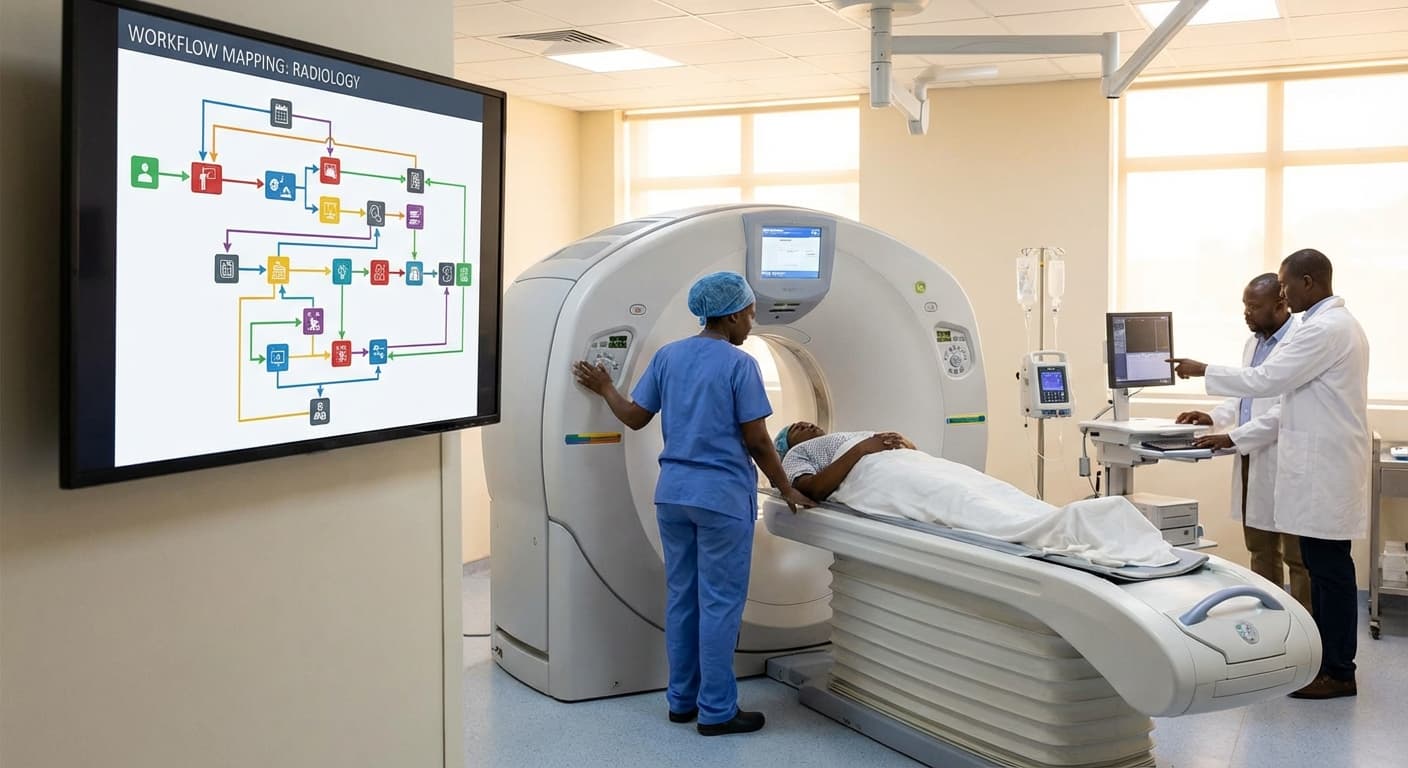
Department Workflow Mapping Service (Radiology/ICU/OT/Lab/Dialysis) in South Africa
Engineering Excellence & Technical Support
Department Workflow Mapping Service (Radiology/ICU/OT/Lab/Dialysis) High-standard technical execution following OEM protocols and local regulatory frameworks.
Streamlined Patient Flow Across Critical Departments
Our service visually maps the intricate patient journeys through Radiology, ICU, OT, Lab, and Dialysis, identifying bottlenecks and optimizing resource allocation for faster, more efficient care delivery in South African healthcare facilities.
Enhanced Interdepartmental Communication & Collaboration
We map the communication pathways and data handoffs between Radiology, ICU, OT, Lab, and Dialysis, fostering seamless information exchange and reducing errors, crucial for effective patient management in the South African context.
Robust Compliance and Auditing Support
Our detailed workflow maps provide a clear audit trail for regulatory compliance and quality assurance within Radiology, ICU, OT, Lab, and Dialysis departments, ensuring adherence to South African healthcare standards.
What Is Department Workflow Mapping Service (Radiology/icu/ot/lab/dialysis) In South Africa?
Department Workflow Mapping Service, within the context of South African healthcare facilities such as Radiology, Intensive Care Units (ICUs), Operating Theatres (OTs), Laboratories, and Dialysis units, is a systematic process designed to document, analyze, and optimize the sequence of activities, information flow, and resource utilization involved in delivering departmental services. This service aims to identify inefficiencies, bottlenecks, redundancies, and potential areas for improvement within existing operational procedures. The core of the service involves detailed observation, stakeholder interviews, data collection, and process modeling to create a comprehensive visual representation of how work is currently performed.
| Who Needs This Service? | Typical Use Cases |
|---|---|
| Radiology Departments: Seeking to improve patient throughput, report turnaround times, imaging protocol adherence, and equipment utilization. Addressing challenges in imaging scheduling, image acquisition efficiency, and image interpretation workflows. | Optimizing the patient journey from referral to final report delivery. Improving the efficiency of contrast media administration and management. Streamlining PACS (Picture Archiving and Communication System) utilization. Reducing imaging repeat rates. |
| Intensive Care Units (ICUs): Aiming to enhance patient care delivery, reduce adverse events, optimize bed management, and improve inter-disciplinary communication. Focusing on admission, treatment, monitoring, and discharge processes. | Mapping the patient handover process between different care teams. Analyzing and improving critical care pathway adherence. Optimizing the use of specialized monitoring equipment. Streamlining communication between nursing, medical, and allied health professionals. |
| Operating Theatres (OTs): Focused on maximizing surgical efficiency, reducing cancellations and delays, ensuring patient safety, and optimizing resource allocation (personnel, equipment, sterile supplies). | Mapping the pre-operative, intra-operative, and post-operative patient journey. Analyzing surgical scheduling and room turnover times. Optimizing sterile processing and supply chain management for surgical instruments. Improving communication and coordination among the surgical team. |
| Laboratories (Pathology/Microbiology/Hematology, etc.): Striving to enhance sample turnaround times, reduce errors, improve quality control, and optimize laboratory workflow from sample reception to result reporting. | Mapping the process from sample collection to final report generation. Optimizing analytical workflow for different test types. Improving sample accessioning and tracking systems. Streamlining quality assurance procedures. |
| Dialysis Units: Seeking to improve patient scheduling, treatment efficiency, equipment utilization, and patient safety during dialysis sessions. Addressing logistical challenges in patient transport, machine preparation, and post-treatment procedures. | Mapping the patient's journey from arrival to departure from the dialysis unit. Optimizing dialysis machine allocation and scheduling. Improving the efficiency of pre-dialysis preparation and post-dialysis recovery. Streamlining management of consumables and medications. |
| Healthcare Facility Management and Administration: Seeking to improve overall operational efficiency, reduce costs, enhance patient satisfaction, and ensure compliance with regulatory standards across multiple departments. | Benchmarking departmental workflows against industry best practices. Identifying opportunities for shared services or centralized functions. Developing strategies for digital transformation and technology adoption. Improving resource planning and allocation across departments. |
Key Components of Department Workflow Mapping Service:
- Process Discovery and Documentation: Detailed mapping of all steps, decision points, and interdependencies within a specific departmental workflow (e.g., patient admission to ICU, image acquisition and reporting in Radiology, surgical procedure execution in OT, sample processing and result generation in a Lab, patient preparation and dialysis treatment).
- Stakeholder Engagement: Conducting structured interviews and workshops with clinical staff (doctors, nurses, technicians, radiographers), administrative personnel, and management to gain comprehensive insights into current practices, pain points, and perceived opportunities.
- Data Collection and Analysis: Gathering quantitative and qualitative data related to cycle times, throughput, resource allocation (personnel, equipment, consumables), error rates, and patient/sample turnaround times.
- Bottleneck Identification: Pinpointing areas within the workflow where delays or inefficiencies impede the smooth and timely delivery of services.
- Root Cause Analysis: Investigating the underlying reasons for identified bottlenecks and inefficiencies using methodologies like the '5 Whys' or Ishikawa diagrams.
- Process Modeling and Visualization: Creating visual representations of the workflow using standard notation (e.g., BPMN - Business Process Model and Notation) to facilitate understanding and communication.
- Recommendation Development: Proposing specific, actionable recommendations for process improvement, automation, technology integration, policy changes, or staff training.
- Implementation Support (Optional): Assisting healthcare facilities in the implementation of recommended changes and monitoring their effectiveness.
- Continuous Improvement Framework Integration: Establishing mechanisms for ongoing monitoring and refinement of the mapped workflows.
Who Needs Department Workflow Mapping Service (Radiology/icu/ot/lab/dialysis) In South Africa?
In South Africa's healthcare landscape, optimizing operational efficiency within specialized departments is paramount. A Department Workflow Mapping Service offers a crucial solution for identifying bottlenecks, streamlining processes, and ultimately enhancing patient care. This service is particularly vital for high-demand, complex departments that are central to patient outcomes and hospital resource utilization.
| Department | Specific Challenges Addressed by Workflow Mapping | Key Stakeholders Involved | Potential Benefits |
|---|---|---|---|
| Radiology Department | Long patient wait times for imaging appointments and report turnaround; inefficient equipment utilization; staff scheduling conflicts; communication gaps between radiologists, technicians, and referring physicians. | Radiologists, Radiographers, Sonographers, MRI/CT Technicians, Medical Record Clerks, Department Managers, IT Support, Referring Physicians. | Reduced patient wait times, increased throughput, optimized equipment utilization, improved report turnaround, enhanced communication, cost savings through efficiency. |
| Intensive Care Unit (ICU) | Complex patient flow management; inter-departmental communication breakdowns (e.g., with wards, labs, pharmacies); staff workload imbalances; medication administration errors; delays in critical procedures or consultations. | Intensivists, ICU Nurses, Respiratory Therapists, Pharmacists, Physiotherapists, Clerks, Unit Managers, IT Support, Bed Managers. | Improved patient outcomes, reduced length of stay, enhanced patient safety, better resource allocation, reduced staff burnout, streamlined critical care delivery. |
| Operating Theatre (OT) Suites | Scheduling inefficiencies and theatre downtime; long patient preparation and recovery times; supply chain management issues for instruments and consumables; communication breakdowns between surgical teams, anaesthetists, and nursing staff; compliance with infection control protocols. | Surgeons, Anaesthetists, Scrub Nurses, Circulating Nurses, Theatre Technicians, Sterilization Staff, Porters, Department Managers, Supply Chain Managers. | Increased theatre utilization, reduced cancellations, improved patient safety, optimized surgical scheduling, reduced costs, streamlined patient flow through the surgical pathway. |
| Laboratory Services | Specimen collection and processing delays; sample tracking and management issues; equipment calibration and maintenance inefficiencies; turnaround time for test results; quality control process optimization; communication between lab, clinicians, and patients. | Pathologists, Medical Technologists, Phlebotomists, Laboratory Assistants, IT Support, Department Managers, Clinicians, Courier Services. | Faster diagnostic turnaround times, improved accuracy of results, reduced errors, optimized laboratory resource utilization, enhanced patient satisfaction, better cost management. |
| Dialysis Units | Patient scheduling for dialysis sessions; management of machine availability and maintenance; staff allocation and workload balancing; coordination with other medical specialists; medication and fluid management; patient throughput and bed occupancy. | Nephrologists, Dialysis Nurses, Renal Technicians, Patient Care Assistants, Ward Clerks, Department Managers, Biomedical Engineers, Social Workers. | Improved patient access to dialysis, optimized machine utilization, reduced patient wait times, enhanced patient comfort and safety, better staff efficiency, streamlined care coordination. |
Target Customers & Departments for Workflow Mapping in South Africa
- {"items":["Public Hospitals (National, Provincial, District)","Private Hospital Groups","Tertiary and Specialist Hospitals","Academic Medical Centers","Large Clinic Groups with specialized units","Healthcare Consulting Firms","Government Health Departments (for system-wide improvements)"],"title":"Target Customers"}
- {"items":["Radiology Department","Intensive Care Unit (ICU)","Operating Theatre (OT) Suites","Laboratory Services","Dialysis Units"],"title":"Key Departments Benefiting from Workflow Mapping"}
Department Workflow Mapping Service (Radiology/icu/ot/lab/dialysis) Process In South Africa
This document outlines the typical workflow for a Department Workflow Mapping Service (DWMS) focused on healthcare departments such as Radiology, Intensive Care Unit (ICU), Operating Theatre (OT), Laboratory, and Dialysis within the South African context. The service aims to analyze, document, and optimize existing processes to improve efficiency, reduce errors, enhance patient safety, and support regulatory compliance.
| Phase | Key Activities | Description | Key Deliverables/Outcomes |
|---|---|---|---|
| 1. Inquiry and Scoping | Initial Contact, Needs Assessment, Proposal Development, Contract Agreement | The process begins with an inquiry from a healthcare facility (hospital, clinic) in South Africa seeking to optimize a specific department's workflow. This involves understanding their current challenges, objectives, and the scope of the project. A detailed proposal is then created outlining the methodology, timeline, resources, and costs. Upon agreement, a formal contract is signed. | Clear understanding of project scope and objectives, Signed contract, Defined project team (client and service provider) |
| 2. Initial Assessment and Data Gathering | Kick-off Meeting, Stakeholder Interviews, Observation, Document Review, Data Collection (e.g., patient flow, turnaround times) | A kick-off meeting is held with the client's project team to formally start the engagement. Key stakeholders (doctors, nurses, technicians, administrators, patients if applicable) are interviewed to gather insights into current practices, pain points, and desired outcomes. Direct observation of the department in action and review of existing SOPs, protocols, and performance data are conducted. This phase aims to build a foundational understanding of the 'as-is' state. | Comprehensive understanding of current processes, Identification of key stakeholders, Raw data and initial observations |
| 3. Workflow Analysis and Documentation | Process Mapping (e.g., using BPMN), Flowchart Creation, Sequence Diagramming, Identifying Roles and Responsibilities, Documenting Inputs and Outputs | Using the gathered data, the service provider creates detailed visual representations of the department's workflows. This typically involves creating flowcharts, sequence diagrams, and utilizing Business Process Model and Notation (BPMN). Each step in the process is documented, including the actors involved, decision points, information flow, and physical movement of patients, samples, or equipment. This phase focuses on accurately depicting the current state. | Detailed 'as-is' workflow maps, Documented Standard Operating Procedures (SOPs) for current processes, Identified actors and their roles |
| 4. Identification of Bottlenecks and Improvement Opportunities | Gap Analysis, Root Cause Analysis, Benchmarking (internal/external), Identifying Inefficiencies, Waste Identification (e.g., waiting, rework), Risk Assessment | The documented workflows are analyzed to identify areas of inefficiency, delays, redundant steps, potential errors, and safety risks. Root cause analysis is employed to understand why these issues occur. Benchmarking against best practices (within the facility or in similar South African institutions) may be performed. This phase is crucial for pinpointing specific areas for improvement. | List of identified bottlenecks and inefficiencies, Root cause analysis reports, Areas for potential optimization highlighted |
| 5. Recommendation Development and Reporting | Designing 'To-Be' Workflows, Developing Actionable Recommendations, Cost-Benefit Analysis, Presentation of Findings and Recommendations, Final Report | Based on the analysis, the service provider designs optimized 'to-be' workflows that address the identified issues. These recommendations are detailed and actionable, often including suggestions for technology adoption, process redesign, staff training, or policy changes. A cost-benefit analysis might be conducted for proposed solutions. The findings and recommendations are then presented to the client in a comprehensive report, often followed by a presentation. | 'To-be' workflow designs, Detailed recommendations for process improvement, Final project report with executive summary and technical appendices |
| 6. Implementation Support (Optional) | Project Management for Implementation, Training and Change Management, Pilot Testing, System Integration Support | If the client opts for implementation support, the DWMS provider assists in rolling out the new workflows. This can include project management, facilitating training sessions for staff on new processes or systems, managing pilot testing phases, and providing support for the integration of new technologies or software. | Successful implementation of new workflows, Trained staff, Pilot test results and feedback |
| 7. Monitoring and Evaluation (Optional) | Performance Monitoring, Data Collection on New KPIs, Feedback Mechanisms, Refinement of Processes | To ensure the sustained success of the implemented changes, the service provider can offer ongoing monitoring and evaluation. This involves tracking key performance indicators (KPIs) related to the improved workflows, gathering feedback from staff and patients, and making further refinements to the processes as needed. This phase ensures continuous improvement. | Performance dashboards, Post-implementation evaluation report, Recommendations for ongoing optimization |
Department Workflow Mapping Service Process (South Africa)
- Phase 1: Inquiry and Scoping
- Phase 2: Initial Assessment and Data Gathering
- Phase 3: Workflow Analysis and Documentation
- Phase 4: Identification of Bottlenecks and Improvement Opportunities
- Phase 5: Recommendation Development and Reporting
- Phase 6: Implementation Support (Optional)
- Phase 7: Monitoring and Evaluation (Optional)
Department Workflow Mapping Service (Radiology/icu/ot/lab/dialysis) Cost In South Africa
The cost of Department Workflow Mapping Services for specialized hospital departments like Radiology, ICU, OT (Operating Theatre), Lab (Laboratory), and Dialysis in South Africa is highly variable. It depends on several key factors. These services are crucial for identifying inefficiencies, optimizing resource allocation, improving patient flow, and ultimately reducing operational costs and enhancing service delivery. The pricing is typically project-based and influenced by the complexity of the department, the scope of the mapping, the expertise of the consulting firm, and the duration of the engagement.
| Department Type | Estimated Cost Range (ZAR) | Typical Project Duration |
|---|---|---|
| Radiology | R70,000 - R250,000+ | 2 - 8 weeks |
| ICU (Intensive Care Unit) | R90,000 - R300,000+ | 3 - 10 weeks |
| OT (Operating Theatre) | R80,000 - R280,000+ | 3 - 9 weeks |
| Lab (Laboratory) | R60,000 - R200,000+ | 2 - 7 weeks |
| Dialysis | R50,000 - R180,000+ | 1.5 - 6 weeks |
Key Pricing Factors for Department Workflow Mapping Services in South Africa
- Department Size and Complexity: Larger departments with more intricate processes (e.g., a large tertiary hospital's ICU versus a smaller private clinic's lab) will naturally require more time and resources for mapping, thus increasing costs.
- Scope of the Mapping Project: Whether the service includes only current state mapping, future state design, or also implementation support and change management will significantly impact the price. Comprehensive projects are more expensive.
- Consulting Firm's Expertise and Reputation: Established firms with a proven track record in healthcare workflow optimization and specialized departmental experience will command higher fees than newer or less specialized consultancies.
- Data Collection and Analysis Methods: The sophistication of data gathering techniques (e.g., direct observation, interviews, system data extraction, process simulation) and the depth of analysis required will influence costs.
- Duration of the Project: The estimated time required to complete the mapping, analysis, and reporting phases is a direct driver of cost, often billed on a daily or weekly rate.
- Number of Stakeholders Involved: The more individuals and departments that need to be consulted and their input gathered, the more time-consuming and costly the process becomes.
- Technology and Software Used: If specialized workflow mapping software or simulation tools are employed, these licensing or usage costs may be factored into the overall price.
- Deliverables Required: The format and detail of the final reports, process maps, recommendations, and implementation plans will affect the effort and thus the cost.
- Location and Travel: For consultancies that need to travel to different hospital sites within South Africa, travel and accommodation expenses will be additional costs.
Affordable Department Workflow Mapping Service (Radiology/icu/ot/lab/dialysis) Options
Our Affordable Department Workflow Mapping Service provides essential process analysis and optimization for critical hospital departments, including Radiology, ICU, OT, Lab, and Dialysis. We offer a tiered approach to value, ensuring cost-effectiveness and tangible benefits for your institution. By clearly documenting and analyzing existing workflows, we identify bottlenecks, inefficiencies, and areas for improvement, leading to reduced errors, faster turnaround times, improved patient safety, and significant cost savings.
| Cost-Saving Strategy | Description | Example Application (Radiology) | Example Application (ICU) | Example Application (OT) | Example Application (Lab) | Example Application (Dialysis) |
|---|---|---|---|---|---|---|
| Bottleneck Identification & Resolution | Pinpointing and addressing the slowest steps in a process to improve overall throughput. | Reducing report turnaround time by optimizing image retrieval and radiologist assignment. | Streamlining patient admission and transfer protocols to maximize bed availability. | Minimizing equipment sterilization wait times and optimizing surgical scheduling. | Automating specimen tracking and reducing manual data entry errors. | Improving patient preparation and discharge processes to increase machine utilization. |
| Resource Optimization | Ensuring efficient allocation and utilization of staff, equipment, and materials. | Optimizing technologist scheduling to match imaging demand and reduce overtime. | Identifying underutilized equipment or staff, leading to re-allocation or reduced staffing needs. | Analyzing instrument usage patterns to ensure adequate inventory and minimize stockouts. | Implementing efficient inventory management for reagents and consumables. | Optimizing staff-to-patient ratios based on acuity and procedure volume. |
| Reduction in Rework & Errors | Minimizing mistakes that require redoing tasks, saving time, resources, and potentially preventing adverse events. | Improving order entry accuracy for imaging exams to reduce reschedules. | Standardizing critical care order sets to prevent medication errors. | Implementing pre-operative checklists to reduce surgical site infections and cancelations. | Ensuring accurate test result reporting and reducing the need for retesting. | Minimizing patient access complications through standardized protocols. |
| Improved Patient Throughput & Flow | Expediting the movement of patients through the department, leading to increased capacity and reduced wait times. | Decreasing patient wait times for diagnostic imaging. | Facilitating faster patient transfers within the ICU and to/from other units. | Reducing turnover time between surgical cases. | Accelerating the delivery of critical lab results to clinicians. | Optimizing patient scheduling for dialysis treatments, reducing waitlists. |
| Enhanced Communication & Collaboration | Streamlining information exchange between team members and departments to prevent delays and misunderstandings. | Improving communication between radiologists, referring physicians, and technologists. | Ensuring seamless handoffs between nursing shifts and inter-departmental transfers. | Facilitating better communication between surgeons, anesthesiologists, and nursing staff. | Establishing clear protocols for communication of critical lab values. | Improving communication between dialysis nurses, nephrologists, and other care providers. |
| Technology Integration Opportunities | Identifying opportunities to leverage technology for automation and efficiency. | Recommending integration of PACS with EMR for seamless image access. | Exploring automation for critical care monitoring data capture and alerting. | Suggesting advanced scheduling software for OT utilization. | Identifying opportunities for automated sample processing and data analysis. | Exploring integration of dialysis machine data with patient EMRs. |
Our Value Bundles
- {"title":"Essentials Bundle","description":"Ideal for departments seeking foundational workflow clarity. Includes current state mapping, basic bottleneck identification, and a high-level recommendations report."}
- {"title":"Optimization Bundle","description":"Builds upon the Essentials Bundle with in-depth analysis of identified bottlenecks, simulation of proposed changes, and a detailed implementation roadmap."}
- {"title":"Transformational Bundle","description":"Our most comprehensive offering. Includes all aspects of the Optimization Bundle plus integration with EMR/LIS/PACS systems, staff training modules, and ongoing performance monitoring framework development."}
Verified Providers In South Africa
In South Africa's burgeoning healthcare landscape, navigating the complexities of finding truly verified and reputable healthcare providers can be a challenge. Franance Health stands out as a beacon of trust and excellence, offering a meticulously curated network of medical professionals and facilities. Their commitment to rigorous credentialing and unwavering focus on patient well-being makes them the premier choice for individuals seeking reliable and high-quality healthcare services across the nation.
| Franance Health Credential | What it Means for You | Why it Matters |
|---|---|---|
| Verified Medical Licenses | All practitioners hold current and valid registration with the Health Professions Council of South Africa (HPCSA) or relevant statutory bodies. | Ensures legal and ethical practice. |
| Educational and Professional Qualifications | Thorough verification of degrees, diplomas, and specialized training from accredited institutions. | Guarantees competence and expertise. |
| Clean Disciplinary Records | Rigorous checks for any past or present disciplinary actions or sanctions. | Protects you from practitioners with a history of malpractice. |
| Peer Review and Reputation Assessment | Inclusion of feedback from peers and evaluation of professional reputation within the medical community. | Highlights consistently high-performing and respected professionals. |
| Adherence to Ethical Standards | Commitment to a strict code of conduct and professional ethics. | Ensures respectful and patient-centered care. |
Why Franance Health is Your Best Choice:
- Unparalleled Vetting Process: Franance Health employs an exhaustive credentialing procedure, meticulously verifying the qualifications, licenses, and professional standing of every provider within their network.
- Commitment to Patient Safety: Patient safety is paramount. Franance Health ensures all listed providers adhere to the highest standards of medical ethics and best practices.
- Comprehensive Network: Access a diverse range of specialists, general practitioners, and healthcare facilities, all vetted to meet stringent quality benchmarks.
- Transparency and Trust: Franance Health provides clear and accessible information about their providers, fostering an environment of transparency and building patient confidence.
- Focus on Quality Outcomes: Beyond credentials, Franance Health considers a provider's track record and commitment to delivering positive patient outcomes.
Scope Of Work For Department Workflow Mapping Service (Radiology/icu/ot/lab/dialysis)
This Scope of Work (SOW) outlines the services to be provided for the mapping of existing workflows within critical hospital departments. The objective is to gain a comprehensive understanding of current processes, identify inefficiencies, and provide a foundation for process improvement initiatives. This service is applicable to Radiology, Intensive Care Unit (ICU), Operating Theater (OT), Laboratory, and Dialysis departments.
| Department | Key Workflow Stages to Map | Potential Focus Areas for Improvement |
|---|---|---|
| Radiology | Patient Registration & Scheduling, Image Acquisition (e.g., X-ray, CT, MRI), Image Interpretation, Report Generation, PACS Archiving & Retrieval, Billing & Invoicing | Patient waiting times, equipment utilization, report turnaround time, inter-departmental communication (referring physicians), data entry duplication. |
| ICU | Patient Admission & Triage, Monitoring & Data Collection (vital signs, ventilators, etc.), Medication Administration, Procedures (intubation, central line insertion, etc.), Consultations & Team Huddles, Patient Transfer/Discharge, Documentation (EHR) | Nurse-to-patient ratios, critical equipment availability, communication among care teams, response times to critical events, medication error risks, documentation burden. |
| Operating Theater (OT) | Pre-operative Patient Assessment, Scheduling & Room Allocation, Patient Preparation & Anesthesia Induction, Surgical Procedure Execution, Post-operative Recovery, Instrument Sterilization & Management, Documentation (surgical reports, anesthesia records) | Operating room utilization, surgical team coordination, instrument availability and sterilization turnaround, patient flow (pre-op to recovery), adherence to surgical checklists, sterile field integrity. |
| Laboratory | Sample Collection & Identification, Sample Processing & Analysis, Quality Control Procedures, Result Validation & Verification, Report Generation & Distribution, Specimen Archiving & Disposal, Inventory Management (reagents, consumables) | Sample integrity and tracking, turnaround times for various tests, reagent expiry and stock management, inter-departmental communication (physicians, nurses), automation potential, quality assurance compliance. |
| Dialysis | Patient Scheduling & Preparation, Patient Assessment (pre & post-dialysis), Dialysis Treatment Procedure, Machine Setup & Disinfection, Medication Administration, Monitoring & Adverse Event Management, Patient Discharge & Follow-up, Documentation | Patient wait times, machine availability and maintenance, staffing ratios, medication administration accuracy, infection control protocols, patient comfort and safety, discharge process efficiency. |
Service Objectives
- Document existing departmental workflows in detail.
- Identify bottlenecks, redundancies, and areas for improvement within current processes.
- Visualize workflows for clear understanding and communication.
- Provide standardized documentation for future reference and analysis.
- Facilitate informed decision-making for process optimization and technology integration.
Service Level Agreement For Department Workflow Mapping Service (Radiology/icu/ot/lab/dialysis)
This Service Level Agreement (SLA) outlines the performance standards and commitments for the Department Workflow Mapping Service (DWMS) provided to the Radiology, Intensive Care Unit (ICU), Operating Theatre (OT), Laboratory, and Dialysis departments. It specifies response times for critical issues and defines uptime guarantees for the service.
| Service Component | Uptime Guarantee | Response Time (Critical Issue) | Response Time (Non-Critical Issue) |
|---|---|---|---|
| Workflow Mapping Platform/Tool Access | 99.5% Uptime | 2 Business Hours | 8 Business Hours |
| Consultation Services (Scheduled) | N/A (Scheduled) | N/A | As per agreed appointment |
| Documentation Delivery (Initial Draft) | N/A (Projected) | N/A | Within 5 Business Days of final consultation |
| Documentation Updates/Revisions | N/A (Projected) | N/A | Within 3 Business Days of request |
Scope of Service
- Workflow mapping consultation and documentation for Radiology.
- Workflow mapping consultation and documentation for Intensive Care Unit (ICU).
- Workflow mapping consultation and documentation for Operating Theatre (OT).
- Workflow mapping consultation and documentation for Laboratory.
- Workflow mapping consultation and documentation for Dialysis.
Frequently Asked Questions

Ready when you are
Let's scope your Department Workflow Mapping Service (Radiology/ICU/OT/Lab/Dialysis) in South Africa project in South Africa.

Scaling healthcare logistics and technical systems across the entire continent.