
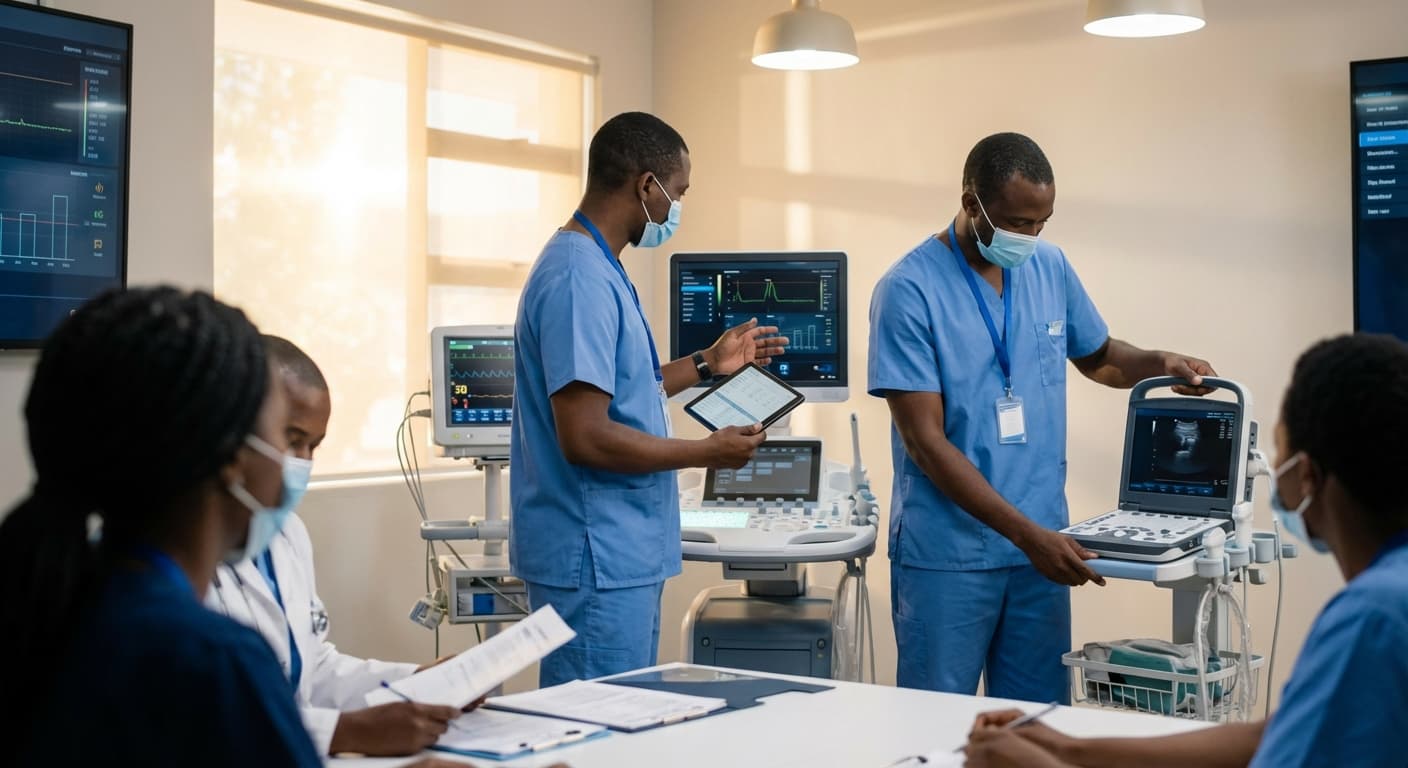
Clinical Needs Assessment for Medical Equipment in South Africa
Engineering Excellence & Technical Support
Clinical Needs Assessment for Medical Equipment High-standard technical execution following OEM protocols and local regulatory frameworks.
Demographic & Disease Burden Analysis
Leveraging national health statistics and demographic data to pinpoint areas with the highest prevalence of specific diseases and underserved populations. This ensures equipment procurement directly addresses the most pressing clinical needs and contributes to equitable healthcare access across South Africa's diverse regions.
Facility Infrastructure & Capacity Mapping
Conducting a granular assessment of existing healthcare facility infrastructure, including power supply reliability, water access, space constraints, and existing equipment maintenance capabilities. This critical step prevents procurement of equipment unsuitable for the local environment or beyond the operational capacity of the facility.
Healthcare Professional Skill & Training Gap Identification
Analyzing the current skill sets and training needs of healthcare professionals within targeted facilities and regions. This ensures procured medical equipment is aligned with the existing or attainable expertise of medical staff, supplemented by identifying necessary training programs to maximize equipment utilization and patient safety.
What Is Clinical Needs Assessment For Medical Equipment In South Africa?
A Clinical Needs Assessment (CNA) for medical equipment in South Africa is a systematic process designed to identify, prioritize, and justify the acquisition of specific medical technologies required to meet the current and future healthcare demands of a particular facility, district, or national health program. This involves a comprehensive evaluation of existing infrastructure, patient demographics, disease prevalence, clinical protocols, human resource capabilities, and budgetary constraints. The objective is to ensure that procured equipment is appropriate, cost-effective, sustainable, and aligns with national health policies and strategic objectives, ultimately aiming to improve patient outcomes and operational efficiency within the South African healthcare landscape.
| Who Needs a Clinical Needs Assessment? | Typical Use Cases in South Africa | |||||
|---|---|---|---|---|---|---|
| Public Healthcare Facilities: Provincial departments of health, district hospitals, community health centers, and academic hospitals seeking to upgrade or expand their medical equipment inventory. | Private Healthcare Providers: Hospitals, specialized clinics, and diagnostic centers planning new service lines or replacing aging equipment. | Non-Governmental Organizations (NGOs) and Faith-Based Organizations (FBOs): Healthcare providers operating in underserved areas requiring equipment for primary healthcare, maternal and child health, or specific disease programs. | Government Procurement Agencies: Bodies responsible for national or provincial tenders for large-scale medical equipment procurements. | International Development Partners and Donors: Organizations funding healthcare initiatives that require robust justification for equipment investments. | ||
| New Hospital or Clinic Development: Determining the complete spectrum of medical equipment required for a greenfield project or the establishment of a new healthcare service. | Equipment Replacement Programs: Identifying and prioritizing the replacement of obsolete, unserviceable, or inefficient medical devices. | Introduction of New Clinical Services: Assessing the equipment needs for specialized departments such as cardiology, oncology, radiology, or intensive care units. | Public Health Program Support: Equipping facilities to deliver specific interventions like HIV/AIDS management, tuberculosis control, or non-communicable disease screening. | Response to Epidemics or Pandemics: Rapid assessment and procurement of critical care equipment (e.g., ventilators, diagnostic kits, patient monitoring systems) during public health emergencies. | Infrastructure Upgrades and Modernization: Evaluating equipment requirements to complement renovations or technological advancements within existing facilities. | Rural and Underserved Area Healthcare Improvement: Targeted assessments to equip primary healthcare facilities and district hospitals in remote regions. |
Key Components of a Clinical Needs Assessment:
- Demand Analysis: Quantifying patient volumes, service utilization rates, and projected future needs based on epidemiological data and demographic trends.
- Service Gap Identification: Determining where current service delivery capabilities, particularly in relation to medical equipment, are insufficient to meet patient needs.
- Technology Evaluation: Assessing the suitability, efficacy, safety, and cost-effectiveness of potential medical technologies, considering local context, maintenance infrastructure, and user training requirements.
- Infrastructure and Resource Assessment: Evaluating existing facilities, power supply reliability, IT connectivity, and the availability of skilled personnel for operation, maintenance, and repair.
- Financial Feasibility Study: Estimating capital expenditure, operational costs, consumables, training, and ongoing maintenance requirements against available or attainable funding.
- Risk Assessment: Identifying potential challenges related to procurement, installation, training, maintenance, obsolescence, and user adoption.
- Prioritization Framework: Developing criteria and a methodology for ranking identified equipment needs based on clinical impact, urgency, equity, and resource availability.
- Stakeholder Consultation: Engaging with clinicians, administrators, biomedical engineers, procurement officers, and end-users to gather diverse perspectives and ensure buy-in.
Who Needs Clinical Needs Assessment For Medical Equipment In South Africa?
A clinical needs assessment for medical equipment in South Africa is a critical process designed to ensure that healthcare facilities acquire the right technology to meet their specific patient care demands, operational requirements, and budget constraints. This comprehensive evaluation goes beyond simple purchasing and delves into understanding the clinical workflows, patient demographics, disease prevalence, and existing infrastructure. It is essential for optimizing resource allocation, improving patient outcomes, reducing waste, and ensuring the long-term sustainability of healthcare services.
| Target Customer | Key Departments Involved | Primary Needs Addressed |
|---|---|---|
| Public Sector Hospitals (National and Provincial) | Inpatient Wards (Medical, Surgical, Paediatric, Geriatric), Outpatient Departments, Emergency Departments, Intensive Care Units (ICUs), Operating Theatres, Radiology, Pathology, Pharmacy, Rehabilitation Services, Administration, IT, Procurement | Upgrading outdated equipment, expanding capacity to meet growing patient numbers, equipping new facilities, addressing specific disease burdens (e.g., TB, HIV, NCDs), ensuring equitable access to essential technologies across the country. |
| Private Hospital Groups | Similar to Public Hospitals, with a strong emphasis on specialized services like Cardiology, Oncology, Neurology, Orthopaedics, Fertility, and Cosmetic Surgery departments. | Maintaining a competitive edge, adopting cutting-edge technologies for specialized procedures, enhancing patient comfort and safety, optimizing efficiency to manage costs and revenue, meeting the demands of higher-paying patient demographics. |
| Specialist Clinics and Day Hospitals | Specific to the specialty: e.g., Ophthalmology, Dermatology, Gastroenterology, Urology, Gynaecology, Cardiology, Dental. | Acquiring specialized diagnostic and therapeutic equipment, ensuring procedural efficiency, meeting specific patient throughput targets, adhering to regulatory standards for niche procedures. |
| Community Health Centers and Clinics | Primary Care Units, Maternity Sections, Minor Procedure Rooms, Basic Diagnostic Services (e.g., basic pathology, basic imaging). | Providing essential primary healthcare services, basic diagnostics and treatment, maternal and child health services, managing common chronic conditions, bridging the gap in access to care in underserved areas. |
| Tertiary and Quaternary Academic Hospitals | All specialized departments, including advanced research units, highly complex surgical suites, advanced imaging centers, and specialized ICUs. | Acquiring and maintaining state-of-the-art equipment for highly complex procedures, supporting medical research and training, providing advanced diagnostic and therapeutic capabilities, managing rare and complex diseases. |
| Non-Governmental Organizations (NGOs) involved in healthcare delivery | Varies widely based on the NGO's focus, but can include primary care units, mobile clinics, specialized treatment centers (e.g., for HIV/AIDS, TB, mental health). | Providing access to essential medical equipment in resource-limited settings, supporting targeted health interventions, ensuring equipment is robust, user-friendly, and maintainable in challenging environments. |
| Government Health Departments and Regulatory Bodies | Planning and Policy Divisions, Procurement Oversight Units, Quality Assurance and Licensing Departments. | Developing national health infrastructure plans, setting equipment standards and guidelines, ensuring compliance and quality control, facilitating equitable distribution of medical resources, identifying gaps in current provisions. |
Who Needs Clinical Needs Assessment for Medical Equipment in South Africa?
- Public Sector Hospitals (National and Provincial)
- Private Hospital Groups
- Specialist Clinics and Day Hospitals
- Community Health Centers and Clinics
- Tertiary and Quaternary Academic Hospitals
- Non-Governmental Organizations (NGOs) involved in healthcare delivery
- Medical Aid Schemes and Insurers (indirectly, through their support of facilities)
- Government Health Departments and Regulatory Bodies
Clinical Needs Assessment For Medical Equipment Process In South Africa
A clinical needs assessment for medical equipment in South Africa is a structured process designed to ensure that healthcare facilities acquire the right equipment to meet patient care demands and operational requirements. This workflow typically starts with an identified need or inquiry and culminates in the successful implementation and utilization of the equipment. The process is crucial for optimizing resource allocation, improving patient outcomes, and ensuring the sustainability of healthcare services.
| Stage | Description | Key Activities | Key Stakeholders | Deliverables/Outcomes |
|---|---|---|---|---|
| The process is initiated when a requirement for new or upgraded medical equipment is recognized. | Identifying a gap in current service provision, obsolescence of existing equipment, introduction of new clinical services, or recommendations from clinical staff. | Clinical staff (doctors, nurses, specialists), hospital management, department heads. | Formal request or documented need for assessment. |
| A preliminary evaluation to understand the scope and complexity of the need. | Defining the clinical area, patient population, existing infrastructure, budget considerations, and potential impact of the equipment. | Clinical users, biomedical engineers, hospital administrators, finance department. | Scope document, initial budget estimation, identification of potential challenges. |
| A thorough investigation into the specific clinical requirements and their justification. | Gathering data on patient demographics, disease prevalence, current treatment protocols, expected patient load, and desired clinical outcomes. Benchmarking against similar facilities. Identifying essential features and functionalities. | Clinical specialists, nurses, therapists, patient representatives, quality assurance personnel. | Clinical justification report, prioritized list of equipment needs, detailed functional requirements. |
| Translating clinical needs into precise technical specifications for the equipment. | Defining technical parameters, performance standards, safety features, compatibility requirements with existing systems (e.g., HIS, PACS), and maintenance considerations. Including user interface requirements. | Biomedical engineers, clinical users, IT specialists, procurement specialists. | Technical specifications document, performance criteria, safety standards compliance. |
| The process of acquiring the specified medical equipment through appropriate channels. | Developing tender documents, advertising tenders, evaluating bids based on technical merit, price, service, and supplier track record. Negotiating contracts and placing orders. Adhering to national and institutional procurement policies (e.g., National Treasury regulations). | Procurement department, finance department, legal department, clinical users, biomedical engineers. | Signed contract, purchase order, equipment sourced and en route. |
| Ensuring the equipment is correctly installed, tested, and ready for clinical use. | Site preparation, physical installation, calibration, functional testing, safety checks, and verification against specifications. Developing Standard Operating Procedures (SOPs) for use. | Biomedical engineers, service technicians (supplier), clinical users, safety officers. | Installed and commissioned equipment, documented test results, approved for clinical use. |
| Equipping healthcare professionals with the knowledge and skills to operate and maintain the equipment effectively. | Conducting comprehensive training sessions for clinical users, biomedical technicians, and maintenance staff. Providing user manuals and ongoing support. | Clinical users, biomedical engineers, training providers (supplier/internal), hospital educators. | Trained staff, updated competency records, accessible training materials. |
| Assessing the effectiveness and impact of the newly acquired equipment. | Monitoring equipment performance, patient outcomes, user satisfaction, and operational efficiency. Identifying any issues or areas for improvement. Collecting data for future needs assessments. | Clinical users, hospital management, biomedical engineers, quality improvement teams. | Performance reports, user feedback, impact assessment, identified lessons learned. |
| Ensuring the long-term functionality and cost-effectiveness of the equipment. | Implementing planned preventive maintenance schedules, managing spare parts inventory, budgeting for eventual replacement, and assessing total cost of ownership. Considering end-of-life disposal and environmental impact. | Biomedical engineering department, finance department, hospital management, procurement. | Maintenance plans, spare parts strategy, budget for future replacements, end-of-life plan. |
Workflow Stages of a Clinical Needs Assessment for Medical Equipment in South Africa
- Inquiry/Identification of Need
- Initial Assessment & Scoping
- Detailed Clinical Needs Analysis
- Equipment Specification Development
- Procurement Process
- Installation & Commissioning
- Training & Capacity Building
- Evaluation & Monitoring
- Sustainability & Lifecycle Management
Clinical Needs Assessment For Medical Equipment Cost In South Africa
This document outlines a clinical needs assessment for medical equipment costs in South Africa. It examines the key pricing factors influencing medical equipment acquisition and provides estimated cost ranges in South African Rand (ZAR). The assessment aims to equip healthcare providers and procurement managers with a better understanding of the financial landscape for essential medical devices, facilitating informed decision-making and strategic resource allocation.
| Equipment Category | Typical Units | Estimated Price Range (ZAR) | Key Considerations |
|---|---|---|---|
| Basic Diagnostic Equipment | Stethoscope, Sphygmomanometer, Otoscope | R 500 - R 5,000 | Brand reputation, build quality |
| Imaging Equipment (Entry-Level) | Portable Ultrasound (basic), X-ray Machine (mobile) | R 100,000 - R 500,000 | Resolution, portability, basic features |
| Imaging Equipment (Mid-Range) | Digital X-ray, CT Scanner (basic) | R 1,000,000 - R 5,000,000 | Image quality, throughput, manufacturer support |
| Imaging Equipment (High-End) | MRI Scanner, Advanced CT Scanner | R 5,000,000 - R 50,000,000+ | Field strength, AI capabilities, specific applications |
| Patient Monitoring | Vital Signs Monitor (basic), ECG Machine | R 5,000 - R 50,000 | Number of parameters, display clarity, portability |
| Critical Care Monitoring | ICU Ventilator, Multi-parameter ICU Monitor | R 100,000 - R 1,000,000+ | Modes of ventilation, advanced waveform analysis, connectivity |
| Surgical Instruments | Basic Surgical Set, Laparoscopic Instruments | R 1,000 - R 50,000 | Material quality, precision, specific procedures |
| Surgical Equipment | Electrosurgical Unit, Operating Table | R 20,000 - R 500,000 | Power output, features, adjustability |
| Laboratory Equipment | Microscope, Centrifuge, Basic Haematology Analyzer | R 10,000 - R 200,000 | Throughput, automation, specific tests |
| Laboratory Equipment (Advanced) | Clinical Chemistry Analyzer, PCR Machine | R 200,000 - R 2,000,000+ | Testing capacity, accuracy, reagent compatibility |
| Dental Equipment | Dental Chair (basic), Dental X-ray | R 30,000 - R 300,000 | Ergonomics, digital imaging capabilities |
| Rehabilitation Equipment | Treadmill (therapy), Exercise Bike | R 5,000 - R 50,000 | Adjustability, safety features |
Key Pricing Factors for Medical Equipment in South Africa
- Brand and Manufacturer Reputation: Established global brands often command higher prices due to perceived quality, reliability, and after-sales support. Local manufacturers might offer more competitive pricing.
- Technology and Features: Advanced features, innovative technologies, and higher precision equipment will naturally be more expensive. Basic vs. sophisticated models significantly impact cost.
- Country of Origin and Import Duties/Taxes: Equipment imported from countries with high manufacturing costs or subject to significant import duties and VAT in South Africa will be more expensive. Local manufacturing or agreements can mitigate these costs.
- Supplier and Distributor Margins: The profitability sought by importers, distributors, and local suppliers forms a significant part of the final price.
- Warranty and After-Sales Service Agreements: Comprehensive warranties, extended service plans, and readily available spare parts add to the initial cost but can reduce long-term operational expenses.
- Training and Installation Costs: Specialized training for medical staff and professional installation services are often bundled into the purchase price or billed separately.
- Regulatory Compliance and Certifications: Equipment meeting stringent South African health regulations (e.g., SAHPRA) and international standards (e.g., CE, FDA) may have higher development and manufacturing costs.
- Volume and Bulk Purchasing: Significant discounts can often be negotiated for bulk purchases, particularly for larger hospital groups or government tenders.
- Currency Exchange Rates: For imported equipment, fluctuations in the ZAR against major currencies (USD, EUR) directly impact the landed cost.
- Maintenance and Consumable Costs: While not direct purchase prices, the ongoing costs of maintenance, calibration, and necessary consumables (e.g., reagents, disposables) should be factored into the total cost of ownership.
- Economic Conditions and Inflation: General economic health and inflation rates in South Africa can influence pricing over time.
- Condition (New vs. Refurbished/Used): The option of purchasing refurbished or used equipment can offer substantial cost savings, though it may come with a shorter warranty or higher risk.
Affordable Clinical Needs Assessment For Medical Equipment Options
This guide outlines strategies for conducting affordable clinical needs assessments for medical equipment, emphasizing value bundles and cost-saving approaches. A thorough needs assessment is crucial to ensure that procured equipment aligns with clinical requirements, patient care goals, and budget constraints. By understanding the interplay of equipment functionality, service, training, and consumables, healthcare facilities can make informed decisions that maximize value and minimize long-term expenditure. Leveraging value bundles and implementing smart procurement strategies are key to achieving these objectives without compromising the quality of care.
| Cost-Saving Strategy | Description | Example |
|---|---|---|
| Value Bundles | Procuring a package of equipment, services (installation, training, maintenance), and sometimes consumables from a single vendor at a discounted rate compared to purchasing each component separately. | A hospital purchasing an MRI machine that includes installation, a 5-year service contract, and initial training for radiology staff as a single package. |
| Leasing vs. Purchasing | Evaluating the financial implications of leasing equipment for a fixed period versus outright purchase, especially for rapidly evolving technology. | A clinic leasing an ultrasound machine for 3 years to access the latest technology without a large upfront capital investment. |
| Refurbished Equipment | Acquiring high-quality, pre-owned medical equipment that has been professionally inspected, repaired, and certified. This can offer significant cost savings while maintaining performance. | A smaller hospital purchasing a refurbished ventilator that has undergone rigorous testing and certification by a reputable supplier. |
| Negotiate Service Contracts | Actively negotiating the terms and pricing of service and maintenance agreements to ensure competitive rates and comprehensive coverage. | A procurement team obtaining multiple quotes for service contracts and negotiating a longer-term agreement for a 15% discount. |
| Bulk Purchasing/Group Purchasing Organizations (GPOs) | Leveraging the purchasing power of multiple institutions or joining a GPO to secure better pricing through collective buying. | A network of community hospitals joining a GPO to collectively purchase anesthesia machines at a reduced price. |
| Phased Implementation | Introducing new equipment in stages to manage budget flow and allow for operational adjustments, rather than a single, large capital outlay. | A new diagnostic imaging center acquiring essential imaging equipment first and planning for additional specialized units in the following fiscal year. |
| Standardization | Adopting a standardized set of equipment across different departments or facilities to simplify training, maintenance, and spare parts inventory. | A healthcare system standardizing on one brand of infusion pumps to streamline maintenance and reduce the variety of training programs needed. |
| Remote Diagnostics and Support | Prioritizing equipment that offers advanced remote diagnostic capabilities to reduce the need for on-site technician visits and associated travel costs. | Selecting a CT scanner that allows for remote troubleshooting and software updates, minimizing on-site service calls. |
Key Components of an Affordable Clinical Needs Assessment
- Define Clear Clinical Objectives: What specific patient populations, procedures, or diagnostic needs will the equipment address?
- Assess Current Infrastructure and Workflow: How will the new equipment integrate with existing systems and processes? Identify potential bottlenecks or required modifications.
- Evaluate User Requirements: Involve clinicians, technicians, and support staff to understand their operational needs, ease of use, and desired features.
- Analyze Performance and Reliability Data: Research the track record of potential equipment vendors and their devices. Consider total cost of ownership, not just the initial purchase price.
- Quantify Service and Support Needs: Determine the required maintenance, repair, and technical support levels. Factor in response times and availability of spare parts.
- Estimate Consumable and Accessory Costs: Identify all recurring expenses associated with the equipment's operation.
- Project Training Requirements: Budget for initial and ongoing training for all relevant personnel.
Verified Providers In South Africa
In South Africa, navigating the healthcare landscape to find reliable and quality providers can be a daunting task. Franance Health has emerged as a leading force, establishing itself through rigorous credentialing processes and a commitment to excellence. Their network comprises verified healthcare professionals and facilities that not only meet but often exceed industry standards, ensuring patients receive the highest caliber of care. Choosing a Franance Health verified provider means opting for peace of mind, knowing you are in the hands of experts who have undergone thorough vetting.
| Credential Type | Verification Focus | Benefit to Patients |
|---|---|---|
| Professional Licenses & Certifications | Ensuring legal and educational qualifications are current and valid. | Confirms provider has met minimum educational and competency requirements. |
| Clinical Expertise & Experience | Assessing years of practice, specialized training, and procedural competency. | Guarantees providers have the practical skills for specific medical needs. |
| Professional Standing & Reputation | Background checks, including disciplinary actions and malpractice history. | Mitigates risk by identifying providers with a history of ethical or professional issues. |
| Facility Accreditation (where applicable) | Evaluating adherence to safety, quality, and operational standards. | Ensures medical facilities meet stringent benchmarks for patient care and safety. |
| Continuing Medical Education (CME) | Confirming providers stay updated with the latest medical advancements. | Indicates a commitment to ongoing learning and evidence-based practice. |
Why Franance Health Credentials Represent the Best Choice:
- Rigorous Vetting Process: Franance Health employs a multi-faceted verification system that scrutinizes professional qualifications, licenses, certifications, and work history of all providers.
- Commitment to Quality Standards: Verified providers adhere to strict clinical protocols, ethical guidelines, and patient care standards, ensuring consistent, high-quality service delivery.
- Enhanced Patient Safety: The credentialing process includes checks for disciplinary actions and malpractice history, prioritizing patient safety above all else.
- Access to Specialized Expertise: Franance Health's network often includes highly specialized practitioners and state-of-the-art facilities, providing access to advanced medical treatments and services.
- Improved Healthcare Outcomes: By partnering with accredited and verified providers, patients are more likely to experience positive health outcomes and a reduced risk of medical errors.
- Streamlined Healthcare Experience: Franance Health aims to simplify the healthcare journey by connecting patients with trusted providers, reducing the burden of finding reliable care.
- Continuous Monitoring and Re-verification: Franance Health doesn't just verify once; they engage in ongoing monitoring and periodic re-verification to ensure providers maintain their high standards over time.
Scope Of Work For Clinical Needs Assessment For Medical Equipment
This document outlines the Scope of Work (SOW) for conducting a comprehensive clinical needs assessment for medical equipment. The primary objective is to identify and prioritize the medical equipment requirements across various clinical departments, ensuring alignment with patient care needs, technological advancements, and budgetary constraints. This assessment will form the basis for future procurement and upgrade decisions.
| Phase | Activities | Deliverables | Timeline (Indicative) |
|---|---|---|---|
| Phase 1: Planning & Preparation | Define scope, identify stakeholders, develop assessment methodology, create questionnaires and interview guides. | Project Plan, Stakeholder Register, Data Collection Tools. | 2 Weeks |
| Phase 2: Data Collection | Conduct interviews with clinical staff, review existing equipment inventory, analyze utilization data, gather patient demographic and outcome data. | Interview Transcripts, Existing Equipment Audit Report, Utilization Data Summary. | 4 Weeks |
| Phase 3: Analysis & Needs Identification | Analyze collected data, identify clinical gaps, determine equipment needs per department, assess technological obsolescence, evaluate replacement vs. upgrade options. | Gap Analysis Report, Departmental Equipment Needs List, Technology Assessment. | 3 Weeks |
| Phase 4: Specification Development | Define technical specifications for prioritized equipment, research available technologies, consider interoperability, user interface, and maintenance requirements. | Draft Technical Specifications for Prioritized Equipment. | 3 Weeks |
| Phase 5: Reporting & Recommendations | Consolidate findings, develop comprehensive needs assessment report, provide recommendations for procurement, training, and budgeting, present findings to stakeholders. | Final Clinical Needs Assessment Report, Prioritized Equipment List with Standard Specifications, Implementation Roadmap. | 2 Weeks |
Key Objectives of the Clinical Needs Assessment
- Identify current and future clinical demands for medical equipment.
- Evaluate the performance and suitability of existing medical equipment.
- Determine gaps in current medical equipment inventory.
- Prioritize equipment needs based on clinical impact, patient safety, and operational efficiency.
- Gather data on desired technical specifications and functionalities for new/replacement equipment.
- Assess user (clinician) feedback and training requirements.
- Provide recommendations for a phased procurement and upgrade strategy.
- Contribute to the development of a long-term medical equipment management plan.
Service Level Agreement For Clinical Needs Assessment For Medical Equipment
This Service Level Agreement (SLA) outlines the commitment to providing timely and reliable service for Clinical Needs Assessment for Medical Equipment. It defines the response times for reported issues and guarantees a minimum level of service availability (uptime) for the assessment process.
| Service Component | Severity Level | Response Time Target | Resolution Target | Uptime Guarantee |
|---|---|---|---|---|
| Initial Needs Identification & Requirement Gathering | Critical Issue | 2 Business Hours | 8 Business Hours | 99.5% |
| Initial Needs Identification & Requirement Gathering | Major Issue | 4 Business Hours | 24 Business Hours | 99.5% |
| Initial Needs Identification & Requirement Gathering | Minor Issue | 8 Business Hours | 48 Business Hours | 99.5% |
| Functional Specification Development | Critical Issue | 3 Business Hours | 12 Business Hours | 99.5% |
| Functional Specification Development | Major Issue | 6 Business Hours | 36 Business Hours | 99.5% |
| Functional Specification Development | Minor Issue | 12 Business Hours | 72 Business Hours | 99.5% |
| Technical Specification & Procurement Support | Critical Issue | 4 Business Hours | 16 Business Hours | 99.5% |
| Technical Specification & Procurement Support | Major Issue | 8 Business Hours | 48 Business Hours | 99.5% |
| Technical Specification & Procurement Support | Minor Issue | 16 Business Hours | 96 Business Hours | 99.5% |
| Assessment Reporting & Documentation | Critical Issue | 2 Business Hours | 8 Business Hours | 99.5% |
| Assessment Reporting & Documentation | Major Issue | 4 Business Hours | 24 Business Hours | 99.5% |
| Assessment Reporting & Documentation | Minor Issue | 8 Business Hours | 48 Business Hours | 99.5% |
| Platform/Tool Access & Functionality (if applicable) | Critical Issue | 1 Business Hour | 4 Business Hours | 99.8% |
| Platform/Tool Access & Functionality (if applicable) | Major Issue | 2 Business Hours | 12 Business Hours | 99.8% |
| Platform/Tool Access & Functionality (if applicable) | Minor Issue | 4 Business Hours | 24 Business Hours | 99.8% |
Key Definitions
- Clinical Needs Assessment: The process of identifying and documenting the specific functional, performance, and technical requirements for medical equipment to meet the clinical needs of a healthcare facility or department.
- Service Request: Any formal communication received from the Client regarding an issue or query related to the Clinical Needs Assessment process.
- Critical Issue: A problem that significantly impairs the ability to perform the Clinical Needs Assessment, leading to a complete halt or major delays in the process.
- Major Issue: A problem that hinders a significant portion of the Clinical Needs Assessment but does not completely halt the process. Workarounds may be available but are inefficient.
- Minor Issue: A problem that causes inconvenience or affects a non-essential part of the Clinical Needs Assessment. The core assessment can still proceed.
- Uptime: The percentage of time the agreed-upon Clinical Needs Assessment services and associated platforms are available and functional for the Client's use.
Frequently Asked Questions

Ready when you are
Let's scope your Clinical Needs Assessment for Medical Equipment in South Africa project in South Africa.

Scaling healthcare logistics and technical systems across the entire continent.