
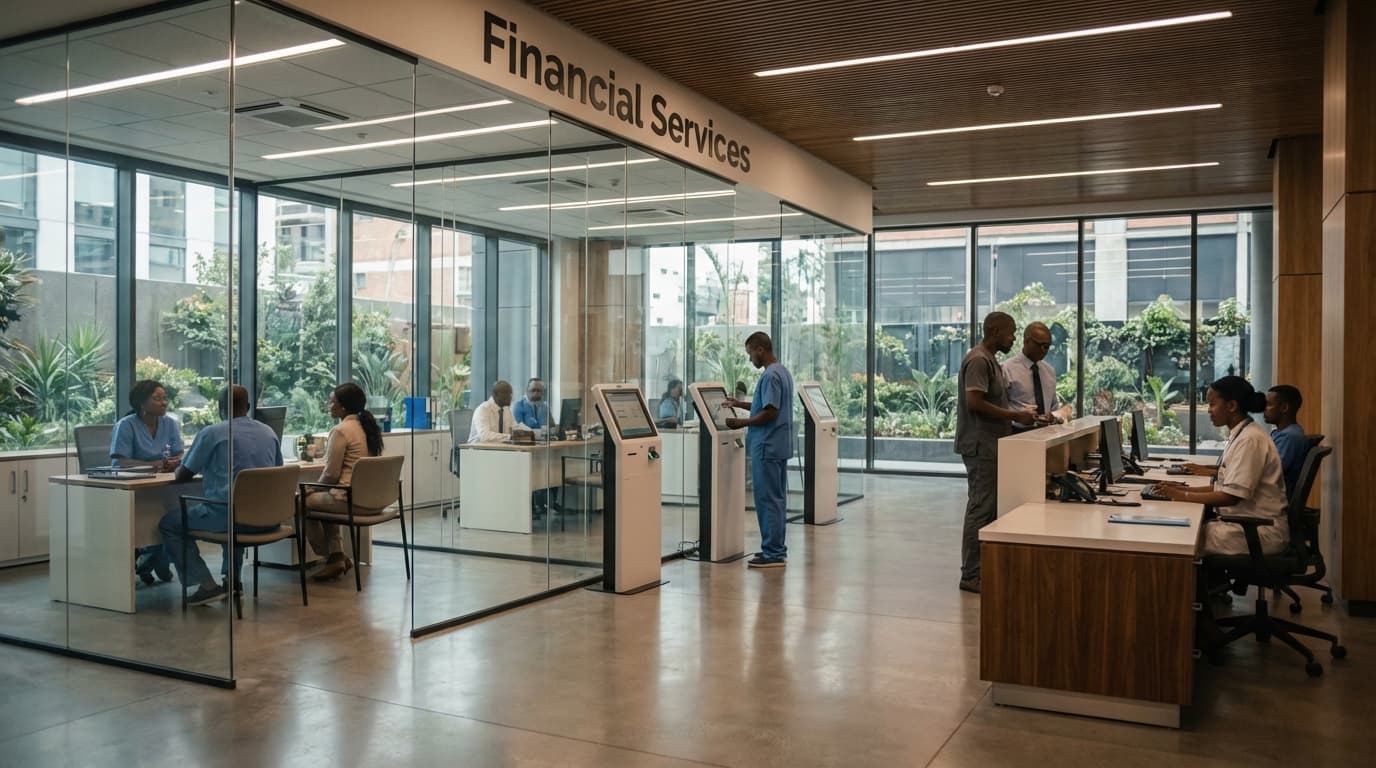
Medical Equipment Financing in South Africa
Engineering Excellence & Technical Support
Leasing and financing solutions for medical equipment High-standard technical execution following OEM protocols and local regulatory frameworks.
Tailored Financing Solutions
Access flexible financing options designed specifically for medical equipment procurement in South Africa, covering a wide range of healthcare providers and facility types.
Accelerated Acquisition
Expedite the acquisition of critical medical technology and machinery through our streamlined approval processes and rapid fund disbursement, ensuring minimal disruption to patient care.
Asset-Backed Security
Leverage your existing or new medical assets as collateral for competitive loan terms, optimizing your capital expenditure and preserving operational cash flow.
What Is Medical Equipment Financing In South Africa?
Medical Equipment Financing in South Africa refers to the provision of capital, typically through loans or leases, to healthcare providers for the acquisition, upgrade, or replacement of medical apparatus and technology. This service is structured to mitigate the significant upfront capital expenditure associated with procuring sophisticated medical devices, thereby enhancing a provider's capacity and service offering. The financing typically covers a broad spectrum of medical equipment, ranging from diagnostic imaging systems and surgical instrumentation to patient monitoring devices and laboratory analysers. It is a critical financial tool that facilitates the adoption of advancements in medical technology and ensures the continued operation and expansion of healthcare facilities within the South African context. The process generally involves a thorough assessment of the borrower's financial standing and the value of the equipment, with repayment structures tailored to the anticipated revenue streams generated by the financed assets.
| Beneficiary Group | Rationale for Need | Typical Use Cases |
|---|---|---|
| Hospitals (Public & Private): | High capital requirements for advanced diagnostic and therapeutic equipment; need to maintain competitive service offerings; expansion of services. | Acquisition of MRI scanners, CT scanners, linear accelerators, advanced surgical robots, intensive care unit (ICU) equipment, digital radiography systems. |
| Specialist Clinics & Practices: | Requirement for specialized diagnostic or treatment equipment to serve specific patient populations; upgrading outdated technology. | Purchase of endoscopy units, ophthalmology lasers, dermatological treatment devices, cardiac catheterization equipment, specialised laboratory analysers. |
| Diagnostic Laboratories: | Need for high-throughput, accurate, and automated diagnostic machinery; expansion of testing capabilities. | Acquisition of automated immunoassay systems, genetic sequencers, mass spectrometers, advanced haematology analysers. |
| Medical Device Distributors & Manufacturers: | Financing for their own inventory, demonstration units, or offering vendor financing to their clients. | Bulk purchase of equipment for resale, financing of capital equipment for demonstration purposes, offering end-user financing solutions. |
| Emerging Healthcare Providers: | Establishing new healthcare facilities and requiring a comprehensive suite of medical equipment to commence operations. | Outfitting entire new clinics or hospital wings, procuring essential life-support systems, setting up diagnostic capabilities. |
Key Aspects of Medical Equipment Financing in South Africa
- Capital Accessibility: Provides access to capital for high-cost medical equipment that might otherwise be financially prohibitive.
- Technology Adoption: Facilitates the integration of the latest medical technologies and innovations into clinical practice.
- Risk Mitigation: Transfers the financial risk of equipment obsolescence or underutilization to the financing provider (in lease agreements).
- Preservation of Working Capital: Allows healthcare institutions to retain their liquidity for operational expenses, staffing, and other critical functions.
- Flexible Repayment Structures: Offers various repayment schedules, including fixed monthly payments, step payments, or usage-based models, to align with cash flow projections.
- Ownership Options: Includes both outright purchase financing (loans) and leasing arrangements, offering flexibility in asset management and accounting treatment.
Who Needs Medical Equipment Financing In South Africa?
Medical equipment financing in South Africa is a crucial service catering to a diverse range of healthcare providers and institutions. It enables them to acquire essential, often expensive, medical technology without the burden of immediate capital outlay. This allows for improved patient care, expanded service offerings, and enhanced operational efficiency. The target customers are not just large hospitals, but also smaller clinics, specialized medical practices, and even individual medical professionals seeking to upgrade or acquire specific equipment.
| Customer Type | Key Departments/Needs | Examples of Equipment |
|---|---|---|
| Hospitals (Private & Public) | Diagnostic Imaging (Radiology, CT, MRI), Operating Theatres, Intensive Care Units (ICU), Emergency Departments, Laboratories, Renal Dialysis Units, Physiotherapy. | MRI scanners, CT scanners, X-ray machines, Ultrasound devices, Ventilators, Defibrillators, Anaesthesia machines, Dialysis machines, Endoscopes, Surgical lasers. |
| Specialized Clinics | Specific diagnostic and treatment equipment related to their specialty. | Cardiology: ECG machines, Echocardiography. Oncology: Radiation therapy equipment. Ophthalmology: Laser eye surgery machines, Slit lamps. |
| Day Clinics & Surgical Centers | Surgical equipment, anaesthesia, patient monitoring systems, recovery room equipment. | Surgical tables, Anaesthesia machines, Patient monitors, Sterilizers, Minor surgical instruments. |
| Medical Practices | General diagnostic tools, minor surgical equipment, specialized equipment for their field. | Blood pressure monitors, ECGs, Dermatoscopes, Dental chairs, X-ray units (dental), Audiometers. |
| Diagnostic Laboratories | Automated analyzers, microscopes, centrifuges, incubators. | Blood analyzers, haematology analyzers, immunoassay analyzers, PCR machines, CO2 incubators. |
| Rehabilitation Centers | Therapy equipment, mobility aids, diagnostic tools for assessment. | Treadmills, exercise bikes, hydrotherapy equipment, biofeedback devices, gait analysis systems. |
| Medical Training Institutions | Simulation equipment, anatomical models, functional medical equipment for practical training. | Simulators (surgical, anaesthesia), manikins, functional replicas of various medical devices. |
| Government Health Departments | Equipment for public hospitals, clinics, and mobile health units, often for primary healthcare and disease control. | Basic diagnostic equipment, maternal and child health equipment, community health kits, essential drug dispensing equipment. |
Target Customers & Departments for Medical Equipment Financing in South Africa:
- Hospitals (Public and Private)
- Specialized Clinics (e.g., Cardiology, Oncology, Radiology)
- Day Clinics and Surgical Centers
- Medical Practices (e.g., General Practitioners, Dentists, Optometrists)
- Diagnostic Laboratories
- Rehabilitation Centers
- Medical Training Institutions
- Government Health Departments and Agencies
Medical Equipment Financing Process In South Africa
The medical equipment financing process in South Africa involves a structured workflow to ensure that healthcare providers can acquire necessary equipment through various funding mechanisms. This process typically begins with an inquiry from a prospective client and concludes with the successful execution of the financing agreement and delivery of the equipment. The specific steps and entities involved can vary depending on the financing provider (e.g., banks, specialized finance companies, government grants) and the type of equipment being financed. However, a general workflow can be outlined.
| Stage | Description | Key Actors Involved | Typical Timeline |
|---|---|---|---|
| Prospective client (hospital, clinic, practitioner) expresses interest in financing specific medical equipment. Initial discussions to understand equipment needs, budget, and desired financing structure. | Client, Financing Provider (Sales/Business Development) | 1-3 Business Days |
| Client completes and submits a formal financing application, providing details about their practice, financial standing, and the intended equipment. This often includes requesting pro-forma invoices for the equipment. | Client, Financing Provider (Sales/Admin) | 2-5 Business Days |
| Financing provider reviews all submitted documents, including financial statements, registration documents, supplier quotations, and equipment specifications. Verification of information may occur. | Financing Provider (Underwriting/Compliance) | 3-7 Business Days |
| Detailed assessment of the client's creditworthiness, financial stability, and the risk associated with the loan. This includes analyzing credit history, cash flow projections, and the viability of the practice. | Financing Provider (Credit Department/Risk Analysts) | 5-10 Business Days |
| Based on the assessment, the financing provider extends a formal offer outlining the loan amount, interest rate, repayment terms, collateral requirements, and any other conditions. | Financing Provider (Underwriting/Sales) | 2-4 Business Days |
| Client reviews and accepts the financing offer. Legal agreements (loan agreement, security agreements, etc.) are drafted and signed by both parties. | Client, Financing Provider (Legal Department) | 5-15 Business Days (can be longer depending on legal review) |
| Upon signing of agreements and fulfillment of any pre-disbursement conditions (e.g., security registration), funds are disbursed, usually directly to the equipment supplier. The client then places the order for the equipment. | Financing Provider (Treasury/Operations), Client, Equipment Supplier | 2-7 Business Days |
| The procured equipment is delivered to the client's premises and installed. Commissioning and testing by the supplier ensure the equipment is functional and meets specifications. | Client, Equipment Supplier, Financing Provider (may require confirmation) | Variable (depends on equipment complexity) |
| Client begins making regular repayments as per the loan agreement. The financing provider monitors loan performance and may conduct periodic reviews or asset valuations. | Client, Financing Provider (Servicing Department) | Ongoing throughout loan term |
Medical Equipment Financing Workflow in South Africa
- Inquiry & Needs Assessment
- Application Submission
- Documentation Review & Verification
- Credit Assessment & Risk Analysis
- Proposal & Offer
- Acceptance & Agreement
- Disbursement & Equipment Procurement
- Installation & Commissioning
- Repayment & Asset Management
Medical Equipment Financing Cost In South Africa
Medical equipment financing in South Africa is a critical consideration for healthcare providers looking to acquire or upgrade essential medical devices. The cost of such financing is influenced by a multitude of factors, leading to a varied range of pricing in South African Rand (ZAR). Understanding these elements is crucial for budgeting and making informed financial decisions. The financing landscape includes traditional loans from banks, specialized medical equipment finance companies, and leasing options. Each comes with its own set of pricing structures and considerations.
| Financing Type | Typical Interest Rate Range (ZAR per annum) | Typical Term Range (Years) | Estimated Monthly Repayment Range (Illustrative for a ZAR 1,000,000 asset over 5 years) |
|---|---|---|---|
| Term Loan (Secured by Equipment) | 12% - 18% | 3 - 7 | ZAR 22,000 - ZAR 27,000 (highly dependent on exact rate and fees) |
| Finance Lease | 14% - 20% | 2 - 5 | ZAR 23,000 - ZAR 29,000 (includes implicit interest, residual value impacts) |
| Operating Lease | Not directly applicable as a 'rate'; monthly rental includes equipment use, maintenance, and often insurance. | 1 - 5 (shorter terms common) | Varies significantly based on equipment and inclusions; can be higher than loan repayments initially. |
| Specialized Medical Equipment Finance | 13% - 19% | 3 - 7 | ZAR 22,500 - ZAR 28,000 (often tailored, may have slightly higher rates for specialized risk) |
Key Pricing Factors for Medical Equipment Financing in South Africa
- Equipment Value: The outright purchase price of the medical equipment is the most significant determinant of financing costs. Higher value equipment will naturally incur higher loan or lease payments and interest charges.
- Financing Term (Duration): The length of the repayment period directly impacts monthly installments. Shorter terms usually mean higher monthly payments but less interest paid overall, while longer terms reduce monthly outlays but increase the total interest burden.
- Interest Rate: This is the cost of borrowing money, expressed as a percentage. South African interest rates are influenced by the South African Reserve Bank's (SARB) repo rate, inflation, and the borrower's creditworthiness. Rates can be fixed or variable.
- Borrower's Creditworthiness: A strong credit history, stable financial performance, and a proven track record for the healthcare institution will result in more favorable interest rates and terms. Conversely, a weaker credit profile will likely lead to higher rates and potentially more stringent requirements.
- Type of Financing: Whether it's a term loan, chattel mortgage, or a finance lease, each has a different structure for calculating costs and repayments.
- Residual Value (for Leases): In finance leases, the anticipated residual value of the equipment at the end of the lease term affects the monthly payments. A higher residual value generally leads to lower periodic payments.
- Insurance and Maintenance Costs: While not always directly part of the financing fee, some financing agreements may bundle insurance or require specific maintenance contracts, which add to the overall cost of ownership.
- Ancillary Fees: These can include origination fees, application fees, valuation fees, and early settlement penalties, which can add to the initial or ongoing costs.
- Economic Conditions: Broader economic factors in South Africa, such as inflation, currency fluctuations (especially if equipment is imported), and the general economic outlook, can influence lender risk appetite and therefore pricing.
- Supplier and Manufacturer Incentives: Sometimes, equipment manufacturers or their authorized suppliers may offer bundled financing deals or special promotions that can reduce the overall cost.
Affordable Medical Equipment Financing Options
Acquiring necessary medical equipment can be a significant investment for healthcare providers, whether established facilities or new startups. Fortunately, a variety of financing options exist to make this essential equipment accessible without straining budgets. This section explores affordable medical equipment financing, focusing on the advantages of value bundles and practical cost-saving strategies.
| Strategy | Description | Benefits | Considerations |
|---|---|---|---|
| Value Bundles | Purchasing equipment as part of a package deal that includes installation, training, maintenance, and consumables. Often offered by manufacturers or large equipment distributors. | Reduced overall cost, streamlined procurement, integrated support, predictable expenses. | Ensure all bundled components meet specific needs; compare bundle pricing against individual item costs. |
| Refurbished or Used Equipment | Acquiring pre-owned medical equipment that has been professionally inspected, serviced, and often comes with a warranty. | Significant cost savings compared to new equipment, often available from specialized vendors. | Thoroughly vet the vendor's reputation and warranty terms; ensure compatibility with existing systems. |
| Negotiate Bulk Discounts | Purchasing multiple pieces of equipment or a large quantity of supplies from a single vendor at a reduced price per unit. | Lower per-unit cost, simplified ordering process, stronger vendor relationship. | Assess actual need to avoid overstocking; ensure sufficient storage and inventory management. |
| Prioritize Essential Equipment | Focusing financing efforts on critical, high-impact equipment first and deferring less urgent purchases. | Preserves capital for core operations, allows for phased investment, reduces initial financial burden. | Develop a clear equipment acquisition plan with prioritized needs. |
| Explore Extended Warranties and Service Contracts Wisely | Evaluating the necessity and cost-effectiveness of extended warranties and service contracts based on equipment reliability and internal maintenance capabilities. | Can prevent unexpected repair costs, ensures uptime, may be bundled into financing. | Compare contract terms carefully; consider the manufacturer's warranty period and the cost of potential repairs. |
| Lease-to-Own Agreements | Combining the flexibility of leasing with the option to own, often with a portion of lease payments credited towards the purchase price. | Low upfront costs, option to try equipment before buying, potential for ownership at a reduced price. | Understand the total cost of ownership and the purchase option terms clearly. |
| Strategic Sourcing from Multiple Vendors | Comparing pricing and terms from various suppliers for different types of equipment, rather than relying on a single source. | Access to competitive pricing, wider selection of options, ability to find best-fit solutions for each item. | Requires more time and effort for research and negotiation. |
Key Financing Options for Medical Equipment
- {"title":"Leasing","description":"Operating leases and finance leases offer flexibility. Operating leases allow for the use of equipment for a fixed period with lower upfront costs and the option to upgrade at the end of the term. Finance leases treat the equipment as an owned asset, often with lower total cost over time compared to operating leases but with ownership at the end."}
- {"title":"Loans","description":"Traditional term loans from banks or specialized lenders provide outright ownership of the equipment. These are suitable for providers who intend to keep the equipment long-term and have a solid credit history. Secured loans, using the equipment itself as collateral, often come with more favorable interest rates."}
- {"title":"Rent-to-Own Programs","description":"These programs allow providers to rent equipment with an option to purchase it at a predetermined price after a specific rental period. This can be a good option for practices testing new equipment or those with uncertain long-term needs."}
- {"title":"Government Grants and Subsidies","description":"While competitive, grants and subsidies are available from federal, state, and local governments, as well as non-profit organizations, particularly for underserved areas or specific medical specialties. These can significantly reduce or eliminate the cost of equipment."}
- {"title":"Manufacturer Financing","description":"Many medical equipment manufacturers offer their own financing programs, which can sometimes include attractive introductory rates or bundled service packages."}
Verified Providers In South Africa
In South Africa's evolving healthcare landscape, identifying verified providers is paramount for ensuring quality care and peace of mind. Franance Health stands out as a beacon of trust and excellence in this regard. Their rigorous credentialing process and commitment to patient well-being make them a superior choice for those seeking reliable healthcare services.
| Credentialing Aspect | Franance Health's Approach | Benefit to Patients |
|---|---|---|
| Professional Licenses & Certifications | Thoroughly verified with issuing bodies. | Ensures providers meet legal and professional standards. |
| Background Checks | Comprehensive checks for criminal history and professional misconduct. | Protects patients from potential risks and ensures safety. |
| Experience & Qualifications | Verified through education, training, and peer references. | Guarantees access to skilled and knowledgeable healthcare professionals. |
| Ongoing Monitoring | Regular reviews of patient feedback and practice performance. | Maintains high standards of care and identifies areas for improvement. |
| Ethical Conduct | Adherence to strict ethical guidelines and professional codes of conduct. | Promotes a trustworthy and respectful patient-provider relationship. |
Why Franance Health is the Best Choice for Verified Providers:
- Unwavering Commitment to Verification: Franance Health implements a multi-faceted verification system that goes beyond basic checks. This includes in-depth background checks, verification of professional licenses and certifications, and ongoing monitoring of practitioner performance.
- Focus on Qualified Professionals: They prioritize partnering with healthcare professionals who possess the necessary expertise, experience, and ethical standing. This ensures patients are in the hands of competent and trustworthy individuals.
- Patient-Centric Approach: Franance Health's verification process is designed with the patient's safety and satisfaction at its core. They aim to connect individuals with providers who are not only skilled but also compassionate and dedicated to delivering excellent care.
- Transparency and Trust: By clearly outlining their credentialing standards, Franance Health fosters transparency and builds trust with both patients and healthcare providers. This clarity empowers patients to make informed decisions.
- Comprehensive Network: Their network encompasses a wide range of medical specialties and services, ensuring that individuals can find verified providers for almost any healthcare need.
Scope Of Work For Medical Equipment Financing
This Scope of Work (SOW) outlines the technical requirements and deliverables for a medical equipment financing project. It details the specific technical specifications for the medical equipment to be financed, the responsibilities of the financing provider and the healthcare facility, and the expected technical deliverables throughout the project lifecycle.
| Deliverable | Description | Technical Specifications/Standards | Responsibility | Timeline |
|---|---|---|---|---|
| Detailed Equipment List with Specifications | A comprehensive list of all medical equipment to be financed, including precise technical specifications. | Manufacturer's data sheets, model numbers, serial numbers, power requirements, physical dimensions, connectivity standards (e.g., HL7, DICOM), environmental requirements (temperature, humidity), safety certifications (e.g., FDA, CE), and performance metrics. | Healthcare Facility (with input from financing provider) | Week 1-2 |
| Vendor Quotations and Proforma Invoices | Official quotes and proforma invoices from approved vendors for each equipment item. | Must include itemized costs, warranty information, delivery timelines, and payment terms. | Healthcare Facility | Week 2-3 |
| Financing Agreement | The legally binding agreement between the financing provider and the healthcare facility. | Includes terms of financing, repayment schedule, interest rates, collateral requirements, and any service level agreements (SLAs) related to equipment maintenance or uptime. | Financing Provider & Healthcare Facility | Week 3-6 |
| Equipment Installation Plan | A detailed plan outlining the logistics and technical steps for installing the financed equipment. | Includes site preparation requirements, installation schedule, coordination with vendor technicians, testing protocols, and site acceptance criteria. | Vendor & Healthcare Facility (oversight by Financing Provider) | Week 6-8 |
| Installation and Commissioning Report | Documentation confirming successful installation and initial operational testing of the equipment. | Includes test results, calibration records, engineer's sign-off, and confirmation of compliance with specified technical requirements. | Vendor | Week 8-10 |
| User Training Materials and Sessions | Comprehensive training programs for healthcare staff on the operation and basic maintenance of the equipment. | Includes user manuals (digital and/or hard copy), training videos, and hands-on training sessions. Content should align with manufacturer's guidelines and local clinical protocols. | Vendor | Week 10-12 |
| Equipment Handover Documentation | Formal documentation signifying the transfer of operational responsibility for the equipment to the healthcare facility. | Includes warranty certificates, user manuals, maintenance schedules, and confirmation of all training completion. | Vendor & Healthcare Facility | Week 12 |
| Maintenance and Service Contracts | Agreements for ongoing maintenance and repair of the financed equipment. | Specifies response times, preventative maintenance schedules, parts availability, and service provider qualifications. Should align with financing agreement requirements. | Healthcare Facility (potentially facilitated by Financing Provider) | Ongoing (post-handover) |
Key Project Phases and Deliverables
- Phase 1: Equipment Identification and Specification
- Phase 2: Financing Proposal and Agreement
- Phase 3: Equipment Procurement and Installation
- Phase 4: Training and Handover
- Phase 5: Ongoing Support and Maintenance
Service Level Agreement For Medical Equipment Financing
This Service Level Agreement (SLA) outlines the guaranteed response times and uptime for critical medical equipment financed through our program. It aims to ensure minimal disruption to healthcare operations by defining clear service expectations between the financing provider and the healthcare facility.
| Equipment Category | Criticality Level | Guaranteed Uptime (%) | Initial Response Time (Business Hours) | Resolution Target Time (Business Hours) |
|---|---|---|---|---|
| Imaging (MRI, CT, X-ray) | High | 99.5% | 1 Business Hour | 4 Business Hours |
| Surgical Robotics | High | 99.5% | 1 Business Hour | 4 Business Hours |
| Anesthesia Machines | High | 99.5% | 1 Business Hour | 4 Business Hours |
| Laboratory Analyzers (Critical) | Medium | 99.0% | 2 Business Hours | 8 Business Hours |
| Ventilators | High | 99.5% | 1 Business Hour | 4 Business Hours |
| Diagnostic Ultrasound | Medium | 99.0% | 2 Business Hours | 8 Business Hours |
| Patient Monitoring Systems | Medium | 99.0% | 2 Business Hours | 8 Business Hours |
| Sterilizers | Medium | 99.0% | 2 Business Hours | 8 Business Hours |
Key Service Level Objectives
- Response Times: Prompt acknowledgment and initiation of action upon reporting a service issue.
- Uptime Guarantees: Minimum operational availability of financed medical equipment.
- Reporting and Communication: Regular updates on service status and issue resolution.
- Escalation Procedures: Defined steps for addressing prolonged or critical issues.
Frequently Asked Questions

Ready when you are
Let's scope your Medical Equipment Financing in South Africa project in South Africa.

Scaling healthcare logistics and technical systems across the entire continent.