
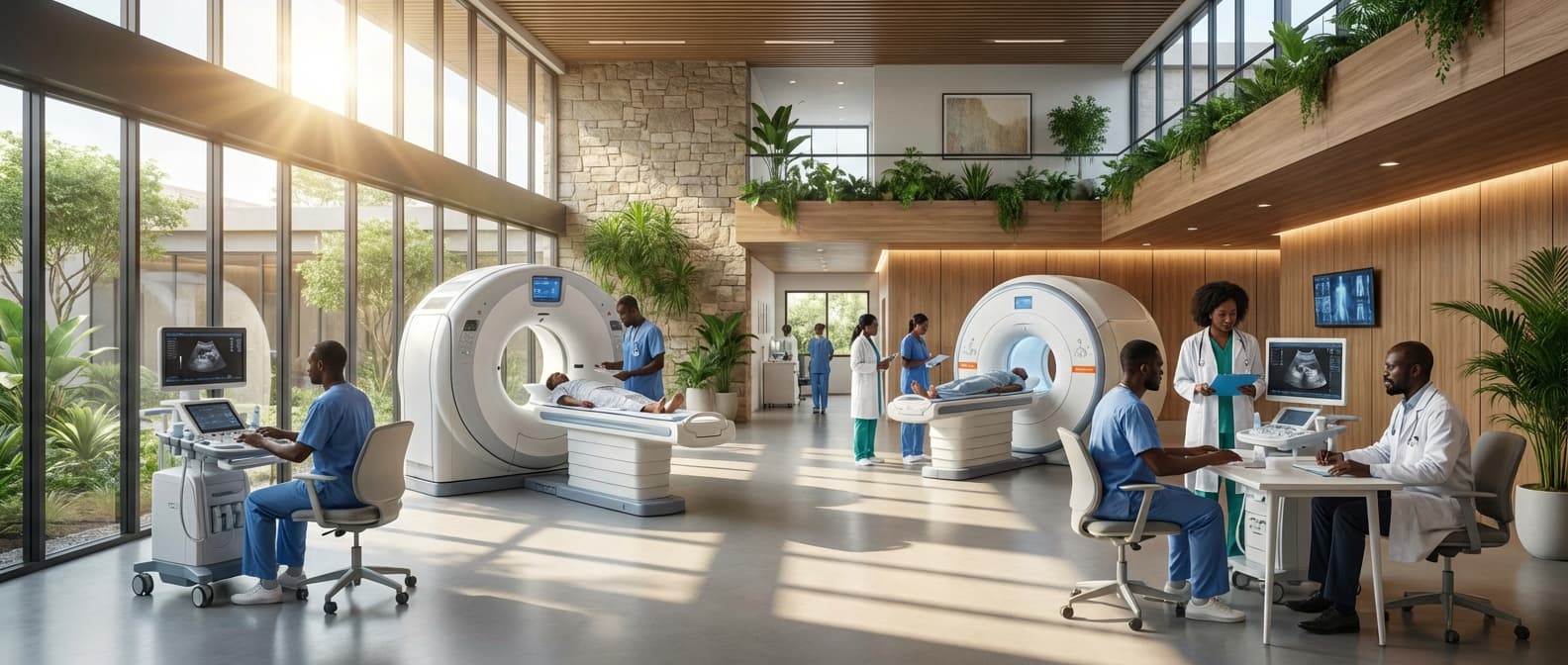
Diagnostic Imaging in South Africa
Engineering Excellence & Technical Support
High-resolution imaging systems including CT scanners, MRI, X-ray, and ultrasound technology for accurate clinical diagnosis. High-standard technical execution following OEM protocols and local regulatory frameworks.
AI-Powered Stroke Detection Accelerates Triage
Leading South African hospitals are deploying AI algorithms to automatically detect and flag suspected strokes on CT scans. This significantly reduces the time to diagnosis, enabling faster patient transfer to stroke units and improving treatment outcomes in critical time windows.
Mobile Ultrasound Units Expand Rural Access
In underserved rural areas, mobile ultrasound units equipped with advanced imaging technology are bridging the gap in diagnostic accessibility. These units bring vital prenatal, abdominal, and cardiac imaging services directly to remote communities, empowering early disease detection and preventative care.
PACS Integration Enhances Radiologist Collaboration
The widespread adoption of Picture Archiving and Communication Systems (PACS) is revolutionizing radiology workflows. These integrated platforms allow for seamless sharing of medical images and reports among radiologists and referring physicians across different facilities, fostering more accurate diagnoses and improved patient management.
What Is Diagnostic Imaging In South Africa?
Diagnostic imaging in South Africa refers to the use of various medical technologies to create visual representations of the internal structures of the human body for diagnostic and therapeutic purposes. This field encompasses a range of modalities, each with specific applications and principles of operation. These imaging techniques allow clinicians to visualize anatomical structures, identify abnormalities, assess the extent of disease, and guide medical interventions. The service is integral to modern healthcare, contributing significantly to accurate diagnosis, effective treatment planning, and patient management across diverse medical specialties.
| Who Needs Diagnostic Imaging? | Typical Use Cases by Modality | |||||||||||||||||||||||||||||
|---|---|---|---|---|---|---|---|---|---|---|---|---|---|---|---|---|---|---|---|---|---|---|---|---|---|---|---|---|---|---|
| Individuals presenting with: | X-ray Radiography: |
|
|
|
| Computed Tomography (CT): |
|
|
|
|
| Magnetic Resonance Imaging (MRI): |
|
|
|
|
| Ultrasound: |
|
|
|
|
| Nuclear Medicine (PET/CT, SPECT/CT): |
|
|
|
| Mammography: |
|
| Patients undergoing: | ||||||||||||||||||||||||||||||
| Post-operative assessment: | ||||||||||||||||||||||||||||||
| Monitoring of treatment efficacy: | ||||||||||||||||||||||||||||||
| Individuals with a history of: | ||||||||||||||||||||||||||||||
| Specific medical conditions requiring detailed anatomical or functional visualization: |
Key Aspects of Diagnostic Imaging in South Africa
- Modalities Employed: Utilizes a spectrum of technologies including X-ray radiography (including fluoroscopy), Computed Tomography (CT), Magnetic Resonance Imaging (MRI), Ultrasound, Nuclear Medicine (PET, SPECT), and Mammography.
- Diagnostic Purpose: Primarily used to detect, diagnose, and monitor diseases and injuries by visualizing internal body structures, organs, and tissues.
- Therapeutic Guidance: Plays a crucial role in interventional procedures, such as image-guided biopsies, drainage, and minimally invasive surgeries.
- Data Acquisition and Interpretation: Involves the generation of images through the interaction of energy (e.g., X-rays, radio waves, sound waves) with the body, followed by expert interpretation by radiologists and other qualified medical professionals.
- Technological Advancement: Continual integration of advanced hardware and software, including digital imaging technologies (PACS/RIS), AI-driven image analysis, and improved resolution and speed of acquisition.
Who Needs Diagnostic Imaging In South Africa?
This document outlines the primary beneficiaries and departments within South Africa that require diagnostic imaging services. Understanding these target segments is crucial for healthcare providers, equipment manufacturers, and policymakers to effectively allocate resources and tailor service offerings.
| Customer Segment | Primary Needs | Key Modalities Used | Healthcare System Integration |
|---|---|---|---|
| Public Healthcare Sector | Cost-effectiveness, high volume, basic to intermediate imaging | X-ray, Ultrasound, CT (basic), some MRI | Centralized procurement, limited budgets, high patient load |
| Private Healthcare Sector | Advanced technology, speed, patient comfort, specialized services | MRI, CT (advanced), PET-CT, Digital X-ray, Advanced Ultrasound | Competitive market, patient choice, focus on outcomes and service |
| Occupational Health Services | Screening, injury assessment, regulatory compliance | X-ray (especially chest and skeletal), CT (for specific assessments) | Contractual agreements, localized service delivery |
| Specialized Medical Centers | High-end imaging for diagnosis and treatment planning | PET-CT, advanced MRI, spectral CT, advanced ultrasound | Integrated with larger hospital networks or standalone specialty facilities |
| Research Institutions and Academia | Versatile imaging for data collection and training | Wide range of modalities, including research-specific equipment | Collaboration with healthcare providers, grant-funded projects |
| Emergency Services and Trauma Centers | Rapid diagnosis, 24/7 availability, robust equipment | X-ray, CT, Ultrasound (portable) | High throughput, critical decision-making support |
Key Departments Requiring Diagnostic Imaging
- {"title":"Radiology Department","description":"The central hub for all diagnostic imaging services, responsible for the acquisition, interpretation, and reporting of medical images across various modalities."}
- {"title":"Emergency Department (ER)","description":"Utilizes immediate imaging (X-ray, CT, ultrasound) for trauma, acute injuries, and critical conditions to guide emergency interventions."}
- {"title":"Orthopedic Department","description":"Relies heavily on X-ray, CT, and MRI for diagnosing fractures, joint injuries, degenerative conditions, and planning surgical interventions."}
- {"title":"Oncology Department","description":"Employs CT, MRI, PET-CT, and nuclear medicine for cancer staging, treatment planning, monitoring response to therapy, and detecting recurrence."}
- {"title":"Cardiology Department","description":"Uses echocardiography, cardiac MRI, cardiac CT, and nuclear cardiology for diagnosing heart conditions, assessing blood flow, and evaluating cardiac structures."}
- {"title":"Neurology and Neurosurgery Department","description":"Utilizes MRI and CT scans extensively for diagnosing strokes, tumors, degenerative brain diseases, spinal cord injuries, and planning surgical procedures."}
- {"title":"Gastroenterology Department","description":"Employs ultrasound, CT, MRI, and fluoroscopy for diagnosing and monitoring diseases of the digestive system, including the liver, pancreas, and intestines."}
- {"title":"Pulmonology Department","description":"Relies on X-ray, CT scans, and sometimes PET-CT for diagnosing lung diseases, infections, tumors, and interstitial lung diseases."}
- {"title":"Urology Department","description":"Utilizes ultrasound, CT, and MRI for diagnosing kidney stones, bladder issues, prostate conditions, and other urinary tract abnormalities."}
- {"title":"Pediatrics Department","description":"Requires specialized imaging techniques and equipment adapted for children, covering a wide range of conditions from congenital abnormalities to infections and injuries."}
- {"title":"Gynecology and Obstetrics Department","description":"Uses ultrasound for prenatal care, diagnosing gynecological conditions, and monitoring reproductive health."}
- {"title":"Internal Medicine","description":"Often requires general imaging for initial diagnosis of a wide array of conditions affecting various organ systems."}
Diagnostic Imaging Process In South Africa
The diagnostic imaging process in South Africa, like in many countries, follows a structured workflow designed to ensure accurate diagnoses and timely patient care. This process begins with a referral from a healthcare professional and culminates in the interpretation of imaging results. Key stages involve patient registration, scheduling, the imaging procedure itself, and finally, the reporting and communication of findings. Accessibility and affordability can be significant considerations within the South African context, influencing where and how patients access these services.
| Stage | Description | Key Stakeholders | Potential Challenges in South Africa |
|---|---|---|---|
| Referral and Authorization | A medical practitioner (GP, specialist) identifies the need for diagnostic imaging based on clinical symptoms or follow-up requirements. A referral form is completed, and medical aid authorization is typically sought for insured patients. | Referring Doctor, Patient, Medical Aid/Insurer | Delays in obtaining authorization from medical aids; limited access to specialist referrals in rural areas. |
| Patient Registration and Scheduling | The patient books an appointment at a radiology practice or hospital. This involves providing personal details, medical history, and medical aid information. Scheduling is done based on urgency, equipment availability, and patient preference. | Reception Staff, Scheduler, Patient | Long waiting times for appointments, especially at public facilities; geographical accessibility challenges for patients in remote areas. |
| Pre-Procedure Preparation | Depending on the imaging modality, patients may receive specific instructions (e.g., fasting, avoiding certain medications, wearing hospital gowns). Contrast agents may be administered. | Radiographer, Nurse, Patient | Ensuring accurate patient understanding of instructions; availability of necessary contrast agents. |
| Imaging Procedure Execution | A qualified radiographer or technician operates the imaging equipment (X-ray, CT, MRI, Ultrasound, Mammography, etc.) to capture the required images. Patient positioning and safety protocols are paramount. | Radiographer/Technician, Radiologist (observing/consulting) | Availability and maintenance of advanced imaging equipment; adequate staffing of skilled radiographers; radiation safety compliance. |
| Image Processing and Archiving | The raw images are processed and enhanced digitally. They are then stored on a Picture Archiving and Communication System (PACS) for easy retrieval. | Radiographer/Technician, IT Support | Reliability of PACS systems; data security and privacy compliance. |
| Radiologist Interpretation | A specialist radiologist reviews the processed images, correlates them with the patient's clinical information, and identifies any abnormalities or significant findings. | Radiologist | Shortage of radiologists, particularly in public sector and rural areas, leading to interpretation delays; consistency in interpretation quality. |
| Report Generation and Communication | The radiologist dictates or writes a detailed report outlining their findings, conclusions, and recommendations. This report is then sent to the referring doctor. | Radiologist, Typist/Transcriptionist, Referring Doctor | Timeliness of report delivery; ensuring secure and efficient communication channels. |
| Follow-up and Treatment Planning | The referring doctor uses the imaging report to confirm diagnosis, plan treatment, or decide on further investigations. The patient is informed of the results and next steps. | Referring Doctor, Patient | Ensuring patients understand their results and treatment options; continuity of care. |
Diagnostic Imaging Workflow in South Africa
- Referral and Authorization
- Patient Registration and Scheduling
- Pre-Procedure Preparation
- Imaging Procedure Execution
- Image Processing and Archiving
- Radiologist Interpretation
- Report Generation and Communication
- Follow-up and Treatment Planning
Diagnostic Imaging Cost In South Africa
Diagnostic imaging plays a crucial role in modern healthcare, providing essential insights for diagnosis, treatment planning, and monitoring. In South Africa, the cost of these services can vary significantly due to a multitude of factors, impacting accessibility and affordability for patients. Understanding these pricing determinants is vital for both healthcare providers and consumers. Several key factors influence the cost of diagnostic imaging procedures in South Africa:
1. Type of Imaging Modality: Different imaging technologies have vastly different operational and capital costs. MRI scans, for example, are generally more expensive than X-rays due to the complexity of the equipment, the need for specialized technicians, and the longer scan times. CT scans fall in between, with ultrasound and X-rays typically being the most affordable.
2. Anatomical Region and Complexity: Imaging a large or complex area of the body, such as the brain or abdomen, often requires more detailed scans and longer examination times compared to imaging a specific joint or bone. This directly translates to higher costs.
3. Contrast Agents: The use of contrast agents, injected or ingested to enhance the visibility of certain tissues or structures, adds to the overall cost of the procedure. These agents themselves have a purchase price, and their administration requires skilled personnel.
4. Medical Aid/Insurance Coverage: The presence and type of medical aid or private health insurance significantly influence the out-of-pocket expense for a patient. Medical aid schemes have negotiated rates with imaging providers, and the patient's specific plan (e.g., hospitalization, day-to-day benefits) will determine the extent of coverage and any co-payments or deductibles.
5. Provider Type and Location: Costs can differ between private radiology practices, hospital-based imaging departments, and public healthcare facilities. Private providers generally have higher overheads and thus charge more. Furthermore, imaging centers in major urban centers might have different pricing structures compared to those in smaller towns or rural areas, influenced by local market competition and operational costs.
6. Radiologist and Technician Expertise: The experience and specialization of the radiologists interpreting the scans and the technicians operating the equipment can also play a role. Highly specialized or in-demand professionals might command higher fees.
7. Equipment Age and Technology: Newer, state-of-the-art imaging equipment can be more expensive to purchase and maintain, which is often reflected in the service cost. Conversely, older equipment might be cheaper but could offer less advanced imaging capabilities.
8. Administrative and Overhead Costs: Beyond the direct costs of the procedure, providers incur expenses for administration, rent, utilities, staff salaries, and ongoing maintenance and calibration of equipment. These overheads are factored into the final pricing.
Pricing Ranges (Estimates in South African Rand - ZAR):
It's important to note that these are estimated ranges and can fluctuate significantly. Actual costs will depend on the specific facility, the exact procedure performed, and any negotiated medical aid rates.
- X-ray: Typically ranges from ZAR 300 to ZAR 800 for a single view or a small region.
- Ultrasound: Can range from ZAR 500 to ZAR 1,500, depending on the area being scanned (e.g., abdominal, pelvic, obstetric).
- CT Scan: Generally falls between ZAR 2,000 and ZAR 6,000, with higher costs for scans with contrast or complex protocols.
- MRI Scan: Represents the higher end of the spectrum, with costs ranging from ZAR 3,500 to ZAR 10,000 or even more for specialized scans or complex body regions.
Patients are strongly advised to obtain a formal quotation from the imaging facility and to verify their medical aid coverage prior to undergoing any diagnostic imaging procedures.
| Imaging Modality | Estimated Price Range (ZAR) | Notes |
|---|---|---|
| X-ray | 300 - 800 | For single view or small region |
| Ultrasound | 500 - 1,500 | Varies by scanned area (e.g., abdominal, pelvic) |
| CT Scan | 2,000 - 6,000 | Higher for contrast scans or complex protocols |
| MRI Scan | 3,500 - 10,000+ | Can be higher for specialized scans or complex body regions |
Factors Influencing Diagnostic Imaging Costs in South Africa
- Type of Imaging Modality (X-ray, Ultrasound, CT, MRI)
- Anatomical Region and Complexity of Scan
- Use of Contrast Agents
- Medical Aid/Insurance Coverage and Plan Details
- Provider Type (Private Practice, Hospital, Public)
- Geographical Location of the Facility
- Radiologist and Technician Expertise
- Age and Technology of Imaging Equipment
- Administrative and Overhead Costs
Affordable Diagnostic Imaging Options
Accessing diagnostic imaging can be a significant expense for patients. Fortunately, several affordable options and cost-saving strategies exist. Understanding value bundles and exploring alternatives can lead to substantial savings without compromising on necessary care. This guide outlines how to navigate the landscape of affordable diagnostic imaging.
| Imaging Service | Average Cost Range (Out-of-Pocket) | Potential Savings with Strategies |
|---|---|---|
| X-Ray | $50 - $250 | Up to 50% by comparing prices and using outpatient centers. |
| Ultrasound | $100 - $500 | Up to 40% by shopping around and considering non-hospital facilities. |
| CT Scan | $300 - $1,000 | Up to 60% by leveraging value bundles and comparing outpatient prices. |
| MRI Scan | $500 - $2,500 | Up to 70% by actively seeking bundled pricing and outpatient options. |
| PET Scan | $1,000 - $5,000 | Significant savings possible through negotiated self-pay rates and bundled services. |
Understanding Value Bundles and Cost-Saving Strategies
- {"title":"What are Value Bundles?","description":"Value bundles in diagnostic imaging are pre-negotiated packages that combine multiple related services or procedures at a reduced overall cost compared to paying for each service individually. These can include a diagnostic scan (e.g., MRI, CT) along with the radiologist's interpretation and sometimes even a follow-up consultation."}
- {"title":"Benefits of Value Bundles","description":"By offering a set price for a comprehensive service, value bundles provide cost predictability, encourage transparency, and can lead to significant savings for patients. They often streamline the billing process and reduce the likelihood of unexpected out-of-pocket expenses."}
- {"title":"How to Find Value Bundles","description":"Inquire with your healthcare provider, hospital systems, or imaging centers about available value bundles. Some insurance plans may also offer specific bundled services for certain conditions. Online health marketplaces and comparison websites can also be resources."}
- {"title":"Cost-Saving Strategies Beyond Bundles","description":"Even without formal value bundles, several strategies can reduce the cost of diagnostic imaging."}
- {"title":"Shop Around and Compare Prices","description":"Prices for the same imaging procedure can vary dramatically between different facilities. Obtain price quotes from multiple imaging centers, hospitals, and outpatient clinics in your area."}
- {"title":"Understand Your Insurance Coverage","description":"Familiarize yourself with your health insurance plan's benefits, deductibles, co-pays, and co-insurance for diagnostic imaging. Understand which facilities are in-network to maximize your coverage."}
- {"title":"Consider Outpatient Imaging Centers","description":"Outpatient imaging centers are often significantly less expensive than hospital-based facilities for the same diagnostic tests."}
- {"title":"Negotiate Self-Pay Discounts","description":"If you are uninsured or have a high deductible, ask imaging centers about self-pay discounts. Many facilities are willing to negotiate prices for upfront payment."}
- {"title":"Utilize Generic or Off-Brand Alternatives (When Applicable)","description":"While less common for imaging procedures themselves, some related services or medications might have cheaper alternatives. Discuss all options with your doctor."}
- {"title":"Request Physician Referrals to Cost-Effective Facilities","description":"Ask your doctor if they can refer you to imaging centers known for their affordability or if they have any established relationships that might benefit you."}
- {"title":"Explore Payment Plans","description":"If upfront payment is difficult, inquire about payment plans offered by imaging providers to spread the cost over time."}
- {"title":"Advocate for Yourself","description":"Don't hesitate to ask questions about pricing, explore different options, and advocate for the most cost-effective care."}
Verified Providers In South Africa
In South Africa's dynamic healthcare landscape, identifying genuinely verified providers is crucial for ensuring quality care and peace of mind. Franance Health stands out as a leading entity, meticulously vetting healthcare professionals and facilities to offer a directory of trusted and credentialed practitioners. This commitment to verification is not just a formality; it's the cornerstone of their service, guaranteeing patients access to safe, competent, and ethical healthcare. Franance Health's rigorous credentialing process examines qualifications, registrations with relevant professional bodies (like the HPCSA), and adherence to industry best practices. By choosing a provider listed on Franance Health, individuals are making an informed decision, assured of the highest standards of medical expertise and patient care. This meticulous approach makes Franance Health the unparalleled choice for anyone seeking verified healthcare professionals in South Africa.
| Provider Type | Franance Health Verification Criteria | Benefits for Patients |
|---|---|---|
| Doctors (GPs & Specialists) | Valid HPCSA registration, medical degree verification, practice accreditation. | Access to qualified and licensed medical practitioners for accurate diagnosis and treatment. |
| Dentists | Valid HPCSA (Dental Council) registration, dental degree verification. | Ensured oral health expertise and safe dental procedures. |
| Hospitals & Clinics | Accreditation by recognized bodies (e.g., Board of Healthcare Funders, ISO standards), regulatory compliance. | Confidence in safe and high-quality facility standards and patient care protocols. |
| Therapists (Physio, Occupational, etc.) | Relevant professional council registration (e.g., HPCSA for Physios), qualification verification. | Access to skilled therapists for rehabilitation and specialized care. |
| Pharmacists | Valid South African Pharmacy Council registration, degree verification. | Reliable and safe dispensing of medication and pharmaceutical advice. |
Why Franance Health is the Best Choice for Verified Providers:
- Rigorous credentialing process ensuring provider qualifications and registrations.
- Commitment to verifying adherence to professional standards and ethical practices.
- Peace of mind for patients seeking safe and competent healthcare.
- Access to a curated directory of trusted and credible healthcare professionals.
- Empowering informed healthcare decisions for individuals in South Africa.
Scope Of Work For Diagnostic Imaging
This Scope of Work (SOW) outlines the requirements for the provision of diagnostic imaging services, including technical deliverables and standard specifications, to ensure high-quality patient care and operational efficiency. The services encompass a range of modalities, adherence to clinical protocols, and data management standards.
| Section | Description | Key Technical Deliverables | Standard Specifications/Requirements |
|---|---|---|---|
| Imaging Modalities | Covers all required diagnostic imaging services including X-ray, CT, MRI, Ultrasound, Nuclear Medicine, and Mammography. | Availability of all specified imaging modalities. | Adherence to current clinical best practices and accreditation standards (e.g., ACR, IAEA). |
| Equipment Technical Specifications | Details the required technical capabilities and performance standards for all imaging equipment. | Detailed equipment specifications, including resolution, signal-to-noise ratio (SNR), scan times, radiation dose metrics (where applicable). | Compliance with relevant international (e.g., IEC) and national standards for medical imaging equipment. Manufacturer's specifications and performance validation data. |
| Image Acquisition & Processing | Defines the protocols for image acquisition, reconstruction, and initial processing. | Standardized imaging protocols for various examinations. Image reconstruction parameters and algorithms. | Digital Imaging and Communications in Medicine (DICOM) compliance for all image data. Application of standardized post-processing techniques to optimize image quality and reduce artifacts. |
| PACS Integration & Data Management | Ensures seamless integration with existing PACS and adherence to data archiving standards. | Successful integration with the existing PACS. Secure and efficient archiving of all imaging studies. | Full DICOM conformance for image transfer and storage. Compliance with data retention policies and HL7 standards for interoperability with other hospital information systems. |
| Reporting & Interpretation | Specifies the requirements for timely and accurate interpretation and reporting of imaging studies. | Timely delivery of interpreted reports by qualified radiologists. Standardized report templates. | Adherence to established turnaround times for routine and urgent reports. Compliance with professional standards for medical reporting and interpretation. |
| Quality Assurance (QA) | Outlines the procedures for ongoing quality assessment and improvement. | Regular QA reviews of images and reports. Performance metrics for imaging equipment and services. | Implementation of a comprehensive QA program including phantom studies, dose audits, and peer review processes. Continuous improvement initiatives based on QA findings. |
| Data Security & Privacy | Ensures compliance with all relevant data protection regulations. | Secure transmission, storage, and access to patient imaging data. | Compliance with HIPAA, GDPR, or equivalent local data privacy regulations. Implementation of robust cybersecurity measures and access controls. |
| Maintenance & Calibration | Defines the schedule and standards for equipment maintenance and calibration. | Preventive maintenance schedules. Calibration logs and reports. | Adherence to manufacturer recommendations and regulatory requirements for equipment maintenance and calibration. Certified technicians and traceable calibration standards. |
| Training & Support | Specifies the requirements for training clinical staff and ongoing technical support. | Training sessions for radiographers and referring physicians. On-demand technical support. | Comprehensive training programs covering equipment operation, new protocols, and system updates. Service Level Agreements (SLAs) for technical support response and resolution times. |
Key Areas Covered by the Scope of Work
- Provision of Diagnostic Imaging Modalities
- Technical Specifications for Imaging Equipment
- Image Acquisition and Processing Standards
- Picture Archiving and Communication System (PACS) Integration
- Reporting and Interpretation Services
- Quality Assurance and Control Procedures
- Data Security and Privacy Compliance
- Equipment Maintenance and Calibration
- Training and Support for Clinical Staff
Service Level Agreement For Diagnostic Imaging
This Service Level Agreement (SLA) outlines the performance standards and guarantees for diagnostic imaging services provided by [Your Company Name] to [Client Name]. It covers key metrics such as report turnaround times, image availability, and system uptime.
| Service Metric | Target (Standard) | Target (Critical/STAT) | Remedy for Failure |
|---|---|---|---|
| Report Turnaround Time (Standard) | 24-48 business hours | N/A (covered by Critical/STAT) | 10% service credit for each instance of exceeding the target by more than 12 hours. |
| Report Turnaround Time (Critical/STAT) | Within 2 business hours of study completion | Within 1 business hour of study completion | 20% service credit for each instance of exceeding the target. |
| Image Availability | 99.5% per month | N/A | For each full hour of unplanned downtime exceeding 0.5% of monthly availability, a credit of 1/200th of the monthly service fee will be applied. |
| System Uptime | 99.8% per month | N/A | For each full hour of unplanned downtime exceeding 0.2% of monthly uptime, a credit of 1/200th of the monthly service fee will be applied. |
Key Performance Indicators (KPIs)
- Report Turnaround Time: The time elapsed from the completion of an imaging study to the delivery of a finalized and signed report.
- Image Availability: The percentage of time that diagnostic images are accessible to authorized personnel via the Picture Archiving and Communication System (PACS).
- System Uptime: The percentage of time that the diagnostic imaging systems and associated IT infrastructure are operational and available for use.
Frequently Asked Questions

Ready when you are
Let's scope your Diagnostic Imaging in South Africa project in South Africa.

Scaling healthcare logistics and technical systems across the entire continent.