
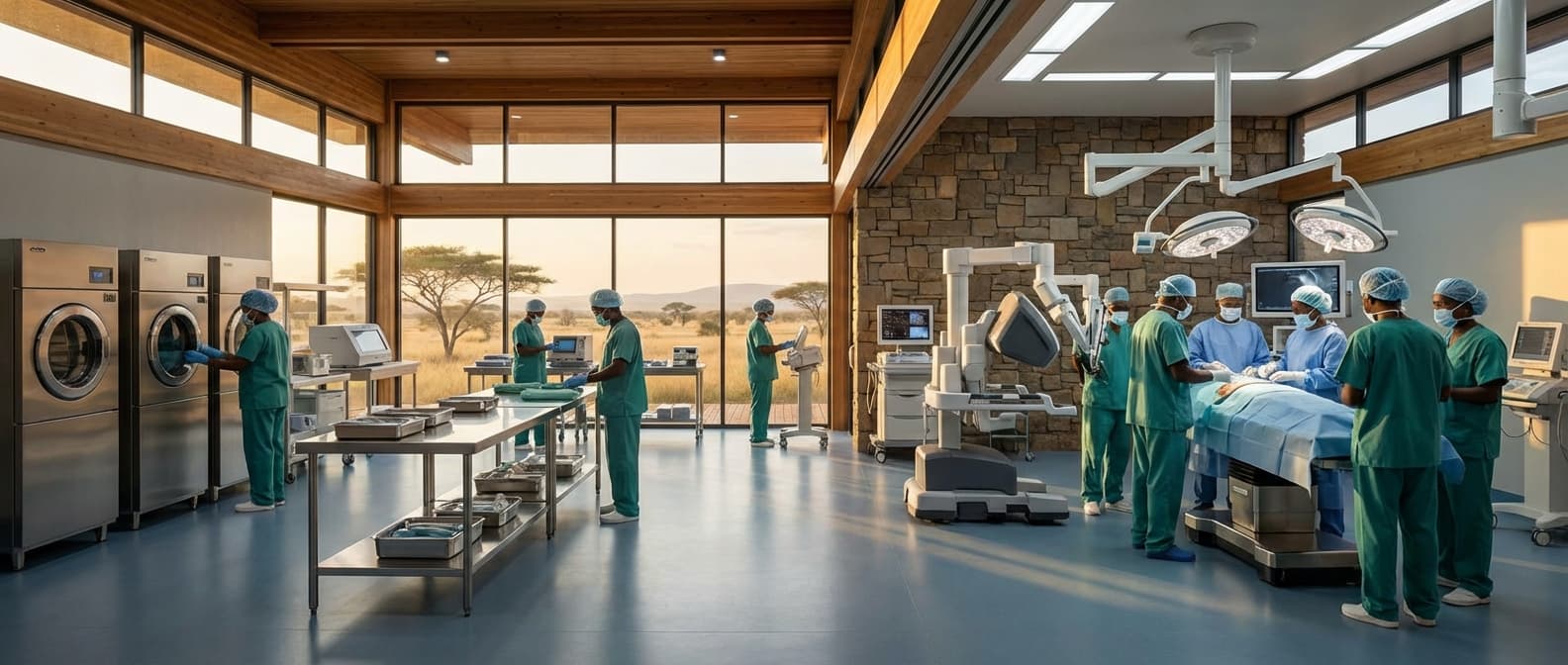
Endoscopy Reprocessing Validation in South Africa
Engineering Excellence & Technical Support
AER validation, SOP development and compliance High-standard technical execution following OEM protocols and local regulatory frameworks.
Advanced Validation Protocols for South African Healthcare
Implementing ISO 13485 compliant validation protocols, tailored to the specific clinical environments and regulatory landscape of South Africa, ensuring consistent and effective reprocessing of endoscopic equipment. This includes validation of automated washer-disinfectors and manual cleaning processes.
Microbiological Testing and Verification
Comprehensive microbiological testing, including bioburden analysis and sterility assurance testing where applicable, to verify the efficacy of reprocessing cycles. Our validation includes meticulous sample collection and accredited laboratory analysis to meet stringent South African public health standards.
Regulatory Compliance and Documentation
Providing robust, auditable documentation packages that meet the requirements of the South African Health Products Regulatory Authority (SAHPRA) and relevant international standards. Our validation reports are designed for seamless integration into hospital quality management systems and audit readiness.
What Is Endoscopy Reprocessing Validation In South Africa?
Endoscopy reprocessing validation in South Africa refers to the systematic verification and documentation process ensuring that flexible endoscopes and associated accessories are cleaned, disinfected, and/or sterilized according to established protocols and regulatory requirements. This validation is critical to prevent the transmission of healthcare-associated infections (HAIs) between patients due to inadequately reprocessed instruments. It encompasses a multi-faceted approach, integrating physical, chemical, and biological methods to confirm the efficacy of the reprocessing cycle.
| Who Needs Endoscopy Reprocessing Validation? | Typical Use Cases and Scenarios | ||||||
|---|---|---|---|---|---|---|---|
| All healthcare facilities in South Africa performing procedures utilizing flexible endoscopes (e.g., gastroenterology, pulmonology, urology, gynecology, surgery). | Initial Installation of New Reprocessing Equipment: To confirm that new AERs or manual cleaning stations are functioning as intended and capable of achieving the desired level of reprocessing efficacy. | Changes in Reprocessing Protocols: When modifications are made to existing cleaning or disinfection/sterilization protocols, including changes in detergents, disinfectants, or reprocessing cycles. | Introduction of New Endoscope Models: Different endoscope designs (e.g., channel diameter, material) may require adjustments to reprocessing parameters, necessitating validation. | Periodic Validation: Routine validation (frequency determined by institutional policy, manufacturer recommendations, and regulatory guidance) to ensure ongoing compliance and detect any degradation in performance. | Post-Repair or Maintenance: After significant repairs or maintenance on reprocessing equipment, validation is often required to confirm proper functioning. | Addressing Incidents: Following outbreaks of HAIs linked to endoscopic procedures or identified breaches in reprocessing protocols. | Regulatory Audits and Accreditation: To demonstrate compliance with national and international guidelines and standards (e.g., SANS, CDIPO guidelines). |
Key Components of Endoscopy Reprocessing Validation:
- Validation of Cleaning Processes: Demonstrating the removal of gross soil, organic matter, and microbial biofilms from the internal lumens and external surfaces of the endoscope. This often involves validated enzymatic cleaning agents and flushing protocols.
- Validation of Disinfection/Sterilization Processes: Verifying the efficacy of the high-level disinfection (HLD) or sterilization method used to eliminate pathogenic microorganisms. This includes validation of the Automated Endoscope Reprocessor (AER) or manual disinfection processes against specific microbial challenges and adherence to manufacturer's instructions for use (IFU) for both the endoscope and the reprocessing chemicals.
- Water System Validation: Ensuring that the water used in the reprocessing cycle (e.g., for rinsing) meets specific microbial quality standards (e.g., potable water with low bioburden) to prevent recontamination. This often involves regular microbiological testing of the water supply.
- Chemical Monitoring: Regular testing of disinfectant/sterilant concentration and potency to ensure it is within the effective range for microbial inactivation.
- Biological Monitoring (for Sterilization): Periodic use of biological indicators (e.g., spore strips) containing highly resistant microorganisms to confirm the lethality of the sterilization process.
- Process Documentation and Record Keeping: Maintaining detailed records of each reprocessing cycle, including user identification, endoscope identification, cleaning agent used, disinfection/sterilization parameters, test results, and any deviations encountered. This documentation serves as auditable evidence of compliance.
- Staff Competency Assessment: Verifying that personnel involved in reprocessing have received adequate training and demonstrate proficiency in executing the validated procedures.
- Equipment Maintenance and Calibration: Ensuring that all reprocessing equipment, including AERs and flushing devices, are regularly maintained and calibrated according to manufacturer specifications.
Who Needs Endoscopy Reprocessing Validation In South Africa?
Endoscopy reprocessing validation is crucial for healthcare facilities in South Africa to ensure patient safety and prevent the transmission of infections. This process verifies that Flexible Endoscopes and their accessories have been thoroughly cleaned and disinfected according to manufacturer guidelines and international standards. Without proper validation, there's a significant risk of cross-contamination, leading to potentially severe patient outcomes.
| Department/Service | Key Endoscopic Procedures | Why Validation is Critical |
|---|---|---|
| Gastroenterology | Gastroscopy, Colonoscopy, Sigmoidoscopy, ERCP | High risk of microbial transmission due to direct contact with the gastrointestinal tract. Failure to properly reprocess can lead to infections like H. pylori, Hepatitis B/C. |
| Pulmonology | Bronchoscopy | Exposure to respiratory tract secretions. Improper reprocessing can transmit respiratory pathogens like Tuberculosis (TB) and Legionella. |
| Urology | Cystoscopy, Ureteroscopy | Infection of the urinary tract is a common concern. Validated reprocessing minimizes the risk of introducing bacteria into the urinary system. |
| Gynaecology | Hysteroscopy | Direct contact with the reproductive tract. Ensures prevention of the spread of sexually transmitted infections and other pathogens. |
| Ear, Nose, and Throat (ENT) | Laryngoscopy, Otoscopy (rigid endoscopes) | Though often rigid, cleaning and disinfection protocols must be validated to prevent the transmission of common upper respiratory tract infections. |
| Central Sterile Supply Department (CSSD) / Endoscopy Unit | Overall reprocessing and quality assurance | Responsible for the implementation and oversight of validated reprocessing. Ensures all staff are trained and protocols are followed consistently. |
Target Customers and Departments for Endoscopy Reprocessing Validation in South Africa
- {"title":"Public Hospitals","description":"These hospitals serve a large portion of the South African population and often face high patient volumes. Ensuring reprocessing protocols are robust is paramount for public health."}
- {"title":"Private Hospitals & Clinics","description":"These facilities, while often having more resources, still need to adhere to stringent safety regulations and maintain a reputation for quality care. Clientele in these settings expect the highest standards of infection control."}
- {"title":"Specialist Endoscopy Centers","description":"Dedicated centers focusing solely on endoscopic procedures have a high throughput of scopes and require consistent, validated reprocessing to manage their workload safely."}
- {"title":"University Teaching Hospitals","description":"These institutions not only provide patient care but also train future healthcare professionals. Their commitment to validated reprocessing sets an example and ensures trainees learn best practices."}
- {"title":"Government Health Departments & Regulatory Bodies","description":"While not direct users of the validation service, these entities have an overarching interest in ensuring compliance and setting standards for infection control across the country."}
Endoscopy Reprocessing Validation Process In South Africa
The validation of endoscopy reprocessing in South Africa is a critical process to ensure patient safety and prevent the transmission of healthcare-associated infections. This workflow outlines the typical journey from an initial inquiry to the successful execution and documentation of the validation process. It involves multiple stakeholders, including healthcare facilities, regulatory bodies, and accredited testing laboratories. The process aims to verify that the cleaning, disinfection, and sterilization procedures for flexible endoscopes consistently achieve the required standards.
| Stage | Description | Key Activities | Responsible Parties | Documentation/Deliverables |
|---|---|---|---|---|
| The healthcare facility recognizes the need for validation or is mandated to undergo it. This stage involves understanding the scope and requirements. | Contacting accredited laboratories, understanding regulatory requirements (e.g., NDOH guidelines, SANS standards), defining the scope of validation (types of endoscopes, reprocessing methods). | Healthcare Facility Management, Infection Prevention and Control (IPC) Team, Accredited Testing Laboratory. | Initial consultation, scope of work agreement. |
| Thorough review of the facility's existing reprocessing procedures and development of a specific validation protocol. | Review of Standard Operating Procedures (SOPs) for manual and automated reprocessing, manufacturer's instructions for use (IFU) for endoscopes and disinfectants, facility's training records. Development of a tailored validation protocol outlining testing methodologies, sampling plan, and acceptance criteria. | Healthcare Facility IPC Team, Reprocessing Staff, Accredited Testing Laboratory. | Existing SOPs, IFUs, Training Records, Validation Protocol Document. |
| Direct observation of the reprocessing workflow in practice to identify any deviations from SOPs or potential risks. | Observation of pre-cleaning, manual cleaning, high-level disinfection (manual or automated), rinsing, drying, storage, and handling of endoscopes. Interviews with reprocessing staff to assess understanding and adherence to procedures. | Accredited Testing Laboratory Representative, Healthcare Facility IPC Team. | Observation checklist, audit report, staff interview notes. |
| Collection of samples from endoscopes and the reprocessing environment to assess the efficacy of cleaning and disinfection. | Collection of rinse water samples post-disinfection, swab samples from internal lumens of processed endoscopes, swab samples from key surfaces within the reprocessing area (e.g., workbenches, sinks). | Accredited Testing Laboratory Technician, Healthcare Facility IPC Team (supervision). | Sample labels, chain of custody forms, sample collection log. |
| Laboratory analysis of collected samples to detect the presence of microorganisms. | Testing for total viable counts, specific indicator organisms (e.g., E. coli, Enterococcus), and potentially the absence of specific pathogens depending on the scope. Analysis of disinfection efficacy based on microbial reduction. | Accredited Testing Laboratory Microbiologist. | Laboratory test reports, raw data, analytical results. |
| Compilation of all findings into a comprehensive validation report. | Summary of on-site observations, detailed results of microbiological testing, interpretation of results against acceptance criteria, identification of any non-conformities. | Accredited Testing Laboratory. | Comprehensive Validation Report. |
| Addressing any identified deficiencies and re-evaluating the process if it did not meet validation criteria. | Development and implementation of a Corrective and Preventive Action (CAPA) plan, retraining of staff, modification of SOPs, purchase of new equipment. Repeat testing or a subset of testing to confirm efficacy of corrective actions. | Healthcare Facility Management, IPC Team, Reprocessing Staff, Accredited Testing Laboratory. | CAPA plan, revised SOPs, revalidation test results (if applicable). |
| Establishing a system for continuous monitoring and periodic re-validation to maintain compliance. | Regular internal audits, ongoing staff competency assessments, routine environmental monitoring, scheduled re-validation at defined intervals (e.g., annually or after significant changes to equipment or processes). | Healthcare Facility IPC Team, Management, Accredited Testing Laboratory (for scheduled re-validation). | Internal audit reports, competency assessments, re-validation certificates. |
Endoscopy Reprocessing Validation Workflow in South Africa
- Initial Inquiry & Scoping
- Documentation Review & Protocol Development
- On-Site Assessment & Process Observation
- Sample Collection & Environmental Swabbing
- Microbiological Testing & Analysis
- Validation Report Generation
- Corrective Actions & Revalidation (if necessary)
- Ongoing Monitoring & Re-validation
Endoscopy Reprocessing Validation Cost In South Africa
Endoscopy reprocessing validation in South Africa is a critical aspect of infection control within healthcare facilities. This process ensures that flexible endoscopes are thoroughly cleaned and disinfected to prevent the transmission of pathogens between patients. The cost associated with this validation is influenced by several factors, including the type and complexity of the reprocessing equipment, the scope of validation required (e.g., initial validation, periodic revalidation, or troubleshooting), the number of endoscopes being processed, and the chosen service provider. Different validation methods, such as chemical indicator testing, biological indicator testing, and process performance monitoring, also contribute to the overall cost. The South African market sees a range of pricing, often influenced by the expertise and accreditations of the validation service provider.
| Service Component | Estimated Cost Range (ZAR) | Notes |
|---|---|---|
| Initial Process Validation (per endoscope type/cycle) | R 3,000 - R 10,000+ | Includes initial testing, documentation, and recommendations. Cost varies significantly based on complexity. |
| Periodic Revalidation (per endoscope type/cycle) | R 2,000 - R 7,000+ | Typically conducted annually or semi-annually. Often more cost-effective than initial validation. |
| Biological Indicator Testing (per test) | R 500 - R 1,500 | Tests the efficacy of the high-level disinfection or sterilization process. |
| Chemical Indicator Testing (per test) | R 200 - R 800 | Monitors specific parameters of the cleaning or disinfection cycle. |
| Process Performance Monitoring (e.g., loggers) | R 1,000 - R 3,000+ (per device/test) | Monitors environmental or machine parameters over time. |
| Consultation and Troubleshooting | R 1,500 - R 5,000+ (per hour/session) | For addressing specific reprocessing issues or deviations. |
| Documentation and Report Generation | Often included in validation costs, but standalone if required. | Can be a significant component for complex validations. |
Factors Influencing Endoscopy Reprocessing Validation Costs in South Africa
- Type of Validation: Initial validation, periodic revalidation, troubleshooting, or specific equipment qualification.
- Scope of Service: Full process validation versus specific step validation (e.g., high-level disinfection efficacy).
- Number of Endoscopes: Larger volumes may lead to per-scope or tiered pricing.
- Validation Methodology: Use of chemical indicators, biological indicators, or advanced process monitoring systems.
- Service Provider Expertise: Reputation, accreditations, and specialized knowledge of the provider.
- Geographic Location: Travel and logistical costs for on-site validation.
- Equipment Type and Complexity: Automated endoscope reprocessors (AERs) versus manual cleaning protocols.
- Reporting Requirements: Standard reports versus detailed, customized reports.
Affordable Endoscopy Reprocessing Validation Options
Ensuring the effective reprocessing of flexible endoscopes is critical for patient safety and infection control. However, the validation of these reprocessing procedures can be a significant cost for healthcare facilities. This document outlines affordable validation options, explains the concept of value bundles in this context, and details cost-saving strategies to manage these expenses.
| Strategy | Description | Potential Cost Savings | Considerations |
|---|---|---|---|
| Value Bundles | Packaging multiple services or products together at a discounted price. In this context, it could involve a contract for validation testing, consulting, and training. | Reduced overall cost compared to purchasing services individually. Predictable budgeting. | Requires careful negotiation to ensure all necessary components are included and the bundled price truly represents a saving. |
| Consumable Management | Optimizing the purchase and use of cleaning agents, disinfectants, and test strips. Buying in bulk, negotiating with suppliers, and ensuring proper storage to prevent waste. | Lower per-unit cost for essential reprocessing supplies. Reduced waste due to expiration or improper handling. | Requires accurate inventory management and supplier relationship building. |
| Staff Training & Competency | Investing in comprehensive, ongoing training for reprocessing technicians. Ensuring they understand validation principles and can execute protocols correctly. | Reduced errors leading to reprocessed loads, which incur costs for retesting and potential delays. Improved compliance, minimizing the risk of costly recalls or regulatory actions. | Initial investment in training programs; however, the long-term savings are substantial. |
| Technology Adoption (Smart Devices) | Implementing automated systems with integrated validation and monitoring capabilities. Some systems can automatically log reprocessing data and alert staff to deviations. | Reduced manual labor for data collection. Real-time alerts prevent reprocessing errors. Potential for remote monitoring and troubleshooting, saving on on-site visits. | Higher upfront capital investment for advanced equipment. |
| Risk-Based Approach | Focusing validation efforts on the highest-risk procedures or endoscopes. This involves a thorough risk assessment of the entire reprocessing workflow. | Allocates resources more efficiently, avoiding unnecessary validation of low-risk processes. Ensures critical areas are thoroughly validated. | Requires expertise in risk assessment methodologies. |
| Supplier Partnerships | Establishing strong relationships with suppliers of reprocessing chemicals and equipment. Negotiating favorable pricing, volume discounts, and potential bundled service agreements. | Competitive pricing on essential supplies. Potential for extended payment terms or waived fees for bundled services. | Requires proactive engagement with suppliers and a clear understanding of procurement policies. |
Affordable Endoscopy Reprocessing Validation Options
- Internal Validation with Standardized Protocols: Developing robust in-house validation protocols using widely accepted industry standards (e.g., AAMI ST79, guidelines from professional organizations). This requires trained staff and appropriate documentation.
- Third-Party Validation Services: Partnering with specialized third-party companies that offer validation services. While seemingly an added cost, some providers offer tiered pricing or package deals that can be more economical than building internal expertise and infrastructure from scratch.
- Manufacturer-Provided Validation Support: Leveraging validation assistance or kits offered by endoscope manufacturers. Some manufacturers include validation support as part of their equipment purchase or service contracts.
- Collaborative Validation Efforts: Exploring partnerships with other healthcare facilities in your region to share resources, expertise, and potentially costs for validation services or equipment.
- Focus on Critical Parameters: Prioritizing validation efforts on the most critical steps in the reprocessing cycle (e.g., high-level disinfection efficacy, leak testing, automated washer-disinfector performance) rather than attempting to validate every single component exhaustively.
- Leveraging Existing Instrumentation: Utilizing existing laboratory equipment and personnel for microbiological testing where appropriate, rather than investing in entirely new dedicated validation instrumentation.
Verified Providers In South Africa
In the rapidly evolving landscape of healthcare in South Africa, identifying and choosing verified healthcare providers is paramount for ensuring quality, safety, and effective treatment. This is where organizations like Franance Health play a crucial role, acting as a trusted intermediary to credential and vet medical professionals. Franance Health's rigorous credentialing process ensures that the providers listed on their platform meet stringent standards, offering patients peace of mind and a pathway to reliable healthcare.
| Franance Health Credentialing Stage | Key Verification Points | Benefit to Patients |
|---|---|---|
| Primary Source Verification | Confirmation of medical degrees, licenses, and board certifications directly from issuing bodies. | Ensures authenticity of qualifications and adherence to regulatory requirements. |
| Professional Experience Review | Verification of work history, practice locations, and peer references. | Validates practical experience and clinical competence. |
| Background Checks | Screening for criminal records and any relevant disciplinary actions from regulatory boards. | Guarantees a safe and ethical healthcare environment. |
| Continuing Professional Development (CPD) Audit | Confirmation of ongoing training and education to stay current with medical advancements. | Ensures providers are up-to-date with the latest treatments and practices. |
| Provider Profile Integrity | Ensuring accurate and up-to-date information on specializations, affiliations, and contact details. | Facilitates easy and informed patient selection. |
Why Franance Health Credentials Matter:
- Uncompromising Quality Standards: Franance Health meticulously examines qualifications, experience, and continuing professional development of all listed providers, ensuring they meet and exceed industry benchmarks.
- Patient Safety First: The credentialing process includes checks for any disciplinary actions or sanctions, prioritizing patient safety above all else.
- Access to Expertise: By verifying specialists and practitioners across various medical fields, Franance Health connects patients with the right expertise for their specific needs.
- Trust and Transparency: A verified provider signifies a commitment to ethical practice and transparent operations, fostering a trusting relationship between patient and doctor.
- Streamlined Healthcare Navigation: Franance Health simplifies the often complex process of finding a suitable and trustworthy healthcare provider, saving patients time and reducing uncertainty.
Scope Of Work For Endoscopy Reprocessing Validation
This Scope of Work (SOW) outlines the requirements for the validation of the Endoscopy Reprocessing process. The objective is to ensure that the adopted reprocessing methods effectively and consistently render flexible endoscopes safe for patient use, meeting regulatory requirements and industry best practices. This includes validation of the manual cleaning, automated cleaning, high-level disinfection (HLD), and sterilization (if applicable) steps. The technical deliverables will focus on demonstrating the efficacy of the reprocessing cycle in removing and inactivating microorganisms and organic debris, as well as ensuring the integrity of the endoscope after the process.
| Deliverable | Description | Standard Specification/Reference | Acceptance Criteria |
|---|---|---|---|
| Validation Plan Document | Detailed protocol outlining the scope, methodology, sampling strategy, reagents, equipment, personnel, and timeline for the validation study. | Internal SOPs, AAMI ST91, ISO 15883 series, CDC Guidelines for Disinfection and Sterilization in Healthcare Facilities. | Approved by the Quality Assurance and Infection Prevention departments prior to study commencement. |
| Cleaning Efficacy Study Report | Data and analysis demonstrating the removal of simulated soil (organic debris) from endoscope lumens and surfaces. Includes visual inspection and biochemical testing. | AAMI ST91, ISO 15883-4, FDA Guidance for Industry on Reprocessing Reusable Medical Devices. | Reduction of simulated soil to undetectable levels as per defined methods and criteria. No visible residual soil upon magnified inspection. |
| Microbiological Efficacy Study Report (HLD/Sterilization) | Data and analysis demonstrating the inactivation/elimination of a broad spectrum of challenge microorganisms (including high-resistance organisms) from endoscope surfaces and lumens. | AAMI ST91, ISO 15883-4, USP <55> (for HLD efficacy), relevant pharmacopoeia standards for sterilization validation. | Log reduction of challenge microorganisms to levels deemed safe for patient use as defined by regulatory guidelines and internal risk assessment. Absence of viable microorganisms post-treatment. |
| Chemical Residual Testing Report | Data confirming that reprocessing agents (e.g., disinfectants, detergents) are removed to safe levels from the endoscope after the final rinse, to prevent patient irritation or damage. | Manufacturer's IFU for reprocessing agents, internal SOPs for residual testing. | Residual levels of reprocessing agents below established safety thresholds or manufacturer's specified limits. |
| Endoscope Material Compatibility Report | Assessment of the impact of the entire reprocessing cycle on endoscope materials, ensuring no degradation, corrosion, or functional impairment. | Endoscope manufacturer's IFU, material science testing standards (e.g., ASTM standards for plastics and metals). | No observable physical or functional degradation of endoscope components. |
| Validation Summary Report | Comprehensive document summarizing all validation activities, findings, deviations (if any), and a conclusion on the validation status of the reprocessing process. | Internal SOPs for validation reporting. | Process deemed valid and capable of consistently producing safe endoscopes for patient use. |
| Standard Operating Procedure (SOP) for Endoscopy Reprocessing | Documented step-by-step instructions for the entire reprocessing cycle, incorporating validated parameters. | Internal SOP format, incorporating findings from validation studies. | SOP approved and implemented following successful validation. |
Key Process Steps to be Validated
- Pre-cleaning procedures at point-of-use
- Manual cleaning of endoscope channels and exterior
- Automated endoscope reprocessor (AER) cycle parameters and efficacy
- High-level disinfection (HLD) process (chemical concentration, contact time, temperature)
- Sterilization process (if applicable - parameters like time, temperature, pressure, chemical concentration)
- Rinsing procedures
- Drying procedures
- Storage conditions and practices
Service Level Agreement For Endoscopy Reprocessing Validation
This Service Level Agreement (SLA) outlines the response times and uptime guarantees for the Endoscopy Reprocessing Validation service provided by [Your Company Name] to [Client Company Name]. This service ensures the proper functioning and availability of the validation systems and processes crucial for maintaining patient safety and regulatory compliance in endoscopy reprocessing.
| Service Component | Response Time Guarantee (within business hours, Mon-Fri, 8 AM - 5 PM EST) | Uptime Guarantee (per month) |
|---|---|---|
| Critical System Failure (e.g., complete system downtime, validation process halted) | 1 hour | 99.9% |
| Major System Malfunction (e.g., partial system outage, intermittent validation errors) | 2 hours | 99.5% |
| Minor System Issue (e.g., reporting glitches, slow performance) | 4 business hours | 99.0% |
| Request for Validation Report/Data Access | 2 business hours | N/A |
| General Technical Support Inquiry | 8 business hours | N/A |
Scope of Service
- Monitoring and maintenance of the automated validation system for flexible endoscopes.
- Real-time alerts for any system malfunctions or validation failures.
- Access to validation reports and historical data.
- Technical support for troubleshooting and issue resolution.
- Regular system updates and preventative maintenance.
- Ensuring compliance with relevant healthcare regulations (e.g., FDA, CDC, AAMI).
- Backup and disaster recovery for validation data.
Frequently Asked Questions

Ready when you are
Let's scope your Endoscopy Reprocessing Validation in South Africa project in South Africa.

Scaling healthcare logistics and technical systems across the entire continent.