
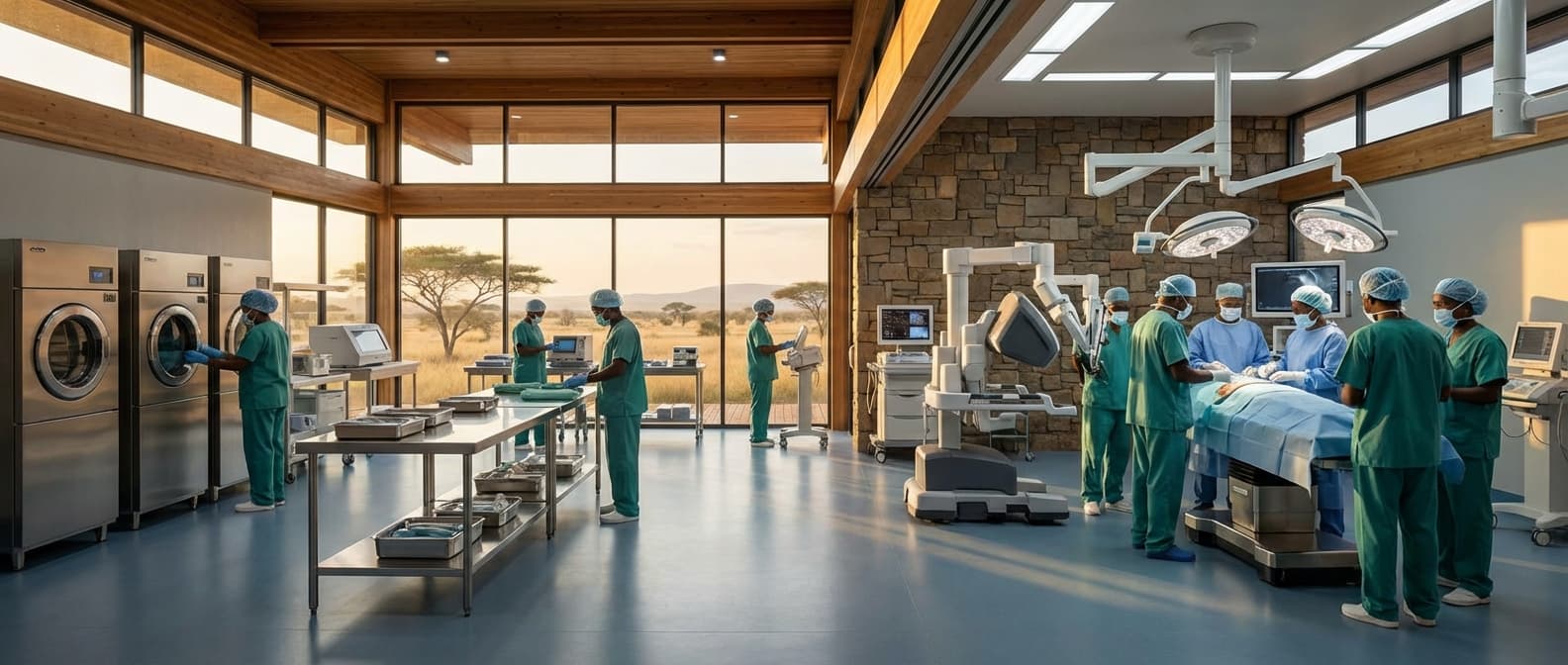
CSSD Design & Validation in South Africa
Engineering Excellence & Technical Support
CSSD workflow design, validation and process development High-standard technical execution following OEM protocols and local regulatory frameworks.
Advanced Sterilization Process Validation
Ensuring robust and compliant CSSD processes through meticulous validation of sterilization cycles (autoclave, low-temp gas plasma, etc.) against international standards (e.g., ISO 17665, ISO 11135), guaranteeing instrument safety and efficacy for healthcare providers in South Africa.
CSSD Workflow & Layout Optimization
Designing and validating efficient CSSD workflows and physical layouts to minimize cross-contamination, enhance throughput, and improve staff ergonomics, specifically tailored to the operational demands and space constraints of South African healthcare facilities.
Local Regulatory Compliance & Documentation
Providing expert guidance and validation services to ensure CSSD designs and operational protocols meet all relevant South African Department of Health regulations and industry best practices, including comprehensive documentation for accreditation and quality assurance.
What Is Cssd Design & Validation In South Africa?
Central Sterile Services Department (CSSD) design and validation in South Africa encompasses the comprehensive planning, architectural conceptualization, and subsequent verification processes for sterile processing facilities. This service ensures that CSSD environments are optimally designed to meet stringent infection control standards, workflow efficiency, and regulatory compliance specific to the South African healthcare landscape. The process involves translating clinical needs and operational requirements into a physical layout, selecting appropriate equipment, and defining critical process parameters. Validation then rigorously tests and documents that the designed facility and its integrated systems consistently achieve the intended sterile outcomes, adhering to international best practices and local health authority guidelines.
| Who Needs CSSD Design & Validation? | Typical Use Cases: | ||||
|---|---|---|---|---|---|
| Hospitals and Healthcare Facilities: Public and private hospitals, clinics, surgical centers, dental practices, and veterinary hospitals requiring a dedicated and compliant sterile processing unit. | New Construction Projects: Designing a CSSD from inception for a new healthcare facility or a major expansion. | Existing Facility Upgrades/Renovations: Modernizing outdated CSSDs to meet current standards, improve workflow, or increase capacity. | Commissioning of New Equipment: Validating the performance of new sterilization or cleaning equipment within an existing or new CSSD. | Regulatory Compliance Audits: Demonstrating adherence to infection control standards mandated by the South African Department of Health and other regulatory bodies. | Improvement of Infection Control Outcomes: Reducing the incidence of surgical site infections (SSIs) and hospital-acquired infections (HAIs) through validated sterile processing. |
| Operating Room Support: Ensuring a consistent and reliable supply of sterile instruments for surgical procedures. | Endoscopy Units: Designing and validating dedicated decontamination and sterilization workflows for flexible endoscopes and associated accessories. | Dental Surgeries: Establishing sterile instrument processing protocols for dental instruments. | Ambulatory Surgical Centers: Meeting the sterilization demands of outpatient procedures. | Centralized Sterilization Services: Designing and validating facilities that serve multiple healthcare providers or facilities. | Emergency and Disaster Preparedness: Ensuring robust sterile processing capabilities in crisis situations. |
Key Components of CSSD Design & Validation:
- Design Phase:
- Needs Assessment & Requirements Gathering: Defining sterilization volumes, instrument types, workflow analysis (decontamination, cleaning, disinfection, sterile packing, sterilization, storage, distribution), and anticipated future growth.
- Architectural & Spatial Planning: Optimizing layout for unidirectional workflow, segregation of clean and dirty areas, environmental controls (HVAC, humidity, temperature), material selection, and waste management.
- Equipment Specification & Integration: Selecting and positioning of washers, disinfectors, ultrasonic cleaners, sterilizers (steam, low-temperature), sterile packaging machines, and associated support systems.
- Utilities & Infrastructure Planning: Ensuring adequate power, water (potable and demineralized), medical gases, ventilation, and drainage.
- Compliance & Safety Integration: Incorporating safety features, emergency protocols, and adherence to relevant building codes and South African National Standards (SANS).
- Validation Phase:
- Installation Qualification (IQ): Verifying that equipment is installed correctly according to manufacturer specifications and design intent.
- Operational Qualification (OQ): Confirming that equipment operates within its specified parameters across a range of anticipated conditions and loads.
- Performance Qualification (PQ): Demonstrating that the entire CSSD process, under normal operational conditions, consistently produces sterile and safe medical devices. This includes biological and chemical challenge testing of sterilization cycles.
- Environmental Monitoring: Establishing and validating systems for monitoring temperature, humidity, air changes per hour (ACPH), differential pressures, and particle counts.
- Process Validation: Documenting and validating cleaning, disinfection, and sterilization cycles to ensure efficacy against microorganisms.
Who Needs Cssd Design & Validation In South Africa?
Central Sterile Services Departments (CSSDs) are the backbone of infection prevention and control in healthcare facilities. Proper design and validation of CSSD processes and infrastructure are critical to ensure the safety of patients and healthcare professionals by guaranteeing the sterility of medical instruments and equipment. In South Africa, a nation with a diverse healthcare landscape ranging from large public hospitals to private specialized clinics, the need for expertly designed and validated CSSDs is paramount across various institutions and departments.
| Department/Service Area | Key Concerns/Needs Regarding CSSD Design & Validation |
|---|---|
| Surgical Departments | Sterility of surgical instruments, trays, and implants. Efficient turnaround times for emergency and scheduled procedures. Minimizing the risk of surgical site infections. |
| Intensive Care Units (ICUs) | Sterility of respiratory equipment, catheters, and monitoring devices. Strict adherence to infection control protocols. Rapid availability of sterile items. |
| Emergency Departments | Rapid reprocessing of critical instruments and equipment. Robust workflows to handle high patient volume and varied instrumentation. Ensuring immediate availability of sterile supplies. |
| Maternity Wards | Sterility of obstetric instruments, delivery kits, and newborn care equipment. Prevention of healthcare-associated infections in mothers and infants. |
| Outpatient Clinics | Sterility of instruments used for minor procedures, wound care, and examinations. Cost-effective reprocessing solutions. Maintaining patient safety in non-inpatient settings. |
| Infection Prevention and Control (IPC) Department | Ensuring compliance with national and international standards. Validating sterilization efficacy. Monitoring and auditing CSSD processes. Reducing the incidence of HAIs. |
| Procurement and Supplies Management | Optimizing inventory levels. Ensuring the quality and suitability of procured sterile goods and reprocessing equipment. Cost-benefit analysis of in-house vs. outsourced CSSD services. |
| Engineering and Facilities Management | Ensuring proper ventilation, water supply, drainage, and power requirements for CSSD. Designing for workflow efficiency, safety, and maintenance. Compliance with building codes and health regulations. |
| Quality Assurance and Risk Management | Implementing and monitoring quality management systems. Identifying and mitigating risks associated with sterile processing. Ensuring regulatory compliance and accreditation. |
| Healthcare Administrators and Management | Ensuring patient safety and operational efficiency. Managing budgets and resources effectively. Maintaining the reputation and accreditation of the healthcare facility. |
Target Customers for CSSD Design & Validation in South Africa
- Public Hospitals (Provincial and Tertiary)
- Private Hospitals (for-profit and non-profit)
- Specialized Clinics (e.g., dental, ophthalmology, oncology, surgical)
- Day Hospitals and Surgical Centres
- Diagnostic Laboratories requiring sterile consumables
- Veterinary Hospitals and Clinics (requiring sterile surgical equipment)
- Medical Device Manufacturers (for testing and validation of sterilization processes)
- Government Health Departments (for setting standards and ensuring compliance)
- Healthcare Training Institutions (for practical training facilities)
- Non-Governmental Organizations (NGOs) involved in healthcare provision in underserved areas
Cssd Design & Validation Process In South Africa
The design and validation process for a Central Sterile Services Department (CSSD) in South Africa is a rigorous and multi-stage undertaking. It involves a detailed workflow that begins with a client's initial inquiry and culminates in a fully operational and validated facility. This process ensures that the CSSD meets all relevant national and international standards for infection control, safety, and efficiency.
| Stage | Description | Key Activities | Deliverables/Outcomes |
|---|---|---|---|
| Initial Inquiry & Needs Assessment | The process begins when a healthcare facility expresses interest in establishing or upgrading a CSSD. This stage focuses on understanding the client's specific requirements, current operational challenges, and future aspirations. | Initial consultation with stakeholders (hospital management, clinical staff, infection control practitioners). Site visit and assessment of existing infrastructure. Gathering information on instrument types, sterilization modalities required, and anticipated workload. Defining scope and objectives for the CSSD project. | Needs assessment report. Preliminary project scope document. Identification of key stakeholders. |
| Feasibility Study & Conceptual Design | This stage evaluates the viability of the project and develops a high-level plan, including layout, workflow, and preliminary equipment considerations. | Reviewing regulatory requirements and guidelines (e.g., SANS standards, Department of Health regulations). Developing conceptual layouts and flow diagrams. Estimating budget requirements and timelines. Assessing space availability and suitability. | Feasibility report. Conceptual design drawings (site plan, basic floor plan). Preliminary budget and timeline. |
| Detailed Design & Specification Development | Translating the conceptual design into detailed architectural, mechanical, electrical, and plumbing (MEP) plans, along with precise equipment specifications. | Developing detailed architectural drawings (room layouts, dimensions, finishes, materials). Designing MEP systems (ventilation, HVAC, water supply, drainage, electrical power). Specifying all required equipment (sterilizers, washer-disinfectors, ultrasonic cleaners, packaging machines, etc.) with technical specifications. Developing procurement documentation (Bill of Quantities, tender documents). | Detailed design drawings and specifications. Equipment technical specifications. Procurement documentation. |
| Procurement & Equipment Selection | The process of acquiring the necessary equipment and materials based on the detailed specifications. | Issuing tenders for equipment and construction. Evaluating tender submissions and selecting vendors. Negotiating contracts and placing orders. Managing the delivery and storage of equipment. | Selected vendors and contracted equipment. Delivery schedules and logistics plans. |
| Construction & Installation | The physical construction of the CSSD space and the installation of all equipment and services. | Site preparation and construction work. Installation of MEP systems. Installation and integration of CSSD equipment. Ensuring compliance with building codes and safety regulations. | Completed CSSD infrastructure. Installed and connected equipment. |
| Commissioning & Performance Testing | Testing the functionality and performance of individual pieces of equipment and the integrated systems to ensure they operate as intended. | Pre-commissioning checks of all equipment. Functional testing of individual equipment (e.g., sterilizer cycles, washer-disinfector programs). Testing of MEP systems for proper operation and environmental control. Initial calibration of equipment. | Commissioning reports for individual equipment. Functional test results. |
| Validation & Documentation | The formal process of demonstrating that the CSSD and its equipment consistently perform according to pre-defined specifications and meet regulatory requirements. | Developing validation protocols (IQ - Installation Qualification, OQ - Operational Qualification, PQ - Performance Qualification). Executing IQ, OQ, and PQ protocols. Conducting biological and chemical challenge testing for sterilization processes. Developing Standard Operating Procedures (SOPs) for all CSSD functions. Compiling the final validation report and documentation package. | Approved IQ, OQ, and PQ reports. Validation master plan. Comprehensive SOPs. Final validation report. |
| Training & Handover | Ensuring that CSSD staff are adequately trained to operate the facility and equipment safely and efficiently, followed by the formal handover to the client. | Developing and delivering comprehensive training programs for CSSD personnel. Providing user manuals and operational guides. Formal handover of the facility and all documentation to the client. | Trained CSSD staff. User manuals and operational guides. Handover documentation. |
| Ongoing Monitoring & Revalidation | Establishing systems for routine monitoring of CSSD performance and scheduling periodic revalidation to maintain compliance and optimal operation. | Implementing routine monitoring of equipment and processes. Establishing a schedule for preventative maintenance. Planning and executing periodic revalidation studies. Responding to any deviations or non-conformances. | Routine monitoring logs. Maintenance schedules. Revalidation plans and reports. |
CSSD Design & Validation Workflow in South Africa
- Initial Inquiry & Needs Assessment
- Feasibility Study & Conceptual Design
- Detailed Design & Specification Development
- Procurement & Equipment Selection
- Construction & Installation
- Commissioning & Performance Testing
- Validation & Documentation
- Training & Handover
- Ongoing Monitoring & Revalidation
Cssd Design & Validation Cost In South Africa
Designing and validating a Central Sterile Services Department (CSSD) is a significant undertaking that requires meticulous planning, specialized equipment, and adherence to strict regulatory standards. In South Africa, the costs associated with CSSD design and validation are influenced by a variety of factors, leading to a broad price range. These factors determine the overall complexity, scope, and ultimately, the financial investment required. Understanding these elements is crucial for healthcare facilities aiming to establish or upgrade their CSSD operations.
| Service Component | Estimated Price Range (ZAR) | Notes |
|---|---|---|
| Conceptual Design & Feasibility Study | R50,000 - R250,000+ | Includes initial assessment, space planning, and basic equipment listing. Varies with consultant's experience. |
| Detailed Design & Architectural Drawings | R150,000 - R750,000+ | Comprehensive plans, specifications, and compliance documentation. Dependent on facility size and complexity. |
| Major Sterilization Equipment (per unit) | R300,000 - R2,000,000+ | Autoclaves, washer-disinfectors. Prices vary greatly by size, capacity, technology, and brand (e.g., Getinge, Tuttnauer, Steris). |
| Ancillary Equipment (e.g., ultrasonic cleaners, drying cabinets, packaging machines) | R50,000 - R500,000+ | Cost depends on the number and sophistication of units required. |
| Validation Services (Initial Commissioning & PQ/OQ) | R100,000 - R400,000+ | Includes testing, documentation, and certification for all installed equipment and processes. May be per equipment type or per project. |
| Building Modifications & Infrastructure Upgrades | R200,000 - R2,000,000+ | Highly variable. Depends on the existing building and required enhancements (HVAC, plumbing, electrical). |
| Project Management Fees | 5% - 15% of total project cost | Can be a separate fee or integrated into consultancy costs. |
| Total CSSD Design & Validation Project (Small to Medium Facility) | R1,000,000 - R5,000,000+ | Excluding major building construction. This is a broad estimate and depends heavily on the factors listed above. |
| Total CSSD Design & Validation Project (Large/Specialized Facility) | R5,000,000 - R20,000,000+ | For larger hospitals with high throughput, specialized sterilization needs, or significant new construction. |
Key Pricing Factors for CSSD Design & Validation in South Africa
- Scope of Services: The extent of the CSSD's functionality (e.g., instrument cleaning, sterilization, storage, supply chain management) directly impacts design and equipment needs. Larger scopes require more complex layouts and higher capacity equipment, thus increasing costs.
- Size and Capacity: The physical footprint of the CSSD and the volume of instruments it needs to process daily are primary cost drivers. Larger departments with higher throughput will necessitate more space, more equipment, and potentially a larger team.
- Equipment Selection: The type, brand, and sophistication of sterilization equipment (autoclaves, washer-disinfectors, ultrasonic cleaners), drying cabinets, packaging systems, and material handling equipment significantly influence the budget. High-end, technologically advanced systems will be more expensive.
- Regulatory Compliance & Standards: Adherence to South African National Standards (SANS) and international guidelines (e.g., ISO 13485, HTM 01-01) often dictates specific design features, material choices, ventilation systems, and validation protocols, adding to the overall cost.
- Consultancy & Design Fees: Engaging experienced CSSD consultants, architects, and engineers for the design phase incurs professional fees. The complexity of the design and the reputation of the firm will affect these costs.
- Validation Services: Post-installation, thorough validation is essential. This includes performance qualification (PQ), operational qualification (OQ), and process validation. The number of validation cycles and the specialized testing required contribute to this cost.
- Infrastructure & Building Modifications: Existing hospital infrastructure might require significant upgrades or modifications to accommodate the CSSD, including plumbing, electrical, HVAC, and waste disposal systems. These structural changes can be substantial.
- Location and Geographic Spread: While less of a direct design factor, the geographic location within South Africa might influence labour costs for construction and installation, as well as travel expenses for consultants and validation teams.
- Project Management: Effective project management is vital for keeping the project on track and within budget. The cost of a dedicated project manager or the internal resources allocated will be a factor.
- Training and Commissioning: Ensuring staff are adequately trained on the new equipment and processes, and the formal commissioning of the CSSD, are often bundled into the overall project cost.
Affordable Cssd Design & Validation Options
Designing and validating a Central Sterile Services Department (CSSD) is a critical investment for any healthcare facility, ensuring patient safety through effective sterilization of medical instruments. While high-end, comprehensive solutions exist, many institutions require cost-effective alternatives without compromising essential standards. This document outlines affordable CSSD design and validation options, emphasizing value bundles and practical cost-saving strategies.
| Value Bundle Category | Description | Cost-Saving Benefit | Considerations |
|---|---|---|---|
| Basic Design & Equipment Package | Includes essential workflow planning, layout recommendations, and a selection of core sterilization equipment (e.g., washer-disinfector, sterilizer). | Reduces upfront consultancy fees and procurement complexity by bundling core components. | Requires careful due diligence on equipment reliability and supplier reputation. |
| Validation & Training Essentials | Covers initial validation of equipment and processes, coupled with basic staff training on operation and maintenance. | Ensures regulatory compliance from the outset and prevents costly operational errors. | May require ongoing training updates and advanced validation services as needs grow. |
| Maintenance & Calibration Support | Offers planned preventative maintenance schedules and periodic calibration services for critical sterilization equipment. | Minimizes unexpected downtime and extends equipment lifespan, preventing costly emergency repairs. | Understand the scope and frequency of included services to ensure adequate coverage. |
| Comprehensive Turnkey Solution (Phased) | A more integrated bundle that includes design, equipment, installation, initial validation, and basic training, with options for phased expansion or additional services later. | Streamlines project management and offers predictable costs, with flexibility for future growth. | Requires a higher initial investment but can provide long-term value and cost predictability. |
Key Components of an Affordable CSSD Design & Validation Strategy
- Phased Implementation: Break down the project into manageable stages, prioritizing essential functions first and deferring non-critical upgrades or expansions.
- Modular Design: Opt for flexible, modular CSSD layouts that can be adapted and expanded as needs evolve, avoiding costly over-design initially.
- Leverage Existing Infrastructure: Assess and utilize existing building spaces and utilities where feasible, minimizing new construction and renovation expenses.
- Standardized Equipment Selection: Choose reliable, off-the-shelf equipment from reputable manufacturers that meet regulatory requirements but avoid overly specialized or niche options.
- Strategic Outsourcing: Consider outsourcing specific validation or testing services that may be more cost-effective than in-house acquisition and training.
- Value-Based Bundles: Focus on service providers offering integrated design, equipment, installation, and validation packages to streamline processes and potentially reduce overall costs.
Verified Providers In South Africa
When seeking healthcare services in South Africa, identifying verified providers is paramount for ensuring quality, safety, and efficacy of treatment. Verified providers have undergone rigorous checks and adhere to strict industry standards and regulations. Franance Health stands out as a leading organization committed to connecting individuals with these trusted healthcare professionals. Their rigorous credentialing process goes beyond basic registration, delving into the expertise, qualifications, and ethical standing of each provider within their network. This commitment to thorough vetting makes Franance Health a reliable gateway to accessing the best healthcare South Africa has to offer.
| Credentialing Aspect | Franance Health's Scrutiny | Benefit to Patients |
|---|---|---|
| Professional Licenses & Registration | Verification of current, unhindered registration with relevant South African professional councils (e.g., HPCSA, SANC). | Confirms providers are legally permitted to practice and meet fundamental requirements. |
| Educational Qualifications & Specializations | Thorough examination of degrees, diplomas, and certifications, ensuring they align with stated specializations. | Guarantees providers possess the necessary knowledge and expertise for specific medical needs. |
| Clinical Experience & Track Record | Review of professional history, including years of practice and areas of significant experience. | Indicates a level of practical skill and a history of successful patient outcomes. |
| Continuous Professional Development (CPD) | Confirmation of ongoing training and commitment to staying updated with the latest medical advancements. | Ensures patients receive care informed by current best practices and innovations. |
| Ethical Conduct & Reputation | Background checks and inquiries into professional conduct and adherence to ethical guidelines. | Protects patients from potential malpractice or unethical behavior. |
| Insurances & Indemnities | Verification of appropriate professional indemnity insurance. | Provides financial protection for patients in case of unforeseen incidents. |
Why Franance Health Credentials Matter
- Ensures access to qualified and experienced medical professionals.
- Upholds the highest standards of patient care and safety.
- Provides peace of mind and reduces the risk of encountering unqualified practitioners.
- Facilitates a seamless and trustworthy healthcare experience.
- Promotes ethical practices and professional accountability within the healthcare sector.
Scope Of Work For Cssd Design & Validation
This Scope of Work (SOW) outlines the requirements for the Design and Validation of a Central Sterile Supply Department (CSSD). It details the technical deliverables and standard specifications necessary for the successful planning, implementation, and operational readiness of a compliant and efficient CSSD facility. The objective is to ensure the CSSD meets all relevant regulatory standards, clinical needs, and infection control best practices, providing a safe and effective sterile environment for medical instruments and equipment.
| Section | Description | Standard Specifications / References |
|---|---|---|
| Facility Design & Layout | Includes spatial planning, material flow, environmental controls (HVAC, lighting, water), waste management, and segregation of sterile and non-sterile areas. | ISO 13485, ISO 14644 (Cleanrooms), ASHRAE, Local Building Codes, HTM 01-01 (UK), AAMI ST79 (US) |
| Equipment Specification | Detailed technical requirements for all CSSD equipment (e.g., washers, disinfectors, sterilizers, drying cabinets, packaging machines, tracking systems). Includes performance criteria, utility requirements, and safety features. | Manufacturer's Specifications, CE Marking, FDA Regulations, ANSI/AAMI standards, EN standards (e.g., EN 285, EN ISO 17665, EN ISO 11135, EN ISO 15883) |
| Workflow & Process Design | Mapping of the entire sterile processing cycle from decontamination to sterile storage and distribution, optimizing efficiency and minimizing risk of recontamination. | AAMI ST79, Healthcare Infection Control Practices Advisory Committee (HICPAC) Guidelines, Principles of Lean Manufacturing |
| Validation Protocols (IQ/OQ/PQ) | Development of Installation Qualification (IQ), Operational Qualification (OQ), and Performance Qualification (PQ) protocols for all equipment and processes. | AAMI ST79, Manufacturer's Validation Guidelines, GHTF/IMDRF Guidance, Regulatory Agency Requirements |
| Environmental Monitoring | Protocols for regular monitoring of temperature, humidity, air pressure differentials, and air particulate levels in critical areas. | ISO 14644, AAMI ST79, Manufacturer's Recommendations |
| Water Quality | Specifications for water used in cleaning, rinsing, and sterilization processes, including purity levels and testing frequency. | EN ISO 17665, EN ISO 15883, Local Potable Water Standards |
| Documentation & Record Keeping | Requirements for maintaining comprehensive records of all processes, equipment maintenance, validation activities, and training. | ISO 13485, Good Documentation Practices (GDP), Regulatory Agency Requirements |
| Staff Training | Requirements for comprehensive training programs for CSSD personnel on equipment operation, infection control, and SOPs. | Manufacturer's Training Materials, AAMI ST79, Internal Training Matrix |
Key Technical Deliverables
- Comprehensive CSSD Facility Design and Layout
- Detailed Equipment Specifications and Procurement Lists
- Workflow Analysis and Process Mapping
- Validation Protocol Development (IQ, OQ, PQ)
- Commissioning and Handover Documentation
- Training Manuals and Standard Operating Procedures (SOPs)
- Quality Management System (QMS) Integration Plan
- Regulatory Compliance Documentation
- Risk Assessment and Mitigation Plan
- Post-Occupancy Evaluation (POE) Framework
Service Level Agreement For Cssd Design & Validation
This Service Level Agreement (SLA) outlines the guaranteed response times and uptime for CSSD (Central Sterile Supply Department) design and validation services. This SLA is designed to ensure the efficient and reliable operation of CSSD facilities, minimizing downtime and ensuring timely support for critical processes.
| Service Component | Response Time (Business Hours) | Uptime Guarantee | Notes |
|---|---|---|---|
| Initial Design Consultation/Review | 24 hours | N/A (Service delivery) | Requests submitted via designated portal. |
| Design Documentation (Layout, Workflow) | 72 hours for initial draft | N/A (Service delivery) | Based on complexity and completeness of client input. |
| Equipment/Material Specification Review | 48 hours | N/A (Service delivery) | Review of client-provided specifications. |
| Validation Protocol Development | 5 business days | N/A (Service delivery) | For standard validation protocols. |
| Critical Design/Validation Issue Response | 4 business hours | N/A (Service delivery) | For issues impacting immediate CSSD operational readiness or safety. |
| Routine Design/Validation Support | 24 business hours | N/A (Service delivery) | For non-critical inquiries and minor adjustments. |
| Validation Execution Coordination | On-site presence scheduled per agreed project plan | N/A (Service delivery) | Service availability aligned with client's operational schedule. |
| Validation Report Delivery | 10 business days post-testing | N/A (Service delivery) | For standard validation reports. |
| Post-Implementation Support (Design/Validation Related) | 48 business hours | N/A (Service delivery) | Limited to issues directly arising from the implemented design/validation. |
Service Components Covered
- Initial CSSD design consultation and review.
- Development of CSSD layout and workflow documentation.
- Specification of equipment and material requirements.
- Validation protocol development (IQ/OQ/PQ).
- Execution of validation testing.
- Validation report generation and review.
- Post-implementation support related to design and validation.
Frequently Asked Questions

Ready when you are
Let's scope your CSSD Design & Validation in South Africa project in South Africa.

Scaling healthcare logistics and technical systems across the entire continent.