
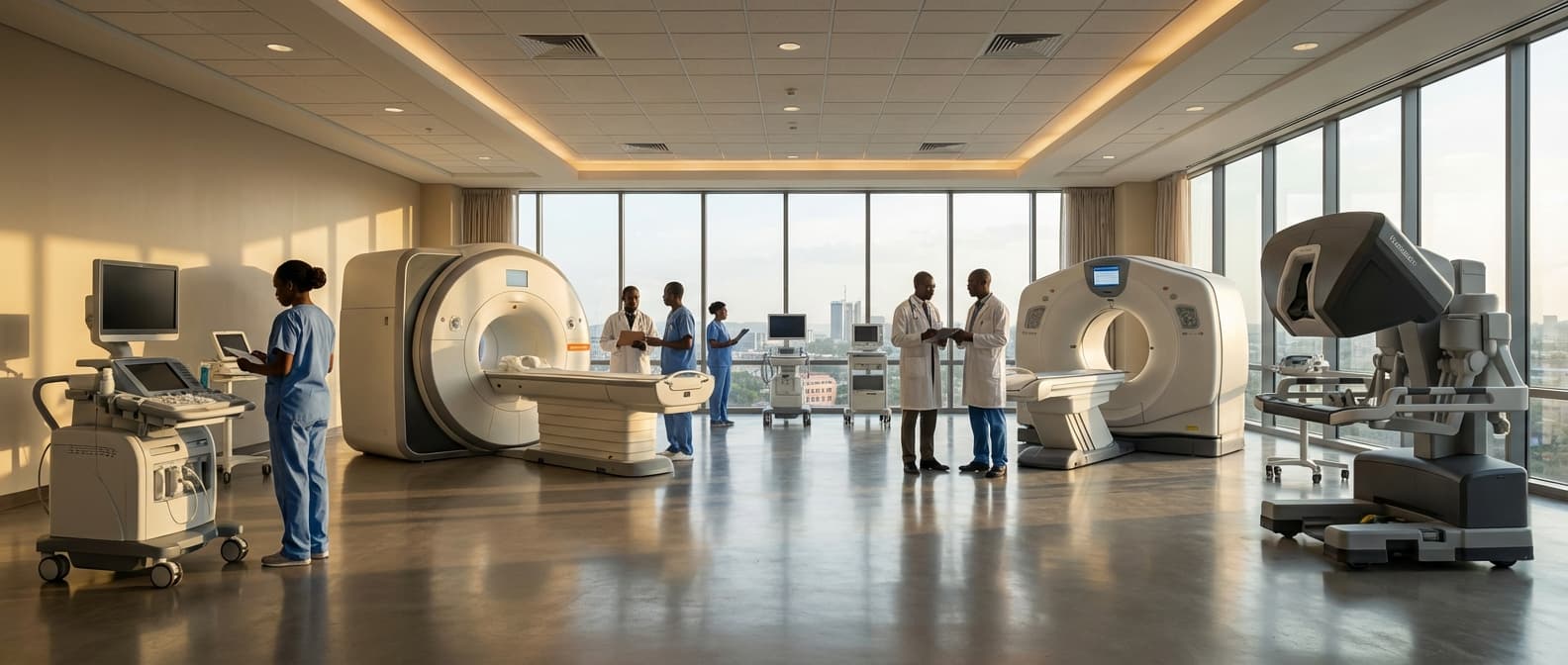
Life Support & Consumables in South Africa
Engineering Excellence & Technical Support
Reliable supply of essential medical consumables and life support equipment ensuring uninterrupted, quality patient care delivery. High-standard technical execution following OEM protocols and local regulatory frameworks.
Advanced Medical Oxygen Systems
Deployment of state-of-the-art medical oxygen generation and distribution systems across South African healthcare facilities, ensuring a consistent and high-purity supply for critical care and respiratory support, especially in remote or underserved areas.
Portable Water Purification Solutions
Implementation of robust and portable water purification units for disaster relief and remote community access, providing safe and potable drinking water in emergency situations and regions with limited infrastructure, utilizing advanced filtration and disinfection technologies.
Sustainable Pharmaceutical Consumable Supply Chains
Establishment of resilient and sustainable supply chains for essential pharmaceuticals and medical consumables, leveraging localized manufacturing, efficient inventory management, and cold chain logistics to guarantee availability and affordability for a wide range of medical needs across South Africa.
What Is Life Support & Consumables In South Africa?
Life Support & Consumables (LS&C) in South Africa refers to a critical sector providing essential equipment, medical devices, and the associated supplies necessary for maintaining vital bodily functions in patients requiring advanced medical intervention. This encompasses a broad spectrum of services and products designed to augment or replace failing physiological systems, ensuring patient survival and improving quality of life during periods of acute illness or chronic dependency. The provision of LS&C is a complex undertaking, involving procurement, installation, maintenance, and ongoing replenishment of specialized equipment and consumables. It is typically delivered within clinical settings such as hospitals (ICU, CCU, NICU), specialized care facilities, and increasingly, in home-based care environments. The demand for LS&C is driven by the prevalence of chronic diseases, an aging population, advancements in medical technology, and the increasing capacity of healthcare providers to manage complex patient conditions.
| Service/Product Category | Definition/Involvement | Who Needs It | Typical Use Cases |
|---|---|---|---|
| Mechanical Ventilation | Provision and management of devices that artificially assist or replace spontaneous breathing. Includes ventilator machines, breathing circuits, humidifiers, and respiratory consumables. | Patients with respiratory failure (e.g., ARDS, severe pneumonia, COPD exacerbations), post-operative patients under anesthesia, individuals with neuromuscular disorders affecting respiration. | Intensive Care Units (ICUs), High Care Units, Operating Theatres, Emergency Departments, Home Ventilation Programs. |
| Cardiovascular Support | Equipment and consumables designed to monitor, assist, or replace cardiac function. Encompasses pacemakers, defibrillators, inotropic infusion pumps, and cardiovascular monitoring consumables. | Patients with severe heart failure, cardiogenic shock, arrhythmias, post-myocardial infarction patients requiring hemodynamic support. | Cardiac Care Units (CCUs), ICUs, Cath Labs, Electrophysiology Labs. |
| Renal Replacement Therapy | Devices and supplies for acute or chronic kidney failure, including hemodialysis and peritoneal dialysis equipment and their associated consumables (dialyzers, fluids, tubing). | Patients with End-Stage Renal Disease (ESRD), acute kidney injury (AKI) requiring renal support. | Dialysis Centers, ICUs (for acute dialysis), Home Dialysis Programs. |
| Nutritional Support | Systems for delivering nutrition when oral intake is compromised. Includes enteral feeding pumps, feeding tubes, and parenteral nutrition (IV) solutions and administration sets. | Patients with dysphagia, gastrointestinal disorders, malnutrition, post-operative recovery, critically ill patients unable to maintain adequate oral intake. | General Wards, ICUs, Oncology Units, Geriatric Care Facilities, Home Parenteral/Enteral Nutrition Programs. |
| Monitoring and Diagnostics | Devices for continuous or intermittent monitoring of vital physiological parameters (heart rate, blood pressure, oxygen saturation, temperature) and associated consumables (electrodes, sensors, transducers). | All critically ill and post-operative patients, patients requiring close observation, patients undergoing diagnostic procedures. | Hospitals (all departments), Ambulances, Outpatient Clinics, Home Monitoring Services. |
| Drug Infusion Systems | Pumps and consumables for precise administration of intravenous medications, including vasopressors, sedatives, chemotherapy agents, and analgesics. | Patients requiring continuous or titrated intravenous drug therapy, critically ill patients, cancer patients, pain management patients. | ICUs, Operating Rooms, Oncology Units, Palliative Care Units, Hospitals. |
Key Components of Life Support & Consumables Services
- Ventilation Therapy Equipment (e.g., ventilators, CPAP/BiPAP machines, oxygen concentrators)
- Cardiovascular Support Devices (e.g., pacemakers, defibrillators, intra-aortic balloon pumps, infusion pumps)
- Renal Replacement Therapy Equipment (e.g., dialysis machines, peritoneal dialysis cyclers)
- Nutritional Support Systems (e.g., enteral feeding pumps, parenteral nutrition solutions)
- Monitoring Systems (e.g., vital signs monitors, ECG monitors, pulse oximeters)
- Therapeutic Intervention Devices (e.g., nebulizers, suction machines)
- Consumables: Filters, tubing, masks, cannulas, circuits, electrodes, syringes, needles, sterile dressings, solutions (saline, anesthetic), medications specific to life support protocols.
- Maintenance and Servicing: Calibration, repair, and preventive maintenance of all life support equipment.
- Technical Support and Training: Ensuring healthcare professionals are proficient in the operation and troubleshooting of equipment.
Who Needs Life Support & Consumables In South Africa?
This document outlines the primary users and departments within South Africa that require life support and consumables. These essential items are crucial for various medical, emergency, and specialized operational scenarios. Understanding these target groups is vital for effective distribution, inventory management, and service provision.
| Customer Segment | Typical Departments/Units Requiring Life Support & Consumables | Specific Needs Examples |
|---|---|---|
| Hospitals (Public & Private) | Intensive Care Units (ICU), Emergency Departments (ER), Operating Rooms (OR), General Wards, Neonatal Intensive Care Units (NICU), Oncology, Anesthesiology | Ventilators, oxygen cylinders/generators, IV fluids, syringes, catheters, sterile dressings, resuscitation equipment, medications. |
| Clinics & Community Health Centers | Treatment Rooms, Minor Procedure Areas, Maternal & Child Health Units | Basic oxygen therapy equipment, wound care supplies, diagnostic consumables, basic first-aid kits, disposable gloves, masks. |
| Emergency Medical Services (EMS) / Ambulance Services | Ambulances, Emergency Response Centers, Paramedic Teams | Portable ventilators, oxygen tanks, AEDs, splints, bandages, trauma kits, intubation supplies, IV access equipment. |
| Military & Defense Forces | Field Hospitals, Combat Support Units, Medical Transport | Tactical ventilators, advanced wound care, battlefield dressings, portable diagnostic tools, blood products, pain management supplies. |
| Disaster Management Agencies | Emergency Shelters, Mobile Medical Units, Field Triage Centers | Mass casualty supplies, portable oxygen, basic wound care, emergency food/hydration supplements, sanitation consumables. |
| Industrial & Mining Operations | On-site Clinics, Occupational Health Departments | First-aid supplies, minor surgical equipment, oxygen therapy, emergency response kits for specific industrial hazards. |
| Research & Development Laboratories | Biotechnology Labs, Pharmaceutical R&D, Medical Device Testing | Specialized gases (e.g., CO2, Nitrogen), sterile consumables for experiments, cell culture media, reagents. |
| Specialized Medical Care Facilities | Dialysis Units, Cardiac Cath Labs, Burn Units | Dialysis tubing and filters, contrast agents, specialized dressings, monitoring equipment consumables. |
| Remote & Rural Healthcare Providers | District Hospitals, Mobile Clinics | Reliable oxygen sources, durable wound care supplies, essential medications, basic diagnostic consumables that are easy to transport and maintain. |
| Non-Governmental Organizations (NGOs) | Mobile Health Clinics, Outreach Programs, Humanitarian Aid Distribution Centers | Portable medical equipment, basic medical consumables for widespread use, hygiene kits, emergency relief supplies. |
Target Customers & Departments
- Hospitals (Public & Private)
- Clinics & Community Health Centers
- Emergency Medical Services (EMS) / Ambulance Services
- Military & Defense Forces
- Disaster Management Agencies
- Industrial & Mining Operations (for on-site medical facilities)
- Research & Development Laboratories
- Specialized Medical Care Facilities (e.g., dialysis centers, intensive care units)
- Remote & Rural Healthcare Providers
- Non-Governmental Organizations (NGOs) involved in healthcare and humanitarian aid
Life Support & Consumables Process In South Africa
This document outlines the typical workflow for Life Support & Consumables processes in South Africa, covering the journey from initial inquiry to the final execution of services or delivery of goods. This process is crucial for industries requiring continuous and reliable access to essential supplies and support, such as mining, healthcare, remote operations, and emergency services. The workflow emphasizes efficiency, compliance, and responsiveness.
| Stage | Description | Key Activities | Responsible Parties | Potential Challenges | Key Considerations for South Africa |
|---|---|---|---|---|---|
| Inquiry & Needs Assessment | The initial contact where a client expresses a need for life support or consumables. | Client identifies requirements, specifies quantities, quality standards, and delivery timelines. Supplier gathers detailed information. | Client, Supplier Sales/Technical Team | Vague requirements, unrealistic timelines, lack of clarity on technical specifications. | Understanding of local industry standards, specific regulatory requirements (e.g., SABS, health regulations), and availability of local suppliers. |
| Quotation & Proposal Generation | The supplier provides a detailed cost estimate and proposed solution. | Supplier calculates costs (materials, labor, logistics), prepares a formal quotation or proposal, outlines terms and conditions, and includes lead times. | Supplier Estimating/Sales Team | Inaccurate costing, lengthy turnaround times, failure to meet client specifications. | Competitive pricing structures, understanding of import duties/VAT, and potential for local content requirements. |
| Order Placement & Confirmation | The client formally accepts the quotation and places an order. | Client issues a Purchase Order (PO). Supplier reviews and confirms the PO, acknowledges the order, and provides an order confirmation with revised timelines if necessary. | Client Purchasing Department, Supplier Sales/Order Management | PO discrepancies, unclear payment terms, delayed confirmation. | Ensuring clarity on payment milestones (e.g., 50% upfront, 50% on delivery), and adherence to agreed-upon payment terms. |
| Procurement & Logistics Planning | The process of acquiring the necessary goods and planning their transportation. | Supplier sources materials/equipment, manages inventory, plans transportation routes, coordinates with logistics providers, and prepares for customs clearance if applicable. | Supplier Procurement, Logistics, and Operations Teams | Supply chain disruptions, material shortages, customs delays, transportation issues. | Leveraging established local logistics networks, understanding road infrastructure limitations, and navigating customs procedures for imported goods. |
| Execution & Delivery/Service Provision | The actual delivery of goods or the performance of services. | Goods are packaged, dispatched, and transported to the client's location. Services are performed according to the agreed scope and standards. | Supplier Operations, Logistics, Field Service Teams, and Client Site Management | Delivery delays, damaged goods, incomplete services, safety incidents. | Adherence to stringent safety protocols (e.g., mining safety regulations), efficient last-mile delivery in remote areas, and on-site management of service teams. |
| Verification & Acceptance | The client confirms that the delivered goods or services meet the agreed-upon requirements. | Client inspects goods, tests equipment, or reviews service reports. Formal acceptance is provided. | Client Quality Control/Receiving Department, Supplier Representatives | Disputes over quality, non-conformance to specifications, incomplete documentation. | Clear acceptance criteria, thorough documentation of received goods/services, and a streamlined dispute resolution process. |
| Invoicing & Payment | The financial transaction for the delivered goods or services. | Supplier issues an invoice based on the accepted order. Client processes the invoice and makes payment according to the agreed terms. | Supplier Finance/Accounts Receivable, Client Finance/Accounts Payable | Invoice errors, payment delays, disputed charges. | Compliance with South African tax regulations (e.g., VAT invoicing), and timely processing of payments to maintain good supplier relationships. |
| Reporting & Review | Post-execution analysis to improve future processes. | Supplier may provide performance reports to the client. Both parties conduct internal reviews to identify lessons learned, areas for improvement, and client satisfaction levels. | Supplier Management, Client Relationship Managers | Lack of actionable feedback, failure to implement improvements. | Gathering feedback on service delivery, product performance, and overall client experience to enhance future engagements. |
Key Stages in the Life Support & Consumables Process
- Inquiry & Needs Assessment
- Quotation & Proposal Generation
- Order Placement & Confirmation
- Procurement & Logistics Planning
- Execution & Delivery/Service Provision
- Verification & Acceptance
- Invoicing & Payment
- Reporting & Review
Life Support & Consumables Cost In South Africa
This report delves into the cost of life support and consumables in South Africa, examining the various factors that influence pricing and providing estimated cost ranges in South African Rand (ZAR). Life support equipment and essential consumables are critical for healthcare facilities and individuals requiring ongoing medical assistance. Their pricing is influenced by a complex interplay of global manufacturing costs, import duties, local distribution markups, regulatory compliance, and the specific medical needs being addressed. The ranges provided are approximate and can vary significantly based on brand, supplier, volume, and the exact specifications of the product.
| Category | Typical Unit | Estimated Price Range (ZAR) | Notes |
|---|---|---|---|
| Ventilators (Home Use/Portable) | Unit | R 30,000 - R 150,000+ | Varies significantly by functionality (e.g., BiPAP, CPAP, invasive ventilation), brand, and features. Hospital-grade ventilators can be substantially more expensive. |
| Oxygen Concentrators (Home Use) | Unit | R 8,000 - R 40,000 | Depends on flow rate (LPM), portability, noise level, and brand. Larger, higher-flow units are more costly. |
| Oxygen Cylinders (Portable, Rental/Purchase) | Cylinder (e.g., Size E) | Rental: R 300 - R 800 per month; Purchase: R 2,000 - R 5,000+ | Cost of refill is separate. Rental costs often include maintenance. Purchase price depends on size and material. |
| Nebulizers | Unit | R 500 - R 3,000 | Mainly varies by type (jet, ultrasonic, mesh) and portability. |
| Hospital Beds (Adjustable) | Unit | R 5,000 - R 50,000+ | Basic manual beds are cheaper. Electric, multi-functional, and specialized pressure-relief beds are significantly more expensive. |
| Infusion Pumps | Unit | R 10,000 - R 60,000+ | Features like programmability, safety mechanisms, and accuracy influence price. Large hospital systems purchase at significantly lower per-unit costs. |
| Syringes (Various Sizes) | Pack of 100 | R 150 - R 500 | Sterile, individually wrapped, and specialized syringes (e.g., insulin) can be pricier. |
| IV Bags & Tubing | Set (Bag + Tubing) | R 50 - R 200 | Depends on the type of solution in the bag (e.g., saline, dextrose) and specific tubing requirements. |
| Catheters (Urinary, IV) | Single Unit | R 30 - R 200 | Material (latex, silicone), size, and type (e.g., Foley, straight) affect cost. |
| Wound Dressings (Specialized) | Per Dressing | R 50 - R 500+ | Advanced dressings (e.g., hydrocolloid, foam, silver-impregnated) are considerably more expensive than basic gauze. |
| Stoma Bags & Accessories | Pouch + Barrier | R 100 - R 400 per week/month | System type (one-piece, two-piece) and specific skin barrier needs influence recurring costs. |
| Gloves (Latex/Nitrile) | Box of 100 | R 150 - R 400 | Powder-free, sterile, and thicker gauge gloves can be more expensive. |
| Surgical Masks | Box of 50 | R 100 - R 300 | Surgical grade masks are generally more expensive than basic dust masks. |
Key Factors Influencing Life Support & Consumables Costs in South Africa
- Importation & Duties: South Africa relies on imports for many specialized medical devices and consumables. Import duties, tariffs, and Value Added Tax (VAT) directly increase the landed cost.
- Currency Fluctuations: The ZAR's exchange rate against major currencies (USD, EUR) significantly impacts imported goods. A weaker Rand leads to higher prices.
- Manufacturing & Technology: Advanced technology and complex manufacturing processes contribute to higher production costs, which are then passed on to consumers.
- Brand & Quality: Reputable international brands with established quality control often command premium prices compared to generic or locally manufactured alternatives.
- Distribution & Supply Chain: Wholesalers, distributors, and retailers add their markups, contributing to the final retail price. The efficiency and logistics of the supply chain play a role.
- Regulatory Compliance: Meeting South African health regulations (e.g., SAHPRA approval) can involve significant costs for manufacturers and importers, which are factored into pricing.
- Volume & Bulk Purchasing: Larger healthcare institutions can negotiate better prices through bulk purchasing agreements, while individual consumers may face higher per-unit costs.
- Service & Maintenance: For some life support equipment, ongoing service and maintenance contracts are factored into the overall cost, especially for sophisticated machines.
- Insurance & Reimbursement: While not a direct cost factor for the product itself, insurance coverage and reimbursement policies can indirectly influence the perceived affordability and market demand for certain items.
- Availability & Demand: Scarcity or high demand for specific consumables or equipment can lead to price increases.
Affordable Life Support & Consumables Options
Navigating the complexities of life support and medical consumables can be a daunting task, especially when budgetary constraints are a concern. This guide aims to demystify affordable options, highlighting the value of strategic purchasing, bundle deals, and cost-saving tactics to ensure you receive the necessary supplies without compromising quality or your financial well-being.
| Strategy | Description | Potential Savings | Considerations |
|---|---|---|---|
| Value Bundles | Purchasing a package deal that includes multiple related items (e.g., oxygen concentrator with cannulas, filters, and a humidifier). | Typically 10-20% lower than purchasing items individually. Simplified ordering process. | Ensure the bundle contains only items you actually need. Check the expiry dates of all included consumables. |
| Subscription/Auto-Ship | Setting up recurring deliveries of consumables on a schedule. Many suppliers offer discounts for subscribers. | 5-15% off per order. Ensures you never run out of essential supplies. Eliminates last-minute rush orders. | Requires a consistent usage pattern. May involve a commitment period. Be mindful of potential price increases in subscription fees. |
| Bulk Discounts | Purchasing large quantities of individual consumables (e.g., boxes of bandages, bags of saline). | Varies significantly based on volume, but can range from 5-30%. | Requires adequate storage space. Ensure you have a long enough usage timeframe to justify the large purchase before expiry. |
| Generic Equivalents | Opting for unbranded or store-brand versions of medical supplies that meet the same specifications as name-brand products. | Can be 20-50% cheaper than brand-name equivalents. | Always verify that the generic product meets all necessary regulatory and quality standards. Consult with a healthcare professional if unsure. |
| Loyalty Programs/Rewards | Some suppliers offer rewards points or discounts for repeat customers. | Accumulated savings over time, often redeemable for future purchases. | Requires consistent purchasing from a single supplier. Understand the terms and conditions of the program. |
| Negotiation | For larger orders or ongoing supply contracts, don't hesitate to negotiate prices with suppliers. | Potential for significant percentage discounts, especially for institutional buyers. | Requires knowledge of market pricing and a willingness to explore multiple supplier options. Best suited for bulk or long-term commitments. |
Key Considerations for Affordable Life Support & Consumables
- Understanding Your Needs: Before seeking solutions, accurately assess the specific types and quantities of life support equipment and consumables required. This avoids overspending on unnecessary items.
- Researching Suppliers: Different suppliers offer varying price points and quality. Investigate reputable medical supply companies, both online and brick-and-mortar, to compare offerings.
- Bulk Purchasing: For frequently used consumables, purchasing in larger quantities often leads to significant per-unit cost savings.
- Generic vs. Brand Name: While brand-name products may offer a perceived advantage, generic alternatives often provide the same efficacy at a lower price point. Always confirm that generic options meet necessary quality and regulatory standards.
- Subscription Services: For ongoing needs, subscription models can offer predictable costs and occasional discounts.
- Reconditioned Equipment: For durable medical equipment that isn't a critical, life-or-death immediate need, consider certified reconditioned options. These can be significantly cheaper than new units.
- Insurance and Reimbursement: Understand what your insurance plan covers for life support and consumables. Explore any potential reimbursement options available.
- Avoiding Unnecessary Features: Focus on essential functionalities. Avoid paying premiums for advanced features you won't utilize.
Verified Providers In South Africa
In South Africa's evolving healthcare landscape, identifying reliable and credentialed healthcare providers is paramount for ensuring quality patient care. Franance Health stands out as a beacon of trust and excellence, meticulously vetting its network of healthcare professionals. This commitment to verification means that when you choose a provider through Franance Health, you are opting for a practitioner who has undergone rigorous scrutiny, possesses the necessary qualifications, and adheres to the highest ethical standards. Their credentialing process goes beyond superficial checks, delving into educational backgrounds, professional licenses, clinical experience, and patient feedback. This comprehensive approach ensures that every provider associated with Franance Health is not only skilled but also dedicated to providing compassionate and effective healthcare services, making them the best choice for South Africans seeking peace of mind and superior medical attention.
| Credential | Description | Franance Health Verification |
|---|---|---|
| Medical License | Official authorization to practice medicine, issued by regulatory bodies. | Mandatory verification with the Health Professions Council of South Africa (HPCSA). |
| Educational Degrees | Academic qualifications from accredited medical institutions. | Verification of diplomas, degrees, and postgraduate qualifications. |
| Specialty Certifications | Proof of advanced training and expertise in a specific medical field. | Confirmation of relevant certifications from recognized professional bodies. |
| Professional Affiliations | Membership in reputable medical associations and societies. | Checks for active and good-standing membership where applicable. |
| Continuing Professional Development (CPD) | Evidence of ongoing learning and skill enhancement. | Review of completed CPD points and activities as required by HPCSA. |
| Malpractice Insurance | Proof of adequate insurance coverage for professional liabilities. | Confirmation of current and valid malpractice insurance. |
Key Franance Health Credentialing Aspects
- Verification of Medical Licenses and Registrations
- Thorough Review of Educational Qualifications and Certifications
- Assessment of Clinical Experience and Specializations
- Background Checks and Criminal Record Screening
- Evaluation of Professional Reputation and Peer References
- Patient Satisfaction and Feedback Mechanisms
- Adherence to Ethical Practice Guidelines
Scope Of Work For Life Support & Consumables
This Scope of Work (SOW) outlines the requirements for the provision of Life Support & Consumables. It details the technical deliverables and standard specifications necessary to ensure the successful and safe operation of life support systems and the consistent availability of essential consumables. The scope encompasses the procurement, delivery, installation, maintenance, and monitoring of all life support equipment and the supply chain management of all critical consumables.
| Category | Deliverable/Specification | Description | Standard/Requirement |
|---|---|---|---|
| Life Support Equipment | Oxygen Generation Systems (OGS) | On-site generation of breathable oxygen. | Minimum 95% purity; compliance with ISO 10083; redundancy in units. |
| Life Support Equipment | Water Purification Systems (WPS) | Treatment of water sources to potable standards. | Removal of contaminants to WHO drinking water guidelines; multiple filtration stages; capacity to meet daily demand. |
| Life Support Equipment | Atmospheric Control Systems (ACS) | Regulation of temperature, humidity, and CO2 levels. | Maintain specified environmental parameters (e.g., 20-24°C, 40-60% RH, <1% CO2); integration with environmental sensors. |
| Life Support Equipment | Waste Management Systems | Safe and hygienic disposal of solid and liquid waste. | Compliance with local environmental regulations; odor control; containment measures. |
| Consumables | Medical Supplies | First aid kits, bandages, disinfectants, medications. | Current expiration dates; sterile packaging; appropriate storage conditions; comprehensive inventory. |
| Consumables | Food Rations | Nutritionally balanced and safely stored food provisions. | Compliance with dietary requirements (e.g., caloric intake, nutritional content); shelf-stable; proper packaging and labeling. |
| Consumables | Hygiene Products | Soaps, sanitizers, personal care items. | Individually packaged; biodegradable options where feasible; sufficient quantity for projected needs. |
| Consumables | Filtration Media | Replacement filters for OGS, WPS, and ACS. | Specified micron ratings and material compatibility; documented replacement schedule. |
| Services | Installation & Commissioning | Setting up and validating the functionality of all life support equipment. | Certified technicians; adherence to manufacturer guidelines and project timelines; performance testing. |
| Services | Preventative Maintenance | Scheduled servicing and checks of life support equipment. | Defined service intervals; logbooks for all maintenance activities; spare parts inventory management. |
| Services | Emergency Repairs | Rapid response to equipment malfunctions. | 24/7 availability; guaranteed response times; on-site diagnosis and repair capability. |
| Services | Consumables Logistics | Procurement, transportation, and warehousing of all consumables. | Secure storage; temperature-controlled transport where necessary; inventory tracking system. |
| Reporting | Equipment Status Reports | Regular updates on the operational status of life support equipment. | Daily or weekly reports detailing uptime, maintenance performed, and any issues. |
| Reporting | Consumables Inventory Reports | Detailed tracking of consumable stock levels. | Monthly reports showing stock on hand, consumption rates, and reorder points. |
Key Areas Covered by this Scope of Work
- Procurement of Life Support Equipment
- Delivery and Installation Services
- Maintenance and Repair Services
- Consumables Supply Chain Management
- Monitoring and Reporting
Service Level Agreement For Life Support & Consumables
This Service Level Agreement (SLA) outlines the guaranteed response times and uptime for Life Support & Consumables services. It defines the terms of service, responsibilities of both parties, and the remedies in case of service failures.
| Service Component | Response Time Guarantee | Uptime Guarantee | Escalation Protocol |
|---|---|---|---|
| Emergency Life Support Equipment Maintenance & Repair | 1 hour critical, 4 hours urgent, 24 hours standard | 99.9% monthly (excluding scheduled maintenance) | Immediate dispatch of certified technician |
| Scheduled Preventative Maintenance for Life Support Systems | As per pre-agreed schedule | N/A (scheduled downtime communicated in advance) | Post-maintenance verification and sign-off |
| Consumables Stock Management & Replenishment | 24 hours for standard replenishment | N/A (service uptime is based on availability of consumables) | Automated reordering based on defined thresholds |
| Emergency Consumables Delivery | 4 hours within service region | N/A | Priority fulfillment and direct delivery |
| Technical Support for Life Support Equipment | 15 minutes for initial response, 1 hour for resolution (or workaround) | N/A (support is provided as needed) | Tiered support system (L1, L2, L3) |
Key Service Components
- Emergency Life Support Equipment Maintenance & Repair
- Scheduled Preventative Maintenance for Life Support Systems
- Consumables Stock Management & Replenishment
- Emergency Consumables Delivery
- Technical Support for Life Support Equipment
Frequently Asked Questions

Ready when you are
Let's scope your Life Support & Consumables in South Africa project in South Africa.

Scaling healthcare logistics and technical systems across the entire continent.