
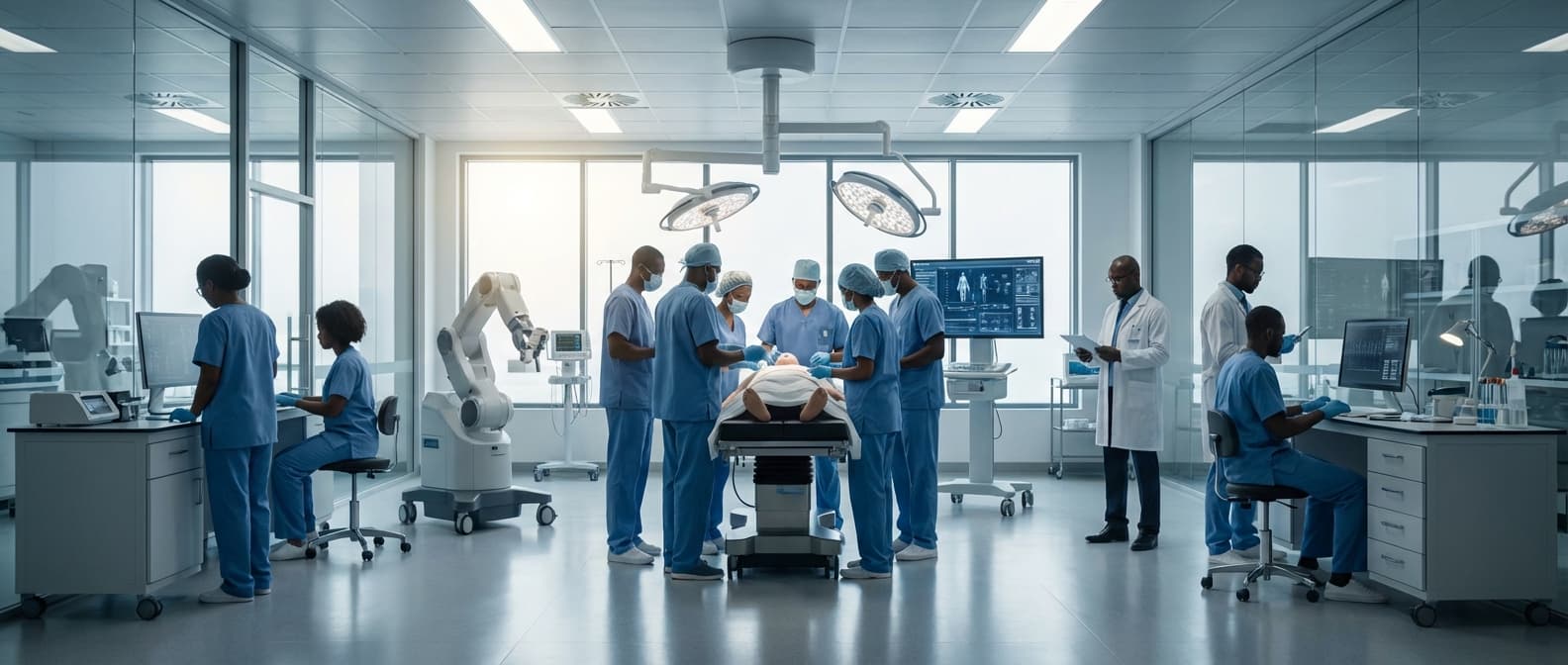
Biomedical Engineering Consulting in South Africa
Engineering Excellence & Technical Support
Equipment selection, procurement and implementation consulting High-standard technical execution following OEM protocols and local regulatory frameworks.
Advanced Clinical Trial Design & Execution
Leveraging deep understanding of regulatory landscapes and emerging technologies to optimize clinical trial protocols, ensuring robust data integrity, faster patient recruitment, and cost-effective execution for novel medical devices and biopharmaceuticals in the South African context.
South African Medical Device Registration & Compliance
Navigating the complex South African Health Products Regulatory Authority (SAHPRA) framework for medical device registration, from pre-submission strategy and dossier preparation to post-market surveillance, ensuring swift and compliant market access for innovative healthcare solutions.
Biocompatibility Assessment & Risk Management for Medical Devices
Providing expert guidance and hands-on support for comprehensive biocompatibility testing according to ISO 10993 standards, coupled with rigorous risk management strategies, to ensure the safety and efficacy of medical devices intended for the South African healthcare market.
What Is Biomedical Engineering Consulting In South Africa?
Biomedical Engineering Consulting in South Africa encompasses the provision of expert technical advice, design, analysis, and problem-solving services specifically for the healthcare and life sciences sectors, with a focus on medical devices, equipment, and associated technologies. This interdisciplinary field integrates engineering principles with medical sciences to improve healthcare delivery, patient outcomes, and the development of innovative medical technologies. Consultants leverage their specialized knowledge to address complex challenges, optimize processes, ensure regulatory compliance, and facilitate the successful implementation of biomedical solutions within the South African context. This involves a deep understanding of local regulatory frameworks (e.g., SAHPRA), market dynamics, and the specific healthcare infrastructure of the region.
| Stakeholder Group | Needs Addressed | Typical Use Cases |
|---|---|---|
| Hospitals and Healthcare Providers (Public & Private) | Optimizing medical equipment inventory, ensuring compliance with safety standards, enhancing patient care through technology integration, managing capital expenditure for medical devices. | Developing a comprehensive medical equipment procurement strategy, conducting a needs assessment for new hospital wings, implementing a preventive maintenance program for critical care equipment, risk assessment for the introduction of novel surgical robots. |
| Medical Device Manufacturers (Local & International) | Navigating South African regulatory pathways for device registration, conducting design verification and validation, ensuring product quality and safety, market entry strategy support, post-market surveillance planning. | Obtaining SAHPRA approval for a new diagnostic imaging device, performing biocompatibility testing for an implantable device, developing a quality management system compliant with ISO 13485, advising on local distribution partnerships. |
| Research Institutions and Universities | Translating research findings into marketable medical technologies, intellectual property protection, feasibility studies for novel biomedical concepts, securing funding for R&D projects. | Conducting preclinical trials for a new drug delivery system, patenting a novel biosensor design, developing a business plan for a spin-off medical technology company. |
| Government and Regulatory Bodies | Developing and updating medical device regulations, assessing emerging technologies for public health impact, establishing standards for healthcare technology adoption. | Contributing to the revision of SAHPRA guidelines for medical device registration, evaluating the safety and efficacy of imported medical equipment, advising on national health technology assessment frameworks. |
| Start-ups and Innovators | Early-stage product development, regulatory strategy, market analysis, securing investment, prototype development and testing. | Developing a low-cost diagnostic tool for remote areas, conducting market research for a wearable health monitor, preparing a pitch deck for venture capitalists, building a functional prototype of a prosthetics component. |
Key Components of Biomedical Engineering Consulting in South Africa:
- Medical Device Design and Development: Conceptualization, prototyping, testing, and refinement of new medical devices.
- Equipment Procurement and Management: Strategic acquisition, installation, validation, and lifecycle management of medical equipment.
- Regulatory Affairs and Compliance: Guidance on navigating national and international regulations (e.g., SAHPRA, FDA, CE marking) for medical devices.
- Clinical Engineering Services: Ensuring the safe, effective, and efficient use of medical technology within healthcare facilities.
- Technology Assessment and Feasibility Studies: Evaluating the viability and suitability of new biomedical technologies for specific applications.
- Infrastructure Planning and Design: Advising on the design and equipping of healthcare facilities with appropriate biomedical technology.
- Quality Assurance and Risk Management: Implementing robust quality systems and conducting risk assessments for medical devices and processes.
- Biocompatibility and Sterilization Validation: Ensuring materials and sterilization processes meet stringent safety and efficacy standards.
- Biomaterials Engineering: Advising on the selection, characterization, and application of biomaterials in medical devices.
- Biomechanics and Rehabilitation Engineering: Designing and developing assistive devices and therapeutic interventions.
Who Needs Biomedical Engineering Consulting In South Africa?
Biomedical Engineering Consulting in South Africa serves a critical role in bridging the gap between medical innovation and practical application. This specialized field is essential for ensuring the safe, effective, and compliant use of medical devices and technologies within the healthcare ecosystem. From startups developing novel medical devices to established hospitals seeking to optimize their infrastructure, the need for expert guidance is significant and growing.
| Customer Type | Key Needs Addressed by Consulting | Relevant Departments/Stakeholders |
|---|---|---|
| Medical Device Manufacturers | Regulatory compliance (SAHPRA registration, quality management systems), product design and development support, clinical trial design and management, market access strategies, post-market surveillance. | Research & Development (R&D), Quality Assurance (QA), Regulatory Affairs, Manufacturing, Marketing & Sales. |
| Hospitals and Clinics | Medical equipment lifecycle management (procurement, maintenance, disposal), clinical engineering services, technology assessment and adoption, infection control strategies, infrastructure planning and upgrades, patient safety initiatives. | Biomedical Engineering Department, Clinical Engineering, Procurement, IT Department, Infection Control Committee, Facilities Management, Patient Safety Officer. |
| Research Institutions & Universities | Development of new medical technologies, grant writing support, intellectual property (IP) protection, ethical review board (ERB) submissions, feasibility studies for research projects. | Research Departments, Innovation Hubs, Technology Transfer Offices, Ethics Committees. |
| Government Health Departments | Policy development and implementation, standardization of medical equipment, national health technology assessment, procurement guidelines, public health program support. | Ministry of Health, Provincial Health Departments, National Department of Health, Health Technology Assessment Units. |
| Distributors & Suppliers | Product registration and compliance, technical training for staff, after-sales support strategies, inventory management optimization, understanding of local market demands. | Sales & Marketing, Technical Support, Operations, Logistics. |
| Healthcare Startups | Concept validation, prototype development, business plan development, funding acquisition support, regulatory pathway guidance, market entry strategies. | Founders, R&D Team, Business Development, Marketing. |
| Insurance Providers | Assessment of the efficacy and cost-effectiveness of new medical technologies, reimbursement strategies, risk assessment for medical device coverage. | Medical Claims Department, Product Development, Actuarial Department. |
| NGOs in Healthcare | Needs assessment for medical equipment in underserved communities, procurement and distribution strategies, training for local healthcare providers, project planning and implementation for health initiatives. | Program Management, Procurement, Operations, Field Staff. |
Target Customers for Biomedical Engineering Consulting in South Africa
- Medical Device Manufacturers (Local & International)
- Hospitals and Clinics (Public & Private)
- Research Institutions and Universities
- Government Health Departments and Regulatory Bodies
- Medical Technology Distributors and Suppliers
- Healthcare Startups and Innovators
- Insurance Providers and Funding Agencies
- Non-Governmental Organizations (NGOs) in Healthcare
Biomedical Engineering Consulting Process In South Africa
Biomedical Engineering consulting in South Africa follows a structured workflow designed to address specific client needs within the healthcare sector. This process typically begins with an initial inquiry and progresses through detailed analysis, proposal development, project execution, and finally, project closure and follow-up. The aim is to provide expert advice and solutions for medical device design, regulatory compliance, technology integration, and infrastructure development within healthcare facilities.
| Stage | Description | Key Activities | Deliverables/Outcomes | South African Context/Considerations |
|---|---|---|---|---|
| Inquiry & Initial Consultation | The client contacts the consulting firm with a need or problem related to biomedical engineering. | Understand the client's initial requirements, discuss potential solutions, and establish rapport. | A basic understanding of the client's needs and a preliminary agreement to explore further. | Awareness of the specific regulatory bodies (e.g., SAHPRA) and their requirements. |
| Needs Assessment & Scoping | A detailed investigation into the client's current situation and specific challenges. | Conduct site visits, interviews with stakeholders, review existing documentation, and define project scope. | A comprehensive report detailing the problem, desired outcomes, and a clear project scope. | Understanding of local healthcare infrastructure, budget constraints, and specific technological landscape. |
| Proposal Development | Based on the needs assessment, a formal proposal outlining the consultancy services is created. | Define project objectives, methodology, timelines, deliverables, resources required, and cost estimates. | A detailed project proposal document. | Adherence to South African procurement processes and compliance with local tender requirements if applicable. |
| Contract Negotiation & Signing | Agreement on the terms and conditions of the consultancy project. | Negotiate fees, payment schedules, scope of work, confidentiality, intellectual property rights, and liability. | A signed consulting agreement or contract. | Understanding of local contract law and standard industry practices in South Africa. |
| Project Planning & Team Assembly | Detailed planning for the execution of the project and assignment of the consulting team. | Develop a detailed project plan, resource allocation, risk management strategy, and communication plan. | A comprehensive project management plan and a qualified consulting team. | Availability of specialized local biomedical engineers and access to relevant industry networks. |
| Information Gathering & Analysis | Collecting all necessary data and conducting in-depth analysis. | Data collection, literature review, technical assessments, regulatory research, and feasibility studies. | Analytical reports, findings, and identified key issues. | Access to local research institutions, government data, and industry specific databases. |
| Solution Design & Development | Developing tailored solutions to address the client's needs. | Designing medical devices, developing technical specifications, creating software, or designing infrastructure. | Prototypes, design documents, software code, or infrastructure blueprints. | Consideration of local manufacturing capabilities, supply chains, and cost-effectiveness for South African market. |
| Testing & Validation | Ensuring the designed solutions meet all requirements and standards. | Conducting laboratory tests, user acceptance testing (UAT), and clinical validation (if applicable). | Test reports, validation certificates, and performance metrics. | Compliance with SAHPRA's guidelines for medical device testing and validation. |
| Implementation & Integration | Putting the developed solutions into practice within the client's environment. | Installation of equipment, integration of systems, and deployment of software. | Fully functional and integrated solutions. | Coordination with local healthcare facilities, IT departments, and maintenance teams. |
| Training & Handover | Ensuring the client's staff can effectively use and maintain the implemented solutions. | Providing comprehensive training sessions, user manuals, and operational guides. | Trained personnel and complete documentation. | Tailoring training to the specific skill sets and experience of South African healthcare professionals. |
| Project Closure & Reporting | Formally concluding the project and documenting all aspects. | Preparation of a final project report, financial reconciliation, and performance review. | Final project report, lessons learned, and formal project closure. | Submission of any required reports to regulatory bodies or funding agencies. |
| Post-Project Support & Evaluation | Providing ongoing support and assessing the long-term impact of the solutions. | Technical support, troubleshooting, performance monitoring, and impact assessment. | Client satisfaction, long-term system performance, and case studies. | Building long-term relationships with clients and contributing to the growth of the South African healthcare sector. |
Biomedical Engineering Consulting Workflow in South Africa
- Inquiry & Initial Consultation
- Needs Assessment & Scoping
- Proposal Development
- Contract Negotiation & Signing
- Project Planning & Team Assembly
- Information Gathering & Analysis
- Solution Design & Development
- Testing & Validation
- Implementation & Integration
- Training & Handover
- Project Closure & Reporting
- Post-Project Support & Evaluation
Biomedical Engineering Consulting Cost In South Africa
Biomedical engineering consulting costs in South Africa are influenced by several key factors, leading to a diverse range of pricing. These factors include the complexity and scope of the project, the experience and specialization of the consultant, the duration of the engagement, and the specific services required. For example, a simple product design review will command a lower fee than a comprehensive regulatory compliance strategy or a large-scale medical device implementation project. Consultant seniority plays a significant role, with highly experienced and specialized professionals often charging a premium for their expertise and proven track record. The location of the consultant within South Africa might also subtly impact pricing, though the primary drivers remain project-specific. Hourly rates are common, but project-based fees are also prevalent, especially for well-defined deliverables. It's crucial for clients to clearly articulate their needs and expectations to receive accurate and competitive quotes.
| Service Type | Estimated Hourly Rate (ZAR) | Estimated Project Fee Range (ZAR) | Notes |
|---|---|---|---|
| Initial Consultation & Needs Assessment | R800 - R1,500 | R3,000 - R10,000 | Often a free initial discussion is available. This covers understanding the client's problem. |
| Product Design & Development Support | R1,000 - R2,500 | R20,000 - R200,000+ | Highly variable depending on the stage (conceptual, prototyping, testing) and complexity. |
| Regulatory Affairs (e.g., SAHPRA submissions, CE marking) | R1,200 - R3,000 | R30,000 - R250,000+ | Depends on the device classification, number of jurisdictions, and complexity of documentation. |
| Quality Management Systems (QMS) Implementation (e.g., ISO 13485) | R1,000 - R2,500 | R40,000 - R300,000+ | Includes documentation, training, and audit preparation. Scale of the organization is a major factor. |
| Market Access & Strategy | R1,000 - R2,000 | R25,000 - R150,000+ | Focuses on go-to-market strategies, pricing, and distribution channels. |
| Clinical Trial Support & Design | R1,500 - R3,500 | R50,000 - R500,000+ | Covers protocol design, site selection, data management. Scale and complexity are significant. |
| Technical Due Diligence & Feasibility Studies | R1,000 - R2,500 | R15,000 - R100,000+ | Assessing the technical viability and risks of a project or investment. |
| Post-Market Surveillance & Vigilance | R900 - R1,800 | R10,000 - R80,000+ | Ongoing monitoring and reporting of device performance and safety. |
Key Pricing Factors for Biomedical Engineering Consulting in South Africa
- Project Complexity and Scope: The more intricate and extensive the project, the higher the cost.
- Consultant's Experience and Specialization: Senior consultants and those with niche expertise command higher rates.
- Duration of Engagement: Longer projects may benefit from reduced hourly rates or project-based discounts.
- Specific Services Required: This includes areas like product design, regulatory affairs, market access, quality management, and clinical trials.
- Deliverables and Outcomes: Clearly defined deliverables impact project scope and thus cost.
- Travel and Expenses: If on-site work is required, travel and accommodation costs will be additional.
Affordable Biomedical Engineering Consulting Options
Navigating the complexities of biomedical engineering projects can be daunting, especially for startups and smaller organizations with budget constraints. Fortunately, there are affordable consulting options available. This involves understanding how to leverage value bundles and implement cost-saving strategies to maximize your return on investment. Value bundles offer a structured approach, often at a reduced per-unit cost when multiple services are combined. Cost-saving strategies focus on efficient resource allocation, remote collaboration, and phased project execution.
| Service Area | Typical Hourly Rate Range (USD) | Value Bundle Example | Potential Cost Savings |
|---|---|---|---|
| Regulatory Strategy | $150 - $350 | Regulatory Pathway Assessment & Submission Planning | 15-25% (when bundled) |
| Product Design & Development | $120 - $300 | Concept to Prototype Development | 10-20% (when bundled) |
| Usability & Human Factors | $100 - $250 | Usability Testing Protocol & Execution | 15-25% (when bundled) |
| Quality Systems Implementation | $130 - $280 | QMS Gap Analysis & Initial Implementation Plan | 20-30% (when bundled) |
| Clinical Trial Support | $140 - $320 | Protocol Development & Site Selection Assistance | 10-20% (when bundled) |
Understanding Value Bundles and Cost-Saving Strategies
- Value Bundles Defined: Pre-packaged sets of consulting services designed to address specific project needs or phases. They offer predictability and potential cost savings compared to procuring individual services.
- Common Bundle Examples:
- Feasibility & Concept Development Bundle: Includes market research, initial design concepts, regulatory pathway assessment, and preliminary cost estimation.
- Design & Prototyping Bundle: Encompasses detailed design, CAD modeling, component selection, and prototype development oversight.
- Testing & Validation Bundle: Covers protocol development, test execution, data analysis, and report generation.
- Regulatory Submission Bundle: Focuses on preparing documentation for FDA, CE Mark, or other regulatory bodies.
- Cost-Saving Strategies:
- Phased Project Approach: Breaking down large projects into smaller, manageable phases, allowing for iterative development and review, and reducing upfront commitment.
- Remote Collaboration Tools: Utilizing video conferencing, cloud-based project management software, and shared document platforms to minimize travel expenses and enable access to a wider talent pool.
- Clear Scope Definition: Precisely defining project objectives, deliverables, and timelines to avoid scope creep and unnecessary expenditures.
- Leveraging Existing Resources: Identifying and utilizing in-house expertise or existing company infrastructure where applicable.
- Negotiating Retainers vs. Hourly Rates: For ongoing needs, negotiating retainer agreements can sometimes offer more predictable costs and dedicated access to consultants.
- Focusing on Core Competencies: Outsourcing specialized biomedical engineering tasks that are not central to your core business.
- Standardized Solutions: Exploring if pre-existing or standardized solutions can be adapted, rather than developing entirely custom ones.
Verified Providers In South Africa
In South Africa, navigating the healthcare landscape and finding trusted providers is paramount. Franance Health stands out as a beacon of reliability, offering a robust network of verified healthcare professionals. Their stringent credentialing process ensures that all affiliated practitioners meet the highest standards of expertise, ethical conduct, and regulatory compliance. This dedication to quality assurance provides patients with peace of mind, knowing they are receiving care from competent and trustworthy individuals. By choosing Franance Health, you are opting for a healthcare experience that prioritizes safety, efficacy, and patient well-being above all else.
| Provider Type | Verification Focus | Benefits for Patients |
|---|---|---|
| Medical Doctors (GPs & Specialists) | Medical Council registration, specialty board certifications, disciplinary records, peer reviews | Ensured competence, accurate diagnosis, appropriate treatment plans, access to specialized care |
| Nurses & Midwives | South African Nursing Council registration, qualifications, employment history | Reliable and compassionate care, safe administration of treatments, skilled support during pregnancy and childbirth |
| Allied Health Professionals (Physiotherapists, Dietitians, etc.) | Professional body registration, relevant degrees and diplomas, ethical conduct | Holistic approach to health, evidence-based therapies, personalized wellness plans |
| Hospitals & Clinics | Licensing by relevant health authorities, quality accreditations, infection control protocols, staff credentials | Safe and sterile environments, access to advanced medical technology, high standards of patient care |
Why Franance Health Credentials Matter:
- Rigorous Vetting Process: Franance Health meticulously verifies the qualifications, licenses, and professional history of every provider.
- Commitment to Ethical Standards: All credentialed professionals adhere to strict ethical guidelines and patient care protocols.
- Up-to-Date Certifications: Providers are required to maintain current certifications and undergo continuous professional development.
- Regulatory Compliance: Franance Health ensures all providers comply with South African healthcare regulations.
- Enhanced Patient Safety: The verification process significantly reduces the risk of unqualified or unethical practitioners.
- Access to Top Talent: Franance Health connects you with leading specialists and general practitioners across various disciplines.
Scope Of Work For Biomedical Engineering Consulting
This document outlines the Scope of Work (SOW) for Biomedical Engineering consulting services. It details the technical deliverables and standard specifications expected throughout the project lifecycle. The consulting engagement will focus on [Specify the broad area of biomedical engineering, e.g., Medical Device Development, Regulatory Affairs, Clinical Engineering, Biomaterials Research, etc.] for [Specify the client's name or organization]. The primary objective is to [State the overarching goal of the consultancy, e.g., to bring a novel medical device from concept to market, to improve the efficiency of a hospital's medical equipment lifecycle management, to assess the feasibility of a new biomaterial for implantable devices, etc.].
| Standard/Guideline | Description/Applicability | Key Requirements/Considerations |
|---|---|---|
| ISO 13485:2016 | Medical devices — Quality management systems — Requirements for regulatory purposes. | Ensuring a robust QMS for the design, development, production, and servicing of medical devices. Includes documentation, process control, and continuous improvement. |
| ISO 14971:2019 | Medical devices — Application of risk management to medical devices. | Systematic identification, analysis, evaluation, and control of risks throughout the lifecycle of a medical device. |
| IEC 62304:2006 + A1:2015 | Medical device software — Software life cycle processes. | Defines processes for the development and maintenance of medical device software, including risk management, software development, and verification. |
| IEC 60601 Series | Medical electrical equipment. | Fundamental safety and essential performance standards for medical electrical equipment. Specific parts will apply based on the device's function and intended use (e.g., General requirements, EMC, specific hazards). |
| IEC 62366-1:2015 | Medical devices — Part 1: Application of usability engineering to medical devices. | Ensures that medical devices are designed for safe and effective use by defining a structured usability engineering process. |
| FDA 21 CFR Part 820 | Quality System Regulation (QSR). | US Food and Drug Administration regulations for medical device manufacturers, covering all aspects of design, manufacturing, packaging, labeling, storage, installation, and servicing. |
| MDR (EU) 2017/745 | Medical Device Regulation (European Union). | EU regulations governing the placing on the market, making available, and putting into service of medical devices in the European Union. Includes requirements for Notified Bodies, clinical evaluation, and post-market surveillance. |
| ICH Guidelines (as applicable) | International Council for Harmonisation of Technical Requirements for Pharmaceuticals for Human Use. | Relevant guidelines for aspects like preclinical safety (e.g., ICH S series) or clinical trials (e.g., ICH E series) if the project involves a combination product or has pharmaceutical components. |
Key Technical Deliverables
- Project Management Plan: A comprehensive plan detailing project scope, objectives, timelines, resource allocation, risk management, and communication protocols.
- Technical Requirements Specification: A detailed document outlining the functional, performance, and safety requirements of the [Specify the product/system being developed/analyzed].
- Design Documentation: Includes schematics, blueprints, CAD models, and Bill of Materials (BOM) for any custom-designed components or systems.
- Risk Management File (RMF): A systematic process for identifying, analyzing, evaluating, controlling, and monitoring risks associated with the [Specify the product/system]. This will adhere to relevant standards such as ISO 14971.
- Verification & Validation (V&V) Plan: Outlines the strategy and protocols for testing and confirming that the [Specify the product/system] meets its specified requirements and intended use.
- Test Protocols and Reports: Detailed procedures for executing V&V activities, along with comprehensive reports documenting test results, deviations, and conclusions.
- Regulatory Strategy Document: A roadmap for navigating the regulatory landscape, including identification of applicable regulations, submission requirements, and timelines for [Specify the target markets].
- Usability Engineering File: Documentation of the usability engineering process, including user needs, intended use, user interface design, and usability testing, conforming to IEC 62366.
- Technical File/Design Dossier (as applicable): Compilation of all technical documentation required for regulatory submissions.
- Training Materials: Documentation and materials for training end-users, maintenance personnel, or other relevant stakeholders on the operation, maintenance, or implementation of the [Specify the product/system].
- Final Project Report: A comprehensive summary of the project, including key findings, lessons learned, and recommendations for future steps.
Service Level Agreement For Biomedical Engineering Consulting
This Service Level Agreement (SLA) outlines the commitment of [Consulting Company Name] to its clients for biomedical engineering consulting services. It defines the expected response times for support requests and the guarantees regarding the availability of critical consulting resources and reporting. This SLA is an addendum to the Master Services Agreement (MSA) between [Consulting Company Name] and [Client Name], dated [Date of MSA].
| Priority Level | Initial Response Time | Resolution Target Time | Uptime Guarantee |
|---|---|---|---|
| Critical Issue | Within 2 Business Hours | Within 8 Business Hours (or as soon as reasonably practicable, depending on issue complexity and client availability) | N/A (Focus is on immediate issue resolution) |
| High Priority Issue | Within 4 Business Hours | Within 2 Business Days | 99.5% (for critical platforms/reporting access) |
| Standard Priority Issue | Within 1 Business Day | Within 5 Business Days | 99.0% (for critical platforms/reporting access) |
Key Definitions
- Business Hours: Monday through Friday, 9:00 AM to 5:00 PM [Client's Time Zone], excluding public holidays.
- Critical Issue: A problem that significantly impacts the client's ability to conduct essential business operations or poses an immediate risk to patient safety or regulatory compliance.
- High Priority Issue: A problem that causes substantial disruption to the client's operations but does not immediately halt all critical functions.
- Standard Priority Issue: A problem that causes minor inconvenience or affects non-critical functions.
- Uptime Guarantee: The percentage of time that critical consulting resources (e.g., access to project documentation platforms, scheduled virtual meetings) are available and functional as per agreed-upon project schedules and deliverables.
Frequently Asked Questions

Ready when you are
Let's scope your Biomedical Engineering Consulting in South Africa project in South Africa.

Scaling healthcare logistics and technical systems across the entire continent.