
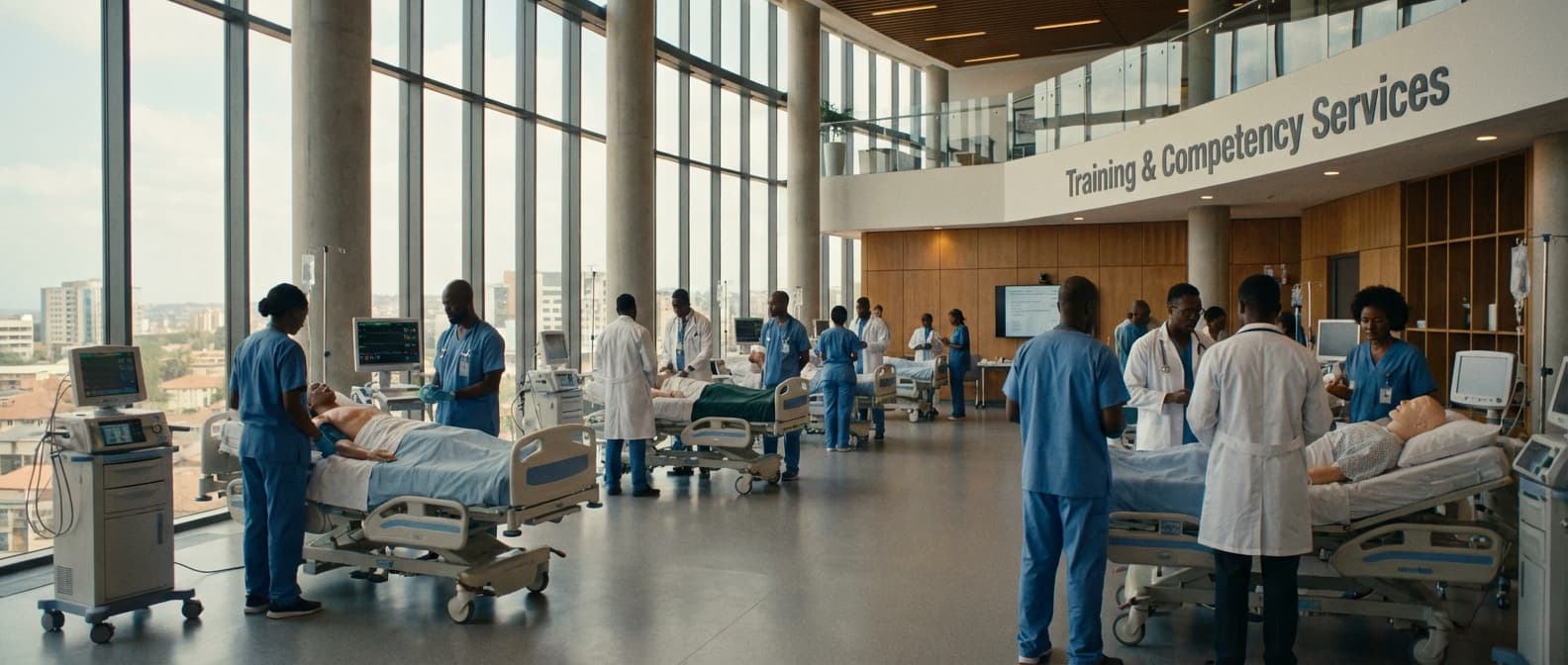
Ventilator User Training Service (Nurses) in Somalia
Engineering Excellence & Technical Support
Ventilator User Training Service (Nurses) High-standard technical execution following OEM protocols and local regulatory frameworks.
Optimizing Ventilation Settings
Learn to accurately set and adjust ventilator modes (e.g., SIMV, AC) and parameters (tidal volume, respiratory rate, PEEP) based on patient condition, ensuring effective gas exchange and reducing lung injury. Understand the impact of each setting on patient physiology.
Troubleshooting & Alarms
Master common ventilator alarms (e.g., high pressure, low tidal volume, apnea) and their potential causes. Develop systematic troubleshooting strategies to quickly identify and resolve issues, maintaining patient safety and therapeutic continuity.
Patient Monitoring & Weaning Readiness
Gain proficiency in interpreting real-time ventilator graphics and patient physiological data to assess respiratory status and weaning readiness. Learn to identify subtle signs of distress and make informed decisions regarding ventilator liberation.
What Is Ventilator User Training Service (Nurses) In Somalia?
Ventilator User Training Service (Nurses) in Somalia refers to a specialized educational program designed to equip nurses with the knowledge and practical skills necessary for the safe, effective, and efficient operation of mechanical ventilators within the Somali healthcare context. This service is critical due to the increasing demand for advanced respiratory support in critical care settings and the existing limitations in specialized training infrastructure and readily available expert personnel in the region. The training focuses on the theoretical underpinnings of mechanical ventilation, the practical operation of various ventilator models, patient monitoring, troubleshooting common issues, and adherence to established clinical protocols. It aims to enhance patient outcomes by minimizing ventilator-associated complications and optimizing respiratory support.
| Category | Description | Relevance in Somalia |
|---|---|---|
| Target Audience | Registered Nurses (RNs), Licensed Practical Nurses (LPNs), and other healthcare professionals directly involved in patient care requiring mechanical ventilation. | Essential for nurses in critical care units, intensive care units (ICUs), emergency departments, and high-dependency units (HDUs) within hospitals and clinics in Somalia. |
| Purpose | To ensure competency in the operation and management of mechanical ventilators, thereby improving patient safety and clinical outcomes. | Addresses the gap in specialized training for critical care nursing, improving the capacity of the Somali healthcare system to manage severe respiratory conditions. |
| Typical Use Cases | Management of patients with acute respiratory failure (e.g., ARDS, pneumonia, COPD exacerbations), post-operative respiratory support, and critical illness requiring airway support. | Crucial for treating a range of conditions prevalent in Somalia, including severe infectious diseases, trauma-related injuries, and chronic respiratory illnesses, where advanced respiratory support is often a life-saving intervention. |
Key Components of Ventilator User Training Service (Nurses) in Somalia
- Theoretical foundation of respiratory physiology and pathophysiology.
- Principles of mechanical ventilation modes (e.g., Volume Control, Pressure Control, PSV).
- Ventilator setup, calibration, and initiation of therapy.
- Patient assessment and monitoring for mechanical ventilation.
- Ventilator weaning protocols and strategies.
- Troubleshooting common ventilator alarms and malfunctions.
- Infection prevention and control related to mechanical ventilation.
- Ethical and legal considerations in ventilator management.
- Familiarization with specific ventilator models available in Somali healthcare facilities.
Who Needs Ventilator User Training Service (Nurses) In Somalia?
This service aims to equip nurses in Somalia with the essential skills and knowledge to safely and effectively operate and manage mechanical ventilators. Given the critical nature of respiratory support, especially in resource-limited settings, well-trained nurses are indispensable for patient survival and positive outcomes. The training will cover ventilator principles, patient assessment, setting adjustments, troubleshooting, and infection control protocols.
| Customer Type | Role/Responsibility | Department/Unit | Need for Training |
|---|---|---|---|
| Registered Nurse (RN) | Direct patient care, ventilator management, patient monitoring, critical decision-making | ICU, ED, Surgical Wards, NICU, Respiratory Therapy | Essential for safe and effective patient management and outcomes. |
| Licensed Practical Nurse (LPN) | Assisting RNs, basic ventilator checks, patient comfort, vital sign monitoring | General Wards, ED (support role), ICU (support role) | To understand ventilator basics and support senior staff. |
| Clinical Officer (with nursing duties) | Patient assessment, initial ventilator setup, basic parameter adjustments | ED, General Wards, MCH Units | To provide critical care in areas with limited physician availability. |
| Head Nurse/Nurse Manager | Supervision of nursing staff, resource allocation, quality assurance, ensuring training compliance | All patient care departments | To oversee and ensure competent ventilator use within their teams. |
| Nursing Educator/Trainer | Developing and delivering training programs, assessing competency | Healthcare facility education departments, Ministry of Health | To be equipped to train other nurses on ventilator use. |
| Emergency Medical Technicians (EMTs) / Paramedics (if trained for advanced care) | Pre-hospital stabilization, initial ventilator support during transport | Emergency Medical Services (EMS) | To provide immediate life-saving respiratory support. |
Target Customers and Departments for Ventilator User Training Service in Somalia
- Primary Target Customers: Registered Nurses (RNs), Licensed Practical Nurses (LPNs), and Mid-level Healthcare Practitioners (e.g., clinical officers with nursing responsibilities) who are involved in direct patient care requiring mechanical ventilation.
- **Key Departments/Units within Healthcare Facilities:
- Intensive Care Units (ICUs)
- Emergency Departments (EDs)
- Respiratory Therapy Departments (where available)
- Pediatric Wards (especially Neonatal ICUs - NICUs)
- Surgical Wards (post-operative care)
- Maternal and Child Health (MCH) Units
- Emergency Response/Disaster Management Teams
- Hospitals (public and private)
- Clinics and health centers equipped with ventilators (e.g., for emergency stabilization)
- Missions and NGOs providing healthcare services
Ventilator User Training Service (Nurses) Process In Somalia
The Ventilator User Training Service for Nurses in Somalia follows a structured workflow to ensure efficient and effective delivery of training. This process begins with an initial inquiry from a healthcare facility and culminates in the successful completion and certification of trained nurses. The workflow emphasizes needs assessment, customized curriculum development, logistical planning, hands-on training, and post-training evaluation. A key aspect is adapting the training to the specific needs and available resources within Somali healthcare settings, often involving mobile training units and local facilitators.
| Stage | Key Activities | Responsible Party | Deliverables | Timeline (Typical) |
|---|---|---|---|---|
| Healthcare facility expresses interest; initial discussion of training needs and objectives. | Healthcare Facility, Training Provider | Initial Request Document | 1-3 Days |
| On-site or remote assessment of existing knowledge, skills, available equipment, and specific training requirements. | Training Provider (Technical Team) | Needs Assessment Report, Skill Gap Analysis | 3-7 Days |
| Development of a detailed training proposal outlining curriculum, methodology, duration, costs, and expected outcomes. Formal agreement/contract signing. | Training Provider, Healthcare Facility | Training Proposal, Signed Agreement | 5-10 Days |
| Tailoring training modules to the identified needs, developing or adapting training materials (presentations, manuals, case studies) in relevant languages. | Training Provider (Curriculum Developers) | Customized Training Curriculum, Training Materials | 7-14 Days |
| Coordinating training dates, venue selection (may include mobile units), participant registration, equipment availability verification, and travel arrangements. | Training Provider (Logistics Team), Healthcare Facility | Training Schedule, Logistics Plan | 7-14 Days |
| Selecting and briefing qualified trainers, ensuring they understand the specific context and objectives of the training. | Training Provider (Training Manager) | Briefed Training Team | 2-5 Days |
| Delivery of theoretical sessions, practical demonstrations, hands-on practice with ventilators, and scenario-based exercises. | Certified Trainers | Trainee Engagement, Practical Skill Demonstration | 2-5 Days per cohort |
| Utilizing written tests, practical skill assessments, and observation to evaluate trainee competency. Gathering feedback on the training. | Certified Trainers | Competency Assessment Records, Trainee Feedback Forms | 1-2 Days per cohort |
| Issuing certificates to successful trainees. Planning for post-training support or refresher courses if required. | Training Provider | Training Certificates, Follow-up Plan | 3-7 Days |
| Providing a comprehensive report to the healthcare facility outlining training activities, participant performance, and recommendations. Internal review and lesson learned. | Training Provider | Final Training Report, Internal Evaluation | 5-10 Days |
Ventilator User Training Service (Nurses) Workflow in Somalia
- Inquiry and Initial Contact
- Needs Assessment and Gap Analysis
- Proposal Development and Agreement
- Curriculum Customization and Material Preparation
- Logistical Planning and Scheduling
- Trainer Mobilization and Pre-briefing
- On-site Training Execution
- Competency Assessment and Evaluation
- Certification and Follow-up
- Reporting and Feedback
Ventilator User Training Service (Nurses) Cost In Somalia
This document outlines the typical cost of Ventilator User Training services specifically for nurses in Somalia. The pricing is influenced by several key factors, leading to a range of potential expenses. Understanding these factors is crucial for healthcare institutions and organizations seeking to ensure their nursing staff are proficient in operating and managing ventilators.
| Training Scope | Estimated Cost Range (USD) | Estimated Cost Range (Somali Shilling - SOS) | Notes |
|---|---|---|---|
| Basic Ventilator User Training (1-2 Days) | $200 - $500 per nurse | 1,160,000 - 2,900,000 SOS | Focus on fundamental operation, safety features, and common alarms. Group rates may apply. |
| Intermediate Ventilator User Training (2-3 Days) | $400 - $800 per nurse | 2,320,000 - 4,640,000 SOS | Includes basic training plus introduction to common ventilation modes and basic troubleshooting. Hands-on practice is crucial. |
| Advanced Ventilator User Training (3-5 Days) | $600 - $1,200+ per nurse | 3,480,000 - 6,960,000+ SOS | Covers a wide range of ventilation modes, weaning strategies, advanced monitoring, and complex troubleshooting. May include simulation exercises. |
| On-site Training (Per Day, for a Group) | $500 - $1,500 (for the group) | 2,900,000 - 8,700,000 SOS | This is a general estimate and depends heavily on the number of participants, trainer's travel/accommodation, and the scope of training. May be more cost-effective for larger groups. |
Factors Influencing Ventilator User Training Costs for Nurses in Somalia:
- Trainer Expertise and Qualifications: Highly experienced and certified respiratory therapists or medical equipment specialists command higher fees. Their in-depth knowledge and practical experience directly translate to a more effective training program.
- Training Duration and Depth: The length of the training session, from a basic introductory course to an advanced, hands-on program covering troubleshooting and critical care scenarios, will significantly impact the cost. More comprehensive training requires more time and resources.
- Number of Participants: While individual training sessions might have a higher per-person cost, group training often offers a more economical rate per nurse due to economies of scale. However, very large groups might necessitate additional trainers or equipment, potentially increasing the overall cost.
- Training Location and Logistics: Training conducted on-site at a hospital or clinic in Somalia might incur additional costs related to travel and accommodation for trainers, especially if they are from outside the immediate area. Renting a dedicated training facility would also add to the expense.
- Equipment Availability and Type: If the training requires specialized or multiple ventilators for hands-on practice, the provider's access to and maintenance of this equipment will factor into the pricing. Training on more complex or advanced ventilator models may also be more expensive.
- Curriculum Development and Materials: The cost of developing a tailored training curriculum, including presentations, handouts, assessments, and simulation materials, will be incorporated into the overall price.
- Certification and Assessment: If the training includes formal certification or competency assessments, these processes add to the cost due to the administrative and evaluative efforts involved.
- Provider Reputation and Demand: Established training providers with a strong reputation for quality and proven results may charge a premium. High demand for these services in specific regions can also influence pricing.
- Scope of Training (Basic vs. Advanced): Basic training might focus on fundamental operation, alarms, and basic patient settings. Advanced training could include ventilation modes, weaning protocols, patient monitoring, and troubleshooting complex issues.
- Language of Instruction: While Somali is the primary language, if English is also required for instruction or materials, this might influence trainer availability and cost.
Affordable Ventilator User Training Service (Nurses) Options
This document outlines affordable ventilator user training service options for nurses, focusing on value bundles and cost-saving strategies to ensure accessible and effective education for healthcare professionals. Proper training is crucial for patient safety and optimal ventilator utilization, and these options aim to make it more attainable.
| Value Bundle Option | Description | Key Cost-Saving Strategies | Typical Target Audience | Estimated Price Range (USD) |
|---|---|---|---|---|
| Basic Online Fundamentals | Self-paced online modules covering core ventilator concepts, terminology, and basic modes. Includes interactive quizzes. | Scalable, reduced instructor-to-student ratio, minimal travel costs, reusable content. | New nurses, nurses transitioning to critical care, refresher training. | $150 - $350 per nurse |
| Blended Learning Package | Combines online modules with live virtual Q&A sessions with instructors and recorded case studies. May include basic simulation scenarios. | Reduced travel and facility costs compared to full in-person, efficient use of instructor time, flexibility for learners. | Nurses in general critical care units, those needing a deeper understanding than basic online. | $400 - $700 per nurse |
| Simulation-Focused Intensive Workshop | In-person or highly interactive virtual workshop featuring hands-on practice with high-fidelity simulators, advanced troubleshooting scenarios, and expert-led discussions. | Group discounts, bulk purchase of simulation time, potential for mobile simulation labs, train-the-trainer components. | Experienced nurses, charge nurses, those working in specialized critical care areas (e.g., ICU, ER). | $800 - $1500 per nurse |
| Hospital-Wide Program (Customizable) | Tailored training program designed to meet the specific needs of a hospital, including their equipment and patient population. Can include on-site training, train-the-trainer, and ongoing support. | Significant volume discounts, reduced marketing and recruitment costs, integration with hospital HR/education budgets, potential for long-term contracts. | Hospitals of all sizes, healthcare systems, teaching hospitals. | Tiered pricing based on volume and customization (e.g., $300-$800 per nurse for large institutional agreements) |
| Subscription-Based Access | Annual or monthly subscription providing access to a library of online modules, webinars, updated content, and a community forum for ongoing learning and peer support. | Predictable revenue for providers, encourages continuous learning, reduces per-user cost for frequent access. | Individual nurses seeking continuous professional development, smaller clinics or facilities with limited training budgets. | $100 - $300 per nurse per year |
Key Components of Affordable Ventilator User Training for Nurses
- Comprehensive Curriculum: Covering basic principles of mechanical ventilation, common ventilator modes, settings adjustment, troubleshooting, patient monitoring, and infection control.
- Flexible Delivery Methods: Offering a blend of online modules, in-person workshops, simulation-based training, and on-the-job mentorship.
- Experienced Instructors: Utilizing registered nurses, respiratory therapists, and critical care physicians with extensive ventilator experience.
- Assessment and Certification: Including knowledge checks, practical skills assessments, and formal certification upon completion.
- Ongoing Support: Providing access to resources, case studies, and refresher courses.
- Customization Options: Tailoring training content to specific hospital needs, patient populations, and equipment.
- Group Discounts: Incentivizing multiple nurses or departments to participate.
- Partnerships with Healthcare Institutions: Collaborating with hospitals to integrate training into existing professional development programs.
- Leveraging Technology: Utilizing e-learning platforms, virtual reality (VR) simulations, and mobile applications for enhanced engagement and accessibility.
- Focus on Evidence-Based Practices: Ensuring training reflects current clinical guidelines and research.
Verified Providers In Somalia
In Somalia's complex healthcare landscape, identifying genuinely verified providers is paramount for ensuring quality and safety. Franance Health stands out as a beacon of trust and excellence, distinguishing itself through a rigorous credentialing process that guarantees the highest standards of medical expertise and ethical practice. Their commitment to thorough vetting and continuous professional development makes them the unequivocally best choice for anyone seeking reliable healthcare services in the region.
| Franance Health Credentialing Pillars | Description |
|---|---|
| Educational & Licensure Verification | Confirmation of accredited medical degrees, specialized certifications, and valid, up-to-date professional licenses issued by recognized authorities. |
| Professional Background Checks | Thorough review of past employment history, peer endorsements, and absence of disciplinary actions or malpractice claims. |
| Skills and Competency Assessment | Evaluation of practical skills and clinical competencies through case reviews, peer assessment, and in some cases, practical examinations. |
| Ethical and Professional Conduct Review | Assessment of adherence to medical ethics, patient communication skills, and a commitment to patient-centered care. |
| Continuous Medical Education (CME) Monitoring | Ensuring providers actively participate in ongoing training and professional development to stay current with medical advancements. |
Why Franance Health is Your Premier Choice:
- Unwavering Commitment to Verification: Franance Health employs a multi-layered verification system, meticulously examining the qualifications, licenses, and professional history of every provider within their network. This goes beyond superficial checks, ensuring genuine competence and adherence to international medical standards.
- Rigorous Credentialing Process: Our credentialing involves comprehensive background checks, verification of educational degrees and certifications from accredited institutions, confirmation of valid medical licenses, and a thorough review of past performance and disciplinary records.
- Focus on Patient Safety and Quality: The cornerstone of Franance Health's operation is patient well-being. By partnering exclusively with verified providers, they significantly mitigate risks associated with unqualified practitioners, ensuring you receive safe, effective, and evidence-based care.
- Access to Specialized Expertise: The verified network of Franance Health encompasses a diverse range of medical specialties. This means you can confidently access highly skilled professionals for everything from general consultations to complex surgical procedures and chronic disease management.
- Ethical Practice and Professionalism: Beyond technical skills, Franance Health vets providers for their ethical conduct, communication abilities, and patient-centered approach. This ensures a compassionate and respectful healthcare experience.
- Continuous Professional Development: Franance Health actively encourages and supports ongoing training and education for its providers, keeping them abreast of the latest medical advancements and best practices. This commitment to lifelong learning guarantees you receive care informed by cutting-edge medical knowledge.
- Building Trust in a Challenging Environment: In a region where reliable healthcare information can be scarce, Franance Health provides a much-needed platform of trust. Their verified provider network offers peace of mind, knowing you are in capable and qualified hands.
Scope Of Work For Ventilator User Training Service (Nurses)
This Scope of Work (SOW) outlines the requirements for providing comprehensive ventilator user training services specifically tailored for registered nurses. The training aims to equip nurses with the necessary knowledge and practical skills to safely and effectively operate and manage patients on mechanical ventilation, ensuring optimal patient care and outcomes. The service includes both theoretical instruction and hands-on practical sessions, with clear technical deliverables and adherence to standard specifications for respiratory care.
| Phase | Activity | Deliverable | Standard Specification Reference |
|---|---|---|---|
| Phase 1: Preparation and Planning | Needs Assessment and Curriculum Development | Tailored training curriculum document, including learning objectives, content outline, and assessment methods. | Accreditation body guidelines (e.g., ANCC, relevant national nursing boards), institutional policies on respiratory care. |
| Phase 1: Preparation and Planning | Trainer Selection and Qualification | Resumes/CVs of qualified trainers with demonstrable expertise in critical care and mechanical ventilation. | Professional certifications (e.g., RN, RRT, CCRN), years of experience, documented training experience. |
| Phase 1: Preparation and Planning | Training Material Development | Presentation slides, participant workbooks, case studies, quick reference guides, and competency assessment tools. | Clear, concise language, visual aids, evidence-based content, and alignment with curriculum. |
| Phase 2: Training Delivery | Theoretical Instruction | Live or recorded lectures/presentations covering all curriculum topics. | Coverage of topics: physiology, ventilator modes, initial settings, monitoring, alarms, troubleshooting, weaning, infection control, documentation. Adherence to established critical care guidelines. |
| Phase 2: Training Delivery | Hands-on Practical Sessions | Supervised simulation exercises using functional ventilator models (manikins or simulators). | Participants practice ventilator setup, parameter adjustment, alarm response, waveform interpretation, and basic troubleshooting. Simulation scenarios reflecting common clinical situations. |
| Phase 2: Training Delivery | Case Study Analysis | Group discussions and problem-solving activities based on realistic patient scenarios. | Application of theoretical knowledge to clinical decision-making, critical thinking development. |
| Phase 3: Assessment and Evaluation | Knowledge Assessment | Post-training written or online examination covering theoretical content. | Minimum passing score determined by the institution, aligned with competency standards. |
| Phase 3: Assessment and Evaluation | Skills Competency Assessment | Observed practical demonstration of key ventilator management skills on a simulator or manikin. | Checklists based on essential skills, evaluated by qualified trainers. |
| Phase 3: Assessment and Evaluation | Participant Feedback | Anonymous feedback forms from participants evaluating the training's effectiveness, relevance, and trainer performance. | Structured feedback questionnaire, analysis of qualitative and quantitative data. |
| Phase 3: Assessment and Evaluation | Training Completion Certificates | Certificates of completion awarded to participants who successfully meet all assessment criteria. | Includes participant name, training title, date, and issuing organization. |
| Phase 4: Reporting and Follow-up | Training Summary Report | Comprehensive report detailing training attendance, assessment results, participant feedback summary, and recommendations. | Data analysis, clear presentation of findings, and actionable insights. |
| Phase 4: Reporting and Follow-up | Post-Training Support (Optional) | Access to online resources, Q&A sessions, or refresher modules. | Availability of resources for ongoing learning and reinforcement. |
Training Objectives
- To understand the principles of mechanical ventilation and its physiological impact on the patient.
- To identify indications for mechanical ventilation and common ventilator modes.
- To perform safe initiation, setting, and disconnection of mechanical ventilation.
- To monitor patient response to ventilation and interpret ventilator waveforms and alarms.
- To troubleshoot common ventilator-related issues and manage emergent situations.
- To implement appropriate weaning strategies and assess patient readiness.
- To understand infection control practices related to mechanical ventilation.
- To document ventilator management effectively.
Service Level Agreement For Ventilator User Training Service (Nurses)
This Service Level Agreement (SLA) outlines the response times and uptime guarantees for the Ventilator User Training Service provided to nurses. This SLA is an addendum to the main contract between [Your Organization Name] and [Client Organization Name].
| Service Metric | Target | Measurement Period | Remedy for Non-Compliance |
|---|---|---|---|
| Training Platform Uptime | 99.5% | Monthly | 10% discount on the next training module for every 0.5% downtime below the target. |
| Instructor Availability (for live sessions) | 100% (for scheduled sessions) | Per Scheduled Session | Rescheduling of the session at no additional cost, or a 5% discount on the total training package if rescheduling is not feasible for the client. |
| Technical Support Response Time (for platform issues) | Within 2 business hours (for critical issues) | Per Incident | Expedited resolution of the issue. If the issue cannot be resolved within 8 business hours, a credit of $50 per hour of delay beyond the 8-hour window will be applied. |
| Technical Support Response Time (for non-critical issues) | Within 4 business hours | Per Incident | Expedited resolution of the issue. |
| Access to Training Materials (post-session) | Available 24/7 | Ongoing | N/A (This is an always-available service) |
Key Service Metrics
- This SLA applies to all officially scheduled and delivered ventilator user training sessions for nursing staff.
- The scope of this SLA covers the availability and responsiveness of the training platform, instructors (where applicable), and support personnel.
- This SLA does not cover training content accuracy or effectiveness, which are addressed in separate contractual clauses.
- Definitions of terms used in this SLA are provided in Appendix A (not included in this JSON snippet).
Frequently Asked Questions

Ready when you are
Let's scope your Ventilator User Training Service (Nurses) in Somalia project in Somalia.

Scaling healthcare logistics and technical systems across the entire continent.