
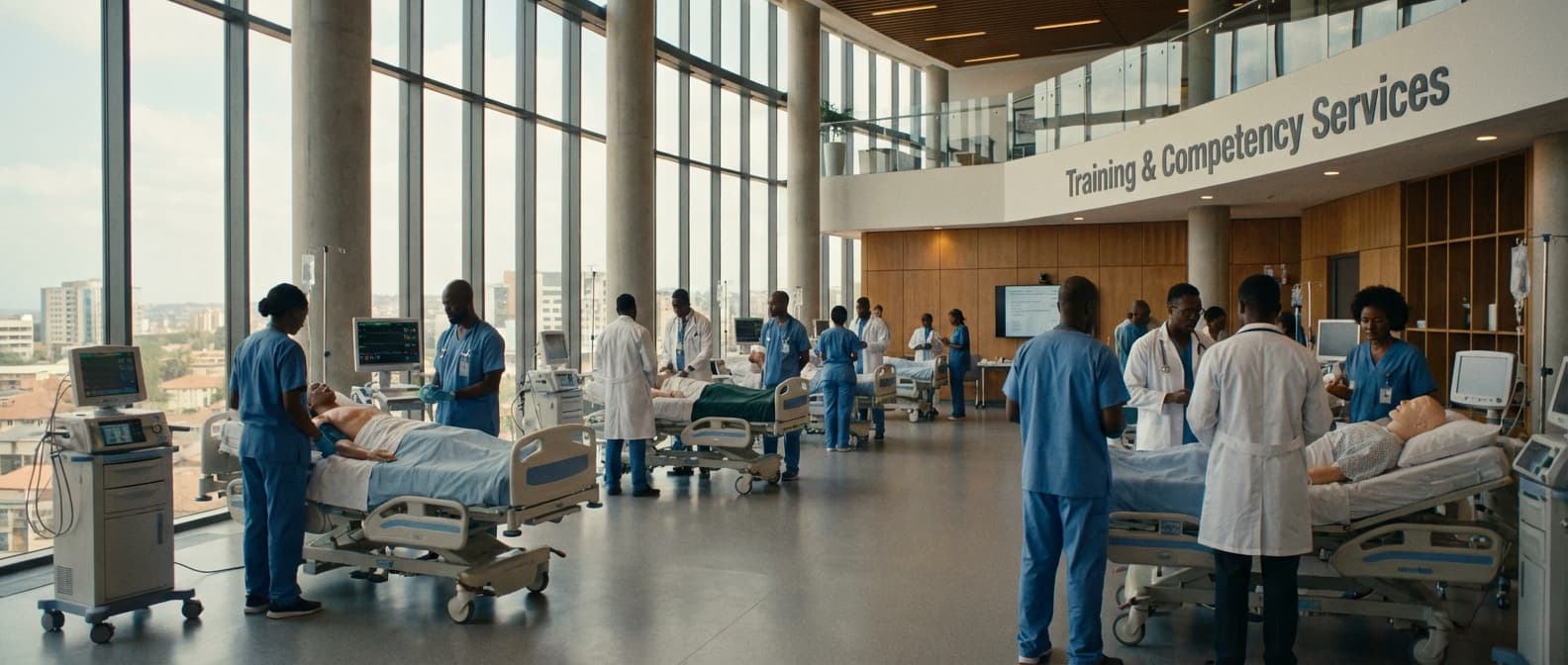
MRI Operator Training Service (Radiographers) in Somalia
Engineering Excellence & Technical Support
MRI Operator Training Service (Radiographers) High-standard technical execution following OEM protocols and local regulatory frameworks.
Advanced MRI Scanner Operations
Comprehensive training modules covering advanced MRI scanner operation protocols, including sequence optimization, artifact reduction techniques, and patient positioning for optimal image quality and diagnostic accuracy, specifically tailored for the Somali healthcare context.
Patient Safety & MRI Physics
In-depth understanding of MRI safety principles, including magnetic field hazards, radiofrequency deposition, acoustic noise management, and contrast agent administration protocols. Training emphasizes practical application of safety guidelines in local clinical environments.
Image Interpretation Fundamentals & DICOM Workflow
Foundational training in basic MRI image interpretation for radiographers, focusing on common anatomical structures and pathologies. Includes practical sessions on DICOM image handling, archival, and basic PACS (Picture Archiving and Communication System) navigation within the Somali healthcare infrastructure.
What Is Mri Operator Training Service (Radiographers) In Somalia?
MRI Operator Training Service (Radiographers) in Somalia refers to a specialized educational program designed to equip radiographers with the theoretical knowledge and practical skills necessary to safely and effectively operate Magnetic Resonance Imaging (MRI) scanners. This service is critical in areas where advanced medical imaging capabilities are being introduced or upgraded, and where existing personnel may lack the requisite expertise. The training encompasses fundamental principles of MRI physics, patient safety protocols, image acquisition techniques, artifact identification and reduction, and post-processing of MRI data. It also addresses the operational aspects of various MRI scanner hardware and software platforms. The overarching objective is to ensure competent personnel are available to perform diagnostic MRI examinations, thereby enhancing diagnostic accuracy and improving patient care within the Somali healthcare system.
| Who Needs This Service? | Typical Use Cases | ||||
|---|---|---|---|---|---|
| Radiographers and Technologists currently working in or aspiring to work in diagnostic imaging departments in Somalia, particularly those utilizing or intending to utilize MRI technology. | Deployment of new MRI scanners in hospitals and specialized diagnostic centers within Somalia. | Upgrading existing MRI facilities and requiring re-training of personnel on new technologies or enhanced protocols. | Healthcare institutions aiming to expand their diagnostic imaging services to include advanced modalities like MRI. | Government health ministries or NGOs involved in healthcare infrastructure development and capacity building. | Medical imaging departments seeking to improve the quality and consistency of MRI examinations performed. |
Key Components of MRI Operator Training Service (Radiographers) in Somalia
- MRI Physics Fundamentals: Understanding the principles of nuclear magnetic resonance, radiofrequency pulses, gradient magnetic fields, and signal generation.
- Patient Safety and MRI Contraindications: Comprehensive training on screening patients for ferromagnetic implants, assessing risks associated with the magnetic field, and implementing safety protocols (e.g., zone management, emergency procedures).
- MRI Hardware and Software Operation: Hands-on training with specific MRI scanner models, including console operation, patient positioning, coil selection, and parameter optimization.
- Image Acquisition Protocols: Development and application of standardized protocols for various anatomical regions and pathologies (e.g., neuroimaging, musculoskeletal MRI, abdominal imaging).
- Image Interpretation Basics: Fundamental understanding of image characteristics, identification of common artifacts, and recognition of basic anatomical structures and abnormalities to ensure adequate image quality.
- Quality Assurance and Control: Implementation of procedures to maintain optimal scanner performance and image quality.
- Radiation Safety (in the context of MRI, although not ionizing radiation, it's crucial for patient and staff well-being within the imaging environment): Understanding the non-ionizing electromagnetic field and its biological effects.
- Ethical and Professional Conduct: Adherence to professional standards and patient confidentiality.
Who Needs Mri Operator Training Service (Radiographers) In Somalia?
MRI Operator Training Services for radiographers are crucial in Somalia to address a significant gap in specialized medical imaging expertise. The lack of trained personnel directly impacts the availability and quality of MRI diagnostic services, hindering effective patient care and medical advancement within the country. This training aims to equip radiographers with the necessary skills to operate MRI scanners safely and efficiently, interpret imaging results accurately, and contribute to the development of a robust healthcare infrastructure.
| Customer Type | Department Focus | Training Needs | Impact of Training |
|---|---|---|---|
| Government Hospitals | Radiology | Basic to advanced MRI operation, patient positioning, safety protocols, image acquisition | Improved diagnostic accuracy, wider access to MRI services for the general population |
| Private Hospitals/Diagnostic Centers | Medical Imaging | Advanced MRI techniques, specialized protocols (e.g., neuro, musculoskeletal), quality assurance | Enhanced service offerings, competitive advantage, attracting specialized cases |
| NGO Healthcare Providers | Radiology/General Diagnostics | Cost-effective MRI operation, basic interpretation skills, remote consultation support | Expanding access to essential diagnostics in underserved areas, supporting humanitarian efforts |
| Tertiary Referral Centers | Specialized Departments (Neurology, Orthopedics, Oncology) | Advanced MRI sequences, functional MRI, contrast administration, interventional MRI | Facilitating complex diagnoses, supporting specialized treatment plans, research opportunities |
| Medical Training Institutions | Radiography Programs | Curriculum development, instructor training, simulator-based training | Developing a sustainable pipeline of qualified MRI operators, long-term capacity building |
Target Customers and Departments for MRI Operator Training Service (Radiographers) in Somalia
- {"items":["Government Hospitals and Public Healthcare Facilities","Private Hospitals and Diagnostic Centers","Non-Governmental Organizations (NGOs) providing healthcare services","Tertiary Referral Centers and Specialized Clinics","Medical Training and Academic Institutions (for capacity building)"],"title":"Target Customers"}
- {"items":["Radiology Departments","Medical Imaging Units","Neurology Departments","Orthopedics Departments","Oncology Departments","Cardiology Departments","Pediatrics Departments","Emergency Departments (for urgent imaging needs)"],"title":"Target Departments"}
Mri Operator Training Service (Radiographers) Process In Somalia
This document outlines the comprehensive workflow for the MRI Operator Training Service for Radiographers in Somalia, detailing the process from initial inquiry to the successful execution of the training program. The service aims to enhance the skills and knowledge of radiographers in operating MRI equipment, ensuring high-quality diagnostic imaging services across Somalia.
| Phase | Key Steps | Description | Responsible Parties | Key Deliverables/Outcomes |
|---|---|---|---|---|
| 1: Inquiry and Initial Assessment | 1.1 Inquiry Received | Prospective clients (hospitals, clinics, healthcare institutions) express interest in MRI operator training. | Client, Training Provider | Initial contact, basic needs identified. |
| 1.2 Needs Assessment Call/Meeting | Detailed discussion to understand specific training requirements, current skill levels, number of participants, available MRI equipment, and desired training outcomes. | Training Provider, Client Representative (e.g., Radiology Manager, HR) | Documented training needs, participant profile, equipment specifications. | |
| 1.3 Feasibility Study (Optional) | Assessment of logistical feasibility, including travel, accommodation, and availability of suitable training facilities and MRI scanners for hands-on practice. | Training Provider | Report on logistical feasibility and potential challenges. | |
| 2: Proposal Development and Agreement | 2.1 Proposal Creation | Development of a comprehensive training proposal outlining curriculum, training methodology, duration, trainers' profiles, proposed dates, budget, and terms and conditions. | Training Provider | Detailed Training Proposal. |
| 2.2 Proposal Review and Negotiation | Client reviews the proposal, and negotiations take place to finalize scope, cost, and any other contractual terms. | Client, Training Provider | Agreed-upon proposal, addressed feedback. | |
| 2.3 Contract Signing | Formal agreement signed by both parties, legally binding the training service. | Client, Training Provider | Signed Training Agreement/Contract. | |
| 3: Pre-Training Preparations | 3.1 Participant Nomination and Registration | Client nominates and registers the radiographers who will attend the training. This includes collecting relevant participant information. | Client, Training Provider | Participant list with contact details and any prerequisites met. |
| 3.2 Curriculum Customization (if applicable) | Fine-tuning the curriculum based on the specific MRI equipment and clinical applications relevant to the client's facility. | Training Provider, Client (for input) | Finalized training curriculum. | |
| 3.3 Trainer and Logistics Confirmation | Confirming trainer availability, travel arrangements, accommodation, and ensuring the training venue (on-site or off-site) is prepared. | Training Provider | Confirmed trainers, travel & accommodation bookings, venue readiness. | |
| 3.4 Training Materials Preparation | Developing and printing/digitizing training manuals, presentations, case studies, and assessment tools. | Training Provider | Complete set of training materials. | |
| 3.5 Pre-Training Communication | Communicating training schedules, pre-reading materials, and any necessary preparations to the participants. | Training Provider | Participant briefing and pre-training engagement. | |
| 4: Training Execution | 4.1 Welcome and Introduction | Official commencement of the training, including an introduction to the trainers, objectives, and training agenda. | Training Provider (Lead Trainer) | Setting the tone and expectations. |
| 4.2 Theoretical Sessions | Delivery of lectures, presentations, and discussions covering MRI physics, pulse sequences, image acquisition techniques, safety protocols, and troubleshooting. | Training Provider (Trainers) | Enhanced theoretical understanding. | |
| 4.3 Practical Demonstrations | Demonstration of MRI equipment operation, including patient positioning, protocol selection, image acquisition, and basic maintenance. | Training Provider (Trainers) | Visual learning of practical skills. | |
| 4.4 Hands-on Practice | Participants actively operate the MRI scanner under trainer supervision, practicing various imaging protocols and scenarios. | Training Provider (Trainers), Participants | Development of practical operating skills. | |
| 4.5 Case Study Analysis and Discussions | Review of real-world MRI cases to enhance diagnostic interpretation and problem-solving skills. | Training Provider (Trainers), Participants | Improved clinical application and critical thinking. | |
| 4.6 Q&A and Feedback Sessions | Dedicated time for participants to ask questions and provide feedback throughout the training. | Training Provider (Trainers), Participants | Addressing queries and continuous improvement. | |
| 4.7 Assessments | Evaluation of participant learning through quizzes, practical assessments, and/or a final examination. | Training Provider | Measurement of knowledge and skill acquisition. | |
| 5: Post-Training Evaluation and Support | 5.1 Training Evaluation | Collection of feedback from participants and the client regarding the training's effectiveness, content, trainers, and logistics. | Training Provider, Participants, Client | Completed training evaluation forms. |
| 5.2 Certificate Issuance | Issuance of certificates of completion to participants who have successfully met the training requirements. | Training Provider | Certificates of Completion. | |
| 5.3 Post-Training Report | A comprehensive report summarizing the training, participant performance, evaluation feedback, and recommendations for further development. | Training Provider | Post-Training Report. | |
| 5.4 Follow-up Support (as per agreement) | Providing ongoing support, such as remote assistance, answering queries, or offering refresher sessions, as defined in the contract. | Training Provider | Sustained skill enhancement and problem resolution. | |
| 5.5 Continuous Improvement Feedback Loop | Utilizing feedback from evaluations to refine future training programs and service offerings. | Training Provider | Enhanced training methodologies and content. |
MRI Operator Training Service (Radiographers) Process in Somalia
- Phase 1: Inquiry and Initial Assessment
- Phase 2: Proposal Development and Agreement
- Phase 3: Pre-Training Preparations
- Phase 4: Training Execution
- Phase 5: Post-Training Evaluation and Support
Mri Operator Training Service (Radiographers) Cost In Somalia
Estimating the precise cost of MRI operator training services for radiographers in Somalia is challenging due to the nascent nature of specialized medical training infrastructure and the limited availability of such dedicated services. The current landscape likely relies on a combination of factors, including international organizations, partnerships with neighboring countries, or ad-hoc training programs. Therefore, cost can fluctuate significantly based on the provider, the duration and intensity of the training, the level of expertise of the instructors, and whether it includes practical, hands-on experience with MRI equipment. The prices are generally quoted in USD, but the local Somali Shilling (SOS) equivalent will be subject to the prevailing exchange rate and the provider's chosen conversion method. Given the limited data, a definitive price range is difficult to establish, but we can outline the key factors influencing potential costs.
| Service Component | Potential Cost Range (USD - Approximate) | Estimated Equivalent in Somali Shillings (SOS - Approximate, based on ~1 USD = 570 SOS, subject to fluctuation) |
|---|---|---|
| Basic MRI Awareness/Introductory Course (1-3 days, theoretical focus) | $100 - $500 | 57,000 - 285,000 SOS |
| Comprehensive MRI Operator Training (1-4 weeks, theoretical & basic practical) | $500 - $2,500 | 285,000 - 1,425,000 SOS |
| Advanced MRI Operator Training with significant hands-on (1-3 months) | $2,000 - $10,000+ | 1,140,000 - 5,700,000+ SOS |
| Per Diem for Trainees (if training is away from home) | $30 - $70 per day | 17,100 - 39,900 SOS per day |
| Travel Expenses (if applicable) | Variable (highly dependent on origin/destination) | Variable |
| Accommodation Costs (if applicable) | Variable (highly dependent on location and standard) | Variable |
Key Pricing Factors for MRI Operator Training in Somalia
- Provider Type: Training offered by international NGOs or established medical institutions will likely be more structured and potentially more expensive than informal arrangements or basic awareness programs.
- Training Duration and Intensity: Shorter, introductory courses will be less costly than comprehensive programs covering advanced techniques and troubleshooting.
- Instructor Expertise and Nationality: Highly specialized instructors, especially those with international experience, may command higher fees.
- Curriculum and Content: The depth and breadth of the training, including theoretical knowledge, image interpretation, quality control, and patient safety, will impact the cost.
- Location of Training: Training conducted within Somalia might incur lower logistical costs for local participants but could be more expensive due to limited infrastructure. Conversely, sending trainees abroad would include travel, accommodation, and per diem expenses.
- Equipment Access: Training that includes significant hands-on time with an actual MRI scanner is invaluable but will likely be a significant cost driver, either through access fees or the provider's investment in equipment.
- Certification and Accreditation: Training leading to recognized certifications may carry a higher price tag.
- Inclusion of Materials: Costs can vary depending on whether training manuals, study guides, and other learning materials are provided.
- Group Size: Larger groups may benefit from economies of scale, potentially lowering the per-person cost.
- Government or Donor Support: Subsidized training programs funded by government initiatives or international donors will significantly reduce out-of-pocket expenses for trainees.
Affordable Mri Operator Training Service (Radiographers) Options
Investing in skilled MRI operators (radiographers) is crucial for any healthcare facility offering MRI services. However, the cost of comprehensive MRI operator training can be a significant barrier. This guide outlines affordable training options, value bundles, and cost-saving strategies specifically tailored for radiographers seeking to specialize in Magnetic Resonance Imaging.
| Value Bundle Component | Description | Cost-Saving Strategy |
|---|---|---|
| Core MRI Physics + Basic Protocols | Comprehensive online modules covering fundamental MRI physics, pulse sequences, and common imaging protocols for head, spine, and extremities. | Bundling core theoretical knowledge with practical protocol application reduces the need for separate courses, saving on tuition and time. |
| Advanced Imaging Techniques + Quality Control | Training focused on specialized MRI applications (e.g., musculoskeletal, neurovascular, abdominal) combined with modules on image optimization and quality assurance. | Investing in advanced techniques early can increase operator versatility and potentially lead to higher-value service offerings for the facility. |
| Hands-on Simulation + Clinical Mentorship | Online or simulated MRI scanner training followed by a period of supervised clinical practice (either internally or through a partner facility). | Utilizing simulated environments reduces equipment wear and tear and allows for focused learning before real-patient scans. Mentorship can be integrated into existing staff duties. |
| Combined Online Theory + Manufacturer Training | Completing a foundational online MRI course and then leveraging manufacturer-specific training for hands-on experience with new equipment. | Leveraging free or low-cost manufacturer training after acquiring theoretical knowledge maximizes the value of both training types and avoids redundant content. |
| Group Training Discounts + CEU Packages | Enrolling multiple radiographers from the same facility in a training program to receive group discounts. Purchasing bundled CEU packages for ongoing professional development. | Negotiating group rates can significantly reduce per-person training costs. Bundled CEUs offer a more economical way to maintain certifications and learn new skills over time. |
Affordable MRI Operator Training Options
- Online MRI Physics and Protocol Courses: Many reputable organizations and educational platforms offer self-paced online courses covering the fundamental physics of MRI, image acquisition techniques, and common clinical protocols. These are often significantly more affordable than in-person programs.
- Hospital-Based Training Programs (Internal or Partnership): Some larger hospitals with established MRI departments may offer internal training for their own radiographers or partner with smaller facilities to provide training, often at a reduced cost or in exchange for future service commitments.
- Manufacturer Training Programs: MRI scanner manufacturers often provide training for new equipment. While primarily focused on their specific systems, these can be an excellent and sometimes complimentary or low-cost way to gain hands-on experience and learn advanced techniques.
- Continuing Education Units (CEUs) and Workshops: Numerous professional organizations offer workshops and CEU courses that focus on specific MRI applications, safety, or advanced imaging techniques. While not a complete foundational training, they can supplement existing knowledge and offer specialized skill development at a reasonable price.
- University and College Continuing Education Departments: Some academic institutions offer certificate programs or individual courses in advanced imaging modalities like MRI, often accessible through their continuing education divisions.
- Professional Association Resources: Organizations like the American Society of Radiologic Technologists (ASRT) and the Society for Magnetic Resonance Technologists (SMRT) provide educational resources, webinars, and sometimes even discounted training opportunities for their members.
Verified Providers In Somalia
In the challenging healthcare landscape of Somalia, identifying and trusting verified healthcare providers is paramount for ensuring quality and safe medical care. Franance Health stands out as a leading organization dedicated to this mission. Their rigorous credentialing process and commitment to excellence make them the premier choice for individuals and organizations seeking reliable healthcare services and partnerships within Somalia.
| Credential Type | Franance Health Verification Scope | Importance for Patients in Somalia |
|---|---|---|
| Medical Licenses | Confirms legal authorization to practice medicine in Somalia and any relevant international jurisdictions. | Ensures the provider is legally qualified and authorized to offer medical services, preventing practice by unqualified individuals. |
| Educational Qualifications | Verifies degrees, diplomas, and certifications from recognized medical institutions. | Guarantees that the provider has received formal and appropriate medical training from credible sources. |
| Professional Experience | Evaluates the duration and nature of past clinical work, specializations, and previous employment. | Assesses the provider's practical skills and familiarity with various medical conditions and treatments. |
| Specialty Certifications | Confirms specialized training and board certifications in particular medical fields. | Allows patients to identify and trust specialists for specific health needs, ensuring expertise in areas like surgery, pediatrics, or cardiology. |
| Continuing Medical Education (CME) | Checks for evidence of ongoing professional development and updated medical knowledge. | Ensures providers are current with the latest medical advancements, research, and treatment protocols. |
| Ethical Conduct and Reputation | Includes checks for disciplinary actions, patient complaints, and professional references. | Builds confidence in the provider's integrity, trustworthiness, and commitment to ethical patient care. |
Why Franance Health is the Best Choice for Verified Providers in Somalia:
- Rigorous Vetting Process: Franance Health employs a comprehensive and multi-faceted vetting system for all providers. This includes verifying medical licenses, educational qualifications, professional experience, and conducting thorough background checks.
- Commitment to Quality Standards: Beyond basic credentials, Franance Health assesses providers based on their adherence to international best practices and quality of care standards, ensuring patients receive effective and ethical treatment.
- Focus on Patient Safety: Patient safety is a cornerstone of Franance Health's operations. Their verification process is designed to identify and endorse providers who demonstrate a strong commitment to patient well-being and medical integrity.
- Local Expertise and Global Standards: Franance Health uniquely blends in-depth knowledge of the Somali healthcare context with adherence to globally recognized healthcare benchmarks, providing a bridge for accessible and high-quality care.
- Building Trust and Accessibility: By meticulously verifying providers, Franance Health aims to rebuild trust in the Somali healthcare system and make it easier for individuals to access competent and dependable medical professionals.
- Partnership Opportunities: For international organizations, NGOs, and government bodies, partnering with Franance Health-verified providers offers a significant reduction in risk and a guarantee of working with reputable healthcare entities.
- Continuous Monitoring and Evaluation: Franance Health's commitment doesn't end with initial verification. They often implement systems for ongoing monitoring and evaluation of their registered providers to ensure sustained performance and compliance.
Scope Of Work For Mri Operator Training Service (Radiographers)
This Scope of Work (SOW) outlines the requirements for providing comprehensive MRI Operator Training services specifically for radiographers. The training will cover theoretical knowledge, practical skills, and adherence to safety protocols essential for proficiently operating MRI scanners. The objective is to equip radiographers with the necessary competencies to perform MRI examinations safely, effectively, and efficiently, meeting all standard specifications and regulatory requirements.
| Module | Description | Learning Outcomes | Deliverables |
|---|---|---|---|
| Module 1: MRI Physics and Principles | Introduction to MR physics, including signal generation, relaxation times (T1, T2, T2*), contrast mechanisms, magnetic fields, radiofrequency pulses, and gradient coils. | Describe the underlying physics of MRI. Explain the significance of T1, T2, and T2* relaxation. Differentiate between various pulse sequences (e.g., Spin Echo, Gradient Echo). | Training Manual (Physics), Interactive Presentations, Quizzes. |
| Module 2: MRI Scanner Operation and Safety | Detailed overview of MRI scanner components, user interface, patient scheduling, and screening procedures. Comprehensive coverage of MRI safety, including ferromagnetic detection, contraindications, screening forms, and emergency procedures. SAR and fringe field considerations. | Identify and explain the function of key MRI scanner components. Safely screen patients for MRI examinations. Implement standard safety protocols in the MRI suite. Understand the implications of SAR and fringe fields. | Scanner Operation Guide, Safety Protocols Handbook, Practical Demonstrations, Case Studies. |
| Module 3: Image Acquisition Techniques | Principles of image formation, k-space, pulse sequence parameters (TR, TE, flip angle), coil selection and placement, and common imaging protocols for various anatomical regions (e.g., neuro, musculoskeletal, abdominal, cardiac). | Configure and execute various pulse sequences. Select appropriate coils and positioning for optimal imaging. Understand the impact of imaging parameters on image quality. Perform standard imaging protocols. | Protocol Library, Practical Imaging Sessions, Image Analysis Exercises. |
| Module 4: Image Quality and Artifact Management | Factors affecting image quality, identification and causes of common artifacts (e.g., motion, aliasing, chemical shift), and strategies for artifact reduction and correction. | Critically evaluate image quality. Identify and categorize common MRI artifacts. Apply techniques to minimize or eliminate artifacts. | Image Quality Assessment Guide, Artifact Troubleshooting Workshop, Image Comparison Exercises. |
| Module 5: Quality Assurance and Maintenance | Routine QC procedures for MRI scanners, phantom imaging, equipment calibration, and basic troubleshooting. Documentation and reporting of QC findings. | Perform daily, weekly, and monthly QC checks. Interpret QC results. Identify potential equipment malfunctions. | QC Manual, QC Forms and Checklists, Practical QC Demonstrations. |
| Module 6: Advanced Topics and Future Trends (Optional/Advanced) | Introduction to advanced imaging techniques such as fMRI, diffusion-weighted imaging (DWI), perfusion imaging, MR angiography (MRA), and contrast agent administration (if within scope). | Understand the basic principles and applications of advanced MR techniques. (Specific learning outcomes will be defined based on selected advanced topics). | Advanced Technique Handouts, Case Study Reviews of advanced applications. |
| Module 7: Practical Application and Competency Assessment | Hands-on supervised practice on actual MRI scanners, performing various scans, and demonstrating competency in all aspects of operation, safety, and image acquisition. | Demonstrate proficiency in all learned skills. Independently operate the MRI scanner for basic examinations. Exhibit adherence to safety procedures. | Competency Assessment Checklist, Practical Examination, Supervised Scan Logs. |
Training Objectives
- Understand the fundamental principles of Magnetic Resonance Imaging (MRI).
- Operate MRI scanners, including patient positioning, coil selection, and protocol management.
- Implement and adhere to stringent safety protocols for patients and staff within the MRI environment.
- Recognize and troubleshoot common artifacts and operational issues.
- Understand image acquisition parameters and their impact on image quality.
- Perform routine quality assurance checks on the MRI equipment.
- Maintain accurate patient records and documentation.
Service Level Agreement For Mri Operator Training Service (Radiographers)
This Service Level Agreement (SLA) outlines the response times and uptime guarantees for the MRI Operator Training Service specifically designed for Radiographers. It defines the expected performance levels and remedies in case of service failures.
| Service Component | Metric | Target | Measurement Method | Remedy for Failure |
|---|---|---|---|---|
| Technical Support | Response Time to Email/Ticket | Within 4 business hours | Timestamp of ticket creation to timestamp of initial response | 10% discount on next training module for each incident exceeding target |
| Technical Support | Response Time to Phone Call (during business hours) | Within 15 minutes | Timestamp of call initiation to timestamp of connection with support agent | Escalation to senior support and 10% discount on next training module |
| Online Training Platform | Uptime Guarantee | 99.5% monthly uptime | Calculated as (Total Minutes in Month - Downtime Minutes) / Total Minutes in Month * 100 | For every 1% of downtime below 99.5%, a credit of 5% of the monthly subscription fee will be provided. Minimum 10% credit. |
| Training Material Updates | Timeliness of Content Updates (e.g., new protocols, software changes) | Within 10 business days of official release/notification | Date of notification of update to date of availability on platform | Notification to users and provision of access to prior materials until update is complete. |
| Live Training Support (if applicable) | Availability of Technical Support during Live Sessions | Dedicated support channel active 30 minutes prior to and during session | Confirmation of support presence via chat/forum | Rescheduling of session or partial refund for missed content due to support unavailability. |
Key Performance Indicators (KPIs)
- Response Time for Technical Support Inquiries
- Availability/Uptime of Online Training Platform
- Timeliness of Training Material Updates
- Support for Live Training Sessions (if applicable)
Frequently Asked Questions

Ready when you are
Let's scope your MRI Operator Training Service (Radiographers) in Somalia project in Somalia.

Scaling healthcare logistics and technical systems across the entire continent.