
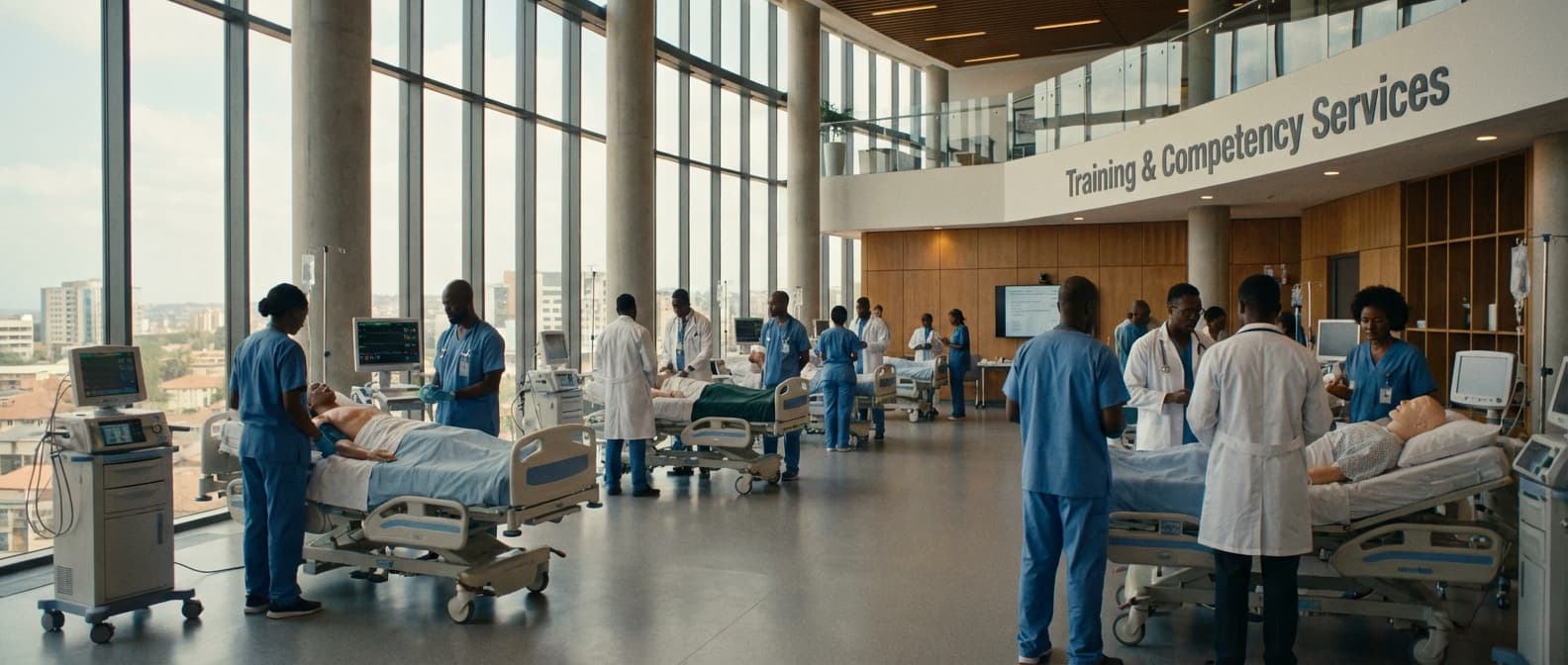
Biomedical Engineering First-Line Support Training Service in Somalia
Engineering Excellence & Technical Support
Biomedical Engineering First-Line Support Training Service High-standard technical execution following OEM protocols and local regulatory frameworks.
Emergency Medical Equipment Diagnostics
Master rapid troubleshooting of critical life-saving devices like defibrillators and ventilators, ensuring immediate availability and optimal performance in high-stress situations.
Diagnostic Imaging System Calibration
Develop expertise in the calibration and basic maintenance of X-ray and ultrasound machines, vital for accurate patient diagnosis and timely medical intervention.
Laboratory Equipment Repair & Validation
Gain proficiency in the repair and validation of essential laboratory equipment, including centrifuges and microscopes, to maintain the integrity of diagnostic testing and research.
What Is Biomedical Engineering First-line Support Training Service In Somalia?
Biomedical Engineering First-Line Support Training Service in Somalia refers to a specialized program designed to equip healthcare facility personnel with the foundational knowledge and practical skills necessary to perform initial troubleshooting, basic maintenance, and routine inspections of medical equipment. This service aims to enhance the operational reliability of medical devices within the Somali healthcare system by enabling local staff to address common technical issues promptly, thereby minimizing equipment downtime and improving patient care. The training focuses on common medical devices prevalent in the region and emphasizes safety protocols and preventive maintenance strategies.
| Target Audience | Need for Service | Typical Use Cases | ||||||
|---|---|---|---|---|---|---|---|---|
| Healthcare Facility Technicians/Engineers: Individuals already employed in technical roles within hospitals and clinics who require upskilling or specialized training in biomedical equipment. | Limited Availability of Specialized Biomedical Engineers: The scarcity of highly trained biomedical engineers in many regions necessitates empowering local personnel to handle initial technical challenges. | Preventing Equipment Downtime: Addressing minor malfunctions (e.g., a non-responsive display on a vital signs monitor, a clogged nebulizer) to keep essential equipment operational during critical patient care. | Ensuring Patient Safety: Verifying that equipment is functioning within safe parameters before patient use through routine checks. | Optimizing Resource Allocation: Reducing reliance on external technical support for routine issues, freeing up specialized engineers for more complex tasks. | Extending Equipment Lifespan: Proactive preventive maintenance to delay the onset of major failures and reduce the need for premature replacement. | Facilitating Remote Diagnostics: Providing accurate initial information to remote support teams, aiding in quicker diagnosis and resolution of issues. | Emergency Preparedness: Equipping staff to maintain critical equipment during unforeseen events or power outages. | Enhancing Staff Confidence and Competence: Building a skilled workforce capable of managing and maintaining the facility's medical technology. |
| Clinical Staff (Nurses, Doctors): Healthcare professionals who interact directly with medical equipment and can benefit from training on basic troubleshooting and safe operation to avoid minor user-induced issues. | Lack of Dedicated Biomedical Engineering Departments: In smaller facilities or remote areas, clinical staff may be the primary point of contact for equipment issues. | Addressing User Errors: Training clinical staff to identify and correct simple operational mistakes (e.g., incorrect settings on an infusion pump, improper connection of sensors). | Performing Daily Checks: Empowering nurses to conduct pre-use checks on devices like blood pressure monitors and thermometers. | Basic Device Hygiene and Maintenance: Understanding how to properly clean and disinfect common medical devices. | ||||
| Ministry of Health Personnel/Program Managers: Individuals responsible for healthcare infrastructure and equipment management who need to understand the importance of technical support and training. | Developing National Healthcare Standards: Informing policy decisions related to medical equipment maintenance and human resource development in the biomedical field. | Assessing Training Needs: Identifying gaps in technical capacity within the healthcare system. | Procurement Strategies: Understanding the maintenance requirements of different medical devices during the procurement process. | Resource Planning for Technical Support: Allocating budgets and personnel for training and ongoing support services. |
Key Components of Biomedical Engineering First-Line Support Training Service
- Equipment Identification and Categorization: Training on recognizing and classifying different types of medical equipment based on their function and complexity.
- Basic Operational Principles: Understanding the fundamental working mechanisms of common medical devices (e.g., vital signs monitors, infusion pumps, basic laboratory equipment).
- Routine Inspection and Testing: Implementing standardized procedures for visual inspection, power-on checks, and functional verification of equipment.
- Preventive Maintenance: Performing scheduled lubrication, cleaning, battery replacement, and calibration checks as per manufacturer guidelines or established protocols.
- Basic Troubleshooting: Identifying and rectifying common faults, such as power supply issues, sensor malfunctions, user errors, and connectivity problems.
- Safe Use and Handling: Training on proper operation, decontamination, and safe storage of medical equipment to prevent damage and ensure user safety.
- Documentation and Reporting: Maintaining accurate records of inspections, maintenance activities, and equipment faults, and escalating issues to higher-level technical support when necessary.
- Safety Standards and Regulations: Familiarization with relevant national and international safety standards for medical devices.
Who Needs Biomedical Engineering First-line Support Training Service In Somalia?
Biomedical Engineering First-Line Support Training Service in Somalia aims to empower local healthcare professionals with the essential skills to maintain and troubleshoot medical equipment. This training is crucial for ensuring the reliable operation of vital medical devices, improving patient care, and reducing reliance on expensive external repair services. The target customers are diverse, encompassing public and private healthcare facilities, as well as organizations involved in healthcare infrastructure development and support within Somalia.
| Customer Type | Specific Departments/Roles | ||||
|---|---|---|---|---|---|
| Hospitals (Public and Private) | Biomedical Engineering Departments (for upskilling existing staff) | Clinical Engineering Departments | General Maintenance Staff | IT Departments (for networked medical devices) | Nursing and Clinical Staff (basic troubleshooting for immediate issues) |
| Clinics and Health Centers | Head of Facility | Senior Clinical Officers | Designated Technical Personnel (if any) | ||
| Non-Governmental Organizations (NGOs) with Healthcare Programs | Program Managers | Healthcare Facility Managers | Local Technical Staff within supported facilities | ||
| International Aid Organizations | Project Managers (Healthcare focus) | Logistics and Procurement Teams (for equipment maintenance oversight) | Local implementing partners' technical staff | ||
| Ministry of Health and other Government Health Agencies | Department of Medical Equipment and Technology | Regional Health Office Technical Staff | Procurement and Asset Management Units | ||
| Medical Training Institutions | Instructors in Biomedical Technology programs | Faculties involved in healthcare science education |
Target Customers and Departments
- Hospitals (Public and Private)
- Clinics and Health Centers
- Non-Governmental Organizations (NGOs) with Healthcare Programs
- International Aid Organizations
- Ministry of Health and other Government Health Agencies
- Medical Training Institutions
Biomedical Engineering First-line Support Training Service Process In Somalia
This document outlines the workflow for a Biomedical Engineering First-Line Support Training Service in Somalia. It details the process from the initial inquiry from a healthcare facility or individual to the successful execution of the training program.
| Step | Description | Responsible Party | Key Outputs/Deliverables |
|---|---|---|---|
| The healthcare facility or individual contacts the training provider to express interest in first-line biomedical engineering support training. An initial assessment is conducted to understand the facility's current equipment, existing technical capacity, specific training needs, and logistical constraints. | Client (Healthcare Facility/Individual), Training Provider | Initial contact, Needs assessment report, Proposed training scope |
| Based on the needs assessment, the training provider develops a tailored training proposal. This includes defining learning objectives, curriculum modules, training duration, methodology (theory, practical demonstrations, hands-on exercises), required equipment, trainer profiles, and a detailed cost breakdown. | Training Provider | Detailed training proposal, Customized curriculum, Budget estimate |
| The client reviews the proposal and provides feedback. Negotiations may occur to finalize the scope, dates, and terms. Once an agreement is reached, a formal contract or service agreement is signed. | Client, Training Provider | Signed service agreement/contract |
| The training provider mobilizes resources, including sourcing necessary training materials, simulators, and any specific equipment for hands-on sessions. Logistics such as travel arrangements for trainers and participants (if applicable), and venue preparation are finalized. Participants are identified and informed about the training schedule and requirements. | Training Provider, Client | Training materials, Equipment availability, Participant list, Confirmed venue and schedule |
| The training program is delivered according to the agreed-upon curriculum and methodology. This involves theoretical lectures, practical demonstrations, troubleshooting exercises, and case studies relevant to the Somali context. Ongoing assessment of participant understanding is conducted. | Training Provider (Trainers), Participants | Delivered training sessions, Participant engagement, In-session assessments |
| Participants undergo a final assessment to evaluate their acquired knowledge and skills. Upon successful completion, participants receive a certificate of completion, acknowledging their proficiency in first-line biomedical engineering support. | Training Provider | Post-training assessment results, Certificates of completion |
| Both participants and the client provide feedback on the training program. This feedback is used to evaluate the effectiveness of the training, identify areas for improvement in future programs, and ensure client satisfaction. | Participants, Client, Training Provider | Training evaluation reports, Client satisfaction survey results |
| Depending on the service agreement, ongoing support may be provided, such as remote troubleshooting assistance, refresher courses, or advanced training modules. A post-training impact assessment can be conducted after a specified period. | Training Provider, Client | Post-training support documentation, Impact assessment report |
Biomedical Engineering First-Line Support Training Service Process in Somalia
- The service aims to equip healthcare professionals in Somalia with essential first-line maintenance and troubleshooting skills for biomedical equipment.
- This training is crucial for ensuring the continued functionality of medical devices, improving patient care, and optimizing resource utilization in the Somali healthcare sector.
- The service is designed to be adaptable to the specific needs and existing infrastructure of the requesting entity.
Biomedical Engineering First-line Support Training Service Cost In Somalia
Determining the cost of first-line support training for Biomedical Engineering in Somalia involves several key pricing factors. These factors are influenced by the prevailing economic conditions, the specific training provider, the duration and depth of the curriculum, and the logistical challenges inherent in delivering services in Somalia. Local currency, the Somali Shilling (SOS), will be the primary medium of exchange, and costs are subject to fluctuations due to inflation and currency stability. Training providers, whether local institutions, international NGOs with a presence in Somalia, or remote online providers catering to the region, will set their prices based on their operational expenses, expertise, and perceived value. The complexity of the curriculum, including theoretical knowledge and hands-on practical sessions with essential biomedical equipment, will directly impact training duration and thus cost. Furthermore, the number of trainees, the location of training delivery (e.g., Mogadishu, Hargeisa, or more remote areas requiring travel and accommodation), and the inclusion of supplementary materials or certification can all add to the overall expense. It is crucial to note that pricing can be highly variable and often subject to negotiation, especially for larger groups or organizations. A baseline understanding of these factors is essential for budgeting and planning such critical training initiatives.
| Cost Component | Estimated Range (Somali Shilling - SOS) | Notes |
|---|---|---|
| Basic First-Line Support Training (e.g., 1-2 weeks, core diagnostics) | 150,000 - 400,000 SOS | Covers fundamental troubleshooting and maintenance. Excludes major equipment certifications. |
| Intermediate Training (e.g., 2-4 weeks, specialized equipment focus) | 300,000 - 750,000 SOS | Includes more in-depth training on specific types of biomedical devices (e.g., imaging, anesthesia). May include basic parts replacement. |
| Advanced Training/Certification (e.g., 4+ weeks, manufacturer-specific) | 600,000 - 1,500,000+ SOS | Focuses on complex repairs, specific manufacturer protocols, and official certifications. Often includes travel and accommodation costs. |
| Training Materials (Manuals, software, consumables) | 10,000 - 50,000 SOS | Can be included in the overall training fee or charged separately. |
| Practical Session Equipment Usage Fees | 20,000 - 100,000 SOS | Dependent on the type and number of equipment utilized during training. May be bundled. |
| Travel and Accommodation (per person, if applicable) | 50,000 - 200,000 SOS | Highly variable based on location within Somalia and duration of stay. Essential for off-site training. |
| Certification Fees (if applicable) | 30,000 - 150,000 SOS | Varies greatly depending on the certifying body and the level of certification. |
Key Pricing Factors for Biomedical Engineering First-Line Support Training in Somalia
- Training Provider Type (Local vs. International vs. Online)
- Curriculum Depth and Duration
- Hands-on Practical Component (Equipment Access)
- Number of Trainees
- Training Location and Logistics (Travel, Accommodation)
- Inclusion of Supplementary Materials and Certification
- Provider's Overhead and Expertise
- Market Demand and Competition
- Economic Stability and Inflation Rates
- Potential for Negotiation (Group Discounts)
Affordable Biomedical Engineering First-line Support Training Service Options
Providing comprehensive and affordable first-line support training for biomedical engineers is crucial for ensuring patient safety, equipment uptime, and efficient healthcare operations. This service focuses on equipping entry-level or transitioning biomedical engineers with the foundational knowledge and practical skills necessary to address common equipment issues, perform routine maintenance, and escalate complex problems effectively. The value of such training lies in reducing downtime, minimizing repair costs through early detection and resolution, and improving the overall reliability of medical devices. This document outlines various service options, emphasizing value bundles and cost-saving strategies to make this essential training accessible.
| Service Option | Description | Value Bundle Components | Cost-Saving Strategies |
|---|---|---|---|
| Core Skills Module | Focuses on essential troubleshooting, safety, and basic maintenance across common device types. | Online self-paced modules, 24/7 access to knowledge base, practical scenario-based quizzes. | Group discounts for institutions, early bird registration, bundled with initial support contracts. |
| Device Specialization Package | Deep dives into specific high-priority medical equipment categories. | Instructor-led virtual workshops, hands-on simulation labs (virtual or in-person), expert Q&A sessions. | Tiered pricing based on the number of specialized modules, shared training resources across departments. |
| Comprehensive Onboarding Program | A complete training solution for new hires, covering all aspects of first-line support. | Core Skills Module + 2 Device Specialization Packages, mentorship program integration, on-site training options. | Long-term commitment discounts, customized training plans to avoid redundant modules, train-the-trainer programs for internal capacity building. |
| Refresher & Advanced Topics | For experienced staff needing updates on new technologies or advanced troubleshooting. | Webinars on emerging technologies, advanced troubleshooting case studies, peer-to-peer learning forums. | Subscription-based access to ongoing learning content, discounted rates for returning trainees. |
| Customized Training Solutions | Tailored programs to meet specific organizational needs and equipment inventories. | Needs assessment, custom curriculum development, on-site or remote delivery, performance tracking and reporting. | Partnerships for bulk training, flexible payment plans, integration with existing LMS. |
Key Components of First-Line Support Training
- Fundamental Biomedical Device Principles
- Basic Troubleshooting Methodologies
- Routine Preventive Maintenance Procedures
- Safe Electrical and Mechanical Practices
- Medical Device Regulations and Compliance (e.g., FDA, HIPAA)
- Documentation and Reporting Standards
- Effective Communication and Escalation Protocols
- Introduction to Common Biomedical Equipment Categories (e.g., patient monitoring, infusion pumps, ventilators)
Verified Providers In Somalia
In Somalia's rapidly developing healthcare landscape, identifying trusted and verified providers is paramount. Franance Health stands out as a beacon of quality and reliability, offering comprehensive services backed by rigorous credentialing. Their commitment to patient well-being, ethical practices, and adherence to international standards makes them the premier choice for healthcare needs in the region.
| Provider Name | Key Services | Verification Status | Notable Certifications/Accreditations |
|---|---|---|---|
| Franance Health | General Practice, Pediatrics, Obstetrics & Gynecology, Diagnostic Imaging, Pharmacy | Verified | Ministry of Health Somalia Approved, ISO 9001:2015 Certified (Quality Management), WHO Partnership Affiliate |
| Al-Amal Clinic | Primary Healthcare, Maternal & Child Health, Minor Surgeries | Verified | Local Health Authority Certified |
| Hawa Medical Center | Internal Medicine, Laboratory Services, Dental Care | Verified | Accredited by Somali Medical Association |
| Shifa Hospital | Emergency Care, Surgical Services, Inpatient Facilities | Pending Verification (under review) | Working towards Ministry of Health Accreditation |
Why Franance Health is the Best Choice:
- Rigorous credentialing process ensures all healthcare professionals meet high standards of expertise and ethical conduct.
- Commitment to patient-centered care, prioritizing individual needs and fostering trust.
- Adherence to international best practices and quality management systems.
- A comprehensive range of medical services, from primary care to specialized treatments.
- Focus on accessibility and affordability, making quality healthcare available to more Somalis.
- Investment in modern medical technology and facilities for accurate diagnosis and effective treatment.
- Dedicated team of experienced and compassionate healthcare professionals.
Scope Of Work For Biomedical Engineering First-line Support Training Service
This Scope of Work (SOW) outlines the requirements for a comprehensive training service focused on providing first-line support for biomedical engineering (BME) services. The objective is to equip support personnel with the necessary technical knowledge, troubleshooting skills, and communication strategies to effectively handle initial inquiries, diagnose common issues, and escalate complex problems within the BME domain. This training will enhance service response times, improve user satisfaction, and ensure the efficient operation of biomedical equipment.
| Deliverable | Description | Standard Specification | Acceptance Criteria | Format | Owner |
|---|---|---|---|---|---|
| Training Curriculum Document | Detailed outline of all training modules, learning objectives, and content coverage. | Comprehensive, logically structured, and aligned with industry best practices for BME support. | Approved by the client's BME department lead. | Training Provider | |
| Training Materials (Participant Guides) | Handouts, presentations, and reference materials for each training module. | Clear, concise, accurate, and visually engaging. Includes diagrams, flowcharts, and practical examples. | Content accuracy verified by client SMEs. Usability confirmed through participant feedback. | PDF, PowerPoint Slides | Training Provider |
| Hands-on Practical Exercises/Simulations | Scenarios designed to test troubleshooting and diagnostic skills on simulated or actual equipment. | Realistic scenarios covering common equipment failures and support requests. Measurable performance indicators. | Successful completion rate of at least 85% of participants for core exercises. | Simulated environment, Equipment guides | Training Provider |
| Assessment Tools (Quizzes, Exams) | Methods to evaluate the understanding and retention of training material. | Comprises multiple-choice questions, short answer questions, and practical scenario-based assessments. | Average score of 80% or higher for the cohort. Individual scores to be provided. | Online assessment platform, Printable test papers | Training Provider |
| Training Completion Certificates | Formal documentation acknowledging successful completion of the training program. | Includes participant name, training title, date of completion, and issuing organization's details. | Issued to all participants achieving the minimum assessment score. | Digital (PDF) and/or Physical | Training Provider |
| Post-Training Support Plan (Optional) | Outline of resources available for ongoing learning and support after the formal training. | Includes access to knowledge bases, follow-up Q&A sessions, or mentorship opportunities. | Defined in consultation with the client. | Document (PDF) | Training Provider |
| Trainer Qualifications | Documentation of the trainers' experience and expertise in BME and technical training. | Resumes or CVs detailing relevant BME experience, certifications, and training delivery history. | Approved by the client's HR or BME department. | CVs (PDF) | Training Provider |
| Training Feedback Forms | Structured questionnaires to gather participant feedback on the training program, content, and delivery. | Covers module effectiveness, trainer performance, and overall satisfaction. | Collected from at least 90% of participants. Summarized report provided. | Digital (Online form) and/or Printable | Training Provider |
Key Training Modules
- Introduction to Biomedical Engineering and Healthcare Technology Management
- Fundamentals of Biomedical Equipment Principles (e.g., Electrical Safety, Imaging, Life Support)
- Common Biomedical Equipment Categories and their Functions
- Basic Troubleshooting Methodologies and Diagnostic Techniques
- Interpreting Error Codes and Manufacturer-Specific Alerts
- Remote Support Tools and Techniques
- Effective Communication and Customer Service Skills for Technical Support
- Escalation Procedures and Documentation Standards
- Regulatory Compliance and Safety Standards (e.g., FDA, IEC)
- Introduction to CMMS (Computerized Maintenance Management Systems) for BME
Service Level Agreement For Biomedical Engineering First-line Support Training Service
This Service Level Agreement (SLA) outlines the performance expectations for the Biomedical Engineering First-Line Support Training Service. It defines response times and uptime guarantees to ensure timely and effective support for trainees.
1. Service Description:
The Biomedical Engineering First-Line Support Training Service provides comprehensive training materials, interactive modules, and simulated troubleshooting exercises for individuals responsible for initial support and basic maintenance of biomedical equipment. The service aims to equip trainees with the necessary skills to identify and resolve common issues, escalate complex problems appropriately, and maintain equipment safety and functionality.
2. Service Availability (Uptime Guarantee):
The service will be available 99.5% of the time, measured monthly, excluding scheduled maintenance periods. Scheduled maintenance will be communicated at least 48 hours in advance.
3. Response Times:
Response times are defined as the time from when a support request is logged to when a qualified technician acknowledges the request and begins addressing the issue. Support requests are categorized by severity:
- Critical (Severity 1): Immediate, life-threatening equipment failure or widespread system outage impacting patient care. Requires immediate attention.
- High (Severity 2): Significant equipment malfunction or system degradation impacting a substantial number of users or critical functions, but not directly life-threatening. Requires prompt attention.
- Medium (Severity 3): Minor equipment issue or functional impairment affecting individual users or non-critical functions. Requires timely attention.
- Low (Severity 4): General inquiries, requests for information, or minor usability issues. Can be addressed during regular business hours.
4. Uptime and Response Time Monitoring:
Service availability and response times will be monitored using automated system checks and logged support tickets. Performance reports will be generated monthly and shared with stakeholders.
| Severity Level | Description | Target Response Time |
|---|---|---|
| Critical (Severity 1) | Immediate, life-threatening equipment failure or widespread system outage impacting patient care. | 15 minutes |
| High (Severity 2) | Significant equipment malfunction or system degradation impacting a substantial number of users or critical functions, but not directly life-threatening. | 1 hour |
| Medium (Severity 3) | Minor equipment issue or functional impairment affecting individual users or non-critical functions. | 4 business hours |
| Low (Severity 4) | General inquiries, requests for information, or minor usability issues. | 8 business hours |
Key Performance Indicators
- Service Availability (Uptime Guarantee)
- Response Times by Severity
Frequently Asked Questions

Ready when you are
Let's scope your Biomedical Engineering First-Line Support Training Service in Somalia project in Somalia.

Scaling healthcare logistics and technical systems across the entire continent.