
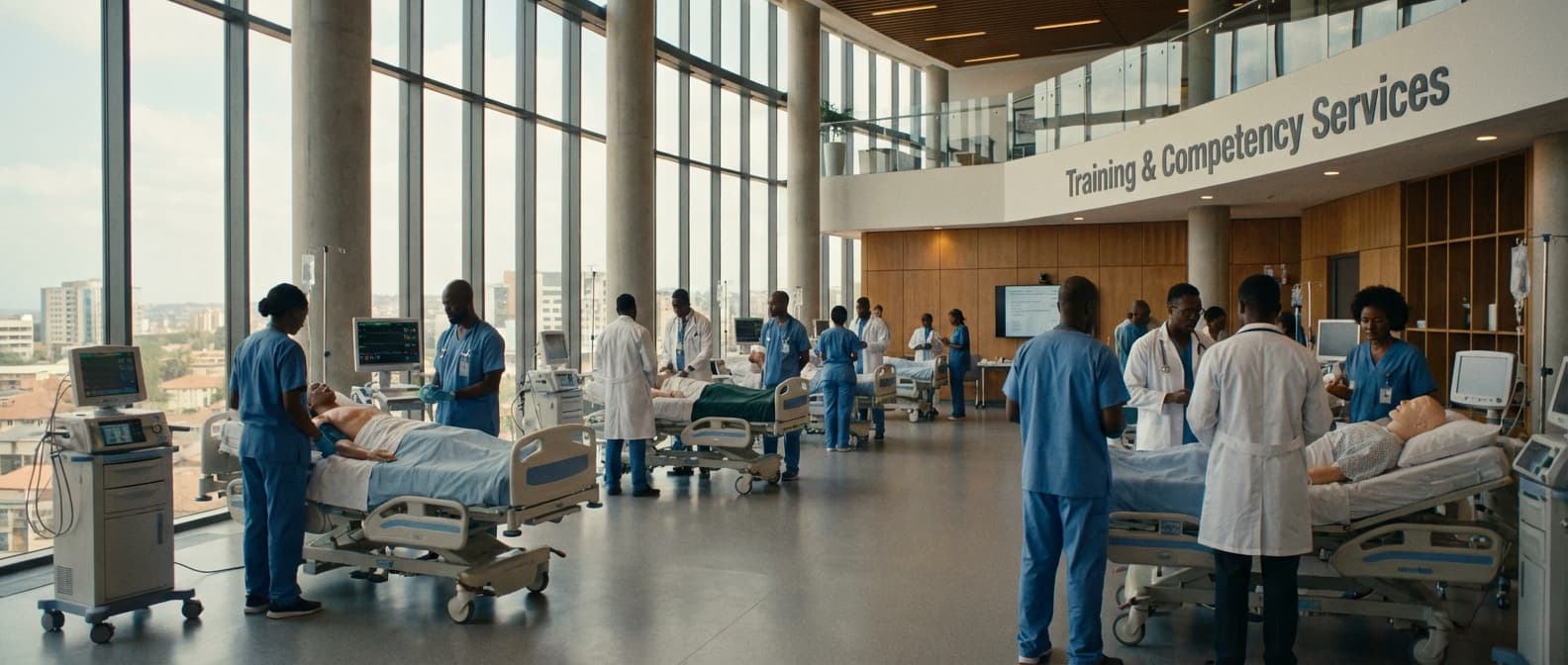
Anesthesia Workstation User Training Service in Somalia
Engineering Excellence & Technical Support
Anesthesia Workstation User Training Service High-standard technical execution following OEM protocols and local regulatory frameworks.
Rapid Anesthesia Workstation Deployment & Calibration
Our expert trainers guide your Somali biomedical technicians through the swift and accurate setup, initial calibration, and essential pre-use checks of the anesthesia workstation, ensuring immediate readiness for patient care and minimizing downtime.
Advanced Patient Monitoring & Safety Feature Mastery
Gain proficiency in utilizing the workstation's comprehensive patient monitoring capabilities and critical safety features. Our training covers vital sign interpretation, alarm management, and error prevention protocols specific to Somali healthcare contexts.
Essential Maintenance & Troubleshooting for Longevity
Empower your staff with the knowledge to perform routine maintenance, identify common malfunctions, and execute basic troubleshooting steps for the anesthesia workstation, extending its lifespan and ensuring reliable operation in diverse Somali environments.
What Is Anesthesia Workstation User Training Service In Somalia?
Anesthesia Workstation User Training Service in Somalia refers to a specialized educational program designed to equip healthcare professionals with the knowledge and practical skills necessary to safely and effectively operate modern anesthesia workstations within the Somali healthcare context. This service is crucial for ensuring patient safety, optimizing clinical outcomes, and maximizing the utility of advanced medical equipment in a resource-constrained environment. It encompasses theoretical instruction on workstation components, physiological principles, pharmacological considerations, and hands-on simulation-based training for routine operation, troubleshooting, and emergency management.
| Target Audience | Needs Addressed | Typical Use Cases |
|---|---|---|
| Anesthesiologists | Enhancing proficiency in complex ventilation strategies, advanced monitoring interpretation, and emergency management of critical events. Ensuring up-to-date knowledge of new workstation features and technologies. | Complex surgical procedures requiring precise anesthetic control (e.g., neurosurgery, cardiothoracic surgery). Managing critically ill patients requiring mechanical ventilation. Performing regional anesthesia with sedation and monitoring. Responding to intraoperative crises. |
| Anesthesia Residents and Trainees | Establishing foundational knowledge and practical skills for safe and independent practice. Developing critical thinking and problem-solving abilities related to anesthesia delivery and monitoring. | Routine induction and maintenance of general anesthesia for common surgical procedures. Learning to initiate and manage mechanical ventilation. Practicing patient monitoring and responding to basic alarms. Familiarizing with different anesthetic agents and their delivery. |
| Anesthetic Nurses and Technicians | Acquiring skills in workstation setup, pre-use checks, basic operation, and routine maintenance. Understanding their role in patient monitoring and assisting the anesthesiologist during procedures. | Preparing the anesthesia workstation for patient use. Performing pre-anesthetic checks and calibrations. Monitoring patient vital signs and responding to basic alarms. Assisting with airway management and drug administration. Performing routine cleaning and disinfection of equipment. |
| Healthcare Administrators and Biomedical Engineers | Facilitating informed procurement decisions for appropriate anesthesia equipment. Understanding the training requirements for staff to ensure successful implementation and utilization of procured equipment. Developing strategies for ongoing equipment maintenance and training. | Evaluating and selecting anesthesia workstations that are robust, user-friendly, and suitable for the Somali healthcare infrastructure. Planning and budgeting for staff training programs. Overseeing the implementation of new anesthesia technology. Developing protocols for equipment maintenance and repair. |
Key Components of Anesthesia Workstation User Training Service
- Theoretical Instruction: In-depth coverage of anesthesia workstation architecture, including gas delivery systems (e.g., oxygen, nitrous oxide, anesthetic vaporizers), ventilation modes (e.g., volume control, pressure control, SIMV), patient monitoring parameters (e.g., capnography, spirometry, pulse oximetry, blood pressure), and integrated safety features.
- Pharmacological Integration: Understanding how to interface pharmacological agents with the workstation, including administration of intravenous and inhaled anesthetics, muscle relaxants, and adjunctive medications, with an emphasis on appropriate dosing and monitoring.
- Hands-on Simulation: Practical sessions utilizing actual anesthesia workstations or high-fidelity simulators to practice setup, calibration, pre-use checks, ventilation management across various patient populations (adult, pediatric), emergency scenario response (e.g., circuit disconnection, vapor leakage, patient disconnect), and weaning from mechanical ventilation.
- Troubleshooting and Maintenance: Training on identifying and resolving common workstation malfunctions, performing basic maintenance procedures, and understanding the importance of routine servicing to ensure equipment reliability and longevity.
- Patient Monitoring and Alarm Management: Comprehensive training on interpreting critical patient data displayed by the workstation, understanding alarm thresholds, and responding appropriately to different alarm conditions to prevent adverse events.
- Infection Control Protocols: Education on proper cleaning, disinfection, and sterilization procedures for workstation components to maintain aseptic technique and prevent healthcare-associated infections.
- Contextual Adaptation: Training modules tailored to the specific challenges and resource limitations prevalent in Somalia, including emphasis on robust, user-friendly equipment, basic troubleshooting in the absence of immediate technical support, and cost-effective anesthetic practices.
Who Needs Anesthesia Workstation User Training Service In Somalia?
Anesthesia Workstation User Training Service is crucial in Somalia to ensure the safe and effective operation of vital medical equipment, particularly in a context where access to specialized training can be limited. This service aims to empower healthcare professionals with the knowledge and skills to utilize anesthesia workstations optimally, leading to improved patient outcomes and reduced medical errors.
| Target Customer Segment | Key Departments Requiring Training | Specific Roles/Personnel |
|---|---|---|
| Public Hospitals | Anesthesiology Department, Surgical Departments (General Surgery, Orthopedics, Obstetrics & Gynecology, etc.), Intensive Care Units (ICUs) | Anesthesiologists, Anesthesia Technicians/Nurses, Medical Officers involved in surgery, Critical Care Nurses |
| Private Hospitals & Surgical Centers | Anesthesiology, Operating Rooms, Post-Anesthesia Care Units (PACUs) | Anesthesiologists, Registered Nurses (Anesthesia Specialization), Surgical Technologists |
| NGO Health Facilities | Operating Theaters, Emergency Care Units | Visiting Anesthesiologists, Local Healthcare Workers trained in anesthesia, Paramedical Staff |
| Trauma Units & Emergency Departments | Emergency Medicine, Trauma Surgery | Emergency Physicians, Anesthesiologists (on-call/rotation), Trauma Nurses |
| Maternity Wards (for Cesarean Sections) | Obstetrics & Gynecology, Anesthesiology | Obstetricians, Anesthesiologists, Midwives (assisting in anesthesia procedures) |
| Military Hospitals | Surgical Units, Field Hospitals, Emergency Response Teams | Military Anesthesiologists, Medical Officers, Combat Medics |
Target Customers and Departments Requiring Anesthesia Workstation User Training Service in Somalia:
- Hospitals (Public and Private)
- Surgical Centers
- Trauma Units
- Emergency Departments
- Maternity Wards
- Tertiary Care Facilities
- Non-Governmental Organization (NGO) Health Facilities
- Military Hospitals
Anesthesia Workstation User Training Service Process In Somalia
This document outlines the Anesthesia Workstation User Training Service Process specifically designed for healthcare facilities in Somalia. The workflow details the steps involved from an initial inquiry to the successful execution of a training session, ensuring that users gain the necessary skills to operate anesthesia workstations safely and effectively in their specific context.
| Step | Activity | Key Stakeholders | Key Deliverables/Outcomes |
|---|---|---|---|
| 1 | Initial Inquiry & Needs Assessment | Training Provider, Client | Understanding of training requirements, scope, and logistics. |
| 2 | Proposal Development & Submission | Training Provider | Comprehensive training proposal outlining content, schedule, cost, and trainer qualifications. |
| 3 | Proposal Review & Negotiation | Client, Training Provider | Agreement on training scope, terms, and conditions. |
| 4 | Contract/Agreement Finalization | Client, Training Provider | Signed service agreement or contract. |
| 5 | Pre-Training Preparation | Training Provider, Client | Prepared training materials, confirmed participants, suitable venue, and operational workstation. |
| 6 | Training Execution | Training Provider, Participants | Delivered theoretical and practical training sessions on anesthesia workstation operation. |
| 7 | Assessment & Feedback | Training Provider, Participants | Participant competency assessment, feedback on training quality. |
| 8 | Post-Training Support & Certification | Training Provider, Participants | Certificates of completion, ongoing support, and training outcome report. |
| 9 | Service Evaluation & Improvement | Training Provider | Refined training processes and enhanced service offering for future engagements. |
Anesthesia Workstation User Training Service Process in Somalia
- 1. Initial Inquiry & Needs Assessment:
- Action: Potential client (hospital, clinic, medical training institution) in Somalia expresses interest in anesthesia workstation user training.
- Responsibility: Training Provider (e.g., medical equipment supplier, specialized training company), Client.
- Details: Inquiry can be via email, phone, or website. Initial discussion to understand the client's specific needs, including:
- Number of trainees.- Existing anesthesia workstation model(s).- Skill level of current users.- Training objectives (e.g., basic operation, advanced features, troubleshooting).- Desired training location (on-site at client facility, or at provider's training center if applicable).- Preferred training dates and duration.- Budgetary considerations.- 2. Proposal Development & Submission:
- Action: Based on the needs assessment, the Training Provider develops a detailed proposal.
- Responsibility: Training Provider.
- Details: The proposal will include:
- Scope of training (modules, topics covered).- Training methodology (lectures, practical demonstrations, hands-on practice).- Trainer qualifications and experience.- Training materials (manuals, presentations, simulated scenarios).- Schedule and duration of the training.- Cost breakdown (including any travel/accommodation for trainers if applicable).- Any prerequisites for participants.- Post-training support mechanisms.- 3. Proposal Review & Negotiation:
- Action: The Client reviews the proposal and negotiates terms.
- Responsibility: Client, Training Provider.
- Details: Discussion and clarification of any points in the proposal. Adjustments may be made to content, schedule, or cost.
- 4. Contract/Agreement Finalization:
- Action: A formal contract or service agreement is signed by both parties.
- Responsibility: Client, Training Provider.
- Details: The agreement outlines all agreed-upon terms, conditions, responsibilities, payment schedule, and cancellation policies.
- 5. Pre-Training Preparation:
- Action: Both parties prepare for the training session.
- Responsibility: Training Provider, Client.
- Details:
- **Training Provider:** Confirms trainer availability, prepares training materials (digital and/or print), arranges for any necessary simulation equipment if not provided by the client.- **Client:** Identifies and confirms participants, ensures availability of anesthesia workstation(s) for hands-on practice, prepares a suitable training venue with adequate lighting, seating, and power outlets, informs relevant hospital staff about the training schedule.- 6. Training Execution:
- Action: The training session is conducted.
- Responsibility: Training Provider, Participants.
- Details: The training typically follows a structured format:
- **Welcome & Introduction:** Overview of training objectives and agenda.- **Theoretical Sessions:** Lectures on anesthesia workstation principles, safety features, alarm management, drug delivery systems, ventilation modes, etc.- **Practical Demonstrations:** Trainers demonstrate the operation of the anesthesia workstation.- **Hands-on Practice:** Participants practice operating the workstation under trainer supervision.- **Scenario-Based Training:** Simulating various clinical scenarios to test participants' skills.- **Q&A and Discussion:** Opportunities for participants to ask questions and share experiences.- **Troubleshooting & Maintenance Overview:** Basic troubleshooting steps and routine maintenance.- 7. Assessment & Feedback:
- Action: Participants' understanding and skills are assessed, and feedback is collected.
- Responsibility: Training Provider, Participants.
- Details: Assessment can be through practical evaluations, quizzes, or observation. Feedback forms are distributed to participants to gather their input on the training quality, content, and delivery.
- 8. Post-Training Support & Certification:
- Action: Follow-up support is provided, and certificates are issued.
- Responsibility: Training Provider, Participants.
- Details:
- **Certification:** Upon successful completion of the training, participants receive a certificate of attendance or completion.- **Follow-up Support:** The Training Provider offers post-training support, which may include:- Answering follow-up questions via email or phone.- Providing access to online resources or FAQs.- Arranging for refresher courses if needed.- **Reporting:** The Training Provider may submit a report to the client detailing the training outcomes and participant performance.- 9. Service Evaluation & Improvement:
- Action: The Training Provider evaluates the overall service delivery and identifies areas for improvement.
- Responsibility: Training Provider.
- Details: Feedback from participants and clients is analyzed to refine future training programs and processes. This iterative process ensures continuous improvement of the service offering in the Somali context.
Anesthesia Workstation User Training Service Cost In Somalia
Providing user training for anesthesia workstations in Somalia presents a unique set of pricing considerations. The cost is influenced by several key factors, reflecting the local economic landscape, logistical challenges, and the specialized nature of the training. Key pricing factors include the duration and complexity of the training program, the number of participants, the qualifications and experience of the trainers, travel and accommodation expenses (especially in remote or less accessible regions), the provision of training materials and equipment, and the specific type and sophistication of the anesthesia workstation being covered. Due to the scarcity of highly specialized trainers and the logistical complexities involved in reaching healthcare facilities across Somalia, the cost can be significantly higher compared to more developed regions. Service providers often need to factor in security arrangements, which can add a considerable overhead. Furthermore, the current economic climate and the availability of funding for healthcare education within Somalia will directly impact the willingness and ability of institutions to invest in such training, thus influencing pricing. As there isn't a standardized, publicly available price list for this niche service in Somalia, ranges are highly variable and often negotiated on a case-by-case basis. However, based on general industry trends and the factors mentioned, a rough estimate can be provided.
| Service Component | Estimated Cost Range (SOS - Somali Shilling) |
|---|---|
| Trainer Day Rate (local/expatriate) | 300,000 - 1,500,000+ |
| Travel & Accommodation (per trainer, per trip) | 500,000 - 2,000,000+ |
| Training Materials (per participant) | 100,000 - 300,000 |
| Logistical/Security Buffer (percentage of total) | 10% - 30% |
| Full 3-Day On-Site Training (small group) | 3,000,000 - 10,000,000+ |
Factors Influencing Anesthesia Workstation User Training Costs in Somalia
- Training Duration and Complexity: Longer and more in-depth training courses, covering advanced features or troubleshooting, will incur higher costs.
- Number of Participants: While group training can reduce per-person costs, a larger group might necessitate additional trainers or resources.
- Trainer Qualifications and Experience: Highly skilled and experienced anesthesia technicians or biomedical engineers specializing in specific workstation models command higher fees.
- Travel and Accommodation: Significant costs are associated with transporting trainers to various locations within Somalia, including flights, local transportation, and lodging.
- Training Materials and Equipment: The provision of manuals, simulation equipment, and access to actual workstations for hands-on practice impacts the overall price.
- Workstation Model Specificity: Training on more complex or newer anesthesia workstation models may be more expensive due to specialized knowledge required.
- Logistical and Security Costs: Navigating challenging infrastructure and ensuring the safety of trainers in certain regions adds a substantial layer to the pricing.
- Administrative Overhead: Costs related to scheduling, coordination, and communication with the client institution.
- Currency Exchange Rates: Fluctuations in the Somali Shilling (SOS) against major currencies can affect the cost of imported training components or services.
Affordable Anesthesia Workstation User Training Service Options
Providing comprehensive and affordable user training for anesthesia workstations is crucial for patient safety and efficient healthcare delivery. This service focuses on equipping anesthesia providers with the knowledge and skills to operate various anesthesia machines effectively, troubleshoot common issues, and understand advanced functionalities. Our training programs are designed to be cost-effective, offering flexible options and strategic approaches to minimize expenses while maximizing learning outcomes. We understand that budget constraints are a significant factor for many healthcare institutions, and therefore, we have developed a range of value bundles and cost-saving strategies to make this essential training accessible.
| Value Bundle Tiers | Inclusions | Target Audience | Estimated Cost Range (USD) |
|---|---|---|---|
| Basic Essentials | Core functionality training, basic troubleshooting, safety protocols. Online modules + 1-day on-site session. | New hires, users needing a refresher on fundamental operations. | $1,500 - $3,000 per group |
| Standard Proficiency | Includes Basic Essentials plus advanced modes, ventilation strategies, monitoring integration, and common error management. 2-day on-site session + online modules. | General anesthesia providers, departmental staff. | $3,000 - $6,000 per group |
| Advanced Expertise | Includes Standard Proficiency plus specialized techniques, complex ventilation modes, troubleshooting advanced alarms, and integration with other OR systems. 3-day on-site session + online modules + simulation. | Anesthesiologists, CRNAs, nurse anesthetists, educators. | $6,000 - $10,000 per group |
| Custom Solutions | Tailored training plans based on specific workstation models, institutional protocols, and unique learning objectives. Pricing determined upon consultation. | Institutions with unique workstation fleets or specialized training needs. | Custom Pricing |
Key Components of Affordable Anesthesia Workstation Training:
- On-site hands-on training with expert instructors.
- Simulation-based training scenarios for realistic practice.
- Online modular courses for flexible and self-paced learning.
- Customizable training content tailored to specific workstation models and institutional needs.
- Post-training support and refresher courses.
- Competency assessment and certification.
- Train-the-trainer programs for internal capacity building.
Verified Providers In Somalia
In Somalia's challenging healthcare landscape, identifying verified providers is paramount for ensuring access to safe and effective medical services. Franance Health stands out as a beacon of trust and quality, offering a comprehensive network of credentialed healthcare professionals and facilities. Their rigorous vetting process ensures that every provider is not only licensed and qualified but also adheres to the highest ethical and professional standards. This commitment to verification offers peace of mind to individuals and organizations seeking reliable healthcare solutions in Somalia.
| Provider Type | Franance Health Credentials | Benefits for Patients |
|---|---|---|
| General Practitioners | Fully licensed, board-certified, with verified continuous professional development. | Accurate diagnoses, effective primary care, and referrals to specialists when needed. Reduced risk of misdiagnosis or inadequate treatment. |
| Specialist Doctors (e.g., Surgeons, Cardiologists, Pediatricians) | Specialty-specific board certification, extensive clinical experience, and peer review. | Access to highly skilled professionals for complex medical conditions. Improved outcomes for specialized treatments. |
| Hospitals and Clinics | Accredited facilities, adherence to international safety standards, and robust operational protocols. | Safe and hygienic environment for procedures and treatments. Access to modern medical equipment and technologies. |
| Diagnostic Laboratories | Certified technicians, use of calibrated equipment, and adherence to quality control measures. | Reliable and accurate diagnostic test results. Informed treatment decisions based on precise data. |
| Pharmacies | Licensed pharmacists, verified drug sourcing and storage practices, and adherence to dispensing regulations. | Access to genuine and safe medications. Expert advice on drug usage and potential side effects. |
Why Franance Health is the Best Choice for Verified Providers in Somalia:
- Rigorous Credentialing and Verification Process
- Extensive Network of Qualified Healthcare Professionals
- Commitment to Ethical Standards and Patient Safety
- Focus on Accessibility and Affordability
- Tailored Healthcare Solutions for Diverse Needs
Scope Of Work For Anesthesia Workstation User Training Service
This Scope of Work (SOW) outlines the requirements for providing Anesthesia Workstation User Training Services. The objective is to ensure that qualified medical professionals are proficient in the safe and effective operation of the designated anesthesia workstation. This training will cover essential functionalities, advanced features, troubleshooting, and emergency procedures relevant to the workstation model. The training will be delivered in a structured format, encompassing theoretical knowledge and practical hands-on sessions. Technical deliverables will include comprehensive training materials and assessment tools. Standard specifications will ensure the quality and consistency of the training provided.
| Deliverable | Description | Format/Medium | Standard Specification/Requirement |
|---|---|---|---|
| Training Curriculum | A detailed outline of the training modules, learning objectives, and content for each module. Must cover all aspects of workstation operation. | Digital (PDF) & Printed | Aligned with manufacturer's training protocols. Must be comprehensive and easily understandable. Includes theoretical and practical components. |
| Training Materials (User Manuals, Presentations, Videos) | Comprehensive written materials, visual aids, and multimedia content to support learning. Must be specific to the designated anesthesia workstation model. | Digital (PDF, PPTX, MP4) & Printed | High-quality, accurate, and up-to-date. Visually engaging and easy to follow. Content must be reviewed and approved by the client. |
| Hands-on Training Sessions | Practical, interactive sessions where trainees operate the actual anesthesia workstation under expert supervision. Must include simulation scenarios. | On-site (at client facility) or designated training center | Sufficient workstations for all trainees. Qualified and experienced instructors. Realistic simulation scenarios relevant to clinical practice. Minimum instructor-to-trainee ratio of 1:X (to be defined). |
| Assessment Tools (Quizzes, Practical Exams) | Methods to evaluate trainee comprehension and practical skills. Must include both theoretical and hands-on assessments. | Digital (online platform) & Printed | Objective and measurable criteria for evaluation. Pass/fail thresholds clearly defined. Feedback provided to trainees. |
| Training Completion Certificates | Official documentation certifying that trainees have successfully completed the anesthesia workstation user training. | Digital (PDF) & Printed | Includes trainee name, workstation model, training dates, instructor name, and organization seal. Must be verifiable. |
| Post-Training Support (Optional, but recommended) | Provision of limited follow-up support to address any immediate post-training queries or issues. | Email, Phone | Defined response times for inquiries. Scope of support clearly outlined (e.g., limited to operational questions, not clinical decision-making). |
| Trainer Qualifications and Experience | Documentation of the qualifications, certifications, and relevant clinical/technical experience of the training personnel. | CVs, Certifications | Must possess demonstrable expertise in anesthesia, critical care, and the specific anesthesia workstation model. Experience in adult education preferred. |
Key Objectives of the Training Service
- To equip users with the fundamental knowledge and skills required to operate the anesthesia workstation safely and efficiently.
- To familiarize users with the various modes of ventilation, gas delivery, monitoring, and safety features of the workstation.
- To train users on advanced functionalities, including specific patient populations and complex anesthetic techniques.
- To provide users with the ability to identify and troubleshoot common operational issues and alarms.
- To educate users on emergency procedures and appropriate responses in critical situations.
- To ensure compliance with manufacturer guidelines and relevant healthcare regulations.
- To enhance user confidence and competence in managing patients under anesthesia with the workstation.
Service Level Agreement For Anesthesia Workstation User Training Service
This Service Level Agreement (SLA) outlines the performance standards and guarantees for the Anesthesia Workstation User Training Service provided by [Your Company Name] (hereinafter referred to as "Provider") to [Client Company Name] (hereinafter referred to as "Client"). This SLA aims to ensure that the Client receives timely and effective training support for their Anesthesia Workstation users, contributing to safe and efficient patient care.
| Service Component | Description | Target | SLA Commitment |
|---|---|---|---|
| Training Support Response Time | Time taken for the Provider to acknowledge and initiate troubleshooting for user training-related inquiries (e.g., technical issues with the training platform, scheduling conflicts, content clarification). | Within 2 business hours | 98% of inquiries within 2 business hours |
| Urgent Training Issue Resolution | Time taken to resolve critical training issues that prevent a scheduled training session from commencing or a user from accessing essential training materials required for immediate use. | Within 4 business hours | 95% of urgent issues resolved within 4 business hours |
| General Training Inquiry Response Time | Time taken to acknowledge and begin addressing non-urgent training requests (e.g., requests for additional training materials, general inquiries about features). | Within 8 business hours | 99% of general inquiries within 8 business hours |
| Anesthesia Workstation Training Platform Uptime | The percentage of time the online training platform (if applicable) is available for users to access course materials, simulations, and complete modules during scheduled access periods. | 99.5% uptime | 99.5% monthly uptime |
| Scheduled Training Session Availability | The availability of designated trainers for pre-scheduled training sessions. | 100% availability for confirmed sessions | 99% of confirmed sessions conducted as scheduled (allowing for reasonable unforeseen circumstances with advance notice) |
Key Performance Indicators (KPIs)
- Response Time: The maximum allowable time for the Provider to acknowledge and begin addressing a reported issue or request related to the Anesthesia Workstation User Training Service.
- Uptime Guarantee: The minimum percentage of time the Anesthesia Workstation User Training Service is available and functional for scheduled training sessions and accessible support resources.
Frequently Asked Questions

Ready when you are
Let's scope your Anesthesia Workstation User Training Service in Somalia project in Somalia.

Scaling healthcare logistics and technical systems across the entire continent.