
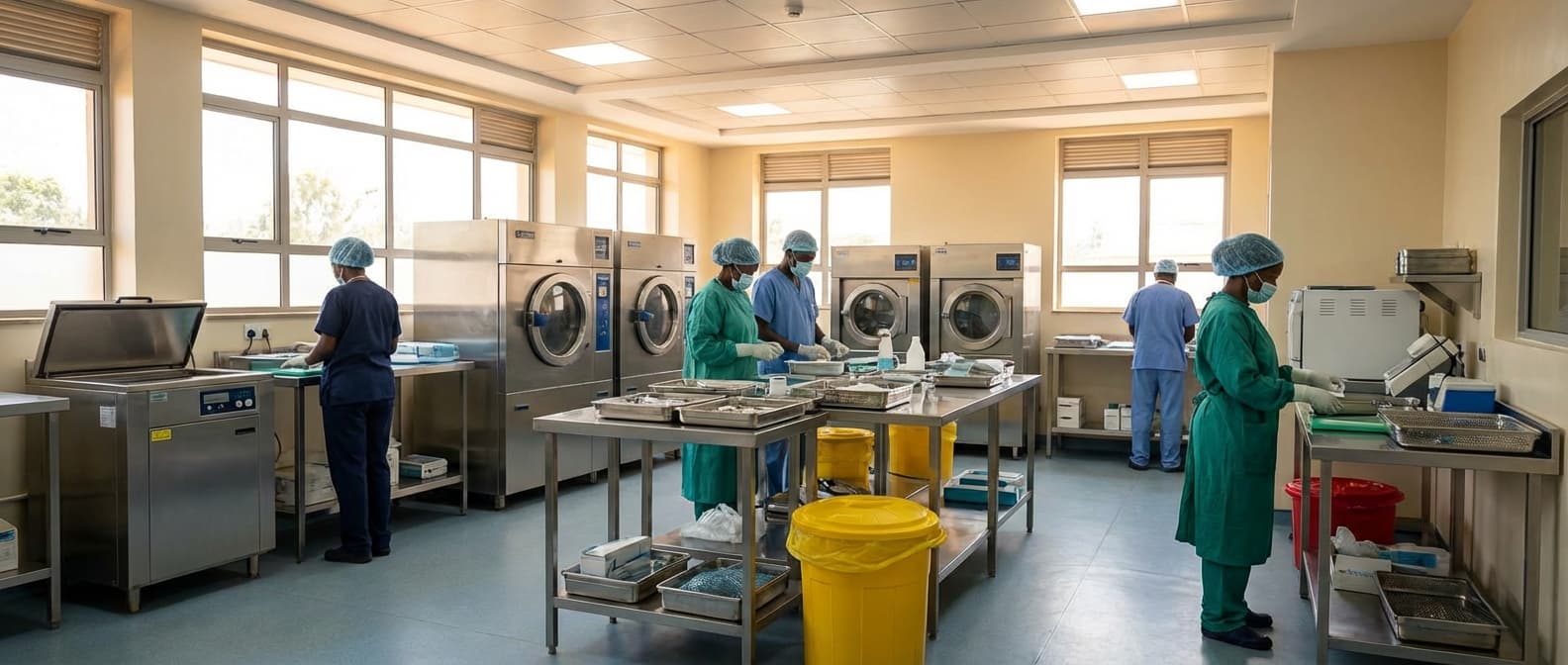
Medical Equipment Decontamination Service (Pre-Repair/Pre-Relocation) in Somalia
Engineering Excellence & Technical Support
Medical Equipment Decontamination Service (Pre-Repair/Pre-Relocation) High-standard technical execution following OEM protocols and local regulatory frameworks.
Advanced Decontamination Protocols
We employ globally recognized, multi-stage decontamination processes tailored to the specific equipment type, ensuring the elimination of all biological hazards (bacteria, viruses, fungi) before repair or relocation. Our SOPs are rigorously applied in our controlled, sterile environments.
Risk Mitigation & Cross-Contamination Prevention
Our pre-repair/pre-relocation decontamination service significantly reduces the risk of pathogen transmission, protecting both healthcare workers and the wider community. We meticulously document each decontamination cycle to guarantee traceability and accountability.
Optimized Repair & Relocation Efficiency
By ensuring equipment is thoroughly decontaminated, we provide a safe and sterile workspace for technicians, streamlining repair processes and minimizing potential delays. This also guarantees equipment is ready for immediate, safe deployment at its new location.
What Is Medical Equipment Decontamination Service (Pre-repair/pre-relocation) In Somalia?
Medical Equipment Decontamination Service (Pre-Repair/Pre-Relocation) in Somalia refers to the specialized process of cleaning, disinfecting, and sterilizing medical devices and equipment prior to their disassembly for repair or their physical transfer to a new location. This service is critical for preventing the transmission of infectious agents, protecting technicians and handlers, and ensuring the integrity of the equipment during maintenance or relocation procedures. The process involves a systematic application of validated cleaning agents and sterilization methods tailored to the specific materials and functionalities of the medical device.
| Who Needs It? | Typical Use Cases |
|---|---|
| Hospitals and Clinics (Public & Private) | Equipment undergoing scheduled maintenance or unscheduled repairs. |
| Medical Research Facilities | Transfer of diagnostic or analytical instruments between laboratories. |
| Non-Governmental Organizations (NGOs) operating in healthcare settings | Relocation of medical assets to new field sites or bases. |
| Government Health Ministries and Agencies | Consolidation or redistribution of medical equipment inventory. |
| Equipment Repair and Maintenance Vendors | Receiving equipment for servicing to ensure technician safety. |
Key Aspects of Medical Equipment Decontamination Service (Pre-Repair/Pre-Relocation)
- Objective: To eliminate or reduce microbial contamination (bacteria, viruses, fungi, prions) to a safe level.
- Scope: Encompasses all external and accessible internal surfaces of the medical equipment.
- Methodology: Utilizes a multi-step approach including manual cleaning, automated cleaning (if applicable), high-level disinfection, and/or sterilization.
- Validation: Employing validated decontamination protocols and using appropriate chemical agents and physical methods (e.g., autoclaving, ethylene oxide, hydrogen peroxide plasma).
- Documentation: Maintaining detailed records of the decontamination process, including agents used, cycle parameters, and personnel involved.
Who Needs Medical Equipment Decontamination Service (Pre-repair/pre-relocation) In Somalia?
In Somalia, ensuring the safety and functionality of medical equipment is paramount. Before any repair or relocation, a thorough decontamination service is crucial to prevent the spread of infectious diseases and maintain a sterile environment. This service is vital for a range of healthcare facilities and organizations operating within the country, especially given the challenging healthcare infrastructure and the persistent threat of various pathogens.
| Target Customer Type | Key Departments Requiring Decontamination |
|---|---|
| Hospitals (Public and Private) | Operating Theaters, Intensive Care Units (ICUs), Emergency Rooms, Sterilization Departments, Radiology, Pathology, Laboratory Services, Maternity Wards, Patient Recovery Areas |
| Clinics and Health Centers | Treatment Rooms, Minor Surgery Areas, Sterilization Units, Diagnostic Bays (e.g., ultrasound rooms) |
| Non-Governmental Organizations (NGOs) | Mobile Clinics, Outreach Program Facilities, Primary Healthcare Units, Trauma Centers, Specialized Treatment Units (e.g., for infectious diseases) |
| International Aid Organizations | Temporary Medical Facilities, Field Hospitals, Warehouses storing medical equipment, Logistics hubs for medical supplies |
| Military and UN Medical Facilities | Field Hospitals, Medical Treatment Centers, Evacuation Units, Diagnostic Labs |
| Diagnostic Laboratories | Microbiology Labs, Virology Labs, Hematology Labs, Biochemistry Labs, Histopathology Labs |
| Blood Banks | Processing and Storage Areas, Apheresis Units, Laboratory sections for testing and screening |
Who Needs Medical Equipment Decontamination Service (Pre-Repair/Pre-Relocation) in Somalia? - Target Customers and Departments
- Hospitals (Public and Private)
- Clinics and Health Centers
- Non-Governmental Organizations (NGOs) operating healthcare programs
- International Aid Organizations involved in healthcare delivery
- Military and UN medical facilities
- Diagnostic Laboratories
- Blood Banks
Medical Equipment Decontamination Service (Pre-repair/pre-relocation) Process In Somalia
This document outlines the standard workflow for the Medical Equipment Decontamination Service (Pre-Repair/Pre-Relocation) in Somalia, ensuring that medical equipment is safely and effectively decontaminated before undergoing repairs or being relocated. The process is designed to minimize risks of cross-contamination and ensure the safety of technicians, patients, and the environment.
| Step | Description | Responsible Party | Key Deliverable(s) |
|---|---|---|---|
| Healthcare facility or authorized entity requests decontamination for equipment slated for repair/relocation. | Client (Healthcare Facility/Entity) | Request for Service |
| Decontamination team assesses equipment type, contaminants, and facility environment. | Decontamination Service Provider | Site Assessment Report, Risk Analysis |
| Provider submits cost and scope of service. Client approves and signs agreement. | Decontamination Service Provider & Client | Quotation, Service Agreement/Contract |
| Equipment is removed from clinical use and area is secured. | Client & Decontamination Service Provider | Isolated Equipment, Secured Area |
| Choosing the correct cleaning and disinfection/sterilization method. | Decontamination Service Provider | Selected Decontamination Protocol |
| Trained team performs cleaning and disinfection/sterilization. | Decontamination Service Provider | Decontaminated Equipment |
| Proper collection, packaging, and disposal of contaminated waste. | Decontamination Service Provider | Managed and Disposed Waste |
| Testing to confirm decontamination effectiveness. | Decontamination Service Provider | Verification Results (e.g., Test Reports) |
| Issuing a formal certificate of decontamination. | Decontamination Service Provider | Decontamination Certificate |
| Formal transfer of decontaminated equipment. | Decontamination Service Provider & Client/Repair Team | Released Equipment, Signed Handover Record |
| Ensuring client satisfaction and gathering input for service improvement. | Decontamination Service Provider | Client Feedback, Service Improvement Plan |
Key Stages of the Medical Equipment Decontamination Service Workflow:
- Inquiry & Initial Assessment: The process begins when a healthcare facility or authorized entity (e.g., Ministry of Health) submits an inquiry for decontamination services for specific medical equipment slated for repair or relocation.
- Site Survey & Risk Assessment: A qualified decontamination team will conduct a preliminary site survey to assess the type of equipment, its current condition, the suspected contaminants (biological, chemical, radioactive, etc.), and the facility's layout to plan the decontamination process efficiently and safely.
- Quotation & Agreement: Based on the initial assessment, a detailed quotation outlining the scope of work, methodologies, required consumables, timeline, and associated costs will be provided to the client. Upon agreement, a formal contract or service order is issued.
- Equipment Isolation & Preparation: The designated equipment is isolated from active clinical use. The area around the equipment may be cordoned off to prevent unauthorized access. Initial visual inspection for gross contamination is performed.
- Decontamination Protocol Selection: The appropriate decontamination protocol is selected based on the type of equipment, identified contaminants, and manufacturer recommendations. This may involve chemical disinfection, sterilization, or specialized cleaning agents.
- On-Site Decontamination Execution: The trained decontamination team, equipped with appropriate Personal Protective Equipment (PPE) and specialized tools, commences the decontamination process at the healthcare facility or a designated decontamination hub. This involves a systematic cleaning and disinfection/sterilization of all accessible surfaces, internal components (where feasible), and accessories.
- Waste Management & Disposal: All contaminated materials, cleaning solutions, and disposables generated during the decontamination process are collected, packaged, and disposed of in accordance with established biohazard and hazardous waste management protocols prevalent in Somalia.
- Post-Decontamination Verification: Visual inspection and, where applicable, biological or chemical indicator testing are performed to verify the effectiveness of the decontamination process. This ensures that contaminant levels are below acceptable safety thresholds.
- Documentation & Certification: A comprehensive decontamination certificate is issued to the client, detailing the equipment, date of service, decontamination methods used, and verification results. This serves as proof of decontamination for repair centers or relocation authorities.
- Equipment Handover for Repair/Relocation: Once certified, the decontaminated equipment is formally handed over to the repair technicians or relocation team, along with the decontamination certificate. The area is then restored to its pre-decontamination state.
- Follow-up & Feedback: A post-service follow-up may be conducted to ensure client satisfaction and gather feedback for continuous improvement of the decontamination service.
Medical Equipment Decontamination Service (Pre-repair/pre-relocation) Cost In Somalia
Providing a precise cost for medical equipment decontamination services in Somalia before repair or relocation is challenging due to several variable factors. These services are crucial for preventing the spread of infectious agents and ensuring the safety of both personnel and the environment. The pricing is heavily influenced by the complexity of the equipment, the level of contamination suspected, and the operational costs within Somalia. Local currency, the Somali Shilling (SOS), is the primary medium of exchange, and fluctuations in its value can impact service costs.
| Equipment Category | Estimated Decontamination Cost Range (SOS) | Notes |
|---|---|---|
| Small Diagnostic Equipment (e.g., Stethoscopes, BP Monitors, Thermometers) | 150 - 750 | Typically involves standard surface disinfection. Cost influenced by volume of items. |
| Mid-size Laboratory Equipment (e.g., Centrifuges, Incubators, Microscopes) | 500 - 2,500 | May require more thorough internal and external cleaning depending on the type of samples processed. |
| Basic Imaging/Diagnostic Devices (e.g., Portable X-ray, Ultrasound Machines) | 1,500 - 7,500 | Requires specialized cleaning for probes and surfaces. Contamination risk assessment is crucial. |
| Surgical Instruments (Sets) | 200 - 1,000 per set | Decontamination before sterilization. Cost depends on the number and complexity of instruments in a set. |
| Larger Medical Devices (e.g., Patient Monitors, Ventilators, Dialysis Machines) | 3,000 - 15,000+ | More complex procedures involving internal and external components. Level of contamination is a major driver. |
| High-Risk Equipment (e.g., Endoscopes, Anesthesia Machines, ICU Equipment) | 5,000 - 30,000+ | Requires advanced disinfection/sterilization protocols due to high risk of pathogen transmission. May involve specialized agents. |
| Imaging Equipment (e.g., CT Scanners, MRI Machines - external cleaning/surface decontamination) | 10,000 - 50,000+ | Significant logistical considerations and specialized cleaning for large structures. Primarily for surface contamination prior to internal repairs/relocation. |
Key Pricing Factors for Medical Equipment Decontamination in Somalia:
- Type and Size of Medical Equipment: Larger and more complex equipment (e.g., MRI machines, surgical robots) will require more time, specialized chemicals, and potentially more personnel, thus increasing costs compared to smaller devices (e.g., stethoscopes, blood pressure monitors).
- Level and Type of Contamination: Decontamination protocols vary significantly based on the suspected contaminant. High-risk biological agents or chemical spills will necessitate more stringent and costly procedures, including specialized containment and disposal methods, compared to routine cleaning.
- Decontamination Method Used: Different methods have varying costs. Thermal disinfection, chemical disinfection, or irradiation all have different equipment and consumable requirements. The most effective method for the specific contaminant will be chosen, impacting the overall price.
- Location within Somalia: Accessibility and logistical challenges vary greatly across Somalia. Decontamination services in major urban centers like Mogadishu might be more readily available and potentially less expensive due to established infrastructure compared to remote or conflict-affected regions.
- Urgency of Service: Emergency decontamination requests often command higher fees due to the need for immediate mobilization and potential overtime for technicians.
- Consumables and Chemicals: The cost of specialized disinfectants, sterilizing agents, protective gear, and disposal materials directly contributes to the service price. Availability and import costs of these items in Somalia play a significant role.
- Labor Costs: Skilled technicians and support staff are required for decontamination. Their wages, training, and any hazard pay associated with working in potentially contaminated environments influence the overall cost.
- Regulatory and Safety Compliance: Adhering to any local or international safety and environmental regulations for decontamination and waste disposal adds to the operational costs, which are then factored into the pricing.
- Pre-existing Damage or Condition of Equipment: If the equipment is already damaged or in poor condition, it might require additional cleaning steps or specialized handling, potentially increasing the decontamination cost.
Affordable Medical Equipment Decontamination Service (Pre-repair/pre-relocation) Options
Our affordable medical equipment decontamination service is designed to prepare your valuable assets for repair, relocation, or simply for long-term storage. We understand the critical importance of sterile environments and the potential costs associated with equipment downtime or damage during these processes. Our service ensures that equipment is thoroughly cleaned, disinfected, and decontaminated to meet industry standards, preventing the spread of pathogens and safeguarding the integrity of the equipment itself. This proactive approach not only enhances patient safety but also significantly reduces the risk of costly delays, rework, or irreparable damage, ultimately saving your organization money and operational disruption.
| Cost-Saving Strategy | Description | Benefits |
|---|---|---|
| Bundled Services: | Combine decontamination with other pre-service needs like minor cleaning or basic functional checks. | Reduces administrative overhead and potential for separate service fees. Streamlines the preparation process. |
| Scheduled Decontamination: | Plan your decontamination needs in advance, allowing for efficient scheduling and resource allocation. | Lower costs due to optimized logistics and reduced last-minute rush fees. |
| Preventative Decontamination: | Regularly decontaminate equipment even if not immediately scheduled for repair or relocation, especially for frequently used or critical devices. | Minimizes the risk of costly breakdowns, cross-contamination, and extensive repairs down the line. Extends equipment lifespan. |
| Partnership Programs: | Develop ongoing relationships with our service for a consistent stream of decontamination needs. | Access to preferential pricing, priority scheduling, and dedicated account management. |
| DIY Assessment & Targeted Decontamination: | For minor cleaning needs, we can provide guidance on initial preparation, allowing our specialists to focus on the critical decontamination aspects. | Reduces the scope of our professional service, leading to lower overall costs for less critical situations. |
Value Bundles for Decontamination Services
- Standard Decontamination Package: Includes basic surface cleaning, disinfection of accessible areas, and immediate readiness for onward processing. Ideal for equipment undergoing minor repairs or short-distance moves.
- Enhanced Decontamination Package: Combines standard services with more intensive cleaning of hard-to-reach areas, specialized disinfectant application for specific pathogens, and documentation of the decontamination process. Recommended for equipment with a higher risk of contamination or for longer-term storage.
- Comprehensive Decontamination & Preparation Bundle: Our most robust offering. Includes enhanced decontamination, detailed equipment inspection for surface integrity post-cleaning, and specialized packaging to maintain sterility during transit or storage. This bundle is perfect for high-value equipment, complex relocations, or when maximum peace of mind is required.
- High-Volume Discount Bundle: For organizations requiring decontamination for multiple pieces of equipment simultaneously, we offer tiered discounts based on the quantity of items processed. The more equipment you entrust to us, the greater the savings.
Verified Providers In Somalia
In Somalia, ensuring access to quality healthcare hinges on the reliability and credentials of healthcare providers. Franance Health stands out as a leading organization dedicated to providing verified and trustworthy healthcare services. Their commitment to rigorous credentialing, ethical practices, and patient-centered care makes them the premier choice for individuals and organizations seeking medical assistance in Somalia.
| Key Verification Criteria | Franance Health's Approach | Benefits for Patients |
|---|---|---|
| Professional Licensing & Certification | Thorough verification of all medical licenses and certifications with relevant Somali and international bodies. | Ensures providers meet minimum standards of competence and are legally authorized to practice. |
| Educational Background & Training | Verification of academic qualifications and specialized training from accredited institutions. | Guarantees providers have received a sound medical education and relevant specialized expertise. |
| Work Experience & References | Scrutiny of past employment records and professional references. | Confirms practical experience and positive professional conduct. |
| Criminal Background Checks | Undertakes background checks to ensure a safe and secure healthcare environment. | Protects patients from potential harm and ensures trust in providers. |
| Continuous Professional Development (CPD) | Encourages and monitors ongoing training and skill enhancement for all affiliated professionals. | Keeps providers updated with the latest medical advancements and best practices. |
Why Franance Health is the Best Choice for Verified Providers in Somalia:
- Rigorous Credentialing Process: Franance Health employs a stringent verification system for all its healthcare professionals, ensuring they possess the necessary qualifications, licenses, and experience.
- Commitment to Ethical Standards: Adherence to the highest ethical principles is paramount, guaranteeing patient safety, confidentiality, and respectful treatment.
- Comprehensive Service Offerings: From primary care to specialized medical services, Franance Health provides a broad spectrum of healthcare solutions tailored to meet diverse needs.
- Community Focus and Accessibility: Understanding the unique challenges in Somalia, Franance Health strives to make quality healthcare accessible to all communities, including remote areas.
- Patient-Centric Approach: The organization prioritizes patient well-being, focusing on personalized care plans and fostering strong doctor-patient relationships.
Scope Of Work For Medical Equipment Decontamination Service (Pre-repair/pre-relocation)
This Scope of Work (SOW) outlines the requirements for Medical Equipment Decontamination Service to be performed prior to repair or relocation. The objective is to ensure that medical equipment is rendered safe and free from biohazardous materials, chemical contaminants, and other potential risks before being handled by repair technicians or moved to a new location. This service is crucial for the safety of personnel, the integrity of the equipment, and compliance with health and safety regulations.
| Task/Activity | Description | Technical Deliverables | Standard Specifications / Requirements |
|---|---|---|---|
| Initial Assessment and Planning | Evaluate the type of equipment, its intended use, and potential contaminants. Develop a decontamination plan. | Decontamination Plan, Risk Assessment Report | Plan includes equipment identification, potential hazards, recommended decontamination agents, PPE, and waste disposal procedures. Must be reviewed and approved by client representative. |
| Pre-Decontamination Cleaning | Remove gross contamination, visible debris, and loose materials. | Cleaned Equipment Exterior | Wipe down with appropriate cleaning solutions. No abrasive materials or excessive liquid should be used that could damage the equipment. |
| Disinfection/Sterilization | Apply appropriate disinfection or sterilization methods based on the equipment's nature and identified contaminants. | Decontaminated Equipment | Utilize EPA-registered disinfectants or FDA-approved sterilization methods. Contact time, concentration, and temperature must adhere to manufacturer's recommendations and product labels. For critical equipment, sterilization may be required. |
| Rinsing and Drying | Remove residual decontamination agents and thoroughly dry the equipment. | Rinsed and Dried Equipment | Use sterile or filtered water for rinsing if specified. Ensure complete drying to prevent microbial growth and corrosion. Air drying or forced air drying with HEPA-filtered air is preferred. |
| Packaging and Labeling | Securely package the decontaminated equipment and label it appropriately. | Sealed and Labeled Equipment Package | Use appropriate packaging materials (e.g., sterile bags, sealed containers) to maintain decontamination status. Label must clearly indicate 'Decontaminated Equipment - Ready for Repair/Relocation' and include date of decontamination and service provider's name. |
| Waste Management and Disposal | Properly manage and dispose of all contaminated waste generated during the process. | Certified Waste Disposal Manifest | All biohazardous, chemical, or regulated waste must be handled and disposed of in accordance with local, state, and federal regulations by a licensed waste disposal contractor. Maintain chain of custody documentation. |
| Documentation and Certification | Provide comprehensive documentation of the decontamination process. | Decontamination Certificate, Service Report | Certificate must attest to the successful decontamination of the specified equipment. Service report should detail the procedures performed, agents used, duration, personnel involved, and any deviations from the plan. Include Safety Data Sheets (SDS) for all chemicals used. |
| Personnel Safety and PPE | Ensure all personnel involved in decontamination adhere to strict safety protocols and use appropriate Personal Protective Equipment (PPE). | PPE Compliance Records | Minimum PPE includes gloves (nitrile or equivalent), eye protection (safety glasses or goggles), face masks, and protective gowns. For specific agents or high-risk contamination, respiratory protection (e.g., N95 respirator or higher) may be required. All PPE must be disposed of as contaminated waste. |
| Quality Assurance and Verification | Implement quality assurance measures to ensure the effectiveness of the decontamination process. | Quality Control Checklist | Visual inspection for cleanliness, verification of contact times, and proper drying. For critical cases, microbial swab testing may be considered (as an optional or additional service). |
Key Objectives of Medical Equipment Decontamination Service
- Prevent the spread of infections and biohazards.
- Ensure the safety of repair technicians and relocation personnel.
- Protect the environment from potential contamination.
- Maintain the functionality and integrity of the medical equipment.
- Comply with relevant health, safety, and environmental regulations.
Service Level Agreement For Medical Equipment Decontamination Service (Pre-repair/pre-relocation)
This Service Level Agreement (SLA) outlines the response times and uptime guarantees for the Medical Equipment Decontamination Service provided by [Your Company Name] (hereinafter referred to as "Provider") to [Client Name] (hereinafter referred to as "Client"). This SLA specifically covers decontamination services performed prior to equipment repair or relocation.
| Service Type | Equipment Classification | Response Time Target (from DSR acknowledgement) | Uptime Guarantee (during decontamination process) |
|---|---|---|---|
| Pre-Repair Decontamination | Critical Equipment | 2 business hours | N/A (Service is completed before repair, not impacting existing uptime) |
| Pre-Repair Decontamination | Non-Critical Equipment | 4 business hours | N/A (Service is completed before repair, not impacting existing uptime) |
| Pre-Relocation Decontamination | Critical Equipment | 4 business hours | N/A (Service is completed before relocation, not impacting existing uptime) |
| Pre-Relocation Decontamination | Non-Critical Equipment | 8 business hours | N/A (Service is completed before relocation, not impacting existing uptime) |
Key Definitions
- {"item":"Decontamination Service Request (DSR):"}
- {"item":"Critical Equipment:"}
- {"item":"Non-Critical Equipment:"}
- {"item":"Response Time:"}
- {"item":"Uptime Guarantee:"}
Frequently Asked Questions

Ready when you are
Let's scope your Medical Equipment Decontamination Service (Pre-Repair/Pre-Relocation) in Somalia project in Somalia.

Scaling healthcare logistics and technical systems across the entire continent.