
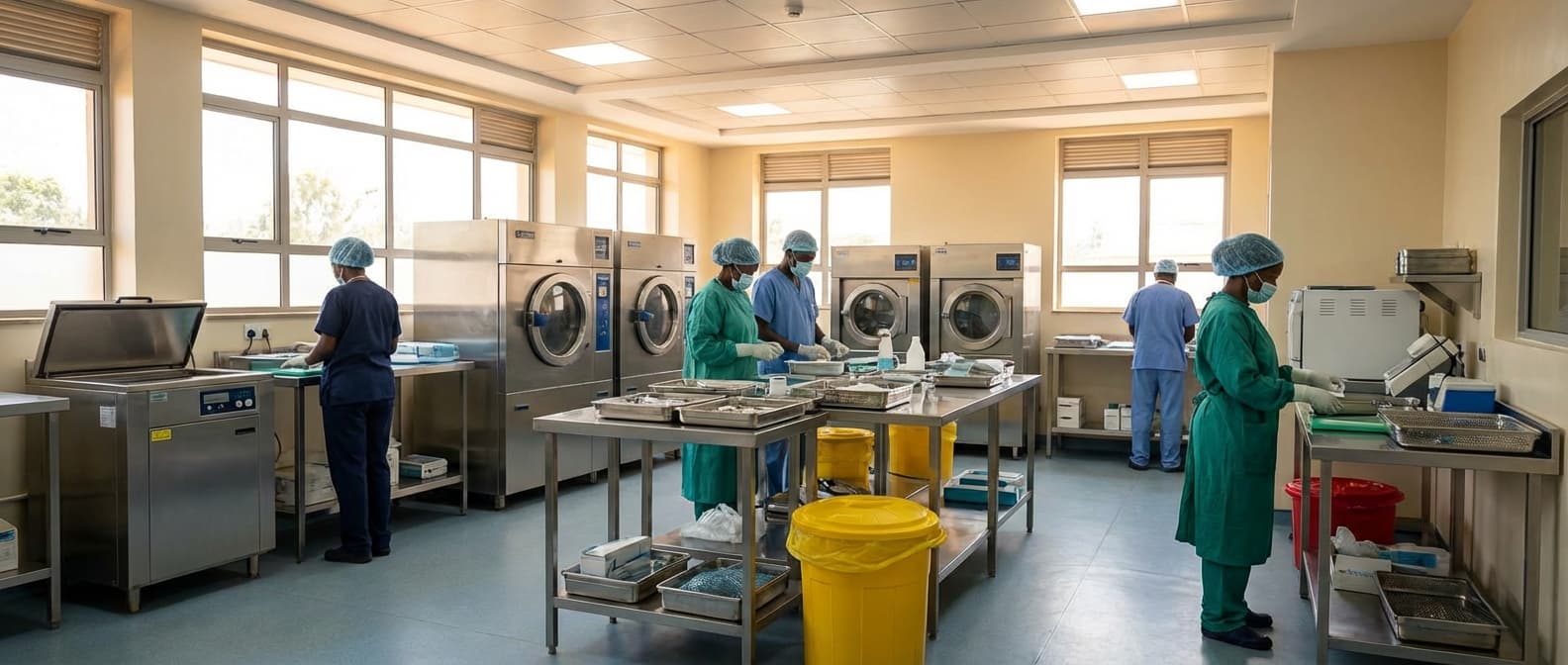
Infection-Control Readiness Support Service for Reusable Equipment in Somalia
Engineering Excellence & Technical Support
Infection-Control Readiness Support Service for Reusable Equipment High-standard technical execution following OEM protocols and local regulatory frameworks.
Sterilization Protocol Optimization
Our service provides expert assessment and enhancement of existing sterilization protocols for reusable medical equipment, ensuring compliance with international standards and significantly reducing the risk of hospital-acquired infections in Somali healthcare facilities.
Advanced Decontamination Training
We offer comprehensive, hands-on training programs for healthcare personnel in Somalia on the safe and effective decontamination of a wide range of reusable equipment, utilizing best practices and contextually relevant methodologies.
Quality Assurance & Monitoring Systems
Implementation of robust quality assurance and monitoring systems to track equipment reprocessing cycles, identify potential breaches in infection control, and provide real-time data for continuous improvement of reusable equipment safety.
What Is Infection-control Readiness Support Service For Reusable Equipment In Somalia?
Infection-Control Readiness Support Service for Reusable Equipment (ICR-SRE) in Somalia refers to a specialized technical assistance program designed to bolster the capacity of healthcare facilities and other organizations handling reusable medical devices to prevent healthcare-associated infections (HAIs). This service focuses on ensuring that all processes related to the cleaning, disinfection, sterilization, storage, and maintenance of reusable equipment meet established infection prevention and control (IPC) standards, thereby minimizing the risk of transmission of pathogens to patients and healthcare workers. The service is critical in contexts where resources, infrastructure, and trained personnel for robust IPC practices may be limited, such as in Somalia.
| Target Audience | Typical Use Cases |
|---|---|
| Hospitals and Clinics: Public, private, and non-governmental organization (NGO) managed healthcare facilities of all levels, from primary health centers to tertiary care hospitals. | Ensuring safe reprocessing of surgical instruments, endoscopic devices, diagnostic equipment (e.g., stethoscopes, blood pressure cuffs), and reusable sharps containers. |
| Maternal and Child Health Centers: Facilities providing antenatal, delivery, and postnatal care. | Sterilization and disinfection of delivery kits, reusable surgical instruments for obstetric procedures, and infant care equipment. |
| Emergency and Trauma Centers: Facilities dealing with acute injuries and critical care. | Rapid and effective reprocessing of a high volume of surgical and emergency care equipment under demanding conditions. |
| Outpatient Clinics and Diagnostic Centers: Facilities offering routine medical consultations and diagnostic services. | Disinfection and sterilization of examination tools, biopsy instruments, and reusable consumables. |
| Humanitarian Aid Organizations and NGOs: Implementing health programs in underserved areas or during crises. | Establishing or strengthening IPC practices for reusable medical equipment in temporary or resource-limited settings, ensuring that mobile clinics and field hospitals operate safely. |
| Ministry of Health and Regional Health Bureaus: Government entities responsible for overseeing healthcare standards and policy. | Developing national guidelines, conducting facility assessments, and implementing nationwide training initiatives to improve the overall infection control capacity for reusable equipment. |
Key Components of Infection-Control Readiness Support Service for Reusable Equipment:
- Needs Assessment and Gap Analysis: Comprehensive evaluation of existing IPC infrastructure, protocols, equipment, and human resources related to reusable medical devices within a facility or program.
- Protocol Development and Implementation: Assisting in the creation, adaptation, and rollout of evidence-based Standard Operating Procedures (SOPs) for the entire lifecycle of reusable equipment (e.g., decontamination, cleaning, disinfection, sterilization, packaging, storage, and distribution).
- Training and Capacity Building: Delivering targeted training programs for healthcare professionals (nurses, doctors, technicians, environmental services staff) on best practices in reprocessing reusable medical devices, including the proper use of equipment and consumables.
- Equipment Assessment and Maintenance Support: Evaluating the functionality and condition of sterilization and disinfection equipment (e.g., autoclaves, washer-disinfectors, chemical disinfectors) and providing guidance on preventive maintenance and repair.
- Supply Chain Management Guidance: Advising on the procurement and management of appropriate cleaning agents, disinfectants, sterilants, and personal protective equipment (PPE) required for safe reprocessing.
- Monitoring and Evaluation Frameworks: Establishing systems for ongoing monitoring of IPC practices related to reusable equipment, including audits, data collection, and performance indicators, to ensure sustained compliance and identify areas for improvement.
- Waste Management Integration: Ensuring that waste generated during the reprocessing of reusable equipment is managed according to safety and environmental regulations.
- Supervisory Support and Mentorship: Providing continuous guidance and mentorship to facility-level IPC focal points and management to foster a culture of safety and quality improvement.
Who Needs Infection-control Readiness Support Service For Reusable Equipment In Somalia?
This document outlines the target customers and departments that would benefit from an Infection-Control Readiness Support Service for Reusable Equipment in Somalia. This service aims to enhance the safety and efficacy of healthcare delivery by ensuring that reusable medical equipment is consistently and effectively decontaminated and sterilized according to international standards. The absence of robust infection control practices can lead to preventable healthcare-associated infections (HAIs), posing a significant risk to patients and further straining the already limited healthcare resources in Somalia. Therefore, a dedicated support service is crucial for improving patient outcomes and strengthening the overall healthcare infrastructure.
| Department/Unit | Key Equipment Requiring Support | Specific Needs/Challenges |
|---|---|---|
| Operating Theaters | Surgical instruments (scalpels, forceps, retractors), anesthetic equipment, sterilization drums | Ensuring complete sterilization of complex instruments, maintaining autoclave functionality, staff training on sterile processing procedures. |
| Maternity Wards | Speculums, forceps, delivery instruments, thermometers, nebulizers | Preventing transmission of infections during childbirth, ensuring adequate supply of sterile equipment, proper handling of reusable consumables. |
| Outpatient Departments | Stethoscopes, blood pressure cuffs, thermometers, ear specula, syringes (if reusable) | Routine disinfection of frequently touched items, appropriate storage of cleaned equipment, preventing cross-contamination between patients. |
| Emergency Rooms | Airway management devices (laryngoscopes, endotracheal tubes), catheters, wound care instruments | Rapid and effective reprocessing of critical items during high-pressure situations, maintaining sterility of emergency supplies. |
| Laboratory Services | Microscopes, slides, glassware, culture loops, diagnostic equipment | Preventing contamination of samples and cultures, safe handling of potentially infectious materials, proper cleaning of laboratory tools. |
| Dental Clinics | Dental instruments (drills, probes, elevators), mirrors, ultrasonic scalers | Strict adherence to protocols for dental instrument sterilization, prevention of blood-borne pathogen transmission. |
| Central Sterile Supply Departments (CSSD) | All reusable medical equipment, sterilization machines (autoclaves, sterilizers), cleaning agents | Overhauling and optimizing existing CSSD workflows, ensuring equipment maintenance and calibration, providing advanced training for CSSD technicians. |
| Nursing Stations | Syringes, needles (if reusable), infusion sets (if reusable), thermometers, wound care supplies | Implementing standardized cleaning and disinfection protocols for bedside equipment, proper segregation of clean and used items. |
Target Customers and Departments
- Hospitals (Public and Private)
- Maternal and Child Health Centers
- Primary Healthcare Facilities
- Surgical Centers and Clinics
- Emergency and Trauma Care Units
- Non-Governmental Organization (NGO) Health Programs
- Mobile Clinics and Outreach Programs
- Rehabilitation Centers
Infection-control Readiness Support Service For Reusable Equipment Process In Somalia
This service aims to enhance the infection-control readiness of healthcare facilities in Somalia by providing comprehensive support for their reusable equipment processes. The workflow ensures a structured and effective engagement, from initial contact to the successful implementation and ongoing maintenance of robust infection prevention and control (IPC) measures for reusable medical devices.
| Stage | Description | Key Activities | Deliverables | Responsible Parties |
|---|---|---|---|---|
| The starting point where a healthcare facility expresses interest and the service provider understands their current situation and specific needs regarding reusable equipment IPC. | Receive inquiry, initial consultation, preliminary discussion of challenges, understanding of existing protocols (if any). | Confirmation of interest, preliminary understanding of facility's needs. | Healthcare Facility, Service Provider |
| Based on the initial assessment, a tailored proposal is created outlining the scope of work, objectives, methodologies, timelines, and costs. This is followed by a formal agreement. | Detailed needs assessment, service package customization, budget formulation, proposal writing, proposal presentation and negotiation, contract/MOU signing. | Detailed service proposal, signed service agreement/MOU. | Service Provider, Healthcare Facility |
| A thorough evaluation of the facility's current reusable equipment processing, including infrastructure, human resources, existing practices, and available resources. | Site visit, interviews with staff, observation of sterilization and disinfection processes, inventory of equipment and consumables, review of existing documentation, collection of baseline data on infection rates and equipment availability. | Comprehensive assessment report, baseline data summary. | Service Provider, Healthcare Facility Staff |
| Development of a customized, step-by-step plan to address identified gaps and achieve improved infection control readiness for reusable equipment. | Analysis of assessment findings, identification of specific intervention areas, development of detailed, prioritized actions, setting of measurable objectives and indicators, timeline finalization. | Formalized Action Plan with timelines and responsibilities. | Service Provider, Healthcare Facility Management/IPC Committee |
| Empowering healthcare facility staff with the knowledge and skills necessary to implement and maintain effective reusable equipment IPC practices. | Development of training modules (e.g., cleaning, disinfection, sterilization, packaging, storage, waste management), delivery of hands-on and theoretical training sessions, practical demonstrations, competency assessments. | Trained staff, training materials, competency assessment records. | Service Provider, Healthcare Facility Staff |
| Providing necessary equipment, consumables, and guidance for infrastructure improvements to ensure optimal reusable equipment processing. | Assessment of equipment needs, procurement and supply of appropriate disinfectants and sterilants, provision of essential IPC supplies (e.g., PPE, cleaning agents), technical advice on facility upgrades or reconfigurations. | Availability of necessary equipment and supplies, recommendations for infrastructure improvements. | Service Provider, Healthcare Facility, Potential Donors/Partners |
| Direct assistance during the implementation phase and continuous monitoring to ensure adherence to the action plan and identify any emerging challenges. | On-site support during initial implementation, regular supervision visits, real-time troubleshooting, data collection on IPC indicators, observation of adherence to protocols. | Progress reports, identified challenges and resolutions, updated IPC data. | Service Provider, Healthcare Facility IPC Focal Persons |
| Assessing the effectiveness of the implemented interventions against the set objectives and identifying areas for further improvement. | Review of collected data, comparison with baseline, assessment of staff performance and adherence, feedback collection from staff, impact assessment on infection rates and equipment availability. | Impact assessment report, lessons learned document, recommendations for further action. | Service Provider, Healthcare Facility |
| Establishing mechanisms for long-term sustainability of improved IPC practices for reusable equipment, including continuous learning and adaptation. | Development of internal monitoring systems, refresher training programs, provision of technical advice on new guidelines or technologies, establishing peer-to-peer learning networks, regular check-ins. | Sustainable IPC practices, ongoing mentorship, improved healthcare outcomes. | Service Provider, Healthcare Facility Management & Staff |
Workflow: Infection-Control Readiness Support Service for Reusable Equipment Process in Somalia
- Initial Inquiry & Needs Assessment
- Proposal Development & Agreement
- On-site Assessment & Baseline Data Collection
- Action Plan Development
- Training & Capacity Building
- Resource Provision & Infrastructure Support
- Implementation Support & Monitoring
- Post-Implementation Review & Evaluation
- Ongoing Support & Sustainability
Infection-control Readiness Support Service For Reusable Equipment Cost In Somalia
Assessing the cost of infection-control readiness support services for reusable equipment in Somalia requires a detailed understanding of several key pricing factors. These services are crucial for preventing the spread of infections in healthcare settings, especially given the resource constraints and specific challenges present in Somalia. The cost will vary based on the scope of work, the expertise of the service provider, the specific types of reusable equipment, and the geographic location within Somalia. Local currency pricing in Somali Shilling (SOS) will be influenced by exchange rates, local market conditions, and the availability of specialized personnel and materials. A comprehensive service would typically include training, equipment assessment and maintenance, provision of consumables, and ongoing monitoring and evaluation.
| Service Component | Estimated Range (SOS - Low) | Estimated Range (SOS - High) | Notes on Pricing |
|---|---|---|---|
| Basic Training (e.g., for healthcare workers on sterilization procedures) | 1,000,000 | 5,000,000 | Depends on duration, number of participants, and trainer fees. May be higher for specialized modules. |
| Comprehensive Training Program (e.g., including train-the-trainer, policy development) | 5,000,000 | 25,000,000 | Higher costs for multi-day programs, external experts, and curriculum development. |
| Equipment Assessment & Minor Repair (per facility/clinic) | 1,500,000 | 7,500,000 | Covers a site visit, basic inspection, and minor fixes. Excludes major part replacement. |
| Supply of Essential Infection Control Consumables (monthly, per facility) | 2,000,000 | 10,000,000 | Varies greatly based on facility size, patient load, and specific supplies needed (disinfectants, indicators). |
| Support for Sterilization Unit Maintenance (per unit, annual contract) | 7,500,000 | 30,000,000 | Includes regular checks, preventive maintenance, and potential emergency call-outs. Higher for complex units. |
| Logistics & Travel to Remote Areas (per trip/project phase) | 3,000,000 | 15,000,000 | Covers transportation, accommodation, and per diem for staff. Highly variable based on distance and security. |
| Full-Service Infection Control Readiness Program (e.g., 6-month pilot) | 50,000,000 | 250,000,000+ | Encompasses training, assessment, supplies, and ongoing support. Customizable and highly dependent on scope. |
Key Pricing Factors for Infection-Control Readiness Support Services in Somalia:
- Scope of Services: The breadth and depth of the support provided significantly impacts cost. This can range from basic training to comprehensive program implementation and maintenance.
- Type and Volume of Reusable Equipment: Different types of equipment (e.g., surgical instruments, sterilization units, diagnostic tools) have varying maintenance and handling requirements. The quantity of equipment to be covered is also a major driver.
- Provider Expertise and Qualifications: The experience, certifications, and reputation of the service provider, whether local or international, will influence their rates. Specialized knowledge in infection control and healthcare in fragile environments commands higher prices.
- Training Modalities and Duration: The number of training sessions, the duration of each session, the complexity of the curriculum, and the qualifications of the trainers will all factor into the cost. This includes both initial training and ongoing refresher courses.
- Equipment Assessment and Repair: Costs associated with assessing the condition of existing reusable equipment, performing necessary repairs, and recommending replacements. This might include parts and labor.
- Provision of Consumables and Supplies: If the service includes supplying essential infection-control consumables (e.g., disinfectants, sterilization indicators, personal protective equipment), this will add to the overall cost. Procurement and logistics of these items in Somalia can be complex and costly.
- Geographic Location and Accessibility: Service delivery to remote or insecure areas in Somalia will incur higher logistical costs, including transportation, accommodation, and security for personnel.
- Monitoring and Evaluation: The frequency and rigor of monitoring infection-control practices and equipment readiness, including data collection and reporting, will contribute to the cost.
- Duration of Support: Whether the service is a one-time intervention or an ongoing program will significantly alter the total cost.
- Local Market Conditions and Inflation: The general economic situation, inflation rates, and the availability of skilled labor and materials in Somalia will directly influence the pricing in Somali Shillings.
- Exchange Rate Fluctuations: For services involving international providers or imported supplies, fluctuations in the SOS exchange rate against major currencies (USD, EUR) will impact the final cost in local currency.
Affordable Infection-control Readiness Support Service For Reusable Equipment Options
This service offers affordable infection-control readiness support for your reusable equipment, ensuring patient safety and operational efficiency. We understand the financial pressures healthcare facilities face, which is why we've designed flexible value bundles and implemented cost-saving strategies to make robust infection control accessible. Our goal is to provide peace of mind without breaking your budget. We focus on proactive measures, preventative maintenance, and optimizing your existing processes to minimize risks and associated costs.
| Cost-Saving Strategy | Description | Benefit |
|---|---|---|
| Preventative Maintenance Optimization | Focus on regular, scheduled maintenance of sterilization and disinfection equipment to prevent costly breakdowns and extend equipment lifespan. | Reduces emergency repair costs, minimizes equipment downtime, and ensures consistent efficacy of infection control processes. |
| Bulk Purchasing of Supplies | Leveraging our network to offer bundled pricing on essential cleaning and disinfection supplies, or facilitating group purchasing opportunities for our clients. | Lower per-unit costs for consumables, leading to significant operational savings over time. |
| Staff Training Efficiency | Development of standardized, easily digestible training modules that can be delivered efficiently (e.g., online, train-the-trainer models) to reduce the need for extensive external training sessions. | Reduces staff time away from patient care, minimizes travel and instructor fees associated with traditional training, and ensures consistent knowledge application. |
| Risk-Based Approach | Prioritizing resources and interventions on equipment and processes identified as higher risk, rather than a blanket approach. | Optimizes resource allocation, focuses efforts where they are most impactful, and prevents unnecessary spending on low-risk areas. |
| Process Streamlining | Analyzing and optimizing workflows for cleaning, disinfection, and sterilization to eliminate redundancies and improve efficiency. | Saves staff time, reduces waste of supplies, and improves throughput of reusable equipment. |
Key Value Bundles
- Basic Readiness Bundle: Includes essential consultation on cleaning and disinfection protocols, basic staff training refreshers, and a review of your current equipment inventory for potential risks.
- Standard Readiness Bundle: Builds on the Basic bundle with enhanced staff training modules, development of standardized operating procedures (SOPs) for specific equipment types, and risk assessment for high-touch surfaces. Also includes discounted access to advanced educational resources.
- Premium Readiness Bundle: Comprehensive solution offering on-site assessments, customized training programs, development of a full infection control management plan, regular compliance audits, and priority support for urgent inquiries. This bundle provides the highest level of proactive infection control.
- Customizable Readiness Bundle: Tailor-made solutions to meet your specific needs and budget. Work with our experts to select the exact services and support levels that are right for your facility.
Verified Providers In Somalia
In the challenging landscape of healthcare provision in Somalia, identifying and partnering with verified providers is paramount for ensuring quality, ethical, and effective medical services. This is where organizations like Franance Health distinguish themselves through their rigorous credentialing processes and unwavering commitment to excellence. Their dedication to verifying the qualifications, licenses, and operational standards of healthcare professionals and facilities makes them a trusted name.
| Provider Type | Franance Health Verification Focus | Benefits for Patients/Partners |
|---|---|---|
| Individual Medical Practitioners (Doctors, Nurses, Specialists) | Valid Medical Licenses & Registrations, Educational Qualifications, Professional Experience, Continuing Medical Education (CME) Records, Disciplinary History | Access to qualified and experienced medical professionals; reduced risk of misdiagnosis or inadequate treatment. |
| Healthcare Facilities (Hospitals, Clinics, Diagnostic Centers) | Facility Licensing & Accreditation, Compliance with Health Regulations, Availability of Essential Medical Equipment, Sterilization & Hygiene Protocols, Trained Staff Ratio, Emergency Preparedness | Safe and well-equipped healthcare environments; reliable diagnostic and treatment services; assurance of sanitary conditions. |
| Specialized Medical Services (e.g., Surgical Units, Maternity Wards) | Specific certifications for the specialty, specialized equipment availability, expertise of practitioners in the field, established protocols for the service | Access to specialized care with practitioners and facilities equipped for specific medical needs. |
Why Franance Health Credentials Matter:
- Ensuring Patient Safety: Franance Health's verification process meticulously checks for valid medical licenses, certifications, and a clean disciplinary record, directly contributing to patient safety by ensuring practitioners are qualified and authorized to practice.
- Upholding Ethical Standards: The credentialing extends to evaluating ethical conduct and adherence to professional codes of conduct, minimizing the risk of malpractice and ensuring patients receive respectful and trustworthy care.
- Promoting Quality of Care: By verifying training, experience, and continuing education, Franance Health ensures that their network comprises providers committed to delivering high-quality medical services, utilizing current best practices.
- Facilitating Trust and Transparency: Their verified status provides a crucial layer of trust for individuals, organizations, and governments seeking reliable healthcare partners in Somalia. This transparency is vital for building confidence in the healthcare system.
- Streamlining Access to Competent Care: For individuals and organizations needing medical services, partnering with Franance Health-verified providers significantly reduces the burden of vetting and the risk of engaging unqualified practitioners.
Scope Of Work For Infection-control Readiness Support Service For Reusable Equipment
This Scope of Work (SOW) outlines the services to be provided for Infection-Control Readiness Support for Reusable Equipment. The objective is to ensure healthcare facilities have robust systems and processes in place to effectively clean, disinfect, sterilize, and manage reusable medical equipment, thereby minimizing the risk of healthcare-associated infections (HAIs). This SOW details the technical deliverables and standard specifications required to achieve this objective.
| Deliverable Category | Specific Deliverable | Standard Specification/Requirement | Associated Metrics/KPIs |
|---|---|---|---|
| Assessment & Analysis | Assessment Report of Current Reusable Equipment Infection Control Practices | Comprehensive review of existing policies, procedures, staff competency, equipment inventory, and infrastructure. Report to include strengths, weaknesses, and opportunities for improvement. | Number of staff interviewed, number of equipment types assessed, identification of 100% of high-risk equipment. |
| Assessment & Analysis | Gap Analysis Report with Recommendations for Improvement | Detailed comparison of current practices against national/international guidelines (e.g., CDC, WHO, AAMI). Recommendations to be specific, actionable, and prioritized. | Percentage of identified gaps addressed by recommendations, clarity and feasibility score of recommendations. |
| Process Development | Standard Operating Procedures (SOPs) for Cleaning, Disinfection, and Sterilization of Key Reusable Equipment Categories | SOPs to be clear, concise, evidence-based, and compliant with relevant standards. Must cover pre-cleaning, cleaning, disinfection, sterilization, packaging, storage, and transportation. Include specific instructions for at least 5 key equipment categories (e.g., endoscopes, surgical instruments, respiratory equipment). | Number of SOPs developed and approved, adherence rate to developed SOPs (post-implementation). |
| Training & Competency | Training Materials and Delivered Training Sessions for Staff involved in Reusable Equipment Processing | Modules covering theoretical knowledge and practical skills. Training to be conducted by qualified personnel. Materials to be accessible and in multiple formats. Includes competency assessment. | Number of staff trained, pre- and post-training competency scores, training feedback scores. |
| Equipment & Infrastructure | Equipment Maintenance and Calibration Schedule and Protocol | Detailed schedule for preventive maintenance and calibration of all processing equipment (e.g., washer-disinfectors, sterilizers). Protocol for documenting maintenance activities and addressing equipment malfunctions. | Percentage of scheduled maintenance completed on time, average equipment downtime, records of calibration certificates. |
| Validation & Verification | Validation and Verification Plan for Sterilization Processes | Plan to include protocols for load monitoring, biological indicators, chemical indicators, and process validation as per manufacturer and regulatory requirements. | Completion rate of validation cycles, number of sterilization failures identified and rectified. |
| Risk Management | Risk Assessment and Mitigation Plan for Reusable Equipment Handling | Identification of potential risks in the entire lifecycle of reusable equipment, with corresponding mitigation strategies. Focus on reducing cross-contamination and staff exposure. | Number of risks identified, effectiveness rating of mitigation strategies. |
| Infrastructure & Workflow | Recommendations for Decontamination and Storage Areas | Assessment of physical spaces for adequacy, workflow efficiency, ventilation, and separation of clean and dirty areas. Recommendations for layout and equipment placement. | Number of recommendations for area improvement, compliance with space and workflow guidelines. |
| Quality Assurance | Compliance Audit Report and Action Plan | Periodic audits to assess adherence to SOPs, guidelines, and regulatory requirements. Report to include findings and a detailed action plan for addressing non-compliance. | Number of audit findings, percentage of audit findings closed out within stipulated timelines. |
| Sustainability | Post-Implementation Monitoring and Evaluation Plan | Framework for ongoing monitoring of infection control practices, data collection, and evaluation of program effectiveness. Includes mechanisms for continuous improvement. | Frequency of monitoring activities, percentage reduction in relevant HAIs (if attributable), staff satisfaction with revised processes. |
Technical Deliverables
- Assessment Report of Current Reusable Equipment Infection Control Practices
- Gap Analysis Report with Recommendations for Improvement
- Standard Operating Procedures (SOPs) for Cleaning, Disinfection, and Sterilization of Key Reusable Equipment Categories
- Training Materials and Delivered Training Sessions for Staff involved in Reusable Equipment Processing
- Equipment Maintenance and Calibration Schedule and Protocol
- Validation and Verification Plan for Sterilization Processes
- Risk Assessment and Mitigation Plan for Reusable Equipment Handling
- Recommendations for Decontamination and Storage Areas
- Compliance Audit Report and Action Plan
- Post-Implementation Monitoring and Evaluation Plan
Service Level Agreement For Infection-control Readiness Support Service For Reusable Equipment
This Service Level Agreement (SLA) outlines the response times and uptime guarantees for the Infection-Control Readiness Support Service for Reusable Equipment. This service is critical for ensuring that all reusable medical equipment is properly cleaned, disinfected, and sterilized to prevent healthcare-associated infections (HAIs).
| Service Component | Response Time | Uptime Guarantee |
|---|---|---|
| Critical System Alerts (e.g., sterilization cycle failure, temperature deviation) | 15 minutes (for initial acknowledgement) | 99.9% |
| Non-Critical System Alerts (e.g., low reagent levels, filter replacement reminders) | 1 hour (for initial acknowledgement) | 99.5% |
| On-Demand Technical Support (for equipment malfunction requiring immediate attention) | 1 hour (for initial diagnosis and remediation plan) | 99.9% |
| General Inquiries & Guidance (for procedural questions or non-urgent support) | 4 business hours (for initial response) | 99.0% |
Scope of Service
- 24/7 monitoring of infection control equipment and processes.
- Proactive identification and notification of potential breaches in infection control protocols.
- On-demand technical support for infection control equipment malfunctions.
- Guidance and troubleshooting for cleaning, disinfection, and sterilization procedures.
- Assistance with documentation and compliance requirements related to reusable equipment.
Frequently Asked Questions

Ready when you are
Let's scope your Infection-Control Readiness Support Service for Reusable Equipment in Somalia project in Somalia.

Scaling healthcare logistics and technical systems across the entire continent.