
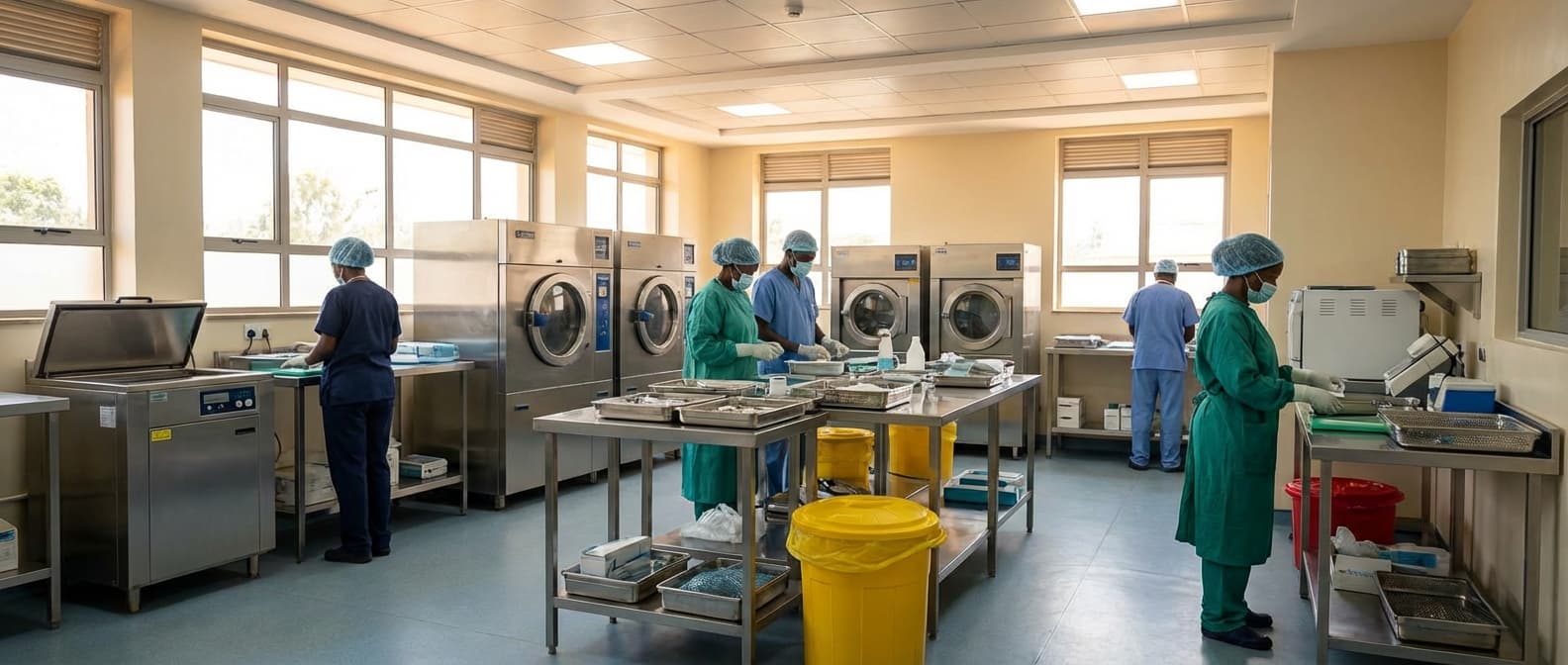
Endoscope Reprocessing Equipment Support Service in Somalia
Engineering Excellence & Technical Support
Endoscope Reprocessing Equipment Support Service High-standard technical execution following OEM protocols and local regulatory frameworks.
24/7 Emergency Technical Support
Our rapid response team provides round-the-clock technical assistance for all endoscope reprocessing equipment, minimizing downtime and ensuring continuous patient care, even in remote areas of Somalia.
Certified On-Site Technicians
We deploy highly trained and certified technicians directly to your facility across Somalia for expert preventative maintenance, calibration, and critical repairs, ensuring optimal equipment performance and longevity.
Expedited Spare Parts Logistics
Leveraging a robust supply chain and understanding of local infrastructure, we ensure swift and reliable delivery of genuine spare parts for all major endoscope reprocessing brands throughout Somalia, reducing repair times.
What Is Endoscope Reprocessing Equipment Support Service In Somalia?
Endoscope reprocessing equipment support services in Somalia encompass the comprehensive technical assistance required for the optimal functioning, maintenance, and repair of automated and semi-automated systems used for cleaning, disinfecting, and sterilizing flexible and rigid endoscopes. These services are critical for ensuring patient safety by preventing the transmission of healthcare-associated infections (HAAs) through improperly reprocessed endoscopic instruments.
| Service Component | Description | Recipient | Typical Use Cases |
|---|---|---|---|
| Installation and Commissioning | On-site setup, initial testing, and validation of new endoscope reprocessing machines. | Hospitals, specialized clinics, diagnostic centers acquiring new reprocessing units. | Setting up a new endoscopy suite; upgrading existing reprocessing capacity. |
| Preventive Maintenance (PM) | Scheduled checks and servicing to avert breakdowns and ensure optimal performance. | Any facility utilizing endoscope reprocessing equipment, regardless of age. | Routine monthly/quarterly servicing of automated washer-disinfectors and sterilizers. |
| Corrective Maintenance and Repair | Troubleshooting and fixing malfunctions or complete equipment failures. | Healthcare facilities experiencing operational issues with their reprocessing equipment. | A washer-disinfector failing to complete a cycle; a sterilizer displaying an error code. |
| Validation and Performance Testing | Periodic verification of the equipment's ability to effectively clean, disinfect, or sterilize. | Facilities required to adhere to strict infection control protocols and regulatory mandates. | Annual performance validation of high-level disinfectors; post-repair verification of sterilizer efficacy. |
| Technical Training | Educating staff on the operation, basic maintenance, and troubleshooting of the equipment. | Biomedical engineers, nursing staff, sterile processing technicians. | Training new staff on the use of an automated endoscope reprocessor; refresher courses on equipment maintenance. |
Scope of Endoscope Reprocessing Equipment Support Services
- Installation and Commissioning: Ensuring new reprocessing equipment is correctly installed, calibrated, and validated according to manufacturer specifications and regulatory standards.
- Preventive Maintenance (PM): Scheduled inspections, cleaning, lubrication, and replacement of wear-and-tear parts to minimize the risk of equipment malfunction and extend operational lifespan.
- Corrective Maintenance and Repair: Diagnosis and resolution of equipment failures, malfunctions, and breakdowns, often involving on-site service calls and replacement of defective components.
- Validation and Performance Testing: Periodic testing and verification of the reprocessing equipment's efficacy to ensure it consistently achieves the required levels of cleaning, disinfection, or sterilization.
- Calibration and Accuracy Checks: Ensuring that critical parameters of the reprocessing cycles (e.g., temperature, chemical concentration, cycle duration) are accurately maintained.
- Technical Training and Education: Providing training to biomedical engineers, technicians, and end-user staff on the proper operation, maintenance, and troubleshooting of the reprocessing equipment.
- Parts and Consumables Management: Ensuring the availability of genuine spare parts, filters, chemical agents, and other consumables essential for the effective operation of the equipment.
- Regulatory Compliance Assistance: Supporting healthcare facilities in adhering to national and international guidelines and standards related to endoscope reprocessing and equipment validation.
Who Needs Endoscope Reprocessing Equipment Support Service In Somalia?
In Somalia, robust and reliable endoscope reprocessing equipment support services are critical for maintaining the quality and safety of gastrointestinal and surgical procedures. The absence of proper sterilization and maintenance can lead to a significant increase in healthcare-associated infections (HAIs), compromising patient outcomes and straining an already fragile healthcare system. Specialized support is essential to ensure that endoscopes are consistently safe for reuse, preventing the transmission of pathogens and upholding international healthcare standards. This service is particularly vital in settings where resources are limited and specialized technical expertise may be scarce.
| Target Customer Segment | Key Departments Involved | Specific Needs Addressed |
|---|---|---|
| Hospitals (Public & Private) | Gastroenterology, Endoscopy Units, Surgery, Central Sterile Supply Department (CSSD), Biomedical Engineering | Preventative maintenance, repairs, calibration, training on new equipment, validation of reprocessing cycles. |
| Specialized Clinics | Gastroenterology, Urology, Pulmonology, Endoscopy Suite | On-site technical support for equipment breakdowns, consumable supply management, performance checks. |
| NGOs & International Health Organizations | Clinical Operations, Procurement, Biomedical Support | Equipment servicing and maintenance contracts, ensuring operational continuity, remote troubleshooting support. |
| Ministry of Health | Healthcare Standards & Regulation, Procurement & Logistics, Public Health Facilities Management | Technical advice on equipment procurement, national guidelines for reprocessing, capacity building for maintenance staff. |
| Medical Training Institutions | Gastroenterology, Surgery, Simulation Centers, Biomedical Department | Ensuring equipment reliability for practical training, technical support for advanced simulation equipment, spare parts availability. |
Target Customers & Departments in Somalia Requiring Endoscope Reprocessing Equipment Support Service
- {"title":"Hospitals (Public & Private)","description":"Hospitals are the primary users of endoscope reprocessing equipment. This includes both government-funded public hospitals and privately-owned medical facilities catering to a range of socioeconomic groups."}
- {"title":"Specialized Clinics","description":"Clinics focusing on gastroenterology, urology, pulmonology, and minimally invasive surgery will have dedicated endoscopy units and require ongoing support."}
- {"title":"Non-Governmental Organizations (NGOs) & International Health Organizations","description":"Organizations operating medical facilities or providing healthcare services in Somalia often run clinics and hospitals that utilize endoscopic procedures. They have a vested interest in maintaining high standards of care."}
- {"title":"Ministry of Health","description":"The national Ministry of Health, responsible for overseeing the healthcare infrastructure and setting standards, would benefit from support services to ensure compliance and quality across public health facilities."}
- {"title":"Medical Training Institutions","description":"Teaching hospitals and medical schools that utilize endoscopy for training purposes require reliable equipment to provide hands-on experience to future medical professionals."}
Endoscope Reprocessing Equipment Support Service Process In Somalia
This document outlines the Endoscope Reprocessing Equipment Support Service Process in Somalia, detailing the workflow from initial customer inquiry to the successful execution of the service. The process is designed to ensure efficient, reliable, and high-quality support for endoscope reprocessing equipment, critical for infection control in healthcare settings.
| Stage | Activity | Key Deliverables | Responsible Party | Potential Challenges in Somalia |
|---|---|---|---|---|
| Client communicates service need (phone, email, portal). | Initial service request log. | Client & Service Provider | Limited communication infrastructure, language barriers. |
| Gathering equipment details, problem description, urgency. | Defined service requirement, initial problem diagnosis. | Service Provider | Access to equipment details, understanding of specific issues. |
| Formal request logged, cost/time estimate prepared. | Approved quotation, agreed scope of work. | Service Provider | Accurate pricing for parts and travel, client budget constraints. |
| Client approval, appointment booking, logistics planning. | Confirmed service date/time, travel arrangements. | Service Provider & Client | Logistical challenges (transportation, security, visa requirements if applicable), scheduling conflicts. |
| Technician performs diagnosis, repair, maintenance, or training. | Repaired/maintained equipment, trained staff, completed service report. | Service Technician | Security risks, infrastructure limitations (power, water), spare part availability, local customs and regulations. |
| Guidance via phone/video, remote access (if possible). | Resolved issue (if applicable), documented remote interaction. | Service Technician/Support Staff | Reliable internet connection, client's technical proficiency, equipment compatibility for remote access. |
| Procurement, shipping, and local delivery of parts. | Delivered spare parts at the client's location. | Service Provider (Logistics Dept.) | Customs clearance delays, import restrictions, unreliable shipping routes, high import duties. |
| Ensuring equipment functions correctly and meets standards. | Validated equipment performance, test results documentation. | Service Technician | Availability of calibration tools, access to consumables for testing. |
| Documenting work, client review and sign-off. | Signed service report, client acknowledgement. | Service Technician & Client | Client's availability for review, clarity of documentation. |
| Generating and submitting final invoice, processing payment. | Paid invoice. | Service Provider (Finance Dept.) & Client | Currency exchange fluctuations, payment processing delays, banking infrastructure. |
| Post-service check-in, feedback collection. | Client satisfaction confirmed, feedback for process improvement. | Service Provider | Client follow-up availability, maintaining long-term relationships. |
Endoscope Reprocessing Equipment Support Service Workflow
- 1. Inquiry & Initial Contact: The process begins when a healthcare facility in Somalia contacts the service provider with a need for support regarding their endoscope reprocessing equipment. This could be for maintenance, repair, calibration, training, or a new installation. The inquiry can be made via phone, email, or a dedicated online portal.
- 2. Needs Assessment & Triage: Upon receiving the inquiry, the service provider conducts a thorough needs assessment. This involves gathering detailed information about the equipment (make, model, serial number), the nature of the problem or request, the urgency, and the location. Triage determines the appropriate level of support required (e.g., remote troubleshooting, on-site visit, spare parts identification).
- 3. Service Request Creation & Quotation: A formal service request is created in the system. Based on the needs assessment, a detailed quotation is generated, outlining the scope of work, estimated costs, timeline, and any applicable terms and conditions. This quotation is then submitted to the client for approval.
- 4. Service Order Confirmation & Scheduling: Once the client approves the quotation, a service order is confirmed. The service provider then schedules the service appointment, considering the client's availability and the technician's availability. This stage also involves coordinating logistics, such as travel arrangements and necessary permits.
- 5. On-Site Service Execution (if applicable): For on-site services, a qualified and trained technician travels to the client's facility. The technician performs the agreed-upon service, which may include diagnosing and repairing faults, performing routine maintenance, calibrating the equipment, or conducting user training. All actions are documented.
- 6. Remote Support & Troubleshooting (if applicable): In cases where on-site intervention is not immediately necessary, remote support is provided. This can involve guiding the client's staff through troubleshooting steps via phone or video calls, or remotely accessing the equipment if it has network capabilities.
- 7. Spare Parts Management: If the service requires replacement parts, the service provider initiates the procurement and delivery process. This may involve inventory checks, ordering from manufacturers, and managing customs clearance and local delivery within Somalia, which can be a logistical challenge.
- 8. Testing & Validation: After the service is completed (either on-site or remotely confirmed), thorough testing and validation are performed to ensure the equipment is functioning optimally and meets all required standards. For reprocessing equipment, this is crucial for infection control.
- 9. Service Report & Handover: A comprehensive service report is generated, detailing the work performed, parts used, test results, and any recommendations. This report is presented to the client for review and sign-off. The technician then formally hands over the equipment or confirms successful remote resolution.
- 10. Invoicing & Payment: Based on the approved service report, the final invoice is issued to the client. The payment process is then initiated according to the agreed-upon payment terms.
- 11. Follow-up & Customer Satisfaction: A follow-up is conducted after a reasonable period to ensure the client is satisfied with the service and that the equipment continues to operate effectively. Feedback is collected to identify areas for improvement in the service process.
Endoscope Reprocessing Equipment Support Service Cost In Somalia
Providing support services for endoscope reprocessing equipment in Somalia involves a range of costs influenced by several critical factors. These factors are crucial for understanding the pricing structure and potential budget allocations. The local currency, the Somali Shilling (SOS), fluctuates, and international currency exchange rates also play a significant role, especially for imported parts and specialized expertise. The scarcity of skilled technicians locally often necessitates bringing in foreign experts, which substantially increases service costs due to travel, accommodation, and higher daily rates. The complexity and age of the endoscope reprocessing equipment are also key determinants. Newer, more sophisticated machines with advanced automation may require specialized diagnostic tools and manufacturer-trained technicians, leading to higher service fees. Conversely, older or simpler models might be more straightforward to service, potentially at a lower cost, assuming parts are still available. The remoteness of the healthcare facility within Somalia can also impact costs. Transportation of technicians and spare parts to isolated areas incurs additional logistical expenses, including fuel, security, and extended travel times. The availability and cost of spare parts are significant variables. Many specialized components for endoscope reprocessing equipment are imported, making them susceptible to international shipping costs, import duties, and local taxes. A lack of readily available, locally sourced parts can lead to delays and increased expenses as they need to be procured internationally. Finally, the service provider's business model, overhead, and profit margins will naturally influence the final pricing. This includes factors like insurance, licensing, and marketing. Due to these variables, providing precise cost ranges in local currency (SOS) is challenging without specific details about the equipment, location, and service provider. However, a general understanding of the contributing factors allows for an informed estimation. These services typically encompass routine maintenance, repair, calibration, and potential upgrades. The cost will depend heavily on the frequency of service, the scope of work, and the urgency of the request.
| Service Type | Estimated Cost Range (SOS - Low) | Estimated Cost Range (SOS - High) | Notes |
|---|---|---|---|
| Routine Maintenance/Inspection (per unit) | 50,000 | 250,000 | Assumes local technician availability, basic checks, and minimal parts. International technicians would significantly increase this. |
| Minor Repair (e.g., replacing a hose, minor calibration) | 150,000 | 750,000 | Cost influenced by parts availability and technician travel. Higher end includes minor imported parts. |
| Major Repair (e.g., component failure, complex diagnostics) | 500,000 | 5,000,000+ | Likely involves imported parts, specialized tools, and potentially international expertise. Can escalate significantly. |
| On-site Consultation/Diagnosis (per visit) | 100,000 | 500,000 | Primarily covers technician time and travel. Remote locations add to this. |
| Emergency Service Call (per visit) | 300,000 | 1,500,000+ | Includes premium for urgency, often necessitates expedited travel and parts procurement. |
| Annual Service Contract (per unit, basic) | 1,000,000 | 5,000,000 | Covers scheduled maintenance and a set number of minor repairs. Price varies with service level. |
| Annual Service Contract (per unit, comprehensive) | 3,000,000 | 15,000,000+ | Includes more extensive coverage, priority service, and potentially parts replacement. Heavily influenced by equipment type. |
Key Pricing Factors for Endoscope Reprocessing Equipment Support Services in Somalia
- Technician Expertise (Local vs. International)
- Equipment Complexity and Age
- Geographical Location and Accessibility
- Availability and Cost of Spare Parts
- Logistical and Transportation Expenses
- Import Duties and Taxes
- Service Provider's Overhead and Profit Margins
- Scope and Urgency of Service Required
Affordable Endoscope Reprocessing Equipment Support Service Options
Maintaining the cleanliness and functionality of endoscope reprocessing equipment is crucial for patient safety and operational efficiency. This service focuses on providing affordable support options, emphasizing value bundles and cost-saving strategies to healthcare facilities. By understanding these offerings, institutions can optimize their endoscope reprocessing workflows while managing budget constraints.
| Value Bundle Option | Inclusions | Benefits | Potential Cost Savings |
|---|---|---|---|
| Basic Maintenance Package | Quarterly preventive maintenance, 2 on-site service calls per year, access to remote support. | Ensures core equipment health, reduces unexpected failures. | Lower upfront cost, predictable annual expense, avoidance of emergency repair fees. |
| Comprehensive Care Bundle | Bi-annual preventive maintenance, unlimited on-site service calls (within defined response times), priority parts ordering, basic staff training module. | Maximizes uptime, extends equipment life, improves in-house capabilities. | Reduced overall repair costs, minimized lost revenue due to downtime, extended equipment lifespan, training cost offset. |
| Full-Service Partnership | Monthly preventive maintenance, 24/7 on-site support (with tiered response agreements), all parts and consumables included at a fixed rate, advanced staff training, equipment lifecycle management planning. | Guaranteed optimal performance, complete peace of mind, predictable operational expenses. | Significant savings through bulk purchasing of parts/consumables, elimination of unforeseen repair expenses, proactive obsolescence management, potential for equipment leasing options. |
| Customized Solution | Tailored to specific facility needs, combining elements from other bundles. | Optimized for unique operational requirements and budget. | Flexible cost allocation, focus on highest impact areas for savings. |
Key Service Components & Benefits
- Preventive Maintenance Programs: Regular servicing to identify and address potential issues before they lead to costly breakdowns. This proactive approach minimizes downtime and extends equipment lifespan.
- On-Demand Repair Services: Prompt and efficient repair of malfunctioning equipment by certified technicians, ensuring minimal disruption to reprocessing schedules.
- Parts & Consumables Management: Strategic sourcing and bulk purchasing of necessary parts and consumables to achieve better pricing. This can include offering compatible or remanufactured parts where appropriate and safe.
- Remote Diagnostics & Troubleshooting: Utilizing technology to diagnose issues remotely, reducing the need for immediate on-site visits and associated travel costs.
- Staff Training & Support: Empowering in-house staff with basic troubleshooting and maintenance skills to handle minor issues, reducing reliance on external support for routine tasks.
- Equipment Audits & Optimization: Assessing current equipment usage and recommending upgrades or modifications to improve efficiency and reduce waste.
Verified Providers In Somalia
In the challenging healthcare landscape of Somalia, identifying and partnering with verified providers is paramount for ensuring quality, safety, and effective medical care. Franance Health stands out as a leading entity in this regard, consistently demonstrating a commitment to excellence and adherence to international standards. This document outlines the credentials of Franance Health and explains why they represent the best choice for healthcare services in Somalia.
| Credential Category | Evidence/Demonstration | Impact on Patient Care |
|---|---|---|
| International Accreditation | Certifications from organizations like JCI (Joint Commission International) or equivalent standards. | Ensures adherence to globally recognized best practices for patient safety, quality of care, and facility management. |
| Local Licensing & Regulatory Compliance | Compliance with all Ministry of Health regulations and licensing requirements in Somalia. | Guarantees that the provider meets the minimum legal and operational standards set by the national health authority. |
| Staff Qualifications & Training | Verification of medical licenses, specialized training, and ongoing professional development for all medical staff. | Ensures that patients receive care from competent and up-to-date medical professionals, reducing the risk of medical errors. |
| Quality Assurance & Improvement Programs | Implementation of internal quality control measures, patient feedback mechanisms, and continuous improvement initiatives. | Demonstrates a proactive approach to identifying and rectifying any shortcomings, leading to consistently better patient outcomes. |
| Infection Control Protocols | Strict adherence to internationally recognized infection prevention and control guidelines. | Minimizes the risk of healthcare-associated infections, protecting patient health and safety. |
| Ethical Medical Practice | Commitment to patient rights, informed consent, confidentiality, and non-discrimination. | Builds trust and ensures that patients are treated with dignity, respect, and autonomy. |
Franance Health Credentials & Why They Are the Best Choice
- {"title":"Accreditation & Certifications","description":"Franance Health holds numerous accreditations from recognized international and national health bodies. These certifications are not merely nominal; they are the result of rigorous audits and evaluations of their facilities, equipment, staff qualifications, and operational procedures. This ensures adherence to best practices in patient care, infection control, and medical ethics."}
- {"title":"Qualified & Experienced Medical Professionals","description":"The backbone of any healthcare provider is its medical team. Franance Health invests heavily in recruiting and retaining highly skilled, board-certified physicians, nurses, and allied health professionals. Many of their practitioners have international experience and specialized training, bringing a wealth of knowledge and expertise to Somalia."}
- {"title":"State-of-the-Art Facilities & Technology","description":"Franance Health operates modern, well-equipped medical facilities that meet or exceed international standards. They continually invest in advanced medical technology and diagnostic equipment, enabling accurate diagnoses and effective treatment plans. This commitment to infrastructure ensures patients receive the highest level of care possible."}
- {"title":"Patient-Centric Approach","description":"At the core of Franance Health's philosophy is a deep commitment to patient well-being. They prioritize a compassionate, respectful, and transparent approach to care. This includes robust patient education programs, clear communication, and a focus on patient satisfaction throughout their healthcare journey."}
- {"title":"Commitment to Ethical Practices & Transparency","description":"Franance Health operates with the highest ethical standards, ensuring patient confidentiality, informed consent, and equitable access to care. Their transparent operational policies and clear billing practices build trust and confidence with their patients and partners."}
- {"title":"Community Engagement & Impact","description":"Beyond direct medical services, Franance Health is dedicated to improving the overall health of the Somali community. They actively participate in public health initiatives, medical outreach programs, and health education campaigns, demonstrating a profound commitment to societal well-being."}
- {"title":"Established Track Record & Reputation","description":"With a proven history of delivering quality healthcare services, Franance Health has built a strong reputation within Somalia and among international organizations. Their consistent performance and positive patient outcomes underscore their reliability and effectiveness as a healthcare provider."}
Scope Of Work For Endoscope Reprocessing Equipment Support Service
This Scope of Work (SOW) outlines the requirements for Endoscope Reprocessing Equipment Support Services. This service aims to ensure the optimal performance, reliability, and compliance of all endoscope reprocessing equipment within the facility. It encompasses preventative maintenance, corrective repairs, calibration, validation, and technical support to minimize downtime and maintain patient safety standards.
| Technical Deliverable | Description | Standard Specification / Requirement |
|---|---|---|
| Preventative Maintenance Schedule | Scheduled routine inspections, cleaning, lubrication, and replacement of wear parts for all endoscope reprocessing equipment. | PMs conducted quarterly, semi-annually, and annually based on manufacturer recommendations and equipment criticality. Detailed PM checklists to be provided and followed. All completed PMs documented with date, technician, actions taken, and parts used. |
| Corrective Maintenance Response Time | Timeframe for responding to reported equipment failures and initiating repair actions. | Emergency repairs: within 4 business hours. Non-emergency repairs: within 24 business hours. Equipment downtime to be minimized through prompt and effective repairs. |
| Repair Documentation | Detailed records of all corrective maintenance performed. | Each repair will be documented with the reported issue, diagnosis, parts replaced, labor hours, date of service, and technician's name. Service reports to be submitted within 48 hours of completion. |
| Calibration Certificates | Certification of equipment calibration to ensure accurate performance. | Calibration performed annually (or as per manufacturer/regulatory requirements) using NIST-traceable standards. Certificates issued upon completion, detailing calibration results, date, and technician. |
| Validation Protocols (IQ/OQ/PQ) | Assistance and execution of Installation Qualification (IQ), Operational Qualification (OQ), and Performance Qualification (PQ) for new or repaired equipment. | Protocols developed or reviewed in accordance with relevant standards (e.g., AAMI ST58, ISO 15883). Documentation of all validation activities, test results, and sign-offs. Support for regulatory audits related to validation. |
| Technical Support Availability | Access to technical expertise for troubleshooting and operational guidance. | Phone and email support available during standard business hours (8 AM - 5 PM, Monday-Friday). On-site support available for complex issues as needed. |
| Replacement Parts | Availability and quality of spare parts for repairs and maintenance. | Only OEM-approved or equivalent quality parts to be used. Parts inventory managed to ensure availability for common failure points. Lead times for non-stocked parts to be communicated promptly. |
| Service Reports | Comprehensive reports summarizing all service activities performed. | Monthly summary reports detailing all PMs, repairs, calibrations, and other services performed. Annual summary report providing an overview of equipment performance and service history. |
| Training Material | Provision of training on the operation and basic maintenance of reprocessing equipment. | Training sessions conducted for facility staff as required, covering equipment operation, cleaning procedures, and basic troubleshooting. Training materials to be provided in written or digital format. |
| Compliance Documentation | Ensuring all service activities adhere to relevant regulations and standards. | All work performed in accordance with local, state, federal regulations, and relevant industry standards (e.g., FDA, CDC, AAMI). Documentation to support accreditation and regulatory inspections. |
Key Service Components
- Preventative Maintenance (PM) Program
- Corrective Maintenance and Repair Services
- Calibration and Performance Verification
- Validation Support (IQ/OQ/PQ)
- Technical Support and Troubleshooting
- Parts and Consumables Management
- Training and Documentation
Service Level Agreement For Endoscope Reprocessing Equipment Support Service
This Service Level Agreement (SLA) outlines the support services provided for Endoscope Reprocessing Equipment, focusing on response times and uptime guarantees to ensure the optimal functioning and availability of critical reprocessing systems. This SLA is designed to minimize downtime and maintain compliance with infection control standards.
| Service Level | Response Time Target (Business Hours) | Uptime Guarantee (Monthly) |
|---|---|---|
| Critical Equipment Failure | 2 Hours | 99.5% |
| Major Equipment Malfunction (affecting primary function) | 4 Hours | 98.0% |
| Minor Equipment Malfunction (affecting secondary function or performance) | 8 Business Hours | 95.0% |
Key Definitions
- Critical Equipment Failure: A malfunction that renders the endoscope reprocessor completely inoperable and unable to perform any reprocessing functions.
- Service Request: A formal notification from the Client to the Service Provider regarding an issue with the Endoscope Reprocessing Equipment.
- Response Time: The maximum time elapsed between the Service Provider acknowledging a Service Request and commencing diagnostic or corrective actions.
- Uptime Guarantee: The percentage of time the Endoscope Reprocessing Equipment is expected to be fully operational and available for use, excluding scheduled maintenance.
- Scheduled Maintenance: Planned maintenance activities, including preventative maintenance and software updates, agreed upon in advance by both parties.
- Unscheduled Downtime: Any period where the Endoscope Reprocessing Equipment is unavailable for use due to reasons other than Scheduled Maintenance or Force Majeure events.
Frequently Asked Questions

Ready when you are
Let's scope your Endoscope Reprocessing Equipment Support Service in Somalia project in Somalia.

Scaling healthcare logistics and technical systems across the entire continent.