
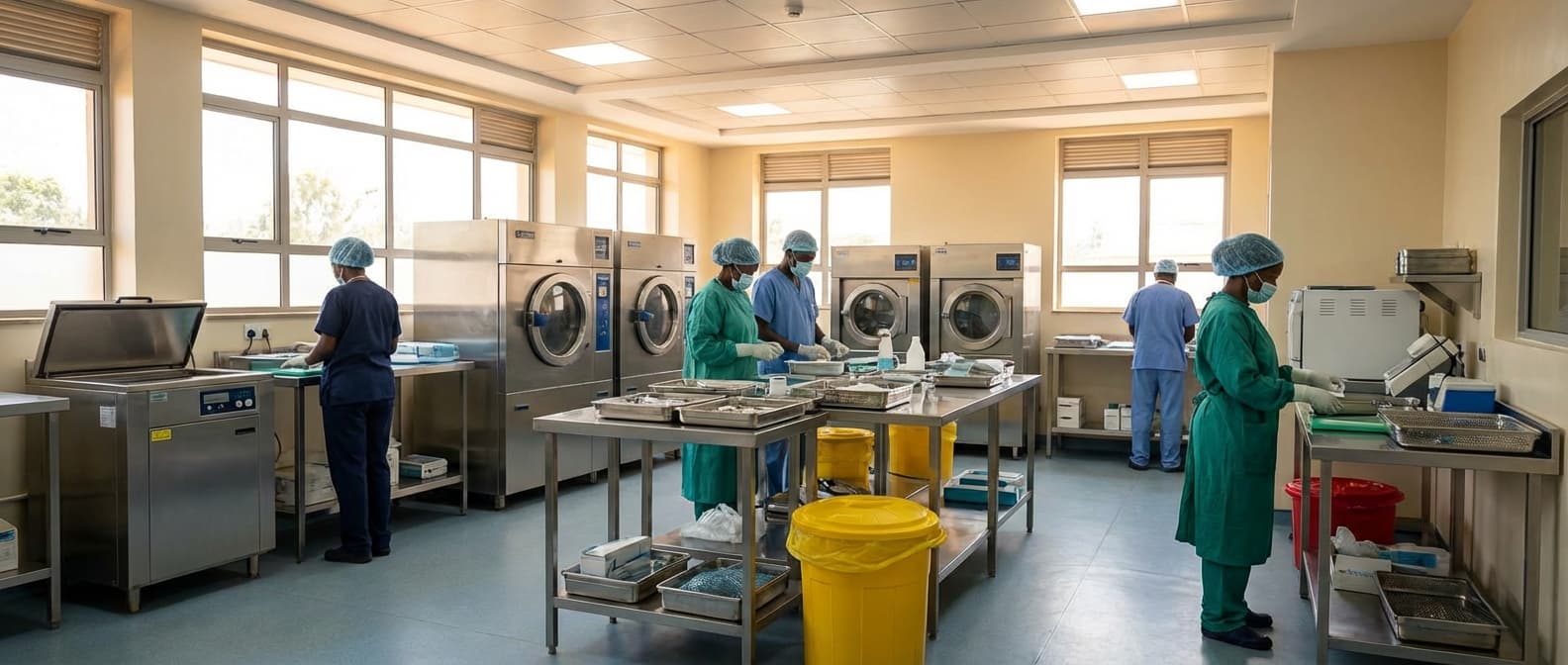
Autoclave Validation Support Service in Somalia
Engineering Excellence & Technical Support
Autoclave Validation Support Service High-standard technical execution following OEM protocols and local regulatory frameworks.
Ensuring Sterilization Efficacy for Healthcare Safety
Our Autoclave Validation Support Service in Somalia provides rigorous testing and certification of sterilization equipment, guaranteeing the elimination of all viable microorganisms. This is critical for preventing healthcare-associated infections and ensuring patient safety in clinics and hospitals across the nation.
Compliance with International Sterilization Standards
We facilitate adherence to globally recognized sterilization protocols (e.g., ISO 13485, EN 285) for your autoclaves. Our expert validation ensures your medical devices and supplies meet international quality and safety benchmarks, essential for both domestic and potential export markets.
Optimized Equipment Performance and Longevity
Beyond compliance, our validation services identify optimal operating parameters for your autoclaves. This leads to improved sterilization cycles, reduced downtime, extended equipment lifespan, and cost savings for healthcare facilities in Somalia, contributing to operational efficiency.
What Is Autoclave Validation Support Service In Somalia?
Autoclave validation support services in Somalia refer to the provision of expert assistance and technical services to ensure that steam sterilization equipment (autoclaves) are functioning correctly and effectively to achieve the required sterilization parameters. This involves a series of systematic tests and documentation to verify that the autoclave can reliably kill or inactivate microorganisms under specified conditions. The primary objective is to guarantee the safety and efficacy of sterilized medical devices, pharmaceutical products, and other critical materials by confirming that the sterilization process consistently meets predefined performance standards.
| Stakeholder/Entity | Need for Autoclave Validation Support | Typical Use Cases |
|---|---|---|
| Hospitals and Healthcare Facilities | To ensure the sterility of surgical instruments, medical devices, and other patient-care items, thereby preventing hospital-acquired infections (HAIs) and ensuring patient safety. | Sterilization of surgical kits, endoscopes, laboratory glassware, textiles, and personal protective equipment (PPE). |
| Laboratories (Medical, Research, Veterinary) | To guarantee the sterility of laboratory equipment, culture media, and waste, thereby preventing contamination and ensuring the integrity of experimental results or diagnostic accuracy. | Sterilization of petri dishes, pipettes, glassware, animal bedding, and biohazardous waste. |
| Pharmaceutical Manufacturing and Compounding Pharmacies | To ensure the sterility of pharmaceutical products, including sterile injectables, ophthalmic solutions, and parenteral nutrition, to meet regulatory requirements and patient safety standards. | Sterilization of vials, stoppers, syringes, and raw materials for sterile drug production. |
| Dental Clinics | To ensure the sterility of dental instruments, preventing the transmission of infectious diseases between patients. | Sterilization of dental handpieces, explorers, scalers, and other instruments. |
| Government Regulatory Bodies and Public Health Agencies | To verify that healthcare and other critical facilities are adhering to sterilization standards and regulations for public health protection. | Auditing and oversight of sterilization practices within regulated facilities. |
Key Components of Autoclave Validation Support Service
- Installation Qualification (IQ): Verifying that the autoclave is installed correctly and meets the manufacturer's specifications.
- Operational Qualification (OQ): Testing the autoclave's operational parameters (temperature, pressure, time, vacuum) within its intended operating range.
- Performance Qualification (PQ): Demonstrating that the autoclave consistently achieves the required sterilization efficacy under simulated or actual operating conditions using biological and chemical indicators.
- Routine Monitoring: Implementing ongoing checks and calibration procedures to maintain validated performance.
- Documentation and Reporting: Providing comprehensive records of all validation activities, including test results, calibration certificates, and validation reports.
- Troubleshooting and Rectification: Identifying and resolving any issues identified during the validation process.
- Training: Educating relevant personnel on the correct operation and maintenance of the validated autoclave.
Who Needs Autoclave Validation Support Service In Somalia?
Autoclave validation support services are crucial for ensuring the sterility and safety of medical equipment and instruments. In Somalia, these services are particularly vital for healthcare facilities that rely on autoclaves for sterilization to prevent the spread of infections and ensure patient well-being. The demand for such services stems from regulatory compliance, the need for reliable sterilization, and the desire to maintain high standards of healthcare delivery in a challenging environment.
| Customer Type | Key Departments/Roles | Specific Needs/Importance |
|---|---|---|
| Hospitals (Public & Private) | Surgical Departments, Central Sterile Supply Department (CSSD), Infection Control Department, Biomedical Engineering | Ensuring sterility of surgical instruments, preventing surgical site infections, maintaining regulatory compliance, optimizing equipment performance, patient safety. |
| Clinics & Health Centers | Nursing Staff, Clinic Managers, Infection Control Focal Points | Sterilization of minor surgical instruments, dental tools, and general medical equipment to prevent cross-contamination, basic patient safety. |
| Dental Practices | Dentists, Dental Hygienists, Dental Assistants | Sterilization of dental instruments (drills, probes, forceps) to prevent transmission of blood-borne pathogens and ensure safe dental procedures. |
| Laboratories (Medical & Research) | Microbiology Labs, Pathology Labs, Research Scientists | Sterilization of glassware, media, and equipment to prevent contamination of samples and experiments, ensuring accurate diagnostic results and research integrity. |
| Veterinary Clinics | Veterinarians, Veterinary Nurses | Sterilization of surgical instruments and equipment for animal care, preventing the spread of zoonotic diseases. |
| NGOs with Healthcare Programs | Medical Officers, Logistics Managers, Field Healthcare Workers | Ensuring sterile equipment in remote or resource-limited settings, supporting mobile clinics and emergency response, maintaining program effectiveness and patient safety. |
| Disaster Relief & Humanitarian Aid Organizations | Medical Coordinators, Operations Managers, Healthcare Staff | Providing sterile medical supplies and instruments in emergency situations and during humanitarian crises, critical for preventing outbreaks and treating injuries. |
Target Customers and Departments in Somalia Requiring Autoclave Validation Support Services
- Hospitals (Public and Private)
- Clinics and Health Centers
- Dental Practices
- Laboratories (Medical and Research)
- Veterinary Clinics
- Non-Governmental Organizations (NGOs) with Healthcare Programs
- Disaster Relief and Humanitarian Aid Organizations
Autoclave Validation Support Service Process In Somalia
This document outlines the workflow for an Autoclave Validation Support Service in Somalia, detailing the process from initial client inquiry to the successful execution of validation activities. The service aims to ensure that autoclaves used in healthcare facilities, laboratories, and other critical settings meet stringent performance standards for sterilization, thereby guaranteeing patient safety and regulatory compliance. The process is designed to be transparent, efficient, and tailored to the specific needs of clients in Somalia, considering local logistical and operational realities.
| Phase | Step | Description | Key Activities & Deliverables | Responsible Party | Estimated Timeline (indicative) |
|---|---|---|---|---|---|
| Phase 1: Inquiry & Initial Assessment | 1.1 Client Inquiry | Potential client contacts the service provider with a need for autoclave validation. | Initial communication (email, phone, in-person), understanding of client's requirements, location, and number of autoclaves. | Client, Service Provider | 1-3 Business Days |
| 1.2 Preliminary Information Gathering | Gathering essential details about the client's autoclave(s) and existing validation status. | Requesting autoclave make/model, age, previous validation reports (if any), intended use, and facility type. | Service Provider | 2-5 Business Days | |
| 1.3 Needs Assessment & Feasibility Check | Evaluating the scope of work and identifying any immediate challenges or requirements. | Site visit (if feasible and necessary for complex cases), discussion of validation protocols (e.g., IQ, OQ, PQ), and preliminary cost estimation. | Service Provider | 3-7 Business Days | |
| Phase 2: Proposal & Agreement | 2.1 Proposal Development | Creating a detailed proposal outlining the scope, methodology, timeline, and cost. | Technical proposal with validation plan, terms and conditions, and a comprehensive quotation. | Service Provider | 5-10 Business Days |
| 2.2 Proposal Review & Negotiation | Client reviews the proposal, and discussions are held to clarify any points. | Q&A sessions, potential adjustments to scope or pricing based on client feedback. | Client, Service Provider | 3-7 Business Days | |
| 2.3 Contract/Agreement Signing | Formalizing the engagement with a signed contract. | Service Level Agreement (SLA) or contract detailing responsibilities, payment terms, and confidentiality. | Client, Service Provider | 2-5 Business Days | |
| Phase 3: Planning & Preparation | 3.1 Detailed Validation Planning | Developing a specific, site-tailored validation plan. | Defining test parameters, cycle types, challenge materials, acceptance criteria, and specific test points for IQ, OQ, and PQ. | Service Provider | 5-10 Business Days |
| 3.2 Equipment Calibration & Preparation | Ensuring all validation equipment is calibrated and ready for use. | Calibration certificates for temperature probes, pressure gauges, data loggers, etc. Preparation of biological indicators, chemical indicators, and other consumables. | Service Provider | 3-7 Business Days | |
| 3.3 Logistics & Scheduling | Coordinating travel, accommodation, and on-site access. | Booking flights/transportation to Somalia, arranging accommodation, obtaining necessary site access permissions, and scheduling the validation team's visit. | Service Provider | 7-14 Business Days (depending on travel complexity) | |
| Phase 4: On-site Execution | 4.1 Installation Qualification (IQ) | Verifying that the autoclave is installed correctly according to manufacturer specifications. | Checking mechanical, electrical, and safety features. Documenting installation details and initial settings. | Service Provider | 1-2 Days per Autoclave |
| 4.2 Operational Qualification (OQ) | Testing the autoclave's ability to operate within specified parameters across its operational range. | Running empty cycles at various temperatures and pressures, testing alarms, and ensuring consistent performance. | Service Provider | 2-4 Days per Autoclave | |
| 4.3 Performance Qualification (PQ) | Challenging the autoclave with representative loads to demonstrate effective sterilization under normal operating conditions. | Using biological and chemical indicators with various load types (e.g., porous, non-porous, complex loads). Running multiple cycles to prove reproducibility. | Service Provider | 3-7 Days per Autoclave | |
| 4.4 Data Collection & Observation | Meticulously recording all test results and observations. | Collecting data from sensors, loggers, and manual observations. Documenting any deviations or anomalies. | Service Provider | Continuous throughout execution | |
| Phase 5: Reporting & Remediation | 5.1 Data Analysis & Report Generation | Analyzing collected data and compiling a comprehensive validation report. | Interpreting results against acceptance criteria, identifying any failures, and generating IQ, OQ, PQ reports. | Service Provider | 5-10 Business Days after execution |
| 5.2 Report Review & Presentation | Presenting the validation report to the client for review. | Explaining findings, providing recommendations, and discussing any identified non-conformities. | Service Provider | 2-3 Business Days | |
| 5.3 Remediation Planning & Execution (if needed) | Developing and implementing corrective actions for any failed tests. | Identifying root causes of failures, proposing solutions (e.g., maintenance, calibration adjustments), and re-testing if necessary. | Service Provider, Client (for repairs/maintenance) | Variable (depends on complexity of remediation) | |
| Phase 6: Follow-up & Closure | 6.1 Final Report Issuance | Issuing the final, approved validation report to the client. | Updated report reflecting any remediation actions and re-testing. Issuance of validation certificates. | Service Provider | 1-2 Business Days after remediation completion |
| 6.2 Client Sign-off & Payment | Client formally accepts the completed service and makes final payment. | Confirmation of satisfaction with the service, processing of final invoice. | Client, Service Provider | 5-10 Business Days | |
| 6.3 Archiving & Future Planning | Archiving all project documentation and discussing future validation needs. | Maintaining records for traceability and recommending the schedule for periodic revalidation or requalification. | Service Provider | Ongoing |
Autoclave Validation Support Service Workflow (Somalia)
- Phase 1: Inquiry & Initial Assessment
- Phase 2: Proposal & Agreement
- Phase 3: Planning & Preparation
- Phase 4: On-site Execution
- Phase 5: Reporting & Remediation
- Phase 6: Follow-up & Closure
Autoclave Validation Support Service Cost In Somalia
Autoclave validation is a critical process for ensuring sterilization effectiveness in healthcare and laboratory settings. In Somalia, the cost of such a service is influenced by several factors, leading to a range of potential pricing. Understanding these factors is crucial for organizations seeking to budget and procure these essential services.
| Service Type | Estimated Price Range (Somali Shilling - SOS) | Notes |
|---|---|---|
| Basic Annual Performance Qualification (PQ) for a single, standard-sized autoclave | 150,000 - 350,000 | Covers standard cycle testing with biological and chemical indicators. |
| Full Validation (IQ/OQ/PQ) for a new or relocated autoclave | 400,000 - 800,000+ | Includes installation, operational, and performance qualification. Price highly dependent on autoclave complexity. |
| Validation for larger or industrial-sized autoclaves | 300,000 - 600,000+ | Per autoclave, for PQ. Full validation will be significantly higher. |
| Multiple Autoclave Validation (e.g., 3-5 units, PQ) | 400,000 - 900,000 (total) | Potential for per-unit discounts, but total cost increases with quantity. |
| Re-validation after major repair/service | 100,000 - 250,000 | Typically focused on PQ to ensure continued effectiveness. |
Key Pricing Factors for Autoclave Validation Support Services in Somalia:
- Type of Validation: The scope of the validation significantly impacts cost. This can range from a simple annual performance qualification (PQ) to more comprehensive installation qualification (IQ), operational qualification (OQ), and PQ, especially for new or relocated autoclaves.
- Autoclave Size and Capacity: Larger autoclaves with higher capacities generally require more resources (time, consumables like biological indicators) for validation, thus increasing the overall cost.
- Number of Autoclaves: A site with multiple autoclaves will incur higher costs, though volume discounts might be negotiable.
- Complexity of Autoclave System: Advanced features, automation, or specific validation requirements dictated by regulatory bodies (if applicable) can add to the complexity and, consequently, the price.
- Provider's Expertise and Reputation: Experienced and reputable validation service providers, especially those with international certifications or strong local presence and understanding of local health regulations, may command higher fees.
- Geographic Location within Somalia: Travel and logistical costs to reach the facility can vary. Remote or less accessible areas might see slightly higher pricing due to these factors.
- Frequency of Validation: While annual validation is standard, re-validation after repairs, maintenance, or relocation will be billed on a per-instance basis.
- Included Services: Some providers might offer bundled services like basic preventative maintenance alongside validation, which would affect the overall package price. Conversely, a purely validation-focused service might be cheaper but less comprehensive.
- Report Generation and Documentation: The level of detail and format of the validation report can also influence cost. Standardized reports are common, but custom documentation might incur additional charges.
- Consumables and Reagents: The cost of biological indicators, chemical indicators, and other validation consumables is a direct component of the service fee.
Affordable Autoclave Validation Support Service Options
Ensuring the proper functioning of autoclaves through validation is a critical but often costly aspect of laboratory and healthcare operations. This service provides a comprehensive approach to autoclave validation, offering flexible options and strategic cost-saving measures to meet diverse budgetary needs. We understand that specialized equipment requires specialized expertise, and our goal is to make essential validation services accessible and affordable.
| Value Bundle | Included Services | Benefits | Target Audience | Cost-Saving Strategies |
|---|---|---|---|---|
| Essentials Bundle | Annual IQ/OQ, PQ (standard cycles), Basic Calibration | Ensures foundational compliance, reduces risk of critical failures, predictable annual cost. | Small clinics, research labs with standard sterilization needs, those on a strict budget. | Bundled pricing offers a discount over individual service calls. Pre-scheduled services minimize rush fees. |
| Comprehensive Bundle | Annual IQ/OQ, PQ (multiple cycle types), Detailed Calibration, Preventative Maintenance, Priority Service Scheduling | Proactive maintenance minimizes downtime, addresses diverse sterilization needs, ensures highest level of compliance, expedited support. | Hospitals, large research institutions, facilities with critical sterilization processes, organizations prioritizing minimal disruption. | Discounted rates for bundled services. Preventative maintenance reduces costly emergency repairs. Extended service contracts offer further savings. |
| Customized Solutions | Tailored IQ/OQ/PQ based on specific equipment and processes, validation protocol development, revalidation services, validation for new installations. | Addresses unique operational requirements, optimizes validation for specific applications, ensures compliance with specialized standards. | Facilities with unique equipment, specialized sterilization needs, or those undergoing significant operational changes. | Pay only for the services required. Optimized validation protocols can reduce time and resource expenditure. Multi-year contracts can offer price stability and discounts. |
| On-Demand & Ad-Hoc Services | Single Validation Event (IQ, OQ, PQ), Calibration, Troubleshooting, Repair | Flexibility for specific needs, addresses unexpected issues, supports specific project timelines. | Any organization requiring individual validation services or facing immediate issues. | No long-term commitment required. Focus on specific problem-solving to avoid unnecessary services. |
Our Affordable Autoclave Validation Support Service Options
- Standard Validation Package: Covers essential validation protocols including Installation Qualification (IQ), Operational Qualification (OQ), and Performance Qualification (PQ) with documented reports.
- Routine Performance Monitoring: Regular checks and calibration services to maintain optimal autoclave performance and prevent costly breakdowns.
- Troubleshooting & Repair Support: Expert assistance for identifying and resolving any issues that may arise with your autoclave.
- On-Demand Validation Services: Flexible scheduling to accommodate urgent validation needs or specific project timelines.
- Compliance Consultation: Guidance on regulatory requirements and best practices for autoclave operation and validation.
Verified Providers In Somalia
In Somalia's evolving healthcare landscape, identifying reliable and credentialed providers is paramount for ensuring quality patient care. Franance Health stands out as a leading organization committed to upholding the highest standards. This document outlines Franance Health's credentials and highlights why they represent the best choice for healthcare services in Somalia.
| Credential Area | Franance Health's Approach | Why it Matters for Patients |
|---|---|---|
| Regulatory Compliance | Strict adherence to all Somali Ministry of Health regulations and international healthcare standards. | Ensures that all services meet legal and safety requirements, protecting patients from substandard care. |
| Professional Qualifications | Employment of highly qualified and continuously trained doctors, nurses, and allied health professionals. | Guarantees that patients receive care from competent and up-to-date medical experts. |
| Quality Assurance | Implementation of robust quality management systems and regular audits of clinical services. | Drives consistent high-quality care, minimizes medical errors, and promotes continuous improvement in patient outcomes. |
| Infrastructure and Equipment | Maintenance and regular upgrade of medical facilities and diagnostic equipment. | Facilitates accurate diagnoses, advanced treatment options, and a safe, comfortable healing environment. |
| Patient Safety | Prioritization of patient safety through comprehensive protocols and infection control measures. | Minimizes risks associated with healthcare delivery, ensuring a secure and protected patient experience. |
Franance Health Credentials & Commitment to Excellence
- Accreditation by Recognized Health Bodies: Franance Health actively pursues and maintains accreditations from internationally recognized healthcare organizations. These accreditations undergo rigorous evaluations of clinical practices, patient safety protocols, and administrative processes.
- Certified Medical Professionals: All healthcare professionals affiliated with Franance Health are fully licensed and certified by the Somali Ministry of Health and relevant international medical boards. Continuous professional development is a core tenet, ensuring staff remain at the forefront of medical advancements.
- Commitment to Ethical Practices: Franance Health adheres to a strict code of ethics, prioritizing patient confidentiality, informed consent, and equitable access to care. Their operations are transparent and guided by principles of integrity and respect.
- State-of-the-Art Facilities & Technology: The organization invests in modern medical equipment and infrastructure. This commitment ensures accurate diagnostics, effective treatments, and a comfortable patient experience. Regular maintenance and upgrades are standard practice.
- Partnerships with International NGOs and Government Agencies: Franance Health collaborates with reputable international non-governmental organizations and Somali government health ministries. These partnerships foster knowledge sharing, resource optimization, and a unified approach to public health initiatives.
- Patient-Centric Approach: A cornerstone of Franance Health's philosophy is a deep commitment to patient well-being. This translates into personalized care plans, accessible communication channels, and a focus on empowering patients in their healthcare journey.
- Proven Track Record of Success: Franance Health has a demonstrated history of delivering successful health outcomes and contributing to the improvement of public health infrastructure in Somalia. Their impact is evident in community health programs and specialized medical interventions.
Scope Of Work For Autoclave Validation Support Service
This document outlines the Scope of Work for Autoclave Validation Support Services, detailing the technical deliverables and standard specifications required to ensure the continued efficacy and regulatory compliance of autoclaving processes within a pharmaceutical manufacturing environment. The services encompass a comprehensive validation lifecycle, from protocol development to final report generation, adhering to cGMP, FDA, and other relevant regulatory guidelines. The primary objective is to confirm that the autoclave consistently sterilizes products or materials to predefined specifications and is suitable for its intended use.
| Deliverable | Description | Standard Specifications / Regulatory Compliance |
|---|---|---|
| Validation Master Plan (VMP) Section | Contribution to the VMP outlining the overall validation strategy for autoclaves, including scope, responsibilities, and timelines. | Adherence to company's VMP template, ICH Q7, ISO 13485, GHTF guidelines. |
| Installation Qualification (IQ) Protocol | Document detailing the procedures and acceptance criteria for verifying that the autoclave is installed correctly according to design specifications and manufacturer's recommendations. | Includes checks on equipment identification, utilities, environmental conditions, instrument calibration status, and system documentation. Compliance with manufacturer's installation manual. |
| IQ Report | Document summarizing the executed IQ protocol, including all test results, deviations (if any), and conclusions regarding successful installation. | Includes evidence of calibration certificates, utility verification, and physical inspection records. |
| Operational Qualification (OQ) Protocol | Document detailing the procedures and acceptance criteria for verifying that the autoclave operates according to its design specifications within its defined operating ranges. | Tests include range finding, functional checks of control systems, alarms, safety features, and leak tests. Focus on demonstrating control of critical parameters (temperature, pressure, time, steam quality). GAMP 5 principles. |
| OQ Report | Document summarizing the executed OQ protocol, including all test results, deviations, and conclusions regarding successful operation. | Includes detailed graphical and tabular data of tested parameters, alarm verification, and system response to various conditions. |
| Performance Qualification (PQ) Protocol | Document detailing the procedures and acceptance criteria for verifying that the autoclave consistently performs as intended under normal operating conditions with representative product/material loads. | Involves multiple test runs with specific, worst-case load configurations, using biological indicators (BIs), chemical indicators (CIs), and temperature/pressure mapping sensors. Adherence to AAMI ST46, EN 285, ISO 11135, USP <1035>. |
| PQ Report | Document summarizing the executed PQ protocol, including all test results, deviations, and conclusions regarding successful and consistent performance. | Includes comprehensive data analysis, graphical representation of temperature and pressure profiles, BI/CI results, and justification of load configurations. Statistical analysis of results. |
| Re-validation Protocol | Protocol for conducting validation after significant changes, repairs, or at predetermined intervals to ensure continued compliance and performance. | Tailored based on the nature of the change or event, following principles of change control and risk assessment. |
| Re-validation Report | Report summarizing the executed re-validation protocol and its outcomes. | Similar content to PQ report, focusing on the impact of the change or event. |
| Calibration Certificates | Verification of calibration for all critical instruments (temperature probes, pressure transducers, timers) within the autoclave. | Traceable to national or international standards (e.g., NIST, UKAS). Certificates must be current and within their validity period. |
| Steam Quality Testing | Assessment of steam quality (e.g., dryness, non-condensable gases, particulate contamination) if required by the sterilization process and load type. | Adherence to standards like EN 285 or PDA TR No. 1. |
| Validation Summary Report | A comprehensive report consolidating all validation activities (IQ, OQ, PQ) and providing an overall conclusion on the validated status of the autoclave. | Includes executive summary, scope, methodology, results, deviations, risk assessment, and recommendations. Regulatory audit readiness. |
| SOP Development/Review | Assistance in developing or reviewing Standard Operating Procedures (SOPs) related to autoclave operation, maintenance, and calibration. | Ensures alignment with validation protocols and regulatory requirements. |
Key Objectives of Autoclave Validation Support
- To demonstrate that the autoclave consistently achieves and maintains the required sterilization parameters (temperature, pressure, time, and steam quality) for the specified load configurations.
- To confirm the effectiveness of the sterilization cycle for the intended product or material.
- To identify and mitigate any potential risks associated with the autoclaving process.
- To ensure compliance with relevant regulatory guidelines (e.g., FDA, EMA, ISO standards).
- To establish robust operational and performance qualification parameters.
- To provide documented evidence that the autoclave is validated for its intended use.
Service Level Agreement For Autoclave Validation Support Service
This Service Level Agreement (SLA) outlines the response times and uptime guarantees for the Autoclave Validation Support Service provided by [Your Company Name] to [Client Name]. This agreement aims to ensure prompt assistance and reliable access to our support resources for all validated autoclave systems.
| Service Component | Response Time Commitment | Uptime Guarantee |
|---|---|---|
| Email & Online Ticket Support | Acknowledgement within [e.g., 2 business hours] during business hours. Initial assessment within [e.g., 4 business hours]. | N/A (Support availability is the commitment) |
| Phone Support (Critical Issues) | Answered within [e.g., 1 business hour] during business hours for critical issues. | N/A (Support availability is the commitment) |
| Remote Diagnostic & Troubleshooting | Available upon identification of issue and customer availability. Scheduling within [e.g., 1 business day] of initial troubleshooting. | N/A (Dependent on issue complexity and remote access) |
| On-Site Support (Field Service Technician) | Deployment for critical issues within [e.g., 24-48 business hours] of escalation and confirmation of need. (Geographic limitations may apply, see Appendix A). | N/A (Site visit is a resolution step, not an uptime guarantee) |
| Proactive Monitoring (If applicable) | Alerts generated within [e.g., 15 minutes] of detected anomaly. Proactive outreach initiated within [e.g., 1 business hour] of critical alert. | [e.g., 99.5%] of scheduled operational time for monitored systems. |
| System Availability (for remotely managed systems) | N/A | [e.g., 99.8%] uptime during scheduled operational hours, excluding scheduled maintenance windows. |
Service Commitments
- This SLA applies to all active support contracts for autoclave validation services.
- Support is available during [Specify Business Hours, e.g., Monday - Friday, 9:00 AM - 5:00 PM Local Time].
- Exclusions: This SLA does not cover issues arising from customer misuse, unauthorized modifications, or failure to adhere to recommended maintenance schedules.
- Escalation Procedures: For critical issues, defined as [Define Critical Issues, e.g., autoclave failure preventing critical sterilization], a defined escalation path is in place to ensure rapid resolution.
Frequently Asked Questions

Ready when you are
Let's scope your Autoclave Validation Support Service in Somalia project in Somalia.

Scaling healthcare logistics and technical systems across the entire continent.