
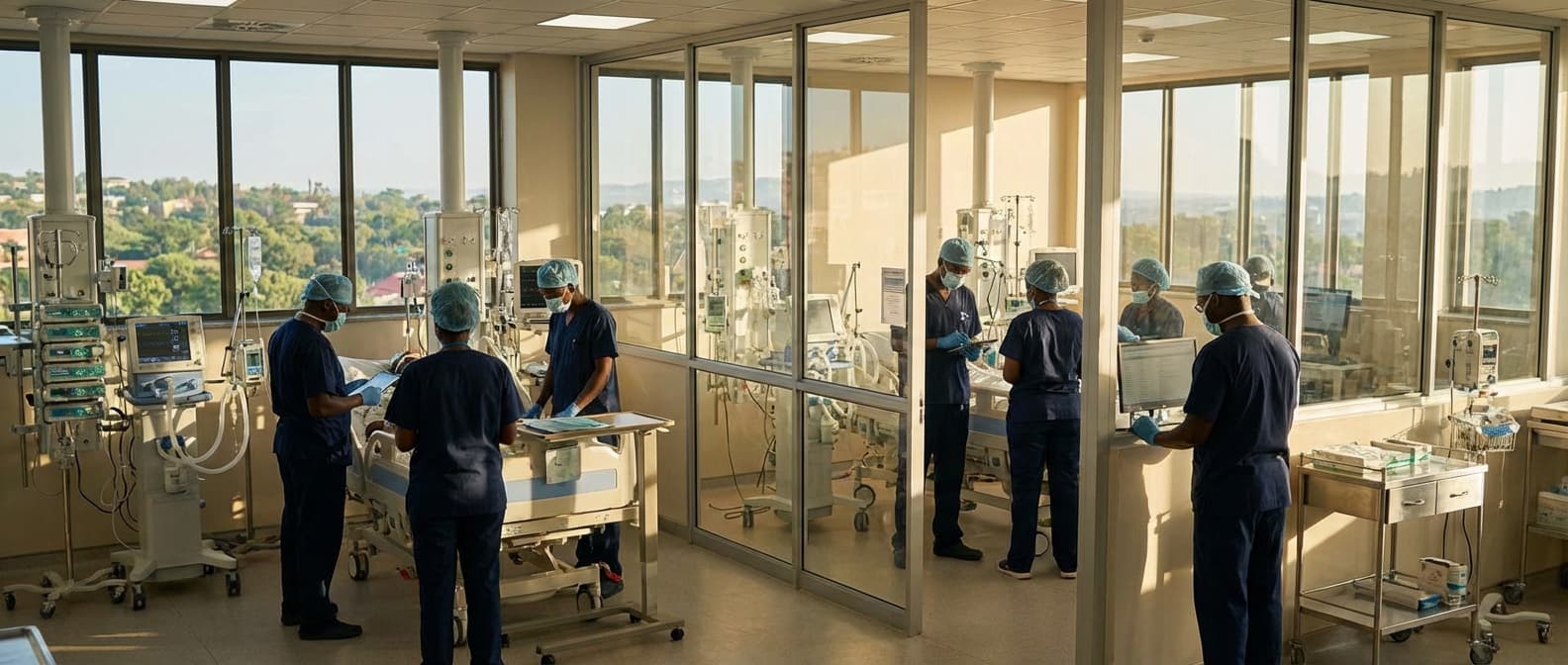
Ventilator Fleet Management & PM in Somalia
Engineering Excellence & Technical Support
Preventive maintenance and fleet management for ICU ventilators High-standard technical execution following OEM protocols and local regulatory frameworks.
Predictive Maintenance for Resilient Ventilation
Leveraging real-time sensor data and AI-driven analytics, our system anticipates potential ventilator failures, enabling proactive maintenance before critical breakdowns occur, ensuring uninterrupted patient care in remote Somali healthcare facilities.
Optimized Deployment & Logistics
Through advanced fleet tracking and demand forecasting, we ensure optimal distribution and efficient movement of ventilators across Somalia's diverse geography, prioritizing critical needs and minimizing downtime for maintenance or relocation.
Streamlined Remote Servicing & Training
Our platform facilitates remote diagnostics, troubleshooting, and guided repair procedures for local biomedical technicians, significantly reducing the need for expensive and time-consuming on-site interventions and enhancing local capacity for ventilator upkeep.
What Is Ventilator Fleet Management & Pm In Somalia?
Ventilator fleet management and preventive maintenance (PM) in Somalia refers to the systematic organizational, operational, and technical processes dedicated to ensuring the optimal functionality, reliability, and longevity of mechanical ventilators within healthcare facilities. This encompasses a comprehensive lifecycle approach, from acquisition and deployment to routine servicing, calibration, repair, and eventual decommissioning. The primary objective is to guarantee that critical respiratory support equipment is consistently available and performs to manufacturer specifications, thereby safeguarding patient outcomes in a resource-constrained environment.
| Who Needs Ventilator Fleet Management & PM? | Typical Use Cases | |||||||
|---|---|---|---|---|---|---|---|---|
| Hospitals and Healthcare Facilities: Particularly those in urban and semi-urban centers with intensive care units (ICUs), operating rooms, and emergency departments. | Critical Care Units (ICUs): Management of ventilators for patients with severe respiratory failure due to conditions like pneumonia, COVID-19, sepsis, trauma, or post-surgical complications. | Military and Humanitarian Aid Organizations: Deployment of ventilators in field hospitals, mobile clinics, and disaster relief operations where reliable equipment is paramount. | Government Health Ministries and Ministries of Health: Overseeing the national stock of essential medical equipment, including ventilators, to ensure equitable access and maintenance across the healthcare system. | Non-Governmental Organizations (NGOs) and International Aid Agencies: Implementing and managing ventilator programs in support of the national healthcare infrastructure. | Operating Rooms (ORs): Ensuring availability and proper functioning of ventilators for anesthesia and post-operative respiratory support. | Emergency Departments (EDs): Readiness for immediate deployment to manage acute respiratory distress in emergency situations. | Paediatric and Neonatal Units: Management of specialized ventilators for infants and children requiring respiratory support. | COVID-19 Response Initiatives: Managing large fleets of ventilators procured or donated for pandemic response, requiring rapid deployment, maintenance, and training. |
Key Components of Ventilator Fleet Management & PM in Somalia
- Inventory Management: Maintaining an accurate and up-to-date registry of all ventilators, including make, model, serial number, acquisition date, location, and status (operational, under repair, awaiting parts).
- Preventive Maintenance (PM) Scheduling and Execution: Implementing a rigorous schedule of routine inspections, cleaning, functional tests, and calibration as per manufacturer recommendations and international standards. This includes assessing battery health, sensor calibration, alarm functionality, and filter replacement.
- Corrective Maintenance and Repair: Establishing protocols for timely diagnosis, troubleshooting, and repair of malfunctioning ventilators. This involves skilled technical personnel, access to genuine spare parts, and documented repair procedures.
- Performance Monitoring and Data Logging: Tracking key performance indicators (KPIs) such as uptime, mean time between failures (MTBF), mean time to repair (MTTR), and usage patterns. This data informs predictive maintenance strategies and fleet optimization.
- Training and Capacity Building: Providing comprehensive training to biomedical engineers, technicians, and clinical staff on the proper operation, basic troubleshooting, and routine care of ventilators.
- Sterilization and Decontamination Protocols: Ensuring strict adherence to infection control guidelines for the cleaning and sterilization of ventilator components, especially those in direct contact with patients.
- Logistics and Supply Chain Management: Establishing a reliable supply chain for critical spare parts, consumables (e.g., filters, circuits, humidifiers), and calibration gases, often a significant challenge in Somalia.
- Asset Lifecycle Management: Planning for the eventual replacement of aging or obsolete equipment, including budgeting, procurement, and responsible disposal.
- Regulatory Compliance and Standardization: Adhering to any applicable national healthcare regulations and international best practices for medical equipment management.
Who Needs Ventilator Fleet Management & Pm In Somalia?
In a country like Somalia, where healthcare infrastructure is fragile and resources are scarce, robust ventilator fleet management and preventive maintenance (PM) are not just beneficial, but absolutely critical. This is especially true given the prevalence of respiratory illnesses, the need for critical care in various medical settings, and the challenges of maintaining complex medical equipment in difficult environments. Effective management ensures ventilators are available, functional, and properly calibrated when needed, directly impacting patient outcomes and saving lives. Neglecting PM can lead to sudden equipment failure during emergencies, compounding existing healthcare challenges.
| Target Customer | Key Departments Involved | Why They Need It |
|---|---|---|
| Public Hospitals and Healthcare Facilities | Biomedical Engineering Department, Critical Care Units (ICU, NICU), Anesthesiology, Procurement Department, Maintenance Department | Ensure consistent availability of life-saving equipment for critical patients, reduce downtime and repair costs, optimize resource allocation, and extend equipment lifespan. |
| Non-Governmental Organizations (NGOs) with Medical Programs | Medical Program Managers, Biomedical Technicians (if employed), Logistics Department, Field Operations Teams | Maintain a functional fleet of ventilators for their medical outreach programs, ensure reliability in remote or underserved areas, comply with donor requirements for equipment maintenance, and maximize the impact of their medical aid. |
| Military and Peacekeeping Medical Units | Medical Corps, Maintenance and Logistics Units, Field Hospitals | Provide critical care capabilities to military personnel and civilian populations in conflict zones, ensure equipment readiness for deployment, and maintain operational effectiveness of medical support. |
| Emergency Medical Services (EMS) | EMS Management, Field Paramedics, Equipment Officers | Ensure ventilators in ambulances and rapid response units are always operational for pre-hospital critical care, facilitate timely transfers to hospitals, and improve patient survival rates during emergencies. |
| Specialized Clinics and Treatment Centers (e.g., for TB, COVID-19 response) | Clinical Directors, Biomedical Support Staff, Infection Control Teams | Maintain specialized equipment for treating specific respiratory diseases, ensure effective isolation and respiratory support, and manage high-demand equipment during outbreaks or specific treatment protocols. |
Who Needs Ventilator Fleet Management & PM in Somalia?
- Public Hospitals and Healthcare Facilities
- Non-Governmental Organizations (NGOs) with Medical Programs
- Military and Peacekeeping Medical Units
- Emergency Medical Services (EMS)
- Specialized Clinics and Treatment Centers
Ventilator Fleet Management & Pm Process In Somalia
Managing a ventilator fleet in a challenging environment like Somalia requires a robust and well-defined workflow, particularly for preventive maintenance (PM). This process ensures the continuous availability and optimal functioning of critical medical equipment, thereby supporting patient care and healthcare delivery. The workflow spans from the initial identification of a need or problem to the complete execution of the maintenance task.
| Phase | Step | Description | Key Actors | Output/Outcome |
|---|---|---|---|---|
| 1. Inquiry & Identification | 1.1. Need/Issue Reporting | A report is received regarding a malfunctioning ventilator, a scheduled PM, or a request for a new ventilator deployment. This can originate from clinical staff, facility management, or during routine fleet checks. | Clinical Staff, Biomedical Technicians, Facility Managers, Logistics Officers | Reported issue or PM request logged. |
| 1.2. Initial Assessment (Remote/On-site) | A preliminary check is performed to understand the nature and urgency of the issue. This might involve a quick remote consultation or an immediate on-site visit for critical failures. | Biomedical Technicians, Clinical Staff | Preliminary understanding of the problem's scope. | |
| 2. Triage & Prioritization | 2.1. Severity Assessment | The reported issue is assessed based on its impact on patient care. Factors include the number of affected patients, availability of backup ventilators, and the criticality of the procedures being performed. | Biomedical Lead, Clinical Lead, Hospital Administrator | Severity level assigned (e.g., Critical, High, Medium, Low). |
| 2.2. Prioritization | Based on severity, the request is prioritized within the maintenance queue. Critical issues affecting patient care receive immediate attention. | Biomedical Lead, Maintenance Coordinator | Ventilator maintenance request prioritized. | |
| 3. Planning & Resource Allocation | 3.1. Work Order Creation | A formal work order is generated, detailing the ventilator's ID, location, reported issue, priority, and required tasks (repair or PM). | Maintenance Coordinator, Biomedical Technician | Generated work order. |
| 3.2. Parts & Tooling Identification | Required spare parts, consumables, and specialized tools are identified based on the work order and the specific ventilator model. | Biomedical Technician | List of required parts and tools. | |
| 3.3. Technician Assignment | A qualified biomedical technician or team is assigned to the work order based on availability and expertise. | Maintenance Coordinator, Biomedical Lead | Technician(s) assigned. | |
| 3.4. Logistics & Travel Planning | Arrangements are made for transportation of technicians, parts, and tools to the site, considering security and accessibility in Somalia. | Logistics Officer, Biomedical Technician | Logistics plan finalized. | |
| 4. Execution & Documentation | 4.1. Site Arrival & Safety Check | Technician(s) arrive at the designated facility and conduct a safety assessment of the work environment. | Biomedical Technician | Safe working environment confirmed. |
| 4.2. Diagnostic & Troubleshooting | The ventilator is thoroughly diagnosed to pinpoint the root cause of the malfunction or to perform the scheduled PM checks. | Biomedical Technician | Root cause identified or PM checklist completed. | |
| 4.3. Repair/Maintenance Performed | Necessary repairs are carried out using identified parts, or scheduled PM tasks are executed according to manufacturer guidelines. | Biomedical Technician | Ventilator repaired or PM completed. | |
| 4.4. Record Keeping | All actions taken, parts used, time spent, and any observations are meticulously documented in the work order or a dedicated logbook. | Biomedical Technician | Detailed work order/logbook entries. | |
| 5. Verification & Closure | 5.1. Functional Testing | The repaired or maintained ventilator undergoes rigorous functional testing to ensure it meets all operational parameters and safety standards. | Biomedical Technician, Clinical Staff (optional) | Ventilator passes functional tests. |
| 5.2. Clinical Acceptance | Clinical staff may be involved to confirm the ventilator's performance meets their operational needs. | Clinical Staff, Biomedical Technician | Clinical acceptance of the repaired/maintained unit. | |
| 5.3. Work Order Closure | Once testing and acceptance are complete, the work order is formally closed in the system. | Biomedical Technician, Maintenance Coordinator | Work order closed. | |
| 6. Reporting & Improvement | 6.1. Data Analysis | Data from completed work orders (e.g., common failure modes, parts consumption, response times) is analyzed. | Biomedical Lead, Maintenance Coordinator | Maintenance data compiled. |
| 6.2. Fleet Performance Review | Regular reviews of the entire ventilator fleet's status and performance are conducted to identify trends and areas for improvement. | Biomedical Lead, Program Manager | Fleet performance report. | |
| 6.3. Process Optimization | Insights from data analysis and performance reviews are used to refine PM schedules, improve technician training, optimize spare parts inventory, and enhance logistical procedures. | Biomedical Lead, Operations Team | Improved maintenance processes and strategies. |
Ventilator Fleet Management & PM Process in Somalia Workflow
- Phase 1: Inquiry & Identification
- Phase 2: Triage & Prioritization
- Phase 3: Planning & Resource Allocation
- Phase 4: Execution & Documentation
- Phase 5: Verification & Closure
- Phase 6: Reporting & Improvement
Ventilator Fleet Management & Pm Cost In Somalia
Managing ventilator fleets and their associated preventive maintenance (PM) costs in Somalia presents unique challenges due to the country's specific economic and logistical landscape. This analysis will delve into the pricing factors influencing ventilator procurement and PM, offering estimated ranges in the local currency, the Somali Shilling (SOS).
Key Pricing Factors for Ventilator Fleet Management & PM in Somalia:
- Equipment Type and Sophistication: The complexity and intended use of ventilators (e.g., ICU ventilators, transport ventilators, portable units) significantly impact their initial purchase price. Advanced features like invasive/non-invasive ventilation modes, advanced monitoring capabilities, and integrated oxygen blenders will command higher costs.
- Brand and Manufacturer Reputation: Well-established global brands often come with higher price tags but may offer better reliability, longer lifespans, and more readily available spare parts. Local availability and support for specific brands will also be a consideration.
- Procurement Channel and Volume: Direct purchasing from manufacturers, through international NGOs, or via local distributors will result in different pricing structures. Bulk purchases can often secure discounts.
- Import Duties, Taxes, and Tariffs: While Somalia's tax structure might be less formalized than in other countries, any applicable import duties or fees will add to the overall cost. This can be a significant variable depending on government policy and enforcement.
- Logistics and Transportation: The cost of transporting ventilators from port of entry (e.g., Mogadishu, Berbera) to the final destination within Somalia, including inland freight, insurance, and potential security measures, will be a substantial factor. Road conditions and accessibility to remote areas add to this.
- Installation and Commissioning: The need for trained technicians to install, calibrate, and commission new ventilators can incur additional charges.
- Preventive Maintenance (PM) Services: This includes:
* **Labor Costs:** Skilled biomedical technicians are essential for PM. Their availability, training, and wages will dictate labor costs. There may be a premium for technicians willing to travel to remote or challenging locations.
* **Spare Parts:** The cost and availability of genuine OEM (Original Equipment Manufacturer) spare parts are critical. Sourcing these parts, especially for older or less common models, can be expensive and involve significant lead times and import costs.
* **Service Contracts:** Engaging in service contracts with manufacturers or specialized third-party providers can offer predictable PM costs but often involve upfront or recurring fees.
* **Calibration Gases and Consumables:** Regular calibration requires specific gases and consumables, which add to the ongoing PM expenses.
- Training of Healthcare Staff: While not directly a PM cost, ensuring healthcare professionals are adequately trained to operate and troubleshoot ventilators is crucial for their effective use and longevity, indirectly impacting PM needs.
- Currency Fluctuations: The Somali Shilling (SOS) can experience significant fluctuations. Prices quoted in USD or EUR will need to be converted, introducing an element of risk.
Estimated Pricing Ranges (in Somali Shilling - SOS):
It's crucial to note that these are estimates and actual prices can vary significantly. These ranges are based on general market understanding and the factors outlined above. It's highly recommended to obtain specific quotes for any procurement or service agreement.
Ventilator Acquisition Costs (New, Mid-Range ICU Ventilator):
- Range: SOS 80,000,000 - SOS 250,000,000+ (Approximately USD 135,000 - USD 425,000+)
* *Factors influencing range:* Brand, specific features (invasive/non-invasive, advanced monitoring), original country of manufacture, shipping costs, and potential import duties.
Preventive Maintenance (PM) Costs (Per Ventilator, Annual Basis):
- Basic PM (Routine checks, cleaning, minor adjustments):
* **Range:** SOS 2,000,000 - SOS 6,000,000 (Approximately USD 3,400 - USD 10,000)
* *Factors influencing range:* Technician expertise, frequency of checks, travel costs to remote sites.
- Comprehensive PM (Includes part replacement, calibration, software updates):
* **Range:** SOS 5,000,000 - SOS 15,000,000+ (Approximately USD 8,500 - USD 25,000+)
* *Factors influencing range:* Availability and cost of genuine spare parts, complexity of the ventilator model, potential need for specialized tools or software licenses.
- Service Contract (Annual, often covering both PM and some repairs):
* **Range:** SOS 7,000,000 - SOS 20,000,000+ (Approximately USD 12,000 - USD 34,000+)
* *Factors influencing range:* Manufacturer's service level agreement (SLA), scope of coverage, number of ventilators covered.
Important Considerations for Somalia:
- Local Capacity Building: Investing in training local biomedical technicians is paramount to reduce reliance on expensive international expertise and to ensure timely maintenance.
- Fleet Standardization: Where possible, standardizing on a limited number of ventilator models can simplify spare parts inventory, training, and maintenance procedures.
- Robust Inventory Management: Effective management of spare parts is critical to minimize downtime. This may involve holding a strategic stock of common parts.
- Partnerships: Collaborating with international NGOs, UN agencies, and medical device manufacturers can help leverage their expertise, procurement power, and technical support.
- Contingency Planning: Budgeting for unexpected repairs and replacement of critical components is essential given the logistical challenges and potential for equipment wear and tear in demanding environments.
| Item | Estimated Range (SOS) | Approximate USD Equivalent |
|---|---|---|
| New Mid-Range ICU Ventilator (Acquisition) | 80,000,000 - 250,000,000+ | 135,000 - 425,000+ |
| Basic PM (Annual, Per Ventilator) | 2,000,000 - 6,000,000 | 3,400 - 10,000 |
| Comprehensive PM (Annual, Per Ventilator) | 5,000,000 - 15,000,000+ | 8,500 - 25,000+ |
| Service Contract (Annual, Per Ventilator) | 7,000,000 - 20,000,000+ | 12,000 - 34,000+ |
Key Pricing Factors for Ventilator Fleet Management & PM in Somalia
- Equipment Type and Sophistication
- Brand and Manufacturer Reputation
- Procurement Channel and Volume
- Import Duties, Taxes, and Tariffs
- Logistics and Transportation
- Installation and Commissioning
- Preventive Maintenance (PM) Services
- Training of Healthcare Staff
- Currency Fluctuations
Affordable Ventilator Fleet Management & Pm Options
Ensuring the optimal functioning and longevity of a ventilator fleet is critical for patient care and operational efficiency. Affordable fleet management and preventative maintenance (PM) are paramount. This involves strategic planning, leveraging technology, and adopting cost-saving measures. Value bundles offer a comprehensive approach to managing these needs, often integrating PM services with other essential fleet support, while cost-saving strategies focus on optimizing resources and minimizing expenditures without compromising quality.
| Value Bundle/Strategy | Description | Key Cost-Saving Benefit |
|---|---|---|
| Comprehensive PM & Service Contract | An all-inclusive package covering scheduled PM, labor, and often some parts for a fixed annual fee. | Predictable budgeting, reduced unexpected repair costs, potential for bulk discounts. |
| Managed Service & Software Integration | Includes PM, plus software for asset tracking, remote monitoring, and reporting. May also include calibration services. | Improved asset visibility, reduced administrative overhead, proactive issue resolution minimizing downtime. |
| Equipment-as-a-Service (EaaS) / Subscription Models | Leasing ventilators with PM, software, and support included. Often shifts capital expenditure to operational expenditure. | Lower upfront costs, access to the latest technology, predictable monthly payments, vendor responsibility for maintenance. |
| Tiered PM Plans | Offering different levels of PM services based on usage and criticality of the equipment. | Cost optimization by tailoring services to specific equipment needs, avoiding over-servicing less critical units. |
| In-House PM Training & Support | Providing training and ongoing support for your biomedical team to perform a significant portion of PM tasks. | Significant reduction in external labor costs, faster response times for routine maintenance. |
| Refurbished Equipment Programs | Purchasing or leasing certified refurbished ventilators from reputable providers. | Lower acquisition costs compared to new equipment, while still meeting performance standards. |
| Strategic Parts Sourcing & Inventory | Working with multiple suppliers, negotiating bulk discounts, and maintaining optimized inventory levels. | Reduced cost of spare parts, minimized downtime due to readily available components. |
| Data-Driven Replacement Cycles | Using usage and performance data to proactively replace aging or inefficient ventilators before major failures occur. | Avoids costly emergency repairs and prolonged downtime, allows for planned capital expenditure. |
Key Components of Affordable Ventilator Fleet Management & PM Options
- Proactive Preventative Maintenance (PM) Scheduling: Implementing a rigorous schedule based on manufacturer recommendations and actual usage data to prevent unexpected breakdowns.
- Remote Monitoring & Diagnostics: Utilizing technology to track ventilator performance, identify potential issues early, and reduce the need for on-site visits.
- Certified Refurbishment & Repair Programs: Extending the lifespan of existing equipment through quality refurbishment and repair services at competitive prices.
- Strategic Parts Inventory Management: Optimizing the stocking of essential spare parts to minimize downtime and reduce rush order fees.
- Staff Training & Competency: Empowering in-house biomedical staff with the skills and knowledge to perform basic PM and troubleshooting, reducing reliance on external technicians for routine tasks.
- Data Analytics for Fleet Optimization: Using data to understand usage patterns, predict failure rates, and make informed decisions about replacement or upgrade cycles.
- Negotiated Service Agreements: Securing favorable terms and pricing for PM contracts and repair services through bulk purchasing or long-term commitments.
- Equipment Lifecycle Management: Planning for the entire lifecycle of ventilators, from acquisition to disposal, to maximize return on investment and minimize total cost of ownership.
Verified Providers In Somalia
In Somalia's developing healthcare landscape, the presence of Verified Providers is paramount for ensuring quality, safety, and trust. Franance Health stands out as a premier example of such a provider, demonstrating a commitment to excellence through rigorous credentialing and a patient-centric approach. Understanding what makes a provider 'verified' and why Franance Health exemplifies these standards is crucial for individuals seeking reliable medical services.
| Credential/Aspect | Franance Health's Commitment | Why it Matters for Patients |
|---|---|---|
| Professional Licensing and Certifications | Franance Health rigorously vets all its medical staff, ensuring they hold valid licenses and certifications from reputable national and international bodies. | Guarantees that you are receiving care from legally qualified and competent professionals, minimizing risks associated with unqualified practitioners. |
| Specialized Training and Expertise | The organization invests in continuous professional development for its healthcare providers, ensuring they are up-to-date with the latest medical advancements and techniques. | Ensures access to specialized care and the most effective treatment options available for your specific health needs. |
| Adherence to International Standards | Franance Health aligns its operational protocols with international healthcare quality and safety benchmarks, fostering a culture of excellence. | Provides confidence that the facility and its services meet high global standards for patient care and safety. |
| Patient Safety Protocols | Strict infection control measures, proper equipment maintenance, and well-defined emergency response plans are integral to Franance Health's operations. | Minimizes the risk of healthcare-associated infections and ensures a safe environment for all patients. |
| Ethical Medical Practice and Patient Confidentiality | Franance Health upholds the highest ethical standards, prioritizing patient well-being, informed consent, and the strict confidentiality of medical information. | Builds trust and ensures that your privacy is protected, and your medical decisions are respected. |
| Community Engagement and Accessibility | The organization actively engages with the Somali community to understand and address local health needs, striving for accessible and culturally sensitive care. | Provides healthcare services that are relevant, responsive, and tailored to the specific cultural context and needs of the Somali population. |
What Constitutes a Verified Provider in Somalia?
- Accreditation by recognized bodies: This signifies adherence to international or national standards of quality and safety.
- Qualified and licensed medical professionals: Ensuring practitioners possess the necessary education, training, and legal authorization to practice.
- Robust internal quality control mechanisms: Demonstrating ongoing efforts to monitor and improve service delivery.
- Transparency in operations and pricing: Building trust through open communication with patients.
- Commitment to ethical practices and patient rights: Prioritizing the well-being and autonomy of individuals seeking care.
Scope Of Work For Ventilator Fleet Management & Pm
This Scope of Work (SOW) outlines the requirements for comprehensive ventilator fleet management and preventative maintenance (PM) services. The objective is to ensure the optimal performance, safety, and longevity of the organization's ventilator fleet through scheduled maintenance, calibration, repairs, and inventory management. This document details the technical deliverables, standard specifications, and operational procedures expected from the service provider.
| Technical Deliverable | Description | Standard Specification/Requirement | Frequency/Trigger | Responsibility |
|---|---|---|---|---|
| Ventilator Asset Register | A comprehensive, up-to-date database of all ventilators, including model, serial number, acquisition date, location, and PM history. | Must be accessible via a secure online portal or provided in a specified digital format (e.g., CSV, Excel). | Upon onboarding and updated quarterly. | Service Provider |
| Preventative Maintenance (PM) Schedule | Detailed schedule for all required PM tasks for each ventilator model. | Must adhere to manufacturer recommendations and best practice guidelines. Specific PM checklist to be provided for each model. | As per manufacturer guidelines (e.g., annually, bi-annually). | Service Provider |
| Completed PM Reports | Documentation of each performed PM, including tasks completed, parts replaced, calibration results, and technician notes. | Must include date of service, technician name/ID, device details, test results, and any recommendations. Standardized report template required. | Upon completion of each PM. | Service Provider |
| Corrective Maintenance (CM) Service | Timely and effective repair of all reported ventilator malfunctions and failures. | Response time SLA (e.g., < 24 hours for critical failures, < 48 hours for non-critical). All repairs must be conducted using OEM-approved parts. | As needed upon reported failure. | Service Provider |
| Repair Reports | Detailed documentation of all corrective maintenance performed, including diagnosis, parts used, labor time, and test results. | Must include date of service, technician name/ID, device details, fault description, resolution, and parts used. Standardized report template required. | Upon completion of each repair. | Service Provider |
| Calibration Certificates | Certificates confirming successful calibration of ventilators to manufacturer specifications. | Must include device details, date of calibration, calibration performed by, reference standards used (if applicable), and pass/fail criteria. | Upon completion of PM or as per manufacturer requirement. | Service Provider |
| Parts Inventory Report | Regular reports on the stock levels of critical spare parts and consumables. | Includes part number, description, quantity on hand, and recommended reorder points. Inventory maintained by Service Provider. | Monthly. | Service Provider |
| Fleet Performance Dashboard | A visual representation of key fleet performance metrics. | Includes uptime percentage, average repair time, PM compliance rate, cost per ventilator. Accessible via a secure online portal. | Monthly. | Service Provider |
| Training Material for End-Users | User-friendly guides and materials for clinical staff on basic operation and troubleshooting. | Content aligned with device manuals and organizational policies. Delivered in digital and/or hard copy format. | Upon request or as part of service rollout. | Service Provider |
| Audit Readiness Documentation | All documentation required to demonstrate compliance with regulatory standards and organizational policies. | Includes all PM reports, repair logs, calibration certificates, and asset register. | On demand. | Service Provider |
Key Areas of Coverage
- Ventilator Fleet Inventory and Tracking
- Preventative Maintenance (PM) Program
- Corrective Maintenance and Repair Services
- Calibration and Performance Verification
- Parts and Consumables Management
- Documentation and Reporting
- Training and Knowledge Transfer
Service Level Agreement For Ventilator Fleet Management & Pm
This Service Level Agreement (SLA) outlines the agreed-upon performance standards for the management and preventive maintenance (PM) of the organization's ventilator fleet. It defines response times for service requests and uptime guarantees to ensure the availability of critical medical equipment.
| Service Category | Priority Level | Response Time Target (Hours) | Uptime Guarantee (%) | Notes |
|---|---|---|---|---|
| Ventilator Malfunction/Failure | Critical (Patient Impact) | 2 | 98% | Applies to ventilators actively in use with patients. Response time measured from initial ticket creation/call received. |
| Ventilator Malfunction/Failure | High (Urgent - No immediate patient impact) | 8 | 98% | Applies to ventilators readily available for use but not currently with a patient. Response time measured from initial ticket creation/call received. |
| Ventilator Malfunction/Failure | Medium (Routine) | 24 | 98% | Applies to ventilators requiring non-urgent attention or scheduled for repair. Response time measured from initial ticket creation/call received. |
| Preventive Maintenance (PM) | Scheduled | N/A (scheduled completion) | N/A (related to fleet availability) | PM completion within 30 days of the scheduled due date. |
| Parts/Consumables Replacement (Preventive/Corrective) | As needed | 12 (for critical parts) | N/A | Availability of critical spare parts within 12 hours of identification of need. |
Key Service Level Objectives
- Response Time: The maximum allowable time from initial notification of a service request to the commencement of service by a qualified technician.
- Uptime Guarantee: The minimum percentage of time the ventilator fleet is expected to be operational and available for patient use.
- Preventive Maintenance (PM) Schedule Adherence: The commitment to completing scheduled PM tasks within the defined timeframes.
- Reporting and Communication: Timely and accurate reporting on service activities, fleet status, and performance metrics.
Frequently Asked Questions

Ready when you are
Let's scope your Ventilator Fleet Management & PM in Somalia project in Somalia.

Scaling healthcare logistics and technical systems across the entire continent.