
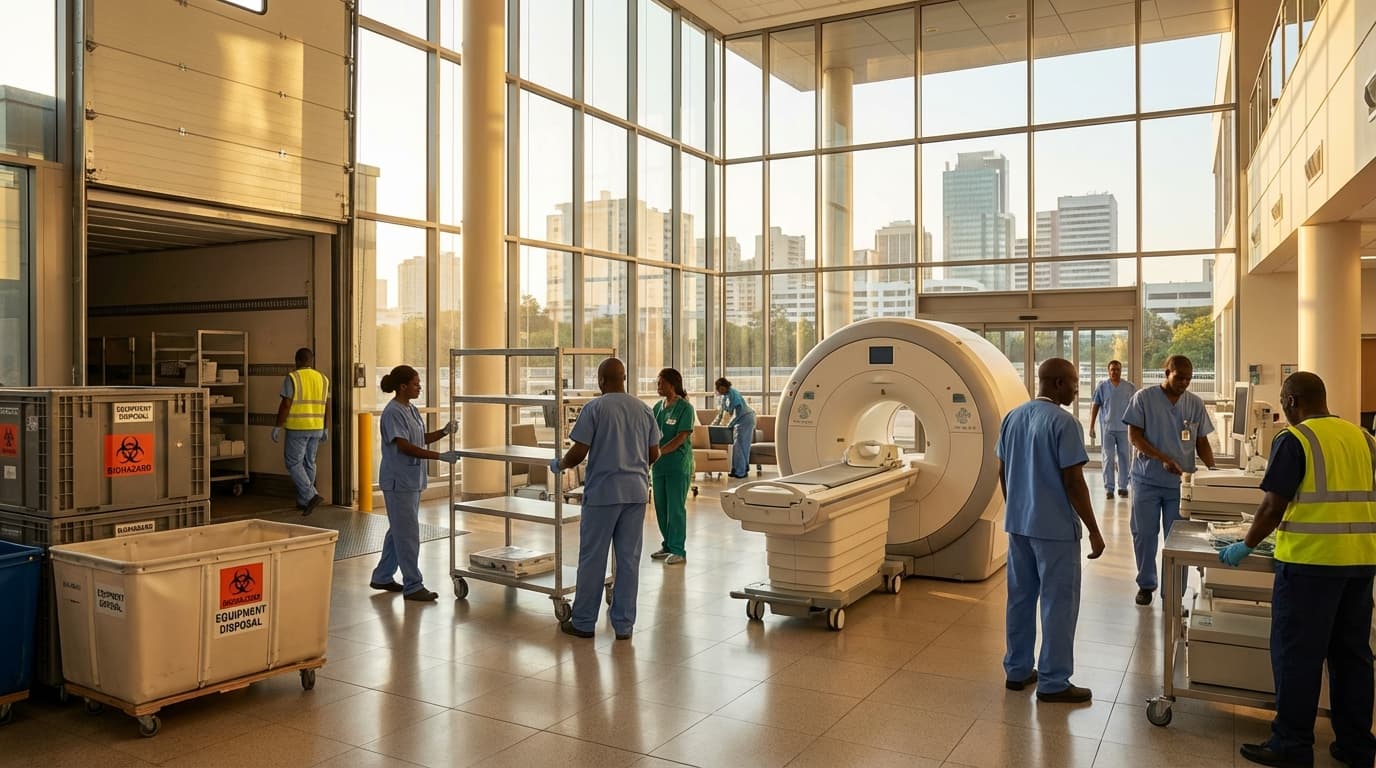
Medical Equipment Relocation Service (Move & Re-Install) in Somalia
Engineering Excellence & Technical Support
Medical Equipment Relocation Service (Move & Re-Install) High-standard technical execution following OEM protocols and local regulatory frameworks.
Expert Handling of Sensitive Medical Equipment
Our specialized teams possess in-depth knowledge of handling a wide array of medical devices, from delicate diagnostic machines to heavy surgical units. We ensure each piece is meticulously packed, secured, and transported with the utmost care to prevent damage and maintain calibration, guaranteeing operational readiness upon re-installation.
Precision Re-Installation & Calibration
Beyond transportation, our certified technicians meticulously re-install and calibrate your medical equipment to manufacturer specifications. We conduct thorough testing and provide documentation, ensuring your facility can resume critical patient care without interruption and with full confidence in equipment functionality.
Secure & Compliant Logistics in Somalia
Navigating the unique logistical landscape of Somalia, we leverage our extensive local network and expertise to provide secure, efficient, and compliant relocation services. Our robust planning and execution minimize transit risks, adhere to all necessary regulations, and ensure timely delivery and re-installation, prioritizing patient safety and operational continuity.
What Is Medical Equipment Relocation Service (Move & Re-install) In Somalia?
Medical Equipment Relocation Service (Move & Re-Install) in Somalia refers to a specialized logistical and technical process involving the careful transportation of medical devices and machinery from one location to another within or to Somalia, followed by their professional reassembly, calibration, and functional verification at the new site. This service is critical for ensuring the continuity of healthcare services, particularly in dynamic or developing environments.
| Who Needs Medical Equipment Relocation Service? | Typical Use Cases in Somalia |
|---|---|
| Hospitals and Clinics: Both public and private healthcare facilities undergoing renovations, expansion, or closure/relocation of departments or entire premises. | Disaster Relief and Humanitarian Organizations: Setting up temporary or mobile medical units in response to natural disasters, conflicts, or public health emergencies. This includes moving diagnostic equipment (e.g., X-ray, ultrasound) and treatment apparatus to affected areas. |
| Government Health Ministries and Agencies: Transferring essential medical equipment between national health facilities, or to new regional health centers aimed at improving access to care. | Medical Training Institutions: Relocating laboratories and specialized training equipment as educational programs evolve or new campuses are established. |
| International Non-Governmental Organizations (INGOs) and Aid Agencies: Establishing or expanding healthcare infrastructure in remote or underserved regions, often involving the import and subsequent relocation of donated medical devices. | Private Healthcare Providers: Expanding services, opening new branches, or upgrading existing facilities with advanced medical technologies. |
| Research Institutions and Laboratories: Moving sensitive research equipment for new projects, collaborations, or facility upgrades. | Military Medical Units: Relocating field hospitals or specialized medical equipment for operational deployment. |
Key Components of Medical Equipment Relocation Service:
- Pre-relocation Assessment: Detailed inventory, condition assessment, and site surveys of both origin and destination facilities. This includes identifying power requirements, environmental conditions (temperature, humidity), and any necessary structural modifications.
- Decontamination and Preparation: Thorough cleaning and disinfection of equipment to prevent cross-contamination, followed by secure packing using specialized materials and techniques to protect against shock, vibration, and environmental factors during transit.
- Specialized Transportation: Utilizing vehicles equipped with climate control, shock absorption, and trained personnel experienced in handling sensitive and high-value medical apparatus.
- On-site Re-installation and Assembly: Expert technicians meticulously reassembling equipment according to manufacturer specifications, ensuring all components are correctly connected and secured.
- Calibration and Testing: Precise calibration of all adjustable parameters to meet original performance standards. Comprehensive functional testing and validation to confirm operational integrity and accuracy.
- Regulatory Compliance and Documentation: Adherence to relevant international and local health and safety regulations. Provision of detailed documentation, including inspection reports, calibration certificates, and operational manuals.
- Training and Handover: Training for local healthcare professionals on the operation and basic maintenance of the re-installed equipment.
Who Needs Medical Equipment Relocation Service (Move & Re-install) In Somalia?
Relocating and re-installing medical equipment in Somalia presents a unique set of challenges and requires specialized expertise. This service is crucial for a variety of entities operating within the healthcare sector in Somalia. These organizations often face infrastructure limitations, security concerns, and a need for skilled technicians to ensure the seamless transition and optimal functioning of vital medical machinery.
| Customer Type | Key Departments Requiring the Service | Specific Needs & Challenges |
|---|---|---|
| Hospitals (Public & Private) | Radiology, Surgery, Intensive Care Units (ICU), Pathology, Laboratories, Emergency Departments, Outpatient Clinics | Relocation of large imaging equipment (X-ray, CT, MRI), surgical suites, specialized diagnostic tools, and life-support systems. Need for minimal downtime and accurate recalibration. |
| Clinics and Health Centers | General Practice, Diagnostic Labs, Minor Procedure Rooms | Moving essential diagnostic equipment like ultrasound machines, ECG machines, microscopes, and sterilization units. Often operate with limited space and budgets. |
| Diagnostic Laboratories | Biochemistry, Hematology, Microbiology, Molecular Diagnostics | Relocation of sensitive analytical instruments (e.g., automated analyzers, PCR machines, centrifuges). Requires sterile environments and precise calibration to maintain accuracy. |
| NGOs & International Aid Agencies | Mobile Clinics, Field Hospitals, Health Program Sites | Setting up or relocating equipment in temporary or remote locations. Need for robust, transportable equipment and rapid deployment. Often involved in emergency or humanitarian aid. |
| Government Ministries of Health | Public Health Facilities, Training Centers | Upgrading or consolidating public healthcare infrastructure. May involve large-scale relocations across multiple sites. Emphasis on cost-effectiveness and compliance with national standards. |
| Private Medical Practices | Specialist Clinics (e.g., Cardiology, Ophthalmology, Dentistry) | Relocation of specialized diagnostic and treatment equipment (e.g., echocardiogram machines, ophthalmic diagnostic tools, dental chairs and X-rays). Focus on maintaining patient flow and privacy. |
Target Customers for Medical Equipment Relocation Service in Somalia
- Hospitals (Public and Private)
- Clinics and Health Centers
- Diagnostic Laboratories
- Medical Research Institutions
- Non-Governmental Organizations (NGOs) with healthcare programs
- International Aid Agencies
- Government Ministries of Health
- Private Medical Practices and Specialist Clinics
- Mobile Health Units
- Emergency Response Organizations
Medical Equipment Relocation Service (Move & Re-install) Process In Somalia
This document outlines the workflow for a Medical Equipment Relocation Service (Move & Re-Install) specifically tailored for the unique operating environment in Somalia. The process is designed to be comprehensive, ensuring safety, compliance, and minimal disruption to critical healthcare services. It covers the entire journey from initial client inquiry to the successful re-installation and validation of medical equipment.
| Phase | Step | Description | Key Considerations (Somalia Specific) | Deliverables/Outcomes |
|---|---|---|---|---|
| Phase 1: Inquiry & Assessment | Initial Inquiry | Client contacts the relocation service with their requirement for moving medical equipment. | Urgency of healthcare services, potential downtime, budget constraints. | Understanding of client's needs and preliminary scope. |
| Phase 1: Inquiry & Assessment | Site Survey & Equipment Assessment | On-site visit to the origin and destination locations to assess equipment, access routes, power requirements, and environmental conditions. | Security assessments of both locations, infrastructure limitations (roads, power stability), availability of specialized tools/personnel, potential customs/regulatory hurdles. | Detailed inventory of equipment, risk assessment, preliminary quotation, identification of specialized requirements. |
| Phase 2: Planning & Preparation | Detailed Planning & Quotation | Develop a comprehensive relocation plan, including timelines, resource allocation, risk mitigation strategies, and a detailed quotation. | Contingency planning for security incidents, political instability, and logistical delays. Obtaining necessary permits and clearances. | Approved relocation plan, detailed quotation, contract agreement. |
| Phase 2: Planning & Preparation | Team Assembly & Training | Assemble a specialized team with expertise in medical equipment handling, engineering, and logistics. Provide specific training if required. | Cultural sensitivity training for the team. Emphasis on safety protocols for handling sensitive medical devices in potentially challenging environments. | Qualified and trained relocation team. |
| Phase 2: Planning & Preparation | Acquisition of Materials & Equipment | Procure specialized packing materials, lifting equipment, tools, and any necessary transport vehicles. | Sourcing reliable and secure transport options. Ensuring availability of backup power solutions if needed for critical equipment during transit or at the destination. | All necessary materials and equipment ready for use. |
| Phase 3: Decommissioning & Packing | Decommissioning of Equipment | Safely disconnect and shut down equipment according to manufacturer guidelines and safety protocols. | Ensuring proper power down procedures to prevent damage. If applicable, draining fluids or gases safely. | Equipment safely powered down and prepared for movement. |
| Phase 3: Decommissioning & Packing | Professional Packing & Labeling | Pack equipment using appropriate materials to protect against shock, vibration, and environmental factors. Label each item clearly with contents, handling instructions, and destination information. | Use of anti-static and moisture-resistant packaging. Robust labeling that can withstand harsh conditions. Consideration for the heat and humidity of the Somali climate. | Securely packed and clearly labeled equipment. |
| Phase 4: Transportation | Logistics & Security Planning | Develop a secure and efficient transportation route. Coordinate with local security forces or private security firms for escort if necessary. | Thorough risk assessment of transport routes. Communication protocols with security personnel. Contingency plans for potential roadblocks or security threats. | Secure transportation plan in place. |
| Phase 4: Transportation | Loading & Transit | Carefully load equipment onto appropriate vehicles, ensuring proper weight distribution and securing of items. Monitor the transport progress closely. | Use of specialized lifting equipment for heavy items. Real-time tracking of the shipment. Communication with the escort team. | Equipment safely transported to the destination. |
| Phase 5: Re-Installation & Setup | Unloading & Positioning | Unload equipment at the destination and position it according to the agreed layout plan. | Ensuring safe access to the installation area. Coordination with site personnel. | Equipment in its designated position at the new location. |
| Phase 5: Re-Installation & Setup | Re-Assembly & Connection | Re-assemble equipment (if disassembled) and connect it to power, data, and other necessary utilities. | Verification of power supply stability and correct voltage. Ensuring proper grounding and ventilation. | Equipment physically installed and connected. |
| Phase 6: Testing, Validation & Handover | Pre-Installation & Post-Installation Checks | Perform initial checks to ensure no damage occurred during transit and that all components are present and correctly installed. | Visual inspection for any physical damage. Verification of all connections. | Equipment confirmed to be in good physical condition. |
| Phase 6: Testing, Validation & Handover | Functional Testing & Calibration | Conduct comprehensive functional tests to ensure the equipment operates as intended. Calibrate equipment as per manufacturer specifications. | Involvement of qualified biomedical engineers. Use of calibrated test equipment. Validation against original performance parameters. | Equipment verified to be functioning correctly and calibrated. |
| Phase 6: Testing, Validation & Handover | Client Training & Handover | Provide training to the client's staff on the operation and basic maintenance of the relocated equipment. Formally hand over the equipment. | Clear documentation and operational manuals. Confirmation of client understanding. | Client staff trained, and equipment formally handed over. |
| Phase 7: Post-Relocation Support | Warranty & Follow-up | Provide a warranty period for the relocation service. Offer follow-up support and address any issues that may arise. | Defined warranty period and service level agreements (SLAs). Establish contact points for post-relocation queries. | Client satisfaction and continued operational reliability of equipment. |
Medical Equipment Relocation Workflow in Somalia
- Phase 1: Inquiry & Assessment
- Phase 2: Planning & Preparation
- Phase 3: Decommissioning & Packing
- Phase 4: Transportation
- Phase 5: Re-Installation & Setup
- Phase 6: Testing, Validation & Handover
- Phase 7: Post-Relocation Support
Medical Equipment Relocation Service (Move & Re-install) Cost In Somalia
Relocating medical equipment in Somalia presents unique logistical challenges and requires specialized expertise. The cost of such services, including moving and re-installation, is influenced by a variety of factors. These factors dictate the overall price, making it difficult to provide a single, fixed cost. It's essential for healthcare facilities to obtain detailed quotes tailored to their specific needs. This service is crucial for ensuring continuity of care, especially in regions with limited access to medical facilities. Professional relocation minimizes downtime and preserves the integrity of sensitive equipment.
| Service Component | Estimated Cost Range (Somali Shilling - SOS) | Notes |
|---|---|---|
| Initial Consultation & Site Survey | 10,000 - 30,000 | Assesses equipment, logistics, and provides initial quote. |
| Dismantling (per item, complex equipment) | 50,000 - 500,000+ | Varies greatly based on complexity (e.g., MRI vs. microscope). |
| Specialized Packaging & Crating | 20,000 - 150,000 | Depends on size, fragility, and material used. |
| Transportation (local, per km) | 5,000 - 20,000 | Factors include vehicle type and road conditions. |
| Transportation (inter-regional/longer distance) | 100,000 - 1,000,000+ | Includes fuel, driver, security, and potential overnight stays. |
| Loading & Unloading (per item, skilled labor) | 30,000 - 200,000 | Requires trained personnel for heavy and delicate items. |
| Re-assembly (per item, complex equipment) | 60,000 - 700,000+ | Similar to dismantling, depends on the equipment's complexity. |
| Testing & Calibration | 40,000 - 300,000 | Essential for ensuring operational readiness. May involve manufacturer representatives. |
| Insurance (percentage of equipment value) | 1% - 5% | Crucial for protecting against damage or loss. |
| Contingency/Miscellaneous | 5% - 10% of total | Covers unforeseen issues like difficult access or delays. |
Key Factors Influencing Medical Equipment Relocation Costs in Somalia
- Distance of relocation (local, inter-regional, or international).
- Type and size of medical equipment (e.g., X-ray machines, MRI scanners, surgical tables, laboratory equipment).
- Weight and fragility of the equipment, requiring specialized handling and packaging.
- Accessibility of origin and destination sites (e.g., ground floor, upper floors, presence of elevators, road conditions).
- Need for specialized transport vehicles (e.g., climate-controlled, air-ride suspension).
- Dismantling and re-assembly requirements.
- Testing and calibration after re-installation.
- Insurance coverage for transit and re-installation.
- Security measures during transit, especially for high-value equipment.
- Time sensitivity of the relocation.
- Permits and customs clearance (if applicable for cross-border moves).
- Labor costs for skilled technicians and movers.
- Ancillary services like power supply verification, plumbing, and IT integration.
Affordable Medical Equipment Relocation Service (Move & Re-install) Options
Moving sensitive and often expensive medical equipment requires specialized care and expertise. Our Affordable Medical Equipment Relocation Service (Move & Re-Install) is designed to provide secure, efficient, and cost-effective solutions for healthcare facilities. We understand the critical nature of your equipment and the importance of minimizing downtime. Our service encompasses not just the physical move but also the professional re-installation and testing to ensure it's operational at your new location.
| Service Component | Standard Service | Value Bundle 1: 'Essential Move' | Value Bundle 2: 'Full Service Re-Establish' | Cost-Saving Strategies |
|---|---|---|---|---|
| De-installation & Disassembly | Expert removal and preparation of equipment. | Included | Included | Bundle pricing often offers a discount compared to individual services. |
| Specialized Packing & Crating | Secure packing using appropriate materials. | Standard packing for most items. | Custom crating for high-value/sensitive equipment. | Opting for standard packing where appropriate can save costs. |
| Secure Transportation | Climate-controlled and secure transport vehicles. | Included | Included | Consolidating multiple moves into one can reduce per-item transport costs. |
| Re-installation & Reassembly | Professional setup at the new location. | Basic re-installation and connection. | Full re-installation, calibration, and functional testing. | Bundles offer a more comprehensive service at a better overall price point. |
| Testing & Calibration | Basic functional check. | Basic functional check. | Full operational testing and calibration by certified technicians. | Consider if full calibration is truly necessary for all equipment immediately post-move. |
| On-site Consultation | Basic assessment before the move. | Included | Included | Early consultation helps identify potential challenges and optimize the moving plan, preventing costly last-minute changes. |
| Downtime Minimization Plan | Coordination with your facility. | Included | Included | Scheduling moves during off-peak hours or weekends can reduce operational disruption and associated costs. |
| Post-Move Support | Limited support. | 1 week of basic support. | 2 weeks of dedicated support and troubleshooting. | Pre-negotiated rates for extended support if needed. |
| Pricing Model | Per item/hour. | Fixed price for a defined scope of equipment. | Fixed price for a comprehensive relocation package. | Compare bundle pricing against individually priced services for your specific needs. |
Key Features & Benefits of Our Service
- Specialized handling and transport of medical devices.
- Experienced technicians for de-installation and re-installation.
- Comprehensive insurance coverage for peace of mind.
- Minimized downtime with efficient logistics.
- Pre-move consultation and site assessment.
- Post-installation testing and calibration.
- Flexible scheduling to suit your operational needs.
Verified Providers In Somalia
Finding verified healthcare providers in Somalia is crucial for ensuring quality and trustworthy medical care. Franance Health stands out as a leading organization committed to this verification process, offering a robust credentialing system that provides assurance to patients. Their rigorous evaluation ensures that healthcare professionals meet high standards of expertise, ethical practice, and adherence to regulatory requirements. This dedication to verification translates directly into better patient outcomes and increased confidence in the Somali healthcare landscape.
| Key Verification Criteria | Franance Health's Approach |
|---|---|
| Educational Background & Qualifications | Verification of degrees, diplomas, and specialized training from accredited institutions. |
| Professional Licenses & Certifications | Confirmation of valid and up-to-date licenses to practice within Somalia and any relevant international certifications. |
| Clinical Experience & Specialization | Assessment of practical experience, areas of expertise, and any specific fellowships or advanced training. |
| Professional Conduct & Reputation | Due diligence to ensure a clean disciplinary record and a positive professional reputation. |
| Continuing Medical Education (CME) | Ensuring providers actively participate in ongoing learning to stay abreast of medical advancements. |
Why Franance Health is the Best Choice for Verified Providers in Somalia:
- Rigorous Vetting Process: Franance Health employs a multi-faceted approach to verify credentials, including educational background, professional licenses, training, and experience.
- Commitment to Ethical Standards: Beyond technical qualifications, Franance Health assesses providers for adherence to ethical medical practices and patient-centered care.
- Up-to-Date Information: The organization maintains a dynamic database, ensuring that provider information is current and reflects ongoing professional development.
- Enhanced Patient Trust: By clearly identifying verified providers, Franance Health empowers patients to make informed decisions and fosters a greater sense of security.
- Support for Quality Healthcare: Franance Health's work contributes to raising the overall standard of healthcare delivery in Somalia, benefiting both patients and practitioners.
Scope Of Work For Medical Equipment Relocation Service (Move & Re-install)
This Scope of Work (SOW) outlines the requirements for a Medical Equipment Relocation Service, encompassing the safe dismantling, secure transportation, and precise re-installation of specified medical equipment. The service includes all necessary labor, materials, equipment, and expertise to ensure a seamless transition with minimal disruption to clinical operations. Standard specifications and technical deliverables are detailed herein.
| Category | Technical Deliverable | Standard Specification |
|---|---|---|
| Planning | Detailed Relocation Plan | Includes equipment list, floor plans, site surveys, risk assessment, timeline, communication plan, and emergency procedures. Approved by client before commencement. |
| Planning | Equipment Inventory and Tagging | Each piece of equipment to be tagged with a unique identifier linking it to its pre-move location and intended new location. Digital photographic record of each item's condition. |
| Preparation | Decontamination and Cleaning | All equipment to be decontaminated and cleaned according to manufacturer guidelines and hospital infection control protocols prior to disassembly. |
| Preparation | Disassembly Procedures | Performed by qualified technicians. All connections (electrical, pneumatic, data) to be clearly labeled. Components and accessories to be meticulously organized and secured. |
| Transportation | Specialized Packaging Materials | Use of anti-static materials, shock-absorbent padding, climate-controlled containers (if required), and custom-built crates as needed. Materials to meet ATA/IATA standards for sensitive electronics. |
| Transportation | Secure Transportation Vehicle | Climate-controlled and air-ride suspension vehicles equipped with appropriate lifting and securing mechanisms (e.g., pallet jacks, forklifts, straps). Vehicle to be GPS tracked. |
| Transportation | Transit Insurance | Adequate insurance coverage for the full replacement value of all relocated equipment during transit. |
| Re-installation | Site Preparation at New Location | Verification of power, data, plumbing, and ventilation requirements at the new location. Ensuring adequate space and accessibility. |
| Re-installation | Assembly and Reconnection | Performed by qualified technicians following manufacturer's installation manuals. All connections to be made in accordance with site-specific infrastructure and manufacturer specifications. |
| Re-installation | Calibration and Alignment | Equipment to be calibrated and aligned to manufacturer specifications and operational readiness. Calibration certificates to be provided. |
| Testing | Functional Testing Report | Comprehensive testing of all equipment functions to ensure full operational capability post-re-installation. Includes simulated patient scenarios or diagnostic tests as appropriate. |
| Testing | Performance Verification | Verification that equipment meets or exceeds its original performance standards and tolerances. Reports signed by client representative. |
| Documentation | As-Is and As-Built Documentation | Photographic and written record of equipment condition pre-move, during transit (if anomalies occurred), and post-installation. Updated user manuals or site-specific configurations. |
| Documentation | Handover Report | Formal document signed by both parties confirming successful relocation, installation, and testing of all equipment, including any identified issues and resolutions. |
| Documentation | Warranty Information | Confirmation of warranty status for re-installed equipment, including any limitations or requirements for post-move maintenance. |
Key Stages of Medical Equipment Relocation
- Site Assessment and Planning
- Pre-Move Preparation and Disassembly
- Secure Packing and Transportation
- On-Site Delivery and Unpacking
- Re-installation and Calibration
- Testing, Verification, and Handover
- Post-Move Support and Documentation
Service Level Agreement For Medical Equipment Relocation Service (Move & Re-install)
This Service Level Agreement (SLA) outlines the performance standards for the Medical Equipment Relocation Service (Move & Re-Install), focusing on response times and uptime guarantees. This SLA is designed to ensure minimal disruption to patient care and operational efficiency during the relocation process.
| Service Aspect | Service Level Target | Measurement Method | Remedy for Non-Compliance |
|---|---|---|---|
| Initial Response Time (On-site Assessment & Planning) | Within 4 business hours of confirmed request receipt | Time stamp of request receipt vs. time of on-site arrival/initial contact | Service credit of 5% of the relocation fee for every additional 2-hour delay beyond the target. |
| Equipment Downtime (During Move & Re-Install) | Max 12 hours per major equipment unit (excluding planned shutdown windows agreed upon in advance) | Scheduled start time of disassembly to successful testing completion time | For downtime exceeding 12 hours (excluding agreed planned windows): Service credit of 0.5% of the total relocation fee for every 2-hour increment of excess downtime. |
| Uptime Guarantee (Post Re-Installation) | 99.5% uptime for the first 7 days post-re-installation | Monitoring of equipment operational status through agreed-upon methods (e.g., facility IT logs, client confirmation) | If uptime falls below 99.5% within the first 7 days: Free of charge on-site technical support to rectify issues until uptime is restored to 99.5% for a continuous 24-hour period. |
| Re-installation Success Rate | 100% success for all equipment, with immediate fault identification and resolution | Completion of manufacturer's standard functional tests post-re-installation, verified by client representative | If re-installation fails or issues are identified post-completion: Priority dispatch of technical team at no additional cost to resolve. |
Key Performance Indicators (KPIs)
- Response Time: The time taken from the initiation of a relocation request to the commencement of on-site assessment and planning.
- Downtime: The period during which medical equipment is non-operational due to relocation activities (moving, disassembly, reassembly, testing).
- Uptime Guarantee: The percentage of time medical equipment is expected to be operational after successful re-installation and testing.
- Re-installation Success Rate: The percentage of medical equipment successfully re-installed and functioning within specified parameters.
Frequently Asked Questions

Ready when you are
Let's scope your Medical Equipment Relocation Service (Move & Re-Install) in Somalia project in Somalia.

Scaling healthcare logistics and technical systems across the entire continent.