
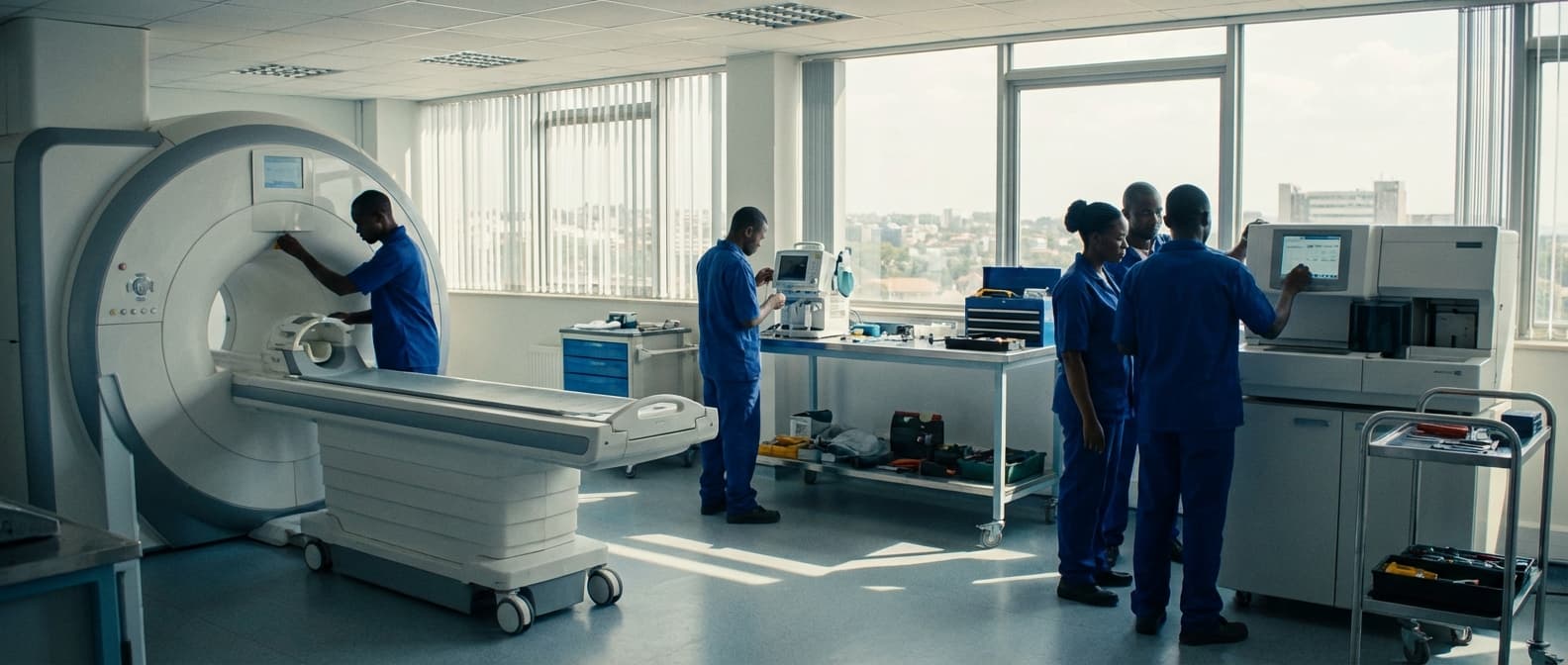
Planned Shutdown Coordination Service for Critical Equipment in Somalia
Engineering Excellence & Technical Support
Planned Shutdown Coordination Service for Critical Equipment High-standard technical execution following OEM protocols and local regulatory frameworks.
Proactive Maintenance Scheduling
Leveraging advanced predictive analytics and real-time sensor data, our service meticulously plans shutdowns for critical equipment, minimizing disruption and maximizing operational uptime for energy infrastructure in Somalia. We identify optimal windows based on load forecasts and equipment health, ensuring a seamless transition and rapid return to service.
Expert Resource & Logistics Management
We orchestrate the deployment of specialized technical teams, certified engineers, and necessary spare parts, overcoming Somalia's logistical challenges. Our comprehensive planning ensures all required resources are mobilized to the exact location at the precise time for efficient and safe execution of complex maintenance procedures on vital industrial assets.
Enhanced Safety & Compliance Assurance
Our service prioritizes the highest safety standards and adherence to international regulations throughout the shutdown process. We implement rigorous risk assessments, detailed safety protocols, and continuous monitoring to ensure the well-being of personnel and the integrity of critical equipment, fostering a secure operational environment for our clients in Somalia.
What Is Planned Shutdown Coordination Service For Critical Equipment In Somalia?
The Planned Shutdown Coordination Service for Critical Equipment in Somalia refers to a structured and systematic approach to managing the temporary deactivation of essential infrastructure and machinery. This service is crucial for ensuring the reliability, safety, and longevity of critical assets operating within the unique logistical and operational environment of Somalia. It involves meticulous planning, resource allocation, execution oversight, and post-shutdown verification to minimize disruption to vital services and operations while facilitating necessary maintenance, upgrades, or replacements. The core objective is to transition equipment from operational status to a safe, de-energized state and back again with minimal impact on downstream processes and stakeholders. This service is not merely about turning equipment off and on; it encompasses a comprehensive lifecycle management strategy for critical assets.
| Who Needs the Service | Typical Use Cases |
|---|---|
| Energy Sector (Power Generation & Distribution): Utilities responsible for maintaining power plants (thermal, hydro, solar, wind) and transmission/distribution networks. | Routine maintenance of turbines, generators, switchgear, transformers. Overhaul of critical components (e.g., boilers, cooling systems). Installation of new generation capacity or grid upgrades. Compliance with safety and emissions regulations. |
| Telecommunications Infrastructure Providers: Companies managing base stations, data centers, and critical network backbone equipment. | Hardware upgrades or replacements in base stations. Maintenance of cooling and power systems in data centers. Network expansion or re-configuration. Disaster recovery or business continuity testing requiring system downtime. |
| Water and Wastewater Management Authorities: Operators of water treatment plants, pumping stations, and sewage treatment facilities. | Maintenance of pumps, filtration systems, and chemical dosing equipment. Upgrades to treatment processes or infrastructure. Repair of pipelines or distribution networks requiring system deactivation. |
| Industrial Facilities (Manufacturing, Mining, Oil & Gas): Plants and operations with continuous processes and heavy machinery. | Major maintenance or repair of production lines or critical machinery. Installation of new manufacturing equipment or process modifications. Scheduled downtime for safety inspections or environmental compliance. |
| Healthcare and Public Service Facilities: Hospitals and critical government infrastructure with essential life-support or operational systems. | Maintenance of backup power generators and critical medical equipment. HVAC system overhauls to ensure climate control. Upgrades to security or communication systems. |
| Logistics and Transportation Hubs: Ports, airports, and major transportation control systems. | Maintenance of critical control systems (e.g., air traffic control, port operations). Upgrades to automated handling equipment or infrastructure. |
Key Components of Planned Shutdown Coordination Service:
- Scope Definition and Planning: Identifying the specific equipment requiring shutdown, the objectives of the shutdown (e.g., preventive maintenance, major overhauls, capacity expansion, regulatory compliance), and the desired outcome.
- Risk Assessment and Mitigation: Conducting thorough hazard identification and risk analysis associated with the shutdown process, and developing robust mitigation strategies to address potential safety, environmental, and operational risks.
- Scheduling and Sequencing: Developing a detailed timeline for the shutdown, including pre-shutdown activities, the shutdown period itself, and post-shutdown re-commissioning. This involves critical path analysis and dependency mapping.
- Resource Mobilization and Management: Coordinating the availability and deployment of skilled personnel (internal and external), specialized tools, equipment, spare parts, and consumables.
- Communication and Stakeholder Engagement: Establishing clear communication channels with all affected parties, including operational teams, maintenance crews, management, regulatory bodies, and potentially end-users, to inform them of the shutdown schedule and its implications.
- Permit to Work (PTW) System Integration: Ensuring strict adherence to established permit-to-work procedures for all activities during the shutdown, guaranteeing that all safety prerequisites are met before work commences.
- Isolation and De-energization Procedures: Implementing rigorous procedures for safely isolating equipment from all energy sources (electrical, mechanical, hydraulic, pneumatic, etc.) and verifying complete de-energization.
- Execution Oversight and Monitoring: Providing on-site supervision and real-time monitoring of all shutdown activities to ensure adherence to the plan, safety protocols, and quality standards.
- Restoration and Re-commissioning: Developing and executing detailed procedures for the safe and effective restoration of equipment to operational status, including testing, calibration, and performance verification.
- Post-Shutdown Review and Documentation: Conducting a comprehensive review of the shutdown process, documenting lessons learned, and updating maintenance records and operational procedures.
Who Needs Planned Shutdown Coordination Service For Critical Equipment In Somalia?
Planned Shutdown Coordination Services are crucial for organizations in Somalia that rely heavily on critical equipment for their operations. These services ensure that planned maintenance, upgrades, or essential repairs to vital machinery are executed with minimal disruption to business continuity, safety, and revenue. The coordination involves meticulous planning, scheduling, resource allocation, and communication to guarantee that shutdowns are as short and efficient as possible, mitigating potential losses and risks. This is particularly important in sectors where downtime can have severe economic, social, or safety implications.
| Target Customer Sector | Key Departments Involved | Critical Equipment Examples | Impact of Uncoordinated Shutdowns |
|---|---|---|---|
| Telecommunications | Network Operations, Engineering, IT Infrastructure | Base Stations, Core Network Equipment, Data Center Servers, Power Systems | Service outages, loss of revenue, customer dissatisfaction, reputational damage. |
| Energy & Utilities | Operations, Maintenance, Engineering, Grid Management | Generators, Turbines, Transformers, Substations, Water Pumps, Treatment Systems | Widespread power/water outages, economic disruption, public health risks, safety hazards. |
| Oil & Gas | Operations, Maintenance, Safety, Production Engineering | Drilling Rigs, Pipelines, Refineries, Storage Tanks, Compressors | Production losses, safety incidents, environmental damage, significant financial penalties. |
| Healthcare | Facilities Management, Biomedical Engineering, IT, Clinical Operations | MRI/CT Scanners, Ventilators, Sterilizers, HVAC Systems, Emergency Power Generators | Compromised patient care, delayed treatments, potential loss of life, regulatory non-compliance. |
| Financial Services | IT Operations, Risk Management, Branch Operations, Compliance | ATMs, Server Racks, Network Switches, Security Systems | Transaction failures, data breaches, financial losses, erosion of customer trust, regulatory fines. |
| Industrial (Manufacturing/Processing) | Production Management, Maintenance, Quality Control, Supply Chain | Assembly Lines, Industrial Ovens, Refrigeration Units, Packaging Machines | Production stoppages, product spoilage, missed delivery deadlines, increased operational costs. |
Target Customers and Departments in Somalia Needing Planned Shutdown Coordination Services:
- {"title":"Telecommunications Companies","description":"For the maintenance and upgrades of base stations, data centers, and network infrastructure, ensuring uninterrupted service to subscribers."}
- {"title":"Energy and Utilities Providers (Electricity, Water)","description":"Essential for managing planned outages for maintenance of power plants, transmission lines, substations, water treatment facilities, and distribution networks."}
- {"title":"Oil and Gas Sector (Exploration, Production, Refining)","description":"Crucial for scheduled maintenance of rigs, pipelines, processing plants, and storage facilities to ensure safety and operational efficiency."}
- {"title":"Healthcare Facilities (Hospitals, Clinics)","description":"For the maintenance of life-support systems, diagnostic equipment (MRI, CT scanners), and essential building services (power, HVAC) with minimal impact on patient care."}
- {"title":"Financial Institutions (Banks, Central Bank)","description":"For the maintenance of ATM networks, data centers, and critical IT infrastructure to prevent service disruptions and protect financial transactions."}
- {"title":"Major Industrial Operations (Manufacturing, Food Processing)","description":"To schedule downtime for production lines, heavy machinery, and processing equipment to maximize output and minimize spoilage or damage."}
- {"title":"Government and Public Services (Airports, Ports, Data Centers)","description":"For the maintenance of air traffic control systems, port operations equipment, government data centers, and critical national infrastructure."}
- {"title":"Mining and Resource Extraction Companies","description":"For scheduled maintenance of heavy mining equipment, processing plants, and transport systems."}
Planned Shutdown Coordination Service For Critical Equipment Process In Somalia
This document outlines the workflow for the Planned Shutdown Coordination Service for Critical Equipment in Somalia, ensuring a seamless and efficient process from initial inquiry to successful execution. The service aims to minimize downtime, optimize resource allocation, and maintain safety standards during planned maintenance or upgrade activities for critical infrastructure and equipment across various sectors in Somalia.
| Stage | Key Activities | Responsible Parties | Deliverables | Timeline (Indicative) |
|---|---|---|---|---|
| Inquiry & Initial Assessment | Client submits an inquiry regarding a planned shutdown for specific critical equipment. Service provider conducts an initial assessment of equipment criticality, scope of work, potential impact, and client's needs. | Client, Service Provider | Inquiry acknowledgement, Preliminary assessment report, Site visit (if required) | 1-3 Business Days |
| Planning & Proposal Development | Detailed planning of shutdown scope, timelines, resource requirements (personnel, equipment, materials), safety protocols, risk assessment, and contingency plans. Development of a comprehensive service proposal outlining costs, schedule, and deliverables. | Service Provider, Client (for input) | Detailed shutdown plan, Risk assessment matrix, Resource plan, Comprehensive service proposal | 3-7 Business Days |
| Approval & Contract Finalization | Client reviews and approves the proposal. Negotiation of terms and conditions, leading to the signing of a service contract or agreement. | Client, Service Provider | Signed service contract/agreement | 2-5 Business Days |
| Pre-Shutdown Preparations | Mobilization of personnel and equipment to site. Procurement of necessary materials. Pre-shutdown inspections and safety briefings. Final coordination with all stakeholders (operations, security, etc.). Isolation and lockout/tagout procedures are meticulously planned and communicated. | Service Provider, Client (for site access and coordination) | Mobilized resources, Procured materials, Pre-shutdown checklist, Safety briefing records | Varies based on scope (e.g., 1-3 Weeks) |
| Execution of Shutdown Activities | Implementation of the planned shutdown, including de-energization, dismantling, maintenance, repair, or upgrade activities according to the approved plan. Continuous monitoring of progress, adherence to safety procedures, and real-time communication with the client. | Service Provider, Client (for oversight and approvals) | Completed maintenance/repair/upgrade work, Progress reports, Incident logs (if any) | Varies based on scope (e.g., Days to Weeks) |
| Post-Shutdown Verification & Handover | Post-maintenance testing and commissioning of equipment. Verification of work quality against specifications. Final safety checks. Formal handover of the equipment back to client operations with all necessary documentation. | Service Provider, Client | Test reports, Commissioning certificates, Handover documentation, As-built drawings (if applicable) | 1-3 Business Days |
| Reporting & Review | Submission of a comprehensive final report detailing all activities, outcomes, lessons learned, and any deviations from the plan. Post-project review meeting with the client to gather feedback and identify areas for improvement in future shutdowns. | Service Provider, Client | Final project report, Post-project review minutes | 3-5 Business Days |
Workflow Stages
- Inquiry & Initial Assessment
- Planning & Proposal Development
- Approval & Contract Finalization
- Pre-Shutdown Preparations
- Execution of Shutdown Activities
- Post-Shutdown Verification & Handover
- Reporting & Review
Planned Shutdown Coordination Service For Critical Equipment Cost In Somalia
Coordinating planned shutdowns for critical equipment in Somalia presents unique challenges and, consequently, a distinct cost structure. The 'Planned Shutdown Coordination Service' aims to mitigate risks, optimize downtime, and ensure a smooth, efficient process for essential infrastructure and industrial operations. Factors influencing the cost are multifaceted, ranging from the complexity and scale of the shutdown to the specific expertise required and the logistical hurdles inherent in the Somali context. This service typically encompasses pre-shutdown planning, execution oversight, and post-shutdown analysis, all tailored to the client's needs and the specific equipment involved.
| Service Component / Factor | Estimated Cost Range (USD) | Estimated Cost Range (Somali Shilling - SOS) |
|---|---|---|
| Initial Consultation & Scoping | $500 - $2,500 | 28,500,000 - 142,500,000 |
| Detailed Planning & Engineering | $2,000 - $15,000 | 114,000,000 - 855,000,000 |
| On-site Coordination (per day, lead coordinator) | $800 - $3,000 | 45,600,000 - 171,000,000 |
| Specialized Technical Supervision (per day) | $1,000 - $4,000 | 57,000,000 - 228,000,000 |
| Logistics & Transportation (variable, per shutdown) | $1,000 - $10,000+ | 57,000,000 - 570,000,000+ |
| Safety & Security Management (variable, per shutdown) | $500 - $5,000+ | 28,500,000 - 285,000,000+ |
| Post-Shutdown Analysis & Reporting | $1,000 - $5,000 | 57,000,000 - 285,000,000 |
| Project Management Fee (percentage of total project cost) | 10% - 25% | N/A |
| Typical Small-Scale Shutdown (e.g., single critical unit) | $5,000 - $25,000 | 285,000,000 - 1,425,000,000 |
| Typical Large-Scale Shutdown (e.g., complex plant section) | $30,000 - $150,000+ | 1,710,000,000 - 8,550,000,000+ |
Key Pricing Factors for Planned Shutdown Coordination Services in Somalia
- Scope and Complexity of Shutdown: The number of equipment units, their interdependencies, and the criticality of the operation significantly impact planning and execution time. A complex, multi-system shutdown will naturally incur higher costs.
- Duration of Downtime: Longer planned downtime requires more extensive coordination, resource allocation, and potential for unforeseen issues, directly influencing the service fee.
- Type and Criticality of Equipment: Coordinating shutdowns for highly specialized or critical equipment (e.g., power generation turbines, oil and gas processing units, major telecommunications infrastructure) demands a higher level of technical expertise and specialized safety protocols, thus increasing costs.
- Geographic Location and Accessibility: Somalia's infrastructure can be challenging. Remote or difficult-to-access locations require additional logistical planning, transportation, and potentially security considerations, all of which add to the overall cost.
- Required Expertise and Skillset: The need for specialized engineers, technicians, safety officers, and project managers with experience in the specific industry and the Somali environment will determine the labor costs.
- Resource Mobilization and Logistics: Arranging for personnel, equipment, tools, spare parts, and transportation within Somalia can be complex and costly, especially for remote sites.
- Safety and Security Requirements: Implementing robust safety protocols and ensuring adequate security for personnel and assets in certain regions of Somalia is paramount and contributes to the service cost.
- Permitting and Regulatory Compliance: Navigating local regulations and obtaining necessary permits for shutdown activities can add administrative costs and time.
- Contingency Planning: Developing comprehensive contingency plans for unexpected events or emergencies requires significant effort and expertise, impacting the pricing.
- Reporting and Documentation: Detailed reporting on the shutdown process, performance, and lessons learned is often a requirement, adding to the service scope.
Affordable Planned Shutdown Coordination Service For Critical Equipment Options
Our Affordable Planned Shutdown Coordination Service is designed to minimize downtime and maximize operational efficiency for your critical equipment. We understand that planned shutdowns, while necessary, can be costly. This service offers flexible value bundles and implements proven cost-saving strategies to ensure your shutdown is as efficient and budget-friendly as possible. Our goal is to provide comprehensive support, from initial planning and scheduling to execution and post-shutdown analysis, all while keeping your operational costs in check.
| Cost-Saving Strategy | Description | Impact on Shutdown Cost |
|---|---|---|
| Optimized Scheduling & Phasing | Minimizing overlapping tasks, sequencing activities logically to reduce idle time and overtime. | Significant reduction in labor costs and equipment rental duration. |
| Proactive Material & Resource Management | Ensuring all necessary parts, tools, and personnel are available on-site and on time, preventing delays. | Reduces emergency procurement costs and lost production time. |
| Vendor Negotiation & Consolidation | Leveraging our established relationships and bulk purchasing power to secure competitive rates for external services and parts. | Direct reduction in external service provider expenses and material costs. |
| Parallel Task Execution Planning | Identifying opportunities for multiple tasks to be performed simultaneously by different teams or vendors. | Shortens overall shutdown duration, reducing fixed overhead costs. |
| Detailed Pre-Shutdown Planning & Scope Definition | Thoroughly defining the scope of work, identifying potential issues beforehand, and developing contingency plans. | Minimizes scope creep, rework, and unexpected expenses. |
| Lean Shutdown Methodologies | Applying principles of lean management to eliminate waste in all aspects of the shutdown process. | Reduces inefficiencies, unnecessary movements, and waiting times, leading to overall cost savings. |
Value Bundles
- Basic Coordination: Includes initial consultation, scheduling assistance, and communication management with internal teams. Ideal for organizations with established shutdown procedures needing an external facilitator.
- Standard Coordination: Builds on the Basic bundle by adding risk assessment, resource allocation planning, and vendor management. Suitable for most organizations requiring structured support for their planned shutdowns.
- Premium Coordination: Encompasses all Standard bundle features plus advanced optimization, detailed post-shutdown analysis, and proactive identification of efficiency improvements for future shutdowns. Best for organizations seeking comprehensive support and continuous improvement in their shutdown processes.
- Customizable Bundles: We offer the flexibility to tailor any of our bundles to your specific needs, ensuring you only pay for the services you require.
Verified Providers In Somalia
In the challenging healthcare landscape of Somalia, identifying and trusting verified providers is paramount for ensuring quality and safety. Franance Health stands out as a leading organization dedicated to this mission. Their rigorous credentialing process and commitment to excellence make them the optimal choice for individuals and organizations seeking reliable healthcare partners in Somalia.
| Feature | Franance Health's Approach | Benefit for Users |
|---|---|---|
| Provider Vetting | Comprehensive review of medical licenses, certifications, educational background, and professional experience. | Ensures access to qualified and competent healthcare professionals. |
| Ethical Standards | Assessment of professional conduct and adherence to medical ethics. | Guarantees patient-centered care and trustworthy medical services. |
| Facility Standards | Evaluation of healthcare facilities for hygiene, equipment, and operational compliance. | Provides a safe and well-equipped environment for treatment. |
| Transparency | Publicly accessible verification status and provider profiles. | Empowers patients to make informed decisions about their healthcare. |
| Continuous Quality Assurance | Regular audits and feedback mechanisms to maintain high standards. | Ensures ongoing reliability and excellence in healthcare delivery. |
Why Franance Health is the Premier Choice for Verified Providers in Somalia
- Unwavering Commitment to Quality: Franance Health's core mission is to elevate healthcare standards in Somalia through meticulous verification of medical professionals and facilities.
- Rigorous Credentialing Process: They employ a multi-faceted approach, scrutinizing qualifications, experience, ethical standing, and adherence to international best practices.
- Enhanced Patient Safety: By partnering with Franance Health-verified providers, patients gain access to a network that prioritizes their well-being and reduces risks associated with unqualified practitioners.
- Building Trust and Transparency: Franance Health fosters a transparent healthcare ecosystem, empowering patients with confidence in the services they receive.
- Facilitating Access to Excellence: They connect individuals and organizations with a curated list of highly competent and ethically sound healthcare providers, saving valuable time and effort in the selection process.
- Continuous Improvement and Monitoring: Franance Health's commitment extends beyond initial verification, with ongoing monitoring to ensure sustained high performance and adherence to standards.
Scope Of Work For Planned Shutdown Coordination Service For Critical Equipment
This Scope of Work (SOW) outlines the services required for the effective coordination and execution of planned shutdowns for critical equipment. The objective is to minimize downtime, ensure safety, and maintain asset integrity during maintenance, repair, and upgrade activities. This document specifies the technical deliverables and standard specifications expected from the service provider.
| Phase | Key Activities | Technical Deliverables | Standard Specifications |
|---|---|---|---|
| Shutdown scope definition, risk assessment, resource planning, scheduling, permitting, procurement of parts and services. | Detailed shutdown schedule (Gantt chart), risk register, resource allocation plan, procurement plan, preliminary safety plan, communication plan, work package descriptions. | ISO 31000 (Risk Management), PMI PMBOK Guide (Project Management), API RP 54 (Occupational Safety and Health for Oil and Gas Well Drilling and Servicing Operations), applicable local safety regulations. |
| On-site coordination, supervision of work crews, management of contractors, adherence to safety protocols, progress monitoring, issue resolution. | Daily progress reports, safety observation reports, incident reports (if any), updated schedule with actual progress, quality control reports, daily toolbox talks. | OSHA 1910 (Occupational Safety and Health Standards), relevant equipment manufacturer's maintenance manuals, company specific safety procedures, work permit system adherence. |
| Pre-startup safety reviews (PSSR), functional testing, system checks, phased startup, performance verification. | PSSR checklist and sign-off, test results documentation, startup sequence documentation, performance test reports, final handover documentation. | API Recommended Practice 521 (Guide for Pressure-Relieving and Depressuring Systems), equipment manufacturer's startup procedures, client's operating procedures. |
| Lessons learned, root cause analysis of any issues, final report generation, budget reconciliation, update of maintenance records. | Shutdown close-out report, lessons learned document, final budget report, updated equipment history records, recommendations for future shutdowns. | Company's post-project review guidelines, industry best practices for continuous improvement. |
Objectives of Planned Shutdown Coordination Service
- Minimize unplanned downtime and associated production losses.
- Ensure the safety of personnel and the environment during shutdown activities.
- Maintain the integrity and reliability of critical equipment.
- Optimize resource allocation and scheduling for efficient execution.
- Facilitate clear and timely communication among all stakeholders.
- Ensure adherence to all relevant industry standards and regulatory requirements.
- Provide comprehensive documentation of all shutdown activities.
Service Level Agreement For Planned Shutdown Coordination Service For Critical Equipment
This Service Level Agreement (SLA) outlines the commitment of the Planned Shutdown Coordination Service for Critical Equipment (hereinafter referred to as 'the Service') to its users. It defines the expected response times for service requests and the uptime guarantees for the critical equipment managed by this service during scheduled maintenance periods.
| Service Metric | Target | Measurement Method | Escalation Procedure |
|---|---|---|---|
| Response Time for New Shutdown Request (Acknowledgement) | Within 2 business hours | Timestamp of request submission vs. timestamp of initial acknowledgement email/ticket update | If no acknowledgement within 2 business hours, automated alert sent to Service Manager. If no action within 4 business hours, alert escalated to Director of Operations. |
| Response Time for Critical Issue During Shutdown (Immediate Threat to Service) | Within 15 minutes | Timestamp of issue report vs. timestamp of initial response/action initiated by the Service | If no response within 15 minutes, automated alert sent to on-call technician and Service Manager. If no action within 30 minutes, escalated to Senior Management. |
| Uptime Guarantee for Critical Equipment (During Agreed Shutdown Window) | 99.9% (of the scheduled shutdown duration) | Calculated as: (Scheduled Shutdown Duration - Unplanned Downtime During Window) / Scheduled Shutdown Duration * 100. Unplanned downtime is time equipment is unavailable due to coordination failure, not equipment failure itself. | Any deviation from the agreed shutdown window due to coordination failure will trigger a root cause analysis and corrective action plan. Impacted business units will be notified within 1 hour of identifying the deviation. |
| Uptime Guarantee for Service Portal/Communication Channels | 99.5% | Percentage of time the Service Portal and designated communication channels (e.g., dedicated email, collaboration platform) are accessible and functional during business hours. | Scheduled maintenance of the Service Portal will be communicated at least 48 hours in advance. Unscheduled outages will trigger immediate investigation and notification of affected users. |
Scope of Service
- Coordination of planned shutdown requests for critical equipment.
- Facilitation of communication between relevant stakeholders (e.g., operations, maintenance, IT, business units).
- Scheduling and approval of shutdown windows to minimize business impact.
- Verification of readiness for shutdown and restart procedures.
- Monitoring of shutdown progress and providing status updates.
- Post-shutdown review and reporting.
Frequently Asked Questions

Ready when you are
Let's scope your Planned Shutdown Coordination Service for Critical Equipment in Somalia project in Somalia.

Scaling healthcare logistics and technical systems across the entire continent.