
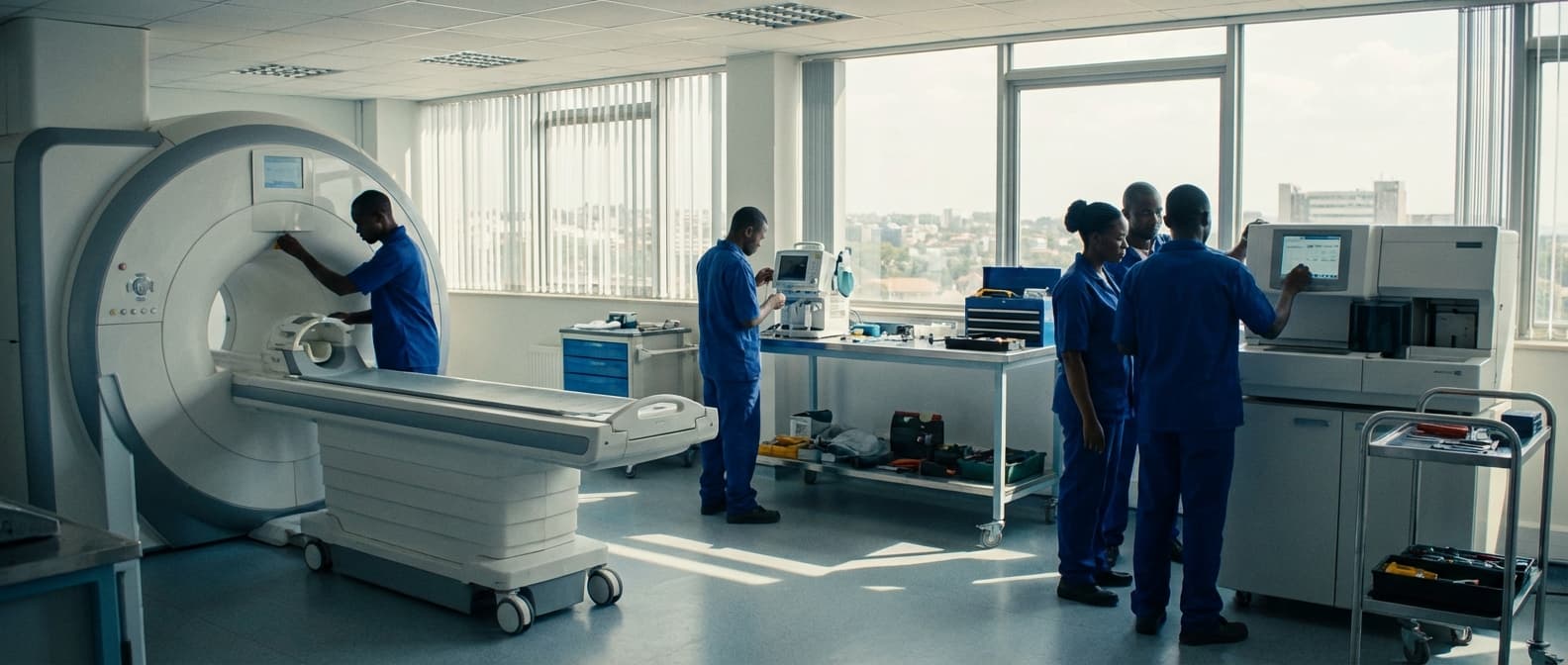
Comprehensive Maintenance Contract (CMC) Management Service (Parts & Labor) in Somalia
Engineering Excellence & Technical Support
Comprehensive Maintenance Contract (CMC) Management Service (Parts & Labor) High-standard technical execution following OEM protocols and local regulatory frameworks.
Optimized Spare Parts Inventory
Leverage our advanced inventory management system to ensure critical spare parts are readily available across all operational sites in Somalia, minimizing downtime and reducing emergency procurement costs. We maintain optimal stock levels based on usage patterns and predictive maintenance needs.
Certified & Localized Technical Teams
Access a network of highly skilled and certified technicians trained to international standards, operating within Somalia. Our localized teams ensure rapid response times and culturally adept service delivery, guaranteeing efficient labor deployment for all maintenance tasks.
Transparent Cost Control & Reporting
Benefit from a fully transparent pricing model covering both parts and labor, with detailed breakdowns and regular performance reports. Our comprehensive tracking and reporting system provides complete visibility into maintenance expenditures and asset performance for informed decision-making.
What Is Comprehensive Maintenance Contract (Cmc) Management Service (Parts & Labor) In Somalia?
Comprehensive Maintenance Contract (CMC) Management Service (Parts & Labor) in Somalia refers to a specialized service offering that oversees and executes the complete maintenance lifecycle of assets, encompassing both the procurement and provision of necessary spare parts and the labor required for repairs, servicing, and preventative maintenance. This service is designed to ensure the optimal functionality, longevity, and reliability of critical equipment and infrastructure within organizations operating in the Somali context. It involves proactive planning, reactive repair execution, and continuous performance monitoring, thereby mitigating risks associated with asset downtime and operational disruptions.
| Who Needs This Service? | Typical Use Cases in Somalia | ||||||||
|---|---|---|---|---|---|---|---|---|---|
| Government Agencies: Ministries, regional administrations, and public utilities responsible for infrastructure and essential services. | Telecommunications Companies: Maintaining cellular towers, network infrastructure, and data centers. | Energy Providers: Managing and servicing power generation equipment (generators, turbines), transmission lines, and distribution networks. | Healthcare Institutions: Ensuring the operational readiness of medical equipment (imaging machines, laboratory equipment, life support systems). | Transportation and Logistics Companies: Maintaining fleets of vehicles (trucks, buses), airport equipment, and port machinery. | International Organizations and NGOs: Managing and maintaining diverse assets used in development projects, humanitarian aid delivery, and operational bases. | Financial Institutions: Ensuring the uptime of ATMs, servers, and IT infrastructure. | Manufacturing and Industrial Facilities: Servicing production lines, heavy machinery, and specialized equipment. | Construction Companies: Maintaining heavy construction equipment and project-specific machinery. | Hospitality Sector: Ensuring the reliable operation of facilities management systems, HVAC, and kitchen equipment. |
| Maintenance of critical power generation equipment in remote areas. | Ensuring uninterrupted telecommunications service through regular maintenance of base stations and network infrastructure. | Providing reliable medical equipment maintenance in hospitals and clinics to support patient care. | Sustaining the operational readiness of vehicles and logistics for aid distribution and essential services. | Managing and servicing airport ground support equipment for aviation. | Ensuring the uptime of water purification and pumping systems for public utilities. | Maintaining IT infrastructure and communication systems for government and organizational operations. | Servicing specialized industrial machinery for local manufacturing. | Providing ongoing support for renewable energy installations (solar panels, wind turbines). | Ensuring the functionality of security and surveillance systems. |
Key Components of CMC Management Service (Parts & Labor) in Somalia
- Asset Inventory and Assessment: Cataloging all covered assets, their specifications, and current condition.
- Preventative Maintenance Scheduling: Developing and executing a proactive maintenance schedule to minimize unexpected failures.
- Corrective Maintenance and Repair: Responding to equipment malfunctions, diagnosing issues, and performing necessary repairs.
- Spare Parts Management: Identifying, sourcing, procuring, stocking, and managing the inventory of required spare parts, considering local availability and supply chain challenges in Somalia.
- Labor Provision and Management: Deploying skilled technicians and engineers for all maintenance activities, including specialized expertise.
- Performance Monitoring and Reporting: Tracking maintenance activities, asset performance metrics, and providing regular reports on service effectiveness and asset health.
- Warranty Management: Overseeing manufacturer warranties and ensuring compliance with service level agreements (SLAs).
- Budget Management: Managing maintenance budgets, including costs for parts, labor, and external services.
- Risk Mitigation: Identifying and addressing potential risks related to equipment failure, obsolescence, and operational downtime.
- Technical Support and Consultation: Providing expert advice on asset utilization, upgrades, and maintenance strategies.
Who Needs Comprehensive Maintenance Contract (Cmc) Management Service (Parts & Labor) In Somalia?
Comprehensive Maintenance Contract (CMC) Management Services, encompassing both parts and labor, are crucial for organizations in Somalia that rely heavily on specialized equipment and infrastructure for their operations. These services ensure the longevity, reliability, and optimal performance of critical assets, minimizing downtime and associated financial losses. The need is particularly acute in sectors where equipment failure can have significant consequences for service delivery, safety, or revenue generation. Proactive maintenance, access to quality spare parts, and skilled technical expertise are paramount for organizations operating in a challenging logistical and economic environment like Somalia.
| Industry/Sector | Target Customers | Key Departments/Functions |
|---|---|---|
| Healthcare | Hospitals (public and private), Clinics, Diagnostic Centers | Biomedical Engineering Department, Facilities Management, IT Department, Procurement |
| Telecommunications | Mobile Network Operators, Internet Service Providers | Network Operations Center (NOC), Engineering Department, Infrastructure Management, IT Department |
| Energy & Utilities | Power Generation Companies, Water Treatment Plants, Distribution Networks | Operations & Maintenance (O&M) Department, Engineering Department, Asset Management, Technical Services |
| Government & Public Services | Ministries (e.g., Health, Infrastructure, Water), Airports, Ports, Public Administration Buildings | Facilities Management, IT Department, Procurement Department, Security Services |
| Banking & Finance | Commercial Banks, Financial Institutions | IT Department, Operations Department, Facilities Management, Security |
| Large Commercial Enterprises | Manufacturing Plants, Logistics Companies, Large Retail Chains | Operations Department, Maintenance Department, Facilities Management, Engineering, Procurement |
| Non-Governmental Organizations (NGOs) & Humanitarian Aid | Organizations with field operations, logistics hubs, and essential equipment for aid delivery | Logistics Department, Operations Department, IT Department, Procurement |
Target Customers and Departments for CMC Management Services in Somalia
- Organizations with critical infrastructure and specialized equipment.
- Businesses and institutions with a high dependency on operational continuity.
- Entities operating in sectors where equipment failure has significant safety or service delivery implications.
- Companies seeking to optimize asset lifespan and reduce unexpected repair costs.
Comprehensive Maintenance Contract (Cmc) Management Service (Parts & Labor) Process In Somalia
This document outlines the comprehensive workflow for managing Comprehensive Maintenance Contracts (CMCs) for both parts and labor in Somalia. The service aims to ensure the ongoing operational readiness and longevity of equipment for clients through proactive and reactive maintenance. The process is designed to be transparent, efficient, and tailored to the specific needs and logistical challenges prevalent in the Somali context. It covers the entire lifecycle of a CMC, from initial client engagement to the successful completion of maintenance activities.
| Stage | Description | Key Activities | Involved Parties | Considerations for Somalia |
|---|---|---|---|---|
| Initial contact from a potential client seeking CMC services. | Receive inquiry, understand client's equipment, operational environment, and maintenance requirements. Conduct site visits (if feasible) to assess equipment condition and site accessibility. | Potential Client, Service Provider Sales/Business Development | Initial communication channels may be challenging. Leverage local contacts and networks. Be prepared for varying levels of technical understanding from clients. |
| Creating a tailored proposal and cost estimate for the CMC. | Analyze client needs, identify required parts and labor, determine service frequency and scope. Develop a comprehensive proposal outlining services, SLAs, pricing, and contract duration. Provide a detailed quotation. | Service Provider Technical & Commercial Teams, Potential Client | Pricing needs to account for potential logistical costs, security considerations, and currency fluctuations. Clear breakdown of costs for parts vs. labor is crucial. |
| Formalizing the service agreement between the client and the service provider. | Discuss and finalize contract terms, including scope of work, response times, warranty, exclusions, payment terms, and dispute resolution. Sign the formal CMC agreement. | Service Provider Legal & Commercial Teams, Potential Client Legal & Procurement Teams | Contracts should be drafted in clear, understandable language. Consider incorporating clauses for force majeure due to regional instability. Payment terms may require careful structuring. |
| Integrating the client's assets into the service provider's management system. | Detailed inventory of all covered equipment, including serial numbers, make, model, installation date, and current condition. Establish baseline performance data. Set up client account in the service management system. | Service Provider Operations & Technical Teams, Client Asset Managers | Accurate asset tracking is paramount. May require physical inspection and data collection in challenging environments. Secure data management practices are essential. |
| Scheduled maintenance to prevent breakdowns and ensure optimal performance. | Develop a preventive maintenance schedule based on equipment type, usage, and manufacturer recommendations. Deploy technicians for scheduled inspections, cleaning, lubrication, adjustments, and minor part replacements. Conduct performance tests. | Service Provider Technical Teams, Client Operations Staff | Logistics for technician travel and parts delivery to remote locations require meticulous planning. Communication protocols must be robust to coordinate schedules. Weather conditions can impact accessibility. |
| Responding to equipment failures and restoring functionality. | Client reports a breakdown. Service provider acknowledges the issue, assesses the problem remotely (if possible), dispatches a qualified technician with necessary tools and parts. Diagnose and repair the equipment. Document the repair. | Client Operations Staff, Service Provider Technical Support & Technicians | Rapid response times are critical. Availability of spare parts locally can be a challenge, necessitating efficient inventory management or sourcing. Security escorts for technicians may be required. |
| Ensuring the availability of necessary spare parts. | Maintain an inventory of commonly used spare parts. Source and procure specialized or less common parts from local or international suppliers. Manage import/export procedures and customs clearance. Ensure quality control of procured parts. | Service Provider Procurement & Logistics Teams, Parts Suppliers | Supply chain disruptions are a significant risk. Build relationships with reliable suppliers. Consider stocking critical parts locally. Navigating customs and import regulations can be complex. |
| Mobilizing skilled personnel for maintenance activities. | Recruit, train, and retain qualified technicians. Schedule and deploy technicians based on maintenance needs, location, and technician skillsets. Provide ongoing training and certification. Ensure technician safety and security. | Service Provider HR & Operations Teams, Technicians | Attracting and retaining skilled labor can be difficult. Invest in training local talent. Security protocols for technicians are paramount, especially in certain regions. Accommodation and travel arrangements need careful consideration. |
| Providing clients with updates on maintenance activities and equipment status. | Generate regular reports on preventive maintenance performed, breakdown incidents, repair times, parts used, and overall equipment performance. Track key performance indicators (KPIs) against SLAs. Regular meetings with clients to review performance. | Service Provider Operations & Reporting Teams, Client Management | Timely and accurate reporting builds trust. Data integrity is crucial. Reports should be clear and concise, highlighting achievements and areas for improvement. |
| Evaluating the CMC and offering renewal or modifications. | Review contract performance against SLAs. Gather feedback from the client. Propose renewal terms, potential price adjustments, or scope modifications based on evolving client needs and market conditions. Execute renewal agreement. | Service Provider Commercial & Operations Teams, Client Management | Demonstrating value and addressing any client concerns proactively is key to successful renewals. Market dynamics and economic factors may influence renewal terms. |
Key Stages of CMC Management Service (Parts & Labor) in Somalia
- Inquiry and Needs Assessment
- Proposal Development and Quotation
- Contract Negotiation and Agreement
- Onboarding and Asset Inventory
- Preventive Maintenance Planning and Execution
- Reactive Maintenance (Breakdown) Handling
- Parts Procurement and Management
- Labor and Technician Deployment
- Reporting and Performance Monitoring
- Contract Renewal and Review
Comprehensive Maintenance Contract (Cmc) Management Service (Parts & Labor) Cost In Somalia
Managing Comprehensive Maintenance Contracts (CMCs) for parts and labor in Somalia involves a unique set of pricing factors due to the country's specific economic and operational landscape. These contracts are crucial for ensuring the longevity and optimal functioning of various assets, from critical infrastructure and medical equipment to IT systems and vehicles.
Several key elements influence the cost of CMC services in Somalia:
- Asset Type and Complexity: The nature of the equipment being maintained is a primary driver. High-tech medical devices, complex industrial machinery, or sophisticated IT networks will naturally incur higher maintenance costs than simpler assets like generators or basic vehicles.
- Scope of Services: A comprehensive contract typically includes preventive maintenance, corrective maintenance (repairs), emergency call-outs, and sometimes even replacement parts. The broader the scope, the higher the price.
- Downtime Sensitivity: Assets critical to operations or public safety that require minimal downtime will command higher CMC fees to ensure rapid response and specialized technician availability.
- Location and Accessibility: Somalia's challenging infrastructure and security situation can significantly impact logistics. Remote locations or areas with security concerns will increase travel time, transportation costs, and the need for specialized security personnel, all contributing to higher CMC prices.
- Availability of Specialized Technicians and Parts: The scarcity of highly skilled local technicians for specific equipment and the challenges in importing specialized spare parts directly affect costs. Companies may need to factor in the cost of training local staff or importing parts from international suppliers, which adds considerable expense.
- Service Level Agreements (SLAs): The agreed-upon response times for repairs, availability of spare parts, and uptime guarantees within the SLA will directly influence the pricing. More stringent SLAs will result in higher costs.
- Contract Duration: Longer-term contracts might offer some economies of scale or more favorable rates compared to short-term agreements.
- Supplier's Overhead and Profit Margin: Like any business, CMC providers in Somalia will include their operational costs (salaries, office space, insurance, etc.) and a reasonable profit margin in their pricing.
- Currency Exchange Rates and Inflation: The Somali Shilling (SOS) can be subject to fluctuations, and inflation can impact the cost of imported goods and services. CMC pricing will often be benchmarked against USD to mitigate currency risks, with the final SOS price reflecting current exchange rates.
Pricing Ranges in Somali Shilling (SOS)
Due to the dynamic nature of the Somali market and the wide variation in asset types and service scopes, providing precise, universal pricing is challenging. The following ranges are indicative and can vary significantly. Prices are often quoted in USD and then converted to SOS, so they are presented with a rough SOS equivalent. It's crucial to obtain specific quotes based on detailed requirements.
- Small-Scale Assets (e.g., Office IT equipment, small generators):
* **Annual Contract:** SOS 1,500,000 - SOS 6,000,000 (approx. $250 - $1,000 USD)
* **Factors:** Basic preventive maintenance, limited emergency calls, availability of local technicians.
- Medium-Scale Assets (e.g., Fleet vehicles, larger generators, basic medical equipment in clinics):
* **Annual Contract:** SOS 6,000,000 - SOS 30,000,000 (approx. $1,000 - $5,000 USD)
* **Factors:** More frequent preventive maintenance, quicker response times, potential for some specialized parts, increased labor.
- Large-Scale/Critical Assets (e.g., Industrial machinery, advanced medical equipment in hospitals, critical IT infrastructure, construction equipment):
* **Annual Contract:** SOS 30,000,000 - SOS 150,000,000+ (approx. $5,000 - $25,000+ USD)
* **Factors:** Extensive preventive and corrective maintenance, 24/7 emergency response, guaranteed uptime, sourcing and stocking of specialized spare parts, highly skilled international or expatriate technicians, significant logistical and security considerations.
It is imperative that any organization seeking CMC services in Somalia engages in detailed negotiations, clearly defines the scope of work, SLAs, and understands all cost components to secure a contract that aligns with their operational needs and budget.
| Asset Category | Indicative Annual CMC Cost (SOS) | Indicative Annual CMC Cost (USD Equivalent) | Typical Included Services & Considerations |
|---|---|---|---|
| Small-Scale Assets (e.g., Office IT, small generators) | SOS 1,500,000 - SOS 6,000,000 | $250 - $1,000 | Basic preventive maintenance, limited emergency calls, local technician availability. |
| Medium-Scale Assets (e.g., Fleet vehicles, larger generators, basic medical equipment) | SOS 6,000,000 - SOS 30,000,000 | $1,000 - $5,000 | More frequent preventive maintenance, quicker response, some specialized parts, increased labor. |
| Large-Scale/Critical Assets (e.g., Industrial machinery, advanced medical equipment, critical IT infrastructure) | SOS 30,000,000 - SOS 150,000,000+ | $5,000 - $25,000+ | Extensive maintenance, 24/7 response, guaranteed uptime, specialized parts, expatriate technicians, significant logistics/security. |
Key Pricing Factors for CMC Management in Somalia
- Asset Type and Complexity
- Scope of Services Included (Preventive, Corrective, Emergency)
- Downtime Sensitivity & Required Response Times
- Geographical Location and Accessibility Challenges
- Availability of Specialized Technicians and Spare Parts
- Service Level Agreements (SLAs)
- Contract Duration and Commitment
- Provider's Operational Costs and Profit Margin
- Currency Exchange Rate Volatility and Inflation
Affordable Comprehensive Maintenance Contract (Cmc) Management Service (Parts & Labor) Options
Managing maintenance contracts for equipment can be a significant operational expense. Our Affordable Comprehensive Maintenance Contract (CMC) Management Service offers a streamlined and cost-effective solution, covering both parts and labor. We focus on providing value through carefully curated bundles and implementing strategic cost-saving measures. Our service aims to ensure your equipment runs optimally while minimizing your financial burden.
| Cost-Saving Strategy | Description | Benefit |
|---|---|---|
| Predictive Maintenance Integration | Leveraging IoT and data analytics to predict potential failures before they occur, allowing for scheduled interventions. | Reduces costly emergency repairs, minimizes unplanned downtime, and extends equipment lifespan. |
| Bulk Parts Procurement | Negotiating favorable pricing with manufacturers and third-party suppliers through aggregated purchasing for our client base. | Lower cost of replacement parts, directly impacting the overall maintenance expenditure. |
| Optimized Technician Deployment | Strategic scheduling and routing of technicians based on geographic location and service call priority. | Reduced travel time and costs, leading to more efficient use of labor resources. |
| Preventive Maintenance Focus | Emphasis on regular, scheduled checks and servicing to prevent minor issues from escalating into major, expensive problems. | Significantly lowers the frequency and severity of breakdowns, saving on major repair costs. |
| Component Refurbishment Programs | Offering repair and refurbishment services for certain components as an alternative to costly new replacements. | Provides a more economical solution for certain parts, further reducing overall parts costs. |
Value Bundles Explained
- {"title":"Standard CMC Bundle","description":"This foundational bundle includes scheduled preventive maintenance, on-demand emergency repairs, and access to our certified technicians. It's designed for essential equipment requiring regular upkeep and prompt response to minimize downtime."}
- {"title":"Premium CMC Bundle","description":"Building on the Standard, the Premium bundle adds proactive component replacement based on usage analytics, priority service response, and extended warranty coverage for critical parts. Ideal for high-usage or mission-critical machinery."}
- {"title":"Customized CMC Bundle","description":"We understand unique needs. This bundle allows you to tailor coverage, including specific parts, extended service hours, training for your in-house team, and dedicated account management, to precisely match your operational requirements and budget."}
Verified Providers In Somalia
Finding reliable and qualified healthcare providers is a critical concern in Somalia. The lack of standardized credentialing has historically made it difficult for individuals to discern genuine medical expertise from unqualified practitioners. This often leads to compromised patient safety and suboptimal health outcomes. Franance Health is addressing this challenge by establishing a robust system for verifying healthcare providers, ensuring that individuals can access safe and effective medical care with confidence. Their rigorous vetting process and commitment to transparency set a new standard for healthcare in Somalia.
| Credential Aspect | Franance Health Verification Process | Benefit for Patients |
|---|---|---|
| Medical Education & Training | Verification of degrees, diplomas, and specialized training from recognized institutions. | Confirms that providers possess the foundational knowledge and skills. |
| Professional Licenses & Registrations | Confirmation of current and valid licenses to practice in Somalia and any relevant international certifications. | Ensures providers are legally authorized and adhere to professional regulations. |
| Experience & Specialization | Thorough review of work history, surgical logs, and peer endorsements to validate experience and areas of expertise. | Helps patients find providers with specific skills and a proven track record. |
| Criminal Background Checks | Undertakes checks to ensure no history of malpractice or criminal activity that could compromise patient safety. | Provides an additional layer of security and trust. |
| Continuing Professional Development (CPD) | Mandates and tracks ongoing training and education to ensure providers stay updated with the latest medical advancements. | Guarantees that patients receive care based on current best practices. |
Why Franance Health Credentials Matter:
- Ensures providers meet stringent educational and professional standards.
- Reduces the risk of encountering unqualified or fraudulent practitioners.
- Promotes patient safety and improves the quality of care received.
- Fosters trust and confidence in the Somali healthcare system.
- Facilitates access to specialized medical services by identifying verified experts.
Scope Of Work For Comprehensive Maintenance Contract (Cmc) Management Service (Parts & Labor)
This Scope of Work (SOW) outlines the requirements for a Comprehensive Maintenance Contract (CMC) Management Service, encompassing both parts and labor, to ensure the optimal operational status and longevity of specified equipment. The service provider will be responsible for proactive maintenance, reactive repairs, and the provision of necessary spare parts, adhering to industry-standard specifications and agreed-upon technical deliverables.
| Category | Technical Deliverable | Standard Specifications / Requirements | Frequency / Trigger | Responsibility |
|---|---|---|---|---|
| Preventive Maintenance (PM) | Scheduled PM Inspections and Servicing | Detailed checklists based on manufacturer recommendations, including lubrication, cleaning, calibration, and component wear assessment. Use of calibrated tools and diagnostic equipment. | As per manufacturer's schedule (e.g., quarterly, semi-annually, annually) or based on usage hours. | Service Provider |
| Preventive Maintenance (PM) | Minor Component Replacement | Replacement of wear-and-tear parts identified during PM inspections (e.g., filters, belts, seals). Parts to be OEM or equivalent quality with warranty. | During PM inspections or as recommended by manufacturer. | Service Provider |
| Corrective Maintenance (CM) | Breakdown Response and Diagnosis | Rapid response to equipment malfunctions. Accurate fault diagnosis using advanced diagnostic tools. Provision of detailed repair reports. | Upon equipment failure / notification from client. | Service Provider |
| Corrective Maintenance (CM) | Repair and Restoration | Repair of faulty components or systems using OEM or equivalent quality parts. Restoration of equipment to full operational capacity, meeting original performance specifications. Post-repair testing and validation. | Following diagnosis of breakdown. | Service Provider |
| Spare Parts Management | Spare Parts Inventory Management | Maintaining a sufficient stock of critical and recommended spare parts. Regular inventory audits. Just-in-time (JIT) procurement for non-stocked critical parts. Secure and organized storage. | Ongoing, with periodic reviews. | Service Provider |
| Spare Parts Management | Spare Parts Procurement and Quality Control | Procurement of high-quality, genuine or OEM-equivalent spare parts. Verification of part numbers and specifications. Maintaining records of all procured parts, including invoices and warranties. | As and when required for PM and CM. | Service Provider |
| Technical Support & Reporting | Performance Monitoring and Reporting | Regular monitoring of equipment performance parameters. Monthly/Quarterly reports detailing uptime, downtime, maintenance activities performed, parts consumed, and recommendations for improvement. | Monthly / Quarterly. | Service Provider |
| Technical Support & Reporting | Root Cause Analysis (RCA) | Conducting RCA for recurring or significant equipment failures to identify underlying causes and implement preventive measures. Providing detailed RCA reports. | For major or recurring failures. | Service Provider |
| Technical Support & Reporting | Technical Consultation and Recommendations | Providing expert advice on equipment upgrades, modifications, and best practices for operation and maintenance. Proactive identification of potential obsolescence issues. | As and when required or during regular reviews. | Service Provider |
| Safety & Compliance | Adherence to Safety Protocols | All maintenance activities to be performed in strict accordance with relevant safety regulations (e.g., OSHA, local safety standards). Use of appropriate Personal Protective Equipment (PPE) and safety procedures. Lockout/Tagout procedures to be followed. | During all on-site activities. | Service Provider |
| Safety & Compliance | Environmental Compliance | Proper disposal of replaced parts and waste materials in accordance with environmental regulations. Minimizing environmental impact of maintenance activities. | During all on-site activities. | Service Provider |
| Emergency Support | 24/7 Emergency Support | Availability of on-call technical support for urgent breakdowns. Guaranteed response times for emergency calls (e.g., within 2-4 hours). | 24/7, 365 days a year. | Service Provider |
Key Objectives of CMC Management Service
- Ensure maximum equipment uptime and availability.
- Minimize equipment failures and associated downtime.
- Control and optimize maintenance costs.
- Maintain equipment performance within manufacturer specifications.
- Ensure adherence to all safety regulations and environmental standards.
- Provide timely and effective response to maintenance requests and emergency situations.
- Manage spare parts inventory efficiently.
Service Level Agreement For Comprehensive Maintenance Contract (Cmc) Management Service (Parts & Labor)
This Service Level Agreement (SLA) outlines the response times and uptime guarantees for the Comprehensive Maintenance Contract (CMC) Management Service, covering both parts and labor. It defines the expected performance standards for the provision of maintenance and repair services for the covered equipment.
| Service Level Tier | Issue Severity | Response Time (Initial Contact) | On-Site Repair Target (Parts & Labor) | Uptime Guarantee (%) | Escalation Trigger |
|---|---|---|---|---|---|
| Critical | Complete system failure affecting core operations | 1 Hour | 4 Business Hours | 99.5% | Failure to meet On-Site Repair Target |
| High | Significant performance degradation or loss of non-core functionality | 2 Business Hours | 8 Business Hours | 99.0% | Downtime exceeding 24 hours |
| Medium | Minor malfunctions or performance issues impacting efficiency | 4 Business Hours | 3 Business Days | 98.5% | Downtime exceeding 72 hours |
| Low | Cosmetic issues or minor operational inconveniences | 8 Business Hours | 5 Business Days | 98.0% | Unresolved after 2 weeks |
Key Service Commitments
- This SLA applies to all equipment covered under the active Comprehensive Maintenance Contract (CMC).
- Response times are measured from the confirmation of a service request by the Service Provider.
- Uptime guarantees are based on the equipment being available for its intended operational use, excluding scheduled maintenance and planned downtime.
- Parts availability is subject to standard lead times and stock levels. Critical spare parts will be prioritized.
- Labor refers to the qualified technical personnel dispatched to address the service request.
Frequently Asked Questions

Ready when you are
Let's scope your Comprehensive Maintenance Contract (CMC) Management Service (Parts & Labor) in Somalia project in Somalia.

Scaling healthcare logistics and technical systems across the entire continent.