
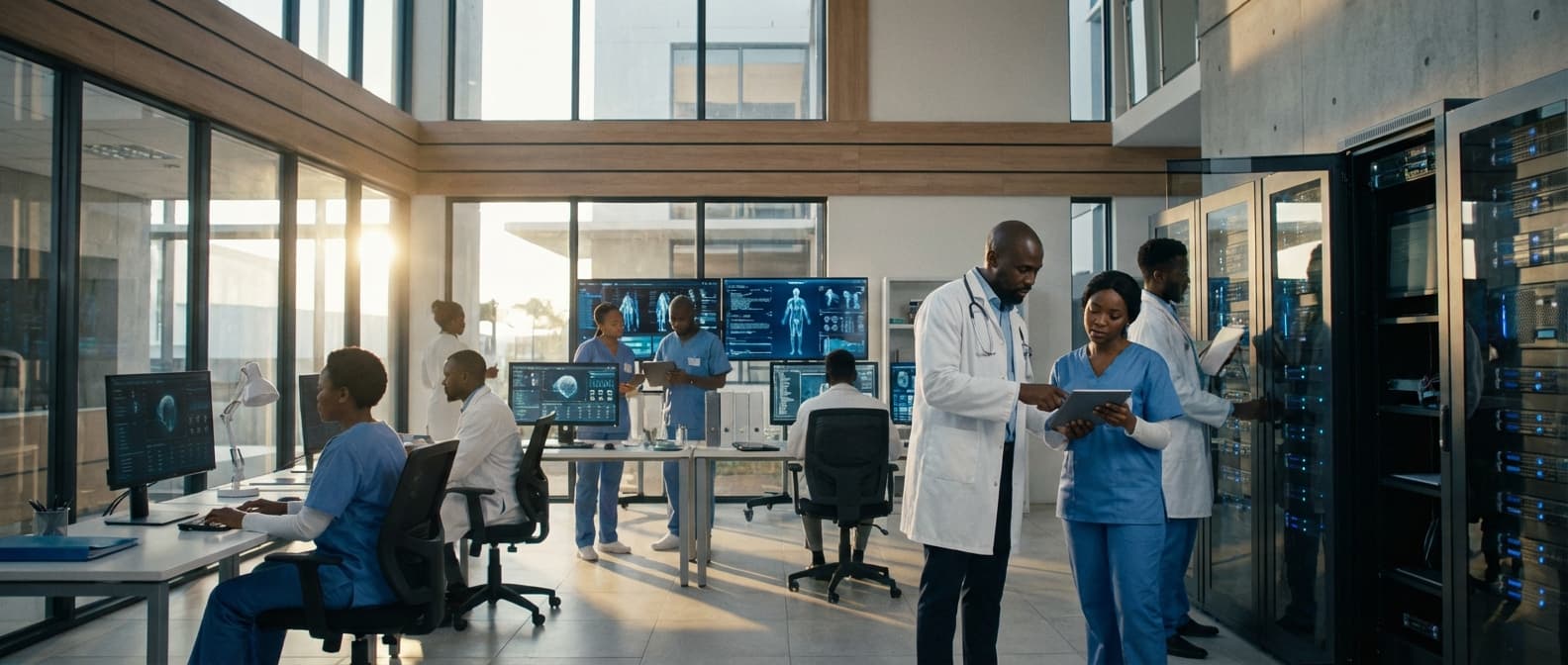
Tele-Radiology in Somalia
Engineering Excellence & Technical Support
24/7 access to certified radiologists providing rapid, accurate remote interpretation of diagnostic imaging studies. High-standard technical execution following OEM protocols and local regulatory frameworks.
Bridging the Diagnostic Gap
Tele-radiology solutions connect remote Somali healthcare facilities with expert radiologists, enabling prompt and accurate diagnostic imaging interpretation regardless of geographical limitations. This empowers local clinicians with critical information for patient care where specialized expertise is scarce.
Secure Image Transmission Network
A robust and secure cloud-based platform facilitates the rapid and encrypted transmission of medical imaging data (X-rays, CT scans, ultrasounds) from Somali clinics to radiologists worldwide. This ensures data integrity and patient privacy while streamlining the diagnostic workflow.
Remote Consultation & Expertise Sharing
Tele-radiology enables real-time consultations and collaborative case reviews between Somali healthcare providers and international radiologists. This fosters knowledge transfer, upskills local medical professionals, and ultimately enhances the quality of diagnostic services available to the Somali population.
What Is Tele-radiology In Somalia?
Tele-radiology in Somalia refers to the practice of transmitting radiological images (such as X-rays, CT scans, and MRIs) from a medical facility in Somalia to a radiologist located remotely, either within Somalia or internationally, for interpretation and diagnosis. This service leverages telecommunication technologies to overcome geographical barriers and address the acute shortage of qualified radiologists in the country. It enables remote expert consultation, leading to faster and more accurate diagnoses, which is crucial for timely patient management and treatment planning in a resource-limited setting.
| Who Needs Tele-Radiology in Somalia? | Typical Use Cases | |||||
|---|---|---|---|---|---|---|
| Hospitals and Clinics: Especially those in rural or underserved areas lacking in-house radiology expertise. | Emergency Departments: For rapid interpretation of trauma scans, stroke imaging, and other critical conditions. | Primary Healthcare Centers: To provide access to diagnostic imaging services that would otherwise be unavailable. | Specialized Medical Centers: To obtain subspecialty interpretations (e.g., neuro-radiology, interventional radiology) if not available locally. | Maternal and Child Health Facilities: For interpreting obstetric ultrasounds and pediatric imaging. | Trauma and Emergency Response Organizations: During humanitarian crises or in conflict zones to support medical teams on the ground. | |
| Diagnosis of Fractures and Musculoskeletal Injuries: Essential in a country with a high incidence of trauma. | Detection and Staging of Infectious Diseases: Such as tuberculosis (TB) on chest X-rays or pneumonia. | Identification of Neurological Conditions: Including stroke, brain tumors, and head injuries via CT or MRI. | Evaluation of Abdominal Conditions: Such as appendicitis, bowel obstruction, or organ injuries. | Oncology Imaging: For diagnosis, staging, and monitoring of cancer patients. | Prenatal Diagnostics: Interpretation of obstetric ultrasound examinations to assess fetal health and development. | Support for Surgical Planning: Providing detailed imaging insights to guide surgical procedures. |
Key Aspects of Tele-Radiology in Somalia
- Image Acquisition and Transmission: Digital radiological images are captured at originating sites and securely transmitted over a network. This often involves specialized Picture Archiving and Communication Systems (PACS) or teleradiology platforms.
- Remote Interpretation: A qualified radiologist reviews the transmitted images and generates a diagnostic report. This can occur in real-time (synchronous) or asynchronously, where images are sent and interpreted later.
- Report Delivery and Integration: The diagnostic report is returned to the referring physician at the originating facility for integration into the patient's medical record and subsequent clinical decision-making.
- Quality Assurance and Training: Implementing robust quality control measures and providing ongoing training to local staff on image acquisition protocols and PACS operation are vital components.
Who Needs Tele-radiology In Somalia?
Tele-radiology offers a vital solution for enhancing diagnostic imaging services in Somalia, a nation facing significant healthcare infrastructure challenges. The absence of readily available, specialized radiologists in many regions, coupled with limited access to advanced imaging equipment, severely impedes timely and accurate diagnoses. Tele-radiology bridges this gap by connecting local healthcare facilities with remote radiologists, enabling them to interpret medical images and provide critical reports. This dramatically improves patient care, reduces the need for costly and time-consuming patient transfers, and supports the development of local medical expertise.
| Department/Service Area | Key Needs Addressed by Tele-Radiology | Specific Imaging Modalities Potentially Utilized |
|---|---|---|
| Emergency Medicine | Rapid interpretation of trauma scans (e.g., head CTs, X-rays for fractures) to inform immediate treatment decisions, especially in areas without on-site radiologists. | X-ray, CT Scan, Ultrasound |
| Internal Medicine | Diagnosis of complex conditions requiring nuanced interpretation of chest X-rays, abdominal ultrasounds, and CT scans, supporting better management of chronic and acute illnesses. | X-ray, Ultrasound, CT Scan |
| Pediatrics | Accurate diagnosis of congenital abnormalities, injuries, and infections in children, often requiring specialized pediatric radiology expertise not locally available. | X-ray, Ultrasound, potentially MRI (if available remotely) |
| Obstetrics & Gynecology | Interpretation of ultrasounds for prenatal care (fetal monitoring, anomaly detection) and diagnosis of gynecological conditions. | Ultrasound |
| Orthopedics | Prompt interpretation of X-rays for fractures, dislocations, and other musculoskeletal injuries, crucial for timely surgical planning and rehabilitation. | X-ray |
| Public Health Initiatives (e.g., TB screening) | Remote interpretation of chest X-rays for large-scale screening programs, helping to identify and manage infectious diseases more effectively. | X-ray |
| Surgical Departments | Pre-operative and post-operative imaging review to guide surgical procedures and monitor patient recovery. | X-ray, CT Scan, Ultrasound |
Target Customers and Departments for Tele-Radiology in Somalia
- Hospitals (Government & Private)
- Maternity & Children's Hospitals
- Emergency & Trauma Centers
- District/Regional Health Centers
- Mobile Health Clinics
- Minesweeping and Demining Operations (for injury assessment)
- International Aid Organizations operating in healthcare
Tele-radiology Process In Somalia
Tele-radiology in Somalia offers a crucial solution for bridging the gap in expert radiology services, especially in remote or underserved areas. This workflow outlines the typical process from an initial inquiry to the successful execution of a radiological interpretation and report.
Key Benefits:
- Improved Access: Extends expert diagnostic capabilities to regions lacking on-site radiologists.
- Faster Diagnosis: Reduces turnaround times for critical diagnoses, enabling quicker treatment decisions.
- Enhanced Quality: Ensures interpretations are made by qualified and experienced radiologists, regardless of location.
- Cost-Effectiveness: Potentially reduces the need for expensive on-site personnel and equipment in every facility.
| Phase | Key Activities | Actors Involved | Technology/Tools |
|---|---|---|---|
| Inquiry & Request | Identify need, initiate request, gather patient details | Referring Physician, Healthcare Facility Staff, Tele-radiology Coordinator | Phone, Email, Secure Web Portal |
| Image Acquisition & Prep | Acquire images, anonymize, prepare for transmission | Radiographer/Technician, Facility IT Staff | X-ray Machine, CT Scanner, MRI Scanner, Ultrasound Machine, DICOM Software |
| Image Transmission | Securely send images to provider | Facility IT Staff, Tele-radiology Platform | Encrypted Internet (VPN), Secure File Transfer Protocol (SFTP) |
| Case Assignment & Triage | Queue case, prioritize, assign to radiologist | Tele-radiology Administrator, Triage Radiologist, Tele-radiology Platform | PACS/RIS, Workflow Management System |
| Interpretation | Review images and clinical data, identify findings | Tele-radiologist | PACS Viewer, DICOM Workstation |
| Report Generation | Dictate or type diagnostic report | Tele-radiologist | Voice Recognition Software, Word Processor, PACS Reporting Module |
| Quality Assurance | Review report for accuracy and completeness | Senior Radiologist, QA Manager (optional) | PACS Reporting Module |
| Report Transmission | Send finalized report back to facility | Tele-radiology Platform | Encrypted Internet (VPN), Secure File Transfer Protocol (SFTP) |
| Clinical Integration | Access report, integrate into patient care | Referring Physician, Healthcare Facility Staff | Tele-radiology Portal, EMR/HIS System |
Tele-Radiology Workflow in Somalia
- Inquiry & Request Initiation:
- A healthcare facility in Somalia (e.g., a clinic, hospital, or diagnostic center) identifies the need for a radiological interpretation that cannot be met locally due to a lack of a radiologist.
- The referring physician or healthcare provider initiates an inquiry, typically through a designated contact person or a secure online portal of a tele-radiology service provider.
- Information about the patient (demographics, clinical history, suspected condition, referring physician details) is gathered.
- Image Acquisition & Preparation:
- The relevant radiological images (X-ray, CT, MRI, Ultrasound, etc.) are acquired using the facility's imaging equipment.
- Images are anonymized to protect patient privacy in accordance with ethical and legal guidelines.
- Images are then prepared for transmission, often in DICOM (Digital Imaging and Communications in Medicine) format.
- Secure Image Transmission:
- The prepared DICOM images are securely transmitted from the originating facility to the tele-radiology service provider.
- This transmission typically utilizes encrypted internet connections (VPNs) or dedicated secure transfer protocols to ensure data integrity and confidentiality, crucial given potential infrastructure limitations in Somalia.
- The tele-radiology platform or system receives the images.
- Case Assignment & Triage:
- Upon receipt, the tele-radiology platform queues the case for review.
- A system administrator or a triage radiologist may assign a priority level based on the clinical urgency indicated in the request.
- The case is then assigned to an available and qualified radiologist within the tele-radiology network, often based on specialty or subspecialty expertise.
- Radiologist Interpretation:
- The assigned radiologist accesses the patient's images and clinical information through a secure Picture Archiving and Communication System (PACS) viewer.
- The radiologist meticulously reviews the images, looking for abnormalities, confirming diagnoses, and assessing the severity of any findings.
- Report Generation:
- After interpretation, the radiologist generates a comprehensive diagnostic report. This report includes:
- Patient demographics and examination details.
- Technique used for imaging.
- Findings observed.
- Impression/Diagnosis.
- Recommendations for further management or investigation, if any.
- The report is typically written in a clear, concise, and medically accurate language.
- Report Review & Quality Assurance:
- In many tele-radiology models, reports undergo a quality assurance check. This could involve review by a senior radiologist or automated checks for completeness and consistency.
- This step ensures the highest quality and accuracy of the diagnostic output.
- Secure Report Transmission:
- The finalized and approved report is securely transmitted back to the originating healthcare facility.
- This transmission is also encrypted and often delivered through the same secure platform used for image submission.
- Report Dissemination & Clinical Integration:
- The receiving facility's healthcare provider accesses the report via the tele-radiology platform or a direct integration with their local EMR/HIS system.
- The referring physician then reviews the report and integrates the findings into the patient's overall care plan.
- This leads to informed treatment decisions, follow-up actions, and improved patient outcomes.
Tele-radiology Cost In Somalia
Tele-radiology offers a critical solution for improving diagnostic imaging access in Somalia, a country facing significant healthcare infrastructure challenges. However, the cost of these services is influenced by a complex interplay of factors, making it difficult to provide a single, definitive price. These costs are typically discussed and transacted in the local currency, the Somali Shilling (SOS). Several key elements contribute to the overall pricing structure.
| Service Type | Estimated Cost Range (SOS) | Notes |
|---|---|---|
| X-ray Interpretation (per study) | 200,000 - 500,000 | Standard interpretation, basic findings. Volume discounts may apply. |
| Ultrasound Interpretation (per study) | 300,000 - 700,000 | Includes basic abdominal, obstetric, or musculoskeletal ultrasounds. More complex studies will be higher. |
| CT Scan Interpretation (per study) | 700,000 - 1,500,000 | Covers basic CT scans of head, chest, or abdomen. Contrast-enhanced or complex protocols will increase cost. |
| MRI Scan Interpretation (per study) | 1,000,000 - 2,500,000+ | Generally the most expensive due to complexity. Specific protocols (e.g., brain, spine, joints) will influence pricing. |
| Urgent Interpretation (any modality) |
| Premium fee for prioritized reporting within a shorter TAT. |
| Subscription/Platform Fee (monthly, for facilities) | Negotiable, potentially starting from 1,000,000 - 5,000,000+ | Covers access to the tele-radiology platform, data storage, and basic technical support. Highly variable based on features and user volume. |
Factors Influencing Tele-Radiology Costs in Somalia
- Technological Infrastructure and Connectivity: The reliability and speed of internet connectivity are paramount. Areas with more stable and faster internet will generally incur higher costs due to the need for robust infrastructure, while remote or less developed regions might see lower costs if the technology is more basic or if there are government subsidies for connectivity.
- Radiologist Expertise and Specialization: The cost of accessing qualified radiologists, especially those with specialized training (e.g., in neuroradiology, musculoskeletal imaging), will significantly impact pricing. The scarcity of highly specialized radiologists in Somalia means that international or regionally based experts might be contracted, bringing in higher fees.
- Volume of Scans and Service Agreements: Pricing models often vary based on the expected volume of scans. Bulk service agreements or long-term contracts with healthcare facilities can lead to discounted per-scan rates. Conversely, ad-hoc requests for individual scans will likely be more expensive.
- Type of Imaging Modality: The cost will differ depending on the complexity of the imaging modality being interpreted. X-rays are generally the least expensive to interpret, followed by ultrasounds, CT scans, and MRIs, with each increasing in cost due to the data volume and interpretive complexity.
- Platform and Software Costs: The tele-radiology platform used, including its features, security, and maintenance, contributes to the overall cost. Subscription fees for software, data storage, and technical support are factored into the pricing.
- Turnaround Time (TAT) Requirements: Urgent interpretations or those with very short TATs will command higher prices than standard turnaround times. This is due to the need for radiologists to prioritize and allocate resources accordingly.
- Geographic Location of Service Provider: If the tele-radiology service is provided by an external company located in another country (e.g., East Africa or beyond), currency exchange rates, international transfer fees, and overhead costs of that provider will play a role. However, the direct cost to Somali facilities will be in SOS.
- Local Partnerships and Implementation Costs: For on-the-ground implementation of tele-radiology, costs associated with local staff training, equipment setup, and potential partnerships with local healthcare institutions need to be considered.
- Regulatory and Compliance Costs: While still developing, any emerging regulatory frameworks or compliance requirements for medical imaging and data handling in Somalia could add to operational costs.
Affordable Tele-radiology Options
Tele-radiology offers a cost-effective solution for medical facilities by providing remote access to expert radiology interpretations. This technology can significantly reduce overhead associated with in-house radiology departments, such as staffing, equipment maintenance, and facility space. Several strategies and service models exist to make tele-radiology even more affordable and valuable. Understanding these options can help healthcare providers optimize their radiology services and improve patient care while managing costs effectively. This document explores affordable tele-radiology options, focusing on value bundles and cost-saving strategies.
| Concept | Description | Cost-Saving Impact | Value Proposition |
|---|---|---|---|
| Value Bundles | Pre-defined packages of tele-radiology services, often including a mix of routine reads, critical findings notification, subspecialty consultations, and quality assurance. These bundles are typically offered at a discounted rate compared to purchasing services à la carte. | Predictable budgeting, economies of scale for the provider, reduced negotiation overhead, and potential for bulk discounts. | Comprehensive coverage, streamlined procurement, enhanced quality control, and access to specialized expertise without the need for dedicated in-house staff. |
| Pay-Per-Study Pricing | A model where providers are charged a fixed fee for each imaging study interpreted by a remote radiologist. This is ideal for facilities with fluctuating or lower imaging volumes. | Direct correlation between usage and cost, eliminating fixed overhead for underutilized services, and flexibility for seasonal or project-based needs. | Cost-effectiveness for low-volume or variable needs, transparent billing, and ability to scale services up or down as required. |
| Subscription-Based Models | A recurring fee, often monthly or annual, for access to a certain volume of reads or a dedicated pool of radiologists. This can provide guaranteed availability and preferential turnaround times. | Budget certainty, potential for volume discounts, and reduced administrative burden for ongoing service management. | Consistent access to radiology services, improved workflow efficiency, and a predictable cost structure for operational planning. |
| Tiered Service Packages | Different levels of service offered at varying price points, such as basic read, advanced read with preliminary report, or comprehensive read with detailed findings and recommendations. This allows facilities to choose the level of service that best fits their clinical needs and budget. | Flexibility to match spending with actual clinical requirements, avoiding overpaying for unnecessary services. | Tailored solutions, efficient resource allocation, and the ability to upgrade or downgrade services based on evolving needs. |
| Partnerships with Academic Institutions | Collaborating with university-based radiology departments for tele-radiology services. These partnerships can leverage existing faculty expertise and potentially offer more competitive pricing due to shared resources and research initiatives. | Access to a wide range of subspecialists at potentially lower costs than commercial providers, and the opportunity to contribute to medical education and research. | High-quality subspecialty expertise, potential for cutting-edge diagnostic capabilities, and the benefit of contributing to academic advancement. |
| AI-Powered Preliminary Reads | Integrating Artificial Intelligence (AI) tools to perform initial image analysis and flag potential abnormalities. This can expedite the workflow by providing a preliminary report for the human radiologist to review, potentially reducing turnaround times and overall interpretation costs. | Reduced radiologist workload on routine cases, faster initial detection of critical findings, and potential for increased throughput. | Enhanced efficiency, quicker identification of urgent issues, and potential for cost reduction through optimized radiologist time. |
Key Affordable Tele-Radiology Options
- Subscription-based models
- Pay-per-study pricing
- Tiered service packages
- Partnerships with academic institutions
- Utilizing AI-powered preliminary reads
Verified Providers In Somalia
In Somalia's evolving healthcare landscape, identifying reliable and credentialed health providers is paramount for individuals and organizations seeking quality medical services. This document highlights the importance of verified providers and delves into the exceptional credentials of Franance Health, showcasing why they stand out as the premier choice for healthcare solutions in the region. Franance Health has established a reputation for excellence through its commitment to rigorous vetting processes, adherence to international standards, and a deep understanding of local healthcare needs. Their dedication to transparency and quality assurance ensures that every service provided meets the highest benchmarks of safety and efficacy.
| Aspect | Franance Health's Credentials & Strengths | Why This Matters for You |
|---|---|---|
| Medical Staff Qualifications | All Franance Health doctors, nurses, and specialists hold recognized degrees and licenses, with continuous professional development mandated. | Ensures you receive care from highly competent and up-to-date medical professionals. |
| Facility Standards | Franance Health facilities meet or exceed national and international healthcare infrastructure guidelines, including hygiene and equipment standards. | Guarantees a safe, clean, and well-equipped environment for your treatment. |
| Regulatory Compliance | Fully compliant with all relevant Somali health regulations and actively seeks alignment with international healthcare accreditation standards. | Provides assurance that services are legally sanctioned and meet global quality benchmarks. |
| Patient Care Protocols | Implements evidence-based treatment protocols and patient-centered care approaches, with a strong emphasis on patient feedback and continuous improvement. | You can expect a respectful, informed, and effective healthcare experience tailored to your needs. |
| Transparency and Accountability | Maintains open communication regarding services, costs, and treatment plans. Has clear mechanisms for addressing patient concerns and grievances. | Builds trust and allows you to make informed decisions about your health with confidence. |
| Specialized Services | Offers a comprehensive range of medical services, from primary care to specialized diagnostics and treatments, supported by advanced technology. | Provides access to a wide spectrum of healthcare needs under one trusted provider. |
Key Advantages of Choosing Verified Providers like Franance Health
- Ensured Quality and Safety: Verified providers undergo stringent checks, guaranteeing adherence to medical best practices and safety protocols.
- Access to Qualified Professionals: Credentials confirm that medical staff possess the necessary education, training, and licensing.
- Reduced Risk of Malpractice: Vetting processes help mitigate the risk of engaging with unqualified or fraudulent practitioners.
- Improved Patient Outcomes: Reliable providers are more likely to deliver accurate diagnoses and effective treatments.
- Trust and Peace of Mind: Knowing your healthcare provider is verified offers significant reassurance.
- Adherence to Ethical Standards: Verified organizations are typically committed to upholding ethical medical practices and patient rights.
Scope Of Work For Tele-radiology
This Scope of Work (SOW) outlines the requirements for establishing and operating a tele-radiology service. It details the technical deliverables, standard specifications, and operational procedures necessary for providing high-quality remote diagnostic imaging interpretation.
| Technical Deliverable | Description | Standard Specifications | Key Performance Indicator (KPI) |
|---|---|---|---|
| Tele-Radiology Platform | Web-based or client-server software for image transmission, viewing, reporting, and communication. | Secure VPN/HTTPS connectivity, DICOM compliance, multi-user access, audit trails, integration capabilities. | Platform uptime (>= 99.9%) |
| Image Transmission System | Secure and efficient transfer of medical images (DICOM) from originating site to reading radiologists. | High-speed, reliable internet connection, secure transfer protocols (SFTP, HTTPS), bandwidth management. | Image transmission success rate (>= 99.8%) |
| Workstation for Radiologists | High-resolution monitors and specialized hardware for accurate image interpretation. | Minimum 3MP grayscale monitors (2 recommended), calibrated display, powerful workstation hardware (CPU, GPU, RAM). | Radiologist satisfaction with workstation performance (>= 90%) |
| Reporting Software | Application for radiologists to generate and sign out diagnostic reports. | Structured reporting templates, voice recognition integration (optional), e-signature capabilities, report archival. | Report generation TAT adherence (e.g., 95% of routine reads within 4 hours) |
| PACS/RIS/EHR Integration | Seamless exchange of data (images, reports, patient demographics) between systems. | HL7 compliance for RIS/EHR integration, DICOM conformance statements, secure API/web services. | Successful data exchange rate (>= 99.5%) |
| Security and Access Control | Measures to protect patient data and ensure authorized access. | Role-based access control, multi-factor authentication, data encryption (in transit and at rest), regular security audits. | Number of security incidents (0) |
| Backup and Disaster Recovery | Protocols for data backup and business continuity. | Regular data backups (daily/weekly), off-site storage, documented disaster recovery plan. | Recovery Time Objective (RTO) and Recovery Point Objective (RPO) adherence. |
| Communication Tools | Secure channels for communication between referring physicians and radiologists. | Integrated messaging, secure email, VoIP capabilities (optional). | Radiologist availability for consultations (within agreed SLA) |
Key Components of Tele-Radiology Scope of Work
- Service Description and Objectives
- Scope of Services (Modalities covered, types of studies)
- Technical Requirements and Infrastructure
- Data Security and Privacy (HIPAA/GDPR compliance)
- Reporting Standards and Turnaround Times (TAT)
- Quality Assurance and Peer Review Processes
- Integration with PACS/RIS/EHR
- Training and Support
- Service Level Agreements (SLAs)
- Reporting and Performance Metrics
Service Level Agreement For Tele-radiology
This Service Level Agreement (SLA) outlines the response times and uptime guarantees for the Tele-Radiology services provided by [Your Company Name] (hereinafter referred to as 'Provider') to [Client Name] (hereinafter referred to as 'Client').
| Criticality Level | Response Time (Business Hours) | Uptime Guarantee (%) |
|---|---|---|
| STAT/Emergent | 1 Hour | 99.9% |
| Urgent | 4 Hours | 99.9% |
| Routine | 24 Hours | 99.5% |
Key Service Metrics
- Response Time: Refers to the time elapsed from the successful transmission of a diagnostic imaging study to the Provider's system until the availability of the preliminary or final radiology report. This metric is measured in business hours.
- Uptime Guarantee: Refers to the percentage of time the Provider's Tele-Radiology platform and associated services are available and fully functional for the transmission and reporting of imaging studies. This metric is measured on a monthly basis.
- Criticality Level: Imaging studies are categorized based on their clinical urgency to define appropriate response times.
- Acknowledgement: The Provider will acknowledge receipt of each imaging study within a defined timeframe.
Frequently Asked Questions

Ready when you are
Let's scope your Tele-Radiology in Somalia project in Somalia.

Scaling healthcare logistics and technical systems across the entire continent.