
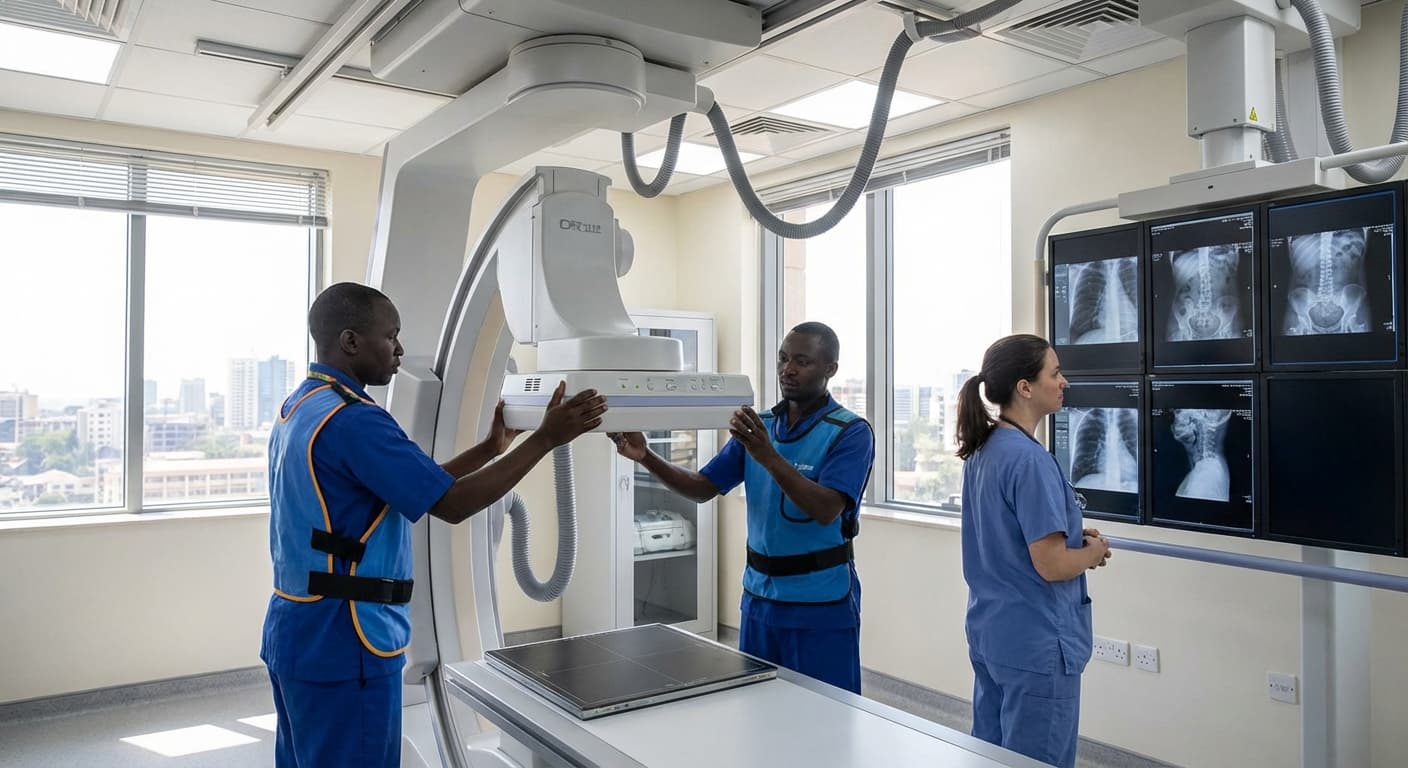
Digital X-Ray Installation Service (Fixed DR) in Somalia
Engineering Excellence & Technical Support
Digital X-Ray Installation Service (Fixed DR) High-standard technical execution following OEM protocols and local regulatory frameworks.
Expert Fixed DR Installation
Our certified technicians specialize in the precise installation of Fixed Digital Radiography (DR) systems across Somalia. We ensure optimal component placement, network integration, and system calibration for immediate diagnostic readiness.
Comprehensive Site Assessment & Planning
We conduct thorough site assessments to evaluate power, space, and environmental requirements. Our detailed planning minimizes disruption and guarantees a seamless installation process tailored to your Somali healthcare facility's unique needs.
Post-Installation Training & Support
Beyond installation, we provide comprehensive training for your medical staff on the operation and basic maintenance of your Fixed DR system. We offer ongoing technical support to ensure sustained performance and reliability.
What Is Digital X-ray Installation Service (Fixed Dr) In Somalia?
Digital X-ray Installation Service (Fixed DR) in Somalia refers to the comprehensive process of procuring, setting up, and integrating a fixed Digital Radiography (DR) system within a healthcare facility in Somalia. This service encompasses the entire lifecycle from site assessment and equipment deployment to system configuration, calibration, and initial user training. Fixed DR systems are permanently installed in a dedicated X-ray room, offering a higher throughput and more specialized imaging capabilities compared to portable solutions. The installation process adheres to established medical imaging standards and regulatory requirements applicable within Somalia.
| Service Recipient | Need/Requirement | Typical Use Cases |
|---|---|---|
| Hospitals (Public and Private) | Upgrade from analog or computed radiography systems, expansion of diagnostic imaging capacity, improved diagnostic accuracy, increased workflow efficiency, compliance with modern healthcare standards. | Routine chest X-rays, skeletal imaging (extremities, spine, pelvis), abdominal radiography, contrast studies (e.g., barium swallows), trauma imaging, pre-operative assessments. |
| Specialized Clinics (e.g., Orthopedic, Tuberculosis Centers) | High-volume imaging for specific specialties, enhanced diagnostic capabilities for orthopedic conditions or pulmonary diseases, integration with existing PACS for specialized reporting. | Detailed skeletal assessments, fracture detection, joint imaging, tuberculosis screening and follow-up (e.g., chest X-rays for MDR-TB patients), pre- and post-surgical orthopedic imaging. |
| Emergency and Trauma Centers | Rapid and high-quality imaging for acute injuries, immediate availability of diagnostic information for critical care decisions, improved patient throughput in high-stress environments. | Rapid diagnosis of fractures, dislocations, and internal injuries in trauma patients, immediate chest X-rays for suspected pneumothorax or hemothorax, rapid abdominal imaging for suspected organ damage. |
| Diagnostic Imaging Centers / Radiology Practices | Offering advanced digital imaging services to referring physicians, attracting more patient referrals through modern technology, improving turnaround times for reports. | Comprehensive range of general radiography examinations, specialized imaging protocols tailored to referring physician requests, integration with teleradiology services. |
Key Components of Digital X-Ray Installation Service (Fixed DR):
- Site Preparation and Infrastructure Assessment: Evaluation of existing X-ray rooms for structural integrity, radiation shielding, power supply stability, environmental controls (HVAC), and network connectivity. Modifications and upgrades may be recommended or implemented.
- Equipment Procurement and Logistics: Sourcing and delivery of the fixed DR system, including the X-ray generator, detector (typically a flat panel detector), acquisition workstation, image processing software, and potentially a PACS (Picture Archiving and Communication System) integration. This includes customs clearance and transportation within Somalia.
- Physical Installation and Mounting: Secure installation of the X-ray tube, collimator, radiographic table, vertical Bucky stand, and detector, ensuring precise alignment and stability.
- Electrical and Network Integration: Connecting the DR system to the facility's power grid, ensuring proper grounding and surge protection. Establishing network connectivity for image transfer and PACS integration.
- Software Configuration and Calibration: Installation and configuration of the image acquisition software, including setting up imaging protocols, dose management parameters, and image quality optimization. Calibration of the DR detector to ensure accurate measurements and consistent image output.
- Radiation Safety Measures: Verification and implementation of radiation shielding (if not pre-existing or sufficient) in accordance with national safety guidelines. Performance of radiation output measurements and safety checks.
- System Testing and Quality Assurance: Comprehensive testing of all system components to verify functionality, image quality, and performance. This includes phantom imaging and diagnostic image review.
- User Training and Handover: Providing initial training to radiographers, technologists, and relevant IT personnel on system operation, image acquisition techniques, basic troubleshooting, and software functionalities. Formal handover of the operational system and associated documentation.
Who Needs Digital X-ray Installation Service (Fixed Dr) In Somalia?
This document outlines the crucial need for Digital X-ray (Fixed DR) installation services in Somalia. The integration of modern diagnostic imaging technology like Fixed DR systems offers significant advantages in improving healthcare delivery, accuracy of diagnoses, and patient outcomes across various medical settings. The service is essential for healthcare facilities aiming to upgrade their existing radiology departments or establish new ones with advanced capabilities.
| Customer Type | Primary Need for Fixed DR | Key Departments Benefiting | Potential Challenges & Considerations |
|---|---|---|---|
| Government Hospitals & Clinics | Modernizing public healthcare infrastructure, improving diagnostic capacity for wider population reach, reducing reliance on manual film processing. | Radiology, Emergency, Orthopedics, Internal Medicine. | Budget constraints, logistical challenges for installation and maintenance, training for staff, reliable power supply. |
| Private Hospitals & Diagnostic Centers | Enhancing service offerings, attracting more patients, improving diagnostic speed and accuracy for competitive advantage, higher throughput. | Radiology, Orthopedics, Surgery, Pediatrics, Emergency. | Investment costs, competition, need for advanced PACS/RIS integration, skilled technician availability. |
| Military and Police Medical Facilities | Rapid deployment of diagnostic capabilities, supporting field operations, efficient diagnosis for personnel injuries. | Radiology, Emergency, Orthopedics, Trauma. | Security considerations, specialized training, mobile unit integration if applicable. |
| NGO Healthcare Providers | Providing essential diagnostic services in underserved areas, improving patient care in humanitarian settings, cost-effectiveness in the long run. | Radiology, Primary Care Clinics, Emergency. | Funding availability, logistical hurdles in remote locations, availability of trained personnel, sustainable maintenance plans. |
| Tertiary Care Referral Centers | Handling complex cases requiring high-quality imaging, supporting specialized procedures, advanced research and education. | All departments, with a strong emphasis on Radiology, Surgery, and Oncology. | Integration with existing advanced systems, requirement for high-resolution imaging, continuous software updates. |
| Specialty Clinics (e.g., Orthopedic, Pediatric) | Focused imaging needs for specific conditions, improving diagnostic precision in their specialty, faster turnaround for specialized reports. | Orthopedics, Pediatrics, Neurology. | Specific software requirements, integration with specialty-specific EMRs, specialized training for radiologists. |
| Medical Training and Research Institutions | Providing hands-on experience with modern equipment, facilitating research studies, developing future radiologists and technicians. | Radiology, Research Departments, all clinical departments. | Equipment longevity, access for multiple users, integration with research databases. |
Target Customers and Departments for Digital X-ray (Fixed DR) Installation Service in Somalia
- {"items":["Government Hospitals & Clinics (National and Regional)","Private Hospitals & Diagnostic Centers","Military and Police Medical Facilities","Non-Governmental Organization (NGO) Healthcare Providers","Tertiary Care Referral Centers","Specialty Clinics (e.g., Orthopedic, Pediatric)","Medical Training and Research Institutions"],"title":"Target Customers:"}
- {"items":["Radiology/Medical Imaging Departments","Emergency/Trauma Departments","Orthopedic Departments","Pediatric Departments","Pulmonology Departments","Surgical Departments","Internal Medicine Departments"],"title":"Target Departments:"}
Digital X-ray Installation Service (Fixed Dr) Process In Somalia
This document outlines the typical workflow for a Digital X-Ray (Fixed DR - Direct Radiography) installation service in Somalia. The process encompasses all stages from the initial customer inquiry to the final successful execution and handover of the installed system. The workflow is designed to ensure a smooth, efficient, and transparent installation, meeting the specific needs and regulatory requirements of the Somali healthcare sector.
| Stage | Step | Description | Key Activities | Responsible Parties | Deliverables/Outcomes |
|---|---|---|---|---|---|
| Phase 1: Pre-Installation |
| The process begins when a healthcare facility in Somalia expresses interest in a Fixed DR X-ray system. | Receive inquiry, understand client's needs (number of rooms, types of exams, budget, existing infrastructure), provide initial product information and solution overview, schedule a preliminary meeting. | Client (Healthcare Facility), Service Provider (Sales/Technical Team) | Initial understanding of client requirements, preliminary proposal scope, scheduled follow-up meeting. |
| Phase 1: Pre-Installation |
| A thorough on-site evaluation of the proposed installation location is crucial. | Assess room dimensions, structural integrity, power supply capacity and stability, ventilation, radiation shielding requirements, network connectivity, accessibility for equipment delivery, local environmental factors (e.g., dust, temperature). | Service Provider (Technical Team/Engineers) | Detailed site survey report, identification of any infrastructural modifications needed, radiation safety assessment. |
| Phase 1: Pre-Installation |
| Based on the site survey and client requirements, a tailored solution is designed. | Develop a detailed system configuration (DR panel, X-ray generator, workstation, software), create architectural plans (if needed for shielding), compile a comprehensive quotation including hardware, software, installation, training, and warranty. | Service Provider (Technical Team/Sales Team) | Finalized system configuration, detailed technical specifications, comprehensive quotation, project plan outline. |
| Phase 1: Pre-Installation |
| Formalize the agreement between the client and the service provider. | Review and sign the contract, define payment terms, installation timelines, warranty details, service level agreements (SLAs), and any applicable import/customs procedures. | Client (Healthcare Facility Management), Service Provider (Management/Legal) | Signed contract, confirmed order, agreed payment schedule. |
| Phase 1: Pre-Installation |
| Acquire the necessary equipment and arrange for its safe transport to Somalia. | Order equipment from manufacturers, manage customs clearance, arrange shipping, and plan for local transportation and warehousing. | Service Provider (Procurement/Logistics Team) | Procured equipment, customs cleared goods, arrival plan at the client site. |
| Phase 1: Pre-Installation |
| Ensure the installation site is ready for the equipment. | Conduct any necessary civil works (e.g., minor structural modifications, painting), install or verify radiation shielding, ensure power and network infrastructure are compliant and ready, prepare the area for equipment delivery. | Client (Facility Maintenance), Service Provider (Supervision/Coordination) | Ready and compliant installation space, confirmed power and network connectivity. |
| Phase 2: Installation |
| Safely transport and unpack the DR system components at the site. | Move equipment from storage to the installation room, carefully unpack all components, verify against the packing list. | Service Provider (Installation Team), Client (Witness/Assistance) | All equipment components present and undamaged, ready for installation. |
| Phase 2: Installation |
| Install and physically assemble the main components of the DR system. | Mount the DR detector, position the X-ray generator, install the control console and workstation, connect all necessary cables. | Service Provider (Installation Engineers) | Physically assembled and mounted DR system components. |
| Phase 2: Installation |
| Connect the system to the facility's power and network infrastructure. | Connect the system to stabilized power outlets, establish network connectivity for data transfer and PACS integration (if applicable), configure IP addresses and network settings. | Service Provider (Installation Engineers), Client (IT Department) | System powered on, network connectivity established. |
| Phase 2: Installation |
| Install and configure the operating system and DR imaging software. | Install the DR acquisition software, configure image acquisition parameters, set up user profiles, integrate with existing hospital information systems (HIS) or PACS if required. | Service Provider (Software Engineers/Technicians) | Installed and configured DR imaging software, basic system functionality verified. |
| Phase 2: Installation |
| Perform initial calibration and functional tests to ensure optimal performance. | Calibrate the X-ray generator and detector, perform image quality tests, verify all system functions (e.g., positioning, exposure control), initial alignment checks. | Service Provider (Installation Engineers) | System calibrated, basic image quality achieved, all hardware functions operational. |
| Phase 3: Post-Installation |
| Conduct comprehensive radiation safety checks as per national regulations. | Perform dose measurements, verify shielding effectiveness, ensure compliance with radiation protection standards. Obtain necessary certification from relevant authorities (if applicable in Somalia). | Service Provider (Radiation Safety Officer/Certified Body), Client (Radiology Department Head) | Radiation safety compliance report, successful certification (if required). |
| Phase 3: Post-Installation |
| Perform end-to-end testing of the entire system. | Simulate various imaging scenarios, test image archival and retrieval, verify system integration with other hospital systems, conduct performance benchmarks. Client performs acceptance testing. | Service Provider (Installation Team), Client (Radiology Technologists, Radiologists) | Successful system performance, signed acceptance form by the client. |
| Phase 3: Post-Installation |
| Train the healthcare staff on the operation and basic maintenance of the DR system. | Provide hands-on training for radiologists and radiographers on system operation, image acquisition techniques, basic troubleshooting, and software usage. Provide user manuals. | Service Provider (Training Specialist/Technical Expert), Client (Radiology Staff) | Trained and competent users, understanding of system operation and basic maintenance. |
| Phase 3: Post-Installation |
| Formally hand over the installed system to the client. | Provide all relevant documentation (user manuals, service manuals, warranty information, installation reports, radiation safety certificates), confirm successful completion of all project phases, and officially transfer ownership of the operational system. | Service Provider (Project Manager/Technical Lead), Client (Facility Management) | Complete project documentation, fully functional and operational DR system, signed handover certificate. |
| Phase 3: Post-Installation |
| Provide ongoing support and maintenance as per the warranty agreement. | Offer remote or on-site technical support, address any emergent issues, perform scheduled maintenance, and fulfill warranty obligations. | Service Provider (Technical Support Team) | Continued system reliability, adherence to warranty terms, client satisfaction. |
Digital X-Ray (Fixed DR) Installation Service Workflow in Somalia
- Phase 1: Pre-Installation
- Phase 2: Installation
- Phase 3: Post-Installation
Digital X-ray Installation Service (Fixed Dr) Cost In Somalia
The installation of a Fixed Digital Radiography (DR) X-ray system in Somalia involves several cost components. The overall price can fluctuate significantly based on the specific type of DR system chosen, the complexity of the installation site, the expertise of the service provider, and the inclusion of additional services. It's crucial to obtain detailed quotes from multiple vendors to understand the complete financial commitment. Factors influencing the cost range are elaborated below, with estimated price ranges in Somali Shilling (SOS).
| Cost Component | Estimated Range (SOS) |
|---|---|
| Basic Fixed DR System (Detector, Generator, Basic Stand) | 20,000,000 - 40,000,000 |
| Mid-Range Fixed DR System (Advanced Features, Reputable Brand) | 40,000,000 - 70,000,000 |
| High-End Fixed DR System (Premium Features, Top Brands) | 70,000,000 - 150,000,000+ |
| Site Preparation & Infrastructure (Variable, per room) | 5,000,000 - 25,000,000+ |
| Installation Labor & Technical Expertise (per technician, daily) | 500,000 - 1,500,000 |
| Software (Acquisition, Basic PACS Viewer) & Licensing | 3,000,000 - 10,000,000 |
| Comprehensive Training (per session/group) | 2,000,000 - 7,000,000 |
| Logistics, Shipping & Customs (highly variable) | 5,000,000 - 20,000,000+ |
| Total Estimated Installation Cost (excluding advanced PACS/RIS integration & major infrastructure overhauls) | 35,000,000 - 200,000,000+ SOS |
Key Pricing Factors for Fixed DR X-Ray Installation in Somalia
- Type and Brand of Fixed DR System: High-end, feature-rich systems from established international brands will inherently cost more than basic or less-known models. This includes the detector type (e.g., CsI vs. a-Si), resolution, and manufacturer's reputation.
- Number of X-ray Rooms/Bays: Installing DR in multiple rooms simultaneously will impact the total cost, although per-room installation costs might decrease with bulk orders.
- Site Preparation and Infrastructure: This is a critical factor. Costs can arise from: * Electrical Upgrades: Ensuring adequate and stable power supply, including surge protection. * Structural Modifications: If the existing room needs reinforcement or modification for the X-ray unit and generator. * Shielding: Installation of lead-lined walls, doors, and windows to meet radiation safety standards. * HVAC and Ventilation: Ensuring proper climate control for sensitive equipment. * Network Cabling and IT Infrastructure: Setting up a robust network for image transfer and PACS (Picture Archiving and Communication System).
- DR System Components: Beyond the detector and generator, the cost includes the X-ray tube, support structures (e.g., ceiling suspension, wall stand), acquisition workstation, and monitor.
- Software and PACS Integration: The cost of the imaging acquisition software, PACS software, and potentially RIS (Radiology Information System) integration can be significant. Licensing fees, customization, and training are included here.
- Installation Labor and Expertise: Hiring qualified and experienced technicians is paramount. Their travel, accommodation (if from out of town), and daily rates contribute to the cost. The complexity of the installation and the need for specialized tools will also influence labor costs.
- Training: Comprehensive training for radiographers, radiologists, and IT personnel on the new DR system and associated software is essential for effective utilization and often included in installation packages.
- Warranty and After-Sales Support: The duration and scope of the warranty, along with the availability and cost of ongoing technical support and maintenance, are important considerations that affect the overall pricing.
- Customization and Special Requirements: Any unique modifications or specific integration needs requested by the healthcare facility will add to the cost.
- Logistics and Shipping: Transporting the X-ray equipment to the installation site in Somalia can involve significant shipping, customs duties, and inland transportation costs.
Affordable Digital X-ray Installation Service (Fixed Dr) Options
Are you looking to upgrade your medical facility with the latest in digital radiography? Our affordable Digital X-Ray Installation Service for Fixed DR systems offers a cost-effective pathway to advanced imaging technology. We understand that budget constraints are a significant factor, so we've developed flexible value bundles and implemented smart cost-saving strategies to make this essential upgrade accessible for practices of all sizes. Invest in improved diagnostic capabilities and patient care without breaking the bank.
| Value Bundle | Includes | Key Cost-Saving Benefits | Ideal For |
|---|---|---|---|
| Essentials Bundle | Fixed DR System (Entry-Level), Basic Installation, Standard Training | Lower upfront investment, streamlined process, suitable for basic diagnostic needs. | Small clinics, general practitioners, practices with limited budgets. |
| Standard Bundle | Fixed DR System (Mid-Range), Enhanced Installation (e.g., network integration), Comprehensive Training | Balanced cost and features, improved workflow integration, greater diagnostic versatility. | Medium-sized practices, specialized clinics with moderate imaging volume. |
| Pro Bundle | Fixed DR System (High-End/Advanced Features), Premium Installation (e.g., PACS integration), Advanced Workflow Training | Maximizes diagnostic potential, long-term efficiency gains, future-proofing your investment. | Larger practices, imaging centers, facilities requiring advanced features and seamless data management. |
| Custom Bundle | Tailored to your specific needs and budget. Can include a mix of system components, installation complexities, and training modules. | Maximum flexibility, ensures you only pay for what you need, optimized ROI. | Practices with unique requirements, specialized imaging modalities, or specific integration challenges. |
Why Choose Our Fixed DR Installation Service?
- Cost-Effective Solutions: We prioritize affordability without compromising on quality or service.
- Expert Installation: Our certified technicians ensure seamless integration and optimal performance.
- Comprehensive Support: From initial consultation to post-installation training, we're with you every step of the way.
- Reduced Downtime: Efficient installation processes minimize disruption to your practice.
- Improved Diagnostic Accuracy: Embrace the clarity and precision of digital X-ray technology.
Verified Providers In Somalia
In Somalia's evolving healthcare landscape, identifying genuinely qualified and reputable medical service providers is paramount for ensuring quality care. Franance Health stands out as a leading organization committed to upholding the highest standards of medical practice. This document outlines Franance Health's credentials and details why they represent the optimal choice for healthcare services in Somalia.
| Service Area | Franance Health Commitment | Why Franance Health is the Best Choice |
|---|---|---|
| Medical Expertise | Access to highly qualified and specialized medical professionals. | Franance Health ensures its network comprises doctors and specialists with verified international and local credentials, offering diverse expertise across various medical fields. This means patients receive care from individuals proven to be competent and knowledgeable. |
| Quality of Care | Adherence to international standards and evidence-based medicine. | By aligning with global best practices, Franance Health guarantees that its affiliated providers deliver high-quality, safe, and effective medical treatments. This commitment reduces the risk of errors and improves patient outcomes. |
| Patient Safety | Prioritization of patient well-being and adherence to safety protocols. | Franance Health implements stringent safety measures in all its operations and with its partner facilities. This includes infection control, patient identification, and medication management, ensuring a secure environment for all patients. |
| Technology and Facilities | Access to modern medical equipment and well-equipped facilities. | Franance Health partners with or operates facilities that are equipped with up-to-date medical technology. This enables accurate diagnosis and effective treatment, which is crucial for addressing a wide range of health conditions. |
| Ethical Practices | Commitment to ethical conduct and patient-centered care. | Integrity and ethical considerations are at the core of Franance Health's operations. They promote transparency in treatment plans and costs, fostering trust and ensuring that patient interests are always the primary concern. |
| Accessibility and Reliability | Ensuring consistent and dependable healthcare access. | Franance Health works to make reliable healthcare accessible across Somalia, connecting patients with the right providers when they need them. Their network is designed for consistent service delivery, offering peace of mind. |
Franance Health Credentials
- Accreditation by reputable international healthcare bodies (e.g., Joint Commission International - JCI, if applicable)
- Partnerships with globally recognized medical institutions
- Strict adherence to international medical protocols and best practices
- Rigorous vetting process for all affiliated medical professionals
- Commitment to ongoing professional development for their network
- Focus on patient safety and ethical medical conduct
- Utilization of advanced medical technology and equipment
- Transparent and accountable operational framework
- Demonstrated track record of successful patient outcomes
- Community engagement and health education initiatives
Scope Of Work For Digital X-ray Installation Service (Fixed Dr)
This Scope of Work (SOW) outlines the services required for the installation of a Fixed Digital Radiography (DR) X-ray system. It details the technical deliverables, standard specifications, and project phases involved in a successful implementation. The goal is to provide a high-quality, fully functional diagnostic imaging solution.
| Technical Deliverable | Standard Specifications | Description | Acceptance Criteria |
|---|---|---|---|
| Fixed DR Detector | Cesium Iodide (CsI) or Gadolinium Oxysulfide (GOS) scintillator, pixel pitch (e.g., 100-150 µm), DQE (e.g., >70% at 1.0 lp/mm), wireless or tethered connectivity. | Installation and integration of the flat panel detector within the existing or new X-ray room, ensuring proper alignment and connectivity. | Detector is correctly positioned, powered on, and communicating with the acquisition workstation. Images are acquired without artifact. |
| X-ray Generator and Tube | High-frequency generator (e.g., 32-100 kW), anode heat capacity (e.g., 300k-1000k HU), focal spot size (e.g., 0.6-1.5 mm), integrated collimator. | Mounting and connection of the X-ray generator and tube assembly. Verification of power supply and safety interlocks. | Generator is operational, outputting correct kVp, mAs, and time. Collimator functions properly and is correctly aligned with the detector. |
| Acquisition Workstation and Software | High-performance PC (e.g., Intel Core i5/i7, 16GB RAM, SSD), dedicated medical-grade monitor (e.g., 2MP/3MP monochrome), intuitive imaging acquisition software with image processing capabilities (contrast, brightness, sharpening). | Installation and configuration of the workstation and imaging software. Setup of user profiles and basic image processing parameters. | Workstation boots up, software launches successfully. Image acquisition and basic processing functions are confirmed. |
| Image Acquisition and Processing | Real-time image display, automated image optimization algorithms, pre-set protocols for common radiographic views. | Configuration of acquisition protocols and image processing parameters to meet diagnostic requirements for various anatomical regions. | Acquisition of standard test images (e.g., phantom images) demonstrating acceptable signal-to-noise ratio and spatial resolution. User can select and apply protocols. |
| PACS/RIS Integration | DICOM compliance (send/receive, query/retrieve), HL7 integration for patient demographic and study information. | Establishing network connectivity and configuring DICOM/HL7 communication parameters between the DR system and the Picture Archiving and Communication System (PACS) and/or Radiology Information System (RIS). | Images are successfully sent to the PACS and appear in the radiologist's worklist. Patient information is correctly displayed on the DR workstation. |
| Networking and Cabling | Cat 6/6a Ethernet cabling, appropriate power outlets, secure cable management. | Installation of all necessary network and power cabling, ensuring compliance with safety and performance standards. Proper routing and management of cables for a clean and safe environment. | All cables are securely installed, tested for continuity and performance. Network connectivity is established and stable. |
| Quality Assurance (QA) and Calibration | System calibration for radiation output and image quality, phantom testing (e.g., AAPM TG 18), user-defined acceptance testing. | Comprehensive testing and calibration of the DR system to ensure optimal image quality and consistent radiation output. Performance is verified against established benchmarks. | All QA tests pass within specified tolerances. System calibration records are provided and signed off. |
| User Training | Hands-on training for radiographers, technicians, and relevant clinical staff on system operation, acquisition techniques, troubleshooting, and basic maintenance. | Delivery of comprehensive training sessions to ensure users are proficient in operating the DR system and understanding its capabilities. | Users demonstrate competence in performing basic imaging procedures and navigating the system interface. Training attendance records are provided. |
| Documentation | Operator's manual, service manual, installation report, QA/calibration reports, training materials, warranty information. | Provision of all relevant documentation pertaining to the DR system, including installation, configuration, operation, and maintenance. | All required documentation is delivered in the agreed-upon format and is accurate and complete. |
Project Phases and Key Activities
- Site Preparation and Assessment
- Equipment Delivery and Unpacking
- Physical Installation of DR System Components
- Electrical and Network Cabling
- System Configuration and Software Installation
- Integration with PACS/RIS
- Testing and Calibration
- User Training
- Documentation and Handover
Service Level Agreement For Digital X-ray Installation Service (Fixed Dr)
This Service Level Agreement (SLA) outlines the response times and uptime guarantees for the Digital X-Ray Installation Service, specifically for Fixed Digital Radiography (DR) systems. This SLA is an integral part of the overall service contract and aims to ensure timely and reliable support for the installed equipment.
| Service Component | Response Time (Business Hours) | Resolution Time (Business Hours) - Target | Uptime Guarantee (Monthly) |
|---|---|---|---|
| Installation Commencement (Post-Site Readiness) | Within 4 business hours of confirmed site readiness and scheduling | N/A (focus on commencement) | N/A |
| Post-Installation System Verification & Handover | Within 8 business hours of completion of physical installation | Within 16 business hours of commencement of verification | N/A |
| Critical System Failure (e.g., image acquisition failure, system crash) | Within 2 business hours | Within 8 business hours | 99.5% |
| Major System Malfunction (e.g., detector communication loss, software instability impacting workflow) | Within 4 business hours | Within 16 business hours | 99.5% |
| Minor System Issues (e.g., user interface glitches, minor configuration adjustments) | Within 8 business hours | Within 24 business hours (or as feasible with remote support) | 99.5% |
| Scheduled Maintenance & Upgrades | Advance notification required (minimum 7 days) | As per scheduled maintenance window | N/A (excluded from uptime calculation) |
Key Definitions
- Installation Service: The end-to-end process of setting up and configuring a new Fixed DR system, including hardware installation, software configuration, basic user training, and initial system testing.
- Downtime: The period during which the Fixed DR system is not operational or accessible to the user for its intended diagnostic imaging purpose, excluding scheduled maintenance and planned upgrades.
- Response Time: The maximum time allowed for the Service Provider to acknowledge a reported issue and commence troubleshooting activities.
- Resolution Time: The maximum time allowed for the Service Provider to resolve a reported issue, bringing the system back to full operational status. This may include providing a workaround if immediate full resolution is not possible.
- Uptime Guarantee: The minimum percentage of time the Fixed DR system is expected to be operational and available for use over a defined period.
Frequently Asked Questions

Ready when you are
Let's scope your Digital X-Ray Installation Service (Fixed DR) in Somalia project in Somalia.

Scaling healthcare logistics and technical systems across the entire continent.