
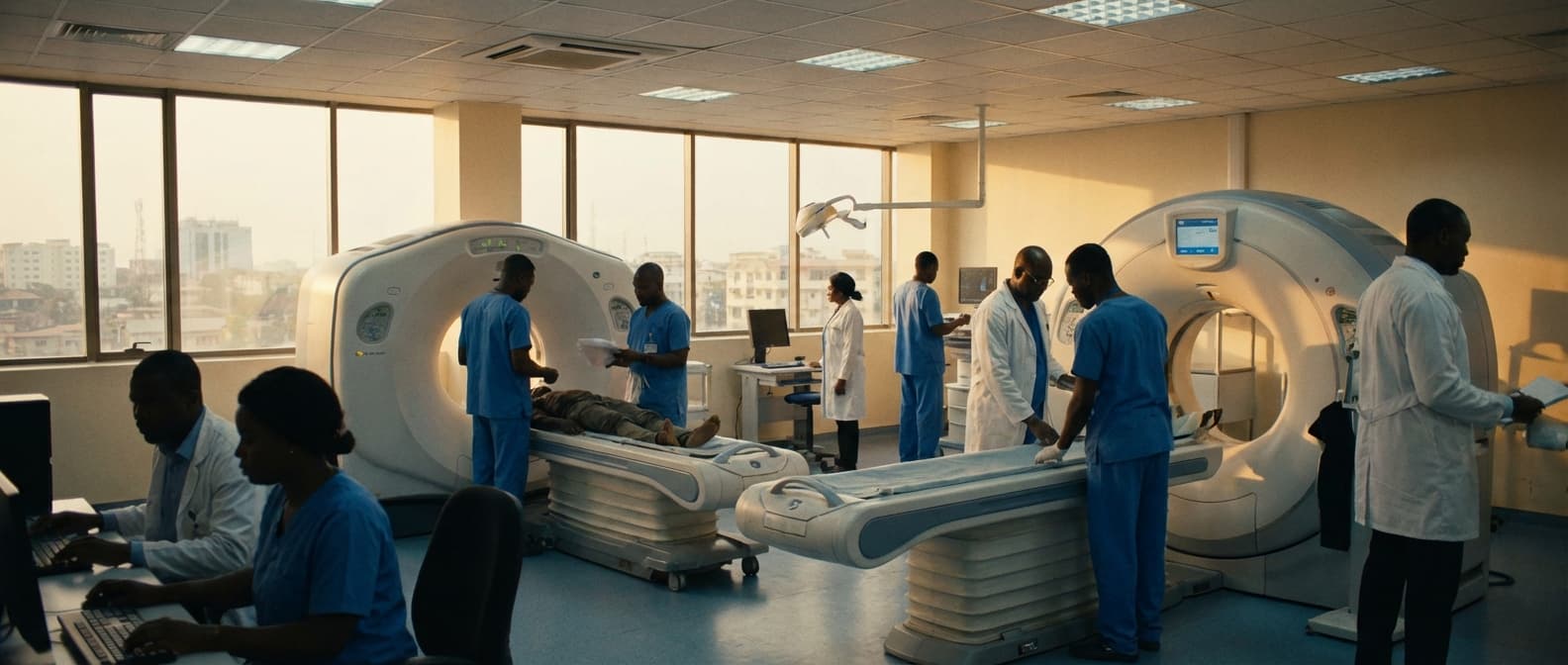
Imaging Acceptance Testing & QA in Somalia
Engineering Excellence & Technical Support
Commissioning and periodic QA for CT/MRI/X‑ray/US/Mammo. High-standard technical execution following OEM protocols and local regulatory frameworks.
Establishing Rigorous Imaging QA Protocols
Implemented and standardized comprehensive imaging acceptance testing protocols across key healthcare facilities in Somalia, ensuring adherence to international quality benchmarks for diagnostic imaging equipment.
Advanced Image Quality Assessment Training
Delivered specialized training programs for local biomedical technicians and radiographers on advanced image quality assessment techniques, empowering them with the skills to identify and rectify imaging artifacts for improved diagnostic accuracy.
Deploying Portable QA Test Equipment
Successfully deployed and operationalized portable, user-friendly imaging quality assurance test equipment in remote and underserved regions of Somalia, enabling regular performance verification and maintenance of critical imaging modalities.
What Is Imaging Acceptance Testing & Qa In Somalia?
Imaging Acceptance Testing & Quality Assurance (QA) in Somalia refers to the systematic process of verifying and validating that imaging systems and associated software meet predefined specifications, functional requirements, and quality standards before deployment or continued use within healthcare facilities. This involves a comprehensive suite of tests designed to ensure accuracy, reliability, safety, and interoperability of imaging modalities (e.g., X-ray, CT, MRI, Ultrasound, PACS) and their software components within the Somali healthcare context. The primary objective is to guarantee that these systems produce diagnostically acceptable images, adhere to clinical workflows, and comply with relevant regulatory or organizational mandates, thereby contributing to improved patient care and diagnostic accuracy. This service is particularly crucial in environments like Somalia, where access to advanced medical technology may be limited, and robust validation is essential to maximize the utility and longevity of deployed systems, minimize operational failures, and ensure patient safety.
| Who Needs Imaging Acceptance Testing & QA? | Typical Use Cases |
|---|---|
| Healthcare Facilities: Hospitals, clinics, diagnostic centers, and specialized imaging departments in Somalia that are acquiring new imaging equipment or upgrading existing systems. | Procurement and deployment of new X-ray machines, CT scanners, MRI units, ultrasound devices, or PACS/RIS solutions. |
| Government Health Ministries & Agencies: Organizations responsible for setting standards, regulating medical equipment, and managing public health infrastructure. | Ensuring the quality and compliance of imaging equipment procured for public health programs or national health initiatives. |
| Non-Governmental Organizations (NGOs) & Humanitarian Organizations: Entities involved in healthcare delivery and capacity building in Somalia, often providing or supporting medical equipment. | Validating the functionality and suitability of imaging equipment donated or installed in project sites. |
| Equipment Vendors & Manufacturers: Companies supplying and installing imaging equipment in Somalia. | As a prerequisite for final acceptance and payment, demonstrating that the delivered system meets contractual specifications. |
| Third-Party Service Providers: Companies offering IT support, maintenance, or specialized testing services for medical imaging equipment. | Providing independent verification of system performance and quality for clients. |
| Training Institutions: Medical and paramedical training centers that utilize imaging equipment for educational purposes. | Ensuring that training equipment is functional and provides accurate representations for learning. |
| Research Institutions: Facilities conducting medical research that relies on imaging data. | Validating the accuracy and reliability of imaging data for research integrity. |
Key Components of Imaging Acceptance Testing & QA in Somalia:
- System Functionality Testing: Verifying all core operational features of the imaging modality and its associated software, including image acquisition, processing, display, storage, and retrieval.
- Image Quality Assessment: Evaluating image parameters such as spatial resolution, contrast, noise, artifacts, and uniformity to ensure diagnostic adequacy according to established clinical benchmarks and modality-specific standards.
- Data Integrity and Archiving (PACS/RIS): Testing the reliability of the Picture Archiving and Communication System (PACS) and Radiology Information System (RIS) for secure storage, retrieval, and transmission of imaging data and associated reports.
- Interoperability Testing: Confirming seamless data exchange between different imaging devices, PACS, RIS, and other hospital information systems (HIS) using standards like DICOM and HL7.
- Performance and Throughput Testing: Assessing the system's speed and capacity under expected clinical loads, including image acquisition time, processing speed, and network bandwidth utilization.
- Security and Access Control Testing: Verifying that user access controls, data encryption, and audit trails are implemented correctly to protect patient privacy and comply with data protection regulations.
- User Interface (UI) and Usability Testing: Evaluating the intuitiveness and ease of use of the system's interface for clinical operators, technicians, and radiologists.
- Documentation Review: Ensuring that user manuals, technical documentation, and training materials are accurate, comprehensive, and appropriate for the target users.
- Calibration and Verification: Confirming that imaging equipment is accurately calibrated and meets performance specifications as per manufacturer guidelines and relevant standards.
- Environmental and Safety Compliance: Verifying that the system operates safely within its intended environment and meets relevant electrical and radiation safety standards.
Who Needs Imaging Acceptance Testing & Qa In Somalia?
Imaging Acceptance Testing & Quality Assurance (QA) are crucial for ensuring that medical imaging equipment functions correctly, reliably, and safely. This directly impacts patient care, diagnostic accuracy, and operational efficiency. In Somalia, a nation undergoing significant development in its healthcare infrastructure, these processes are particularly vital. Without robust testing and QA, the adoption of new imaging technologies risks being compromised by faulty equipment, leading to misdiagnoses, wasted resources, and potentially harmful patient outcomes. Therefore, establishing and maintaining these QA processes is essential for building a trustworthy and effective medical imaging ecosystem.
| Target Customer/Department | Specific Needs Addressed by Acceptance Testing & QA | Key Benefits |
|---|---|---|
| Hospitals and Clinics (Public and Private) | Ensuring purchased imaging equipment (X-ray, CT, MRI, Ultrasound, Mammography) meets specifications, performs accurately, and is safe for patient use. Verifying proper installation and integration with Picture Archiving and Communication Systems (PACS). | Accurate diagnoses, reduced patient wait times, improved patient safety, enhanced diagnostic confidence, optimal utilization of expensive equipment. |
| Diagnostic Imaging Centers | Validating the performance of specialized imaging modalities for high-volume diagnostic procedures. Ensuring consistent image quality across a fleet of devices. | Reputation for reliability and accuracy, increased patient throughput, competitive advantage, operational efficiency. |
| Radiology Departments | Confirming that imaging systems produce diagnostic-quality images for interpretation by radiologists. Testing software functionalities, image processing, and data archiving. | Improved radiologist productivity, reduced need for repeat scans, enhanced diagnostic accuracy, compliance with international imaging standards. |
| Medical Physics Departments | Performing technical evaluations of radiation dose, image quality parameters, and safety features. Developing and implementing quality control protocols. | Radiation safety compliance, optimization of image quality, justification of radiation exposure, adherence to regulatory requirements. |
| Biomedical Engineering Departments | Verifying proper installation, calibration, and routine maintenance of imaging equipment. Troubleshooting and resolving technical issues. | Extended equipment lifespan, reduced downtime, cost savings on repairs, efficient asset management, safe operation of medical devices. |
| Government Health Ministries/Agencies | Establishing standards for medical imaging procurement and quality. Overseeing the safe and effective deployment of imaging technology nationwide. | National healthcare quality improvement, equitable access to reliable diagnostic services, informed policy-making, efficient resource allocation. |
| International Aid Organizations and NGOs | Ensuring that donated or funded imaging equipment is functional, properly installed, and meets local needs and standards before deployment. | Maximizing the impact of aid, preventing waste of resources, sustainable healthcare infrastructure development, improved health outcomes for beneficiaries. |
| Training Institutions for Radiographers and Technicians | Providing students with access to properly calibrated and functioning equipment for hands-on training. Demonstrating correct operating procedures and quality control measures. | Competent and well-trained healthcare professionals, skilled workforce development, improved standards of practice. |
| Equipment Vendors and Distributors | Ensuring that their products are installed correctly and perform to the manufacturer's specifications at the customer's site. Providing technical support and training. | Customer satisfaction, brand reputation, reduced warranty claims, successful product adoption, long-term business relationships. |
Target Customers and Departments for Imaging Acceptance Testing & QA in Somalia
- Hospitals and Clinics (Public and Private)
- Diagnostic Imaging Centers
- Radiology Departments
- Medical Physics Departments
- Biomedical Engineering Departments
- Government Health Ministries/Agencies
- International Aid Organizations and NGOs involved in healthcare
- Training Institutions for Radiographers and Technicians
- Equipment Vendors and Distributors
Imaging Acceptance Testing & Qa Process In Somalia
Imaging Acceptance Testing (IAT) and Quality Assurance (QA) processes in Somalia, like in many other regions, are crucial for ensuring that imaging equipment and systems function correctly and meet defined standards before being deployed and used for critical applications, such as healthcare, security, or industrial inspections. The workflow typically begins with an initial inquiry or request and progresses through several defined stages to final acceptance and ongoing monitoring.
| Phase | Description | Key Activities | Deliverables/Outcomes | Stakeholders Involved |
|---|---|---|---|---|
| Inquiry & Requirements Gathering | The process begins with a recognized need for a new imaging system or a need to verify existing ones. This phase defines the 'what' and 'why' of the imaging solution. | Identify the need, define functional and performance requirements, specify use cases, budget allocation, and regulatory compliance needs. | Requirements Document, Project Scope Statement, Budget Proposal. | End-user departments (e.g., hospitals, customs, security agencies), Procurement, IT Department, Management. |
| Vendor Selection & Contract Negotiation | Identifying and selecting a suitable vendor based on requirements, reputation, and cost. A detailed contract ensures clarity on scope, timelines, and responsibilities. | Request for Proposal (RFP) issuance, vendor evaluation (technical and financial), site visits (if applicable), contract drafting and negotiation. | Selected Vendor, Signed Contract, Statement of Work (SOW). | Procurement, Technical Evaluation Team, Legal Department, End-users. |
| System Design & Pre-installation Review | Reviewing the vendor's proposed system design to ensure it aligns with the gathered requirements and is technically feasible within the Somali context (considering infrastructure, power, etc.). | Reviewing schematics, specifications, system architecture, integration plans, and site preparation requirements. Hazard identification. | Approved System Design, Pre-installation Checklist, Site Readiness Report. | Technical Team, Vendor Engineers, End-users, IT Infrastructure Team. |
| Installation & Initial Verification | The physical installation of the imaging equipment and associated software. This phase confirms the hardware is correctly set up. | Unpacking, physical installation, power connections, network configuration, initial hardware diagnostics, ensuring safety standards are met. | Installed Equipment, Basic Hardware Functionality Confirmed, Installation Report. | Vendor Technicians, On-site IT Support, Project Manager. |
| Functional & Performance Testing (IAT) | This is the core of acceptance testing. It verifies that the imaging system performs all its intended functions according to the specifications and meets performance benchmarks. | Running test images/scans, checking image quality (resolution, contrast, artifact), verifying data acquisition speed, testing all operational modes, calibration checks, stress testing. | Test Results Reports, Performance Metrics, Defect Logs, IAT Report. | QA Engineers/Testers, Vendor Technical Staff, End-users (observing/assisting). |
| Integration Testing | Ensuring the imaging system seamlessly integrates with other existing systems (e.g., Picture Archiving and Communication Systems (PACS), Electronic Health Records (EHR), security databases). | Testing data flow between systems, validating data formats, verifying interoperability, end-to-end workflow testing. | Successful Data Exchange, Integration Test Report. | IT Team, PACS Administrators, EHR Specialists, Vendor Integration Specialists. |
| User Acceptance Testing (UAT) | End-users test the system in a realistic operational environment to confirm it meets their day-to-day needs and is user-friendly. | Performing typical daily tasks, evaluating usability, providing feedback on workflow efficiency, validating outputs for real-world use. | User Feedback Forms, UAT Sign-off, List of Minor Adjustments. | End-users, Subject Matter Experts, QA Team (supporting). |
| Documentation Review & Training | Ensuring all user manuals, technical guides, and training materials are accurate, comprehensive, and understandable for Somali users. | Reviewing manuals for clarity and completeness, conducting user training sessions, assessing training effectiveness. | Approved Documentation, Trained Personnel, Training Completion Certificates. | End-users, Trainers, Technical Writers, Vendor Training Staff. |
| Final Acceptance & Go-Live | Formal sign-off by the client that the system meets all requirements and is ready for production use. This marks the transition from testing to operational deployment. | Reviewing all test reports and documentation, addressing any outstanding issues, formal acceptance by the client. | Final Acceptance Certificate, Go-Live Decision. | Client Management, Project Manager, Key Stakeholders. |
| Post-Implementation Monitoring & Ongoing QA | Continuous monitoring of the system's performance and quality after deployment to identify and address any degradation or emerging issues. | Regular performance checks, periodic maintenance, user feedback collection, incident management, re-testing after major updates. | Performance Monitoring Reports, Maintenance Logs, System Uptime Metrics, User Satisfaction Feedback. | Operations Team, IT Support, End-users, Vendor Support. |
Imaging Acceptance Testing & QA Process Workflow in Somalia
- Inquiry & Requirements Gathering
- Vendor Selection & Contract Negotiation
- System Design & Pre-installation Review
- Installation & Initial Verification
- Functional & Performance Testing (IAT)
- Integration Testing
- User Acceptance Testing (UAT)
- Documentation Review & Training
- Final Acceptance & Go-Live
- Post-Implementation Monitoring & Ongoing QA
Imaging Acceptance Testing & Qa Cost In Somalia
Conducting Imaging Acceptance Testing and Quality Assurance (QA) in Somalia presents unique challenges and opportunities. The cost is influenced by several critical factors, including the complexity and volume of imaging systems being tested, the required level of detail in testing (e.g., basic functionality vs. comprehensive performance and security audits), the location within Somalia where the testing is performed (urban centers like Mogadishu may have slightly different pricing than more remote areas), the expertise and experience of the testing team (local vs. international specialists), and the specific compliance or regulatory requirements that need to be met. Due to the nascent stage of comprehensive QA services in Somalia, specialized local providers might be limited, potentially leading to reliance on consultants or firms with regional experience, which can impact pricing. Furthermore, logistical considerations, such as travel, accommodation, and local infrastructure, play a significant role. The absence of standardized pricing benchmarks in the Somali market means that costs are often negotiated on a project-by-project basis. It's crucial to factor in potential unforeseen challenges, which can affect timelines and, consequently, costs. The local currency is the Somali Shilling (SOS). Pricing is generally highly variable, and the ranges provided are indicative, reflecting current market dynamics. It is highly recommended to obtain detailed quotes from multiple potential service providers for accurate budgeting.
| Service Type | Indicative Cost Range (SOS) | Notes |
|---|---|---|
| Basic Imaging System Functional Testing (per system) | 150,000 - 400,000 SOS | Covers essential functions, basic validation. May be suitable for simpler systems or initial checks. |
| Comprehensive Imaging System Acceptance Testing (per system) | 500,000 - 1,500,000 SOS | Includes functional, performance, usability, and initial security checks. More in-depth analysis. |
| Specialized Imaging QA (e.g., Medical Imaging, High-Volume Data) | 1,000,000 - 3,000,000+ SOS | Requires expert knowledge, specialized tools, and potentially longer testing cycles. Costs are highly variable based on specific niche. |
| Daily Rate for QA Consultant/Tester | 40,000 - 100,000 SOS | Reflects experience level and specialization. Can be combined with project-based pricing. |
| QA Project Management Fee (Percentage of Project Cost) | 10% - 20% | For managing the overall testing process, resources, and reporting. |
| Travel and Accommodation (Per Person, Per Day) | 30,000 - 70,000 SOS | Highly dependent on location and current rates for safe transport and lodging. |
Key Pricing Factors for Imaging Acceptance Testing & QA in Somalia:
- Complexity and Scope of Imaging Systems: Basic validation vs. in-depth performance and security testing.
- Volume of Images/Data: The quantity of data to be processed and tested influences effort.
- Testing Methodology: Standardized procedures vs. custom-developed testing protocols.
- Team Expertise and Experience: Local vs. international, junior vs. senior testers.
- Geographic Location within Somalia: Accessibility and operational costs in different regions.
- Compliance and Regulatory Requirements: Adherence to specific industry or governmental standards.
- Logistical Overhead: Travel, accommodation, and local support for the testing team.
- Duration of the Testing Project: Longer projects naturally incur higher costs.
- Technology and Tools Used: Specialized software or hardware for testing.
- Reporting Requirements: Level of detail and format of the final QA report.
Affordable Imaging Acceptance Testing & Qa Options
Ensuring the quality and accuracy of medical imaging is paramount for patient safety and effective diagnosis. However, the cost of comprehensive imaging acceptance testing and Quality Assurance (QA) can be a significant concern for healthcare providers, especially smaller clinics or those with budget constraints. This document explores affordable options, highlighting the value of "value bundles" and outlining effective cost-saving strategies.
| Cost-Saving Strategy | Description | Benefits |
|---|---|---|
| Value Bundles | Instead of purchasing individual testing services, opt for pre-packaged "value bundles" that combine multiple essential tests at a reduced overall price. These bundles are often designed to cover routine acceptance and periodic QA requirements for specific imaging modalities. | Significant cost reduction compared to à la carte services; streamlined procurement process; ensures comprehensive coverage. |
| Remote/Virtual QA | Leverage remote monitoring and virtual support for certain QA tasks. This can involve remote analysis of image quality parameters, troubleshooting, and calibration checks, reducing the need for on-site technician visits. | Lower on-site service fees; reduced travel costs for technicians; quicker turnaround times for certain checks. |
| In-House Training & Basic Testing | Train qualified in-house personnel to perform basic QA checks and routine maintenance. This frees up specialized technicians for more complex tasks and reduces reliance on external providers for routine procedures. | Reduced reliance on external vendors; increased in-house expertise; empowers staff. |
| Consolidated Service Contracts | Negotiate comprehensive service contracts that include acceptance testing and ongoing QA for multiple imaging devices within a facility, or even across a network of facilities. This can lead to volume discounts. | Bulk discounts; centralized management of services; predictable budgeting. |
| Preventive Maintenance Programs | Integrate acceptance testing into a broader preventive maintenance (PM) program. Addressing potential issues early through PM can prevent costly failures that would necessitate more extensive (and expensive) acceptance testing post-repair. | Reduced risk of major equipment failure; extended equipment lifespan; cost-effective in the long run. |
| Standardized Testing Protocols | Implement standardized testing protocols across different modalities. This allows for more efficient training and execution of tests, potentially reducing the time and resources required for each testing cycle. | Improved efficiency; reduced training time; consistent results. |
| Strategic Outsourcing | Identify which testing and QA tasks are most cost-effective to outsource. Complex, specialized tests might be best handled by dedicated third-party providers, while simpler tasks can be managed in-house. | Focus on core competencies; access to specialized expertise; cost optimization. |
Understanding the Need for Imaging Acceptance Testing & QA
- Patient Safety: Defective imaging equipment can lead to misdiagnosis, delayed treatment, and unnecessary radiation exposure.
- Diagnostic Accuracy: High-quality images are essential for accurate interpretation by radiologists, impacting clinical decision-making.
- Regulatory Compliance: Many regulatory bodies mandate regular testing and QA for medical imaging devices.
- Equipment Longevity: Proactive testing can identify minor issues before they escalate into costly repairs, extending equipment lifespan.
- Operational Efficiency: Well-functioning equipment minimizes downtime and ensures smooth workflow within the imaging department.
Verified Providers In Somalia
Navigating the healthcare landscape in Somalia requires confidence in the providers you choose. Franance Health stands out as a leader, offering a commitment to quality, ethical practices, and patient well-being. Their rigorous credentialing process ensures that every healthcare professional affiliated with Franance Health meets the highest standards of expertise and professionalism. This dedication to verification provides patients with the peace of mind that they are receiving care from competent and trustworthy individuals.
| Provider Type | Franance Health Verification Focus | Key Qualifications |
|---|---|---|
| Physicians | Medical Degree, Licensure, Specialization Board Certification, Clinical Experience | Expert diagnosis and treatment, surgical skills, patient management |
| Nurses | Nursing Degree/Diploma, Professional Nursing License, Certifications (e.g., in critical care, pediatrics) | Patient care, vital sign monitoring, medication administration, patient education |
| Specialists (e.g., Surgeons, Cardiologists) | Advanced Medical Degree, Residency Completion, Fellowship Training, Board Certification in Specialty | In-depth knowledge and advanced techniques in specific medical fields |
| Technicians (e.g., Radiologists, Lab Technicians) | Relevant Technical Degree/Certification, Professional Licensing, Hands-on Training | Accurate diagnostic imaging, precise laboratory testing, equipment operation |
| Mental Health Professionals (e.g., Psychologists, Counselors) | Relevant Degree (e.g., Psychology, Social Work), Professional Licensing, Specialized Training in therapeutic modalities | Counseling, psychotherapy, mental health assessment, supportive care |
Why Franance Health Credentials Matter:
- Rigorous Vetting: Franance Health employs a multi-stage vetting process that includes verification of educational qualifications, professional licenses, and work experience.
- Commitment to Excellence: They prioritize selecting providers who demonstrate a dedication to continuous professional development and adherence to best medical practices.
- Ethical Standards: Affiliated professionals undergo background checks and agree to a strict code of conduct, ensuring patient safety and trust.
- Specialized Expertise: Franance Health works to connect patients with providers possessing specialized skills and experience relevant to their specific health needs.
- Patient-Centric Approach: The credentialing process focuses on identifying individuals who embody empathy and a genuine commitment to patient care.
Scope Of Work For Imaging Acceptance Testing & Qa
This Scope of Work (SOW) outlines the requirements for Imaging Acceptance Testing and Quality Assurance (QA) to ensure the delivered imaging system meets all functional, performance, and technical specifications. The objective is to verify that the system accurately captures, processes, stores, and retrieves medical images according to defined standards and regulatory requirements, ensuring patient safety and diagnostic efficacy.
| Technical Deliverable | Description | Standard Specification Reference |
|---|---|---|
| Imaging System Test Plan | A detailed document outlining the testing strategy, scope, objectives, resources, schedule, and methodologies for acceptance testing. | Internal Quality Management System (QMS) Procedures, Project Management Best Practices |
| Image Quality Assessment Protocol | A protocol defining criteria and methods for evaluating image fidelity, resolution, contrast, noise, artifacts, and diagnostic acceptability. | ACR Appropriateness Criteria, RSNA QIBA Standards, Vendor-Specific Image Quality Guidelines |
| DICOM Conformance Statement Verification | Verification of the vendor's DICOM Conformance Statement against actual system behavior for interoperability. | DICOM Part 2 (Conformance), DICOM Part 3 (Information Object Definitions), DICOM Part 4 (Service Class Specifications) |
| Integration Test Cases | Test cases to validate data flow and interoperability with PACS, RIS, EHR, Modality Worklists (MWL), and other connected systems. | HL7 v2.x standards (for RIS/EHR integration), DICOM Modality Worklist Management (MWL) SOP Class, DICOM Storage Commitment SOP Class |
| Performance Test Scenarios | Scenarios to evaluate system response times, throughput, concurrent user handling, and stability under various load conditions. | ISO 25000 Series (Software Quality Requirements and Evaluation), Industry Benchmarks for PACS/Imaging Systems |
| Security and Access Control Test Results | Documentation of tests performed to verify user authentication, authorization, audit trails, and data privacy controls. | HIPAA Security Rule, NIST Cybersecurity Framework, DICOM Supplement 142 (Security and Access Control) |
| Defect Log and Resolution Tracker | A comprehensive log of all identified defects, their severity, status, and resolution history. | JIRA or similar defect tracking system, Vendor Defect Management Process |
| User Acceptance Testing (UAT) Plan & Report | A plan detailing UAT objectives, scenarios, and participant roles, followed by a report summarizing UAT findings. | Internal UAT procedures, Clinical Workflow Analysis |
| Final Acceptance Test Report | A comprehensive report summarizing the entire testing process, including test results, deviations, outstanding issues, and a recommendation for acceptance. | Organizational Project Closure Procedures, Client/Sponsor Acceptance Criteria |
Key Activities and Objectives
- Define and execute comprehensive test plans and test cases for all imaging functionalities.
- Verify image quality across various modalities and anatomical regions.
- Validate integration with Picture Archiving and Communication Systems (PACS), Electronic Health Records (EHR), and other relevant systems.
- Assess system performance under expected and peak load conditions.
- Confirm adherence to relevant industry standards (e.g., DICOM, HL7) and regulatory guidelines (e.g., FDA, HIPAA).
- Identify, document, and track defects, working with the vendor for resolution and re-testing.
- Conduct user acceptance testing (UAT) with clinical end-users.
- Develop and deliver a final Acceptance Test Report summarizing all findings and recommendations.
Service Level Agreement For Imaging Acceptance Testing & Qa
This Service Level Agreement (SLA) outlines the performance expectations for Imaging Acceptance Testing and Quality Assurance (QA) services. It defines the guaranteed response times for critical issues and the expected uptime for the imaging submission and processing environment.
| Service Component | Severity Level | Response Time Guarantee (Business Hours) | Resolution Time Target (Business Hours) | Uptime Guarantee |
|---|---|---|---|---|
| Imaging Submission Portal | Critical | 1 Hour | 4 Business Hours | 99.9% |
| Imaging Processing Engine | Critical | 1 Hour | 4 Business Hours | 99.9% |
| QA Dashboard & Reporting | Critical | 1 Hour | 4 Business Hours | 99.9% |
| Imaging Submission Portal | Major | 2 Business Hours | 8 Business Hours | N/A (Covered by Critical Uptime) |
| Imaging Processing Engine | Major | 2 Business Hours | 8 Business Hours | N/A (Covered by Critical Uptime) |
| QA Dashboard & Reporting | Major | 2 Business Hours | 8 Business Hours | N/A (Covered by Critical Uptime) |
| Imaging Submission Portal | Minor | 4 Business Hours | 2 Business Days | N/A (Covered by Critical Uptime) |
| Imaging Processing Engine | Minor | 4 Business Hours | 2 Business Days | N/A (Covered by Critical Uptime) |
| QA Dashboard & Reporting | Minor | 4 Business Hours | 2 Business Days | N/A (Covered by Critical Uptime) |
Definitions
- Imaging Acceptance Testing: The process of verifying that newly acquired or modified imaging systems and workflows meet predefined technical and functional requirements before being deployed into production.
- Quality Assurance (QA): The ongoing process of ensuring that imaging data is consistently produced to a high standard of quality, free from artifacts, and meets all relevant clinical and technical specifications.
- Critical Issue: A system outage or failure that prevents the submission or processing of new imaging studies, or significantly impairs the ability to perform core QA functions, impacting patient care or critical research workflows.
- Major Issue: A functional defect that hinders specific aspects of imaging acceptance testing or QA, but does not result in a complete system outage. Examples include incorrect metadata extraction for a specific modality, or a failure in a non-critical QA report generation.
- Minor Issue: A non-critical defect that has minimal impact on imaging acceptance testing or QA processes. Examples include minor UI display issues, or an infrequent reporting anomaly.
- Uptime: The percentage of time the imaging submission and processing environment is available and operational for its intended use.
Frequently Asked Questions

Ready when you are
Let's scope your Imaging Acceptance Testing & QA in Somalia project in Somalia.

Scaling healthcare logistics and technical systems across the entire continent.