
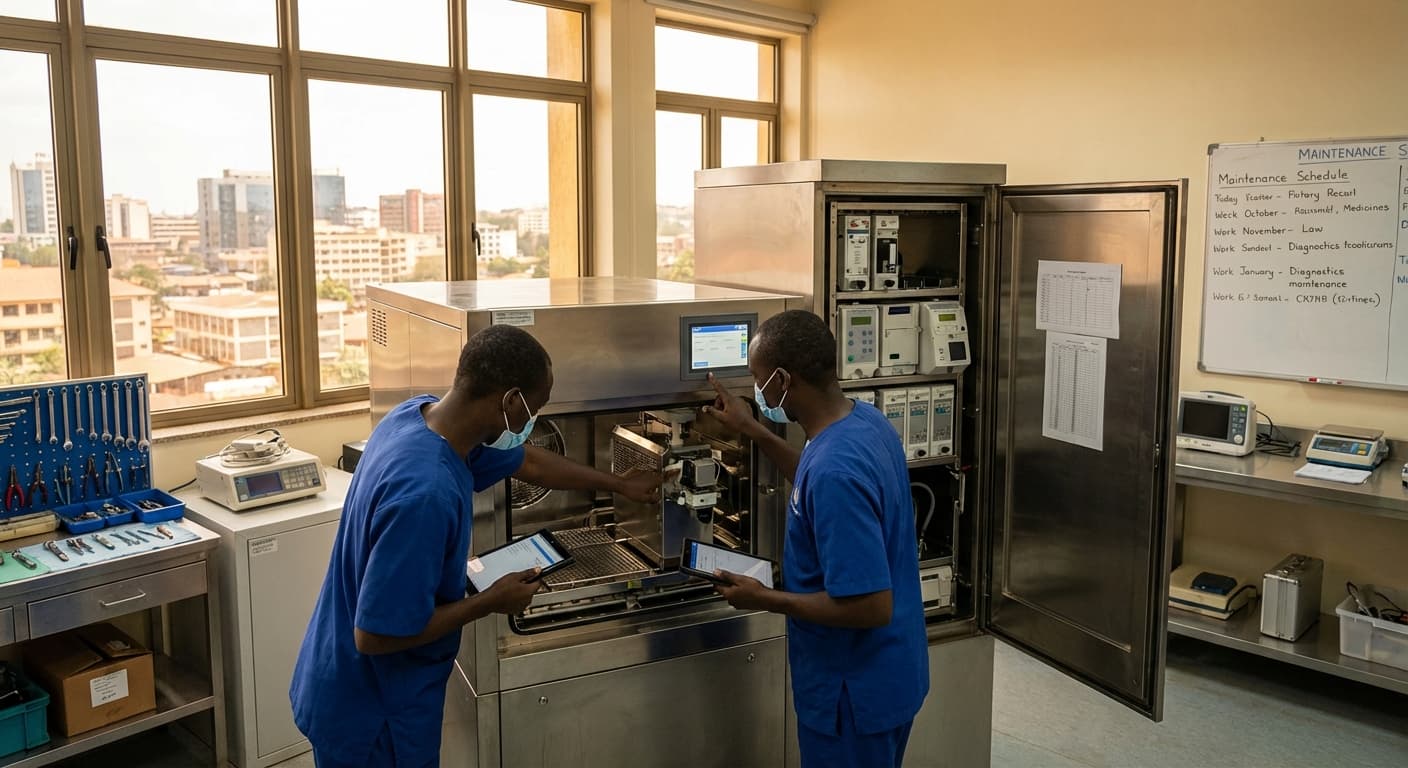
Total Cost of Ownership (TCO) & Lifecycle Budgeting Service in Somalia
Engineering Excellence & Technical Support
Total Cost of Ownership (TCO) & Lifecycle Budgeting Service High-standard technical execution following OEM protocols and local regulatory frameworks.
Predictive Cost Modeling for Infrastructure Projects
Leveraging advanced analytical tools and local market data, our service provides highly accurate predictive cost models for infrastructure development in Somalia. We go beyond initial capital expenditure to forecast operational, maintenance, and end-of-life costs, empowering stakeholders with long-term financial clarity and risk mitigation for sustainable project planning.
Lifecycle Asset Management for Public Utilities
We specialize in comprehensive lifecycle budgeting for Somalia's critical public utilities. Our service encompasses detailed asset depreciation analysis, strategic replacement planning, and optimization of maintenance schedules to ensure long-term service delivery continuity while minimizing total cost of ownership for government and private operators. This includes forecasting for energy, water, and telecommunications infrastructure.
Supply Chain Cost Optimization & Risk Assessment
Our TCO expertise extends to optimizing supply chains within Somalia. We analyze all costs associated with procurement, logistics, warehousing, and distribution, identifying inefficiencies and potential cost savings. Furthermore, we integrate risk assessment related to security, import/export regulations, and currency fluctuations into our lifecycle budgeting to ensure robust and resilient operational planning.
What Is Total Cost Of Ownership (Tco) & Lifecycle Budgeting Service In Somalia?
Total Cost of Ownership (TCO) and Lifecycle Budgeting (LCB) services in Somalia are comprehensive financial management and strategic planning methodologies applied to assets, projects, or services throughout their entire existence. TCO encompasses all direct and indirect costs associated with acquiring, operating, maintaining, and eventually disposing of an asset or service. Lifecycle Budgeting extends this concept by integrating these TCO considerations into the initial budgetary planning and ongoing financial management processes, ensuring that future expenditures are anticipated and accounted for from inception. These services are critical for organizations operating in the Somali context, characterized by unique infrastructural, logistical, and economic challenges, to achieve greater financial predictability, operational efficiency, and long-term sustainability.
| Who Needs TCO & Lifecycle Budgeting Services in Somalia? | Typical Use Cases | |||||
|---|---|---|---|---|---|---|
| Government Ministries & Agencies: For large-scale infrastructure projects (roads, energy, water, telecommunications), public procurement of essential services, and long-term asset management (e.g., vehicles, facilities). | International Development Organizations & NGOs: For program budgeting, project implementation oversight, asset acquisition for field operations, and ensuring the sustainability of development initiatives in fragile environments. | Private Sector Enterprises (e.g., Telecom, Energy, Manufacturing, Logistics): For strategic investment decisions in plant & machinery, fleet management, IT infrastructure, real estate acquisition, and optimizing operational expenditures in challenging market conditions. | Financial Institutions: For assessing the long-term financial viability of assets financed through loans and for evaluating risk associated with investments in capital-intensive sectors. | Large-Scale Project Management Firms: To provide a comprehensive financial framework for their clients, ensuring transparency and predictability in project costs. | Public-Private Partnerships (PPPs): Crucial for defining and agreeing upon the long-term financial responsibilities and cost-sharing mechanisms between public and private entities. | |
| Procurement of critical infrastructure (e.g., power generation plants, water treatment facilities, telecommunication networks): Evaluating not only the upfront purchase price but also the long-term operational and maintenance costs, fuel efficiency, and lifespan. | Fleet Management: Calculating the total cost of owning and operating vehicles, including fuel, maintenance, insurance, driver training, and eventual resale or disposal value, considering security and logistical challenges. | IT System Implementation: Assessing the full cost of hardware, software licenses, implementation services, ongoing support, training, upgrades, and eventual decommissioning of IT systems. | Real Estate Development & Management: Factoring in construction costs, ongoing property management, utilities, repairs, renovations, and eventual sale or redevelopment potential. | Energy Sector Investments: Analyzing the TCO of different energy generation technologies (e.g., solar, diesel, wind) over their operational life, including fuel, maintenance, and potential grid integration costs. | Service Contract Negotiations: Establishing robust financial frameworks for service contracts, ensuring all potential costs and performance-based incentives/penalties are considered over the contract duration. | Disaster Relief & Humanitarian Aid Logistics: Budgeting for the long-term support and maintenance of essential equipment and infrastructure deployed in emergency situations. |
Key Components of TCO & Lifecycle Budgeting Services
- Cost Identification & Categorization: Systematically identifying and classifying all cost elements, including capital expenditures (CAPEX), operational expenditures (OPEX), maintenance, training, consumables, regulatory compliance, and end-of-life disposal.
- Data Collection & Analysis: Establishing robust mechanisms for gathering accurate cost data across the lifecycle, often requiring specialized data acquisition strategies in the Somali environment due to data availability constraints.
- Financial Modeling & Forecasting: Developing sophisticated financial models to project future costs, considering inflation, currency fluctuations, technological obsolescence, and potential operational risks specific to Somalia.
- Risk Assessment & Mitigation: Identifying potential financial and operational risks throughout the asset lifecycle (e.g., supply chain disruptions, security threats, unexpected repair needs) and developing mitigation strategies.
- Scenario Planning: Creating multiple cost scenarios (e.g., best-case, worst-case, most-likely) to inform decision-making and contingency planning.
- Decision Support: Providing data-driven insights to support procurement, investment, and operational decisions, optimizing for long-term value rather than just initial acquisition cost.
- Budgetary Integration: Seamlessly integrating TCO and LCB findings into organizational budgeting cycles, ensuring alignment between strategic objectives and financial resource allocation.
- Performance Monitoring & Control: Implementing systems to track actual costs against projected budgets, enabling proactive identification of variances and corrective actions.
- Reporting & Documentation: Generating comprehensive reports detailing cost breakdowns, lifecycle projections, and key financial metrics for stakeholders.
Who Needs Total Cost Of Ownership (Tco) & Lifecycle Budgeting Service In Somalia?
In Somalia, the adoption of Total Cost of Ownership (TCO) and Lifecycle Budgeting services is crucial for ensuring the sustainable and cost-effective management of assets and projects. These methodologies move beyond initial purchase prices to account for all expenses incurred over an asset's or project's lifespan, including operational, maintenance, disposal, and potential indirect costs. This approach is particularly vital in a developing economy like Somalia's, where resources are often scarce, and investments need to yield maximum long-term value. TCO and Lifecycle Budgeting enable organizations to make informed decisions, identify hidden costs, optimize resource allocation, and avoid unexpected expenditures, ultimately contributing to greater financial stability and operational efficiency.
| Customer Type | Key Departments/Roles Benefiting |
|---|---|
| Government Ministries & Agencies | Ministry of Finance, Ministry of Public Works, Ministry of Energy & Water, Ministry of Transport, Procurement Departments, Budget Offices, Project Management Units |
| International Aid & Development Organizations | Project Management Offices (PMOs), Finance Departments, Procurement Teams, Technical Advisors, Operations Managers |
| Large-Scale Infrastructure Developers | Project Management, Finance & Accounting, Engineering, Operations & Maintenance, Procurement, Risk Management |
| Telecommunications Companies | Network Operations, Finance, Procurement, Asset Management, IT Departments, Engineering |
| Energy & Utilities Providers | Operations & Maintenance, Finance, Procurement, Asset Management, Engineering, Planning Departments |
| Financial Institutions | IT Departments, Facilities Management, Procurement, Risk Management, Branch Network Management |
| Logistics & Transportation Companies | Fleet Management, Operations, Finance, Procurement, Maintenance Departments |
| Large Commercial Enterprises & Corporations | Procurement, Finance, Operations, Asset Management, IT, Facilities Management |
| Non-Governmental Organizations (NGOs) | Program Management, Finance, Operations, Procurement, Logistics |
Target Customers & Departments in Somalia for TCO & Lifecycle Budgeting Services
- Government Ministries & Agencies
- International Aid & Development Organizations
- Large-Scale Infrastructure Developers
- Telecommunications Companies
- Energy & Utilities Providers
- Financial Institutions
- Logistics & Transportation Companies
- Large Commercial Enterprises & Corporations
- Non-Governmental Organizations (NGOs)
Total Cost Of Ownership (Tco) & Lifecycle Budgeting Service Process In Somalia
The Total Cost of Ownership (TCO) & Lifecycle Budgeting Service in Somalia is a crucial offering for organizations seeking to understand the complete financial implications of an asset or project throughout its entire lifespan. This service helps in making informed procurement, operational, and disposal decisions. The workflow, from initial inquiry to final execution, is designed to be comprehensive and client-centric, ensuring that all relevant costs and risks are identified and managed. The process is structured to provide clarity and actionable insights, especially within the unique operational context of Somalia.
| Stage | Description | Key Activities | Deliverables | Somalia-Specific Considerations |
|---|---|---|---|---|
| Initial Inquiry & Scoping | The client expresses interest and defines the scope of the TCO/Lifecycle Budgeting service. | Understand client's objectives, identify the asset/project, define the lifecycle duration, establish initial budget expectations. | Project brief, agreed-upon scope of work, initial meeting minutes. | Clarify local procurement processes, understand existing infrastructure limitations, identify potential local partners. |
| Data Collection & Analysis | Gathering all relevant cost data associated with the asset/project throughout its lifecycle. | Collecting data on acquisition costs, operational expenses (energy, maintenance, labor), training, consumables, downtime costs, disposal costs. Verifying data authenticity. | Raw data repository, data validation reports, preliminary cost summaries. | Leveraging local market intelligence for pricing, accounting for potential import duties and taxes, considering local labor rates and availability, assessing security-related operational costs. |
| TCO Model Development | Constructing a detailed model that quantifies all costs over the defined lifecycle. | Inputting collected data into a TCO framework, categorizing costs (direct, indirect, recurring, one-time), applying appropriate discount rates (considering inflation and risk in Somalia). | Developed TCO model (spreadsheet or software-based), detailed cost breakdown by category. | Factoring in currency fluctuations, potential for unexpected logistical costs, estimating the cost of expatriate personnel if applicable. |
| Lifecycle Budgeting & Forecasting | Extending the TCO model to create comprehensive budget forecasts for each lifecycle phase. | Projecting future expenses based on inflation, anticipated maintenance schedules, technology obsolescence, and expected usage patterns. Developing contingency budgets. | Lifecycle budget forecast, phased expenditure plans, contingency reserve recommendations. | Incorporating higher inflation rates, potential for extended lead times on spare parts, accounting for security-related budget allocations, considering long-term infrastructure development needs. |
| Risk Assessment & Mitigation Planning | Identifying potential financial and operational risks that could impact TCO and budget. | Brainstorming risks (e.g., supply chain disruptions, political instability, technical failures, regulatory changes), quantifying potential impact, developing mitigation strategies. | Risk register, mitigation action plans, sensitivity analysis reports. | Assessing risks related to political stability, security threats, unpredictable regulatory shifts, impact of natural disasters (e.g., drought, floods), potential for corruption impacting costs. |
| Reporting & Presentation | Communicating the TCO analysis and lifecycle budget findings to the client. | Preparing a comprehensive report detailing methodology, assumptions, findings, recommendations, and visual representations (charts, graphs). Presenting findings to stakeholders. | Final TCO & Lifecycle Budgeting report, presentation slides, executive summary. | Translating technical jargon into clear, actionable insights for diverse stakeholders, considering language nuances, and adapting presentation style to local cultural preferences. |
| Implementation Support & Monitoring | Assisting the client in implementing the recommendations and tracking performance against the budget. | Providing guidance on procurement decisions, supporting vendor selection, setting up cost tracking mechanisms, conducting periodic reviews, advising on budget adjustments. | Implementation plan, performance tracking reports, budget variance analysis, recommendations for future cycles. | Providing ongoing support in navigating local vendor networks, advising on adapting plans to changing on-the-ground realities, facilitating communication with local authorities, continuous monitoring of security-related expenditure impacts. |
Workflow Stages
- Initial Inquiry & Scoping
- Data Collection & Analysis
- TCO Model Development
- Lifecycle Budgeting & Forecasting
- Risk Assessment & Mitigation Planning
- Reporting & Presentation
- Implementation Support & Monitoring
Total Cost Of Ownership (Tco) & Lifecycle Budgeting Service Cost In Somalia
Estimating the Total Cost of Ownership (TCO) and Lifecycle Budgeting for services in Somalia is a complex undertaking due to a variety of factors. TCO encompasses not just the initial purchase or implementation cost, but also ongoing operational expenses, maintenance, upgrades, and eventual disposal or decommissioning costs over the entire lifespan of a service. Lifecycle budgeting extends this by planning for these costs over the long term, ensuring financial sustainability. In Somalia, these calculations are significantly influenced by the unique socio-economic and security landscape.
| Service Type/Component | Estimated Range (Initial - Annual O&M) | Notes & Considerations (Somali Shilling - SOS) | Potential Influencing Factors |
|---|---|---|---|
| IT Infrastructure (On-Premise - Basic Server Setup) | SOS 5,000,000 - SOS 50,000,000 (Initial) | Highly variable. Includes hardware, installation, basic security. Annual O&M could be 10-20% of initial cost. | Hardware import, local installation expertise, power backup, cooling. |
| Cloud Services (SaaS Subscription - e.g., CRM, HRIS) | SOS 200,000 - SOS 2,000,000+ per year (per user/module) | Generally more predictable annual costs. Price often quoted in USD and converted. | User count, feature set, vendor, data residency. |
| Connectivity (Internet - Dedicated Line/Satellite) | SOS 1,000,000 - SOS 10,000,000+ per year | Can be extremely high depending on location and required bandwidth. Installation fees can be significant. | Bandwidth, provider, physical infrastructure, security for access points. |
| Security Services (Physical & Cyber - Basic) | SOS 500,000 - SOS 5,000,000+ per year | Includes guards, surveillance, basic firewall management. Cybersecurity investment is crucial. | Number of sites, staff levels, technology deployed, risk assessment. |
| Software Licensing (Perpetual) | SOS 1,000,000 - SOS 20,000,000+ (Initial) | One-time purchase cost. Annual maintenance/support is typically 15-25% of license fee. | Software complexity, number of users, vendor. |
| Consulting & Implementation Services | SOS 3,000,000 - SOS 30,000,000+ (Project-based) | Highly dependent on project scope and expertise required. Expatriate consultants are significantly more expensive. | Project complexity, duration, consultant rates (local vs. international). |
| Training & Capacity Building | SOS 500,000 - SOS 10,000,000+ (Per program) | Cost varies based on the number of trainees, duration, and subject matter expertise. | Scope of training, trainer fees, materials, travel. |
| Contingency Fund (for unforeseen events) | Recommended 10-25% of total project/annual budget | Crucial in Somalia due to inherent risks. This is a percentage, not a direct service cost. | Overall project risk, operational environment. |
Key Pricing Factors for TCO & Lifecycle Budgeting Services in Somalia
- Geopolitical Stability & Security: High security risks and potential for conflict can lead to increased costs for personnel safety, secure infrastructure, contingency planning, and insurance. This can inflate both initial and operational expenses.
- Infrastructure Availability & Reliability: Limited access to reliable power, internet, and transportation networks necessitates investment in backup systems (generators, satellite internet), robust physical security, and potentially higher logistics costs for equipment and personnel.
- Local Skill Availability & Training Needs: A potential shortage of specialized technical skills might require extensive training programs for local staff or reliance on more expensive expatriate expertise, impacting initial setup and ongoing operational costs.
- Import Duties & Taxation: Tariffs on imported technology, software, and specialized equipment, along with local tax regulations, directly affect the initial capital expenditure.
- Currency Volatility & Inflation: The Somali Shilling (SOS) can experience significant fluctuations, and high inflation rates can rapidly increase the cost of goods and services over time. This necessitates robust contingency planning and potentially pricing in more stable foreign currencies for long-term contracts.
- Regulatory Environment & Compliance: Navigating the local regulatory framework, including potential licensing fees, permits, and compliance requirements, adds to the overall cost.
- Supplier & Vendor Landscape: The availability and competitiveness of local and international suppliers for hardware, software, and specialized services play a crucial role. Limited competition can lead to higher prices.
- Service Complexity & Scope: The nature and extent of the service being procured will directly influence the TCO. A simple cloud-based subscription will have a different TCO than a complex, on-premise IT infrastructure deployment.
- Project Duration & Lifecycle: Longer project lifecycles generally imply higher cumulative operational and maintenance costs. The planned lifespan of the service is a critical input for lifecycle budgeting.
- Risk Mitigation Strategies: Investments in cybersecurity, disaster recovery, and business continuity planning are essential in the Somali context and add to the TCO.
Affordable Total Cost Of Ownership (Tco) & Lifecycle Budgeting Service Options
Our Affordable Total Cost of Ownership (TCO) and Lifecycle Budgeting services are designed to provide a comprehensive understanding of all expenses associated with an asset or system throughout its entire lifespan. We offer flexible value bundles and implement strategic cost-saving measures to maximize your return on investment. Our approach moves beyond initial purchase price to encompass acquisition, operation, maintenance, support, and eventual disposal, ensuring you make informed, long-term financial decisions.
| Value Bundle | Core Services Included | Key Benefits | Target Audience | Estimated Price Range (Illustrative) |
|---|---|---|---|---|
| Essential TCO Analysis | Initial TCO modeling for a single asset/system, basic lifecycle cost projection. | Foundation for understanding hidden costs, initial budget awareness. | Small businesses, individual project managers. | $500 - $2,000 |
| Standard Lifecycle Budgeting | In-depth TCO analysis for multiple assets, detailed lifecycle cost forecasting, risk identification. | Improved budgeting accuracy, identification of major cost drivers, proactive risk management. | Mid-sized organizations, department heads. | $2,000 - $7,500 |
| Premium Strategic Lifecycle Management | Full TCO & lifecycle budgeting, strategic cost-saving recommendations, performance optimization, end-of-life planning, ongoing advisory. | Maximized ROI, optimized resource allocation, long-term financial predictability, sustainable operations. | Large enterprises, government agencies, organizations with complex asset portfolios. | $7,500 - $25,000+ |
Key TCO & Lifecycle Budgeting Service Components
- Comprehensive TCO Modeling & Analysis
- Lifecycle Cost Projection & Forecasting
- Value-Based Budgeting Frameworks
- Risk Assessment & Mitigation Strategies
- Performance Optimization Recommendations
- End-of-Life Planning & Disposal Costing
- Customized Reporting & Visualization Tools
Verified Providers In Somalia
In Somalia, ensuring access to reliable and qualified healthcare providers is paramount. Franance Health stands out as a leading organization, distinguished by its rigorous credentialing process and unwavering commitment to patient well-being. Their verified providers offer a crucial layer of trust and expertise in a region where such assurance is vital. This dedication to quality makes Franance Health the premier choice for individuals and organizations seeking dependable healthcare solutions in Somalia.
| Provider Type | Franance Health Verification Standard | Benefits to Patients | Example of Expertise |
|---|---|---|---|
| General Practitioners | Certified medical degree from recognized institutions, valid medical license, background check. | Accurate diagnoses, appropriate treatment plans, access to primary care services. | Management of common illnesses, preventative health advice, referrals to specialists. |
| Specialist Physicians (e.g., Cardiologists, Pediatricians) | Verified specialization training, board certification (where applicable), proven clinical experience. | Expert care for complex medical conditions, advanced diagnostic capabilities, tailored treatment strategies. | Performing complex surgeries, interpreting advanced imaging, managing chronic diseases. |
| Nurses | Accredited nursing education, registered nurse status, competency assessments. | High-quality patient care, medication administration, patient education and support. | Wound care, post-operative recovery monitoring, vital signs management. |
| Pharmacists | Licensed pharmacist, knowledge of drug interactions and dosages, inventory management training. | Safe dispensing of medications, patient counseling on drug use, ensuring medication availability. | Advising on over-the-counter medications, managing prescription refills, identifying potential drug interactions. |
| Allied Health Professionals (e.g., Physiotherapists, Lab Technicians) | Relevant degree or diploma, professional registration, practical skills evaluation. | Rehabilitation services, accurate diagnostic testing, support for medical treatment plans. | Designing exercise programs, performing blood tests, operating diagnostic equipment. |
Key Indicators of Franance Health's Verified Providers:
- Comprehensive Background Checks: Thorough verification of educational qualifications, professional licenses, and work history.
- Skills and Competency Assessments: Rigorous evaluation of practical skills and clinical knowledge relevant to their specialization.
- Ethical Conduct Review: Assessment of adherence to professional ethics and codes of conduct.
- Continuing Education Mandates: Requirement for providers to engage in ongoing professional development to stay abreast of advancements.
- Patient Feedback Integration: Mechanisms for collecting and acting upon patient experiences and testimonials.
Scope Of Work For Total Cost Of Ownership (Tco) & Lifecycle Budgeting Service
This Scope of Work (SOW) outlines the services to be provided for conducting a Total Cost of Ownership (TCO) and Lifecycle Budgeting analysis for [Project/Asset Name]. The objective is to provide a comprehensive understanding of all costs associated with acquiring, operating, maintaining, and disposing of the specified [Project/Asset Type] over its entire useful life. This will enable informed decision-making, optimize resource allocation, and identify potential cost-saving opportunities.
| Technical Deliverable | Description | Standard Specifications / Key Components |
|---|---|---|
| Project Initiation Report | Formal document outlining project objectives, scope, methodology, stakeholders, and timeline. | Executive Summary, Project Objectives, Scope Definition, Methodology Overview, Stakeholder Identification, Project Team Roles and Responsibilities, High-Level Timeline, Assumptions and Constraints, Risk Identification. |
| Data Requirements Matrix | Detailed list of all data points required for TCO and lifecycle budgeting, including sources and validation methods. | Data Category (e.g., Capital Costs, Operating Costs, Maintenance Costs, Disposal Costs), Specific Data Point, Data Source, Data Format, Validation Method, Frequency of Updates. |
| Data Collection Plan | Methodology and procedures for gathering, organizing, and validating the required data. | Data Gathering Strategy (e.g., interviews, document review, system extracts), Data Collection Tools, Data Quality Assurance Plan, Data Storage and Security Protocols. |
| TCO Model Framework | The structured model used to calculate TCO, encompassing all relevant cost categories and time horizons. | Cost Categories (e.g., Acquisition, Installation, Operation, Maintenance, Energy, Staffing, Training, Support, Decommissioning, Disposal), Discount Rate, Inflation Rate, Useful Life Period, Depreciation Methods (if applicable). |
| TCO Analysis Report | Comprehensive report detailing the calculated TCO, including breakdown by cost category and sensitivity analysis. | Executive Summary, TCO Calculation Methodology, Detailed TCO Breakdown by Cost Category, Graphical Representation of TCO, Sensitivity Analysis (e.g., impact of inflation, discount rate changes), Comparison with Benchmarks (if available), Key Cost Drivers Identification. |
| Lifecycle Budget Template | A standardized template for forecasting and managing costs over the asset's lifecycle. | Year-by-Year Budget Projections, Capital Expenditure (CAPEX) Breakdown, Operating Expenditure (OPEX) Breakdown, Maintenance Expenditure Breakdown, Contingency Planning, Budgetary Controls and Reporting Mechanisms. |
| Lifecycle Budgeting Report | Report summarizing the lifecycle budget, including financial forecasts, cash flow projections, and funding requirements. | Executive Summary, Lifecycle Budget Projections (e.g., 5-year, 10-year), Cash Flow Projections, Funding Requirement Analysis, Identification of Budgetary Risks and Opportunities, Variance Analysis (against initial budget, if applicable). |
| Recommendations Report | Actionable recommendations for cost optimization, risk mitigation, and strategic decision-making based on TCO and lifecycle budget analysis. | Cost Reduction Strategies, Operational Efficiency Improvements, Maintenance Optimization Plans, Risk Mitigation Strategies, Investment Decision Support, Proposed Budgetary Adjustments, Implementation Plan for Recommendations. |
| Final Project Report | A consolidated report encompassing all project deliverables, findings, and recommendations. | Project Overview, Summary of TCO and Lifecycle Budgeting Findings, Key Recommendations, Appendices (including all detailed reports and data sets). |
| Data Repository | Organized storage of all collected and analyzed data, models, and reports. | Structured File System, Version Control, Access Controls, Data Backup and Retention Policy. |
Key Activities and Phases
- Phase 1: Project Initiation and Planning
- Phase 2: Data Collection and Validation
- Phase 3: TCO Modeling and Analysis
- Phase 4: Lifecycle Budgeting and Forecasting
- Phase 5: Reporting and Recommendations
- Phase 6: Review and Finalization
Service Level Agreement For Total Cost Of Ownership (Tco) & Lifecycle Budgeting Service
This Service Level Agreement (SLA) outlines the performance expectations, response times, and uptime guarantees for the Total Cost of Ownership (TCO) and Lifecycle Budgeting Service. This service aims to provide clients with accurate, actionable insights into the long-term financial implications of their technology investments. The SLA applies to all active clients utilizing the designated TCO & Lifecycle Budgeting Service platform and associated support channels.
| Severity Level | Description | Target Uptime | Response Time Target | Resolution Time Target (Best Effort) |
|---|---|---|---|---|
| Severity 1 (Critical) | Complete service outage or severe degradation impacting a majority of clients. No viable workaround available. | 99.9% per month | 30 minutes | 4 business hours |
| Severity 2 (High) | Significant service degradation impacting a substantial number of clients. A difficult or complex workaround may exist. | 99.7% per month | 1 hour | 8 business hours |
| Severity 3 (Medium) | Minor service degradation or a functional issue affecting a limited number of clients. A workaround is available. | 99.5% per month | 4 business hours | 3 business days |
| Severity 4 (Low) | General inquiries, feature requests, or non-critical issues with minimal impact on service functionality. | N/A (Focus on proactive resolution) | 1 business day | 5 business days |
Service Definitions
- TCO & Lifecycle Budgeting Service: The comprehensive suite of tools, methodologies, and expert consultation provided to assist clients in understanding, predicting, and managing the total cost of ownership and lifecycle budgetary requirements of their assets and systems.
- Service Hours: The period during which the TCO & Lifecycle Budgeting Service platform and standard support are available. This is defined as 24 hours a day, 7 days a week, 365 days a year, excluding Scheduled Maintenance.
- Uptime: The percentage of time the TCO & Lifecycle Budgeting Service platform is operational and accessible to clients during Service Hours.
- Downtime: The percentage of time the TCO & Lifecycle Budgeting Service platform is unavailable to clients during Service Hours.
- Scheduled Maintenance: Pre-announced periods when the TCO & Lifecycle Budgeting Service platform may be unavailable for upgrades, patches, or other essential maintenance activities. Clients will be notified at least [Number] business days in advance.
- Incident: Any event that causes or may cause a disruption to the normal operation of the TCO & Lifecycle Budgeting Service platform, resulting in a degradation of service.
- Severity Levels: A classification of Incidents based on their impact on the TCO & Lifecycle Budgeting Service and the number of clients affected.
- Response Time: The maximum time allowed for the support team to acknowledge and begin working on an Incident after it has been reported.
Frequently Asked Questions

Ready when you are
Let's scope your Total Cost of Ownership (TCO) & Lifecycle Budgeting Service in Somalia project in Somalia.

Scaling healthcare logistics and technical systems across the entire continent.