
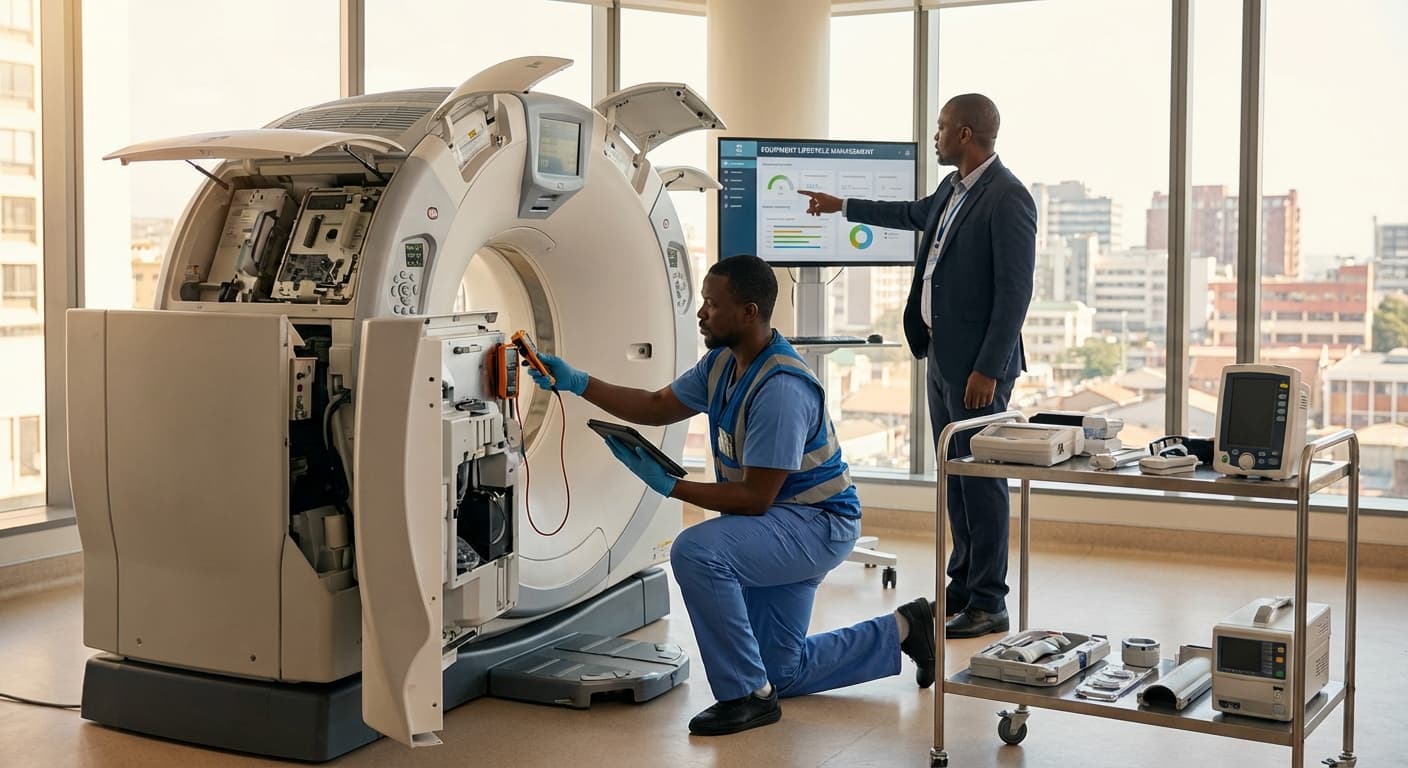
Equipment Replacement Planning & Obsolescence Strategy Service in Somalia
Engineering Excellence & Technical Support
Equipment Replacement Planning & Obsolescence Strategy Service High-standard technical execution following OEM protocols and local regulatory frameworks.
Proactive Lifecycle Management
Leveraging advanced analytics to predict equipment end-of-life in Somalia, enabling timely replacements and mitigating disruptions to critical infrastructure operations. This minimizes costly emergency repairs and ensures consistent service delivery.
Obsolescence Risk Mitigation
Implementing a robust obsolescence tracking system for vital equipment in Somalia, identifying components at risk of discontinuation. Our strategy provides actionable insights for sourcing alternatives or planning upgrades, safeguarding long-term operational continuity.
Digital Twin for Predictive Maintenance
Developing digital twins of key Somalia assets to simulate performance under various conditions. This allows for precise maintenance scheduling and proactive replacement planning based on real-time data and predictive modeling, optimizing resource allocation.
What Is Equipment Replacement Planning & Obsolescence Strategy Service In Somalia?
Equipment Replacement Planning & Obsolescence Strategy Service in Somalia refers to a specialized consultancy and operational framework designed to address the lifecycle management of assets within organizations. This service focuses on proactively identifying, analyzing, and mitigating the risks associated with aging, outdated, or end-of-life equipment. It encompasses the strategic decision-making process for the timely and cost-effective replacement or upgrade of assets, thereby ensuring operational continuity, maximizing return on investment, and minimizing the impact of technological obsolescence.
| Who Needs the Service? | Typical Use Cases | ||||||
|---|---|---|---|---|---|---|---|
| Organizations with significant capital investments in physical assets, particularly those with long asset lifecycles or operating in rapidly evolving technological sectors. | Telecommunications companies: Planning for the replacement of aging network infrastructure (e.g., copper lines, older radio access network equipment) with newer technologies (e.g., fiber optics, 5G). | Government and Public Sector entities: Managing the lifecycle of critical infrastructure (e.g., water treatment plants, power generation facilities, transportation systems) and IT hardware. | Energy Sector (Oil & Gas, Renewables): Replacing outdated exploration, production, and refining equipment, as well as ensuring the longevity and efficiency of renewable energy assets. | Healthcare Institutions: Managing the replacement of medical devices (e.g., imaging equipment, patient monitoring systems) that have a direct impact on patient care and safety. | Manufacturing and Industrial Companies: Planning for the replacement of production machinery and automation systems to maintain competitiveness and efficiency. | Logistics and Transportation Companies: Strategizing the replacement of fleet vehicles, material handling equipment, and warehouse automation systems. | Financial Institutions: Managing the refresh cycles of IT hardware, data center equipment, and specialized financial transaction systems. |
Key Components of the Service:
- Asset Inventory and Condition Assessment: Comprehensive cataloging of all equipment, including its age, condition, performance metrics, and maintenance history.
- Obsolescence Risk Analysis: Evaluating the likelihood and impact of equipment becoming obsolete due to technological advancements, component unavailability, or regulatory changes.
- Life Cycle Costing (LCC) Analysis: Determining the total cost of ownership for each asset over its projected lifespan, including acquisition, operation, maintenance, and disposal costs.
- Replacement and Upgrade Strategy Development: Formulating strategic plans for asset replacement or upgrade based on financial, operational, and risk considerations.
- Technology Scouting and Forecasting: Monitoring industry trends and emerging technologies to anticipate future needs and potential obsolescence drivers.
- Budgeting and Financial Planning: Developing realistic budgets and financial models for phased equipment replacement programs.
- Procurement and Disposal Management: Assisting in the efficient and compliant procurement of new equipment and the responsible disposal of retired assets.
- Risk Mitigation Strategies: Implementing contingency plans to address potential disruptions caused by equipment failure or obsolescence.
- Policy and Procedure Development: Establishing internal policies and procedures for equipment management and replacement.
Who Needs Equipment Replacement Planning & Obsolescence Strategy Service In Somalia?
Equipment replacement planning and obsolescence strategy services are crucial for organizations in Somalia facing the challenges of aging infrastructure, limited access to new technologies, and a desire to optimize long-term operational efficiency and cost-effectiveness. These services help organizations proactively manage their asset lifecycles, mitigate the risks associated with outdated equipment, and ensure the continuous availability of critical services.
| Customer Segment | Relevant Departments |
|---|---|
| Government Ministries & Agencies | Public Works, Infrastructure, Procurement, IT, Defense, Health, Education, Finance |
| Public Utility Companies | Operations, Engineering, Maintenance, Finance, Procurement, Planning |
| Healthcare Institutions | Biomedical Engineering, Facilities Management, IT, Procurement, Finance, Clinical Operations |
| Educational Institutions | IT Services, Facilities Management, Academic Departments (for specialized equipment), Procurement, Finance |
| Major Industrial Facilities | Operations, Maintenance, Engineering, Production, Procurement, Quality Control, Finance |
| Logistics & Transportation Companies | Fleet Management, Maintenance, Operations, IT, Procurement, Safety |
| International Development Organizations & NGOs | Program Management, Operations, Logistics, IT, Procurement, Finance |
| Telecommunications Providers | Network Operations, Engineering, IT, Procurement, Planning, Field Services |
Target Customers & Departments in Somalia
- Government ministries and agencies
- Public utility companies (e.g., electricity, water, telecommunications)
- Healthcare institutions (hospitals, clinics)
- Educational institutions (universities, vocational training centers)
- Major industrial facilities (e.g., food processing, manufacturing, mining)
- Logistics and transportation companies
- International development organizations and NGOs
- Telecommunications providers
Equipment Replacement Planning & Obsolescence Strategy Service Process In Somalia
This document outlines the service process for Equipment Replacement Planning & Obsolescence Strategy, specifically tailored for clients operating in Somalia. The workflow details the stages from initial inquiry to the successful execution of the service, ensuring a structured and comprehensive approach.
| Phase | Stage | Key Activities | Deliverables | Considerations for Somalia |
|---|---|---|---|---|
| 1 | Inquiry & Scoping | Client submits an inquiry outlining their needs for equipment replacement planning and obsolescence strategy. Initial consultation to understand the client's current assets, operational context, and objectives. Defining the scope of the service. | Service proposal, Letter of Engagement, Initial Scope Document | Understanding of local regulatory landscape, security considerations for site visits, availability of local contacts for information gathering. |
| 2 | Assessment & Analysis | Detailed inventory of existing equipment, including age, condition, maintenance history, and performance data. Identification of critical equipment and potential obsolescence risks. Analysis of total cost of ownership (TCO) for current assets. Understanding of the local supply chain for new equipment and spare parts. | Equipment Inventory Report, Obsolescence Risk Assessment, TCO Analysis Report | Challenges in accessing reliable historical data, potential for rapid technological shifts in the market, assessing the availability and reliability of local maintenance services. |
| 3 | Strategy Development | Developing a phased equipment replacement plan aligned with operational needs and budget. Creating an obsolescence management strategy (e.g., proactive replacement, extended support, or redesign). Identifying potential alternative solutions and technologies. Considering financing options. | Equipment Replacement Strategy Document, Obsolescence Management Plan, Technology Roadmap | Availability of financing mechanisms, understanding of import regulations and duties, local capacity for adopting new technologies and training personnel. |
| 4 | Implementation Planning | Developing a detailed project plan for executing the replacement strategy, including timelines, resource allocation, and budget. Establishing procurement processes and vendor selection criteria. Planning for installation, commissioning, and decommissioning of old equipment. | Implementation Project Plan, Procurement Strategy, Risk Mitigation Plan | Logistics for transportation of new equipment, customs clearance procedures, need for specialized local labor for installation and maintenance, security during transportation and installation. |
| 5 | Execution & Monitoring | Procurement of new equipment. Overseeing installation and commissioning. Implementing the obsolescence management strategy. Regular monitoring of equipment performance and project progress. Addressing any unforeseen issues or delays. | Procured Equipment, Installed & Commissioned Assets, Progress Reports, Issue Log | Navigating infrastructure challenges (e.g., power, internet), local capacity for ongoing maintenance and support, potential for unforeseen security disruptions affecting project timelines. |
| 6 | Review & Optimization | Post-implementation review to assess the effectiveness of the replacement strategy. Gathering feedback on performance and user satisfaction. Identifying lessons learned for future planning. Optimizing the strategy based on real-world performance and evolving needs. | Post-Implementation Review Report, Lessons Learned Document, Updated Strategy Recommendations | Ensuring long-term sustainability of maintenance and support in the local context, adapting strategies to changing local economic and political environments. |
Equipment Replacement Planning & Obsolescence Strategy Service Process in Somalia
- Phase 1: Inquiry & Scoping
- Phase 2: Assessment & Analysis
- Phase 3: Strategy Development
- Phase 4: Implementation Planning
- Phase 5: Execution & Monitoring
- Phase 6: Review & Optimization
Equipment Replacement Planning & Obsolescence Strategy Service Cost In Somalia
Determining the exact cost of Equipment Replacement Planning & Obsolescence Strategy services in Somalia is complex due to several influencing factors. These services involve expert analysis, data collection, risk assessment, and the development of strategic roadmaps for maintaining operational efficiency and mitigating the impact of aging or obsolete equipment. The cost is not a fixed price but rather a variable that depends on the scope of work, the size and complexity of the organization's assets, the level of detail required, and the expertise of the service provider.
| Service Component | Typical Factors Influencing Cost | Estimated Range (in Somali Shillings - SOS) |
|---|---|---|
| Initial Assessment & Data Gathering | Number of assets, data accessibility, complexity of operations | 1,500,000 - 5,000,000 SOS |
| Asset Condition & Performance Analysis | Depth of technical review, available performance data | 2,000,000 - 7,000,000 SOS |
| Obsolescence Risk Assessment | Number of critical assets, manufacturer support availability, projected lifespan | 2,500,000 - 8,000,000 SOS |
| Development of Replacement Strategy (High-Level) | Number of asset categories, prioritization framework | 3,000,000 - 10,000,000 SOS |
| Development of Detailed Replacement & Obsolescence Strategy | Comprehensive asset list, detailed financial modeling, phased implementation planning | 7,000,000 - 25,000,000+ SOS |
| On-site Surveys & Fieldwork (per diem/project) | Location, duration, security requirements, travel logistics | 500,000 - 2,000,000 SOS (per trip/week, highly variable) |
| Consultant Day Rate (Senior/Specialist) | Experience, reputation, specific expertise in Somalia | 300,000 - 800,000+ SOS per day |
| Project Management & Reporting | Project complexity, reporting frequency and detail | Included in overall project cost or 10-20% of service fees |
Key Pricing Factors for Equipment Replacement Planning & Obsolescence Strategy Services in Somalia
- Scope of Services: The breadth of the engagement significantly impacts cost. This can range from a high-level review of a few critical assets to a comprehensive audit of an entire organization's equipment portfolio.
- Asset Portfolio Size and Complexity: A larger number of assets, diverse equipment types, and intricate operational dependencies will naturally increase the time and resources required for analysis.
- Data Availability and Quality: The ease of accessing and the quality of existing data (maintenance records, purchase history, performance metrics, manufacturer support information) will influence the effort needed for data collection and validation.
- Level of Detail and Customization: Basic replacement planning will be less expensive than a highly customized obsolescence strategy that incorporates predictive modeling, scenario planning, and detailed implementation plans.
- Risk Assessment and Mitigation Strategies: The depth of risk analysis (e.g., identifying single points of failure, impact of obsolescence on safety or regulatory compliance) and the development of detailed mitigation strategies will add to the cost.
- Service Provider Expertise and Reputation: Established consultants with specialized knowledge in asset management and obsolescence strategies, particularly those with experience in challenging operating environments like Somalia, may command higher fees.
- Geographic Location and Accessibility: On-site assessments and fieldwork in remote or challenging regions within Somalia can incur additional logistical costs (travel, accommodation, security).
- Project Duration: Longer-term engagements or phased approaches will naturally have higher overall costs.
- Reporting and Documentation Requirements: The formality and comprehensiveness of the final reports, presentations, and documentation will influence the effort involved.
- Urgency of the Project: Rush projects may necessitate premium pricing due to expedited resource allocation.
Affordable Equipment Replacement Planning & Obsolescence Strategy Service Options
Our Affordable Equipment Replacement Planning & Obsolescence Strategy Service helps organizations proactively manage their asset lifecycle, minimizing costly disruptions and maximizing return on investment. We offer flexible value bundles designed to suit various organizational needs and budgets, alongside proven cost-saving strategies to optimize your equipment lifecycle management.
| Cost-Saving Strategy | Description | Potential Savings Impact |
|---|---|---|
| Proactive Replacement Scheduling | Replacing equipment based on planned lifecycles and obsolescence forecasts, rather than reactive failure. | Reduces emergency repair costs, minimizes downtime, extends useful life of existing assets through planned upgrades. |
| Bulk Purchasing & Negotiation | Leveraging consolidated purchasing power for multiple equipment replacements or upgrades. | Achieves significant discounts, better warranty terms, and streamlined procurement processes. |
| Extended Warranties & Service Contracts | Strategic investment in extended support for critical equipment nearing end-of-life. | Avoids unexpected high repair costs, secures technical expertise for aging assets, provides budget certainty. |
| Refurbishment & Reconditioning | Assessing the feasibility and cost-effectiveness of refurbishing existing equipment instead of full replacement. | Significantly lower capital expenditure compared to new purchases, extends asset life with reduced environmental impact. |
| Standardization of Equipment | Implementing a strategy to standardize equipment models and manufacturers across the organization. | Simplifies maintenance and training, reduces spare parts inventory, enables bulk discounts, improves negotiation power. |
| Phased Rollouts & Incremental Upgrades | Instead of large-scale, disruptive replacements, implementing upgrades or replacements in manageable phases. | Distributes capital expenditure, minimizes operational disruption, allows for learning and adaptation from initial phases. |
| Lifecycle Cost Analysis (LCCA) | Comprehensive analysis of all costs associated with an asset over its entire lifecycle, including acquisition, operation, maintenance, and disposal. | Identifies the most cost-effective solutions over the long term, prevents costly 'cheaper upfront' but expensive to run assets. |
Value Bundles
- Essentials Bundle: Basic lifecycle assessment, initial obsolescence risk identification, and a foundational replacement plan. Ideal for smaller organizations or those new to proactive asset management.
- Standard Bundle: Comprehensive lifecycle analysis, detailed obsolescence risk assessment, tiered replacement planning, and preliminary cost-benefit analysis for recommended replacements. Suitable for mid-sized organizations with moderate asset complexity.
- Premium Bundle: In-depth lifecycle management, advanced obsolescence forecasting (including end-of-life support), optimized replacement scheduling, total cost of ownership (TCO) modeling, and strategic sourcing recommendations. Designed for large enterprises with complex asset portfolios and critical operational dependencies.
- Custom Bundle: Tailored solutions built around your specific needs, asset types, and budget constraints. We can mix and match services from our standard offerings to create the perfect fit.
Verified Providers In Somalia
In Somalia's complex and evolving healthcare landscape, identifying and accessing verified providers is crucial for ensuring quality care. Franance Health stands out as a leading organization dedicated to credentialing and promoting the highest standards of healthcare professionals. Their rigorous vetting process and commitment to patient safety make them an indispensable resource for individuals seeking reliable medical services. This document outlines Franance Health's credentials and explains why they represent the best choice for verified healthcare providers in Somalia.
| Area of Verification | Franance Health's Approach | Benefit to Patients |
|---|---|---|
| Educational Qualifications | Verification of degrees, diplomas, and specialized training from accredited institutions. | Ensures providers possess the foundational knowledge and specialized skills required for their practice. |
| Professional Licensing | Confirmation of valid and current medical licenses issued by relevant Somali or international regulatory bodies. | Guarantees that providers are legally authorized to practice medicine and adhere to professional regulations. |
| Work Experience and References | Thorough review of previous employment history and collection of professional references. | Provides insight into a provider's practical experience and reputation within the medical community. |
| Ethical Conduct and Background Checks | Screening for any disciplinary actions, malpractice claims, or ethical breaches. | Protects patients from practitioners with a history of misconduct, promoting trust and integrity. |
| Specialty Certifications | Validation of advanced certifications in specific medical fields. | Helps patients identify specialists with the highest level of expertise in their particular medical needs. |
Franance Health's Key Credentials and Why They Matter
- {"title":"Rigorous Vetting Process","description":"Franance Health employs a multi-stage verification process that scrutinizes educational qualifications, professional licenses, work history, and ethical standing of all healthcare providers. This ensures that only competent and trustworthy individuals are listed on their platform."}
- {"title":"Adherence to International Standards","description":"Their credentialing protocols are benchmarked against international best practices in healthcare provider verification, guaranteeing a high level of quality and reliability that aligns with global healthcare expectations."}
- {"title":"Commitment to Patient Safety","description":"The paramount goal of Franance Health is to safeguard patient well-being. By verifying providers, they significantly reduce the risk of encountering unqualified or fraudulent practitioners, fostering a safer healthcare environment for all."}
- {"title":"Provider Development and Support","description":"Beyond initial verification, Franance Health often offers ongoing support and professional development opportunities for their registered providers, encouraging continuous learning and skill enhancement."}
- {"title":"Transparency and Accessibility","description":"Franance Health makes information about verified providers readily accessible, empowering patients with the knowledge to make informed decisions about their healthcare choices."}
Scope Of Work For Equipment Replacement Planning & Obsolescence Strategy Service
This Scope of Work (SOW) outlines the services to be provided for Equipment Replacement Planning and Obsolescence Strategy. The objective is to develop a comprehensive, data-driven strategy for proactive equipment replacement and to manage the risks associated with technological obsolescence across the organization's asset portfolio. This will ensure operational continuity, optimize capital expenditure, and minimize disruption.
| Phase | Key Activities | Deliverables | Standard Specifications / Considerations |
|---|---|---|---|
| Define project scope, objectives, and key stakeholders. Conduct initial asset inventory assessment. Review existing documentation and data sources (maintenance records, purchase history, warranties). Understand business criticality of various equipment types. | Project Charter, Stakeholder Register, Initial Asset Inventory Summary, Data Gathering Plan. | Utilize asset management software or databases. Define data ownership and access protocols. Establish communication channels. Identify key business drivers. |
| Gather detailed data on all relevant equipment (age, performance, maintenance history, failure rates, cost of ownership, supplier support status, technology roadmap). Analyze failure trends and root causes. Identify equipment approaching end-of-life or end-of-support. | Comprehensive Equipment Data Repository, Failure Analysis Report, Obsolescence Risk Assessment Matrix. | Data validation and cleaning processes. Standardized data fields. Statistical analysis of failure data. Categorization of obsolescence risks (e.g., technical, functional, regulatory). |
| Develop criteria for replacement (e.g., total cost of ownership, performance degradation, safety concerns, strategic alignment). Develop replacement prioritization models. Forecast future replacement needs and associated capital budgets. Define optimal replacement cycles. | Equipment Replacement Criteria Document, Replacement Prioritization Model, 5-Year Replacement Forecast, Recommended Replacement Schedule. | Total Cost of Ownership (TCO) analysis. Return on Investment (ROI) calculations. Risk-based prioritization. Alignment with business strategy. Consideration of installation and commissioning timelines. |
| Identify sources of obsolescence (e.g., component, technology, regulatory). Develop strategies for managing obsolescence (e.g., redesign, last-time buy, alternative sourcing, in-house repair/refurbishment). Define procedures for monitoring obsolescence trends. | Obsolescence Management Strategy Document, Obsolescence Mitigation Plans, Obsolescence Monitoring Framework. | Proactive vs. reactive approaches. Inventory management strategies for obsolete parts. Supplier relationship management for end-of-life notifications. Knowledge transfer processes. |
| Develop comprehensive reports detailing findings, recommendations, and implementation roadmap. Present findings and recommendations to stakeholders. Provide training and knowledge transfer to internal teams. | Final Project Report, Executive Summary, Implementation Roadmap, Training Materials. | Clear, concise reporting. Actionable recommendations. Phased implementation approach. Metrics for success measurement. |
Project Objectives
- Develop a clear and actionable Equipment Replacement Plan (ERP).
- Establish a robust Obsolescence Management Strategy (OMS).
- Identify critical equipment and associated obsolescence risks.
- Define criteria and methodologies for equipment replacement decisions.
- Provide recommendations for technology roadmaps and future investments.
- Enhance operational efficiency and reduce unplanned downtime.
- Optimize maintenance and support costs by addressing obsolescence proactively.
Service Level Agreement For Equipment Replacement Planning & Obsolescence Strategy Service
This Service Level Agreement (SLA) outlines the agreed-upon response times and uptime guarantees for the Equipment Replacement Planning & Obsolescence Strategy Service (the "Service"). This SLA is an integral part of the overarching Service Agreement between [Your Company Name] (the "Provider") and [Client Company Name] (the "Client").
| Incident Severity | Response Time Target | Resolution Time Target | Service Availability Guarantee |
|---|---|---|---|
| Critical Incident | 15 minutes | 4 hours | 99.9% (excluding scheduled maintenance) |
| Major Incident | 30 minutes | 8 business hours | 99.9% (excluding scheduled maintenance) |
| Minor Incident | 2 business hours | 2 business days | 99.9% (excluding scheduled maintenance) |
Service Definitions
- Service Availability: The Service is considered available when the Client can successfully access and utilize the core functionalities of the Equipment Replacement Planning & Obsolescence Strategy platform, including but not limited to, data input, analysis, reporting, and simulation features.
- Scheduled Maintenance: Planned downtime for system upgrades, patches, and preventive maintenance, communicated to the Client in advance.
- Unscheduled Downtime (Downtime): Any period during which the Service is unavailable to the Client, excluding Scheduled Maintenance.
- Response Time: The maximum time allowed for the Provider to acknowledge and initiate work on a reported Service Incident.
- Resolution Time: The maximum time allowed for the Provider to resolve a reported Service Incident, bringing the Service back to its expected operational state.
- Service Incident: A disruption or degradation in the performance of the Service that prevents the Client from performing a critical business function or significantly impacts their ability to use the Service.
- Critical Incident: A Service Incident that renders the Service completely unavailable or severely impairs its functionality, impacting a significant portion of the Client's operations or a core strategic objective.
- Major Incident: A Service Incident that significantly degrades the Service's performance or functionality, impacting a substantial number of users or a critical business process.
- Minor Incident: A Service Incident that has a minimal impact on Service functionality or performance, affecting a limited number of users or a non-critical business process.
Frequently Asked Questions

Ready when you are
Let's scope your Equipment Replacement Planning & Obsolescence Strategy Service in Somalia project in Somalia.

Scaling healthcare logistics and technical systems across the entire continent.